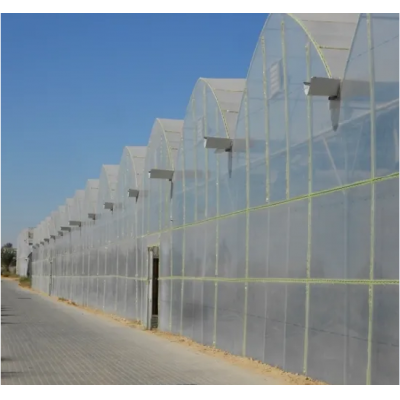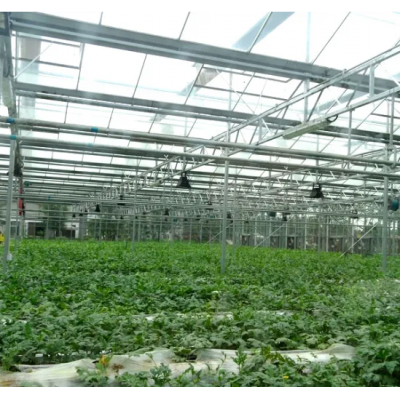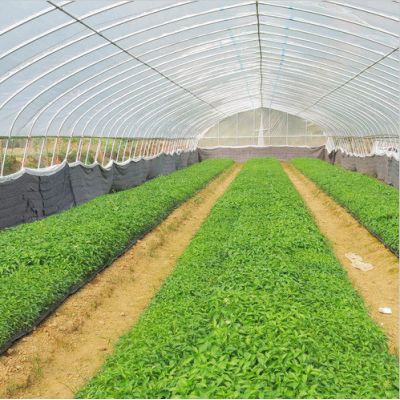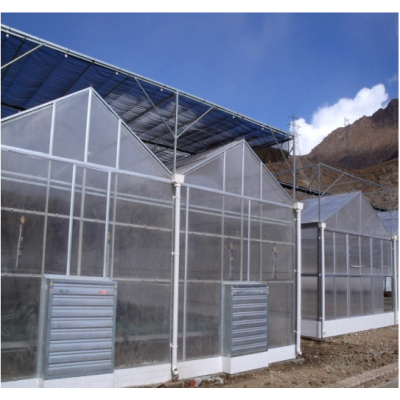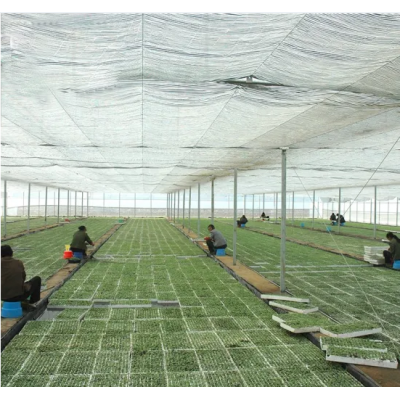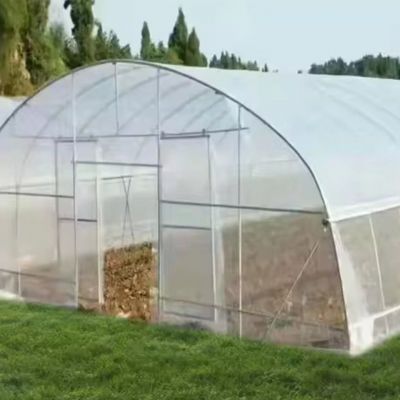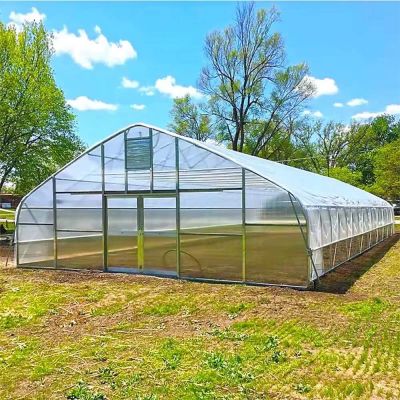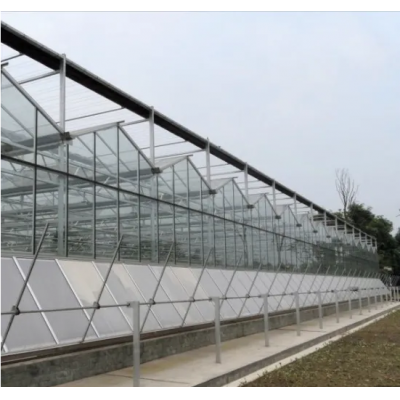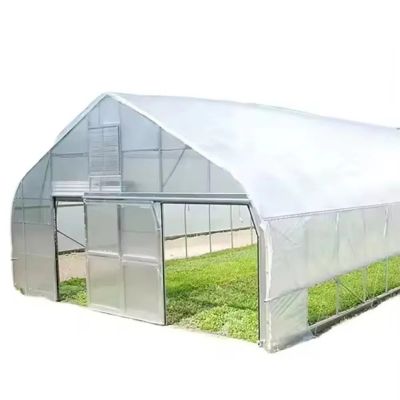
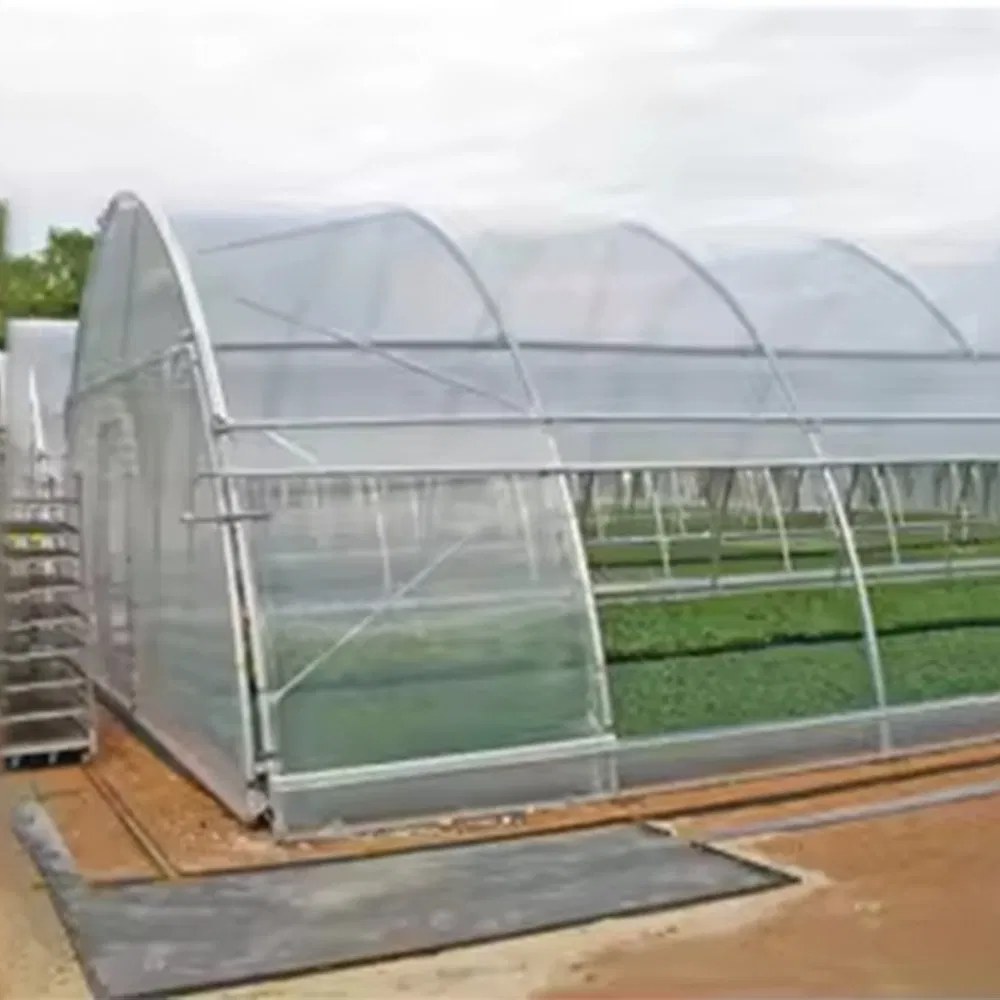
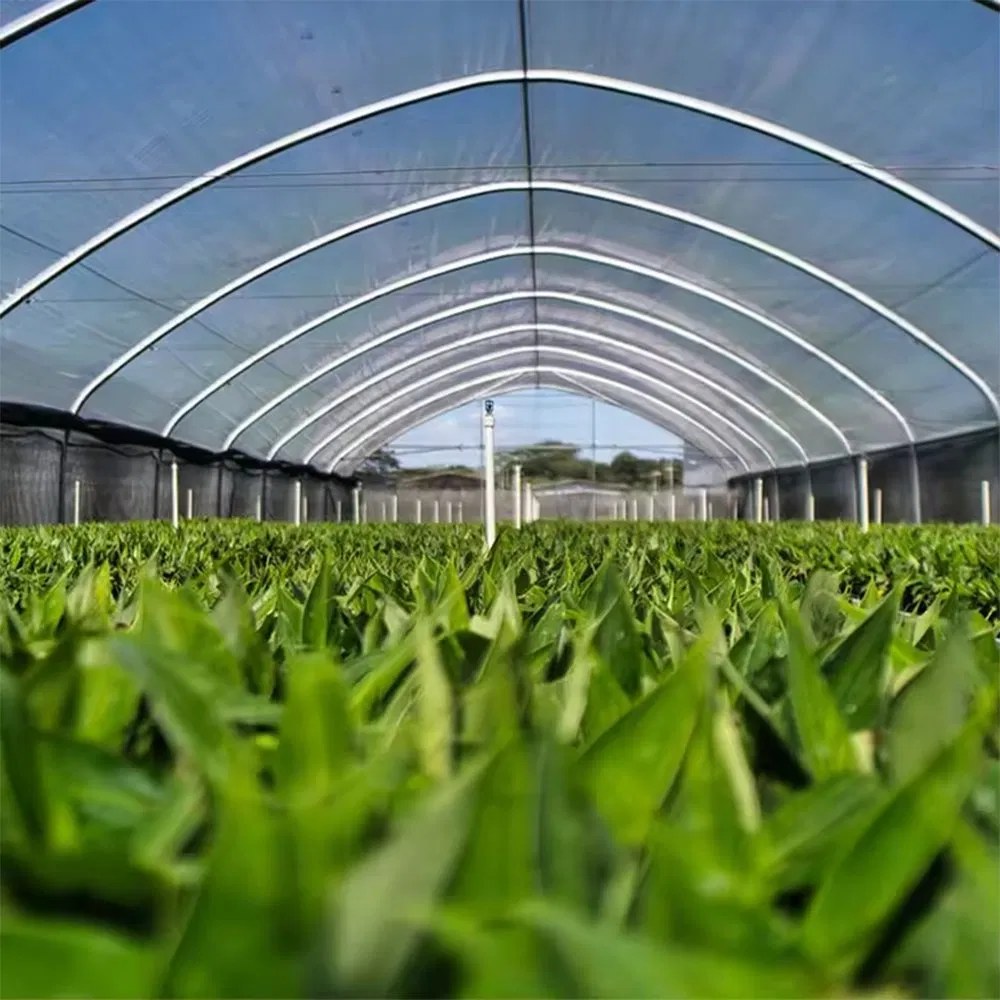
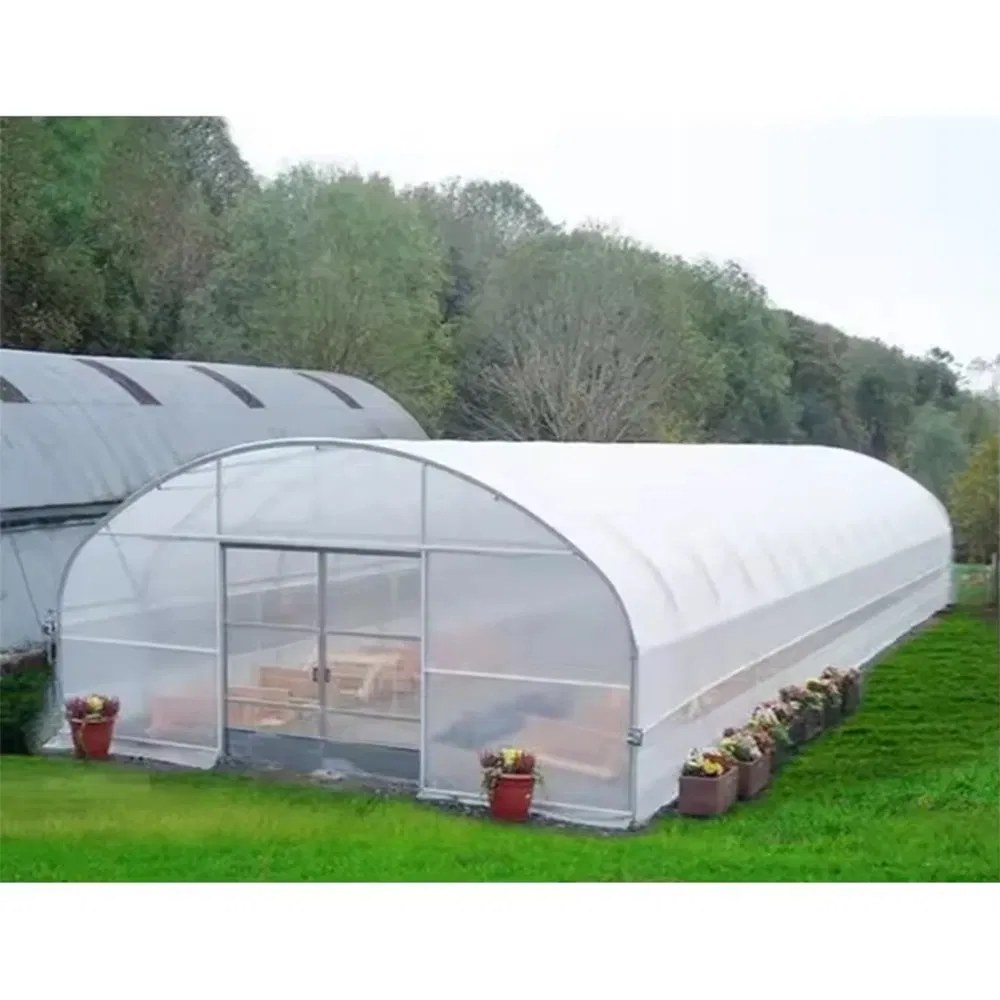
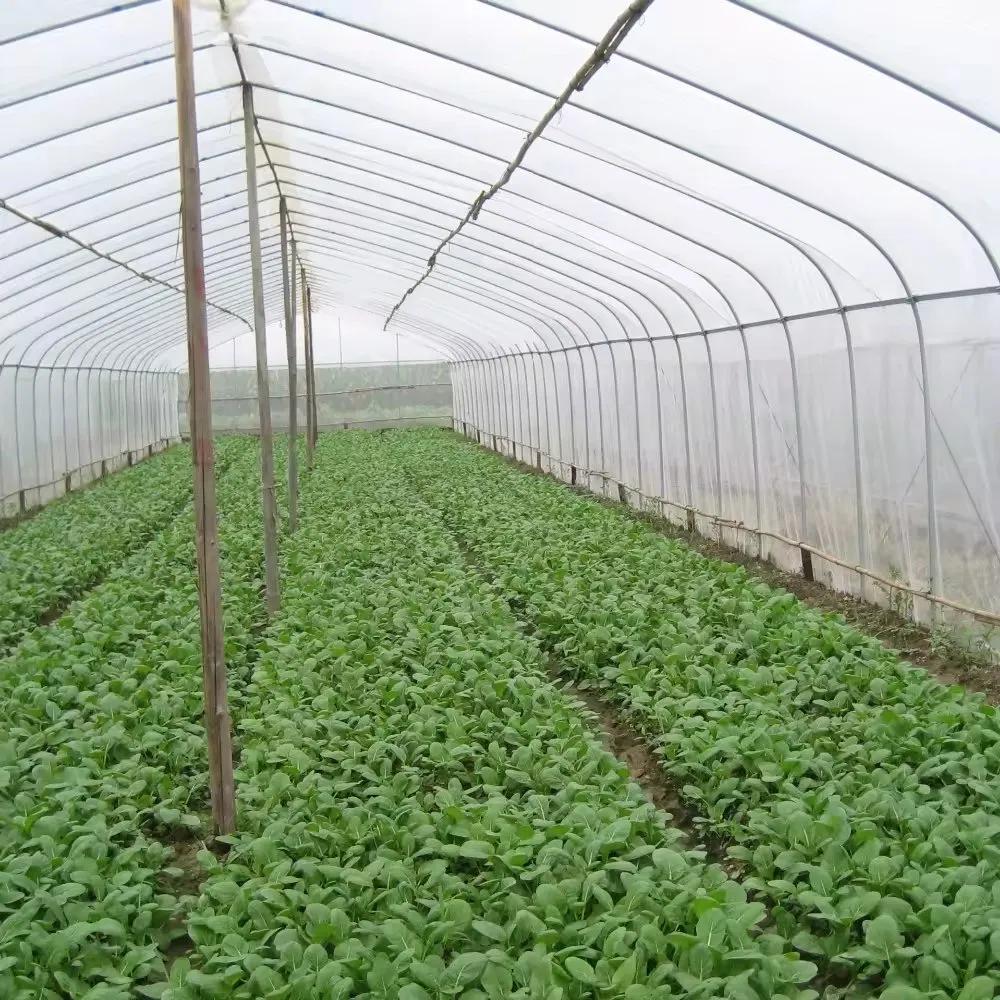
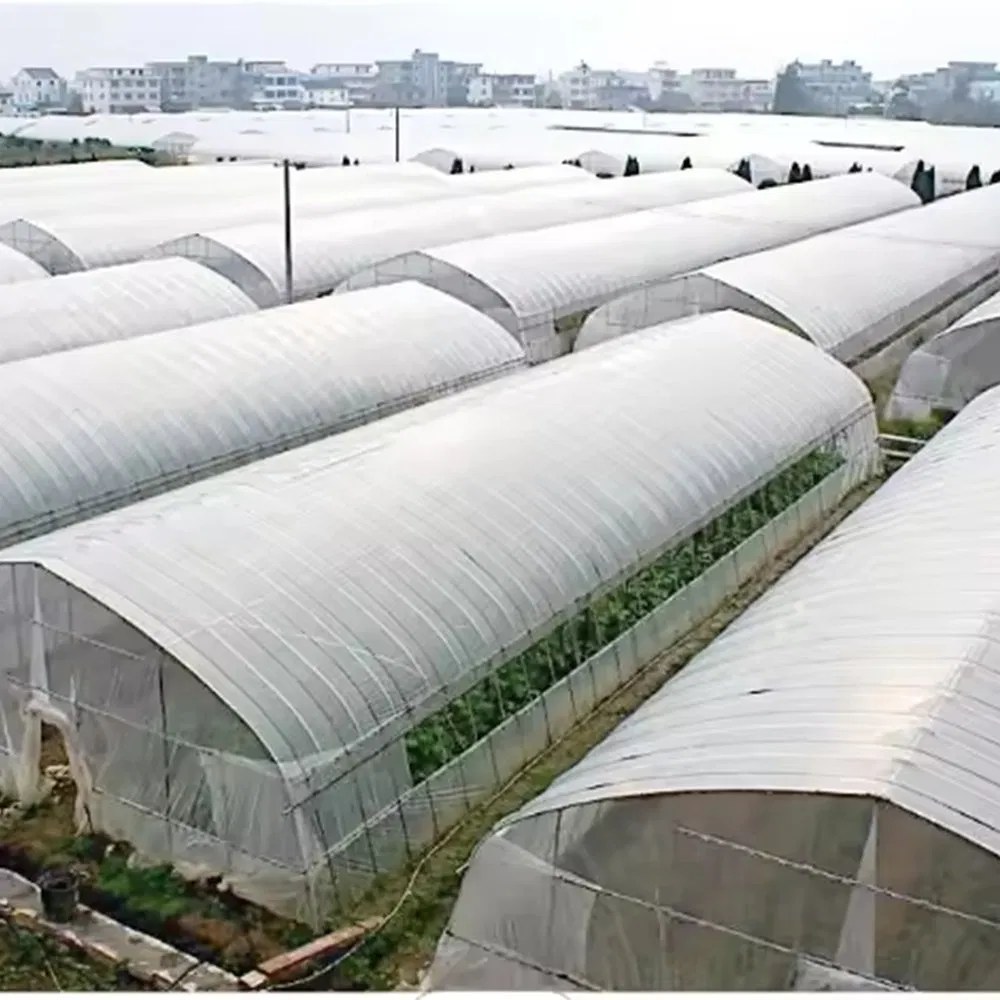
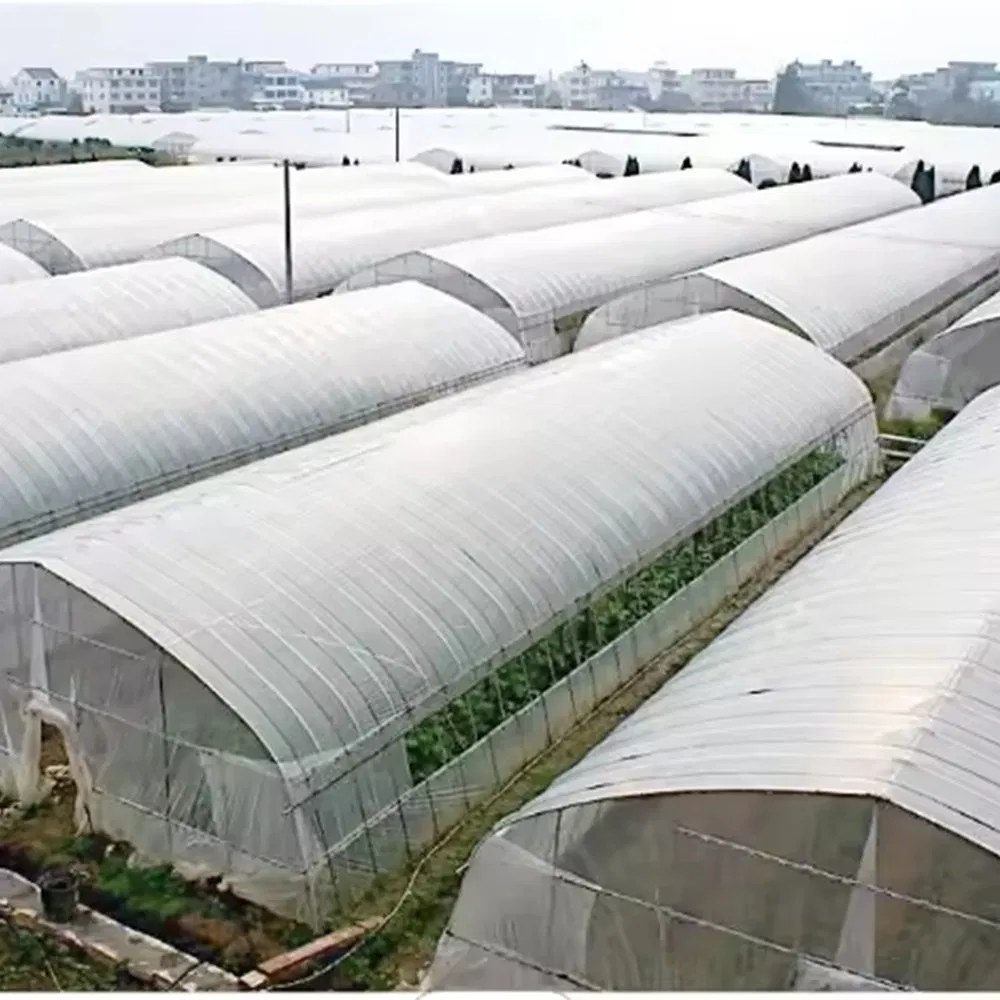
Eight metres by thirty is a working size: wide enough for four beds and a path, long enough to make the ends worth the frame. The hoops are 2 mm galvanized steel and the cover is 200 micron film, and the house is offered as a knockdown kit with pre-cut arches, film, clamps and drawings, which is what makes it shippable at a sensible freight cost rather than as a fabricated structure. The double film option is the one most buyers add first, because night temperature is what limits the season on this size of house.
A tunnel at 8 by 30 metres is a different proposition from a small garden house. It is large enough to work inside with equipment, and long enough that the end walls stop being the main constraint on airflow. What matters at this size is the frame section and how the house is cooled.
At eight metres wide the span is wide enough for four beds with a central path, or three beds and a work strip. Thirty metres of length gives a run that can be cropped in blocks rather than as one house, which is how most growers actually use a tunnel of this size: part in production, part in preparation.
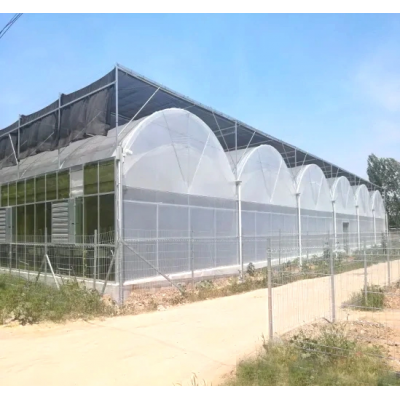
The constraint that comes with the size is summer heat. A house this wide has more volume to ventilate than a small tunnel, and roll-up sides alone stop being sufficient once the outside temperature passes the mid thirties. That is why the wet pad option exists on this house. Houses of this shape are grouped on the tunnel greenhouse range on this site.
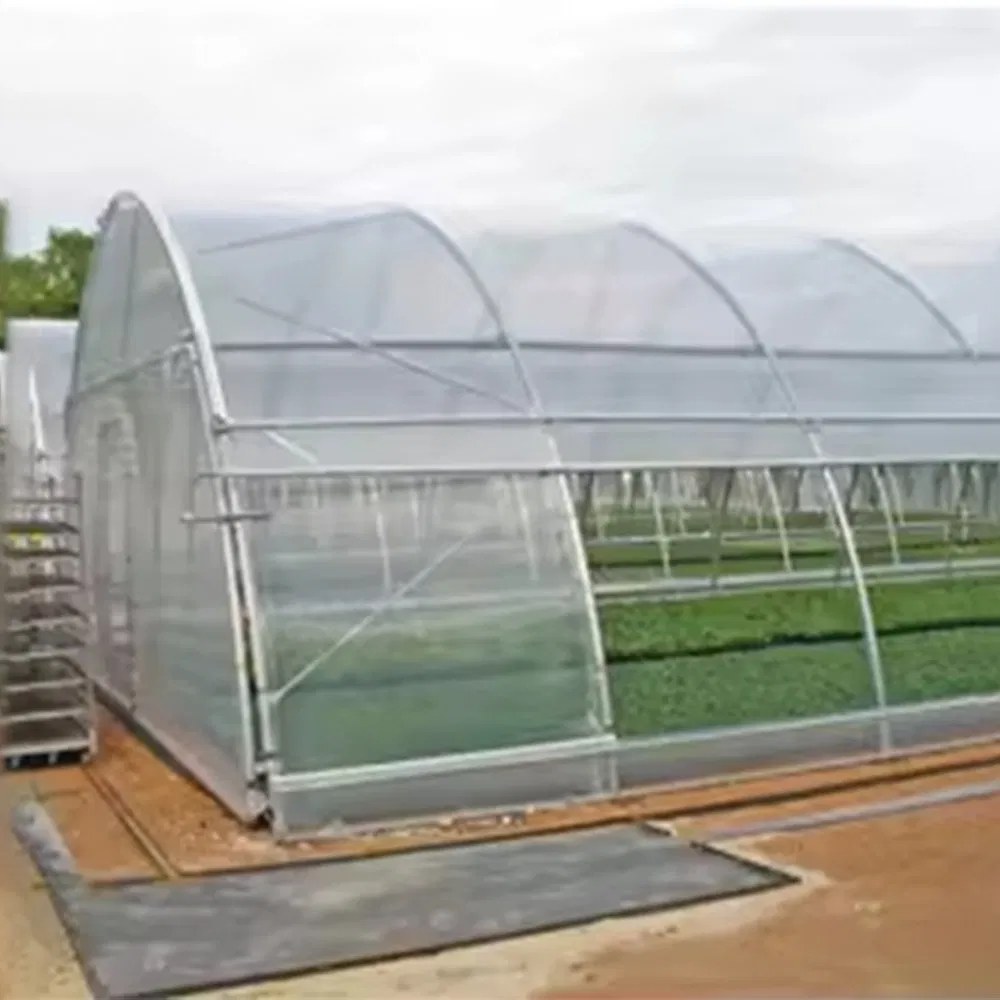
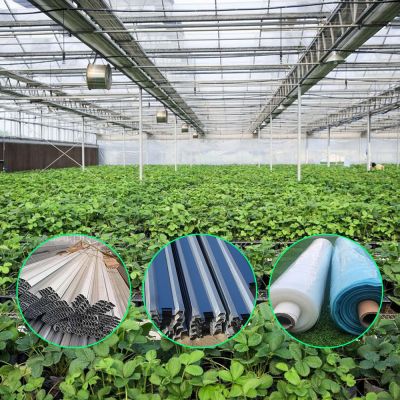
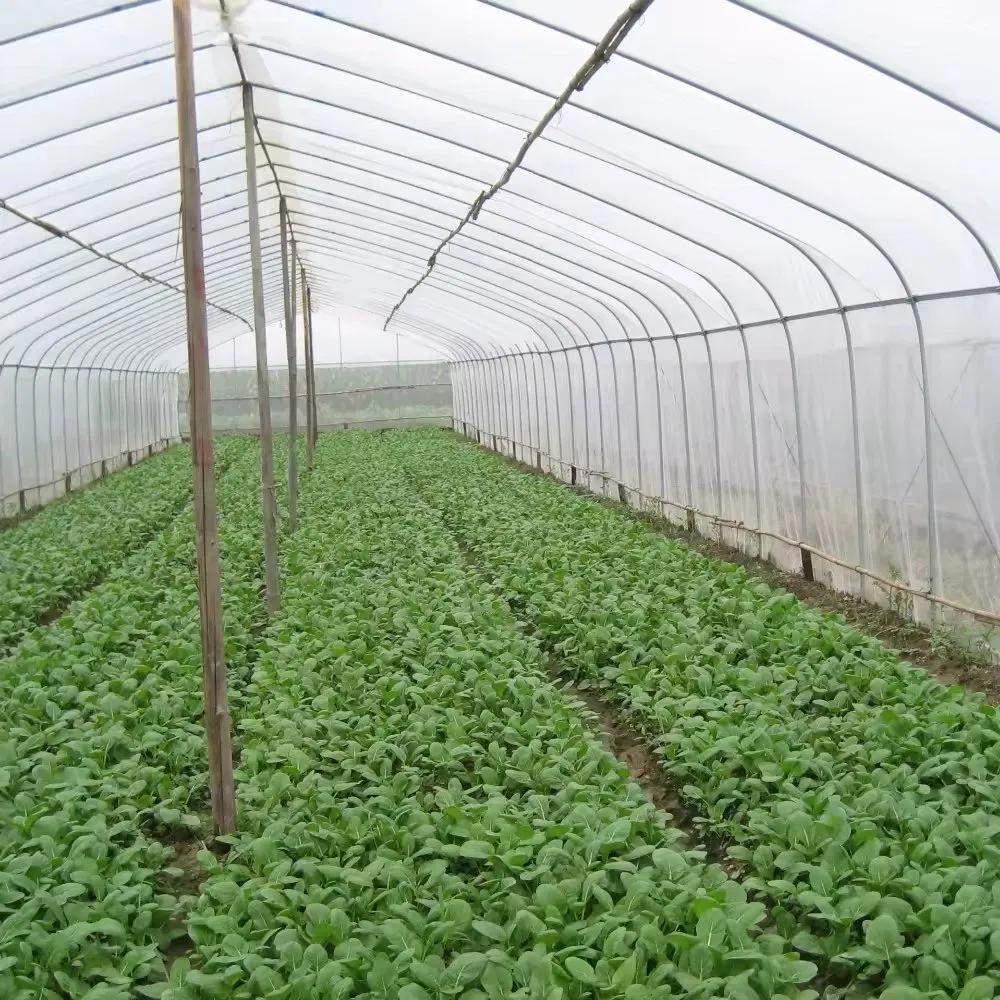
The hoops are 2 mm galvanized steel, which is a heavier section than a garden tunnel carries and is what allows the eight metre span without a forest of internal posts. The cover is 200 micron polyethylene with a UV stabilised anti-drip coating; the anti-drip side matters on tomato and pepper because condensation falling on the leaf is how fungal problems start.
The double film option adds a second layer with an inflation blower between them. The manufacturer puts the gain at about 3 degrees Celsius higher night temperature than a single layer, which on a shoulder-season crop is the difference between holding fruit set and losing it. A heated version of the same single span idea is described on the hydronic heated plastic greenhouse page.
| Structure | Single span tunnel, 2 mm galvanized steel hoops |
| Standard size | 8 m wide x 30 m long |
| Span range | 6 m to 12 m, or to order |
| Cover | 200 micron PE film, UV stabilised, anti-drip |
| Double film option | Second layer with inflation blower |
| Side walls | Roll-up, hand crank |
| Ventilation | Roof and side ventilation |
| Cooling option | Wet pad and fan system |
| Shading option | Internal and external shading |
| Packing | Knockdown kit, pre-cut arches, film, clamps, drawings |
| Container load | Two units per 40 ft container, flat pack |
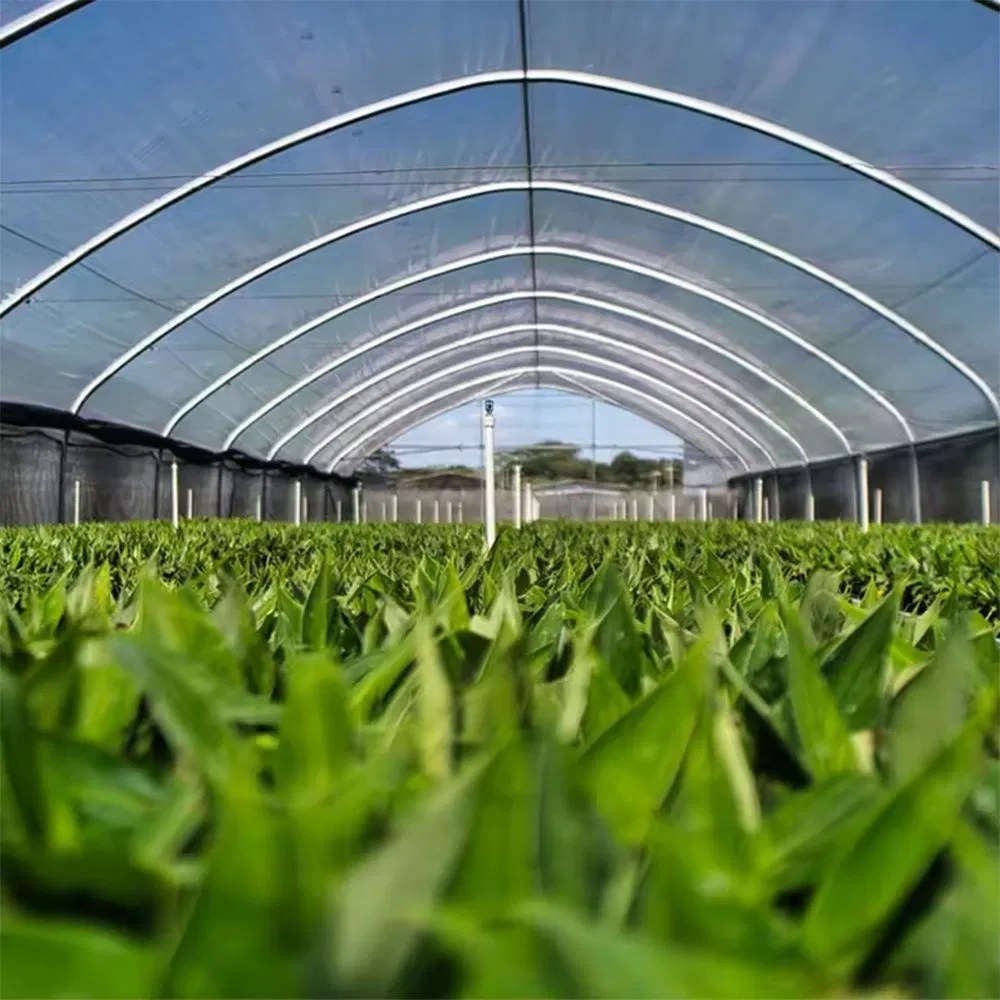
Two side walls on a hand crank is the standard arrangement, and the manufacturer puts the summer drop at about 6 degrees Celsius against a closed house. That is enough for a temperate summer and not enough for a hot one, which is where the wet pad and fan option comes in: the pads cool the incoming air by evaporation, and the fans move it through the length of the house.
Roof ventilation is also available in addition to the sides. On a thirty metre run the roof vents do more work near the middle of the house than at the ends, which is worth knowing when the vents are being set out. A single span house specified with a cooling system is described on the single span greenhouse with cooling system page.
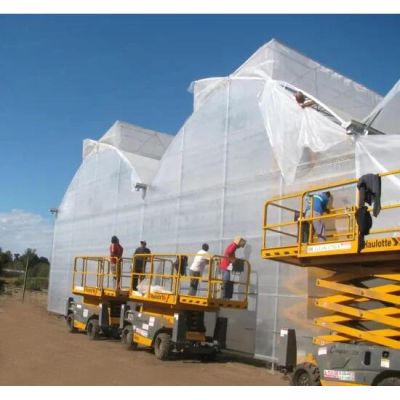
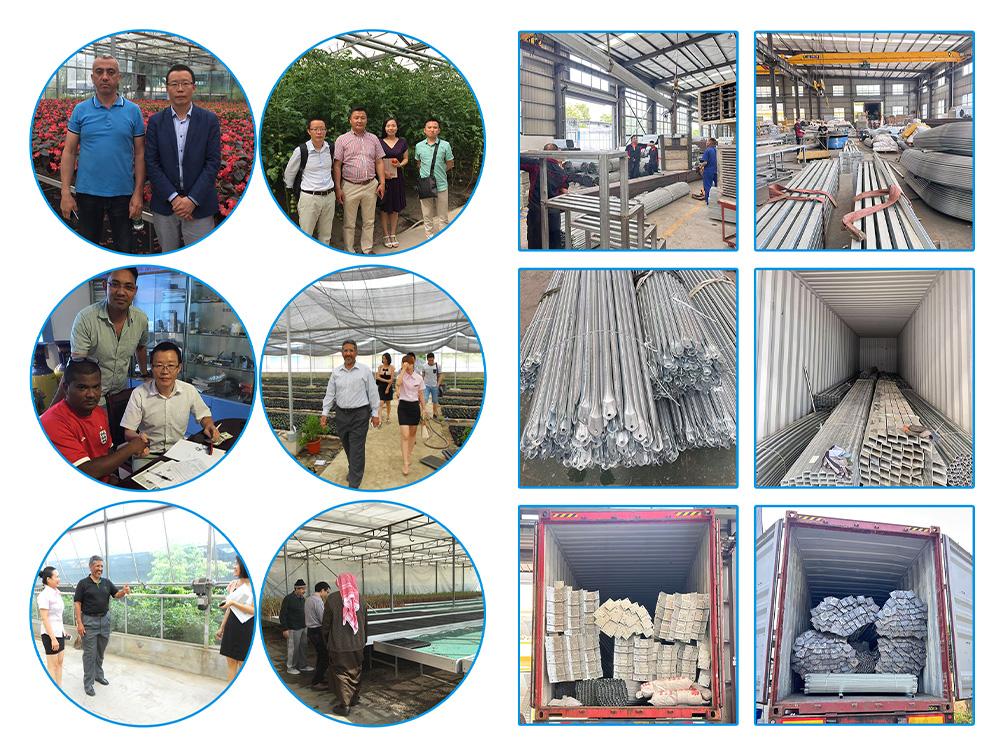
The house ships as a knockdown kit: pre-cut arches, film rolls, clamps and assembly drawings. Flat packing is what allows two units in a 40 ft container, and the manufacturer puts the freight saving at around 40 per cent against shipping assembled sections. On site the work is bolting and tensioning, with no welding.
Maintenance is the film, the crank mechanisms and the blower on a double layer house. The blower runs continuously to hold the air gap, so it is a service item rather than a fitting, and a failure shows up as a slack inner layer before it shows up as a temperature problem.
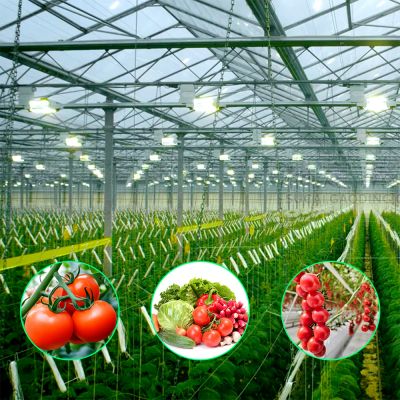
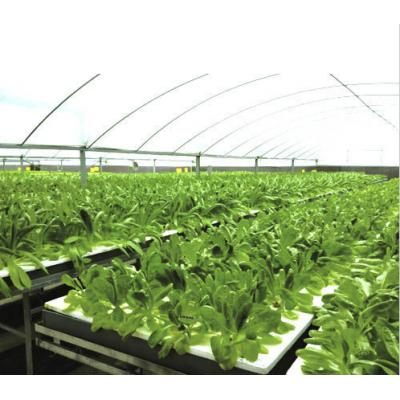
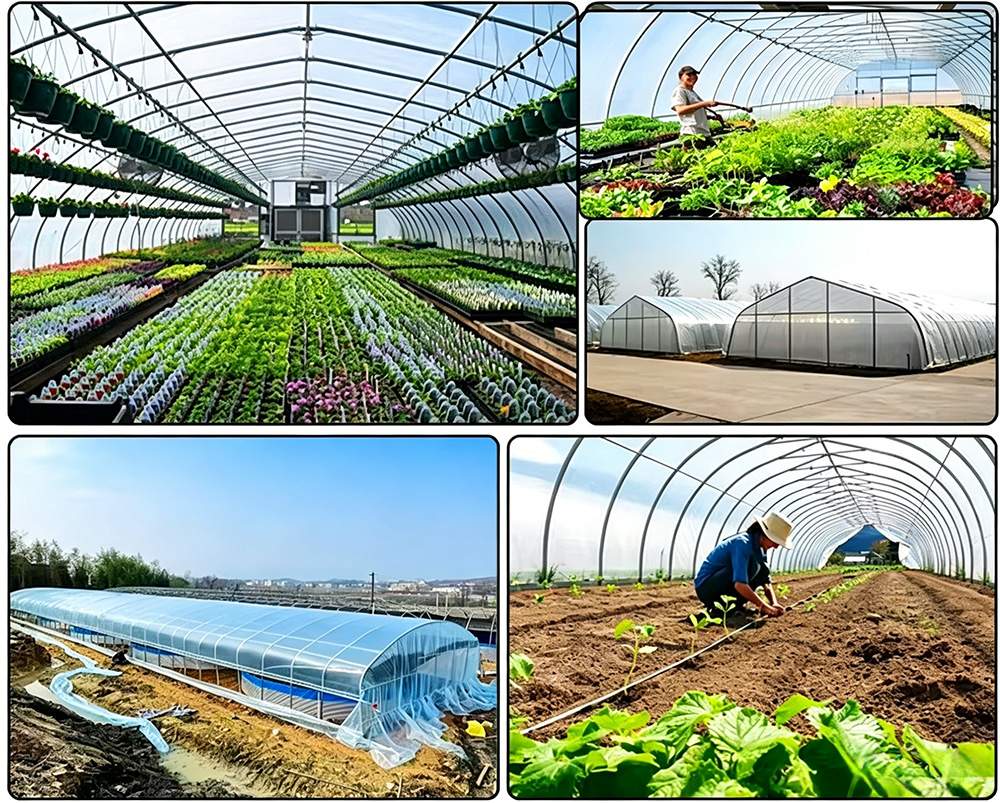
Houses at this size are used for tomato and pepper, for leafy crops and herbs, for cut flowers, and for strawberry on a commercial scale. They suit a grower moving from a smaller tunnel to a working house, an operation that wants several identical units rather than one large building, and buyers shipping to a site where a knockdown kit is the practical way to deliver a structure.
Standards and industry guidance for greenhouse manufacturers are published by the National Greenhouse Manufacturers Association. Fresh produce trade reporting is published by FreshFruitPortal.
It adds a second layer with an air gap held by a small blower. The manufacturer puts the gain at about 3 degrees Celsius higher night temperature than a single layer.
By hand crank along each side wall. The manufacturer puts the summer temperature drop at about 6 degrees Celsius against a closed house.
Send your growing area, span and length, crop type and local climate. If you already have a layout drawing, that is enough to start. Our engineers then return a quotation with a structure drawing and a bill of materials.
The hot-dip galvanized steel frame is designed for a 15-20 year service life in normal agricultural environments, with a double-sided zinc coating of 200-275 g/m². Film covers are replaced every 3-5 years, while glass and PC panels carry their own manufacturer warranties.
Yes. We customize span width, bay length, gutter height, covering material (film, PC sheet or glass) and ventilation configuration. Share your crop type, local climate and growing area, and our engineers will size the structure to match.
The hot-dip galvanized steel frame carries a 10-year structural warranty covering structural safety, plus a 5-year warranty against corrosion perforation. It is designed for a 15-20 year service life. Film covers carry a 3-5 year UV warranty depending on grade.