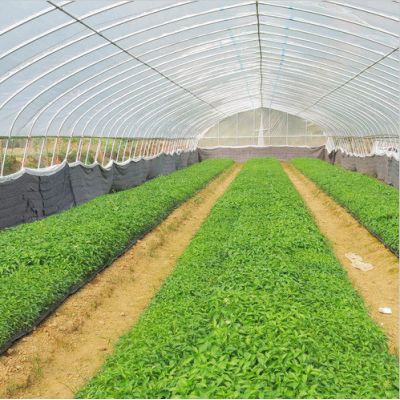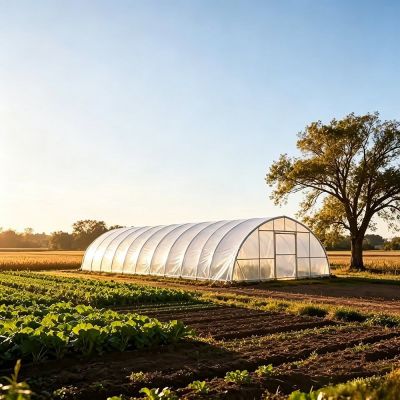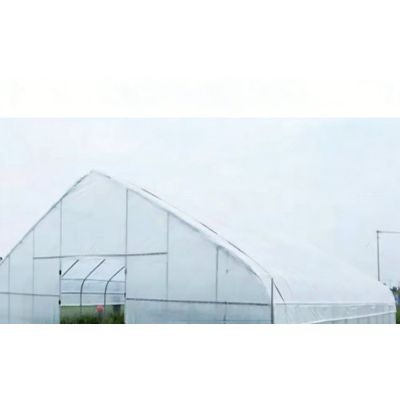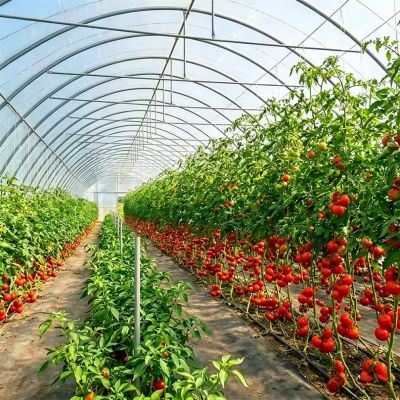
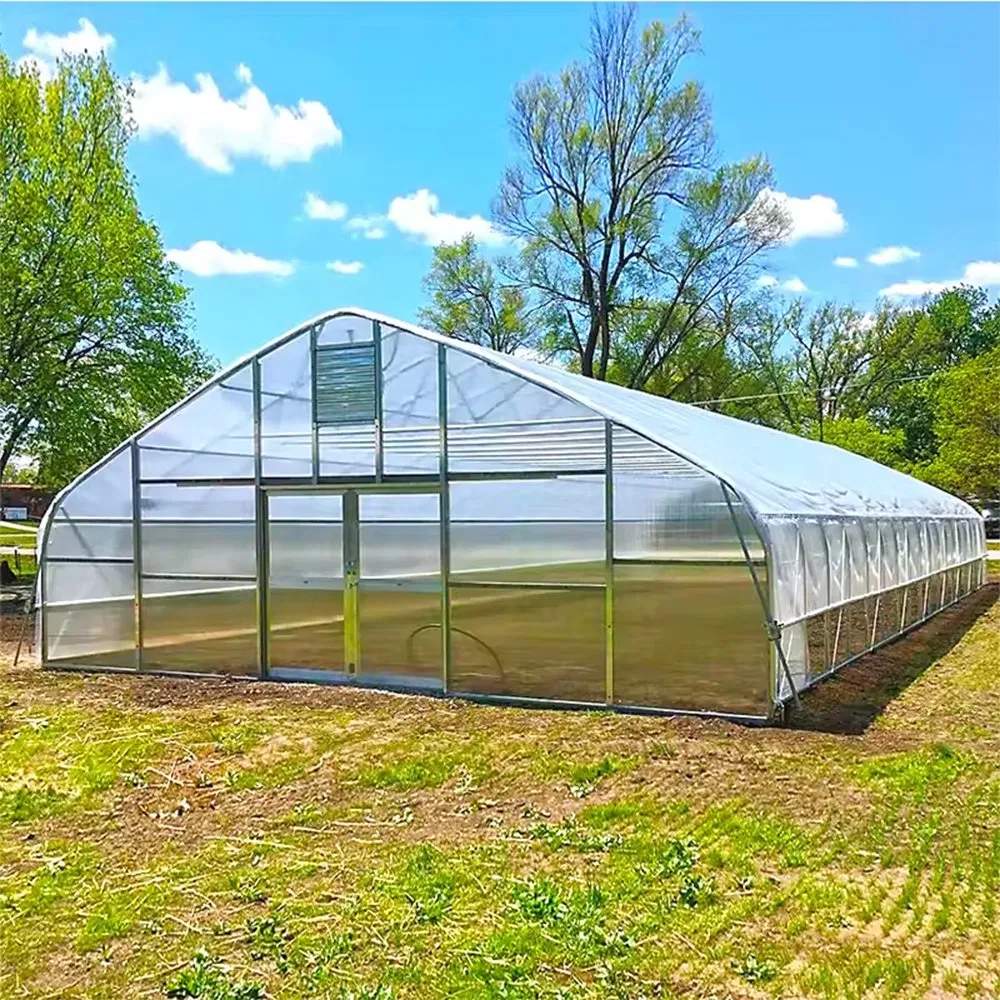
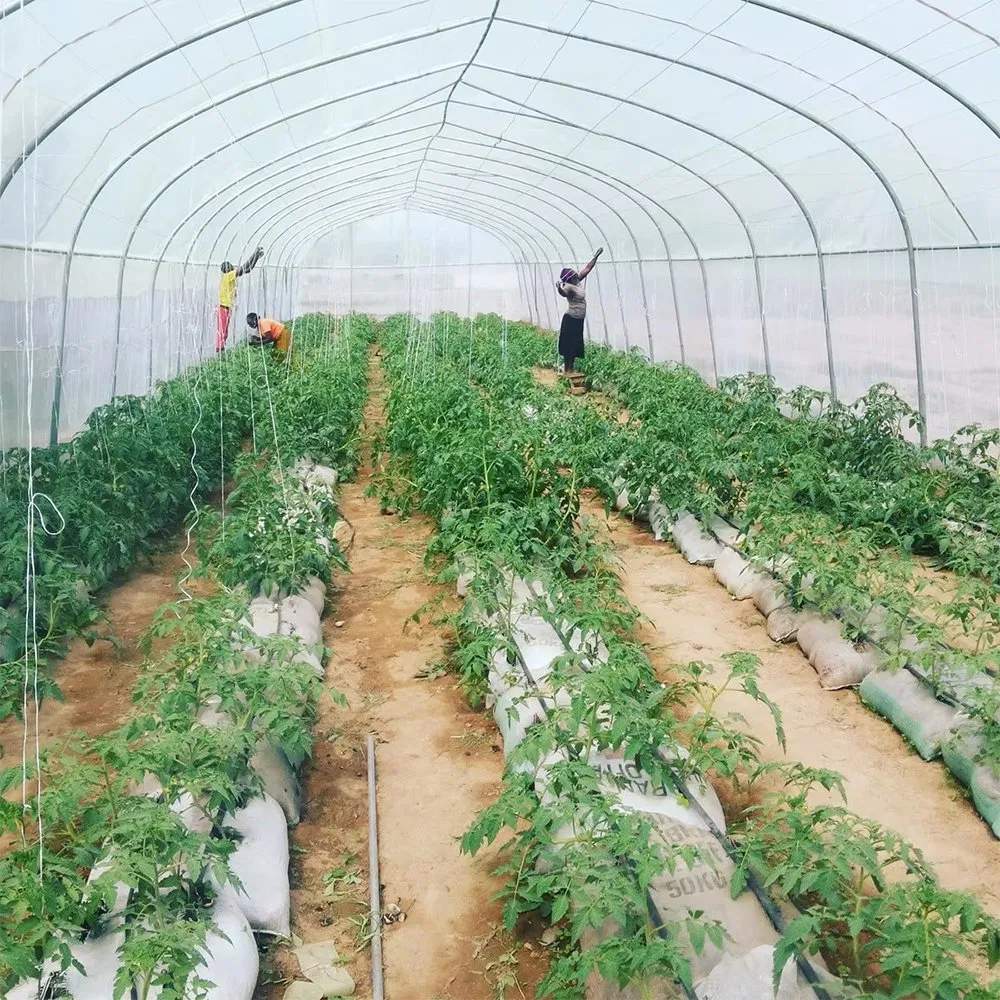
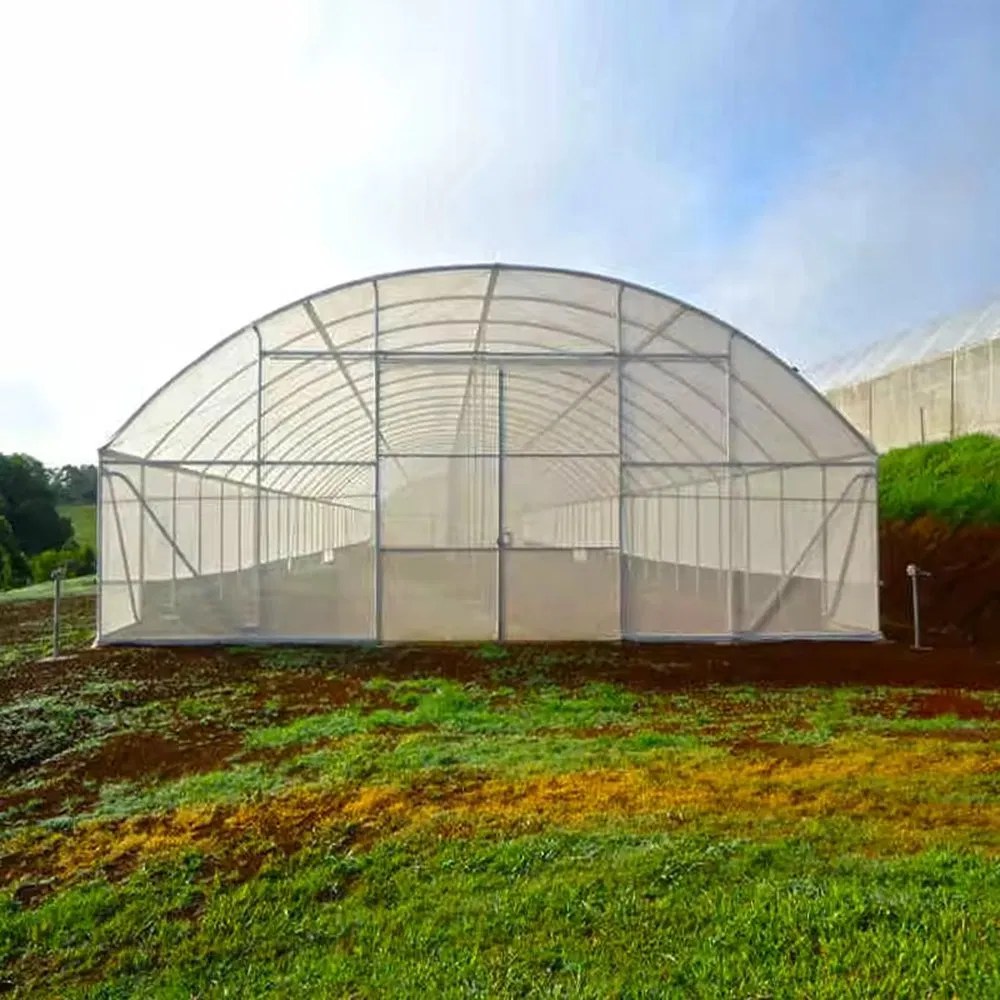
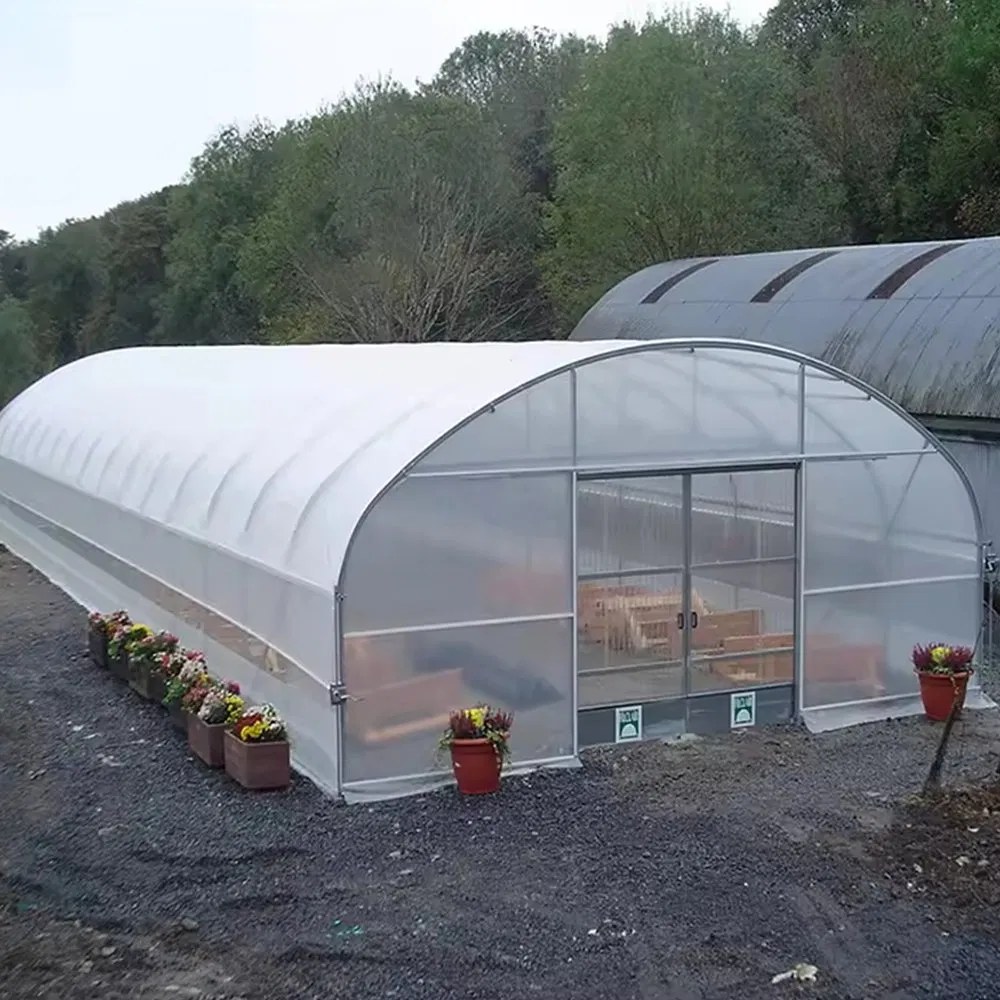
Frost does its damage in the last hour before dawn, and a single film skin only slows it down. This house carries two: a cover on the frame and a second skin with an air gap behind it, which is the least expensive insulation available to a grower without a boiler. Spans run 6 to 10 metres with arches at 1 to 1.5 metre centres, and the frame is hot dip galvanized pipe throughout. It is not a heated house and does not claim to be, but on a market garden it is often the difference between a crop that finishes and one that stops.
A market garden sells into a window, and the window is set by the first frost. Anything that pushes the last harvest two weeks later pays for itself in one autumn. Double film is the oldest way to do that without a heater, and it is still the one that most growers can afford. This house is built for it and sits in the tunnel greenhouse range on this site.
Still air is an insulator. A second film layer traps a layer of it between the two skins, and that gap is what slows heat loss overnight. It is not heating: it buys hours, not degrees, and the difference matters most on clear calm nights when the crop would otherwise be lost at four in the morning.
What it costs is light. Every extra skin loses some transmission, so the crop under double film starts the day a little darker than under single. In a short winter that is a good trade; in a dull climate with a low-light crop it is worth costing before the order.
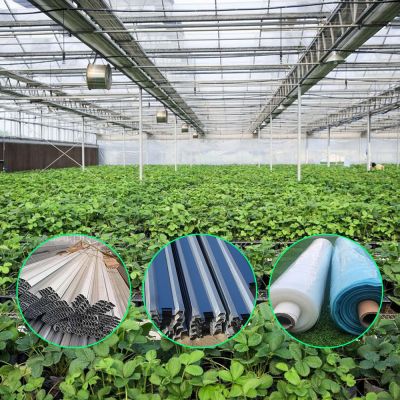
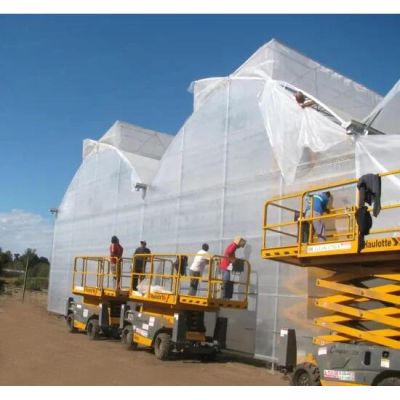
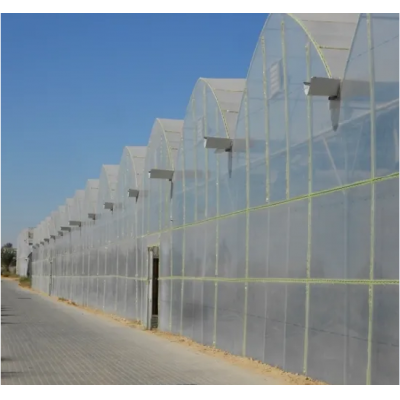
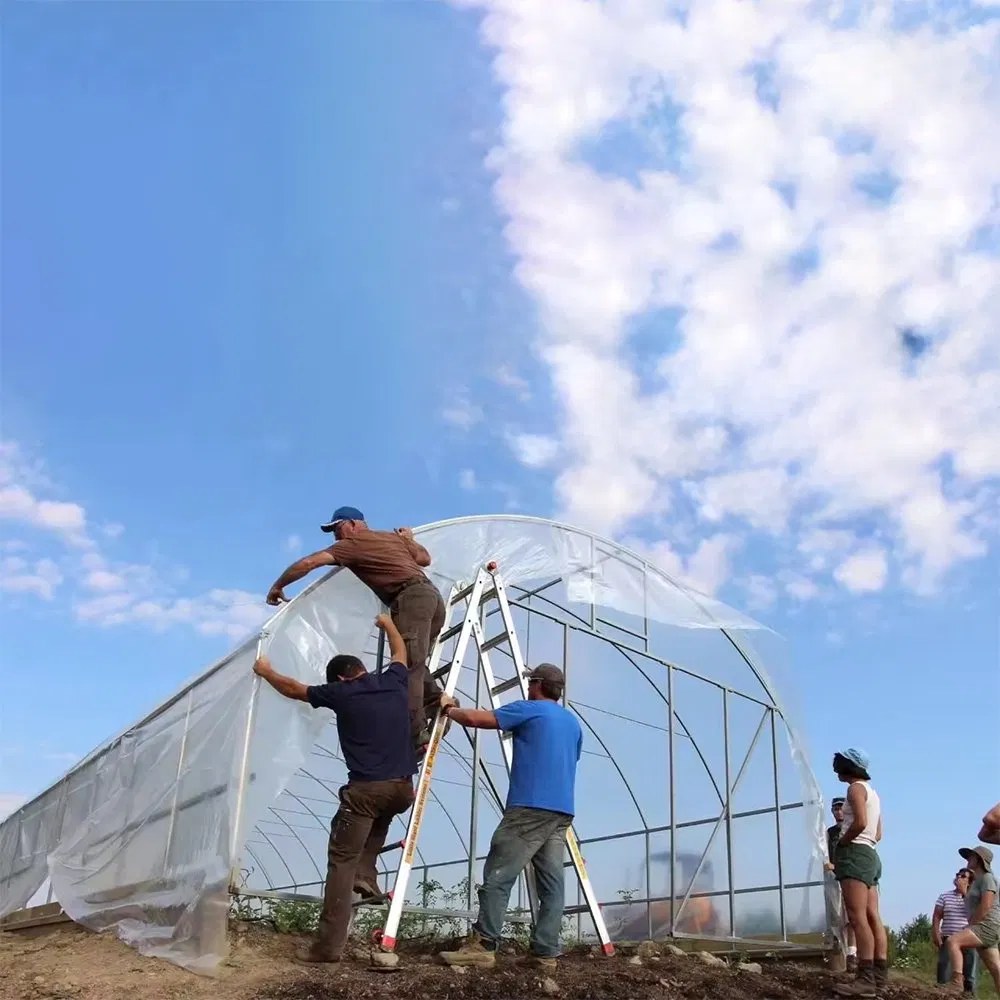
The frame is hot dip galvanized steel pipe, prefabricated and bolted with no site welding. Arch spacing runs from 1 to 1.5 metres and is the detail that decides how a double-skinned house behaves in wind: two skins catch more load than one, so a house on the wider spacing is the one that needs the closer look.
The film is PE or PO between 0.12 and 0.20 mm. For the outer skin, a heavier gauge is the usual choice; for the inner skin, a lighter and clearer film does the same job with less weight on the frame. A diffusing cover on a single-skin house is described on the diffuse film polytunnel page.
| Structure | Single span tunnel, hot dip galvanized steel pipe, prefabricated |
| Span | 6 m to 10 m, custom |
| Length | 10 m to 100 m, custom |
| Arch height | 2.5 m to 5 m, custom |
| Arch spacing | 1 m to 1.5 m, custom |
| Cover | PE or PO film, 0.12 to 0.20 mm, two layers |
| Ventilation | Roll-up sides, manual, insect net optional |
| Optional systems | Planting, irrigation and shading systems |
| Assembly | Bolted joints, no welding on site |
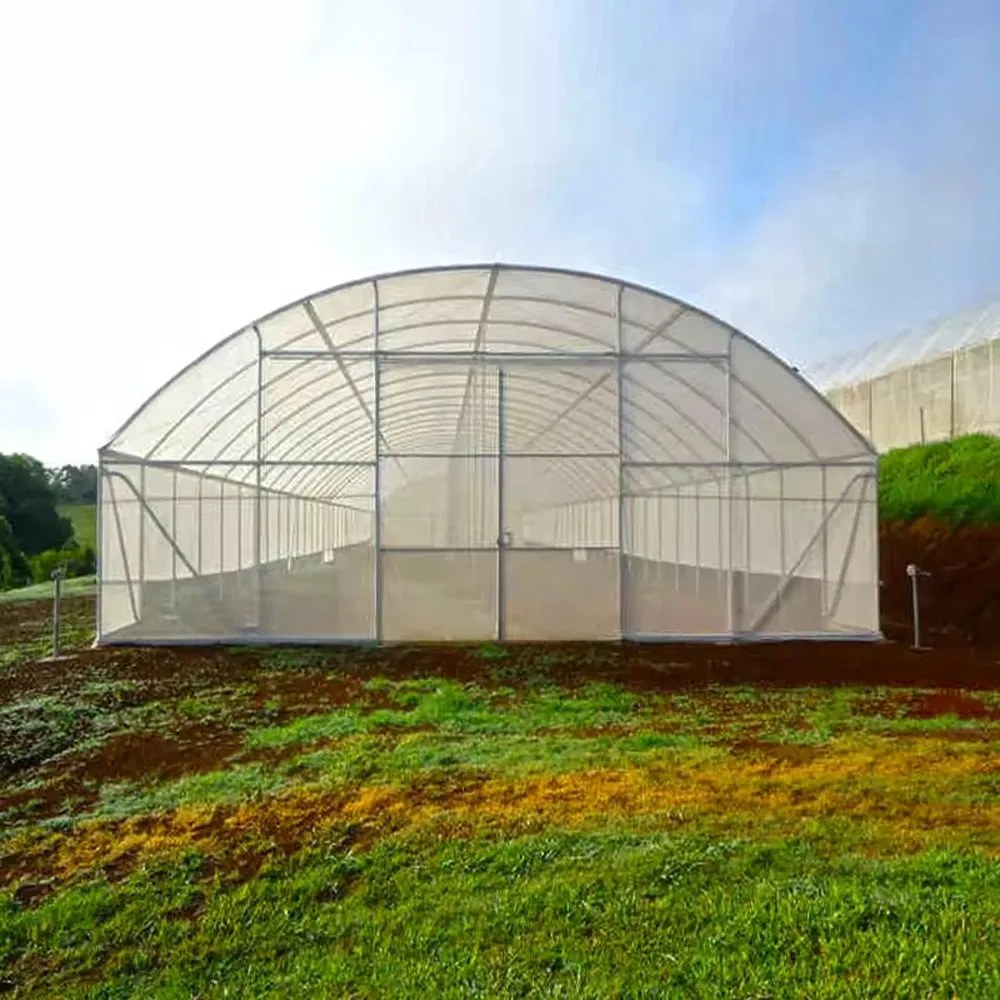
Two ways of doing it are common. An inner skin fixed to the same hoops on separate clips keeps the gap fixed and needs no equipment; an inflated double layer holds a more even gap but needs a small blower running. The first costs less to run and the second holds a wider cavity on a long house.
Either way, the gap has to stay sealed to be worth anything. Openings at the eaves and at the base rail are where a double-film house quietly becomes a single-film house, and they are worth checking before the cold weather rather than during it.
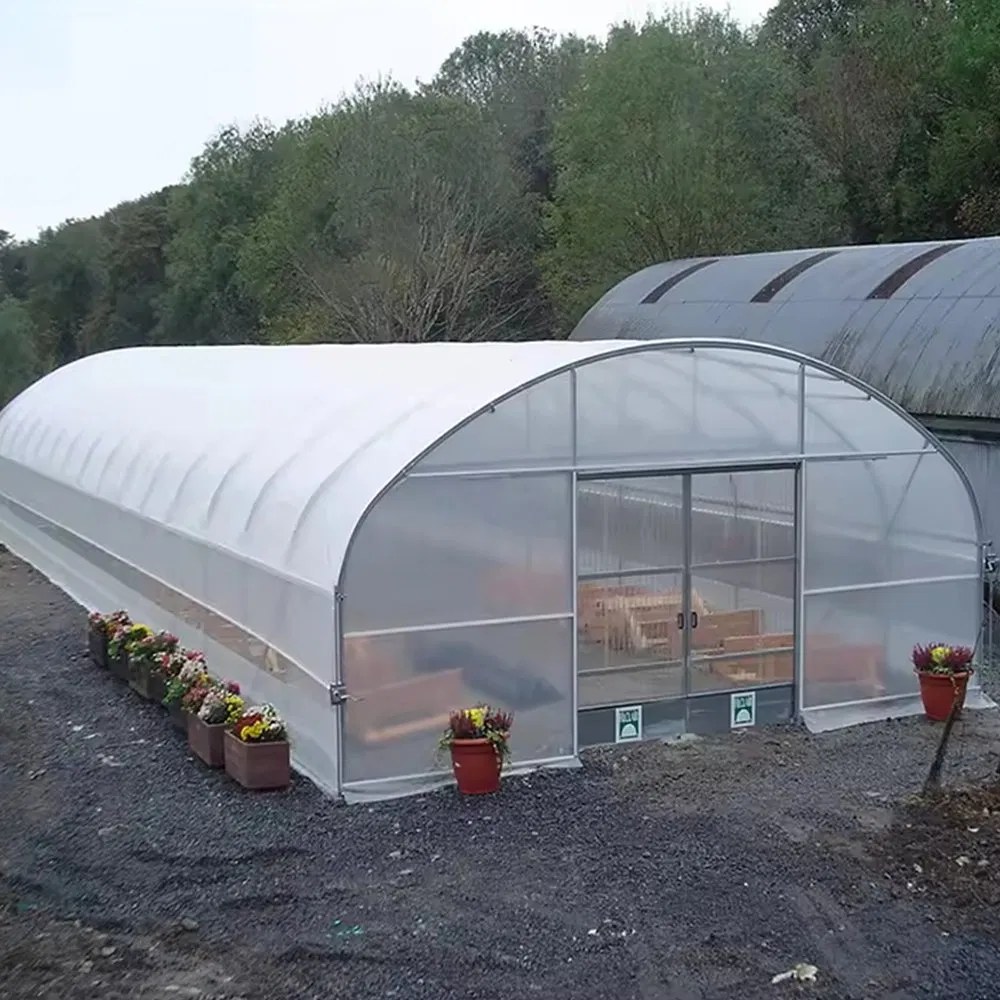
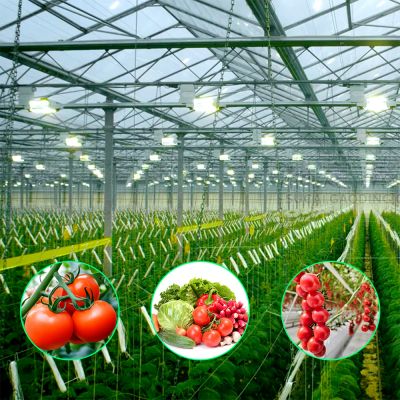
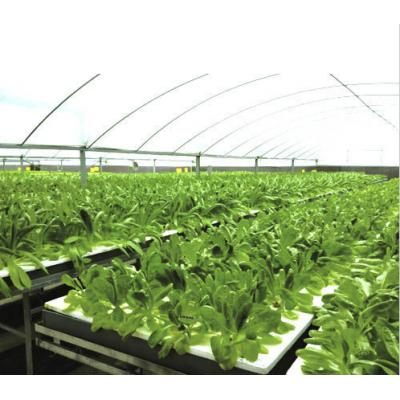
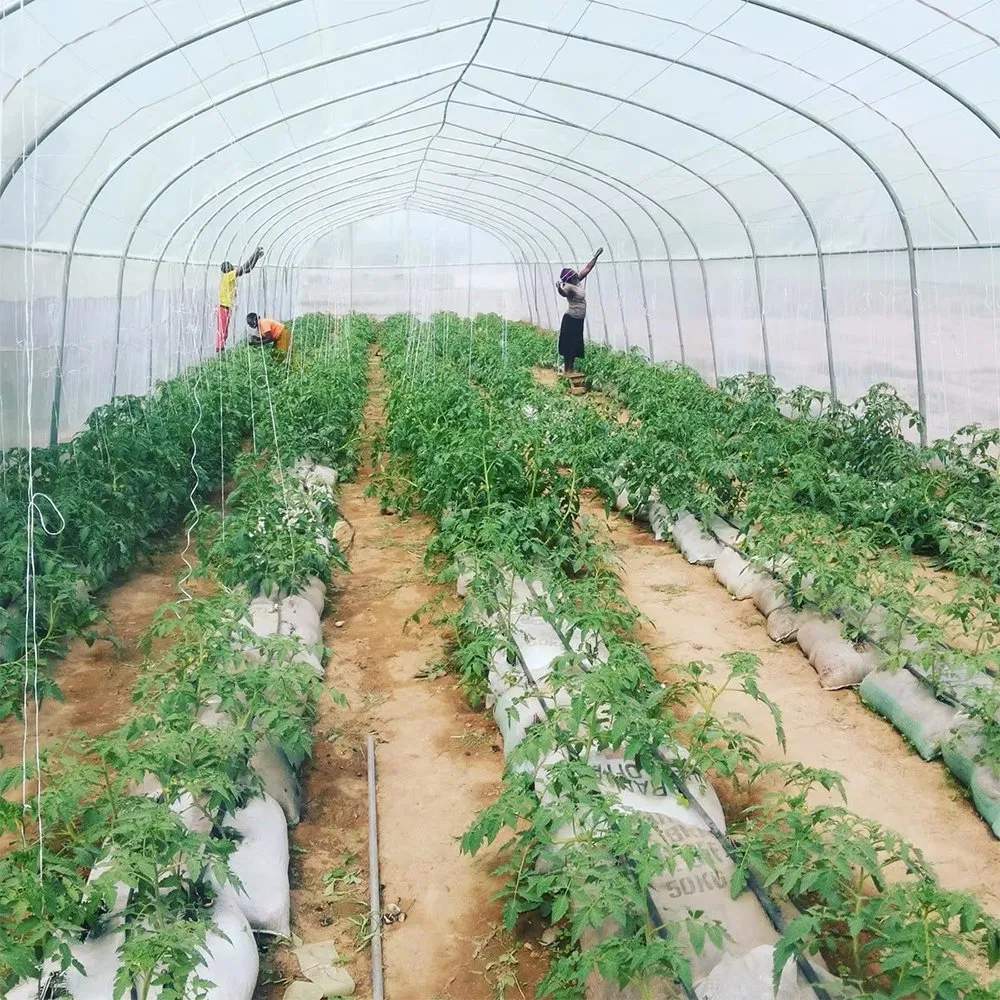
Market garden houses are usually laid out around a barrow and a picking round, not around a tractor. A six to eight metre span with beds across the width and a central path is the common shape, and the length is whatever the field allows up to a hundred metres.
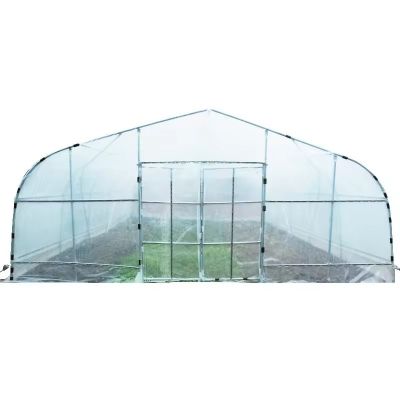
The doors matter more than they look. On a frost protection house they are opened late and shut early, so a door that one person can handle with a tray in their hands is worth more than a wider one. A house on the same frame with blackout screens for photoperiod control is described on the single arch film tunnel page. Guidance on protected cultivation and food production is published by FAO, and commercial horticulture reporting by HortiDaily.
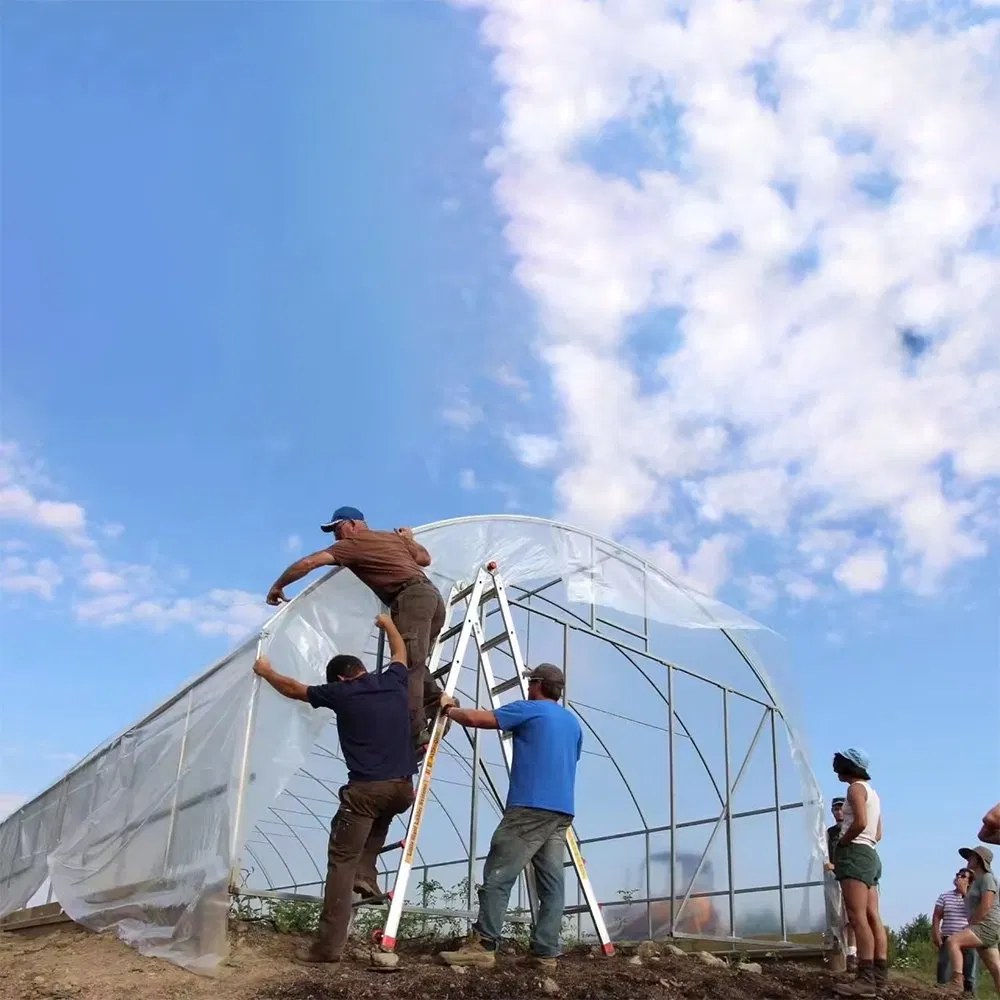
A house that holds heat also holds moisture, and a double-skinned house holds more of both. The usual mistake is to keep it shut through a mild week in autumn, when the crop is transpiring hard and the vents stay closed because the nights are cold. Opening the sides for an hour in the middle of the day costs little heat and takes a lot of water out.
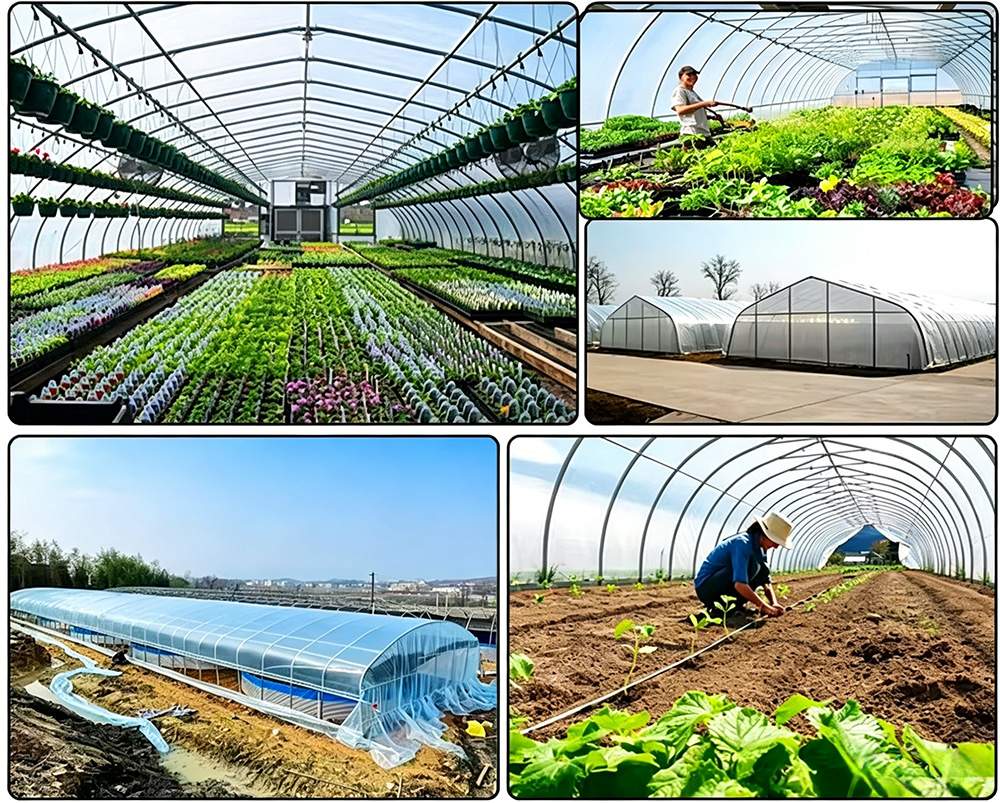
Film suits low-cost tunnels on 3-5 year replacement cycles. Glass delivers the highest light transmission and the longest lifespan, at the highest cost. PC sheet insulates better than film and suits cold or high-humidity climates. The right choice depends on climate, crop and budget.
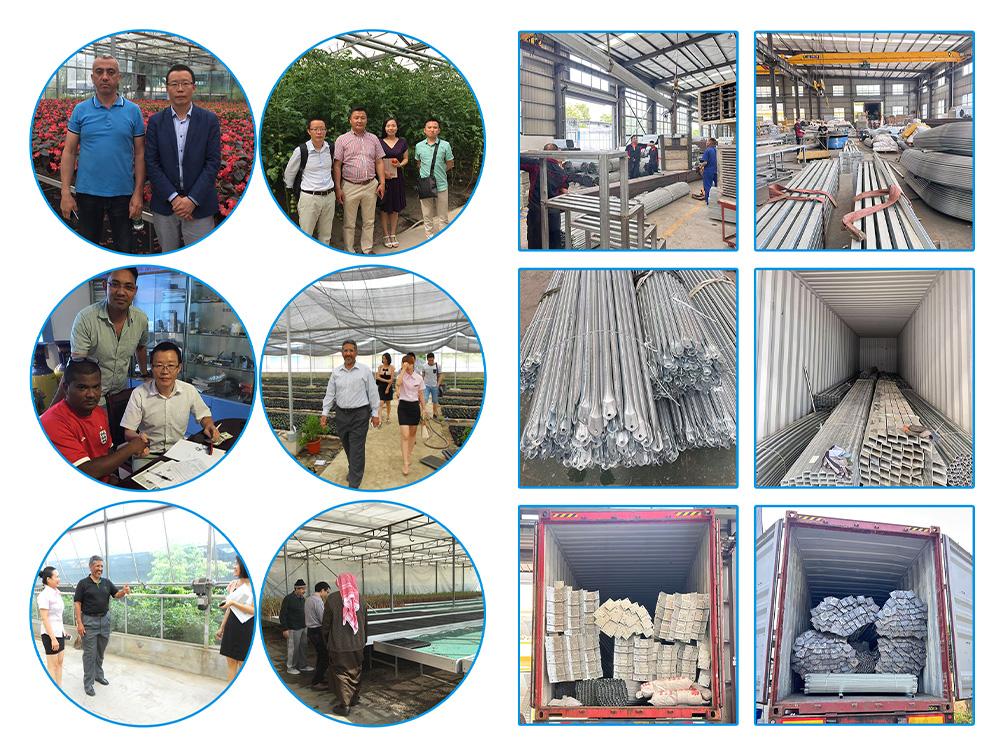
Ziyang Bozong Greenhouse Industry Co., Ltd. is a manufacturer based in Ziyang, Sichuan, China. We produce the hot-dip galvanized steel frame in-house, cutting and drilling to drawing, and supply covering materials, ventilation, cooling and irrigation systems as one coordinated package.
Send your growing area, span and length, crop type and local climate. If you already have a layout drawing, that is enough to start. Our engineers then return a quotation with a structure drawing and a bill of materials.
The hot-dip galvanized steel frame is designed for a 15-20 year service life in normal agricultural environments, with a double-sided zinc coating of 200-275 g/m². Film covers are replaced every 3-5 years, while glass and PC panels carry their own manufacturer warranties.
Between 1 and 1.5 metres, and on a double-skinned house the closer end of that range is the safer choice, because two skins catch more wind than one. The spacing is confirmed on the drawing rather than left to the crew.
The range is 0.12 to 0.20 mm in PE or PO. In practice the outer skin takes the heavier gauge because it carries the weather, and the inner skin a lighter, clearer film. Both should carry UV stabiliser and an anti-drip treatment.