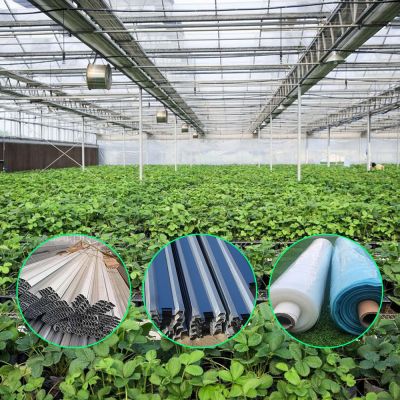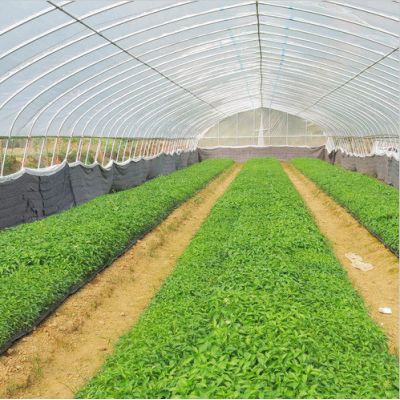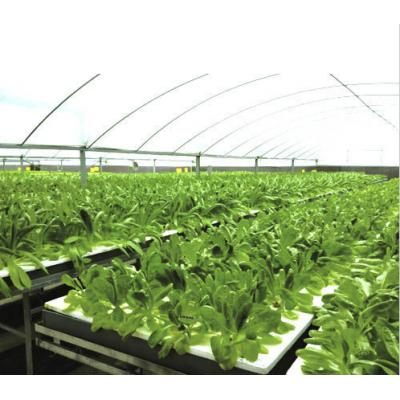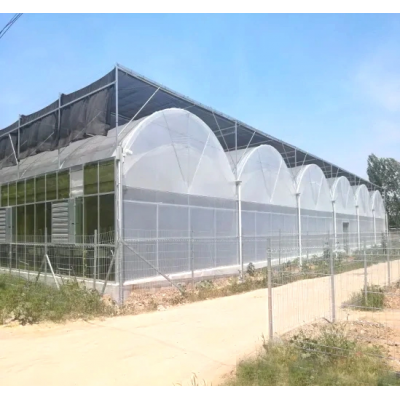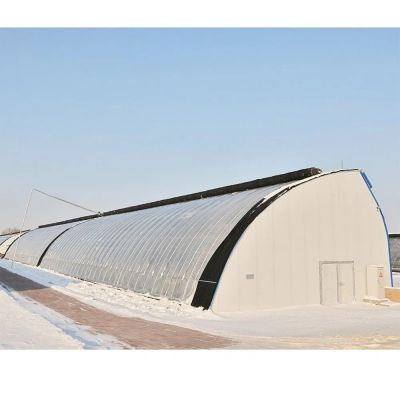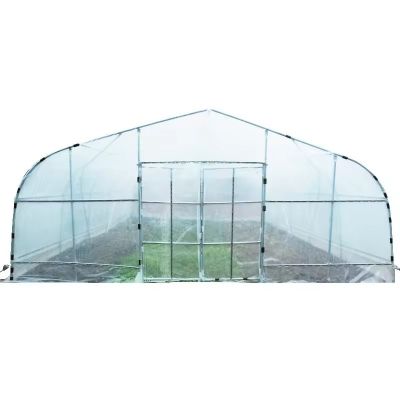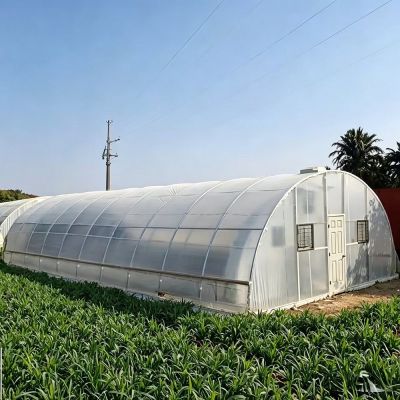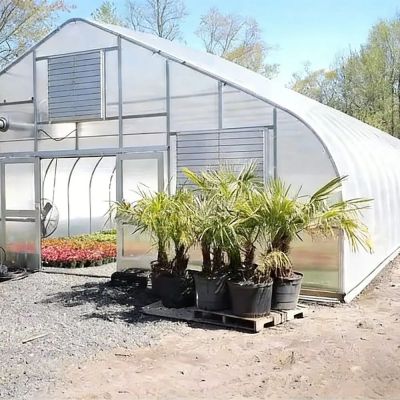
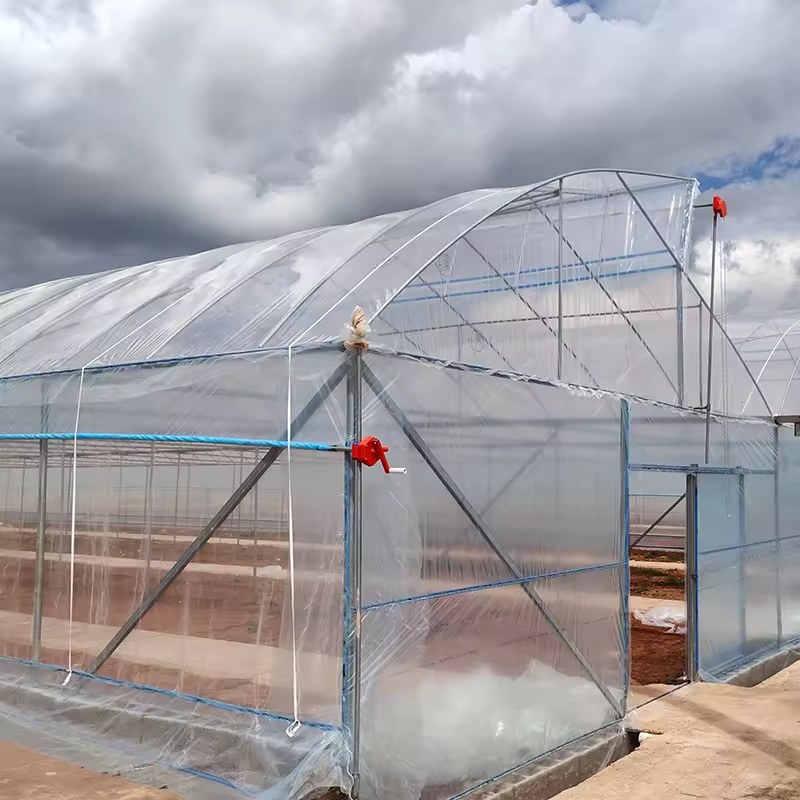
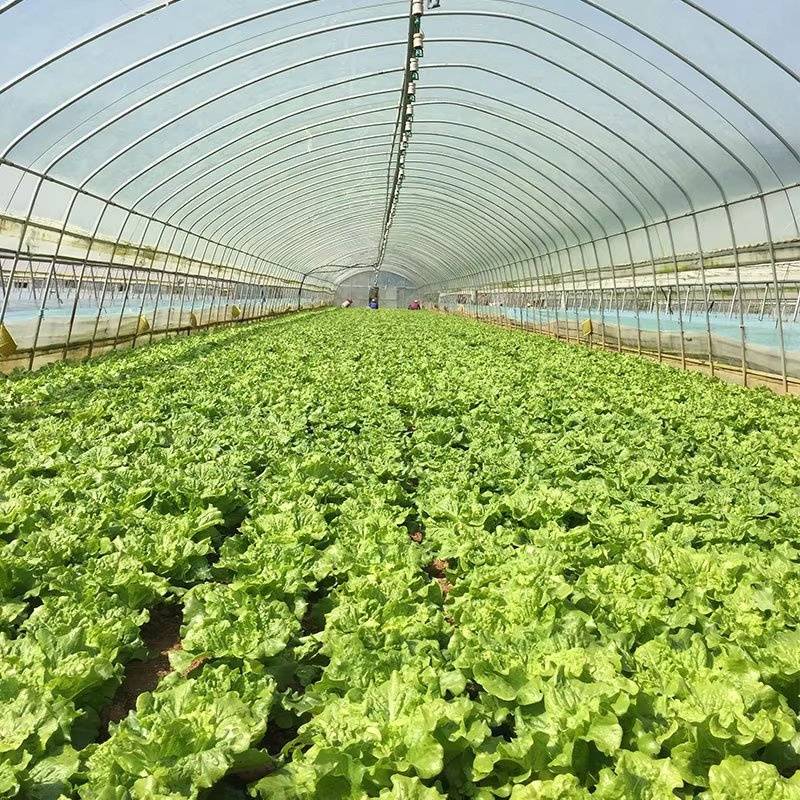
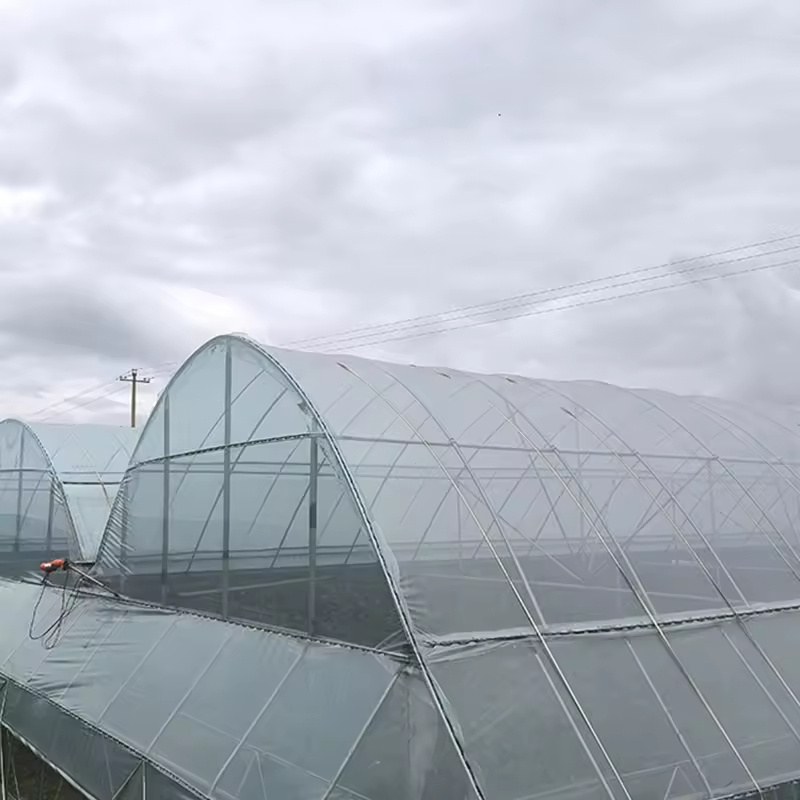
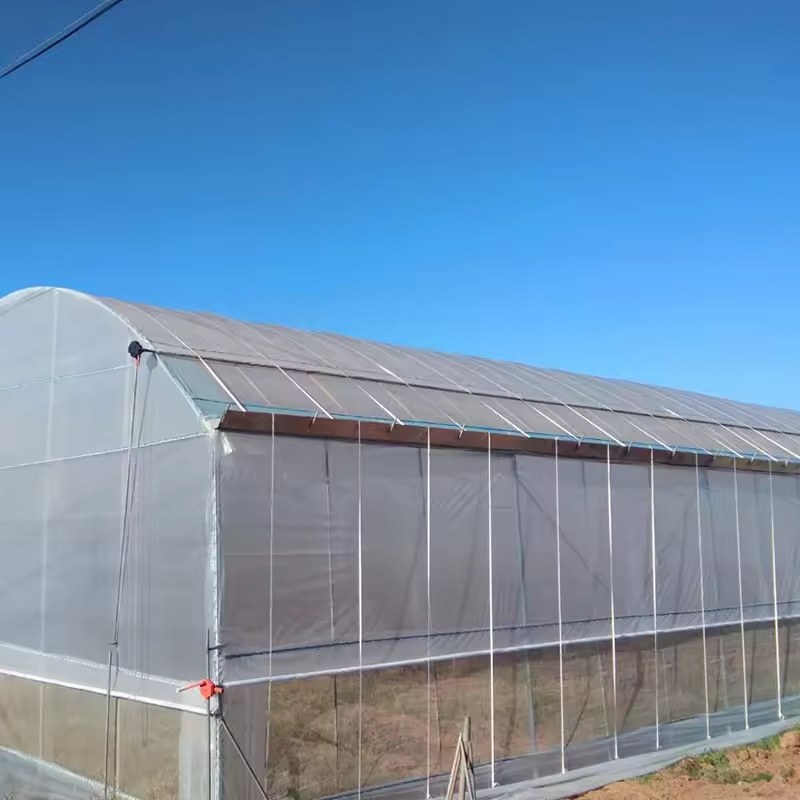
Light inside a tunnel is uneven by nature: the sun comes in as a hard band and the crop under it ripens ahead of the crop in the shade. A diffuse film changes that by scattering the light as it passes through, so the crop sees a softer and more even level across the house. This tunnel is built around that film, on a hot dip galvanized frame with bolted connections and no welded joints to break the zinc. The frame is expected to outlast several covers, which is what the coating and the bolted joints are for.
A tunnel is a light structure, and most of what a grower notices in the first season comes down to the film rather than the steel. The film decides how much light arrives and how evenly it lands, and an uneven house is one where the crop has to be managed row by row. This tunnel is specified with a diffuse cover for that reason.
Clear film passes light in straight lines. Under direct sun that means a bright band on the crop and shade either side of it, and the plants respond by growing at different rates across the same bed. A diffuse film scatters the light as it enters, so what reaches the crop is spread out rather than concentrated.
The cover here is treated for a 40 to 60 degree light angle, which is the range most of the day sits in for a tunnel running east to west. Total transmission is 90 to 92 per cent, so scattering the light does not cost much of it. The effect is a house where the crop under the ridge and the crop near the side wall are closer to the same condition. Houses of this shape are grouped on the tunnel greenhouse range on this site.
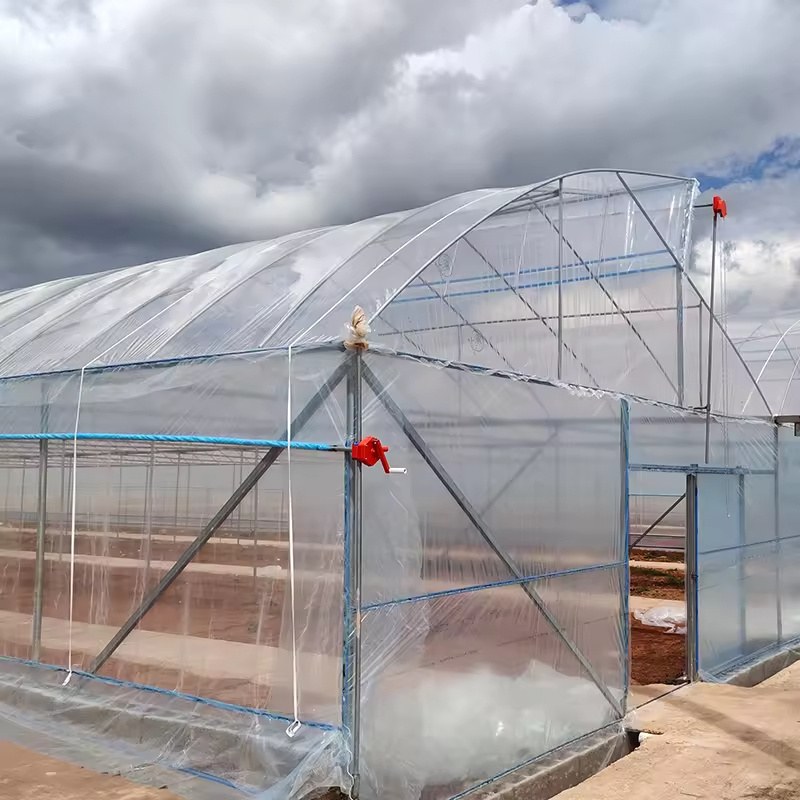
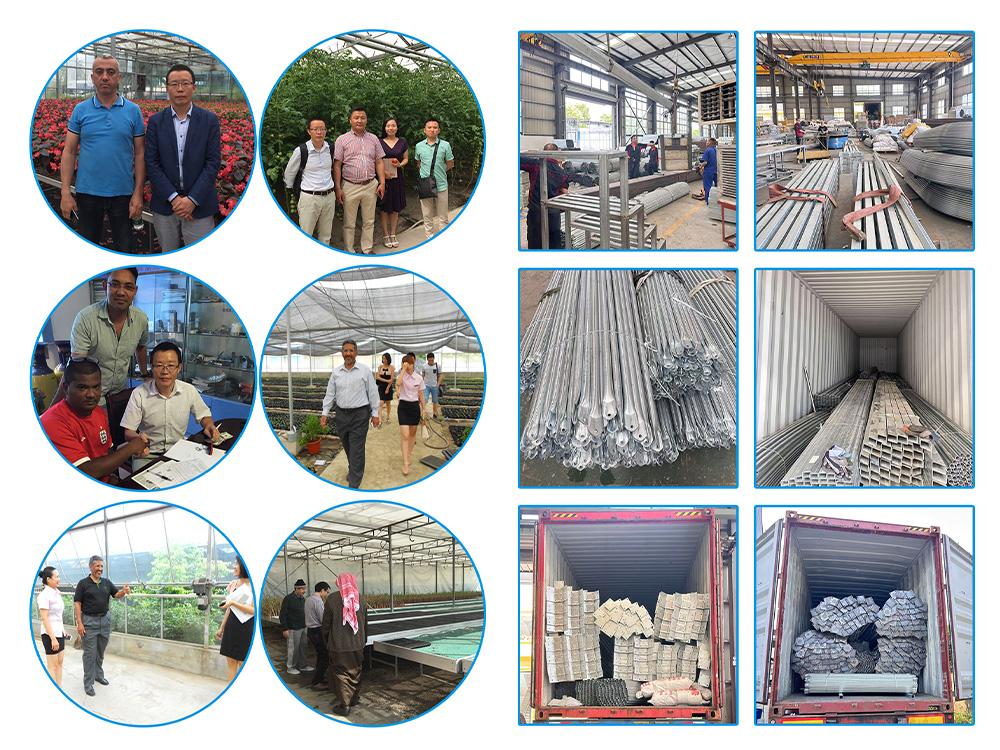
The frame is hot dip galvanized steel. The important detail is how it goes together: every connection is bolted through pre-drilled parts, and there is no welding on site. Welding burns the zinc off around the joint, and that bare patch is where a frame starts to rust, so a bolted structure keeps the coating intact over the whole tube.
Parts are prefabricated to the ordered dimensions and arrive as a kit, which is why assembly is a matter of joining and tightening rather than cutting and fitting. That is also what makes a later extension practical: the same connection pattern is used throughout, so extra bays join the same way the originals did. A kit built on the same principle is described on the year round vegetable greenhouse page.
| Structure | Commercial tunnel, arch frame, hot dip galvanized steel |
| Span | 8 / 9 / 10 / 11 / 12 m |
| Length | 10 m to 100 m, or to order |
| Height | 3 m to 8 m |
| Cover | UV stabilised diffuse polyethylene film, frosted surface |
| Light transmission | 90 to 92 per cent |
| Film properties | Dust proof, anti-fog, anti-drip, anti-aging, anti-mildew, UV block |
| Connections | Bolted, pre-drilled, no site welding |
| Frame service life | More than 10 years under normal conditions |
| Ventilation | Optional natural ventilation on both sides, manual, insect net available |
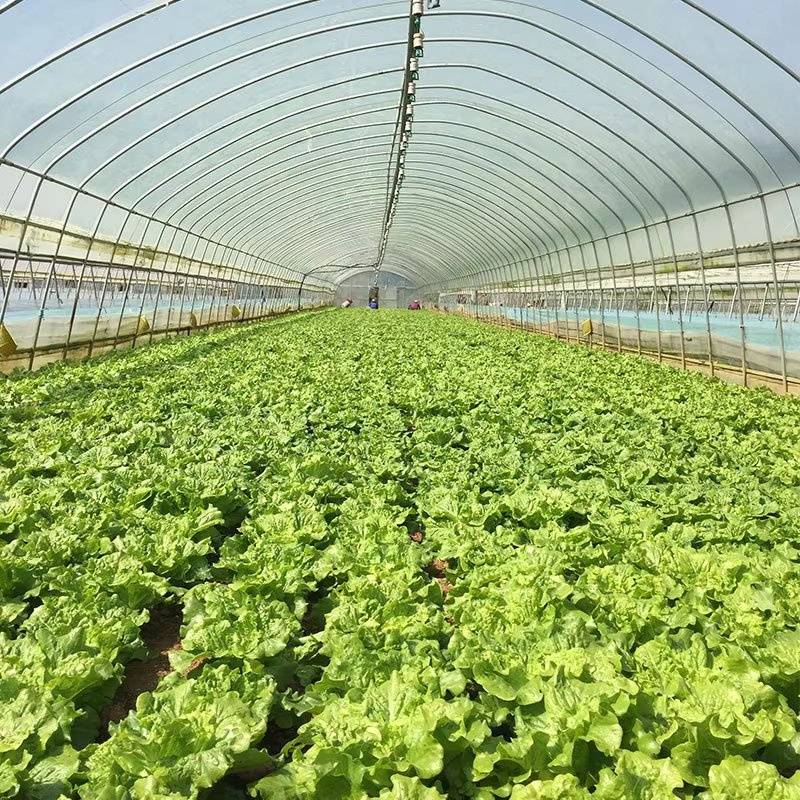
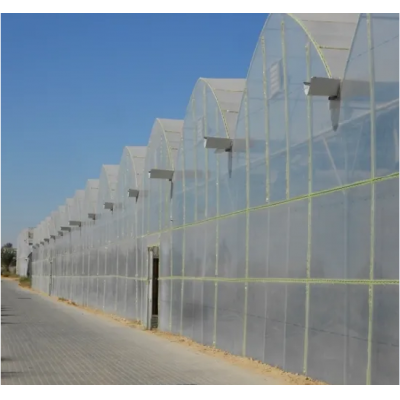
Diffuse light lowers the peak leaf temperature a little, but a tunnel still has to be ventilated or it becomes humid. The standard arrangement is an opening along each side, operated by hand, with insect netting available at those openings so air can move without letting pests in.
In practice the openings are what the grower manages through the day: closed early, opened as the house warms, and closed again before the evening temperature drops. A tunnel that is asked to hold warmth overnight and shed heat at midday is doing both jobs with the same two openings.
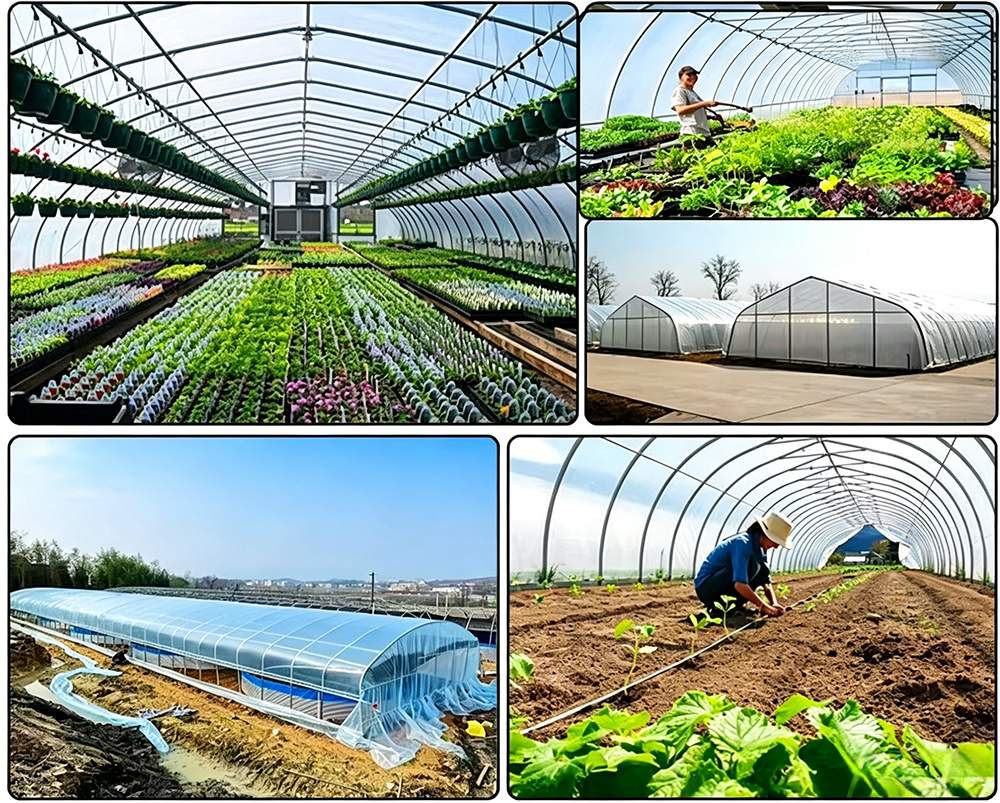
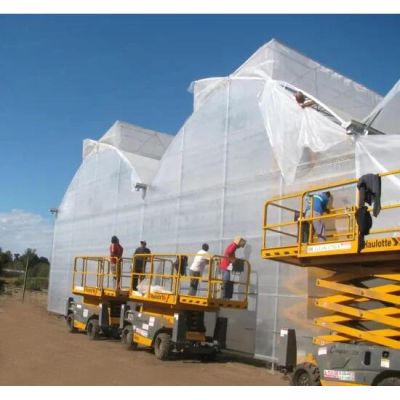
The base is set and levelled, the arches are stood and joined, and the frame is squared before the film goes on. Assembly needs no welding, so the work is bolting and tightening in a fixed sequence, which a small crew can follow from the drawings.
The film is the part that needs attention over time. It is a service item, replaced on a cycle, and the usual failure is at the fixings rather than in the middle of the sheet, so those are worth checking before a windy season. The frame itself is expected to outlast several covers, which is the point of the galvanized pipe and the bolted joints.
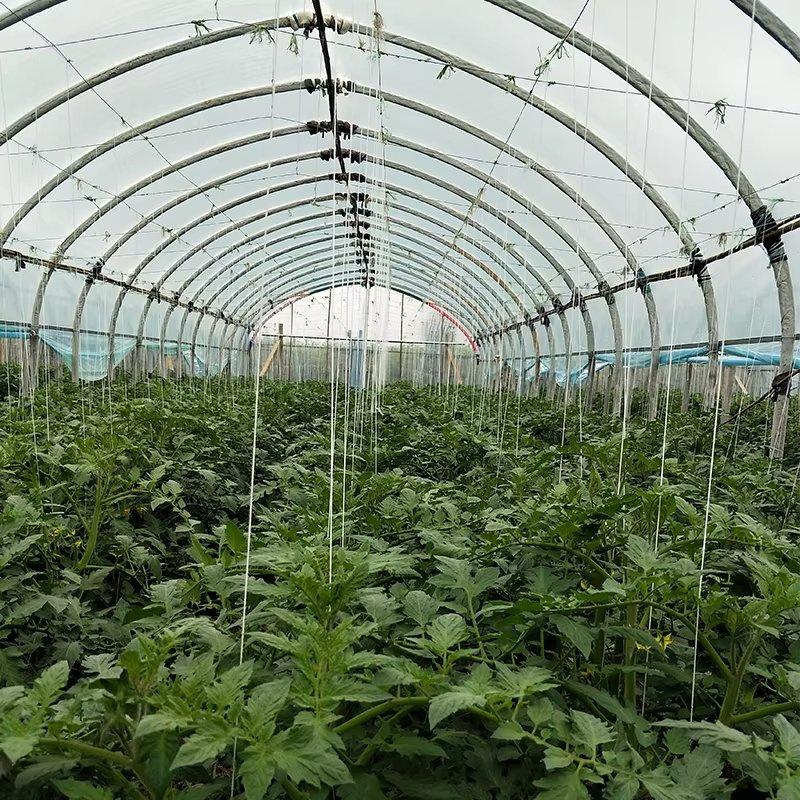
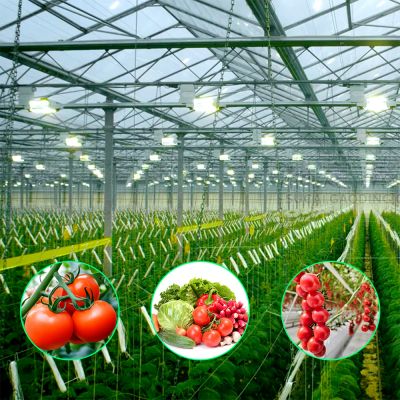
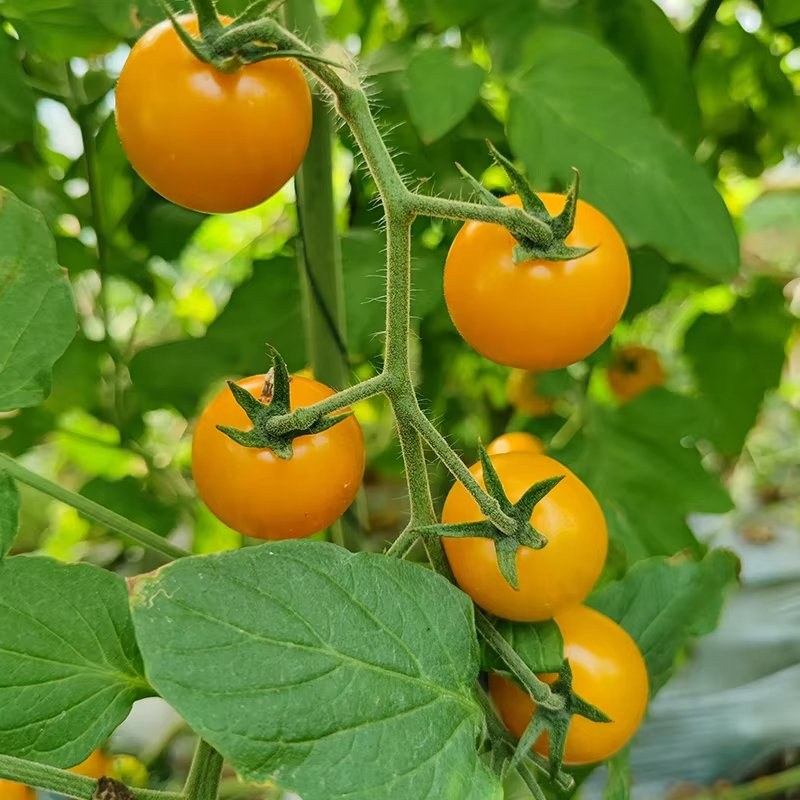
Houses of this type are used for lettuce and leafy crops, for tomato and cucumber, for herbs, and for soft fruit where an even light level matters more than peak intensity. They suit a grower moving from open field to covered production, an operation adding bays to an existing tunnel line, and buyers who want the structure supplied as a kit that matches a site already laid out.
Information on protected crop production is published by Cornell University College of Agriculture and Life Sciences. Farming and agribusiness reporting for growers is published by Irish Farmers Journal. A polycarbonate house of similar span is described on the polycarbonate sheet greenhouse page.
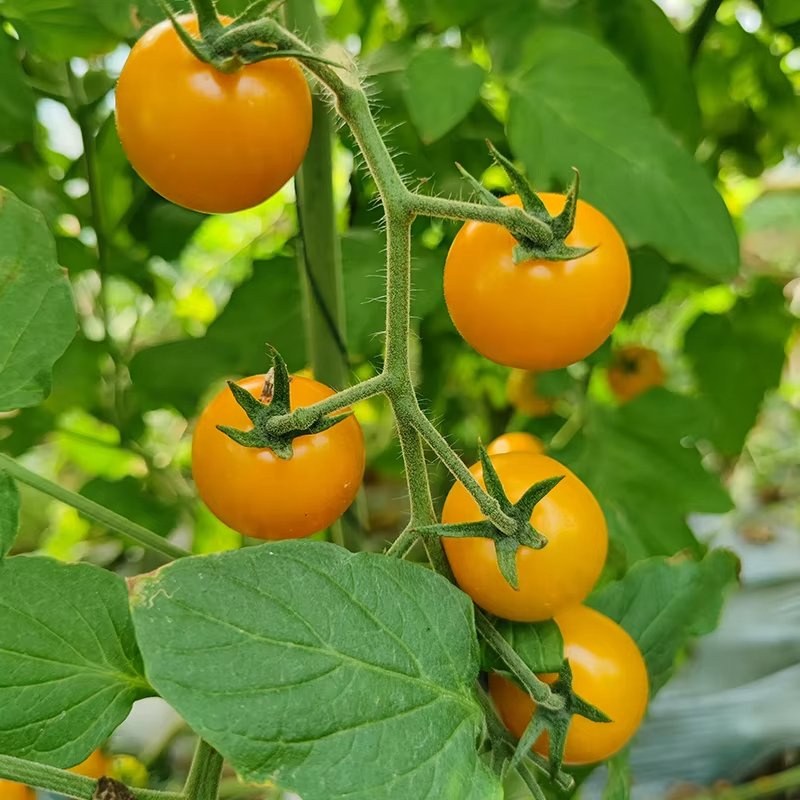
It scatters incoming light instead of passing it straight through, so the crop sees a more even level across the house and less of a hot band under the ridge.
Yes. Natural ventilation on both sides is available as an option, hand operated, and insect netting can be fitted at the openings.
Yes. We customize span width, bay length, gutter height, covering material (film, PC sheet or glass) and ventilation configuration. Share your crop type, local climate and growing area, and our engineers will size the structure to match.
The hot-dip galvanized steel frame carries a 10-year structural warranty covering structural safety, plus a 5-year warranty against corrosion perforation. It is designed for a 15-20 year service life. Film covers carry a 3-5 year UV warranty depending on grade.
Film suits low-cost tunnels on 3-5 year replacement cycles. Glass delivers the highest light transmission and the longest lifespan, at the highest cost. PC sheet insulates better than film and suits cold or high-humidity climates. The right choice depends on climate, crop and budget.
Ziyang Bozong Greenhouse Industry Co., Ltd. is a manufacturer based in Ziyang, Sichuan, China. We produce the hot-dip galvanized steel frame in-house, cutting and drilling to drawing, and supply covering materials, ventilation, cooling and irrigation systems as one coordinated package.