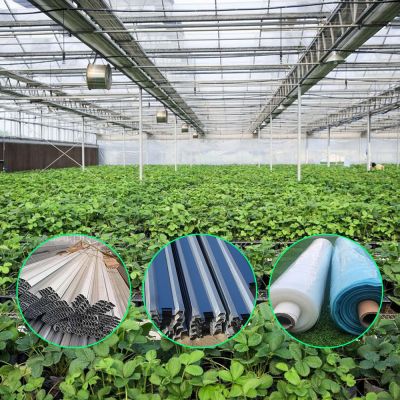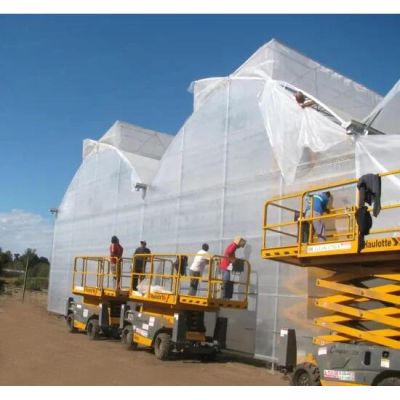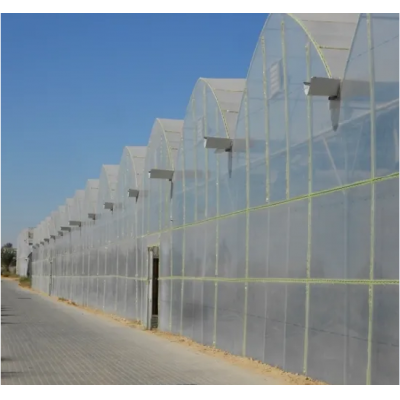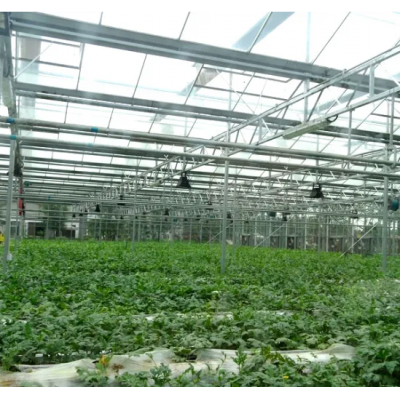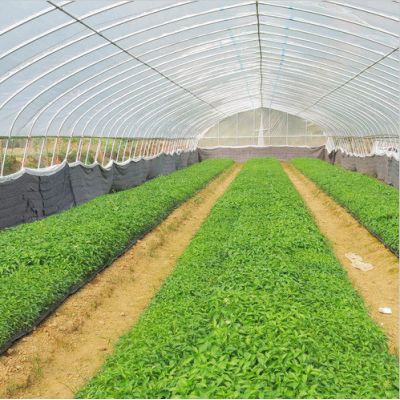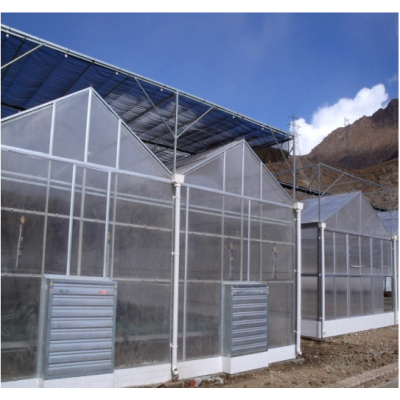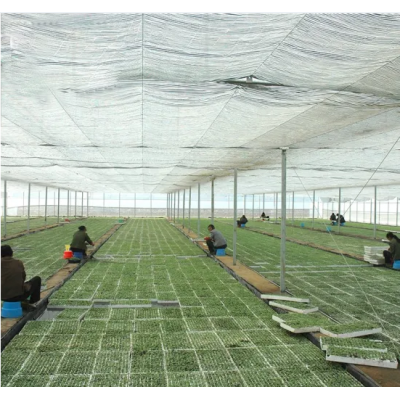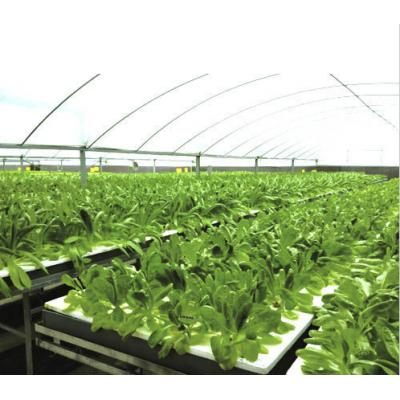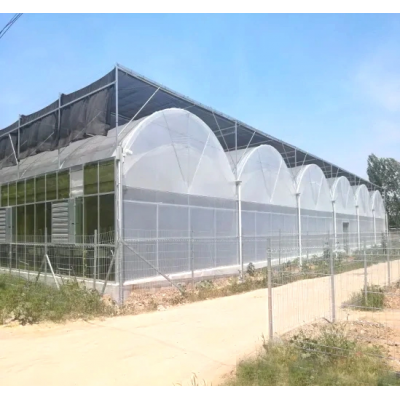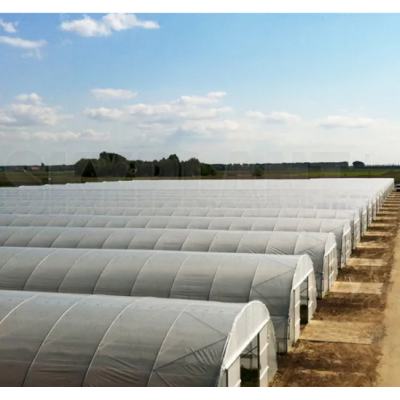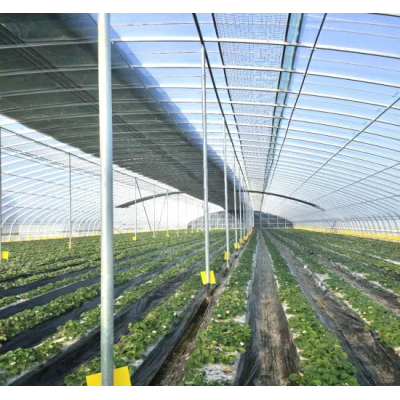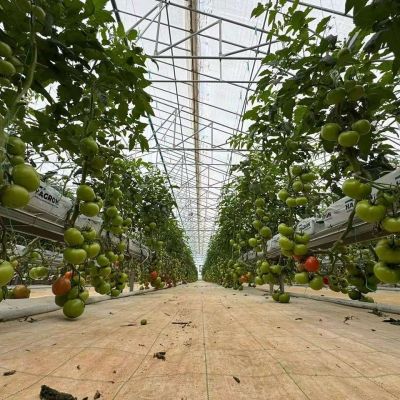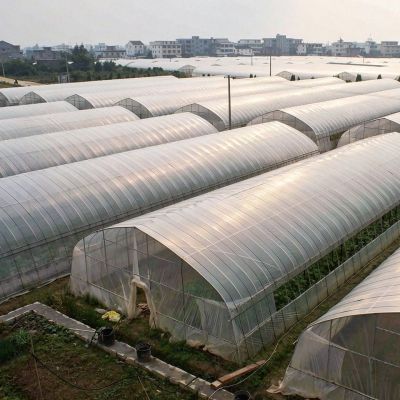


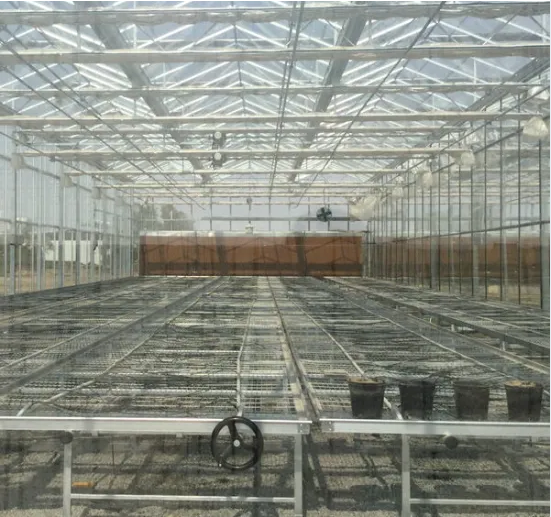


A commercial film greenhouse is a tunnel of polyethylene over a galvanized steel frame, sized to a working farm. Solar radiation warms the plants, soil and structure faster than the heat can leave, and the film and frame hold that warmth around the crop, which is why the same house works in temperate regions much as a glass structure does. Gable spans run from 5 to 10 metres with a total height of 3 or 4 metres, and the covering is 0.08, 0.12 or 0.15 mm polyethylene held with aluminium clips. The frame is bolted rather than welded, so it arrives fully galvanized and is assembled on site with an installation manual and CD.
A commercial greenhouse has to be affordable enough to pay for itself and strong enough to survive the weather on your site. Film tunnels meet both conditions better than any other structure at this scale: the covering costs a fraction of glass or PC sheet, and the galvanized frame underneath has nothing in it that can rot. The house is delivered as a kit, which is what keeps the price down and lets a farm crew put it up themselves.
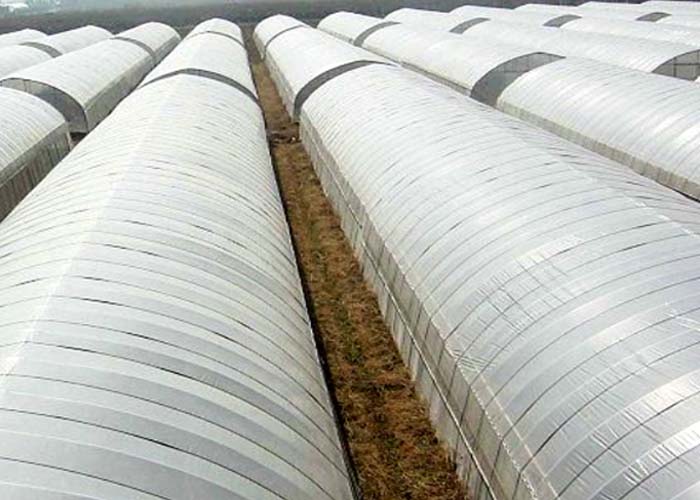
Incoming solar radiation warms the plants, the soil and the structure faster than the heat can escape, and the film and frame hold the warmed air around the crop. Temperature, humidity and ventilation are then controlled by equipment fixed inside the tunnel, which is why a film house is used across temperate regions in much the same way as a glass or film greenhouse. The interior volume is large relative to the covered area, so the crop buffers its own temperature far better than a low tunnel does.
The frame is hot-dip galvanized steel pipe with a zinc coating of 275 g/m², assembled as a non-welded structure so no joint is left unprotected. Gable spans run from 5 to 10 metres, with a total structure height of 3 or 4 metres, and the roof is an arch type. The covering is polyethylene of 0.08 mm, 0.12 mm or 0.15 mm, held with aluminium clips. Wind load and snow load are both rated at 0.35 kN/m², and the structure is built for wind speeds of 90 to 100 km/h.
Three layouts cover most farm requirements: 6 m x 40 m, 8 m x 30 m and 9.6 m x 16 m, with the 9.6 m version available with a top vent. Lengths are normally supplied in multiples of 4 metres so the house can be matched to the plot rather than the other way round. A door unit can be specified as an option, and the package ships with a well engineered structure, test reports and an installation manual with CD for a do-it-yourself build. Growers who want a heavier specification for exposed sites usually step up to the heavy duty polytunnel greenhouse, and the same geometry in other widths is covered by the tunnel greenhouse range.
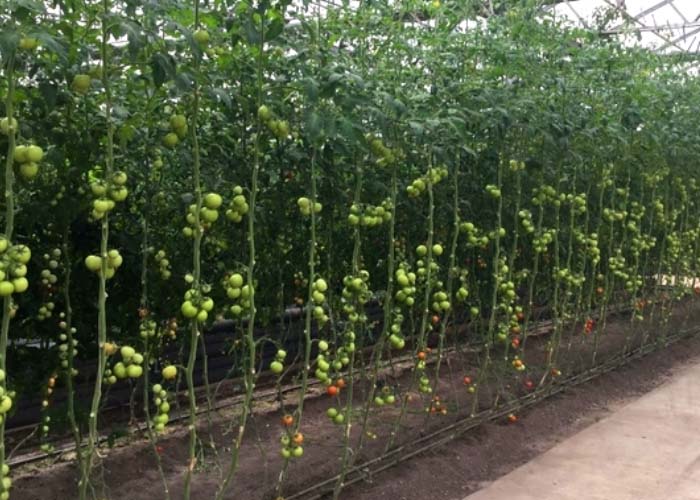
Ventilation is by side-wall openings covered with insect nets and roll-up curtains, operated manually or electrically. Maintenance is mostly a matter of routine: check the fixture connections and re-tighten any loose wedge immediately, replace or patch torn film promptly, close all vents and tension the film line before strong wind, and clear snow as soon as it settles to prevent overloading. Where severe weather is expected, temporary stays against the arch add extra support, and someone should be responsible for the house through the storm. Loose, damaged or missing fittings should be reordered in time, and parts should be stored dry and ventilated between seasons to avoid deformation.
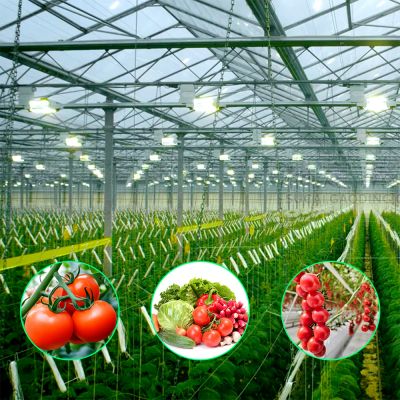
These houses carry vegetables, flowers and nursery stock, and they are usually the first structure a grower buys before upgrading to a wider span. Buyers who want the kit form with a faster build can compare the prefab greenhouse kit. Guidance on protected cultivation is published by AIPH, the international grower association, and commercial greenhouse practice is covered by GrowerTalks.
Three layouts cover most requirements: 6 m x 40 m, 8 m x 30 m, and 9.6 m x 16 m with a top vent. Lengths are supplied in multiples of 4 metres, so the house can be matched to your plot. Tell us your growing area and crop and we will recommend the combination.
The frame is hot-dip galvanized steel pipe with a 275 g/m² zinc coating and is assembled without welding, so no joint is left bare. Wind load and snow load are rated at 0.35 kN/m² and the structure is built for wind speeds of 90 to 100 km/h.
The hot-dip galvanized steel frame is designed for a 15-20 year service life in normal agricultural environments, with a double-sided zinc coating of 200-275 g/m². Film covers are replaced every 3-5 years, while glass and PC panels carry their own manufacturer warranties.
The hot-dip galvanized steel frame carries a 10-year structural warranty covering structural safety, plus a 5-year warranty against corrosion perforation. It is designed for a 15-20 year service life, and film covers carry a 3-5 year UV warranty depending on grade.
Send your plot dimensions, the crop and your local wind and snow conditions. With that we can recommend the span, the covering thickness and the venting arrangement, and return a quotation with a structure drawing and a bill of materials.