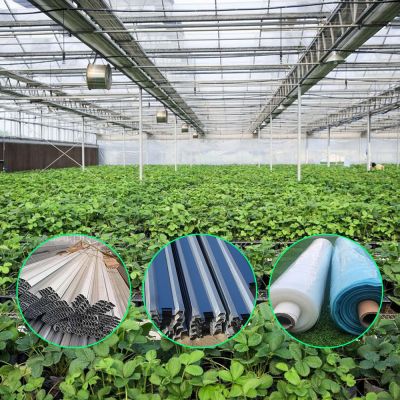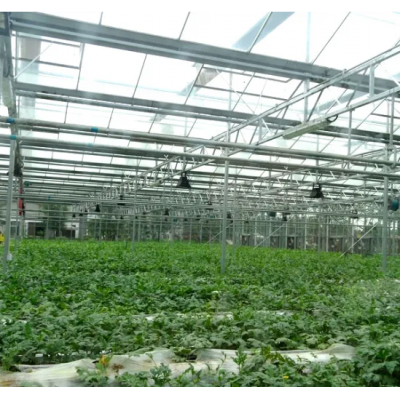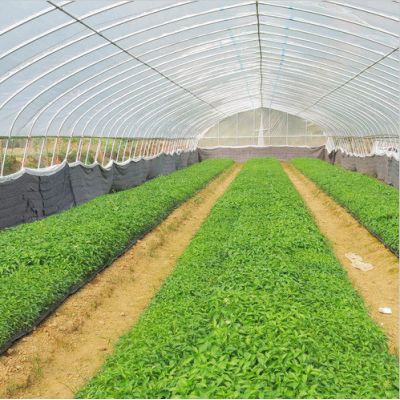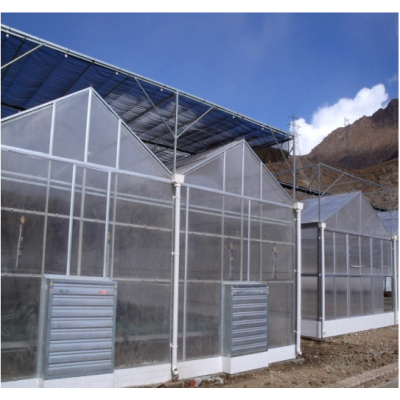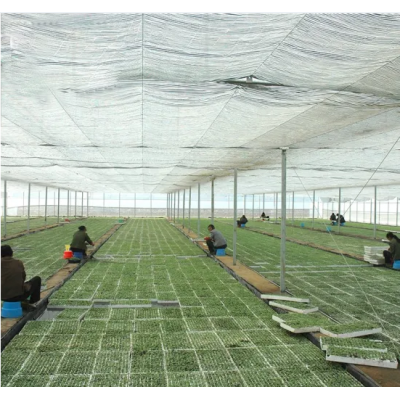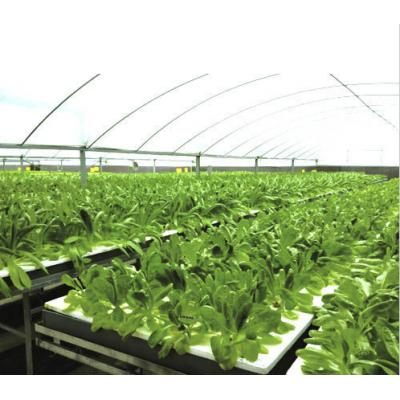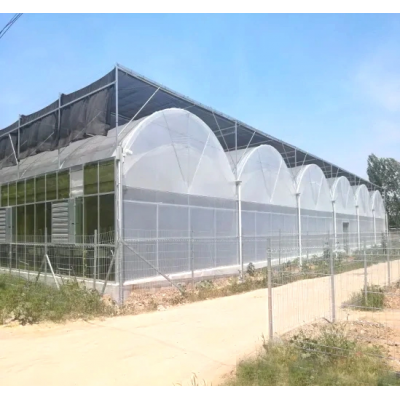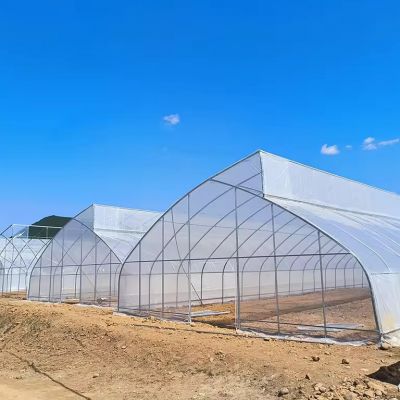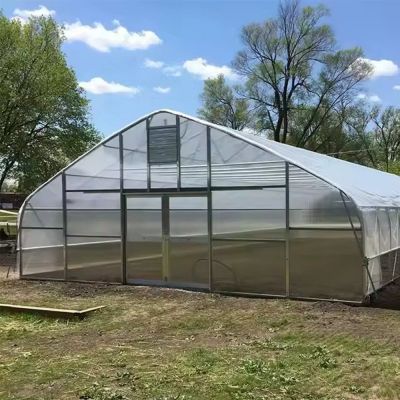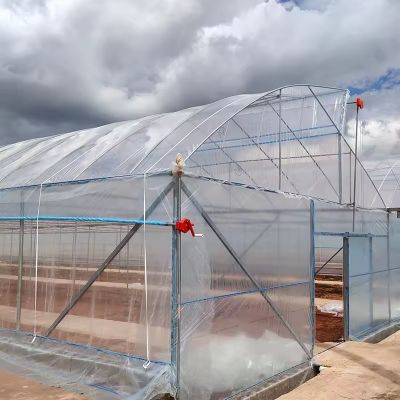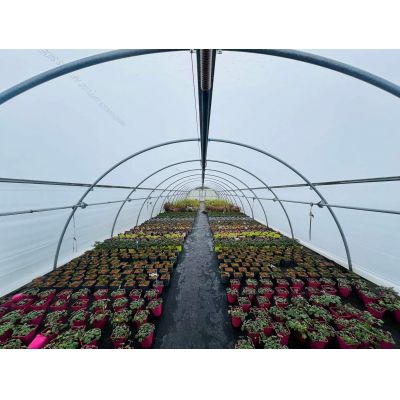


This tunnel greenhouse is a galvanized steel hoop house covered with polythene film, the structure most growers use for seasonal vegetable and fruit production. The frame is made from zinc-coated steel tube with a non-welded assembly, so the arches bolt together and the house can be moved or extended if the rotation changes. Spans run from 5 to 10 metres with a 3 or 4 metre structure height. The cover is 0.08 mm, 0.12 mm or 0.15 mm polythene held with aluminium clips, and ventilation comes from side-wall openings covered by insect net and roll-up curtains, operated by hand or by motor. Roof and side vents together keep the internal temperature workable through the growing season.
This tunnel greenhouse is a galvanized hoop house with a polythene film cover, the structure most growers use for seasonal vegetable, fruit and cut flower production. A tunnel house warms the air inside because incoming solar radiation heats the plants, soil and surfaces faster than the heat can escape through the film, and the warmed air is then held by the cover. That effect extends the growing season at both ends of the year at a fraction of the cost of a glass or polycarbonate house, which is why tunnels remain the workhorse structure on vegetable farms.
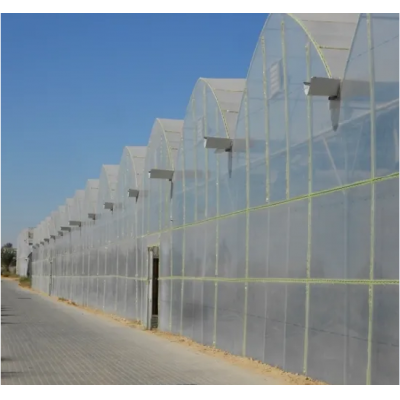
The frame is zinc-coated steel tube built as a non-welded assembly, so the arches and purlins bolt together on site and the house can be extended in bays or moved to a new plot if the rotation changes. Spans run from 5 to 10 metres with a structure height of 3 or 4 metres, and the recommended footprints include 6 m by 40 m, 8 m by 30 m and 9.6 m by 16 m, all in multiples of 4 metres so bays line up cleanly. The cover is polythene film in 0.08 mm, 0.12 mm or 0.15 mm thickness, held with aluminium clips along the frame rather than stapled. Wind load is rated to 90-100 km per hour, and the tube carries a 275 gsm zinc coating.
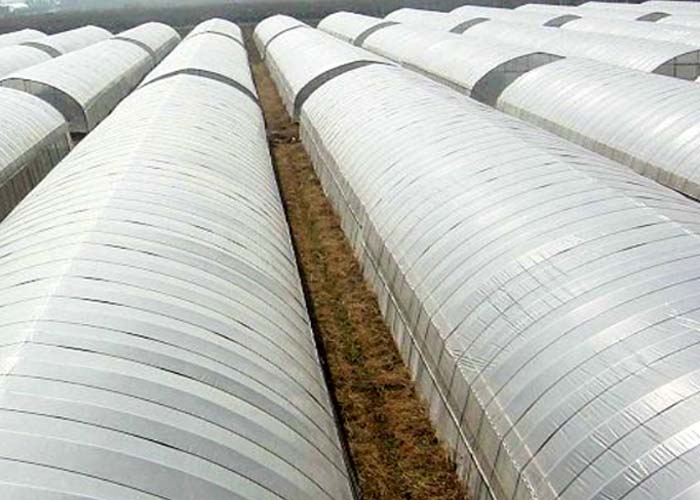
| Structure | Zinc-coated steel tube, non-welded assembly |
| Cover material | Polythene film, 0.08 / 0.12 / 0.15 mm |
| Span options | 5 to 10 metres |
| Structure height | 3 or 4 metres |
| Roof type | Arch roof |
| Ventilation | Side-wall openings with insect net and roll-up curtains, manual or electric |
| Service life | Structure 15-20 years, structure warranty 10 years, anti-corrosion warranty 5 years |
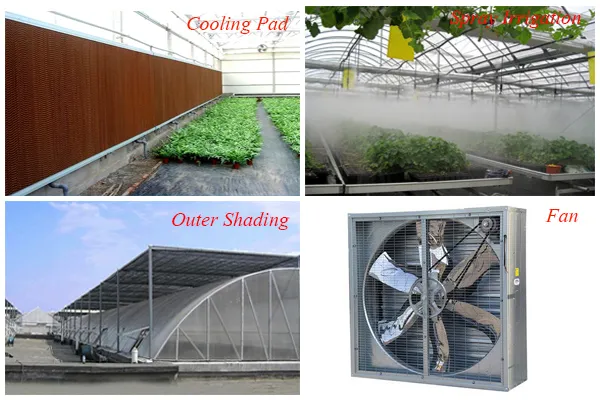
| Optional systems | Cooling, heating, irrigation, ventilation, shading, benching |
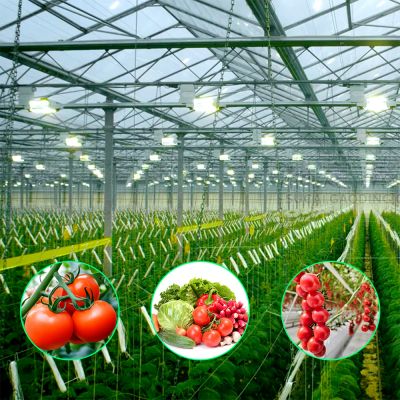
A high tunnel greenhouse lives or dies on its ventilation, because the same cover that holds heat at night can cook a crop at midday. Side-wall openings covered by insect net and roll-up curtains are the standard answer: the curtain rolls up to open the wall and drops to close it, either by hand or with an electric motor, and the insect net keeps pests out while the opening is wide. Roof vents along the ridge add a second path for warm air to leave. Working the two together lets you shift a lot of air quickly on a hot day while keeping the house closed at night. Temperature, humidity and ventilation can all be driven by equipment fixed inside the tunnel.
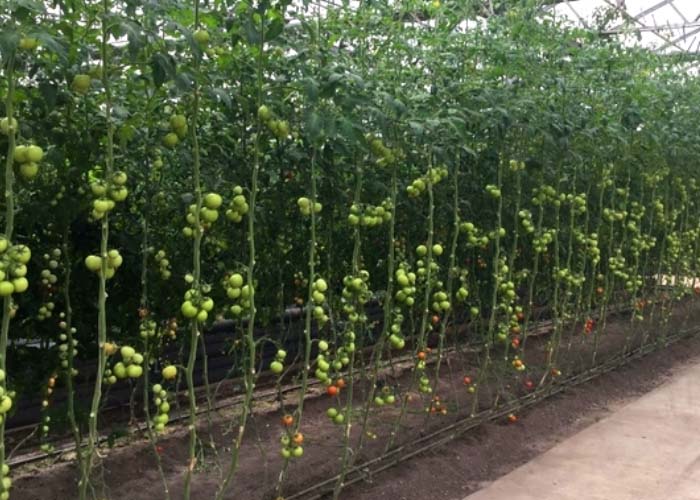
Greenhouse life depends on proper use and careful maintenance, and the routine is short. Check the frame connections at regular intervals and re-tighten any loose wedge or clamp as you find it. Repair or replace film that has torn rather than leaving a gap, since a small tear grows quickly in wind. In windy weather keep vents closed and check the film lamination lines, and after snow, clear the cover so the load does not build up on the arches. Keep the frame parts sorted and stored dry when the house is moved or taken down, so corrosion and deformation do not shorten the service life. Accessories, doors and replacement film are available from the factory when needed.
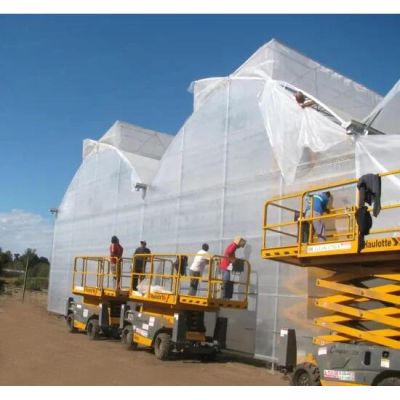
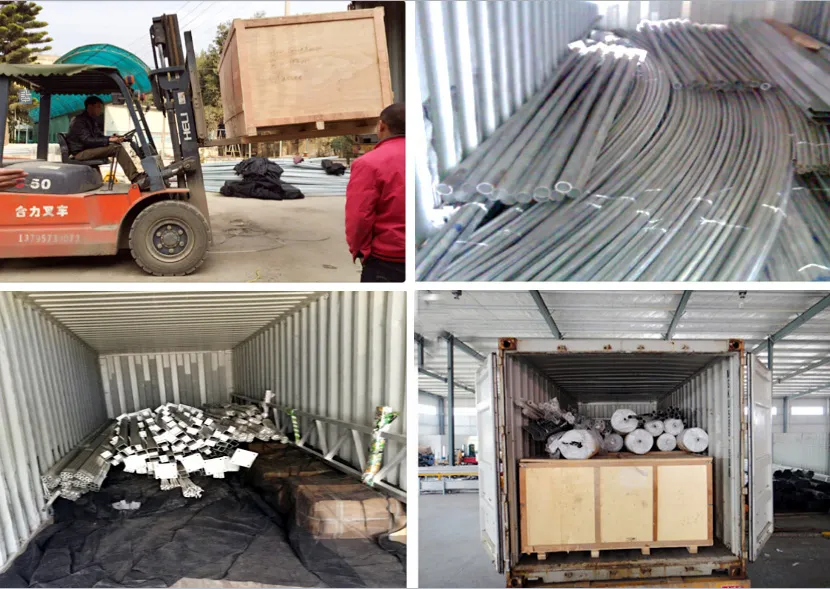
The house ships as a metal frame package with the film cover, aluminium clips, door unit and installation notes, and the manual can be supplied so the build can be done as a do-it-yourself kit. Steel sections are bundled and labelled against the assembly drawings, and the film is rolled for container loading. Our engineering team supplies drawings and guidance through the build, and where a customer wants support on site we can send engineers to guide installation.
They describe the same structure. A tunnel greenhouse, hoop house, polytunnel and high tunnel all refer to a frame of arched hoops covered in polythene film, with the terms used differently by region.
Film life depends on thickness and UV grade, and the cover is replaced on its own without touching the frame. Standard thicknesses are 0.08 mm, 0.12 mm and 0.15 mm.
Yes. The frame is a non-welded assembly, so it can be taken down and re-erected on a new plot when the crop rotation changes.
Side-wall openings covered by insect net and roll-up curtains are standard, operated by hand or by electric motor, and roof vents along the ridge can be added for extra air movement.
Yes. A door unit is available as an option, and replacement film, clips and other accessories can be supplied from the factory when they are needed.
Compare this house with our greenhouse with plastic film, the multi span agricultural greenhouse and our steel greenhouse structure for other frame and covering options.
For high tunnel practice and vegetable production references, see the United States Department of Agriculture and Produce Grower magazine on protected cropping practice.