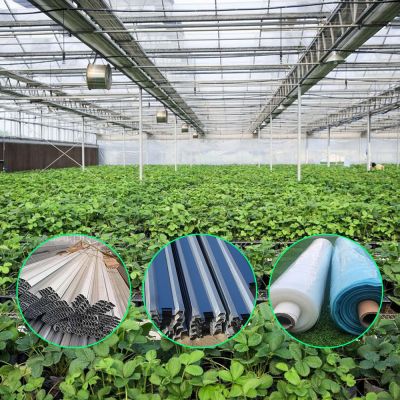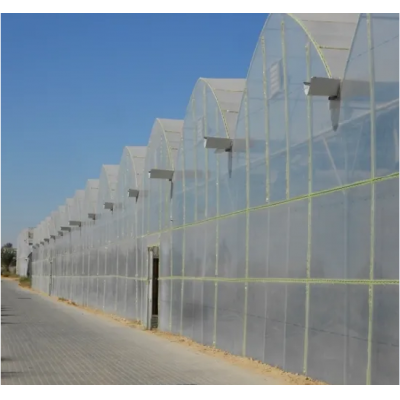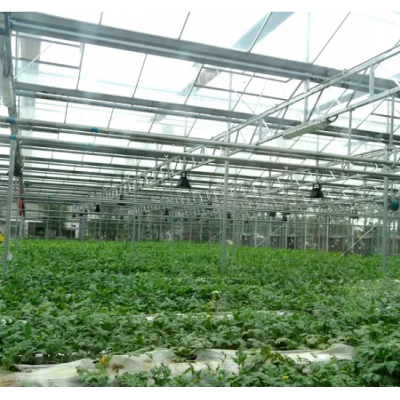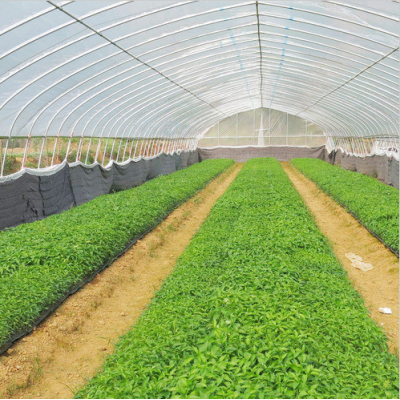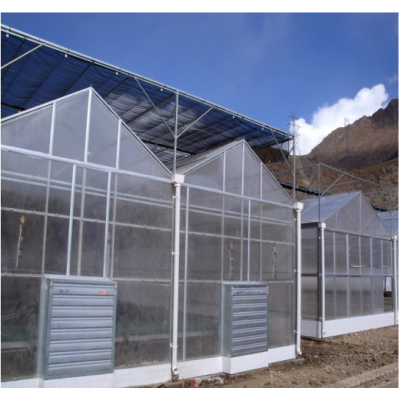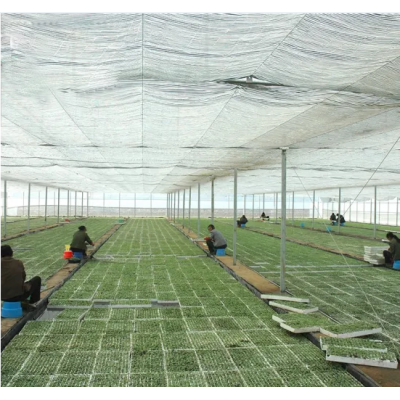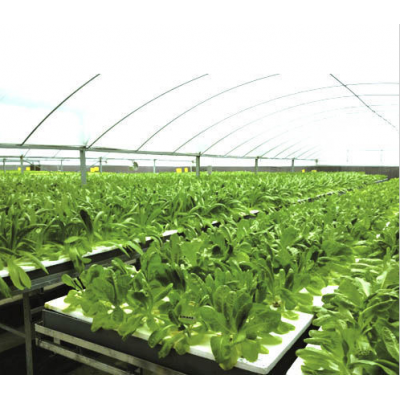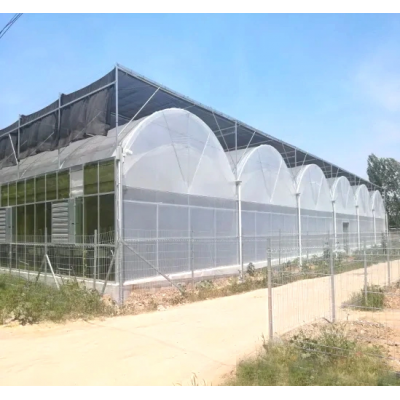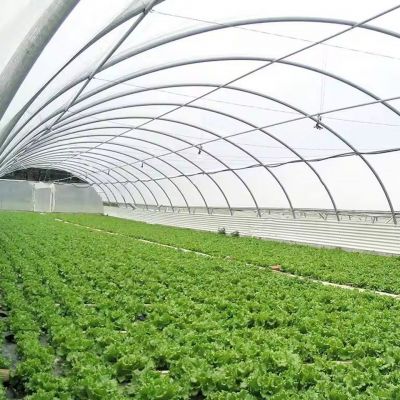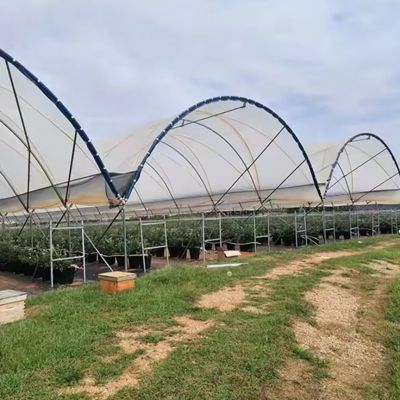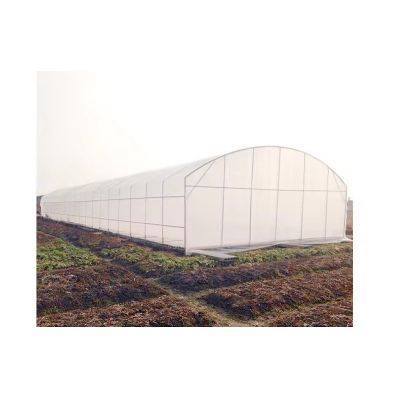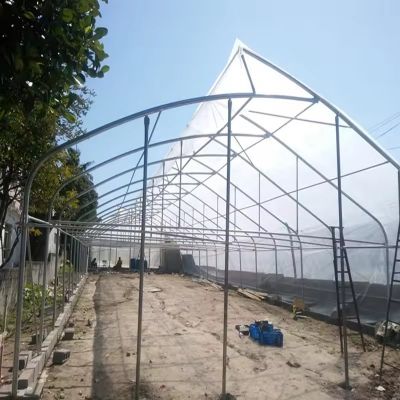
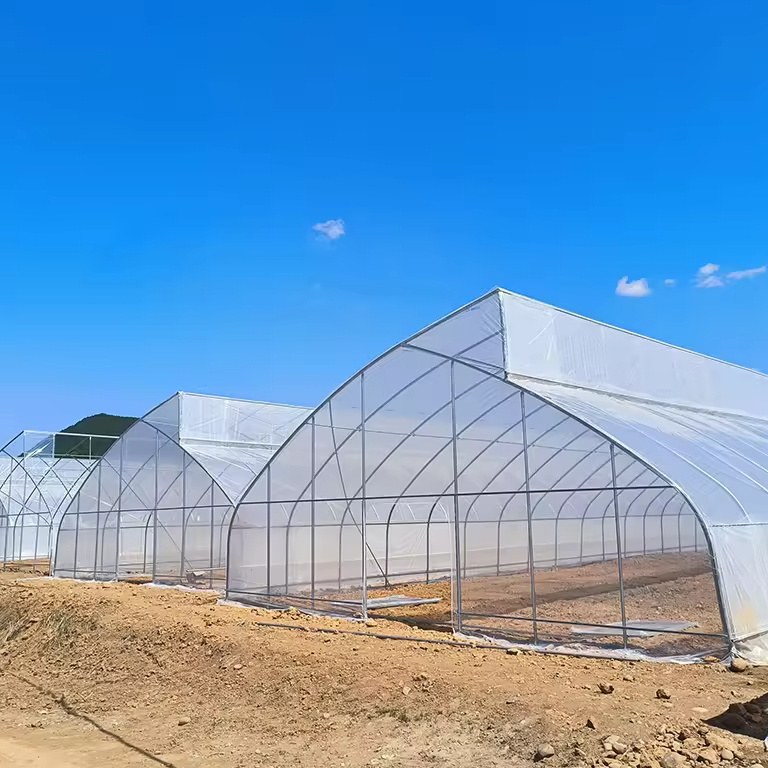
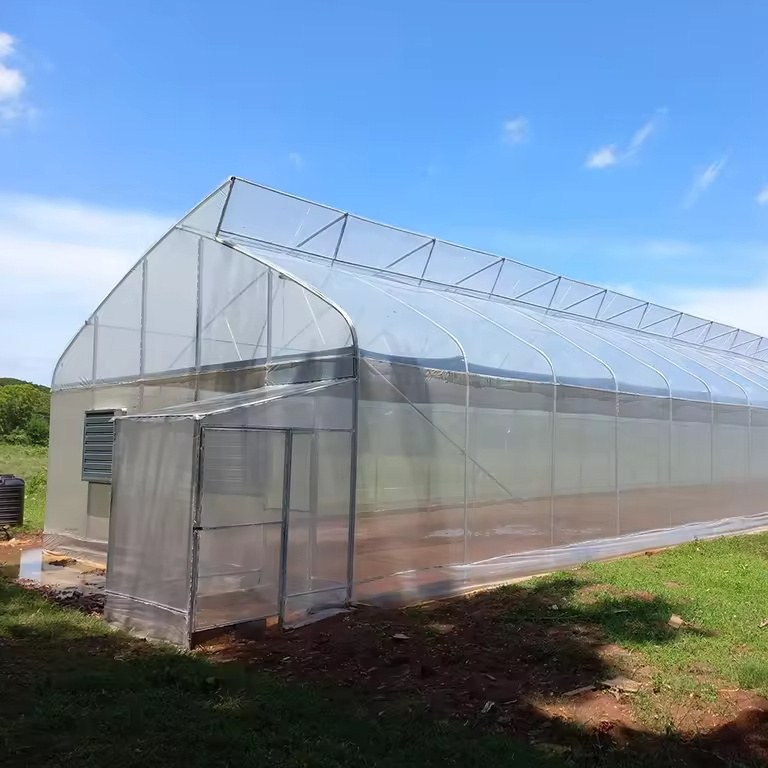
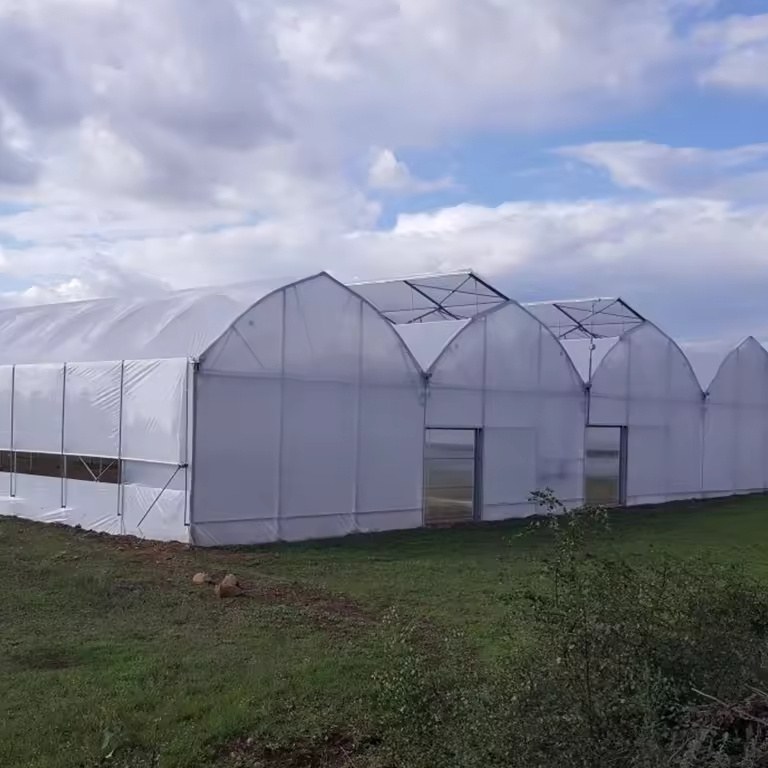
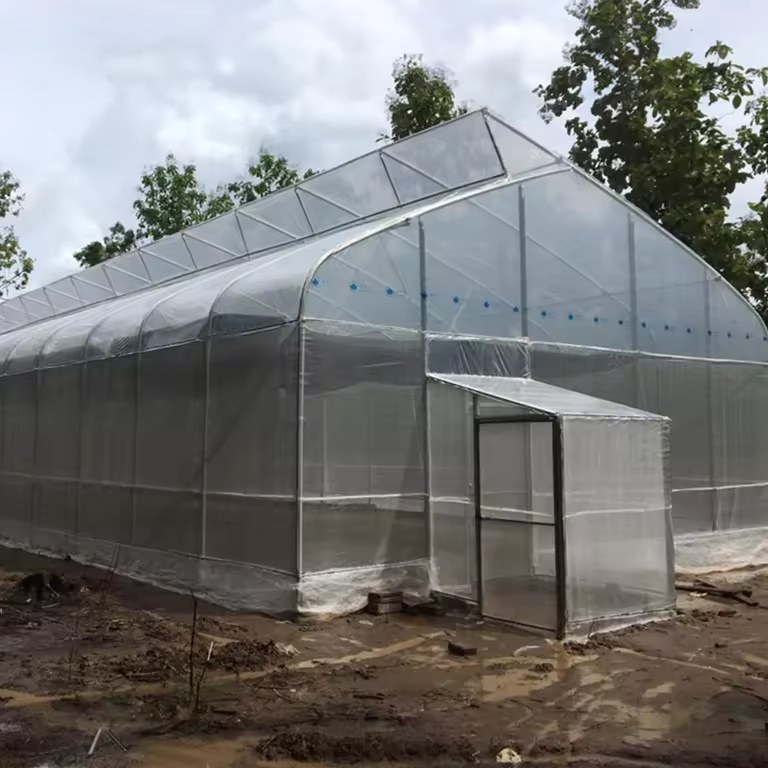
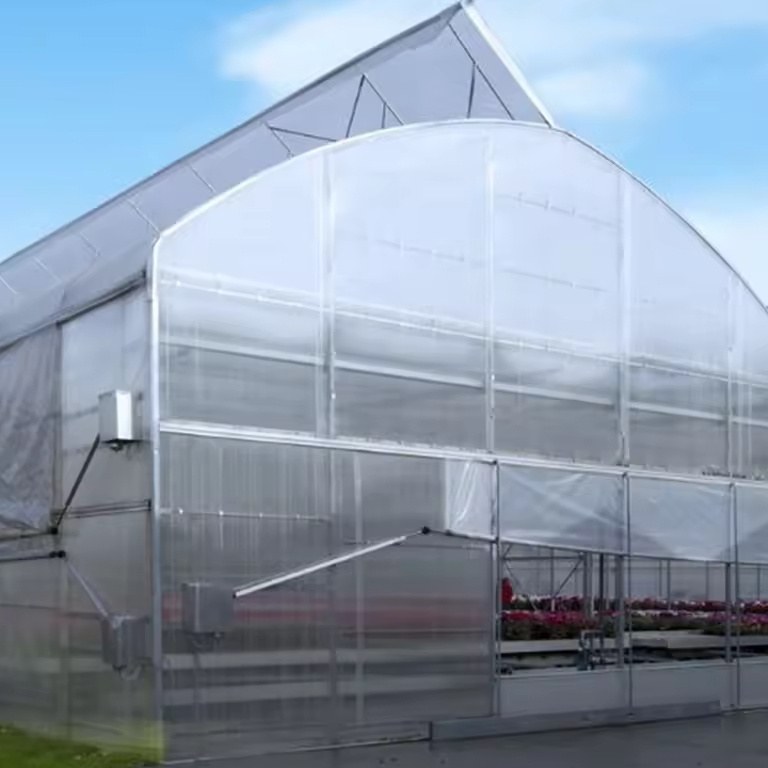
The house is designed around airflow rather than insulation, because in a hot humid climate the limit is heat and stale air rather than cold. A raised roof section opens along the ridge so warm air leaves continuously by buoyancy, and side curtains exchange the layer the canopy actually occupies; the two together move air through the bay instead of only stirring it near the vent. The frame is hot galvanized steel pipe covered with PE or PO film, in a single span that keeps the width clear of posts. Spans run 8 m to 12 m and length from 10 m to 100 m.
In a tropical or warm humid climate a greenhouse is not built to keep heat in. It is built to keep rain off and pests out while still letting the heat that builds up under the roof leave. That is a ventilation problem before it is a covering problem, and it is where most film houses in hot regions fall short.
Heat collects in the layer of air just under the ridge, because that is where the air that has passed over the crop arrives. If there is no opening at that height, the house holds it all day and the crop closes down in the afternoon. The second problem is humidity: in a humid climate the canopy stays wet for longer after rain or irrigation, and a wet canopy at night is where fungal disease starts. Both are answered by openings placed at the right heights rather than by more opening area.
With a single span, the whole width is clear of posts, so air moves across the bay without breaking up around a column. The wider tunnel family is listed on the tunnel greenhouse range page on this site.
A raised section along the roof line opens upward above the ridge, and because warm air inside is lighter than the air outside it leaves through that opening without a fan. The opening runs continuously along the house rather than at intervals, so the exhaust is spread over the length of the building instead of concentrated at one point.
The side openings then supply the replacement air at crop level and complete the flow across the bay. Running the ridge vent and the side curtain together is what turns a house from a container that traps heat into one that exchanges it through the day. Where a site needs more than natural ventilation can give, a pad and fan cooling set is added on the same frame. A house built around the ventilation side of the same problem is described in the greenhouse with a full ventilation system.
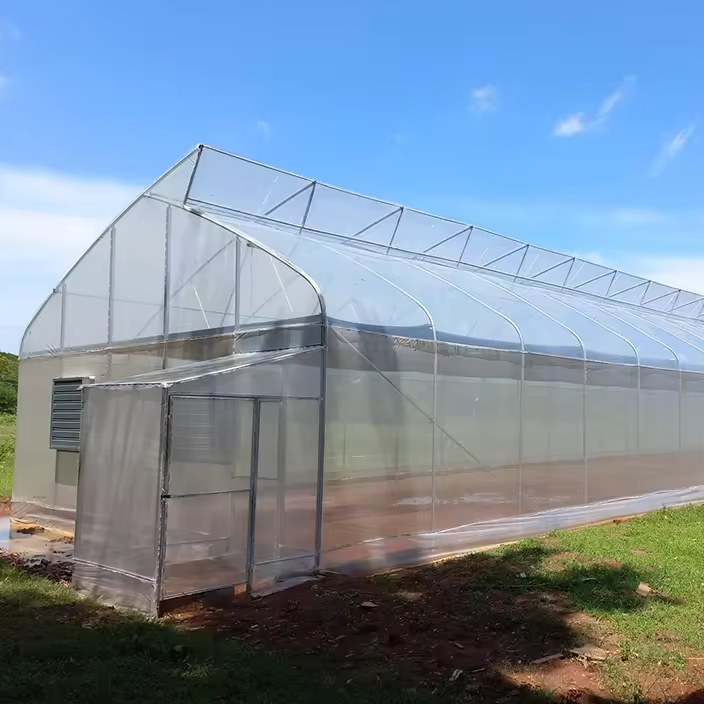
The frame is hot galvanized steel pipe, galvanized after forming so the zinc reaches the bore, the cut ends and the wall of every drilled hole, and the house is rated for a maximum wind speed of 120 kilometres per hour with a snow load of 0.5 kN per square metre. Sections are bolted rather than welded on site, so the coating survives assembly and a bent hoop is unbolted and replaced rather than cut out.
The cover is PE or PO film at 120 to 200 micron, held on clips along the hoops and the base rail, with 40 mesh insect net available in the side openings. In a humid climate the net does two jobs: it keeps the openings open for longer without letting the crop be attacked, and it lets the house be vented through a rainy period instead of being closed up. A sawtooth profile house with side ventilation is described in the sawtooth single span house with side ventilation.
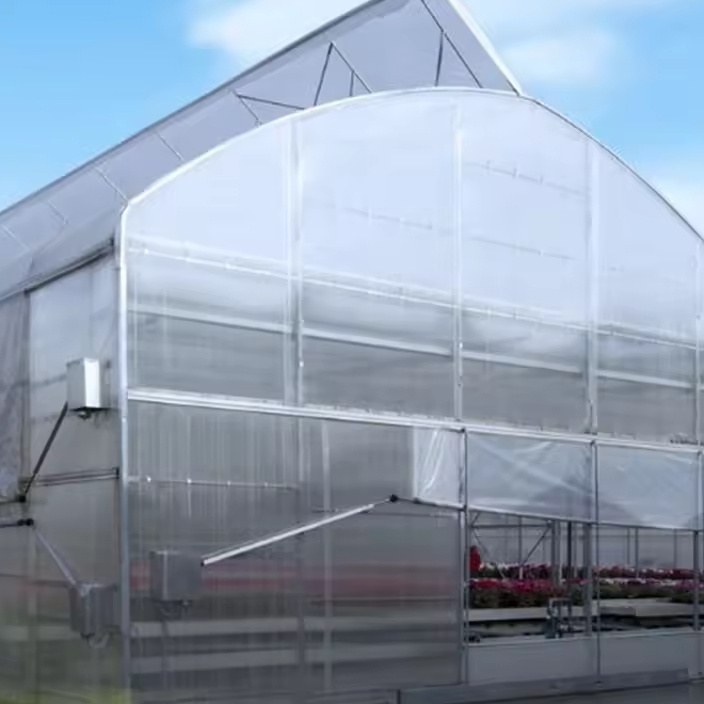
The table below is the standard build. Width, length, height, cover and ventilation are set to the site and to the crop.
| Greenhouse span | 8 m / 9 m / 10 m / 11 m / 12 m |
| Available widths | 8 m standard; 6 m / 7 m / 9 m / 10 m, or custom |
| Greenhouse length | 10 m to 100 m, or built to client demand |
| Common block sizes | 30x8 m / 40x8 m / 50x8 m / 60x8 m / 100x8 m |
| Shoulder height | 1.3 m or 2 m, or custom |
| Roof height | 3.3 m or 3.5 m, or custom |
| Structure material | Hot galvanized steel pipe, bolted assembly |
| Cover material | PE or PO film, 120 / 150 / 180 / 200 micron; PC board 6 or 8 mm |
| Ventilation | Raised ridge vent section plus side openings; 40 mesh insect net optional |
| Cooling | Fan and pad cooling system optional |
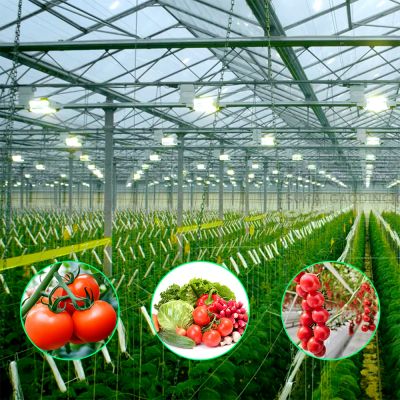
| Crops | Tomato, cucumber, leafy vegetables, flowers and herbs |
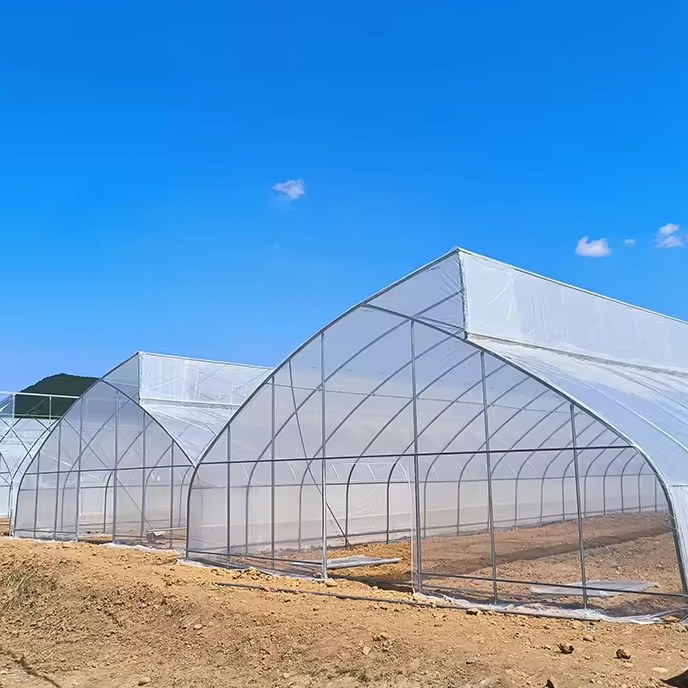
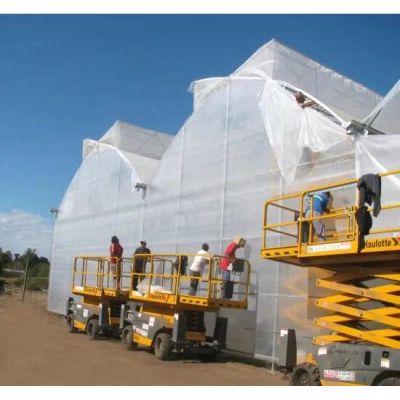
The kit arrives pre formed and drilled with the fittings, so the work on site is bolting and tensioning rather than fabrication, and no welding is done at any point. Ground posts or a base rail go in first and are set to the drawing, the arches and the raised ridge section go up together because the vent is part of the frame geometry rather than an addition, and the film is pulled over last.
Maintenance in a hot climate is mostly about the openings and the water. The ridge vent, the side curtains and their gear are the working parts, so they are checked and greased before the season turns. Film tension is checked after the first season and the cover renewed on a planned cycle. In a region with heavy rainfall the gutters, downpipes and the drainage outside the wall matter more than they do in a dry one, because a blocked outlet backs water into the bay rather than away from it.
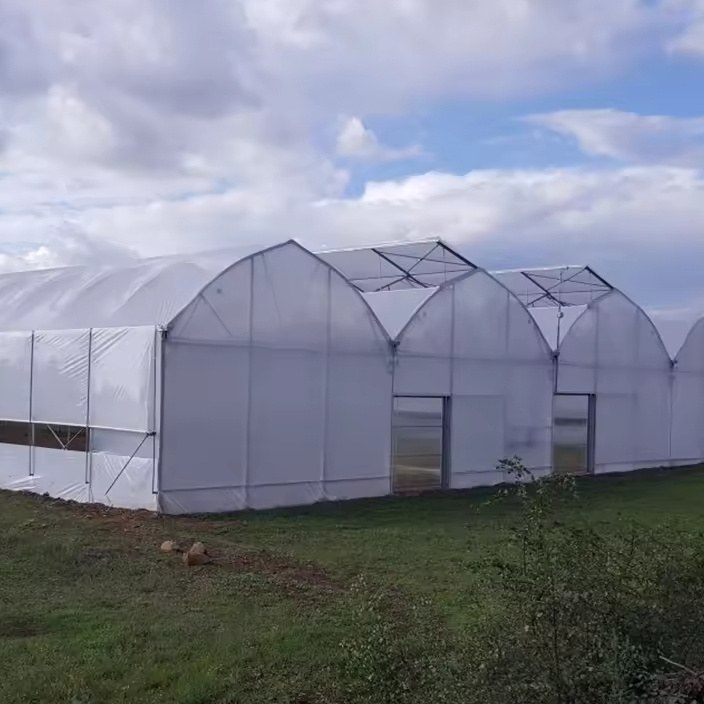
Houses of this type are used for tomato, cucumber and leafy vegetable production, for flowers and herbs, and for nurseries working through a hot wet season. They suit growers in tropical and warm humid regions who need rain protection and pest exclusion without a house that holds the heat of the afternoon, and operations that may add pad and fan cooling to the same frame later.
Research and extension material on protected crop production, including work on the growing environment and on ventilation under cover, is published by Cornell University through its horticulture section. Production and market reporting for commercial greenhouse growers is published by Greenhouse Grower. The question that decides the specification is normally the crop the house will be running in ten years, not only at handover.
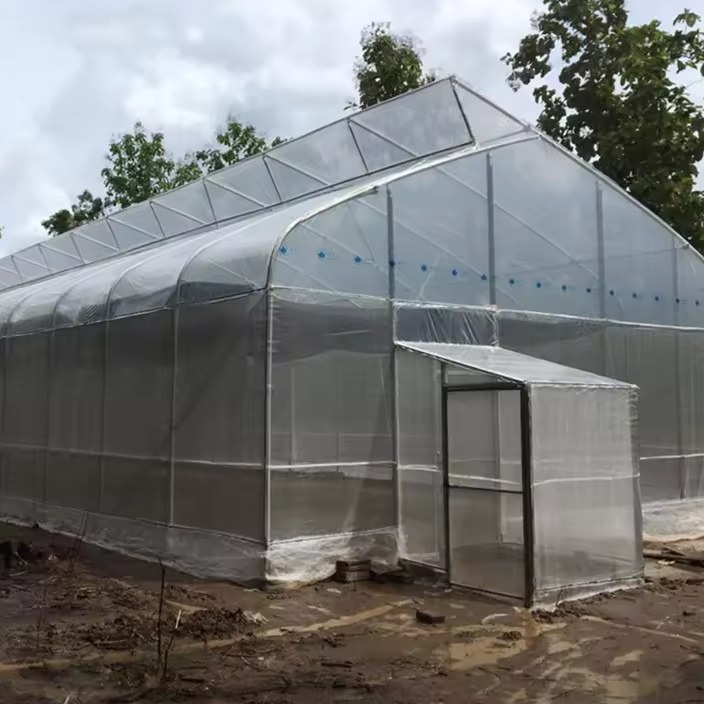
By buoyancy. Warm air inside the house is lighter than the air outside, so it rises and leaves through the opening above the ridge, and cooler air is drawn in through the side openings to replace it. That keeps the house venting through a power failure, which a fan system will not do.
Yes, and it matters more in a warm climate, not less. The openings have to stay open for long periods to move the heat out, and net allows that without the crop being exposed. It also lets the house be vented during a rainy spell instead of being closed up.
The galvanized steel frame is rated for 15 to 20 years under normal growing conditions. The film cover runs on a shorter cycle than the frame, typically 3 to 5 years depending on UV exposure at the site.
We provide a 10 year structural warranty and a 5 year anti-corrosion warranty on the galvanized frame. Details are set out in the contract for each project.
Send your site dimensions, the crops you plan to grow and your local wind, snow and rain figures. We reply with a layout drawing and a full quotation.