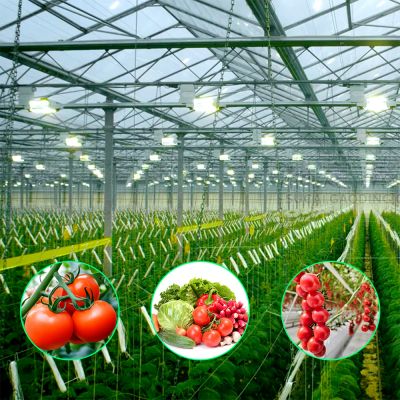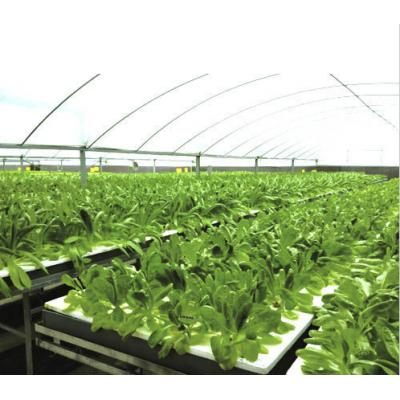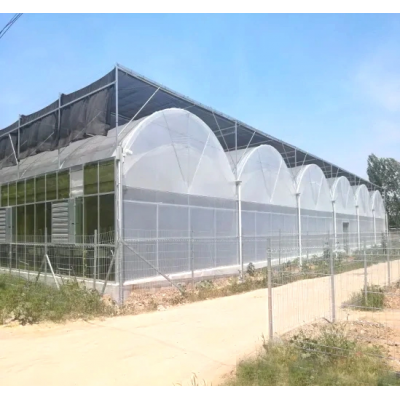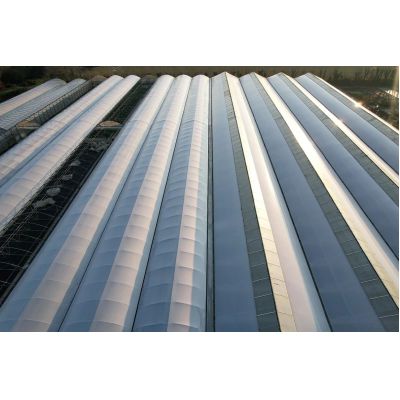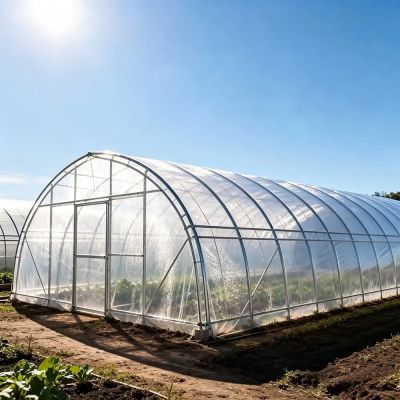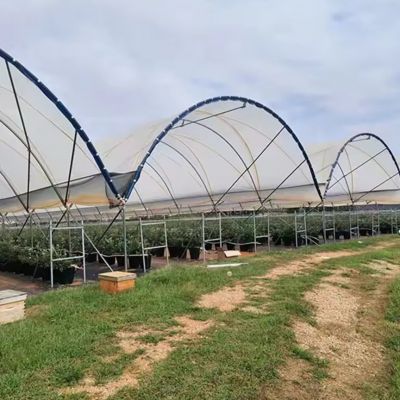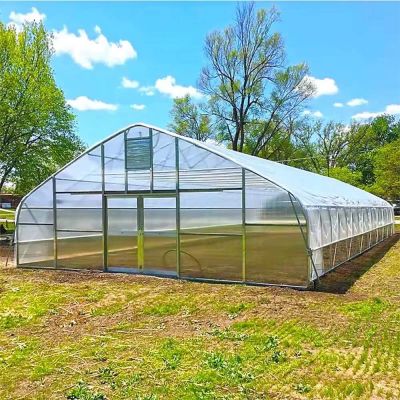
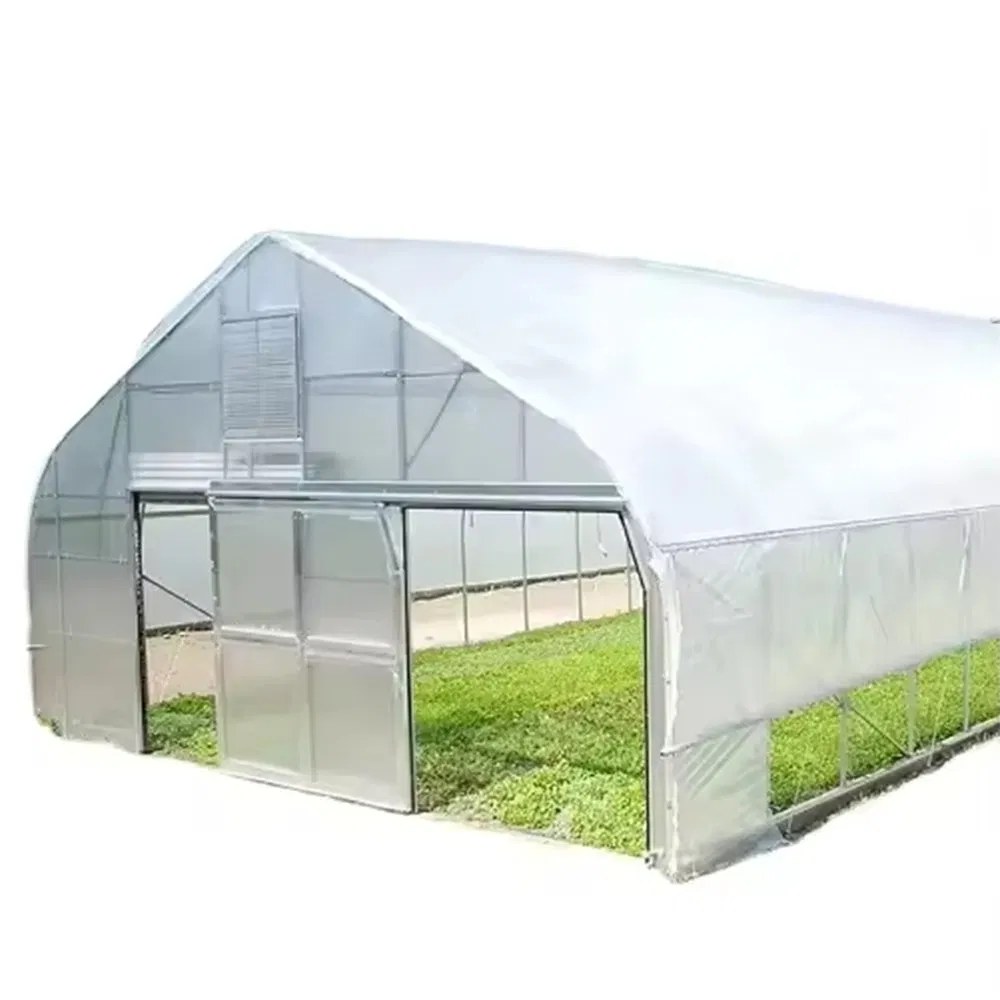
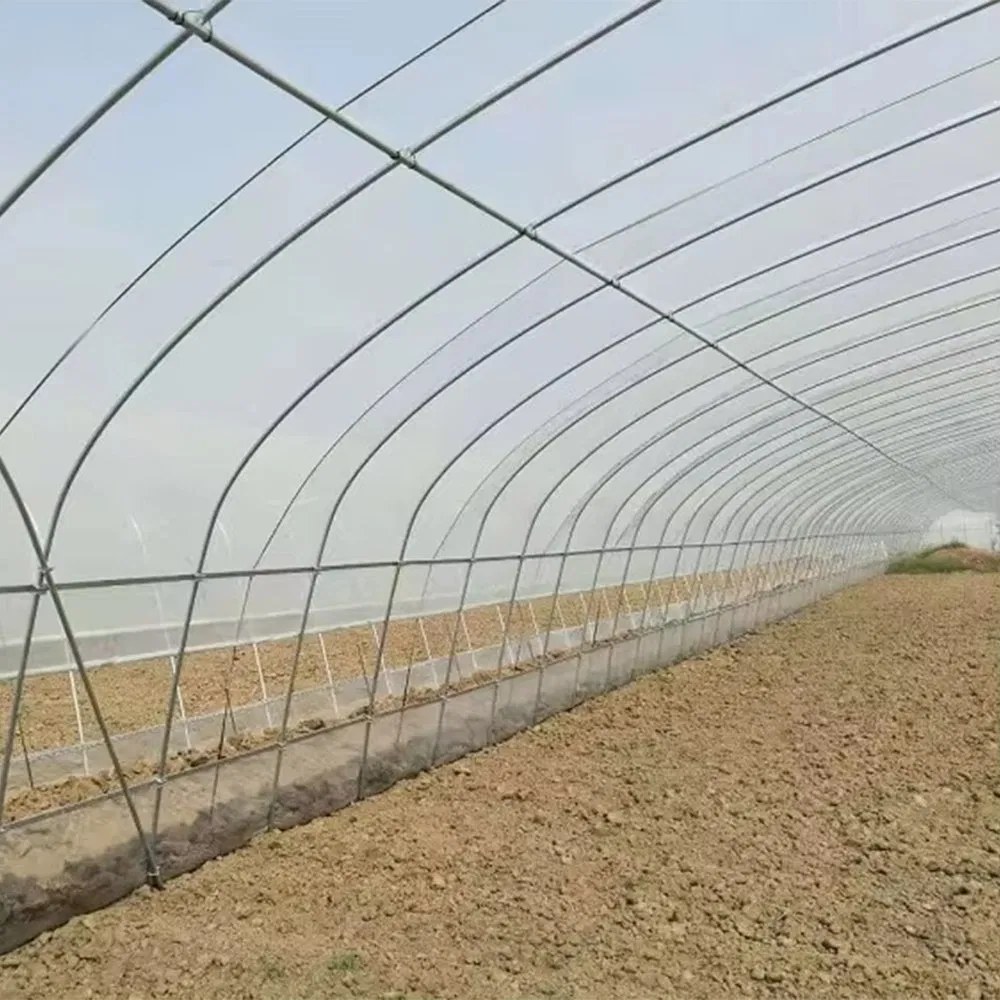
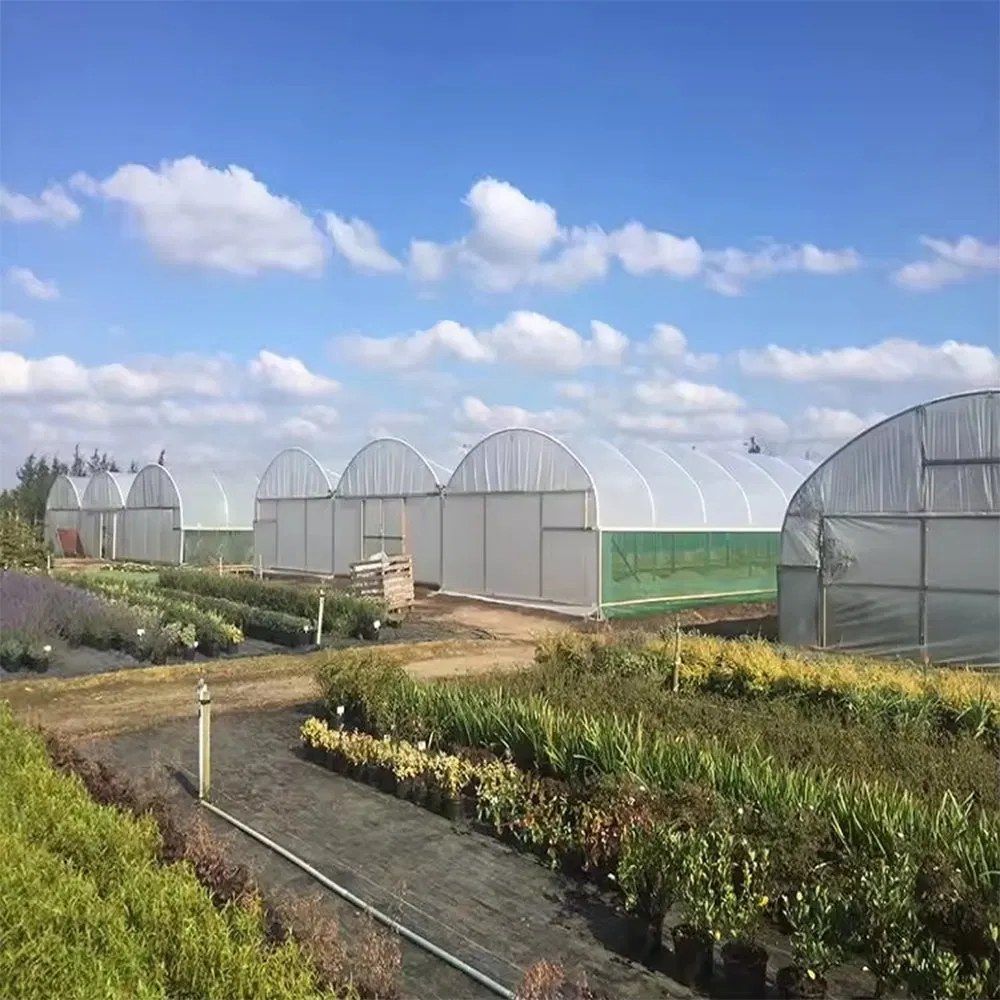
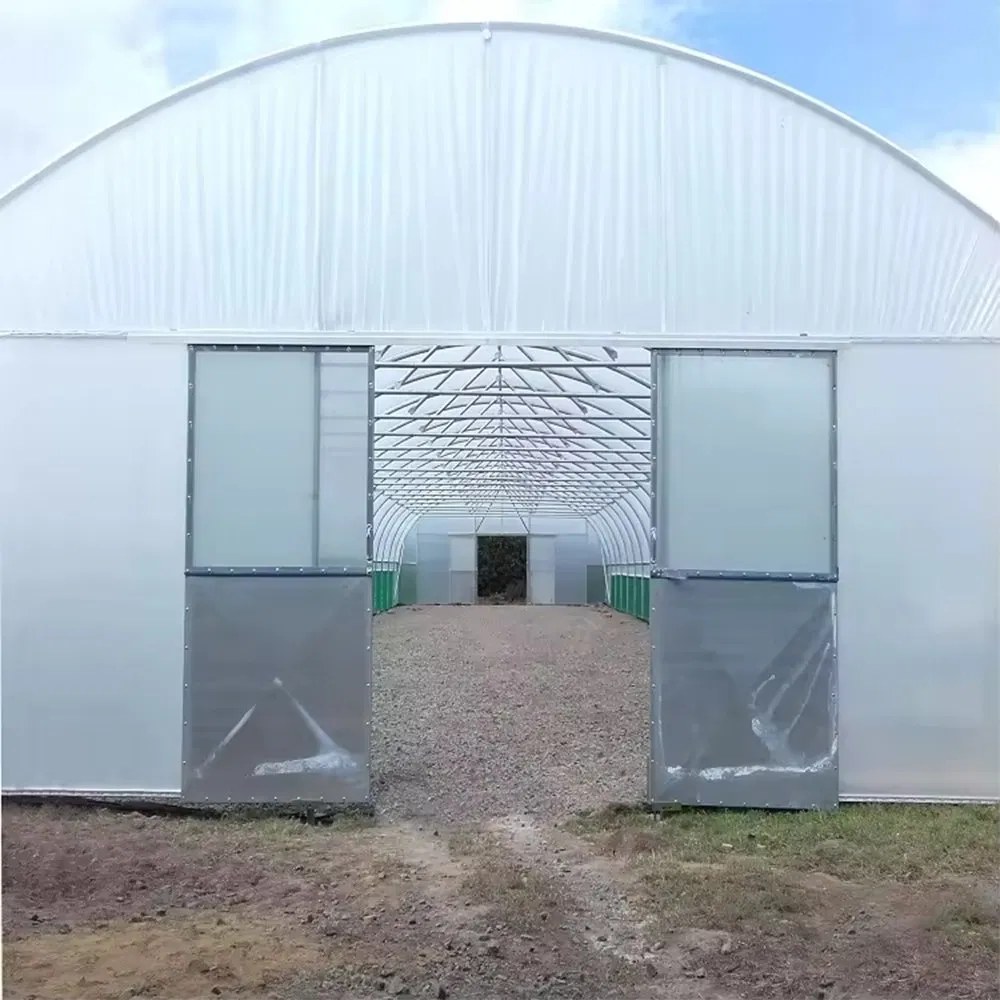
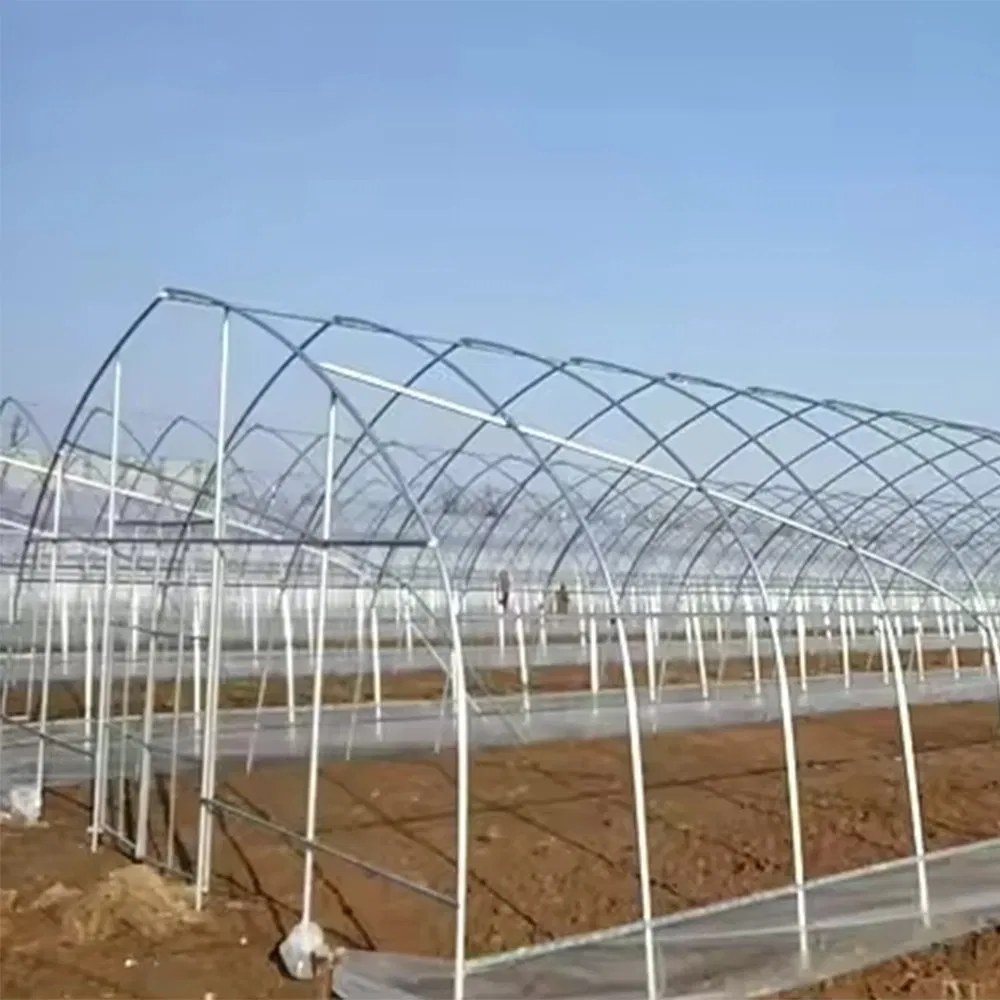
A tomato house is a trellis with a roof over it, and the roof has to be tall enough, tight enough and open enough at the right hours. This tunnel is built on 2 mm galvanized hoops at 1.2 m centres, clad in 200 micron film with anti-drip and UV treatment, and vented through roll-up side walls on a hand crank. It ships cut to length with clamps and drawings, so a grower can put up two houses from one container.
Tomato is grown up a string, which means the house has to be tall at the eaves, straight along the row and dry at the leaf. A tunnel built for the crop rather than adapted to it starts with those three and works back to the pipe. This one is quoted that way. It sits with the rest of the tunnel greenhouse range on this site.
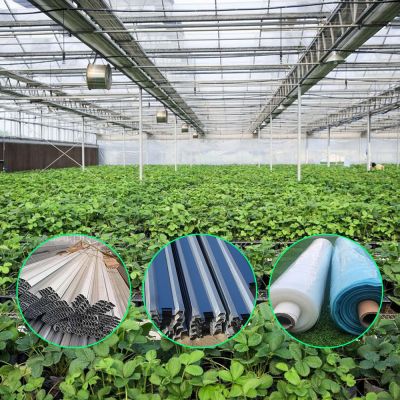
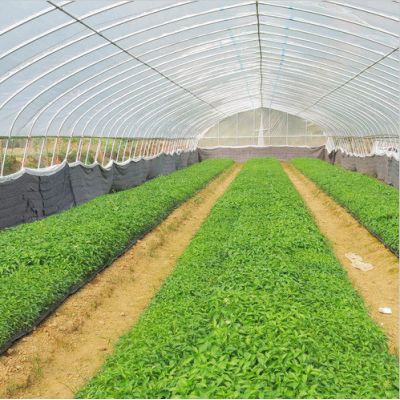
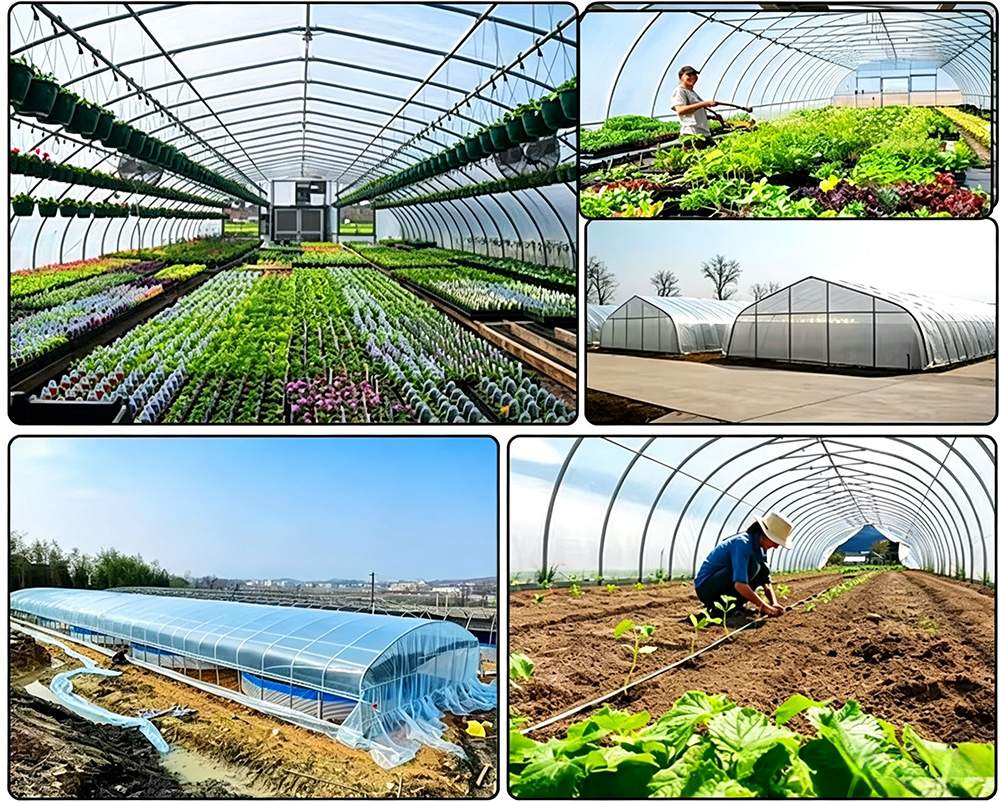
The reference house is eight metres wide and thirty long, which is two double rows of trellised tomato plus a working path, with enough length to make a picking round worth the walk. Hoops are 2 mm galvanized pipe at 1.2 metre centres: close enough that the film does not flap between them in wind, and close enough that a snow load is spread over several arches rather than one.
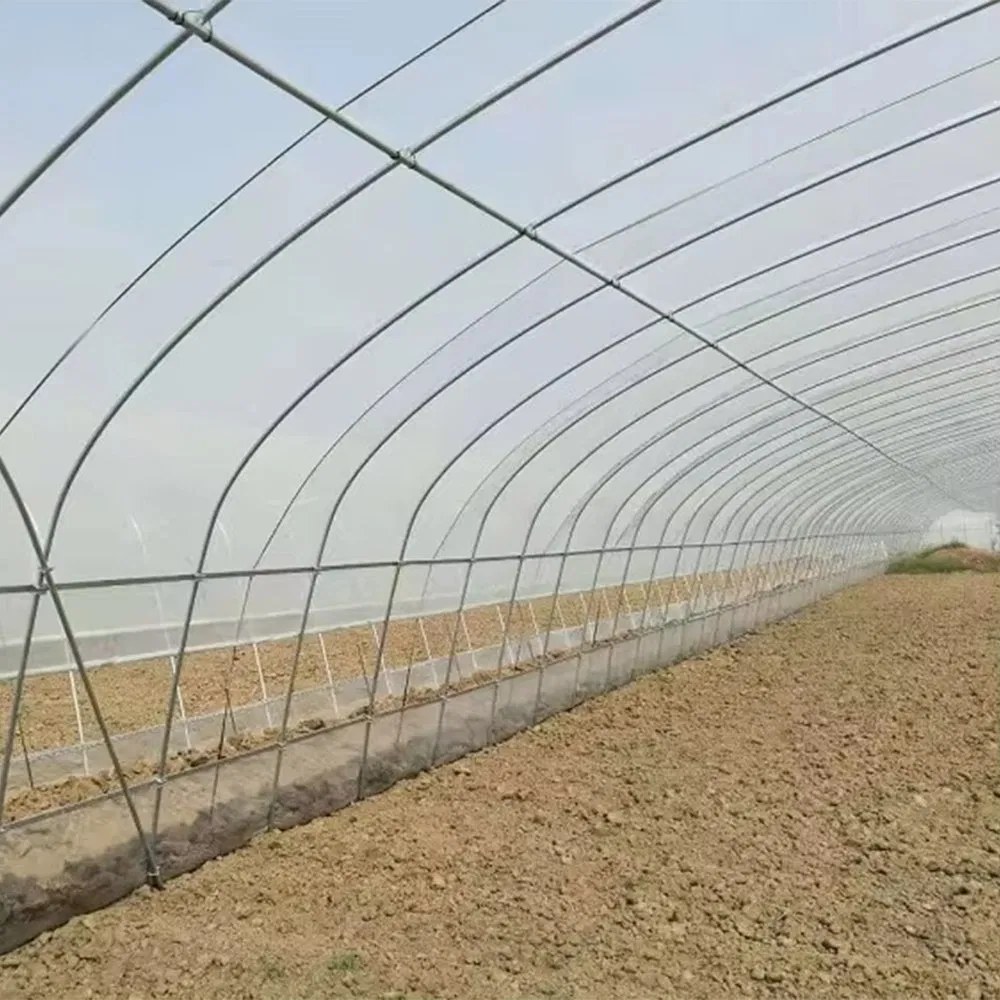
The cover is 200 micron polyethylene with UV stabilisers and an anti-drip additive. That last one is what a tomato grower is actually buying: without it, condensation forms beads on the underside and drops onto the leaves below, and every one of those drops is a route in for leaf mould. With it, water sheets down the film to the side walls.
Double film is available for cold sites, either as a second skin with an air gap or as a thermal screen. It costs light, which is why it is a climate decision and not a default. A house with a wider span and winch ventilation instead of a crank is described on the custom gothic commercial tunnel page.
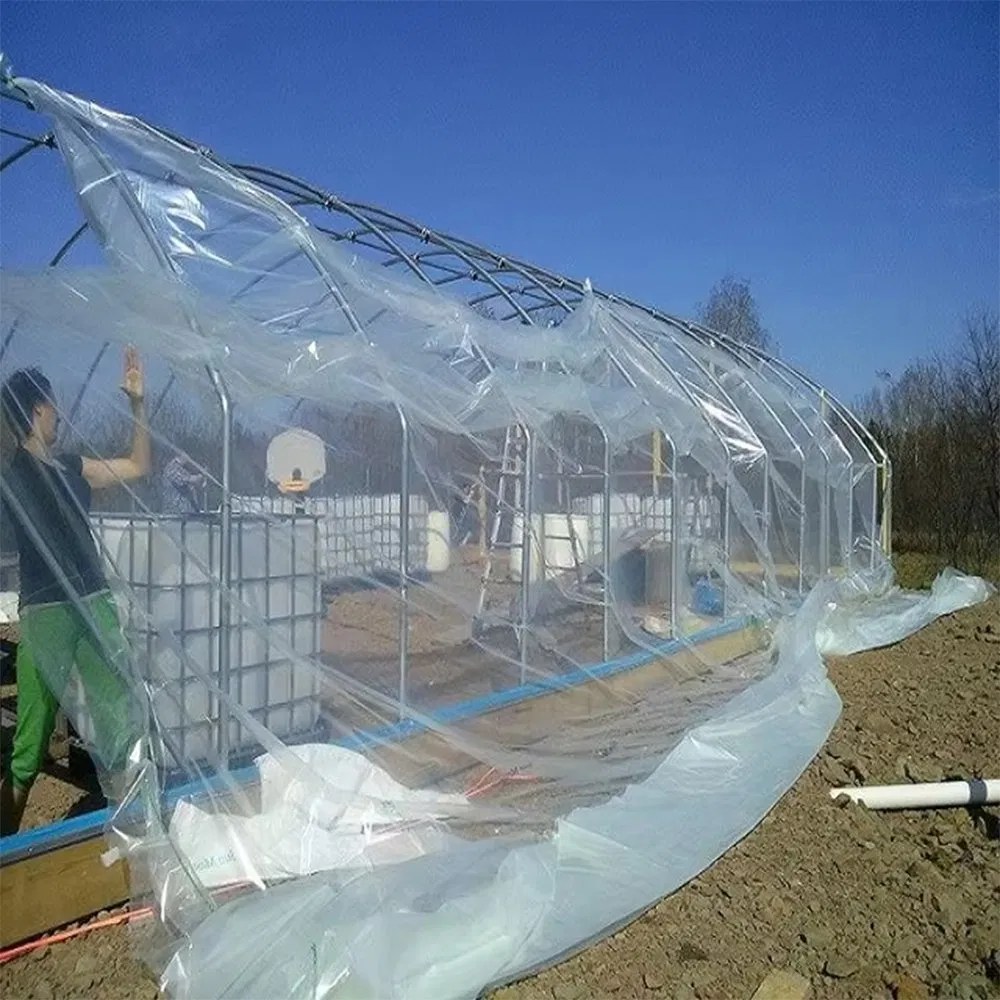
| Structure | Poly tunnel, hot dip galvanized steel pipe hoops |
| Span | 6 m to 12 m |
| Length | 20 m to 100 m, or to order |
| Reference house | 8 m by 30 m |
| Hoop | 2 mm galvanized pipe at 1.2 m centres |
| Cover film | 120 to 200 micron PE, UV stabilised, anti-drip |
| Ventilation | Roll-up side walls, manual crank or electric winch |
| Irrigation | Specified to the crop |
| Packing | Pre-cut arches, film rolls, clamps and drawings, flat pack |
| Container load | Two houses per 40 ft container |
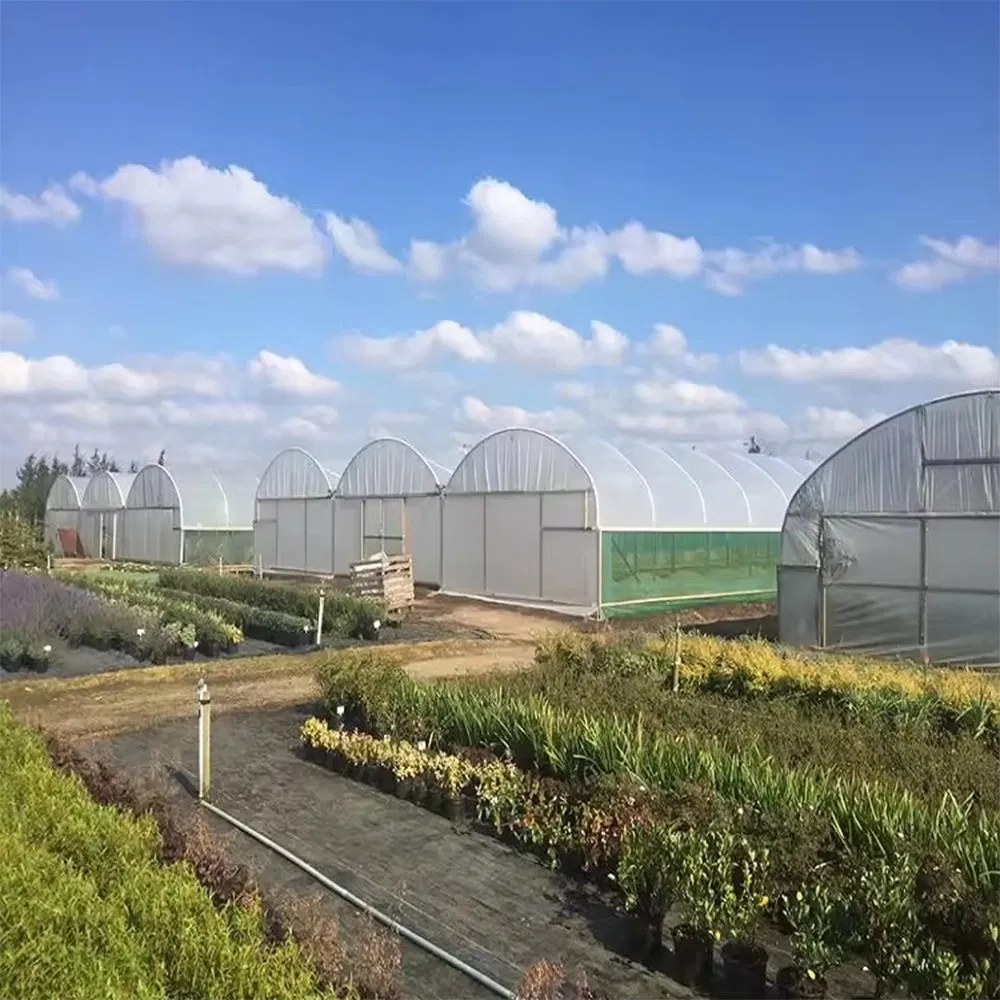
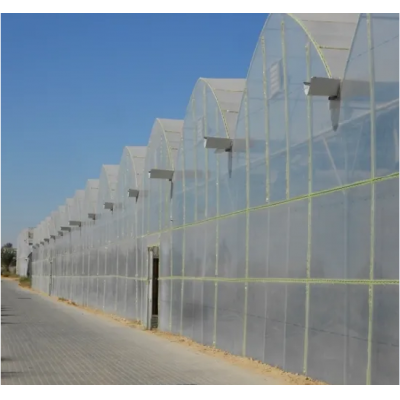
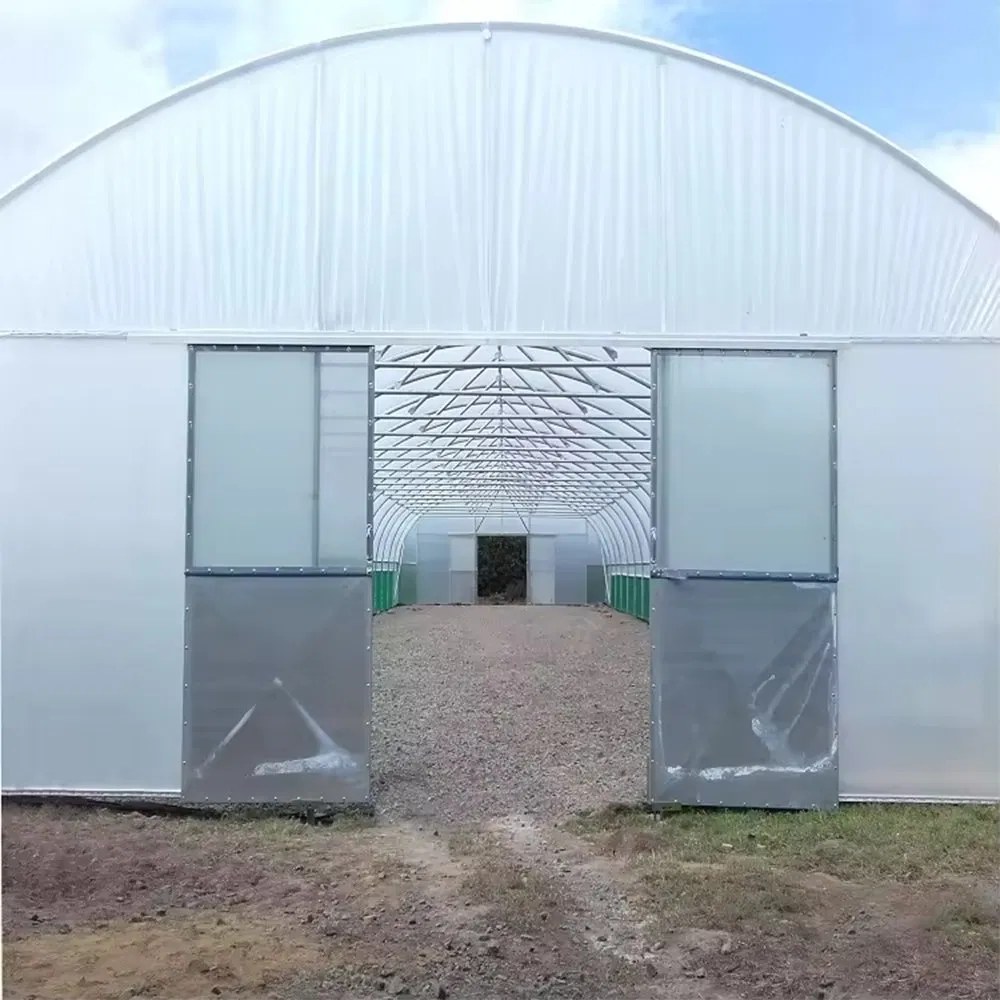
Ventilation on a tunnel happens at the sides, and on a tomato house that is exactly where it is wanted: air moves through the crop rather than over the top of it. A roll-up wall on a hand crank is a two-minute job at each end of the house, and it has no motor to fail in a wet season.
How much heat that removes depends on the site, the wind and the crop load, and it is the sort of number that should come from a temperature logger in your own house rather than from a brochure. Guidance on protected cultivation is published by the International Society for Horticultural Science, and growing and farm business coverage by AgriLand UK.
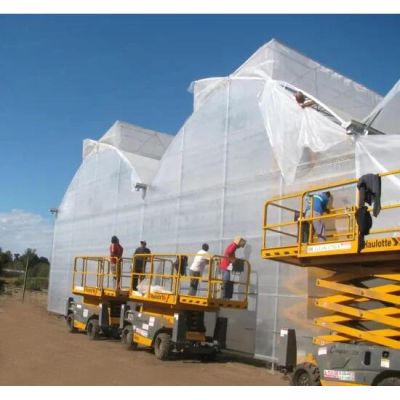
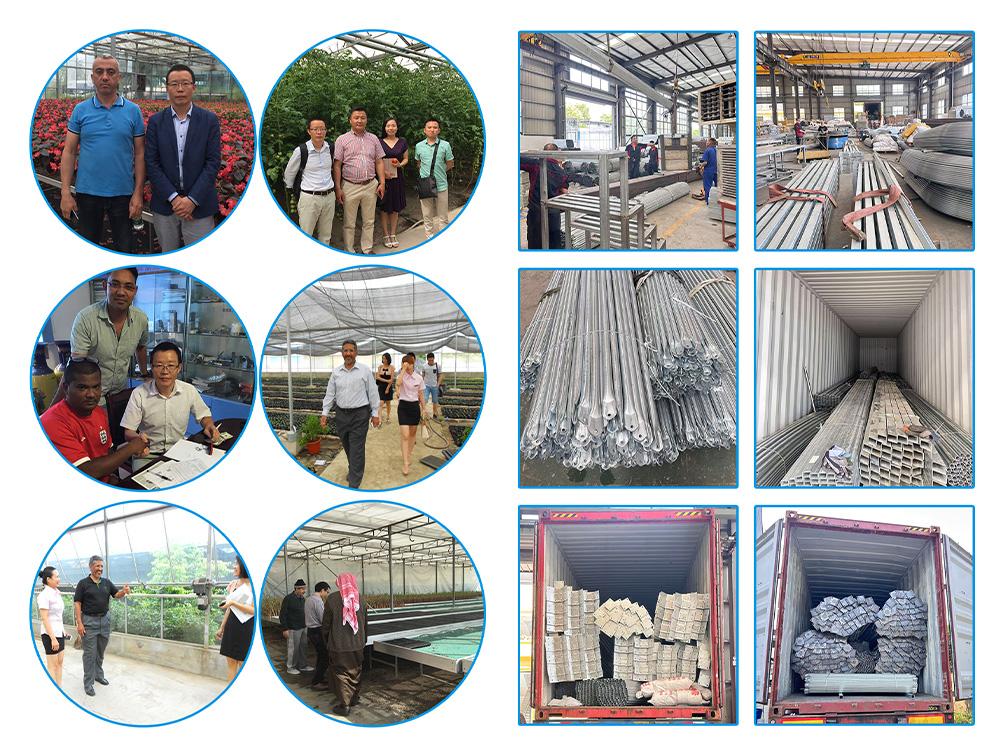
Bulk orders leave as a flat pack: arches cut and drilled, purlins and base rail bundled, film on rolls, clamps and fixings boxed, drawings inside. Two houses fit in a 40 foot container, which is the reason the parts are cut to length rather than shipped as lengths of pipe. The buyer needs a crew, spanners and a calm day for the film.
It is bought for tomato, pepper and cucumber on trellis, for strawberry on raised beds, and for cut flowers where the crop is picked and carried out weekly. A house of the same family specified for strawberry is described on the strawberry tunnel greenhouse page.
1.2 metres on the reference eight by thirty house. Closer spacing spreads wind and snow load across more arches and stops the film drumming between hoops. On a wider span the spacing tightens further, and it is quoted with the drawing rather than assumed.
Yes. Everything is flat packed with pre-cut arches, film rolls, clamps and assembly drawings, and two houses fit in a 40 ft container. For a project with several identical houses, that is usually the least expensive way to move them.
The hot-dip galvanized steel frame is designed for a 15-20 year service life in normal agricultural environments, with a double-sided zinc coating of 200-275 g/m². Film covers are replaced every 3-5 years, while glass and PC panels carry their own manufacturer warranties.
Yes. We customize span width, bay length, gutter height, covering material (film, PC sheet or glass) and ventilation configuration. Share your crop type, local climate and growing area, and our engineers will size the structure to match.
The hot-dip galvanized steel frame carries a 10-year structural warranty covering structural safety, plus a 5-year warranty against corrosion perforation. It is designed for a 15-20 year service life. Film covers carry a 3-5 year UV warranty depending on grade.
Film suits low-cost tunnels on 3-5 year replacement cycles. Glass delivers the highest light transmission and the longest lifespan, at the highest cost. PC sheet insulates better than film and suits cold or high-humidity climates. The right choice depends on climate, crop and budget.