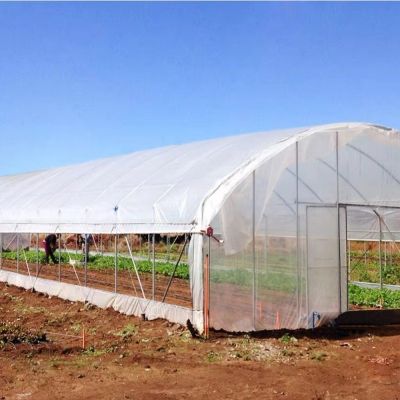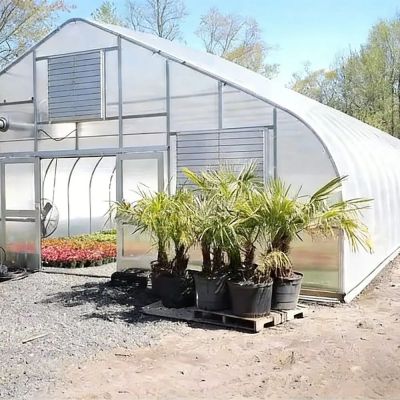
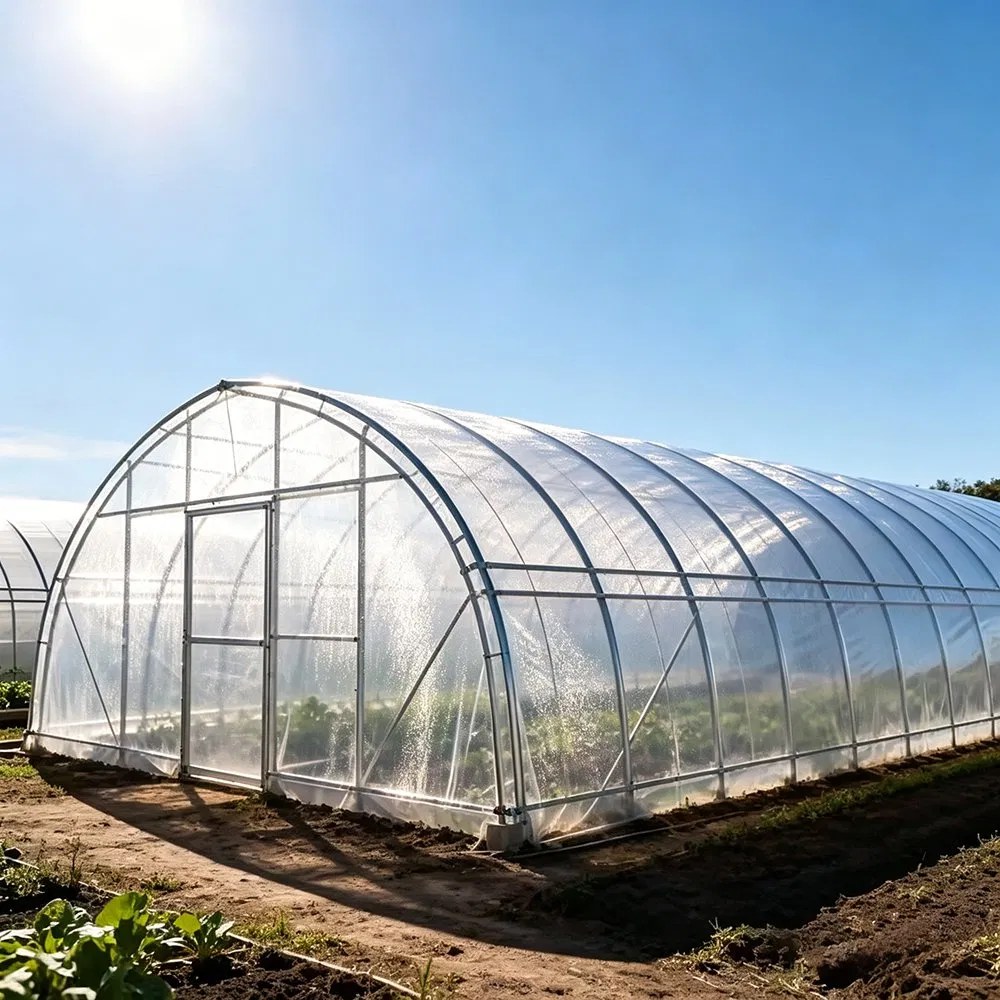
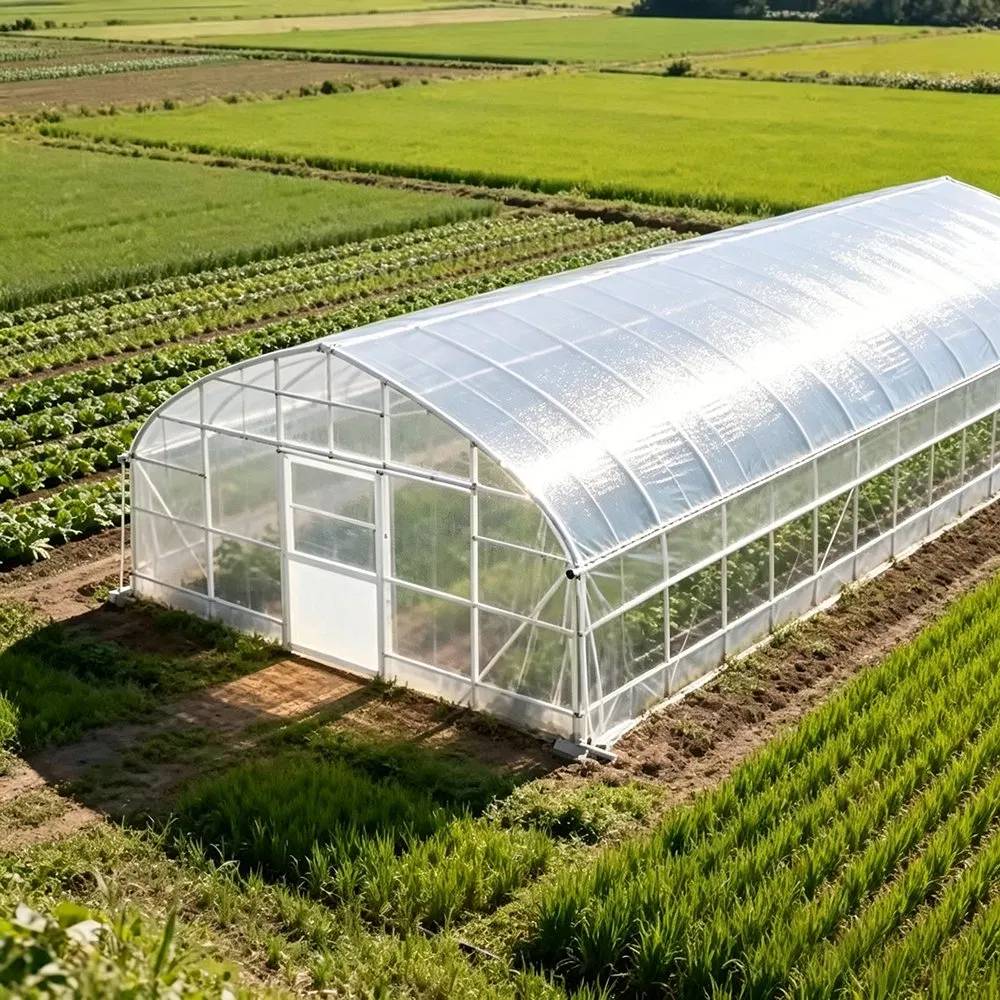
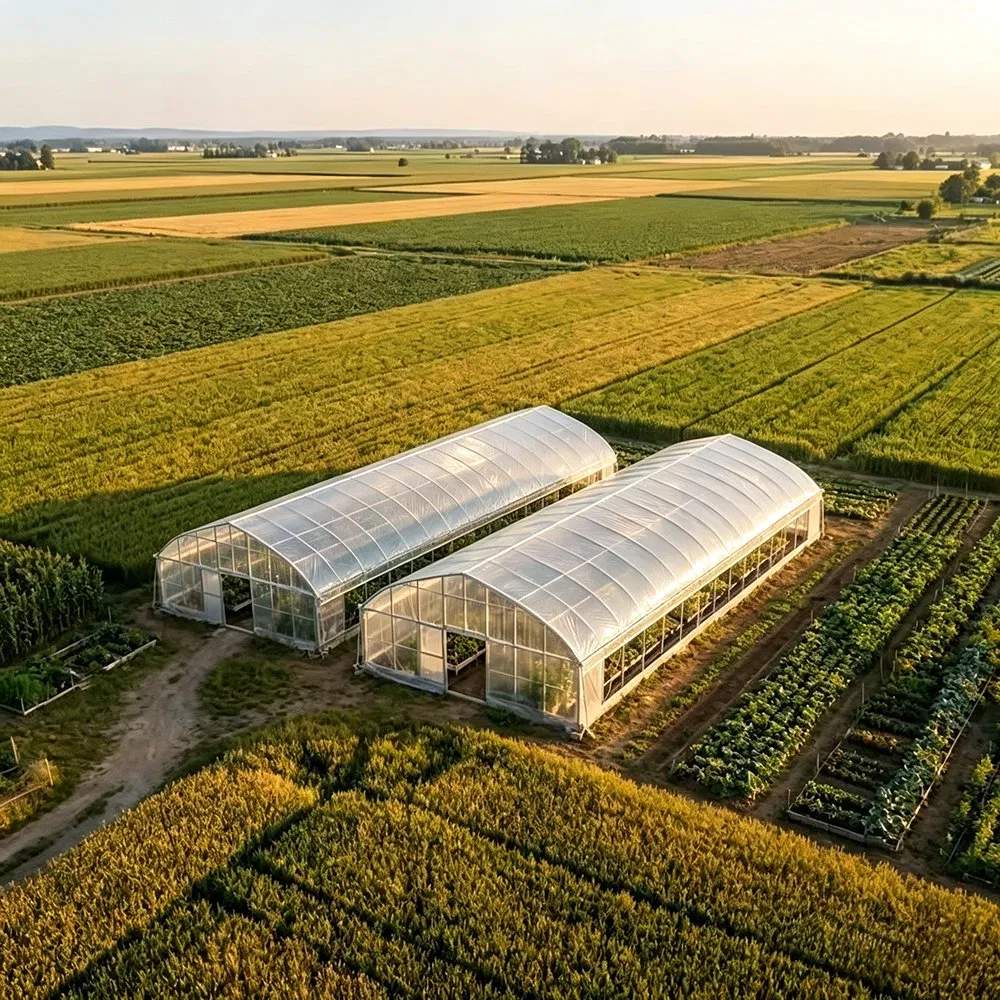
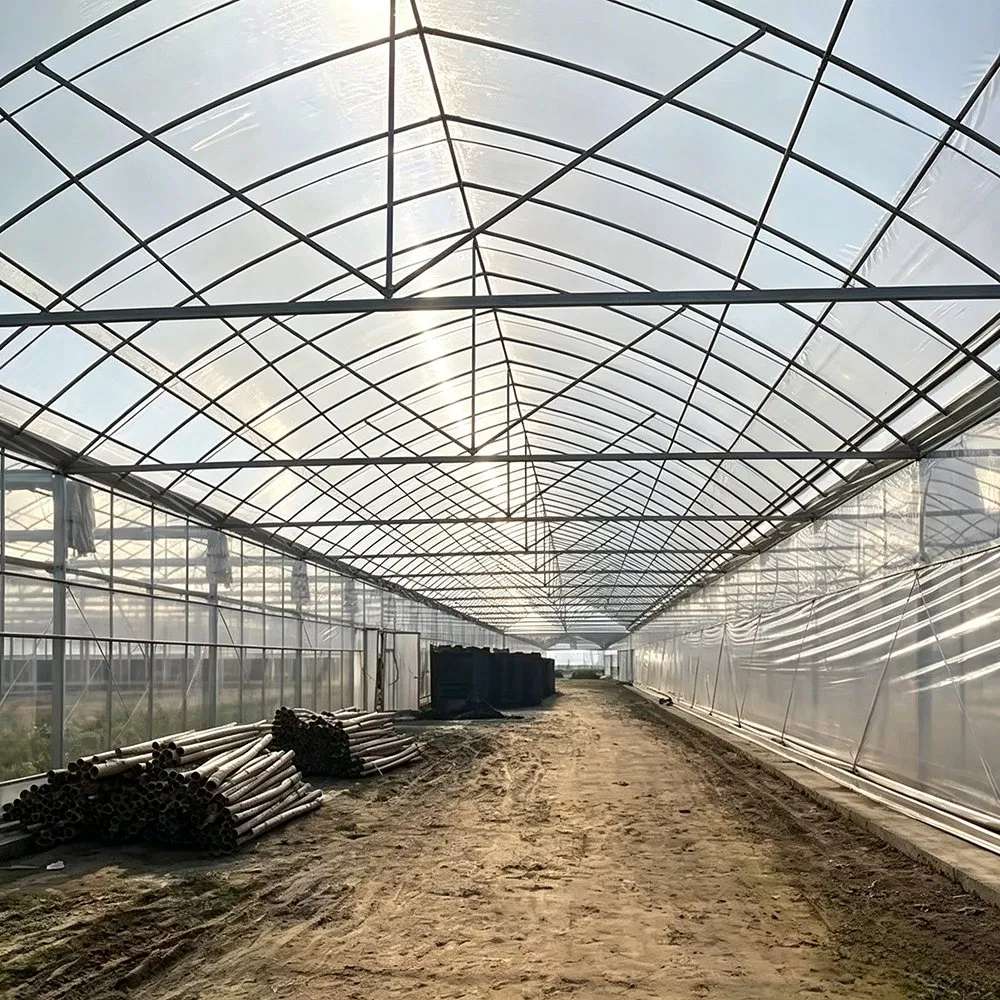
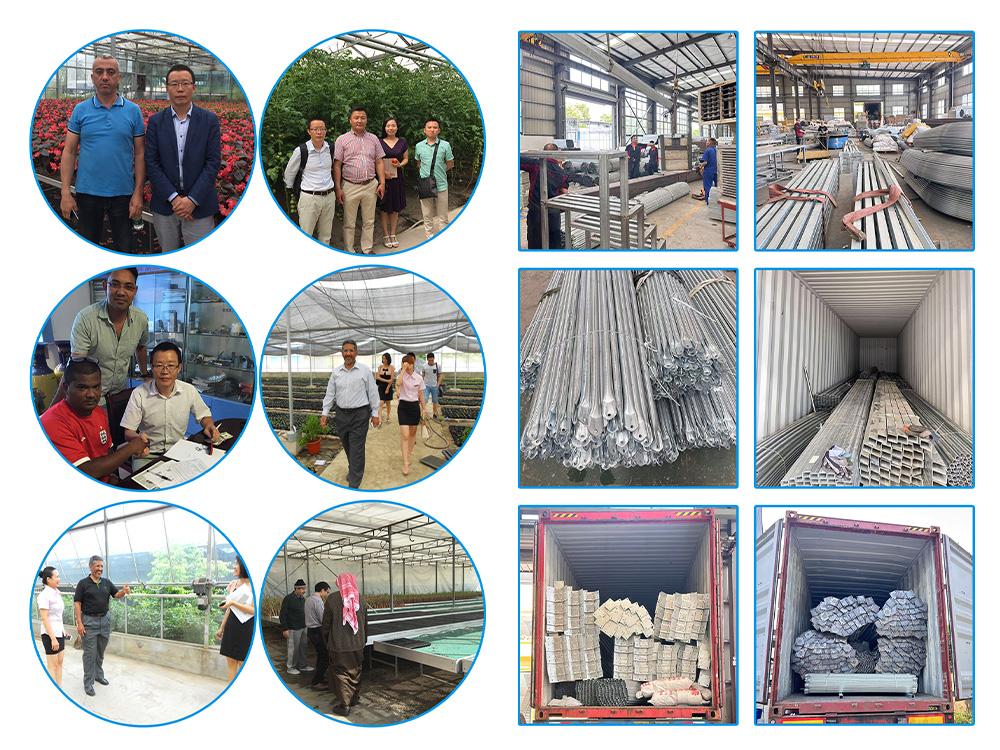
A kit is judged by how much of it has already been done. Here the arches arrive pre-drilled and numbered, so assembly is a spanner job rather than a measuring one, and four people are quoted about two days for a house. The zinc coating is 275 grams per square metre, the figure that decides how the frame ages in a wet climate, and the arch pipe runs from 25 to 60 mm depending on span. Pre-drilled parts are also what makes a later extension practical.
Most hoop house kits are a pile of pipe and a drawing. The difference between that and a kit that goes up in two days is not the steel: it is whether the parts were cut, drilled and marked before they were packed. That is the specification this house is built around.
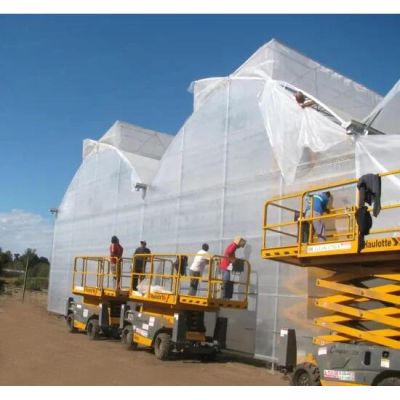
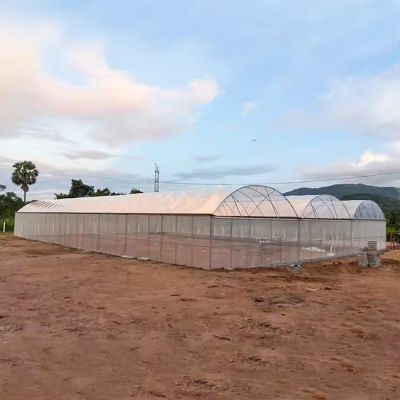
Every arch and purlin arrives pre-drilled and numbered to the drawing. The crew matches numbers and tightens bolts rather than measuring, cutting and drilling on site, which is where most of the time and most of the mistakes go on a first build. Four people are quoted about two days for a house.
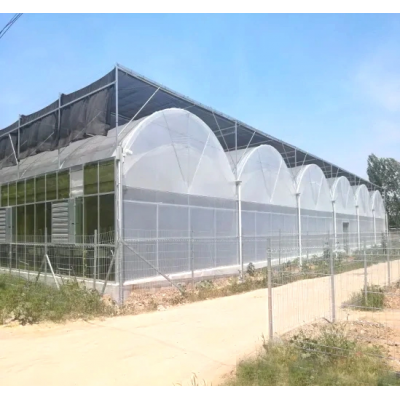
The saving is not only in labour. A frame drilled in a workshop has clean holes with the zinc intact around them; a frame drilled on site has bare steel at every hole, and that is where corrosion starts. Houses of this shape are grouped on the tunnel greenhouse range on this site.
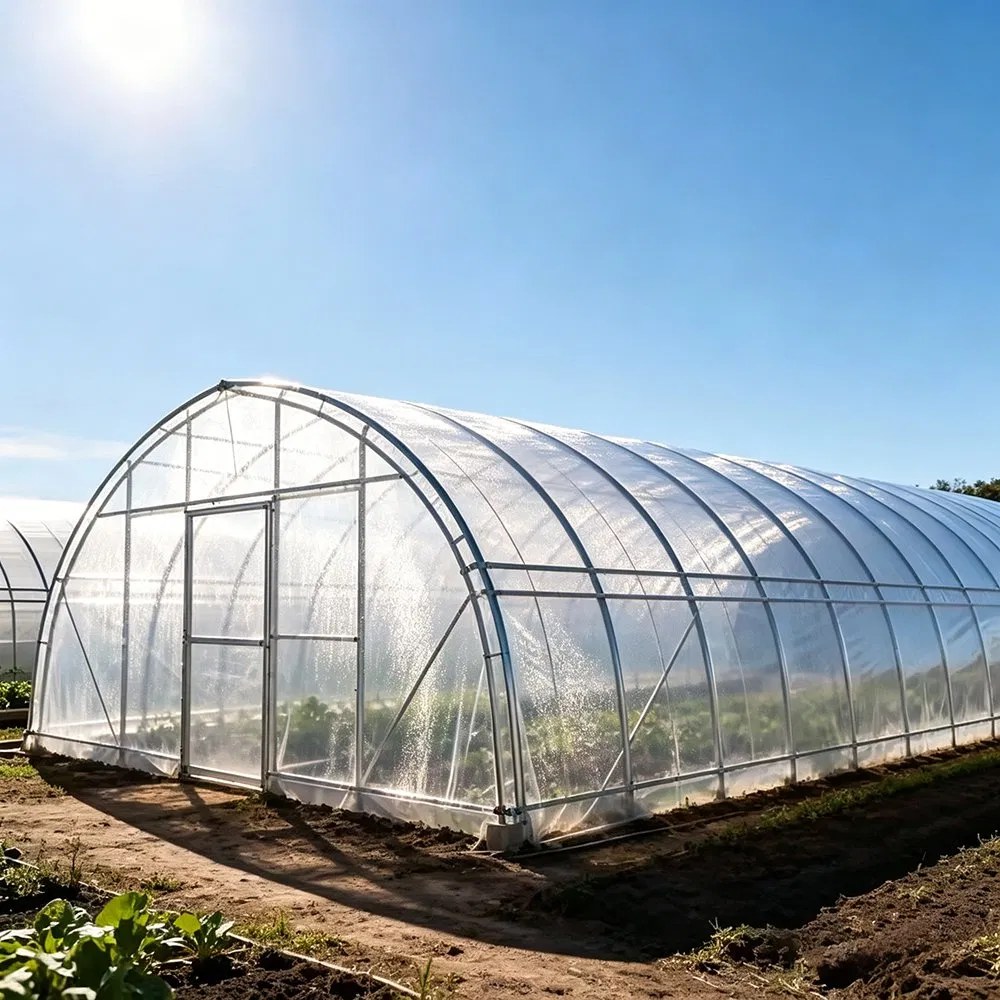
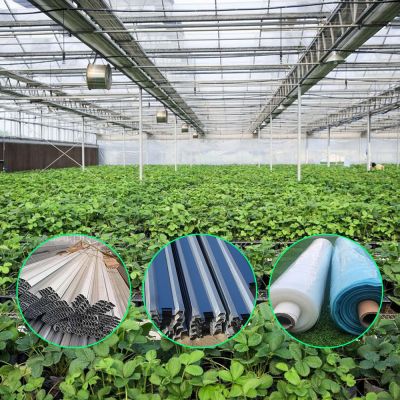
The frame is hot dip galvanized steel pipe at 275 grams per square metre of zinc, with arch pipe from 25 mm on the narrow spans to 60 mm on the widest. The coating weight is worth asking about on any quotation, because galvanized pipe is sold at several weights and they do not last the same length of time in a wet climate.
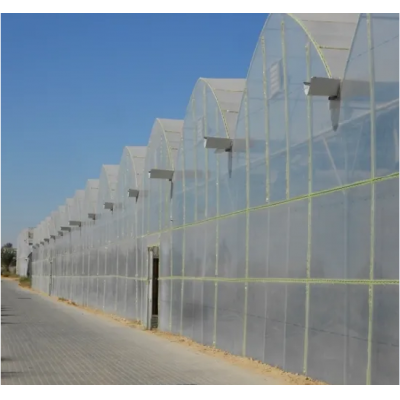
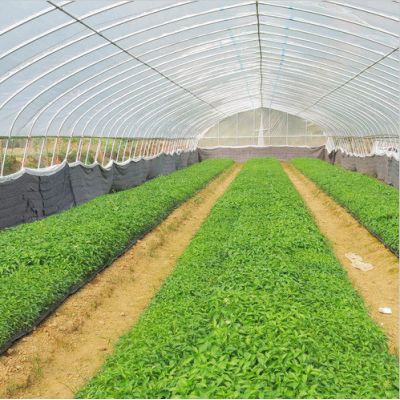
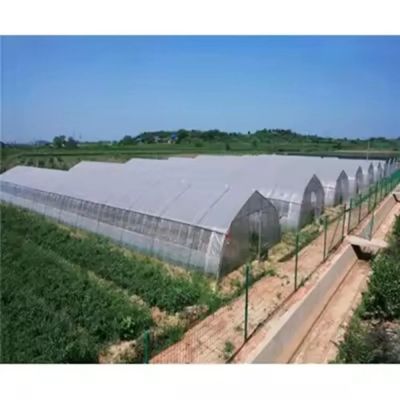
The cover is 200 micron polyethylene with UV stabilisers, and the side walls roll up on the same frame. The film is a service item on a replacement cycle, and on a windy site the fixings at the base rail are where a cover usually starts to fail. A house on the same frame with a heating system is described on the hydronic heated plastic greenhouse page.
| Structure | Single span hoop house, 2 mm galvanized steel arches |
| Zinc coating | 275 g/m2 |
| Arch pipe diameter | 25 / 32 / 40 / 50 / 60 mm by span |
| Width | 6 m to 12 m, or to order |
| Length | 20 m to 100 m, or to order |
| Shoulder height | 1.3 m or 2 m |
| Roof height | 3.3 m or 3.5 m |
| Cover film | 200 micron PE, UV stabilised |
| Side walls | Roll-up vents on both sides |
| Packing | Knockdown flat pack, two units per 40 ft container |
| Assembly | Pre-drilled and numbered, spanner only, about two days with four people |
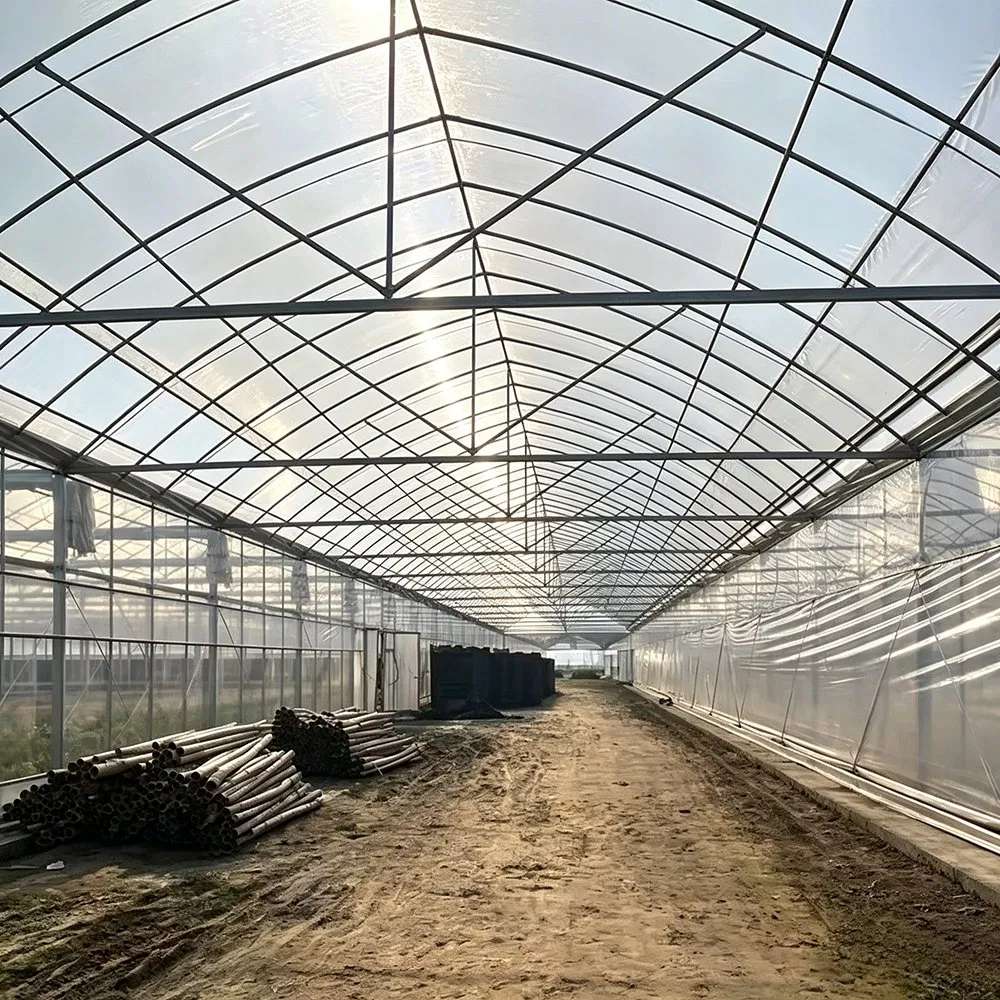
Roll-up side walls are the working part of a hoop house. On a narrow span they are enough on their own; on a wider one they do the cooling and the frame does the holding. The vents are hand operated and roll up from the base rail, which is the arrangement that survives contact with a crop and a barrow better than any mechanism with more parts.
On a house running the length quoted here the vents matter most in the middle of the day and least at the ends, so the crop plan is usually written with the heat-sensitive blocks near the sides.
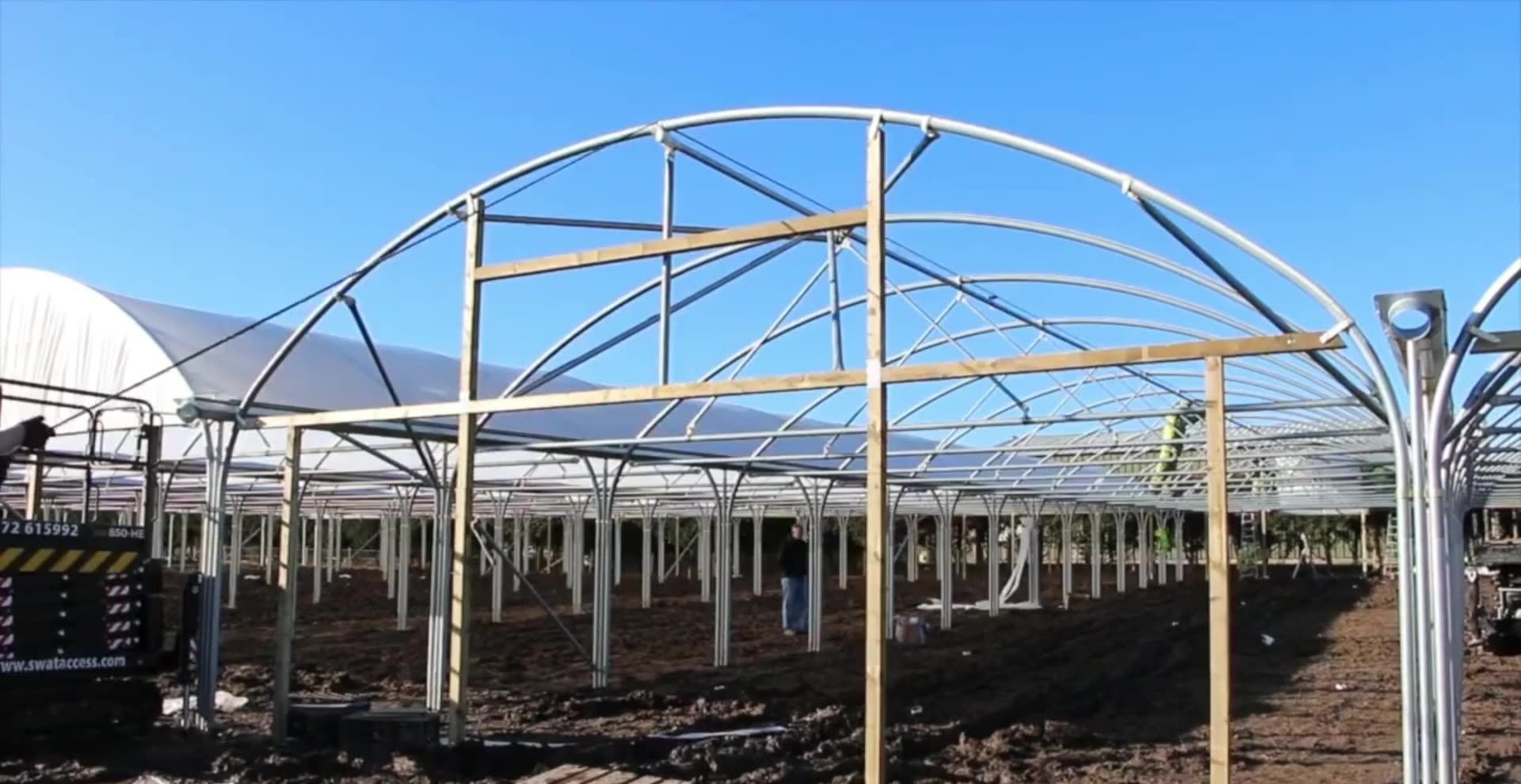
The kit goes up on a levelled base in a fixed order: arches, purlins, bracing, then the film, then the side walls. Because every part is numbered, the drawing is a sequence rather than a set of dimensions to mark out, and the film is the only step that needs calm weather.
Maintenance is the cover, the base rail fixings and an occasional look at the coating where a tool has caught it. The frame is expected to outlast several covers, which is what the 275 gram coating buys. A year-round house on the same frame is described on the year round vegetable greenhouse page.
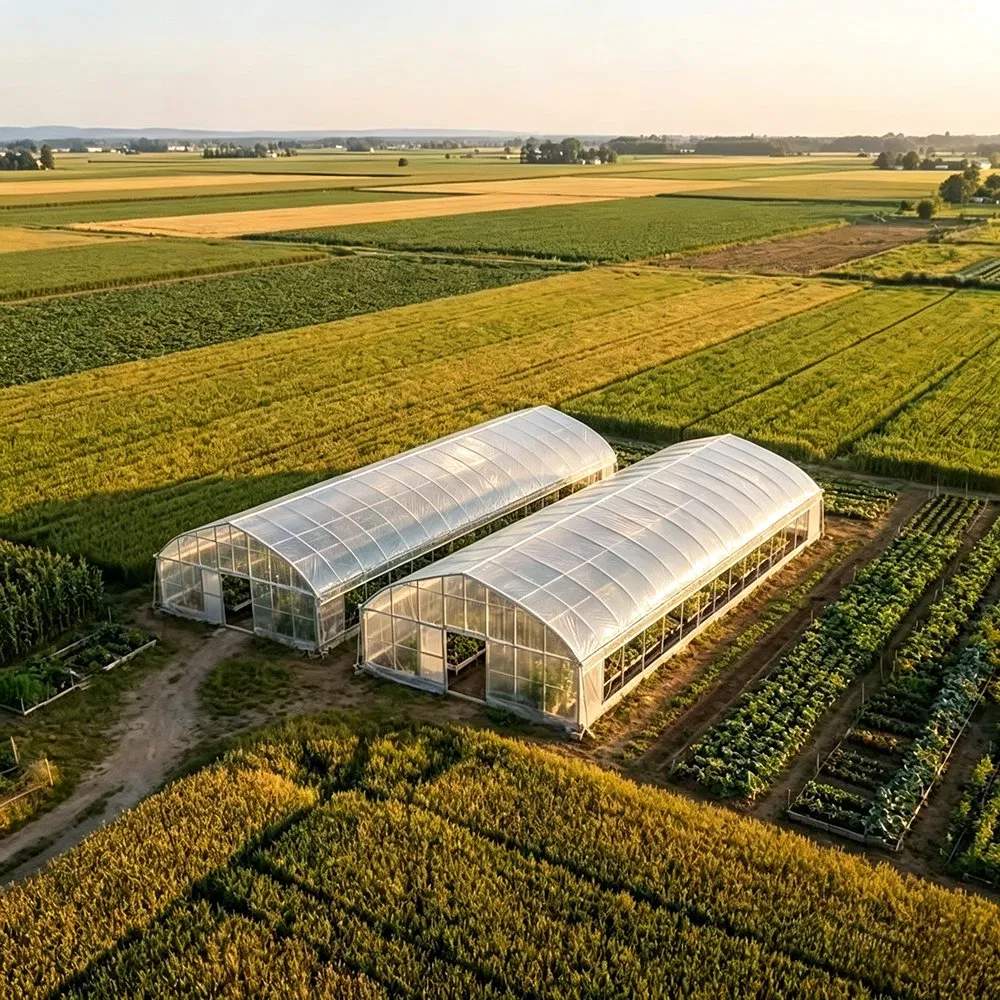
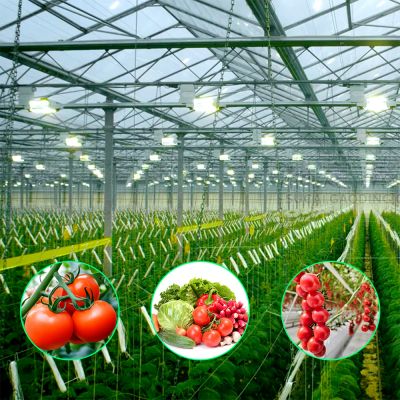
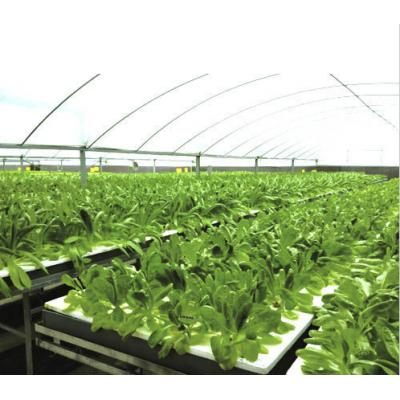
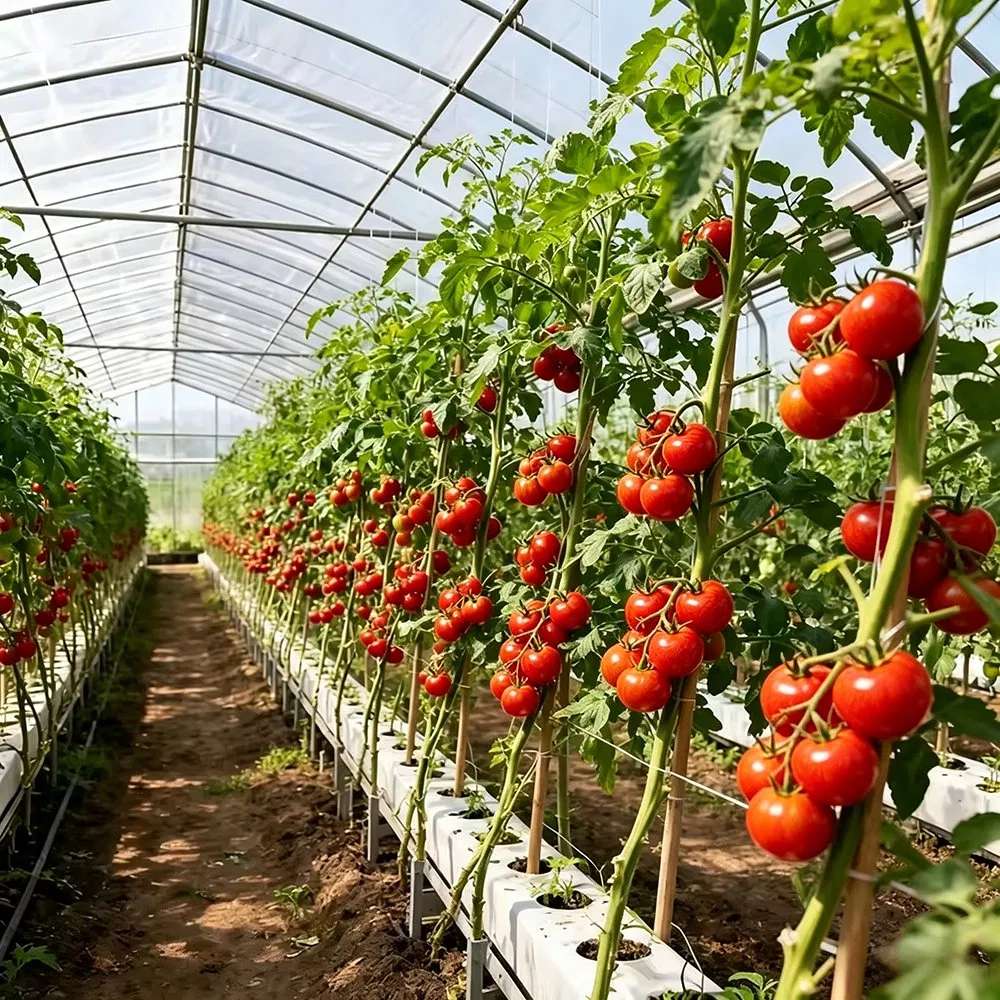
Houses from this kit are used for tomato and pepper, for lettuce and herbs, for strawberry, and for nursery stock. They suit a grower building covered area with their own crew rather than a contractor, an operation that wants several identical houses rather than one bespoke building, and importers shipping flat pack because the freight works better that way.
Industry standards and guidance for greenhouse manufacturers are published by AmericanHort. Fresh produce growing and marketing reporting is published by The Produce News.
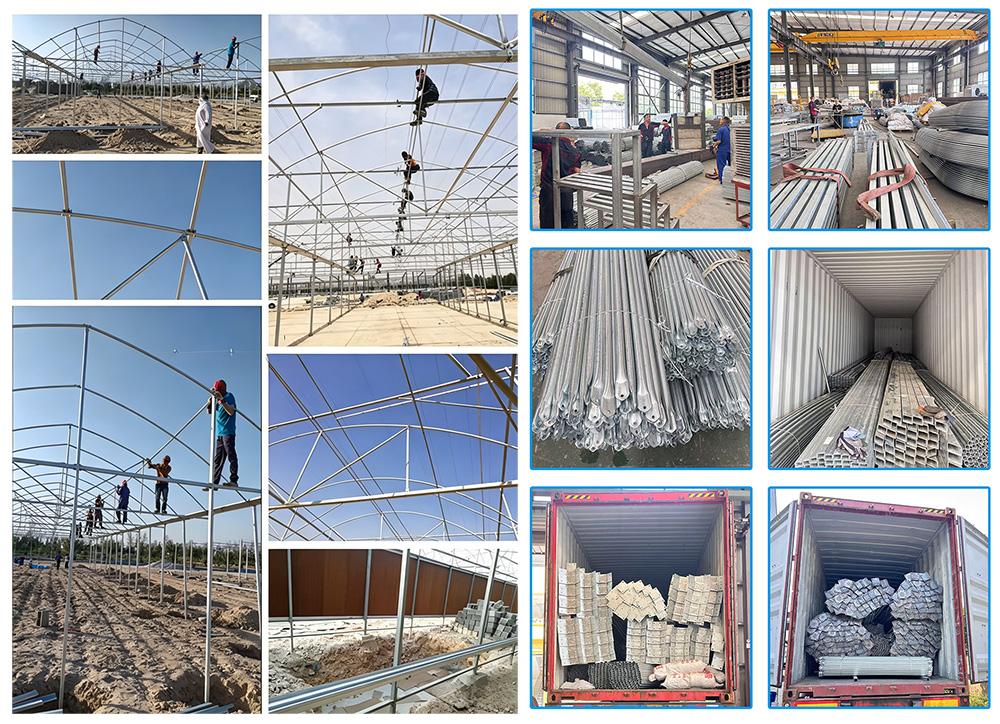
About two days for four people on a standard house, because every frame part arrives pre-drilled and numbered and needs only a spanner.
Numbered arches and purlins, base rail, 200 micron UV stabilised film, roll-up side walls, clamps and fixings.
The hot-dip galvanized steel frame carries a 10-year structural warranty covering structural safety, plus a 5-year warranty against corrosion perforation. It is designed for a 15-20 year service life. Film covers carry a 3-5 year UV warranty depending on grade.
Film suits low-cost tunnels on 3-5 year replacement cycles. Glass delivers the highest light transmission and the longest lifespan, at the highest cost. PC sheet insulates better than film and suits cold or high-humidity climates. The right choice depends on climate, crop and budget.
Ziyang Bozong Greenhouse Industry Co., Ltd. is a manufacturer based in Ziyang, Sichuan, China. We produce the hot-dip galvanized steel frame in-house, cutting and drilling to drawing, and supply covering materials, ventilation, cooling and irrigation systems as one coordinated package.
Send your growing area, span and length, crop type and local climate. If you already have a layout drawing, that is enough to start. Our engineers then return a quotation with a structure drawing and a bill of materials.