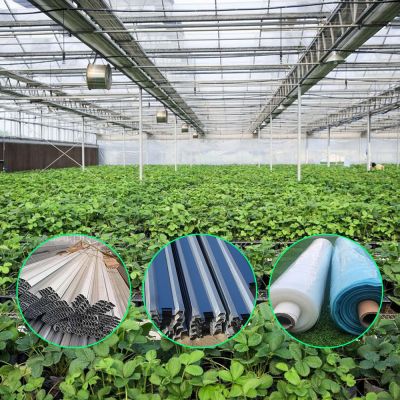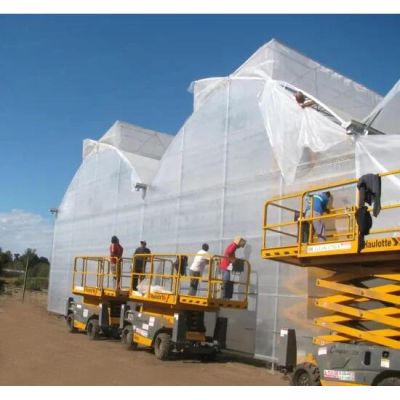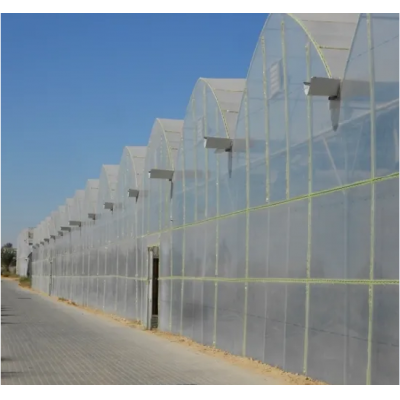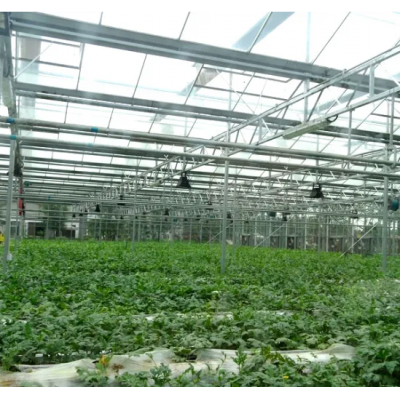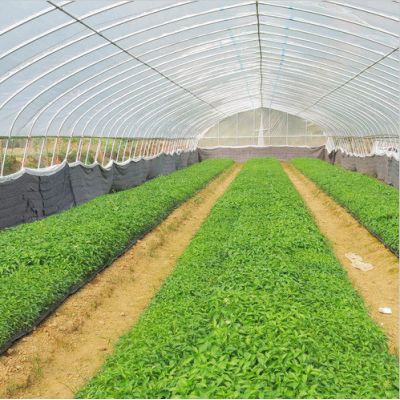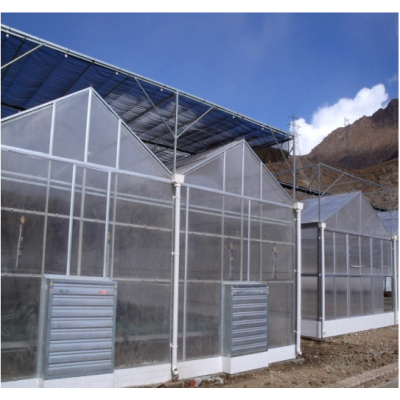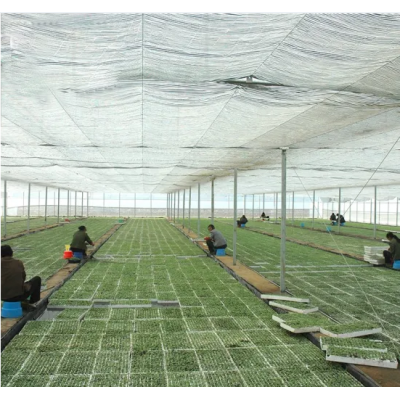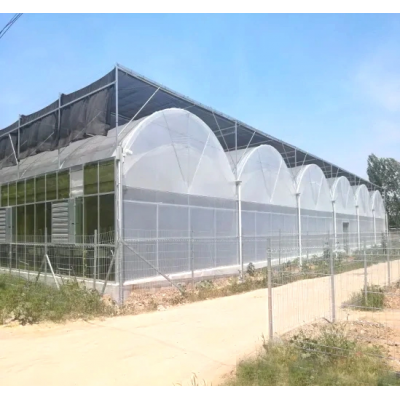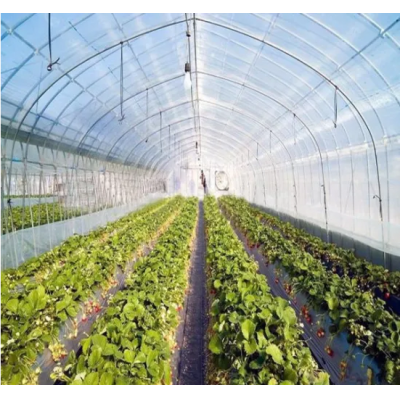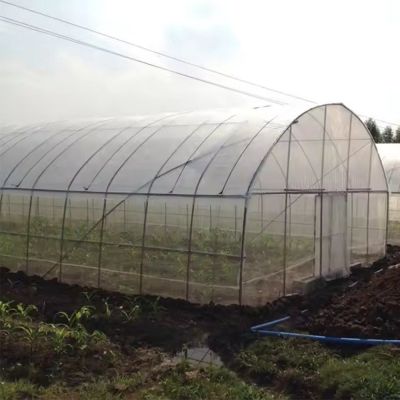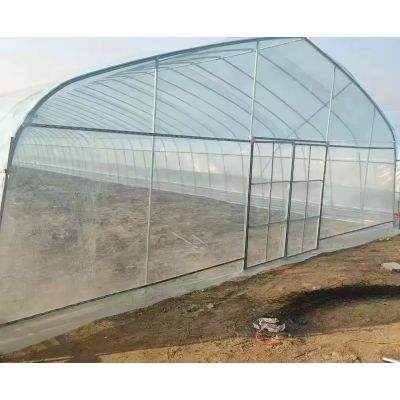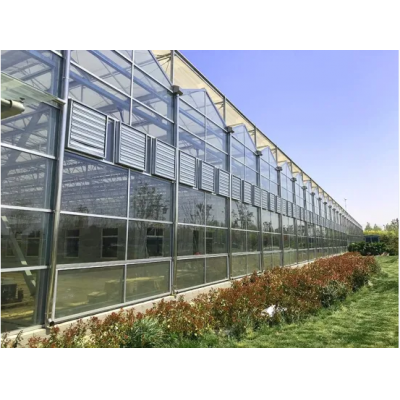
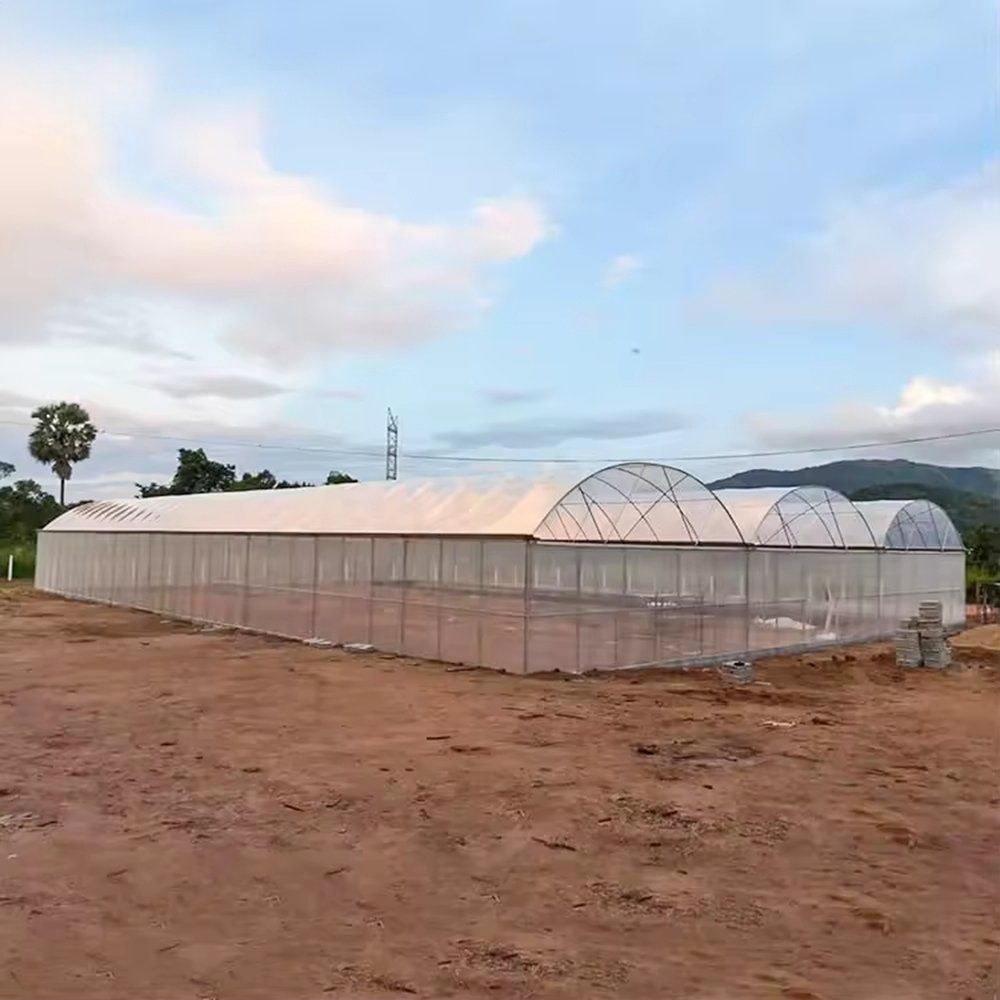
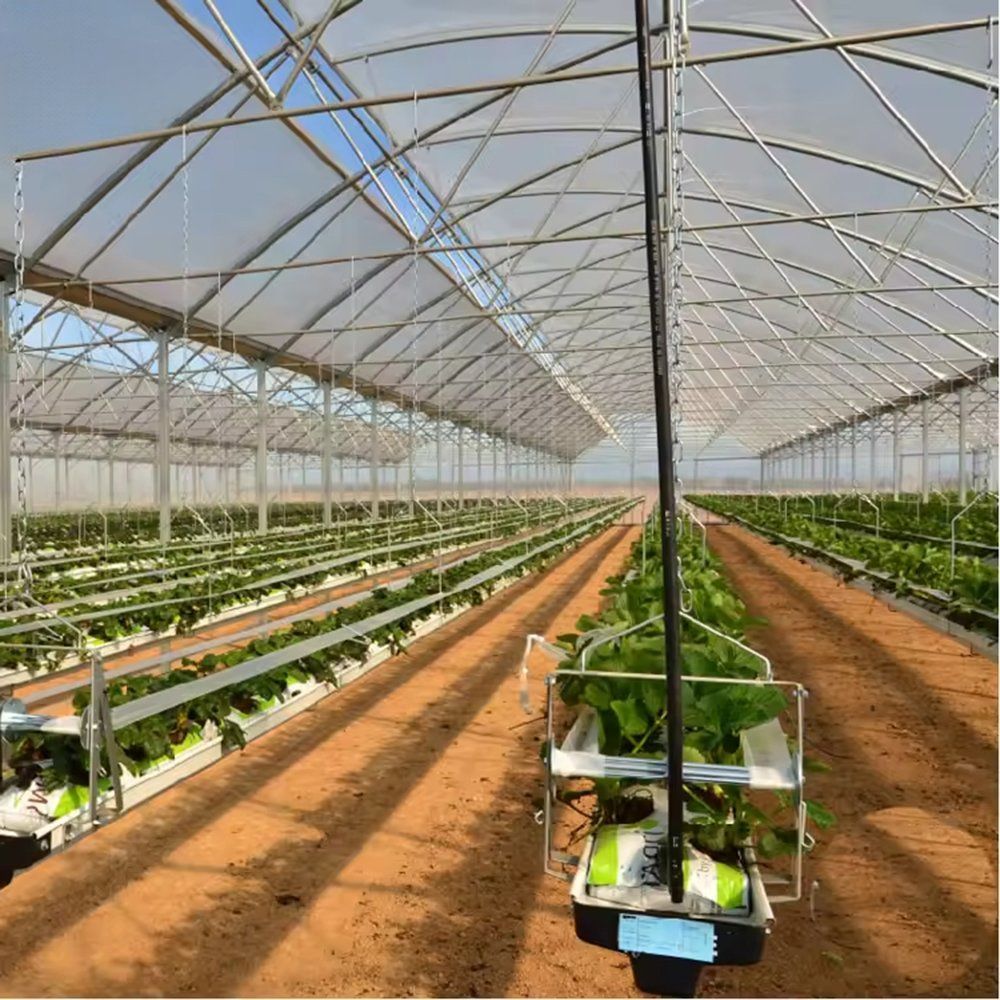
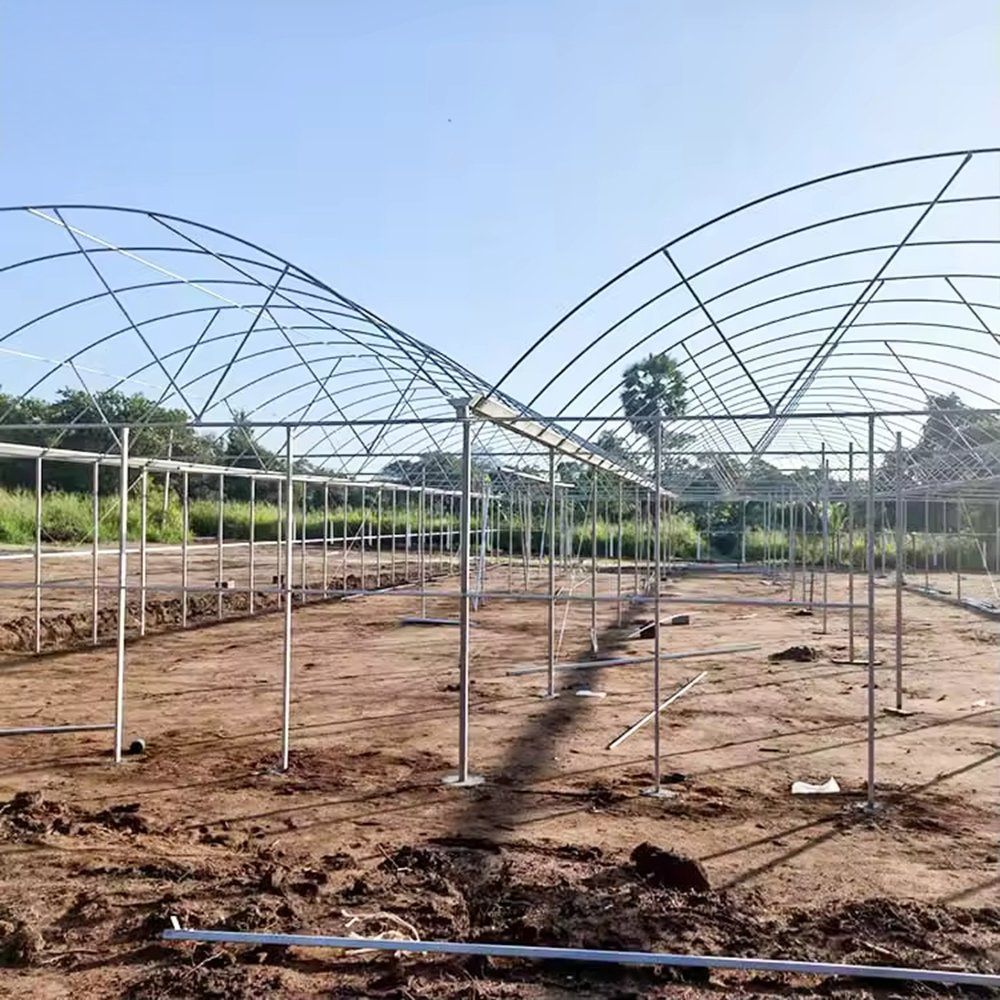
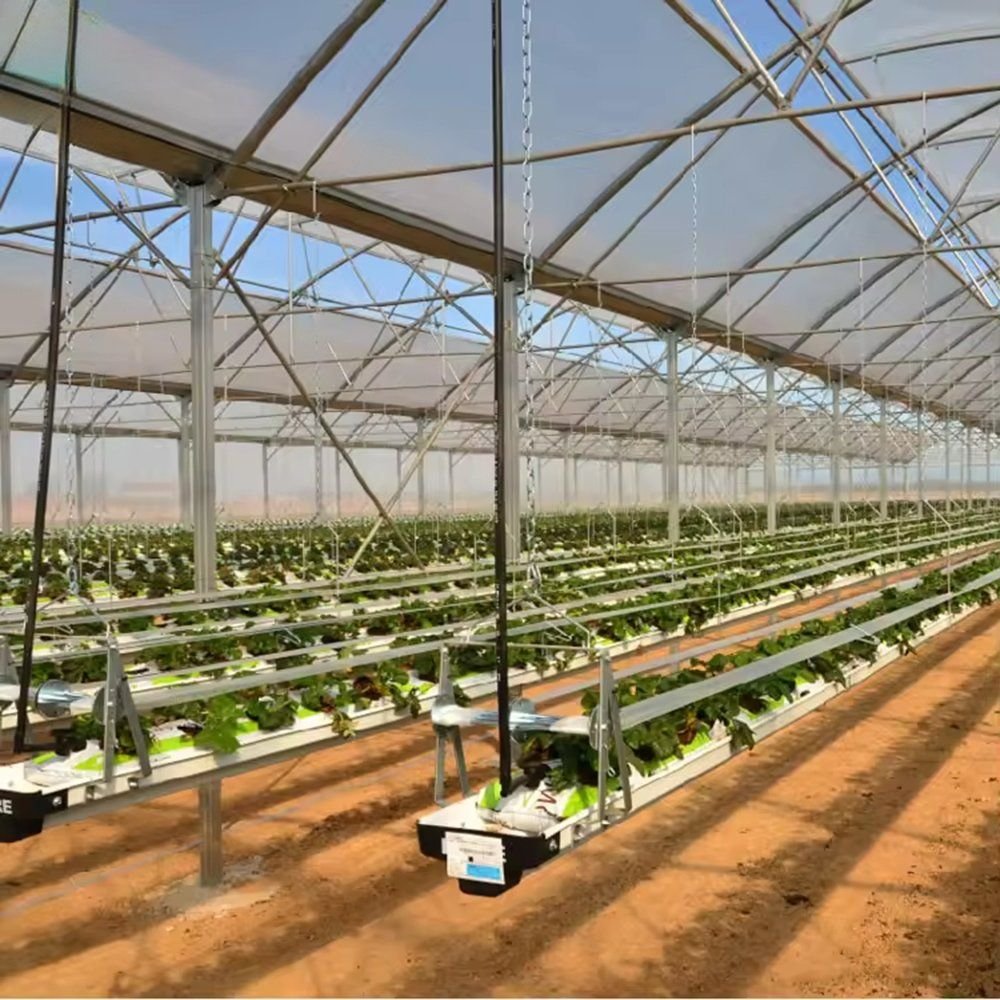
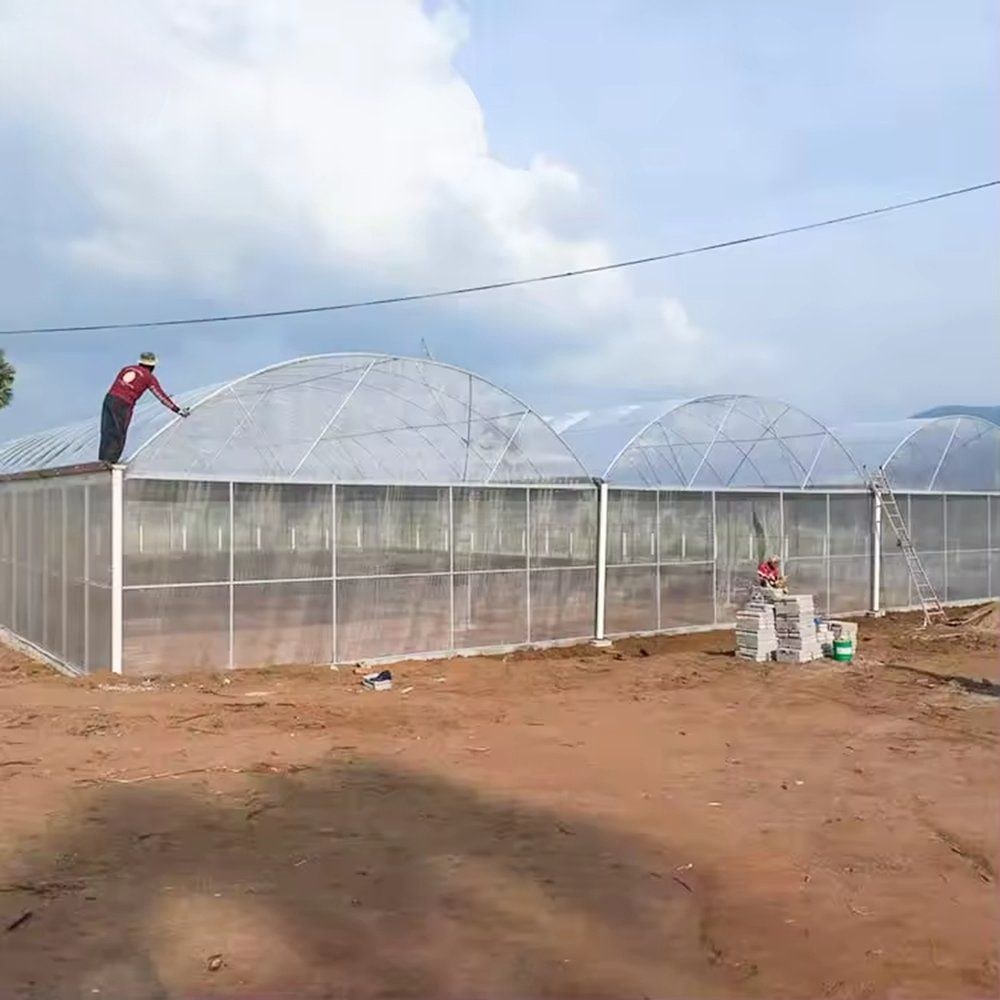
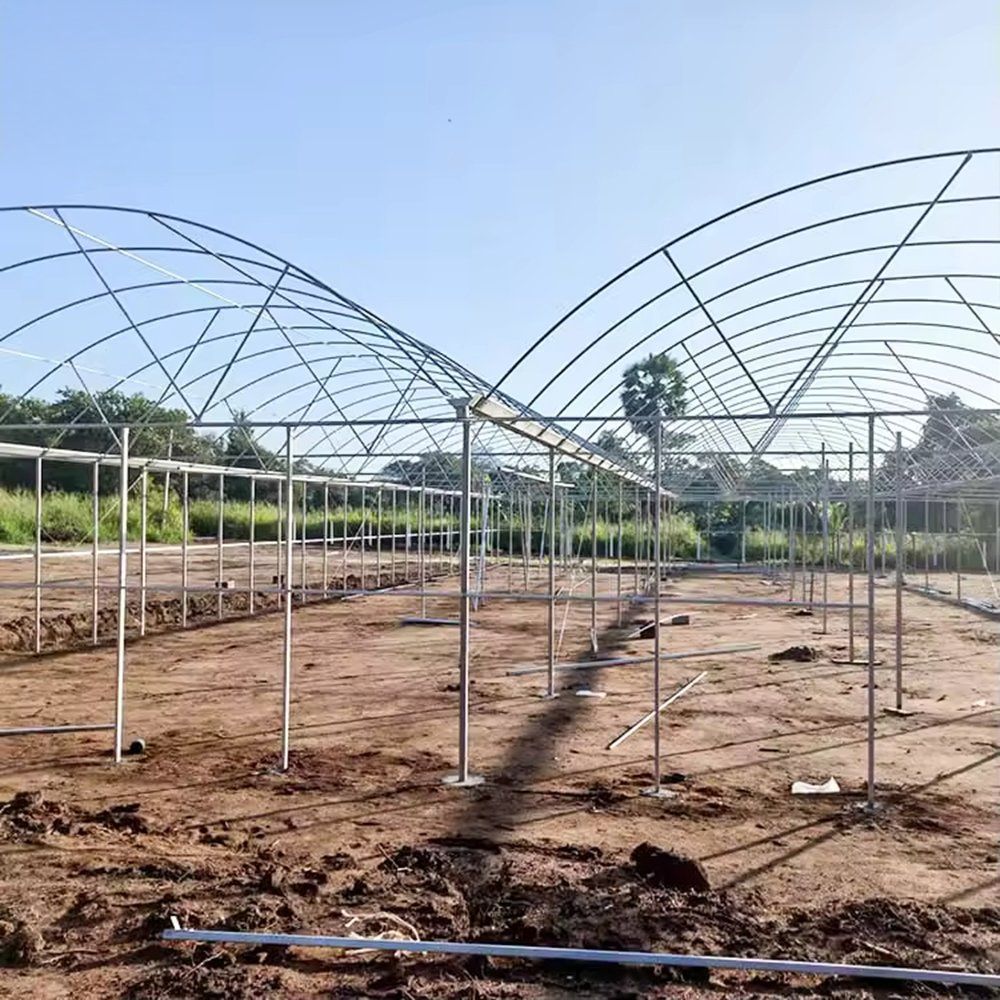
This listing is unusual in giving the frame dimensions as well as the house: arch tubes of forty or forty eight millimetres at one and a half millimetre wall, a hot dip galvanized skeleton, cover in PE or PO film, widths of six to twelve metres, heights of three to seven metres and lengths of twenty to a hundred metres. The film is held with a locking profile and wiggle wire rather than battens, which is the detail that decides how quickly a bay can be recovered.
Most greenhouse listings give you a width and a length and leave the section to the imagination. This one gives the arch tube size and the wall thickness, which is what a buyer actually needs to compare two quotations. It is part of the tunnel greenhouse range on this site.
The listing quotes arch tubes at forty by one point five millimetres or forty eight by one point five millimetres, with a skeleton in hot dip galvanized steel and a material thickness of two millimetres or one and a half. Those numbers, not the price per square metre, are what set the snow capacity and the service life of the house.
It also quotes a snow load of nought point four kilonewtons per square metre, which is about forty kilograms per square metre. On a small tunnel that is a comfortable margin; on a wide one it is the line the section was chosen to hold.
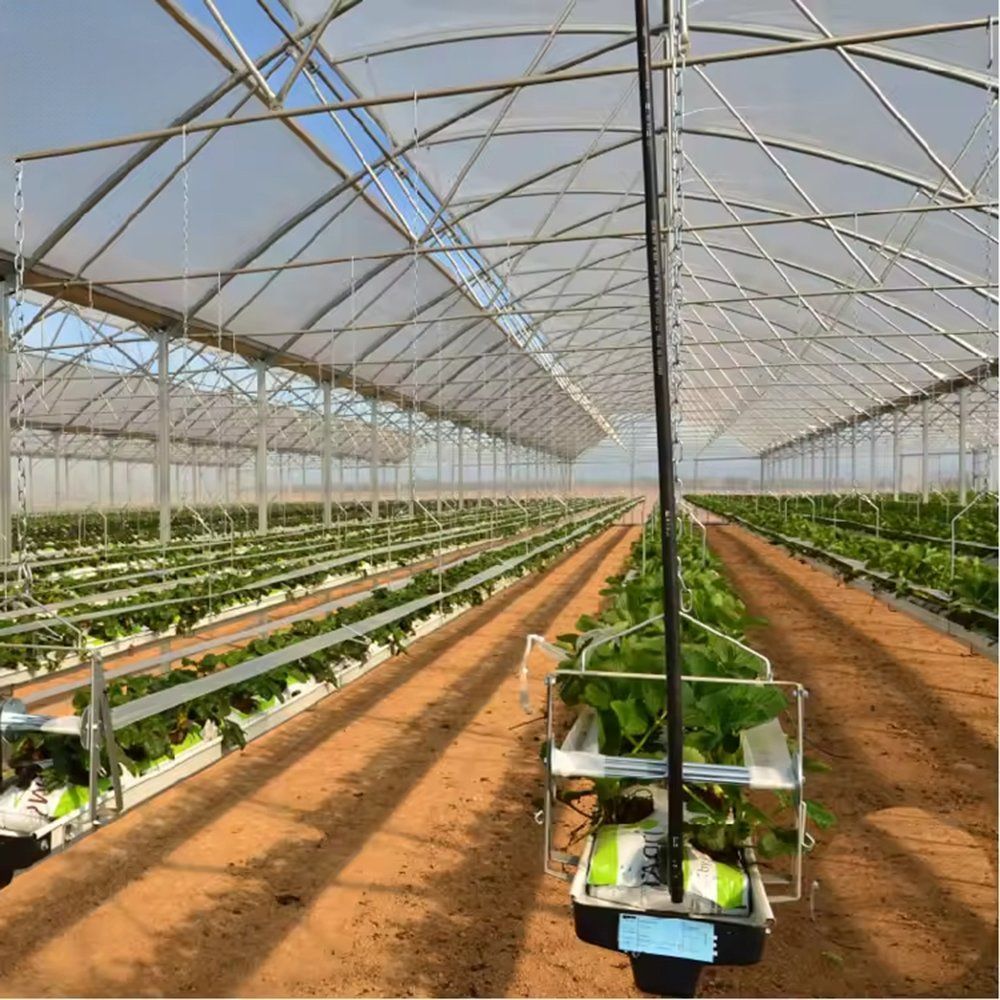
Widths run from six to twelve metres and heights from three to seven metres, with lengths from twenty to a hundred metres. The arch section is the thing to match to the width: a forty millimetre tube is adequate at six metres and marginal at twelve, and a forty eight millimetre tube at one and a half millimetres wall is the usual step up for the wider spans.
The custom fields on the same listing offer spans of eight to twelve metres and heights of three to eight metres, so the range overlaps the table rather than contradicting it.
| Width | 6 to 12 m, customized |
| Height | 3 to 7 m, customized |
| Length | 20 to 100 m, customized |
| Frame | Hot dip galvanized skeleton |
| Cover | PE or PO plastic film |
| Material thickness | 2 mm or 1.5 mm |
| Arch | 40 x 1.5 mm or 48 x 1.5 mm |
| Snow load | 0.4 kN/m² |
| Film fixing | Locking profile with wiggle wire |
| Side ventilation | Manual or electric, optional |
| Span connection | Spans can be joined by gutter |
A locking profile with wiggle wire holds the film in a continuous channel. It costs a little more than battens and staples and it repays that on the first repair: a bay can be released, patched and re-tensioned by two people in an afternoon, instead of a whole sheet being written off.
It also tensions the film evenly, which matters more than it sounds. A cover that flutters against the frame wears through at the contact points first, and that is where the first tear appears in a storm.
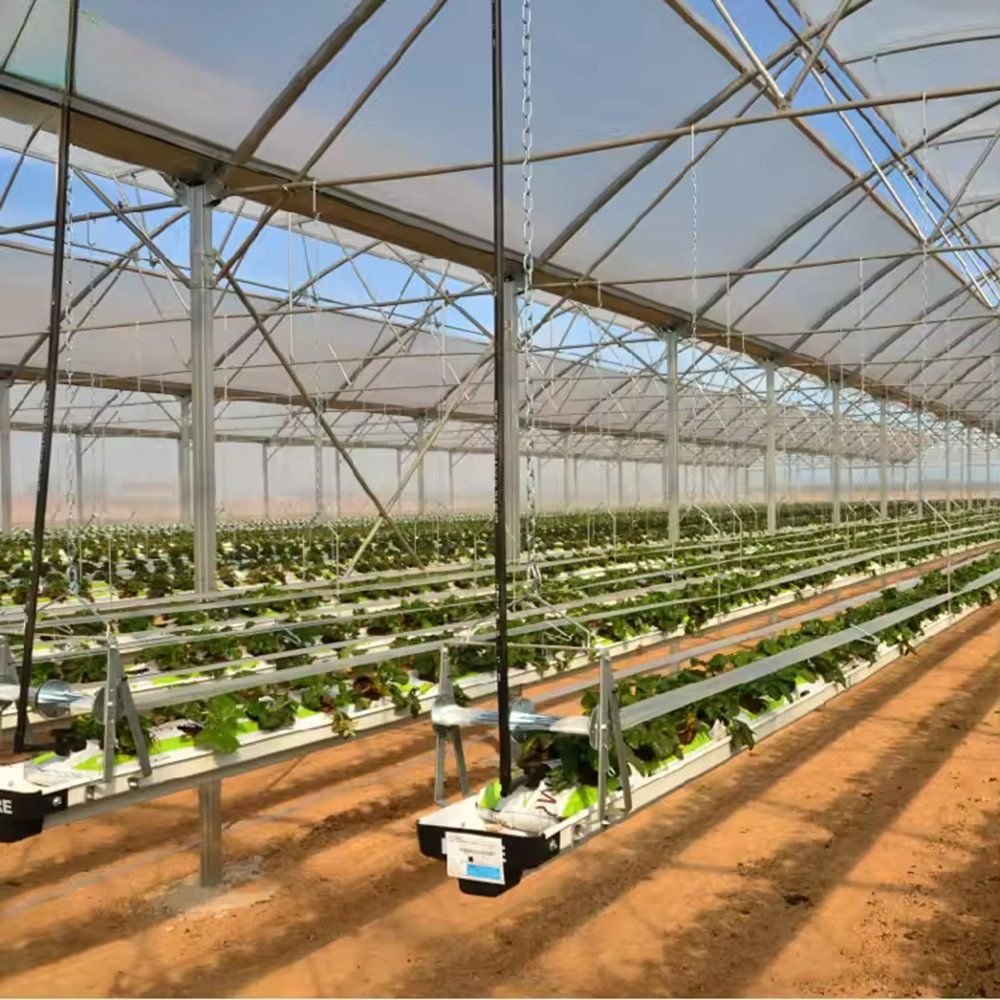
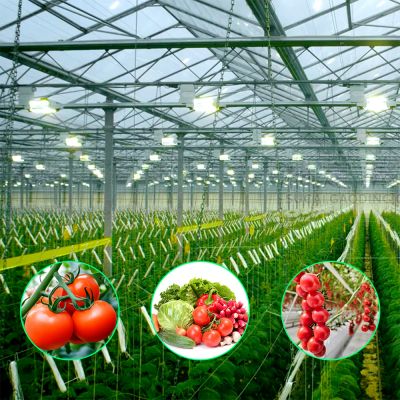
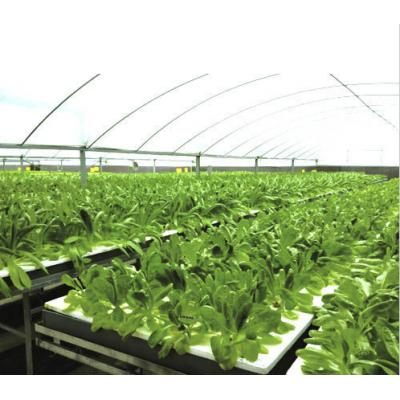
The listing is aimed at hydroponic vegetable production, and film is a reasonable cover for it: leafy crops and herbs do not need the light stability of glass, and the capital saved goes into the channels, the pump and the tank.
The constraint is humidity. A film house holds moisture, and a hydroponic system adds to it. Venting at crop level, not only at the ridge, is what keeps the canopy dry; that is why side ventilation is offered as manual or electric on this house.
A large multi span film house is described on the large commercial multi span house page, and a prefab multi span kit on the prefab multi span high tunnel page.
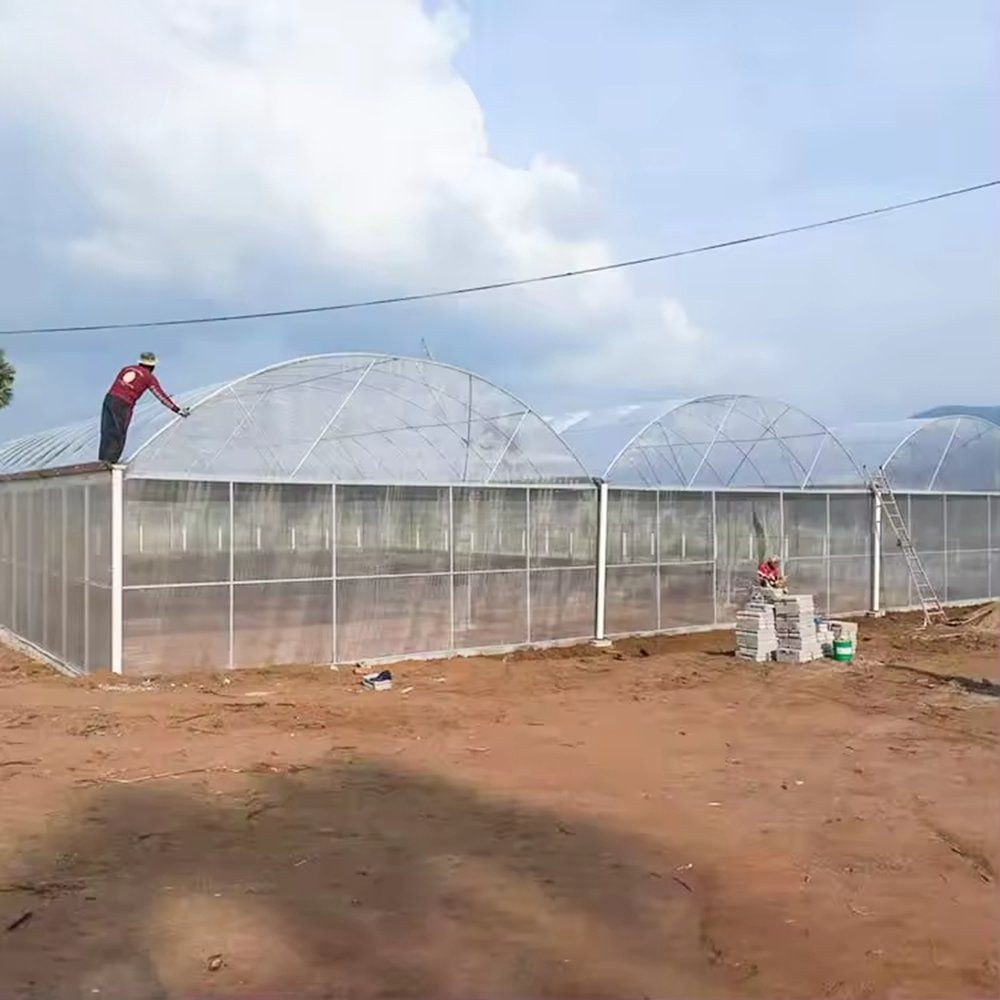
Spans can be joined through a gutter, which turns a row of tunnels into one volume. That is the low cost route to a large continuous growing area without buying a wider section: the same arches, repeated, with a gutter between them.
The gutter then carries the drainage for every span it joins, so the outlet and the fall are sized for the whole roof. A gutter that is adequate for one span is not adequate for six.
Protected cropping guidance is published by AHDB, and agribusiness trade coverage by AgriBusiness Global.
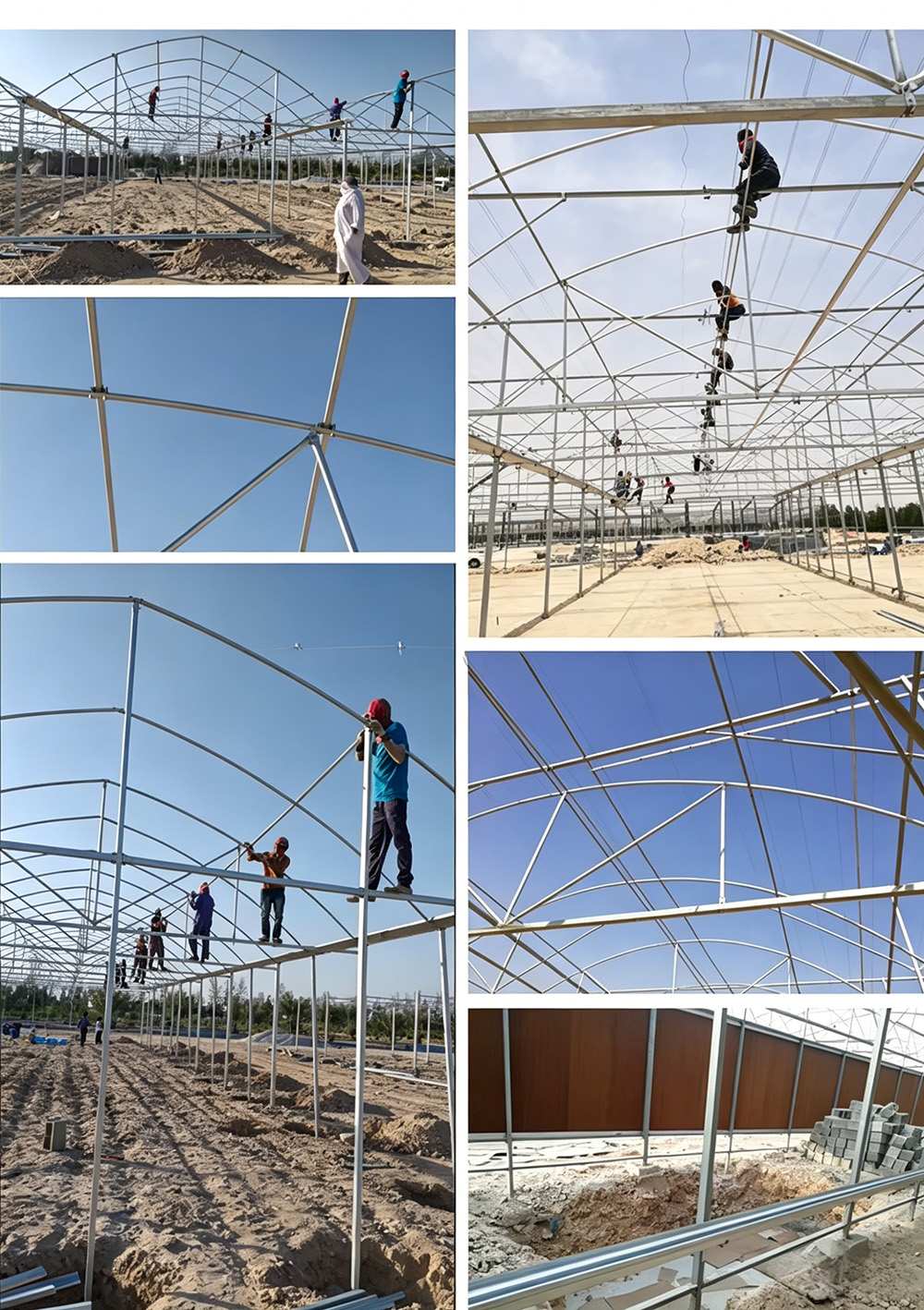
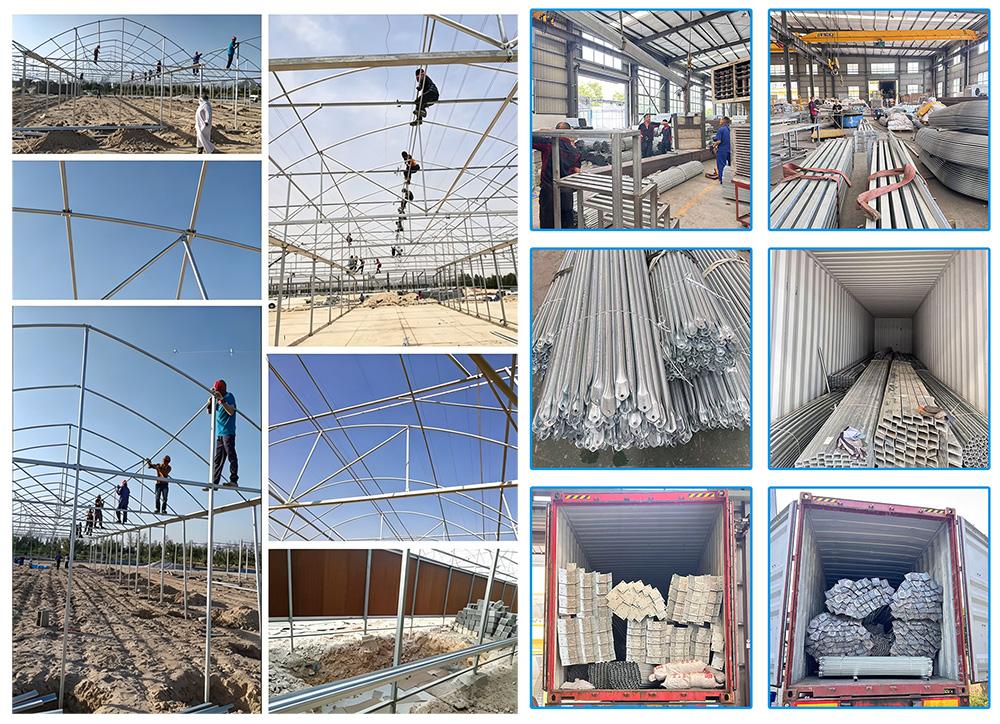

The hot-dip galvanized steel frame is designed for a 15-20 year service life in normal agricultural environments, with a double-sided zinc coating of 200-275 g/m². Film covers are replaced every 3-5 years, while glass and PC panels carry their own manufacturer warranties.
A standard multi-span greenhouse is typically erected in 2-4 weeks, depending on the span, the number of bays and site access. Foundation work and glazing are the two stages that set the pace, and both are scheduled before the frame arrives.
Yes. We customize span width, bay length, gutter height, covering material (film, PC sheet or glass) and ventilation configuration. Share your crop type, local climate and growing area, and our engineers will size the structure to match.
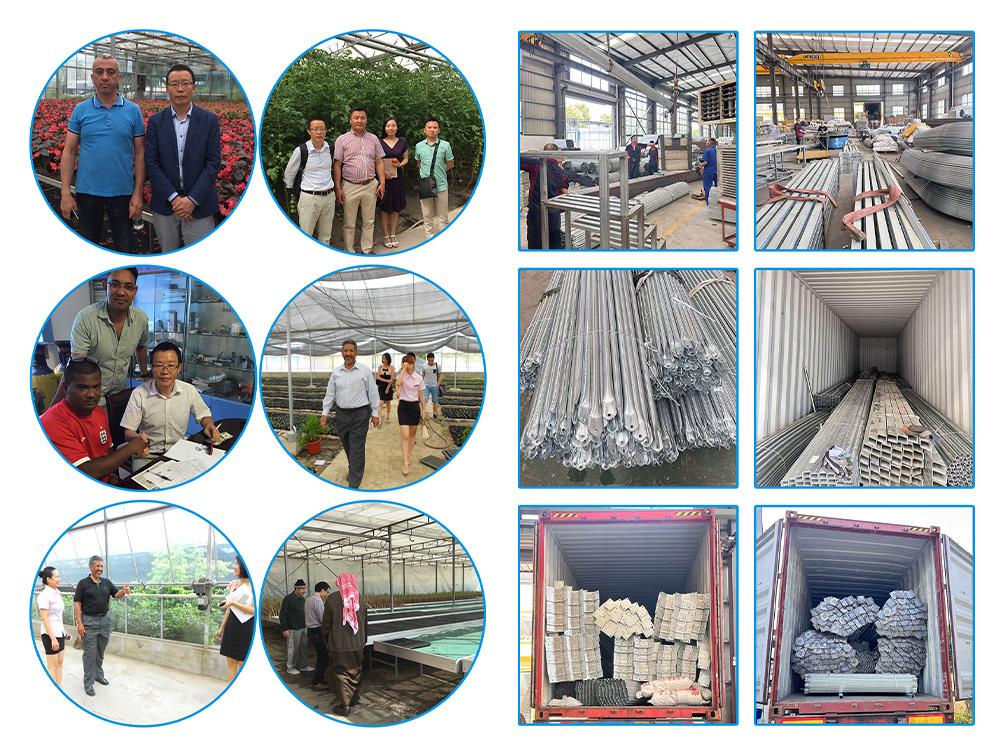
Ziyang Bozong Greenhouse Industry Co., Ltd. is a manufacturer based in Ziyang, China. We produce the hot-dip galvanized steel frame in-house, cutting and drilling to drawing, and supply covering materials, ventilation, cooling and irrigation systems as one coordinated package.
The wider the span, the more the arch section matters. A forty millimetre tube suits the narrow end of the range; at ten to twelve metres the forty eight millimetre tube at one and a half wall is the safer choice, especially where snow load is specified. Match the tube to the span, not to the price.
The listing names PE or PO film as the cover and describes the locking profile, so the cover is part of the specification rather than an extra. Confirm the film grade and thickness in the quotation, because those two decide how many seasons the cover lasts.