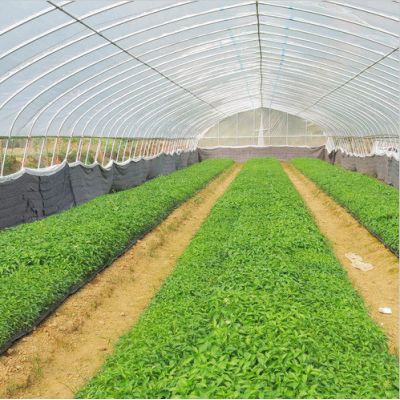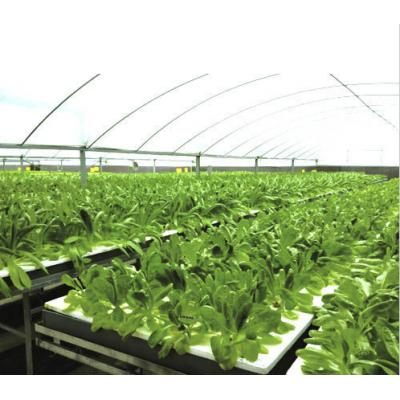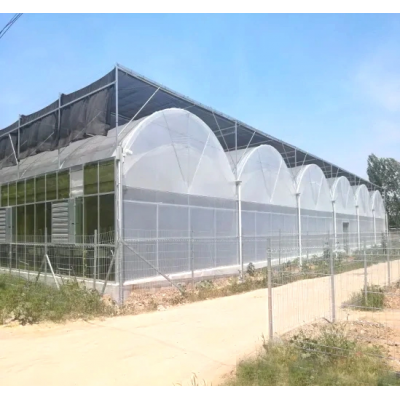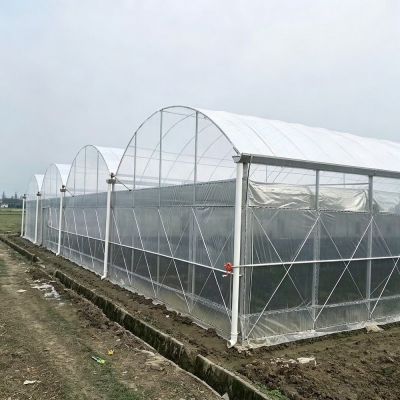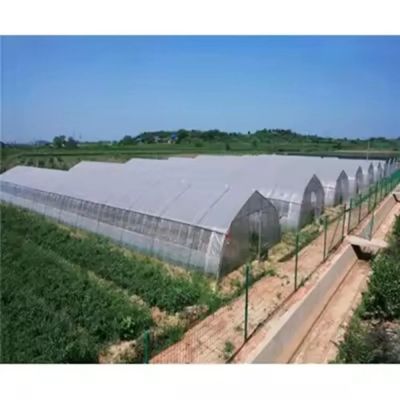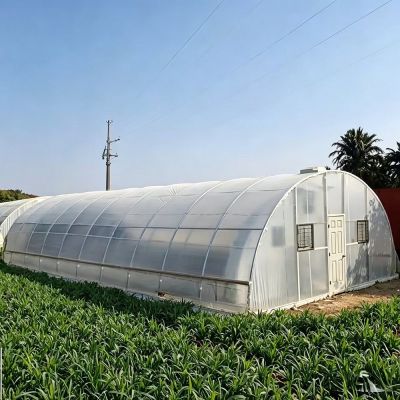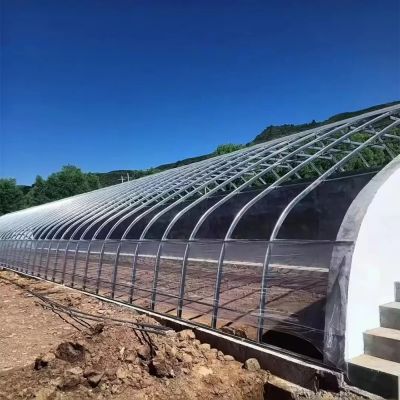
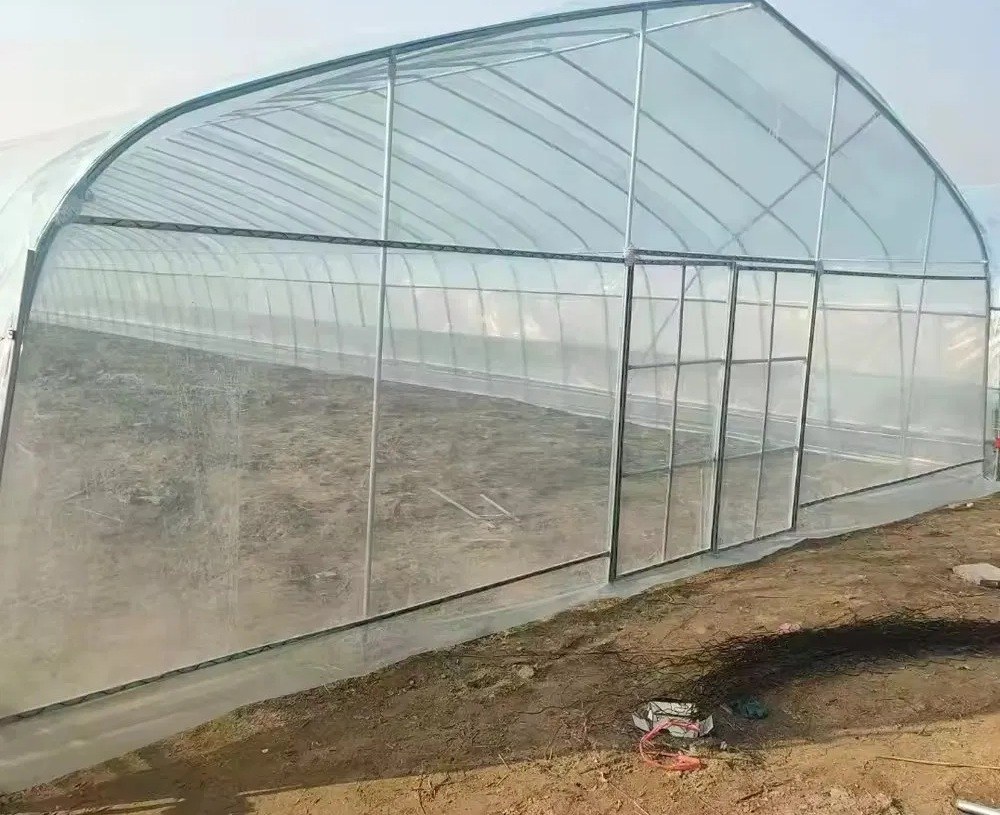
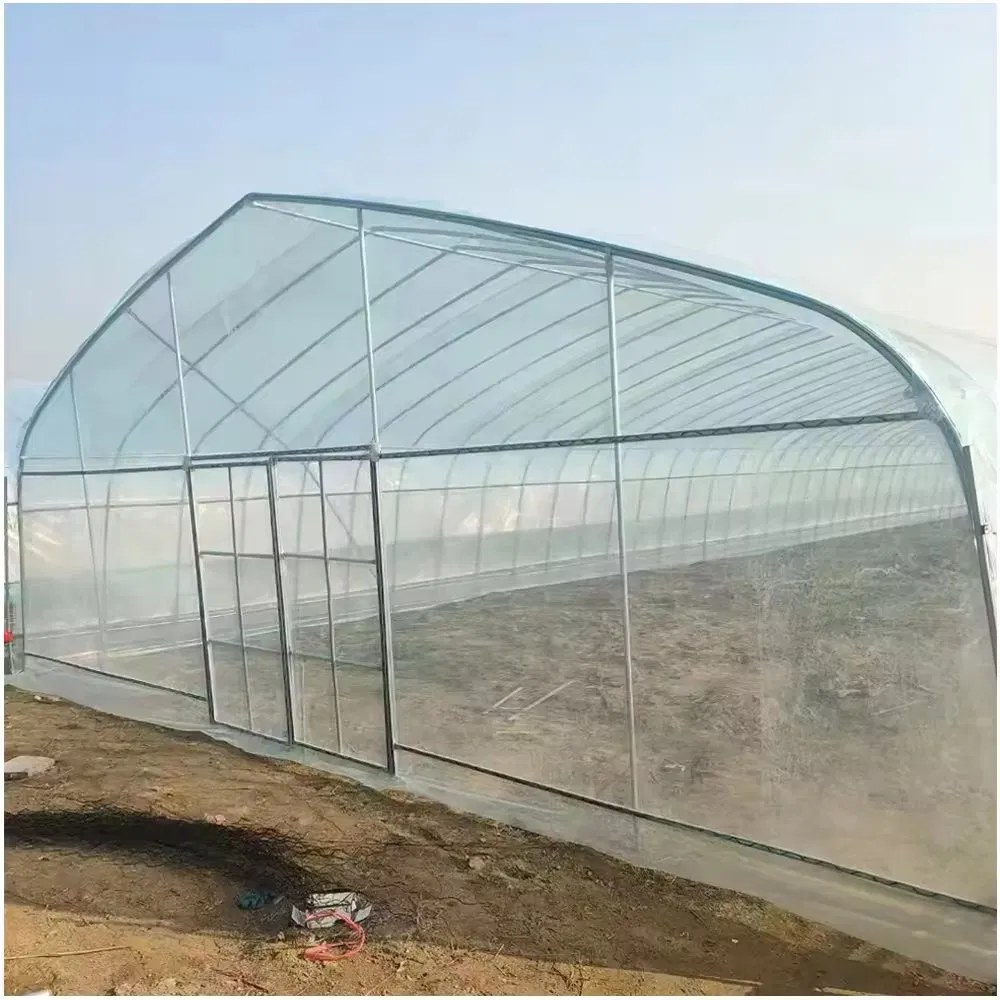
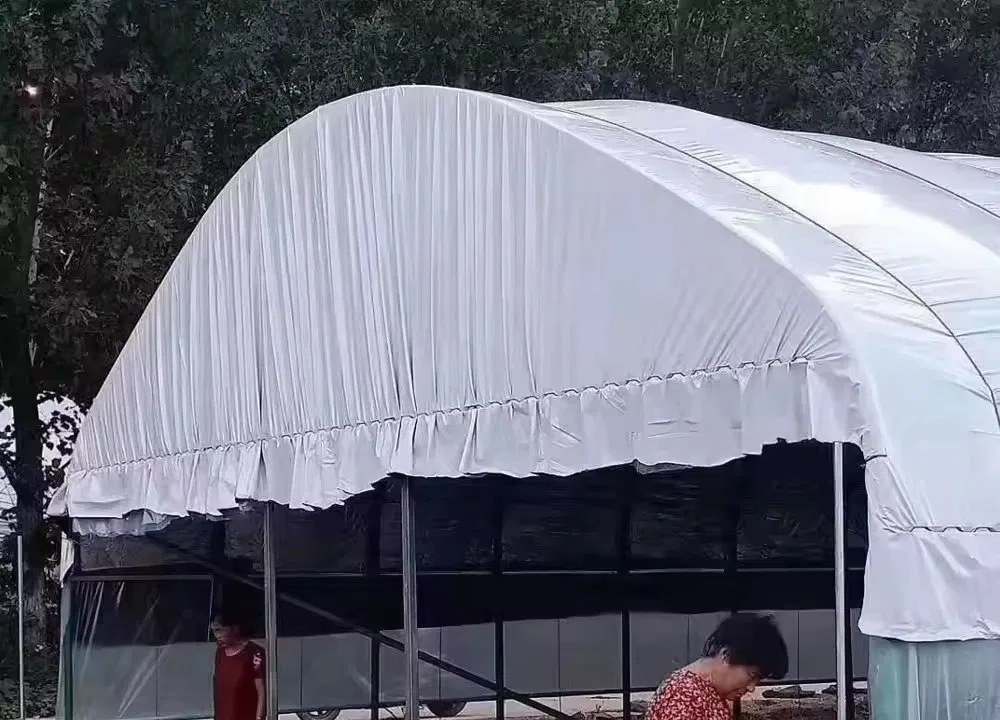
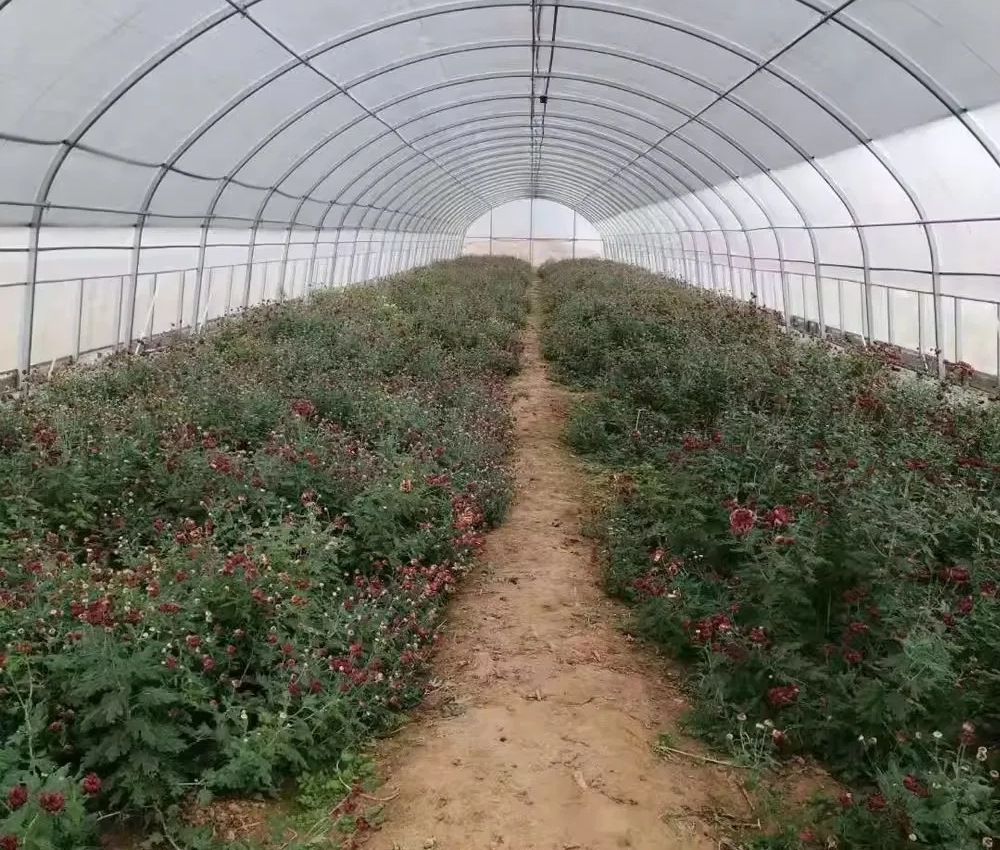
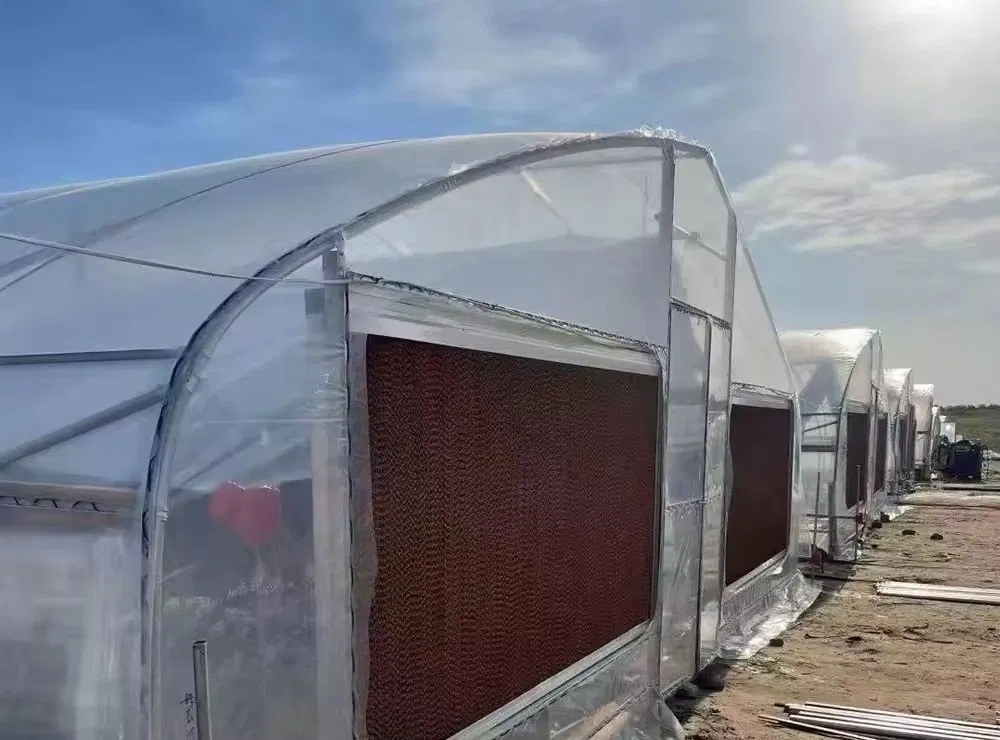
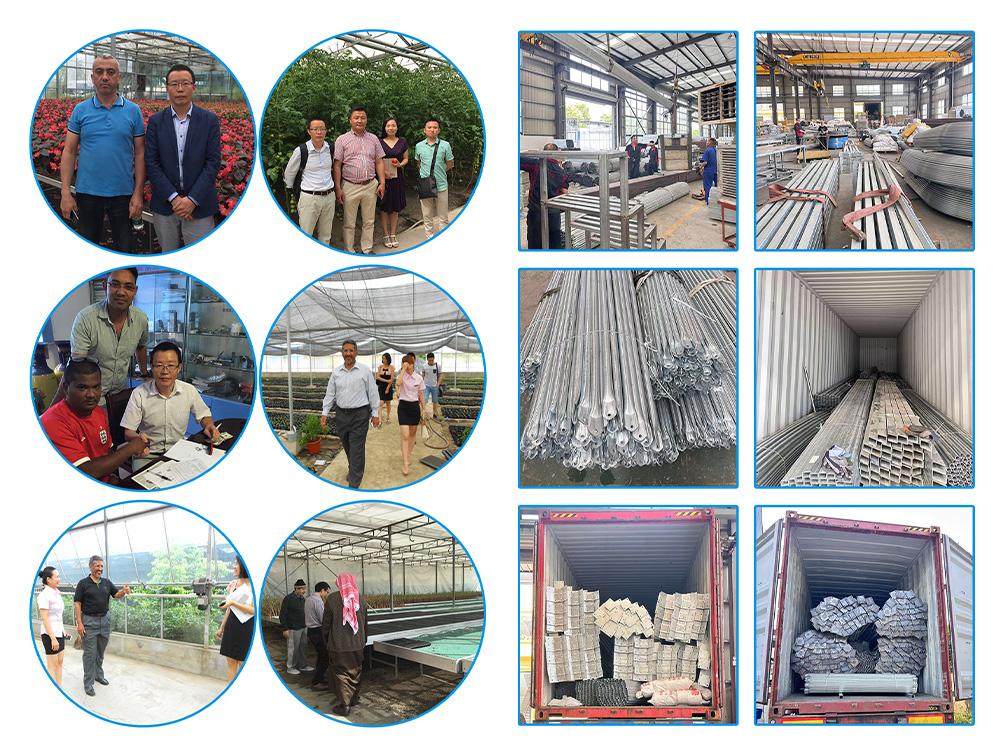
A complete set means the buyer is not assembling a house from parts: frame, cover, fixings and ventilation arrive together, cut to the ordered size. That matters most on a first tunnel, where the cost of a missing clamp or a wrong length is a stalled build. The frame is hot dip galvanized and bolted, and the width runs from five to ten metres, so the same set can be ordered for a small block or a working house. Fans and film grade are chosen against the site rather than sold as an afterthought.
The expensive part of a first tunnel is rarely the steel. It is the fortnight lost to a missing fitting, a cover cut to the wrong length, or a frame that arrives without the clamps that hold the film down. A complete set is a packaging decision as much as a product one.
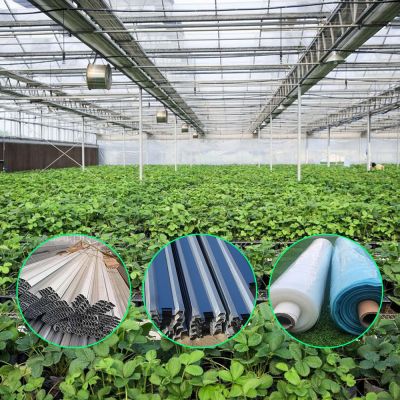
Everything needed to close the house arrives together and cut to the ordered dimensions: arches, purlins, base rail, film, clamps and the fixings for the ventilation. On a site without a fabrication shop that is the difference between a build that runs in sequence and one that stops whenever something is short.
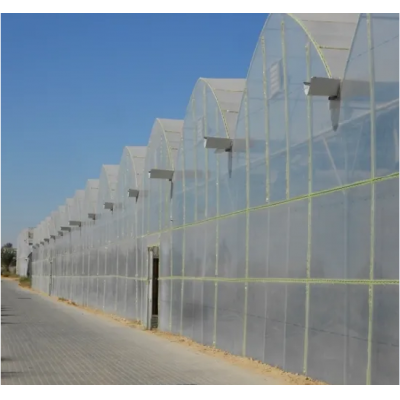
The trade is that a set is ordered in standard widths. Five to ten metres covers most small and medium blocks, and the length is cut to order, so the set fits the site rather than the site being laid out around the set. Houses of this shape are grouped on the tunnel greenhouse range on this site.
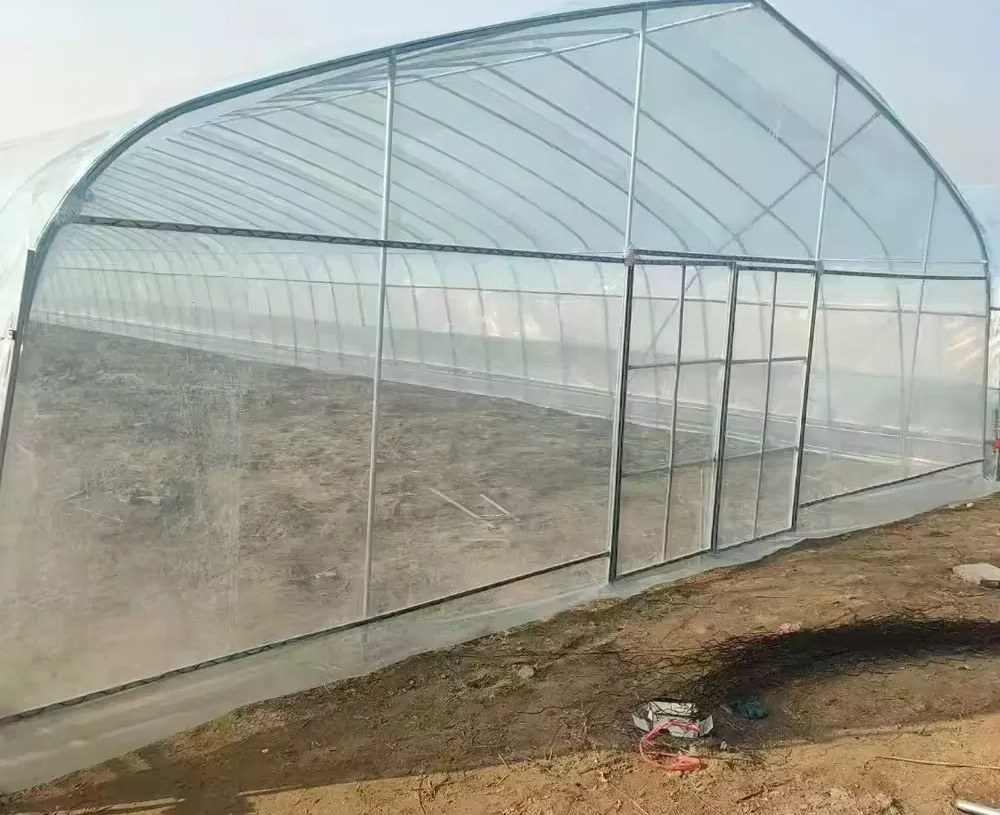
The frame is hot dip galvanized steel pipe, bolted throughout with no site welding. On a house that will be washed with condensation every night, the joints are where corrosion would start if the zinc were burned away, and bolting avoids that.
The cover is polyethylene film from 80 to 200 micron, UV stabilised, with anti-drip, anti-fog and anti-aging treatment. The thickness is chosen against the wind and hail the site actually sees rather than against a single specification: 80 micron is a light cover for a sheltered site, 200 micron is what a coastal or windy site needs. A year-round house built on the same frame is described on the year round vegetable greenhouse page.
| Structure | Single span tunnel complete set, hot dip galvanized steel |
| Width | 5 m to 10 m |
| Side height | 1.6 m to 2 m |
| Top height | 2.5 m to 3 m |
| Cover film | 80 to 200 micron PE, UV stabilised, anti-drip, anti-fog, anti-aging |
| Ventilation | Ventilation fans included in the set |
| Assembly | Prefabricated, bolted, no site welding |
| Frame service life | More than 10 years under normal conditions |
| Customisation | Length cut to order, other sizes fully customizable |
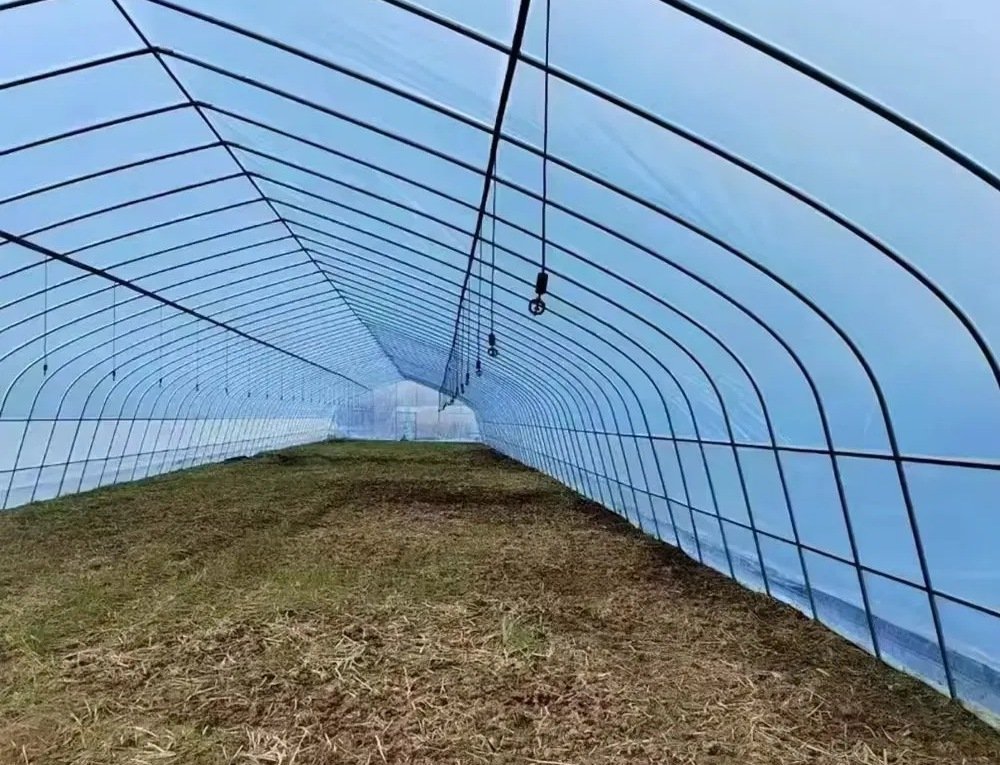
Side openings alone work on a narrow tunnel and stop working as the width approaches ten metres: the air in the middle of the house turns over slowly and the crop there sits in still, humid conditions. Fans fix that by moving a volume of air through the house rather than relying on buoyancy.
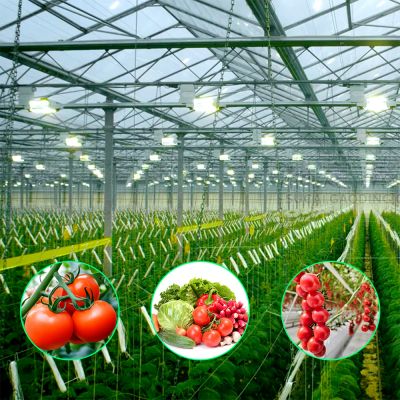
The set includes the fans, which is the reason it is sold as complete rather than as a frame plus options. On a tomato or cucumber crop the practical effect is on the humidity around the canopy rather than on the headline temperature, and that is what decides how much disease pressure the season carries.
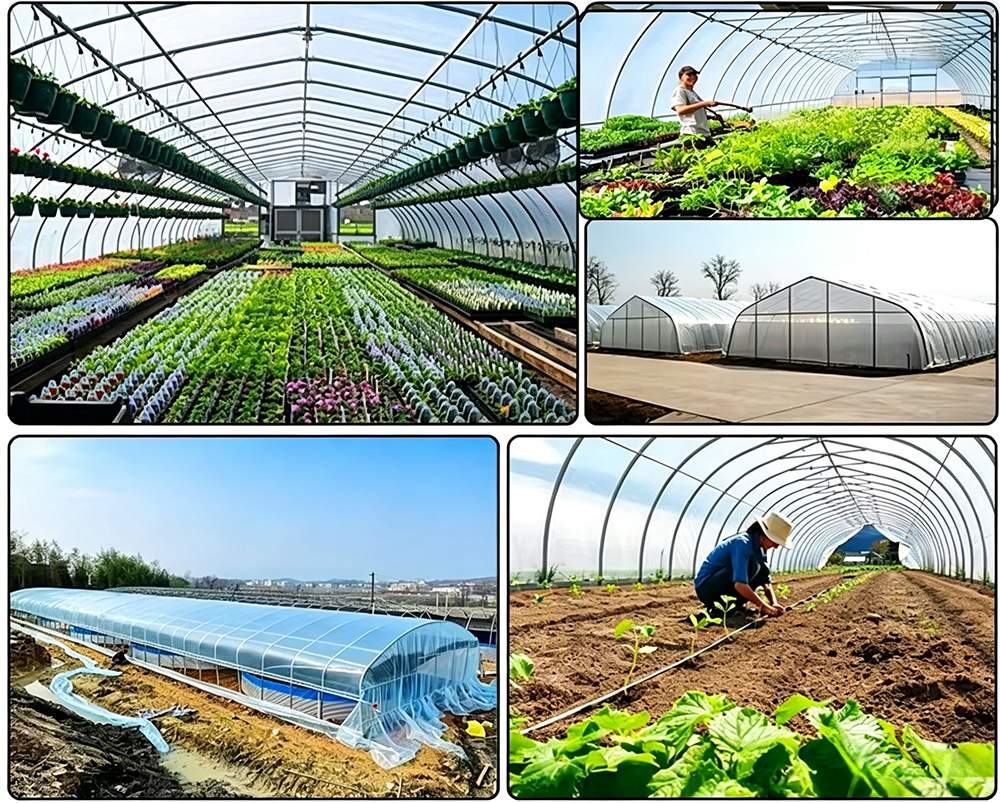
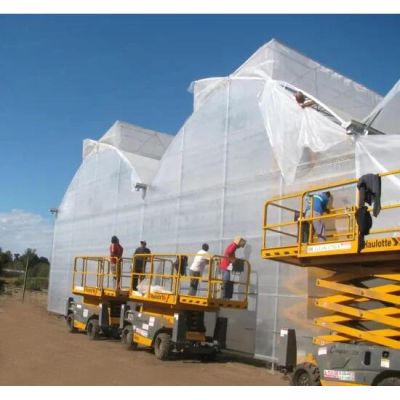
The set goes up in a fixed sequence: base rail, arches, purlins and bracing, then the cover, then the ventilation. Bolted joints mean the crew is tightening rather than fabricating, and the film is the only part that needs calm weather.
Maintenance is the cover, the fan bearings and the fixings. Film is a service item replaced on a cycle; the fans are the part that fails quietly, because a fan turning slowly still looks like a working fan until the crop tells you otherwise. A heated version of the same house is described on the hydronic heated plastic greenhouse page.
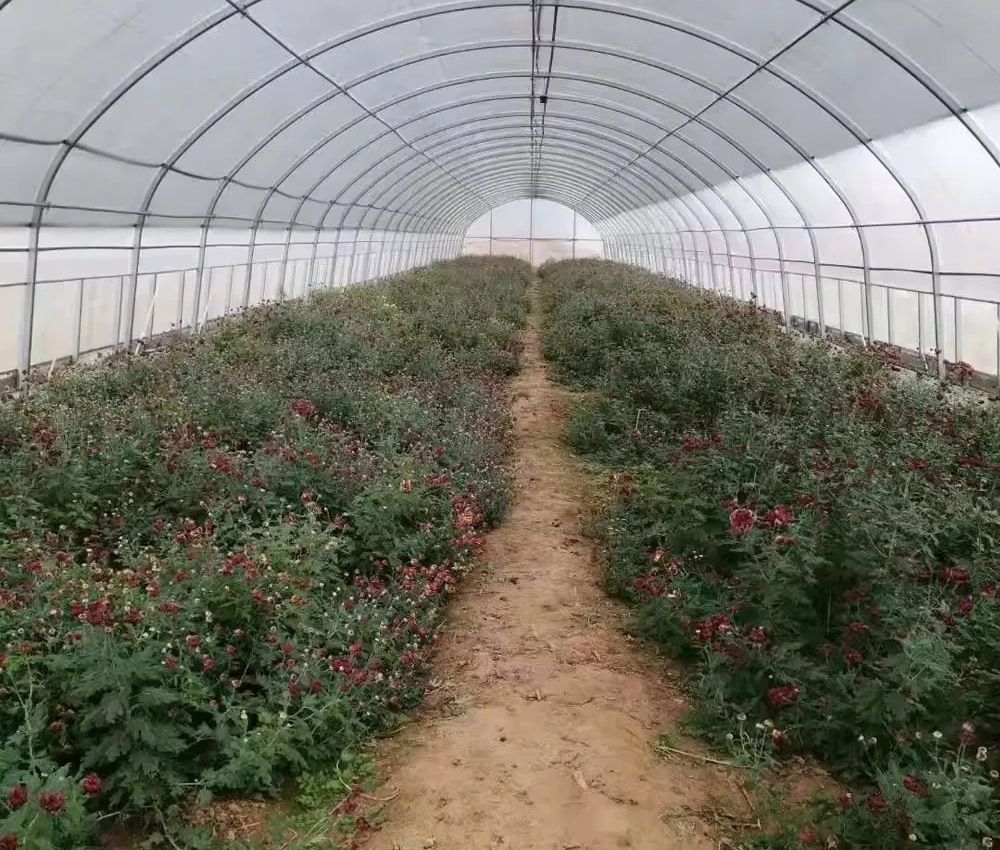
Sets at this size are used for tomato and vegetable production, for strawberry, for cut flowers, and for nursery and seedling lines. They suit a first-time buyer who wants one order rather than several, a grower adding a house of the same width as the ones already standing, and projects where the structure has to arrive complete because there is no fabrication capacity on site.
Technical guidance on protected agriculture is published by University of Florida IFAS Extension. Agricultural reporting for growers is published by Ag Alert.
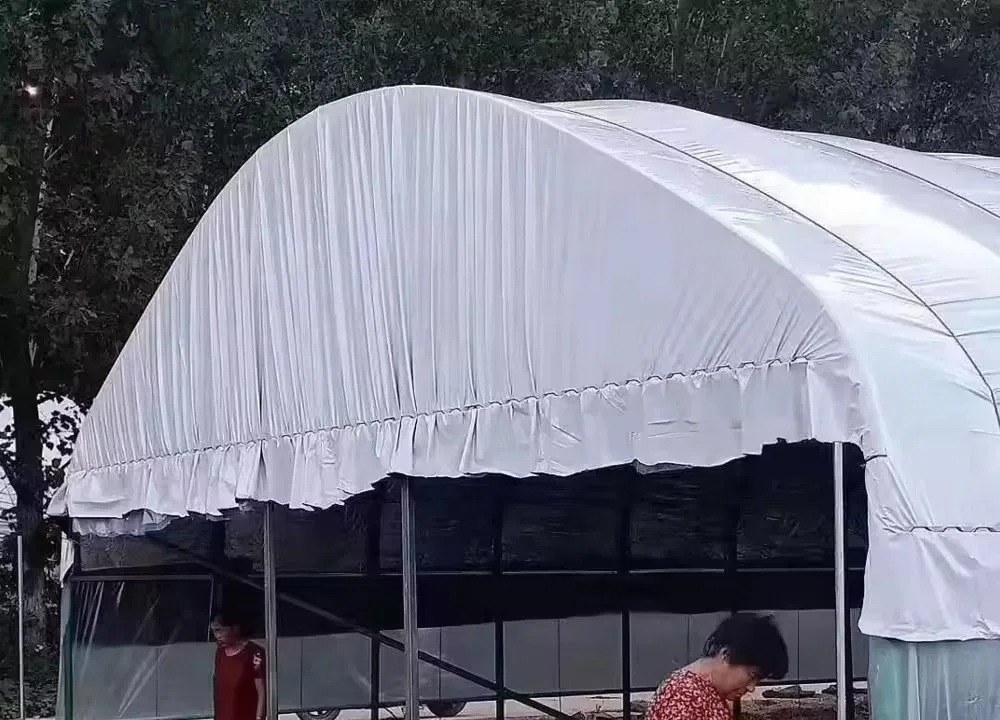
Arches, purlins, base rail, film, clamps, fixings and the ventilation fans, all cut to the ordered width and length.
They move air through the house rather than relying on the side openings alone, which is what keeps the middle of a wide tunnel from sitting in still, humid air.
The hot-dip galvanized steel frame is designed for a 15-20 year service life in normal agricultural environments, with a double-sided zinc coating of 200-275 g/m². Film covers are replaced every 3-5 years, while glass and PC panels carry their own manufacturer warranties.
Yes. We customize span width, bay length, gutter height, covering material (film, PC sheet or glass) and ventilation configuration. Share your crop type, local climate and growing area, and our engineers will size the structure to match.
The hot-dip galvanized steel frame carries a 10-year structural warranty covering structural safety, plus a 5-year warranty against corrosion perforation. It is designed for a 15-20 year service life. Film covers carry a 3-5 year UV warranty depending on grade.
Film suits low-cost tunnels on 3-5 year replacement cycles. Glass delivers the highest light transmission and the longest lifespan, at the highest cost. PC sheet insulates better than film and suits cold or high-humidity climates. The right choice depends on climate, crop and budget.