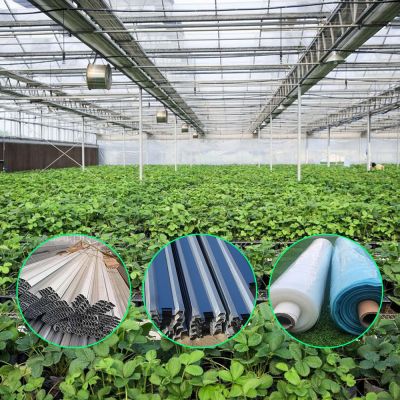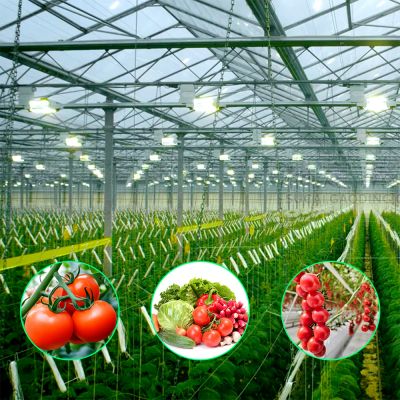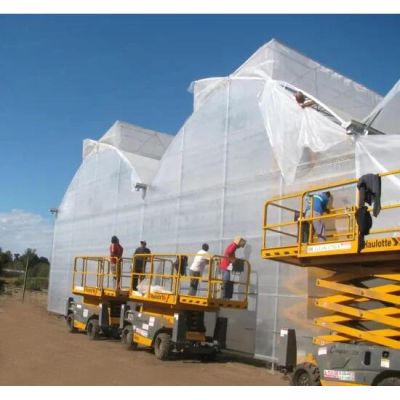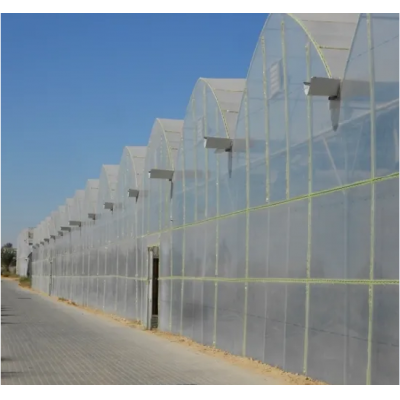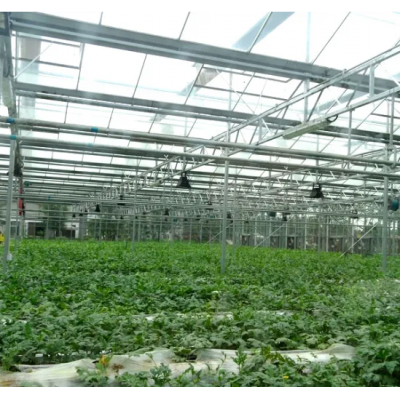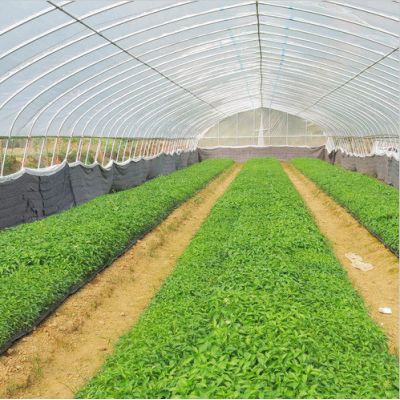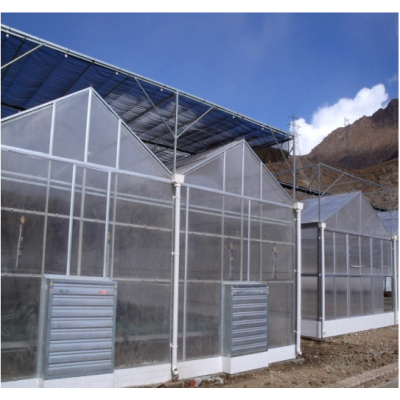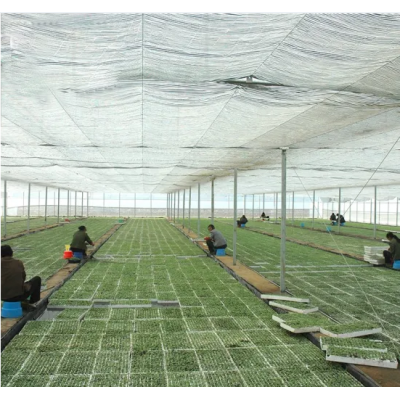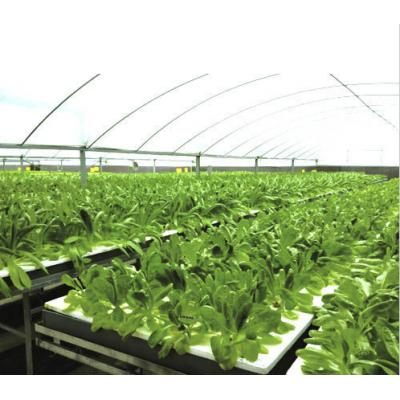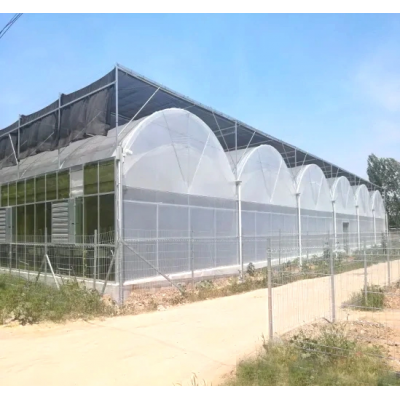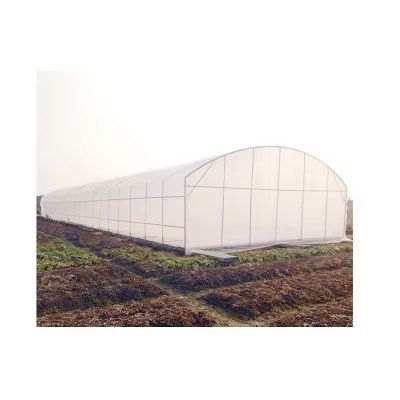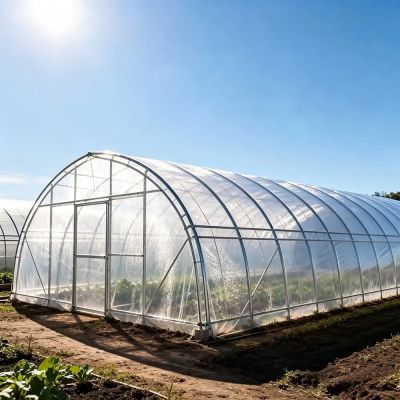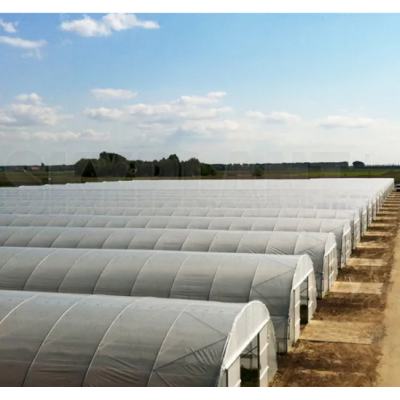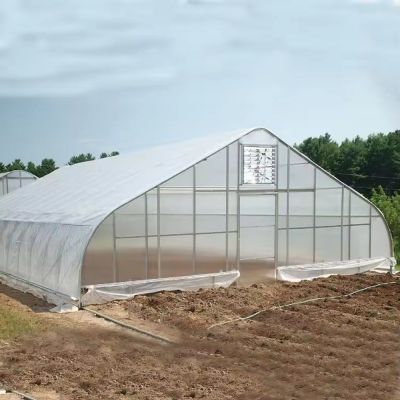
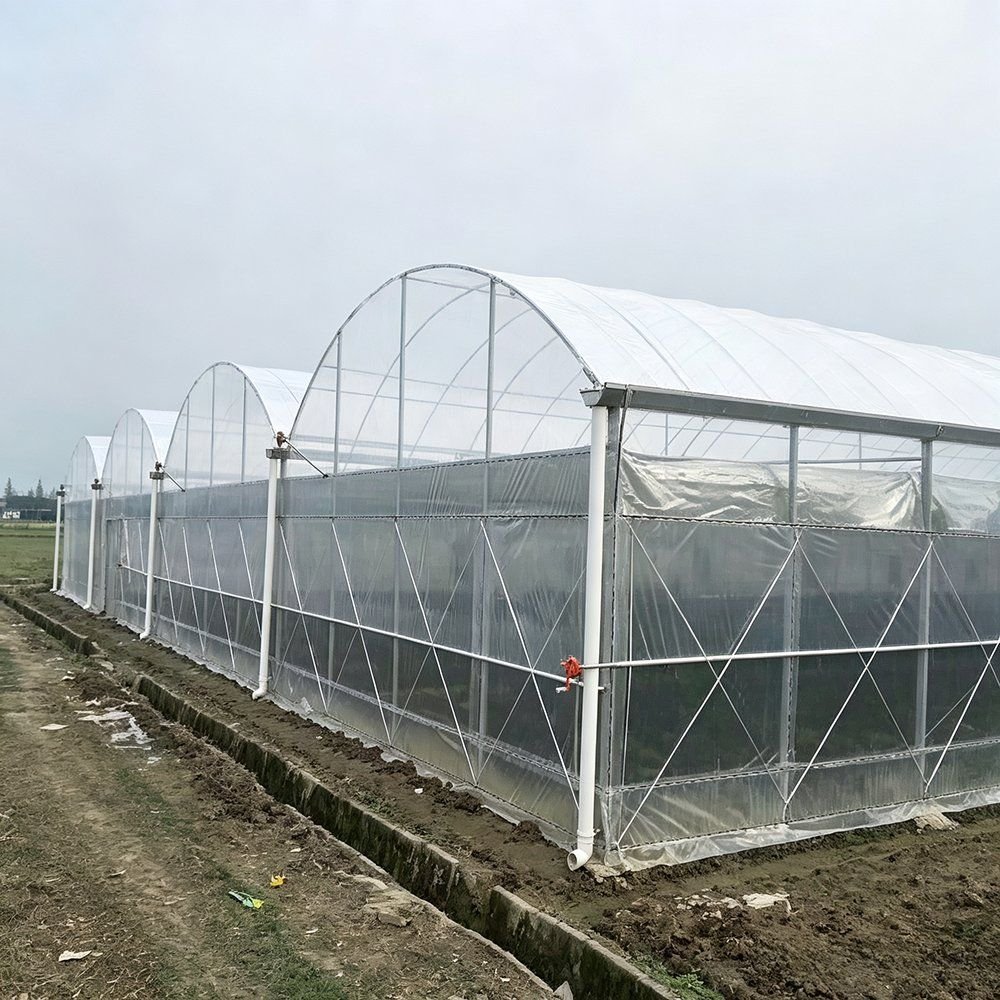
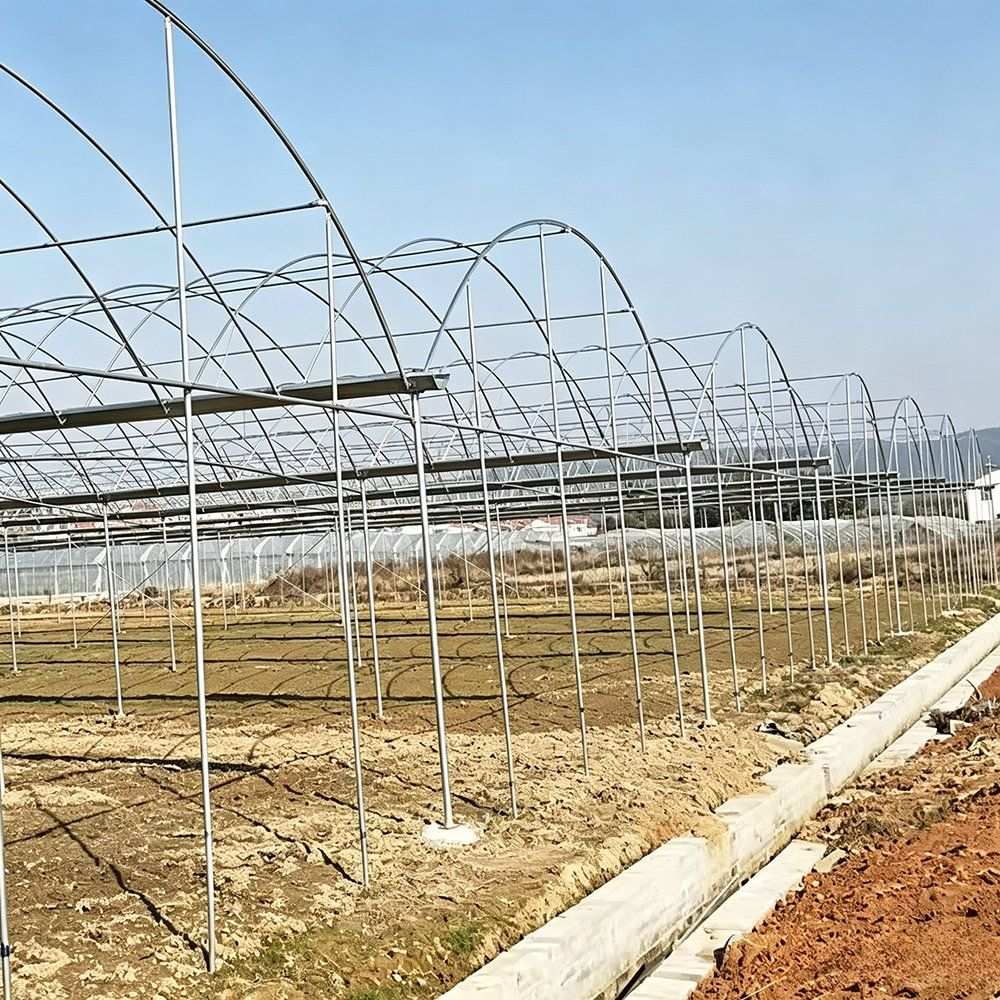
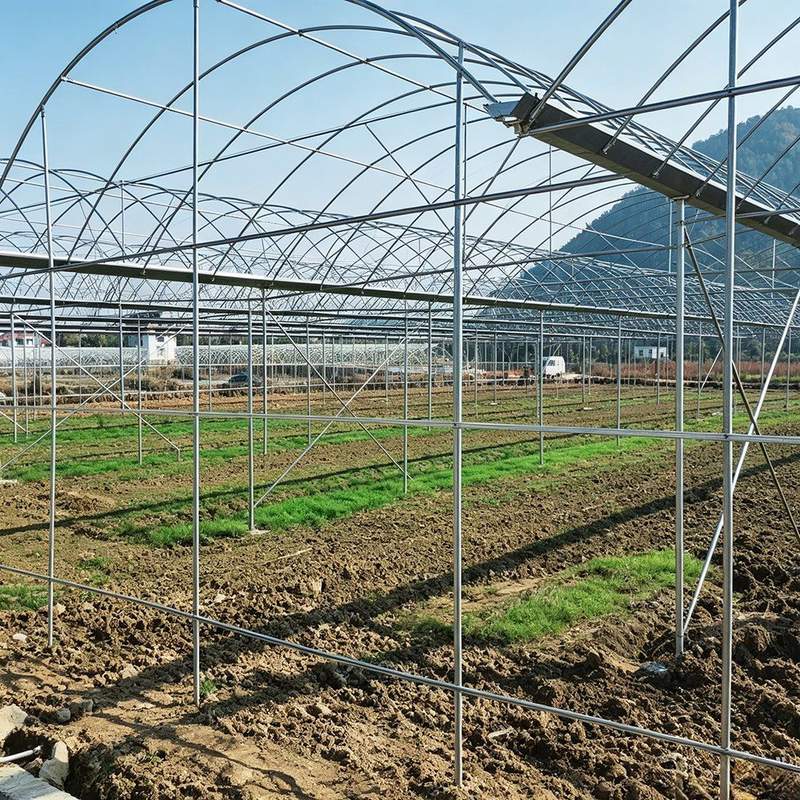
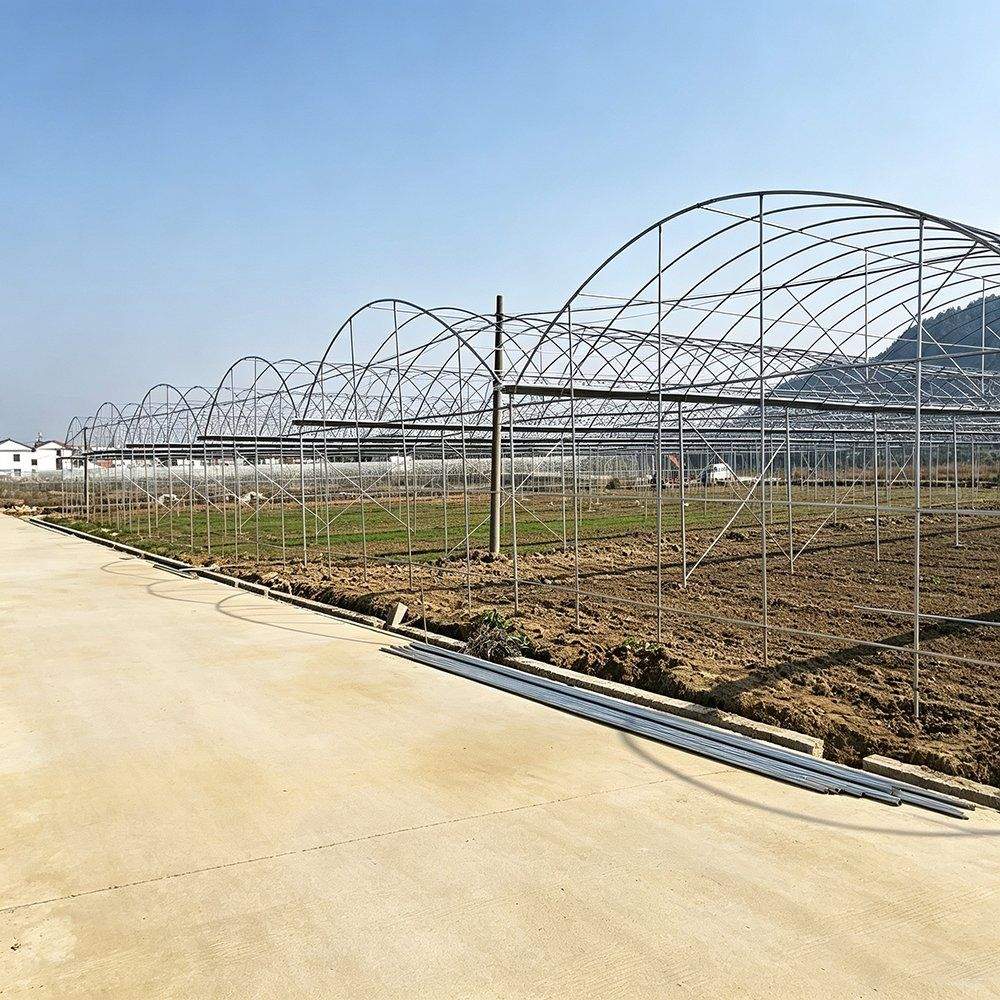
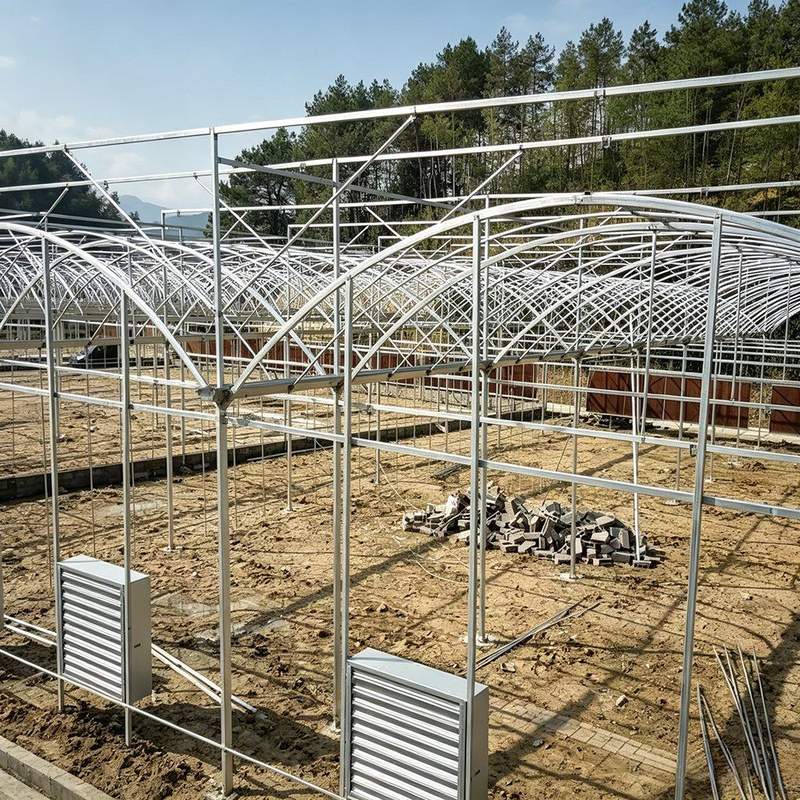
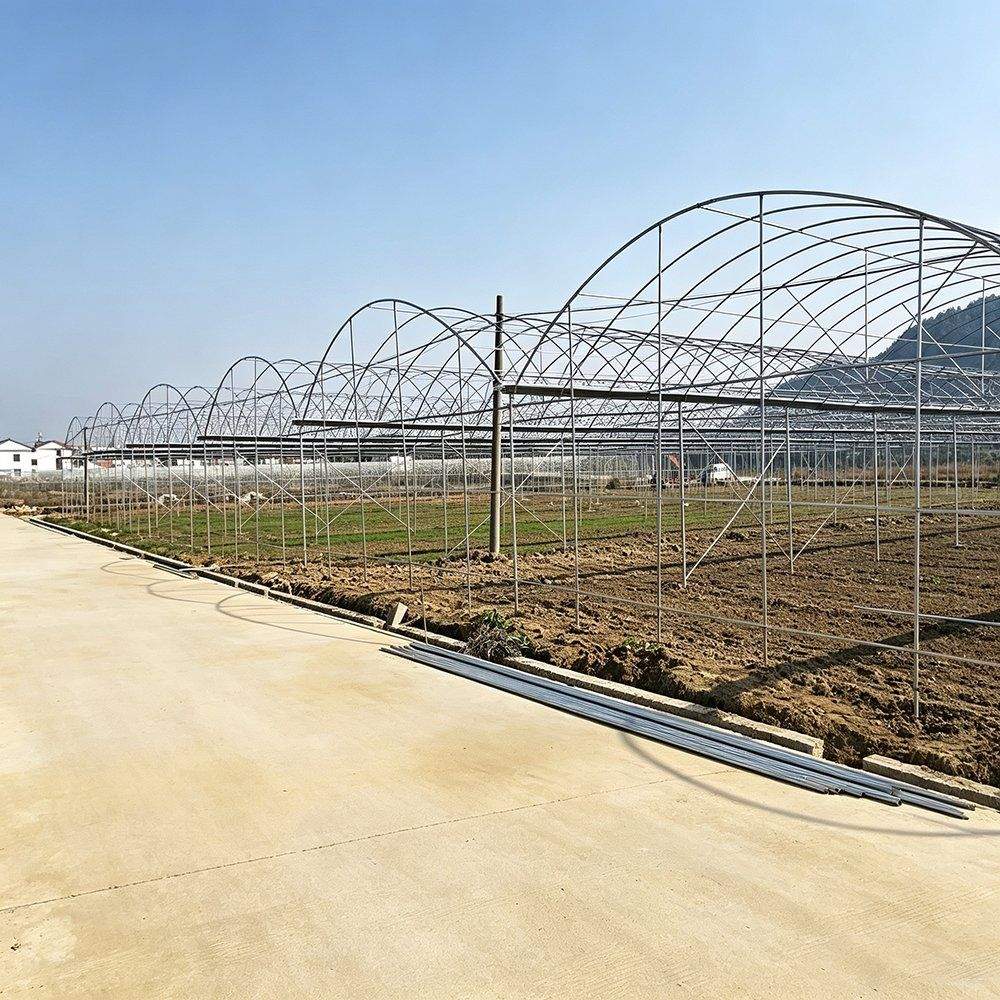
A nursery does not want the same house as a tomato grower. Seedlings want still air and steady humidity, not maximum airflow, which is why this tunnel is sealed along both sides instead of being opened up. The film blocks UV, the frame is hot dip galvanized and bolted so the zinc stays intact, and the house goes up without a concrete foundation, so benching can start as soon as the ground fabric is down. Bays can be added later on the same connection pattern, which suits a nursery planning to grow.
Seedling production is a different job from growing a crop to harvest. The plants are small, the density is high, and what damages them is rarely cold: it is draught, dry air and fluctuating humidity. That is the case for a tunnel that is closed down the sides rather than opened up.
A ventilated tunnel is built to dump heat. On a nursery bench that same airflow dries the leaf surface and pulls moisture out of the trays faster than the roots take it up, and the plants at the edge of the house suffer first. Sealing the sides removes that draught, so the air inside stays still and the humidity holds.
What is left is a fixed vent at the roof, which is enough to stop the house becoming stagnant without turning it into a wind tunnel. The result is a house that behaves more like a controlled room than a field structure, which is what a propagation unit needs. Houses of this shape are grouped on the tunnel greenhouse range on this site.
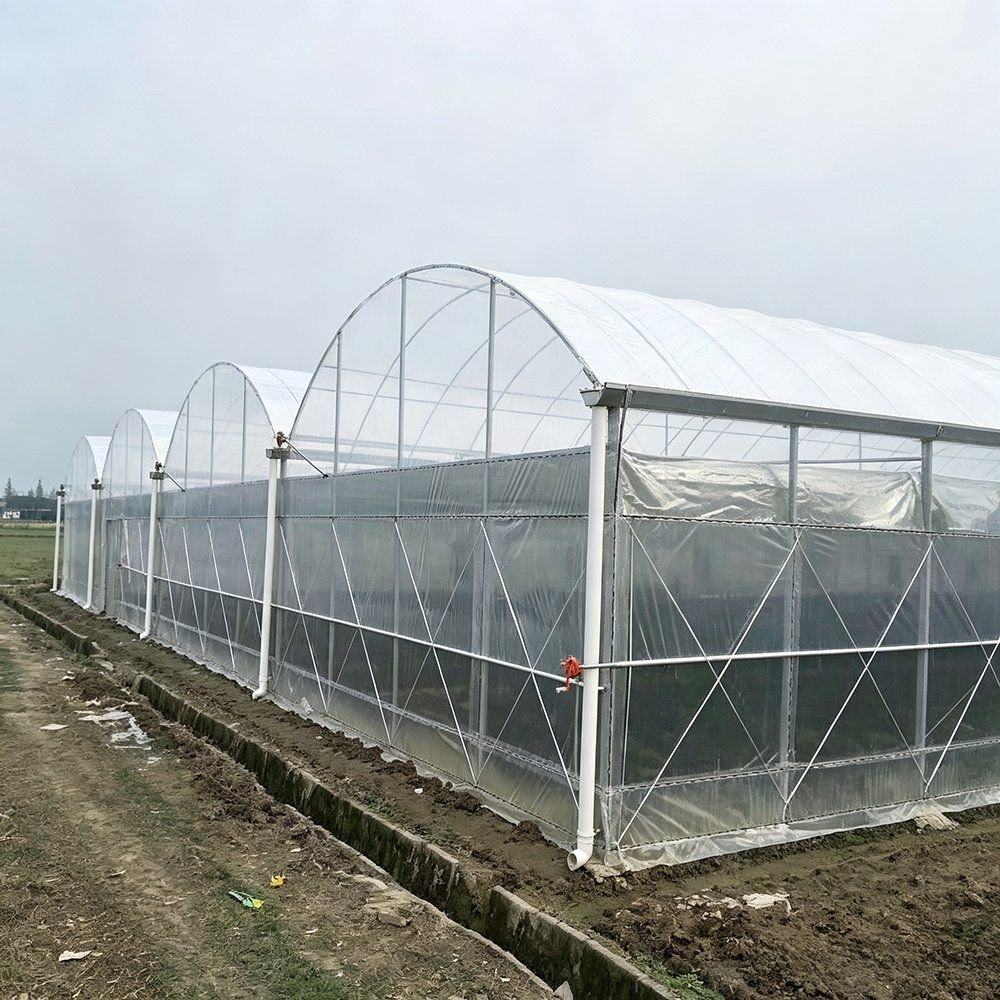
The arches are hot dip galvanized steel, and the assembly is bolted throughout. That matters more than it sounds: welding on site burns the zinc away at the joint, and a nursery is a wet environment where that bare patch rusts first. A bolted frame keeps the coating continuous from end to end.
The cover is PEP film at 150 or 200 micron, with UV block in the sheet. Seedlings are more easily damaged by strong light than a mature crop, so the film is there to take the edge off the sun while still passing enough for growth. Film grade and arch spacing can both be set for a large order where the local weather asks for it. A frame prepared the same way is shown on the nursery seed tray greenhouse page.
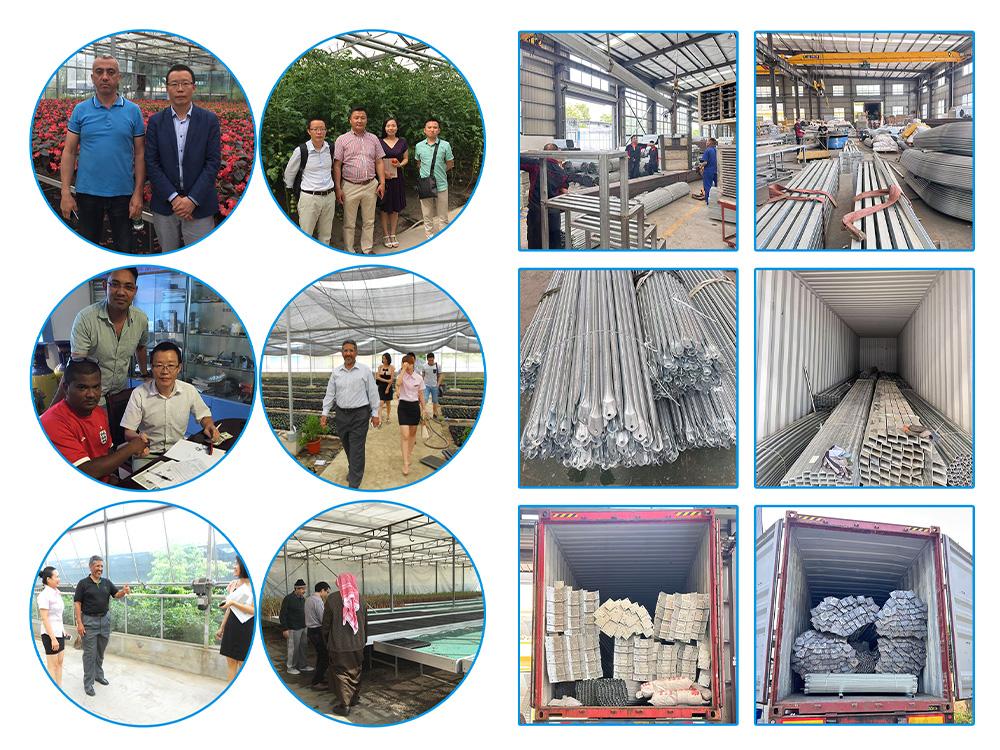
| Structure | Sealed tunnel, hot dip galvanized arch frame, bolted assembly |
| Width | 8 m to 10 m |
| Length | 30 m to 100 m |
| Wall height | 3 m |
| Roof height | 5 m |
| Arch spacing | 2 m, adjustable on large orders |
| Cover film | PEP 150 or 200 micron, UV block |
| Ventilation | Sides sealed, fixed roof vent |
| Foundation | No concrete foundation required |
| Extension | Bays can be added later on the same connection pattern |
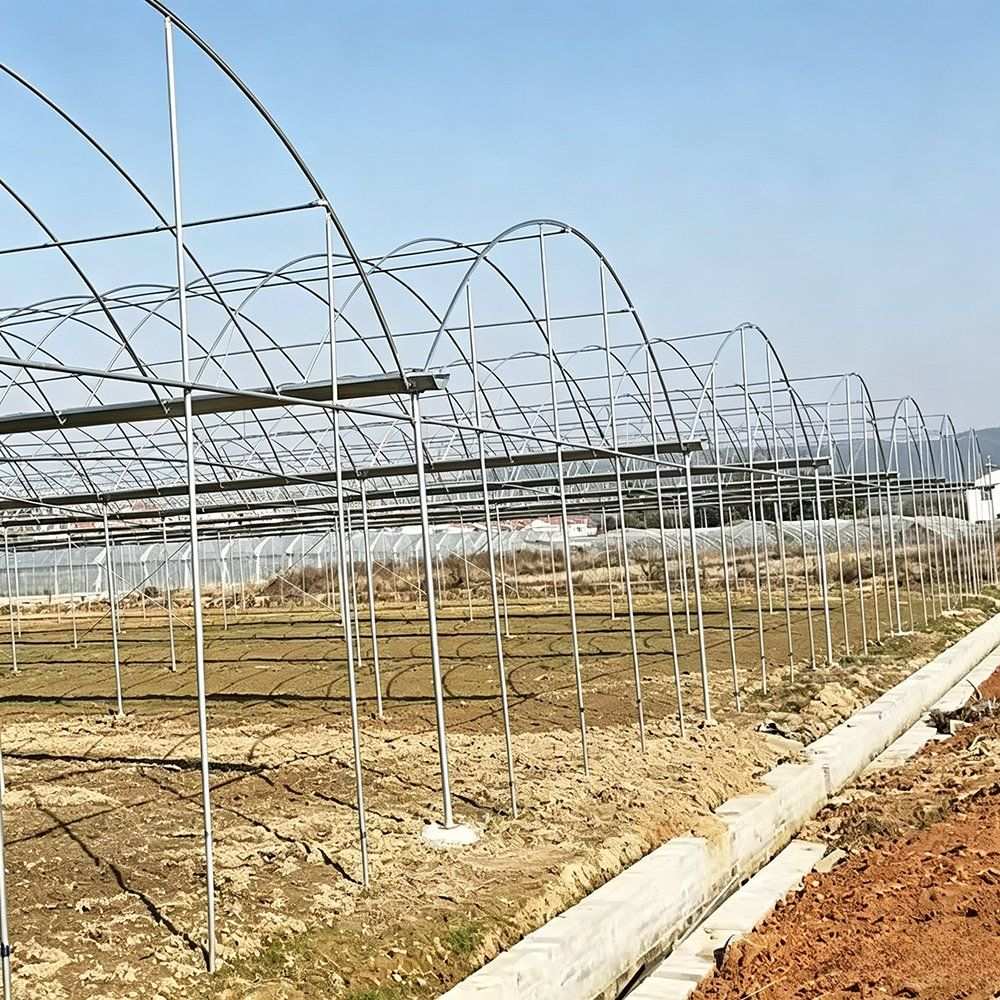
With the sides closed, the moisture the trays give off stays in the house, so irrigation intervals lengthen and the trays at the far end behave like the trays near the door. The trade is that the grower has to watch the roof vent rather than the side walls, because that is the only opening.
The UV block in the film protects young tissue from scorch during the first weeks after pricking out, when the plants have not yet built a waxy leaf surface. It is the same reason shading is used on a nursery, done here with the cover rather than with a separate screen.
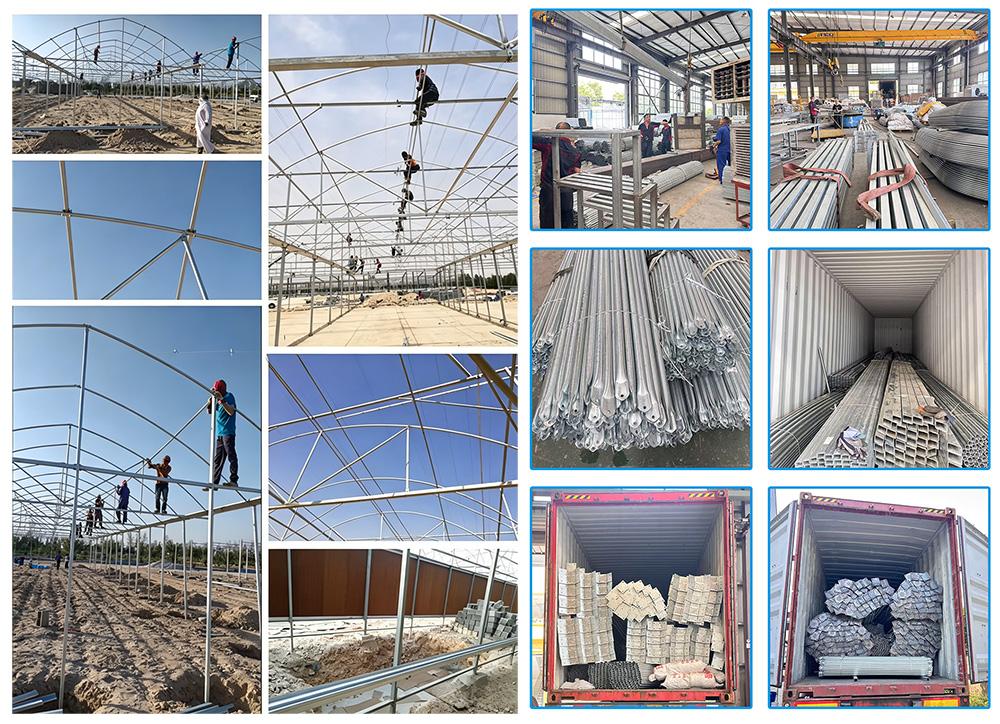
There is no foundation to pour. The ground is levelled, ground fabric is laid, and the arches are stood and bolted to the base plates; benching can follow immediately. Because the structure is prefabricated and standardised, the crew is following a sequence rather than fabricating on site.
Maintenance is the film and the fixings. The cover is a service item with a replacement cycle, and the places to check are where it meets the base rail and where it passes over the end arches. The galvanized frame itself needs little beyond an occasional look at the coating where a tool has caught it. A bed system used inside a nursery house is described on the seeding bed page.
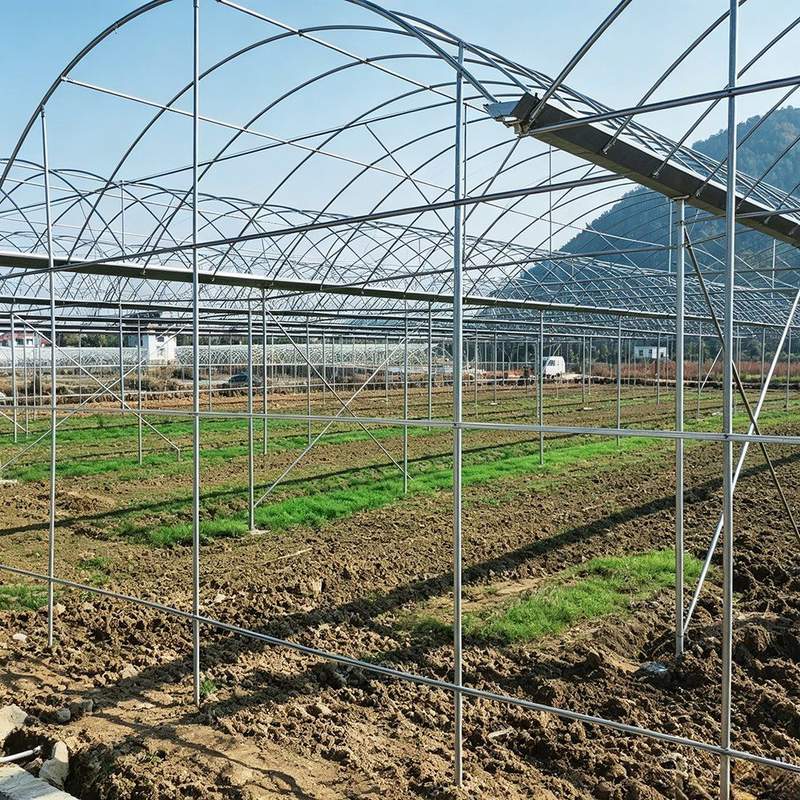
These houses are used for vegetable and flower seedling production, for propagation units attached to a larger nursery, for herb and lettuce transplants, and for any crop where still air and steady humidity matter more than maximum ventilation. They suit a propagator adding bench space without building work, a nursery that wants a repeatable house rather than a one-off, and buyers ordering several bays at once with film and arch spacing set to their climate.
Horticultural guidance for growers is published by the Royal Horticultural Society. Agricultural news and rural reporting is published by Rural News Group.
Because side openings create a draught across the bench that dries the trays unevenly. Sealing the sides keeps the air still and the humidity steady, which is what young plants need.
No. The ground is levelled and ground fabric laid, then the arches are bolted down and benching goes in. That keeps the site work short and the cost down.
The hot-dip galvanized steel frame carries a 10-year structural warranty covering structural safety, plus a 5-year warranty against corrosion perforation. It is designed for a 15-20 year service life. Film covers carry a 3-5 year UV warranty depending on grade.
Film suits low-cost tunnels on 3-5 year replacement cycles. Glass delivers the highest light transmission and the longest lifespan, at the highest cost. PC sheet insulates better than film and suits cold or high-humidity climates. The right choice depends on climate, crop and budget.
Ziyang Bozong Greenhouse Industry Co., Ltd. is a manufacturer based in Ziyang, Sichuan, China. We produce the hot-dip galvanized steel frame in-house, cutting and drilling to drawing, and supply covering materials, ventilation, cooling and irrigation systems as one coordinated package.
Send your growing area, span and length, crop type and local climate. If you already have a layout drawing, that is enough to start. Our engineers then return a quotation with a structure drawing and a bill of materials.