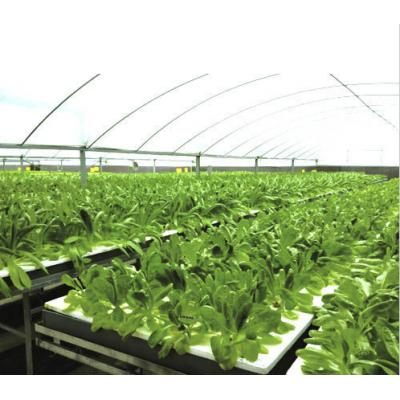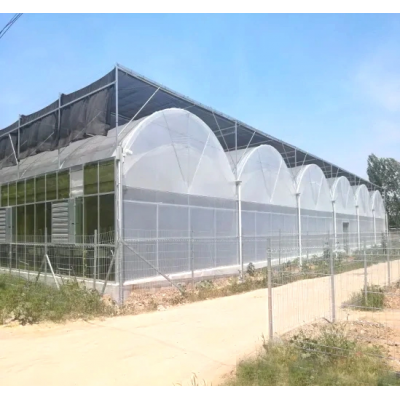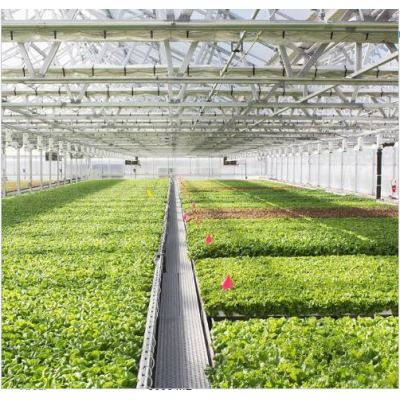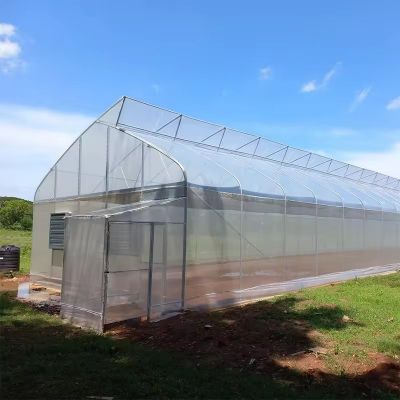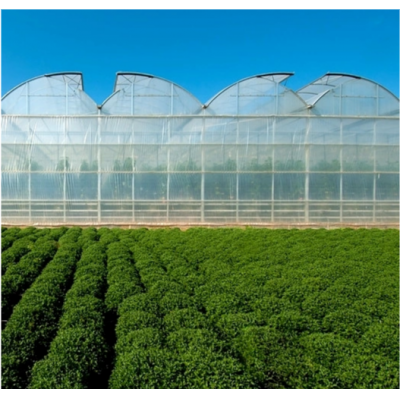


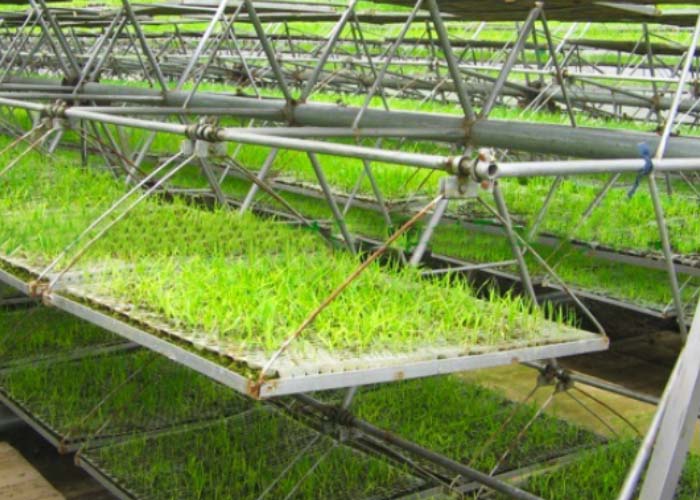
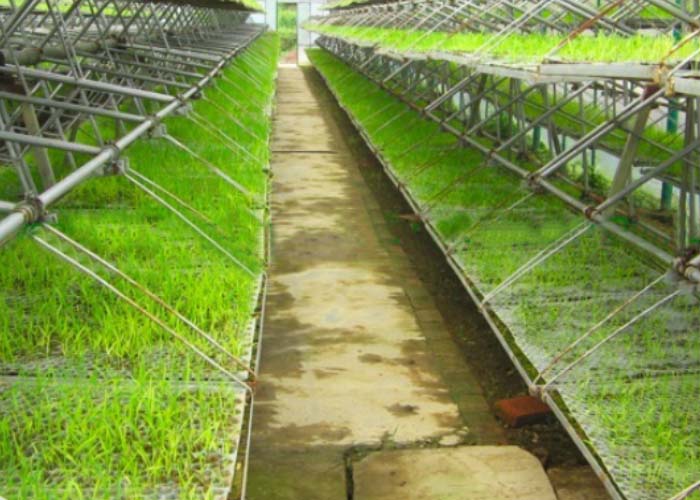

A seeding bed is where a nursery's season actually starts. Seed is sown into trays at a fixed spacing, the trays go onto a bench instead of the floor, and the bench becomes the first environment the seedling ever sees. Carrying the trays in layers above the ground means the same house raises far more seedlings than floor beds allow - close to double the tray count on the same footprint - and because each level slides out on rails, the trays are watered and checked from the aisle rather than from over the crop. The frame is galvanized for the humid air of a working nursery, and the bay length, layer count and aisle width are sized to your span before fabrication.
Seedlings decide the season. Sow into a bed that dries unevenly, or stack trays so that one level shades the next, and the loss shows up weeks later as an uneven crop that cannot be graded. A seeding bed exists to take that variation out of the nursery: fixed tray spacing, even water, even light, and no trays standing on the floor.
Floor beds give one layer of plants and leave the aisles where the trays are not. A multi-layer bench uses the height of the house instead, so planting area grows upward and a bench house comes close to double the tray count of flat beds on the same ground. Trays also stay off the soil, which keeps splash and soil-borne problems away from the seedling stems, and crews work from the aisle instead of reaching over wet trays.
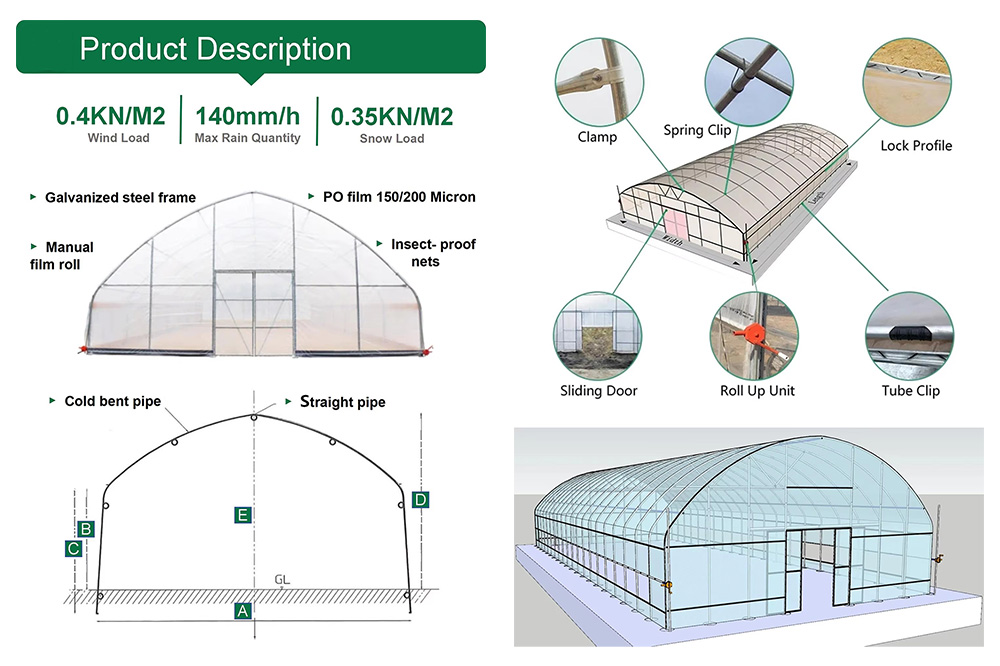
Each level carries trays at a fixed spacing and slides out on rails, so every tray receives the same light and the same water rather than the levels nearest the aisle being favoured. The frame is galvanized for the damp air of a working nursery, so it carries the load of wet trays without corroding, and the bench, rails and brackets are supplied as one set sized to your span. Bay length, layer count and aisle width are adjusted to your crop plan, so the system drops into a house you already run instead of needing custom fabrication on site.
A bench is only as good as the environment around it. Overhead irrigation is pitched so every level wets evenly, ventilation is arranged so air moves between the layers rather than sitting in them, and the rails let a crew turn trays without lifting them out of position. Where the house is vented with roll-up curtains or roof openings, the air path above the bench matters as much as the bench itself - the lettuce greenhouse layout is a useful reference for a leafy start crop. Growers who need a taller stack for high-volume output usually step up to the movable multi-layer growing bench, which adds power-driven levels to the same principle.
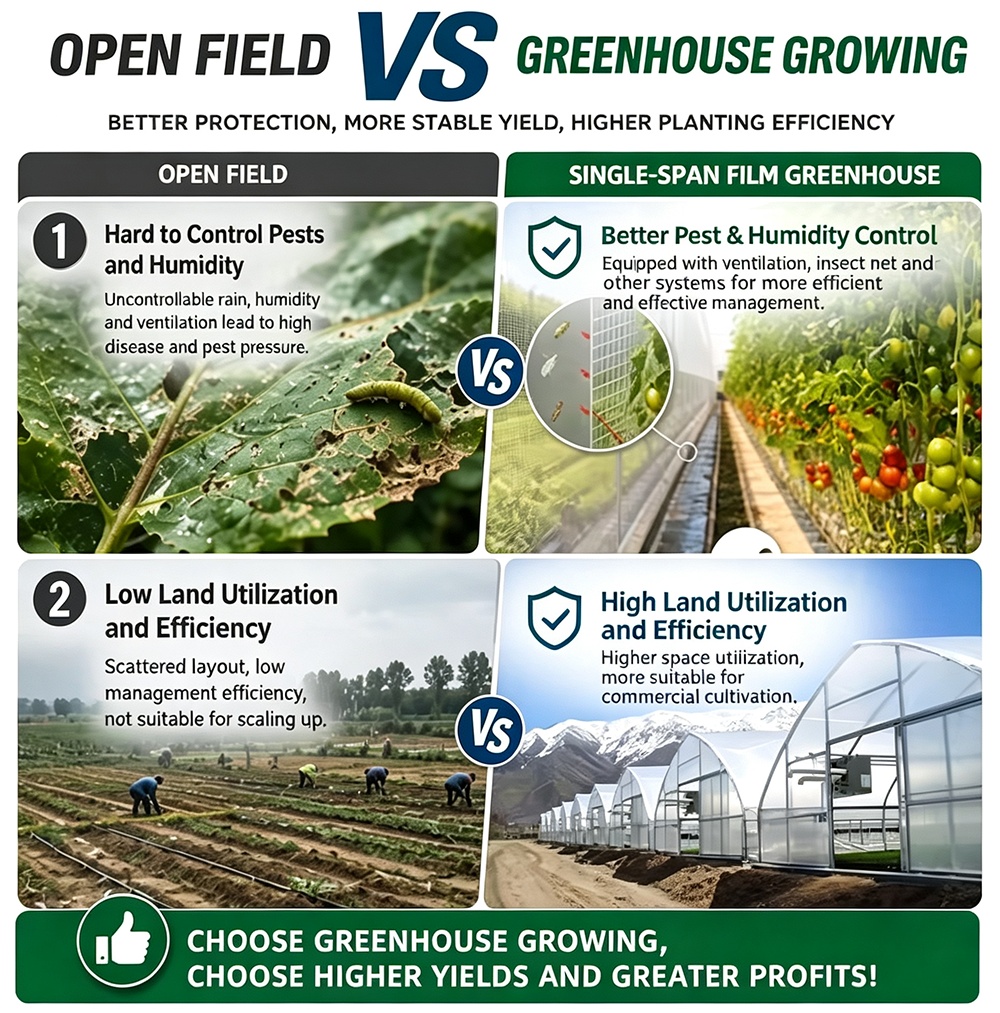
Bench systems are sized from a layout drawing, so the aisle width, the drive side and the irrigation positions are agreed before the house is ordered rather than discovered during installation. That is also the point at which the tray size and the number of cycles per season are fixed. Nurseries that raise trays in a separate house before the bench stage often use a seed tray greenhouse for that first move, and the two together cover the whole seedling route from sowing to dispatch.
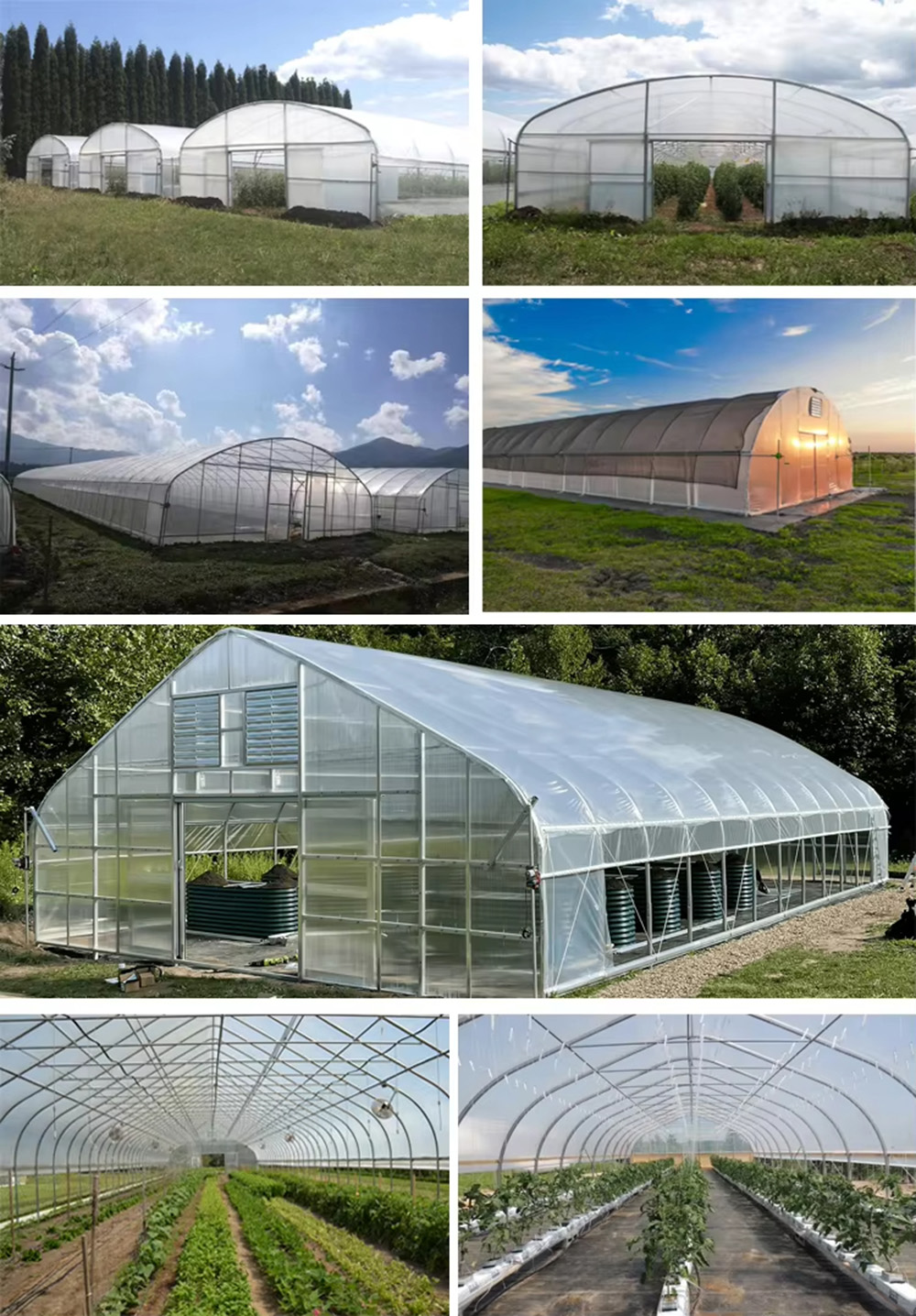
Bench, rails, brackets and trays ship as one package, bundled and crated to keep container volume low, and the packing list and loading date are confirmed in writing before dispatch. Our team has supervised nursery installations across Asia, Africa and South America, and the layer count is settled before fabrication rather than after a problem on site. We state the load rating at quotation and do not offer a bench for weights it was not designed to carry. On nursery practice, FAO publishes guidance on protected cultivation and seedling production, and Greenhouse Grower covers propagation practice for commercial growers.
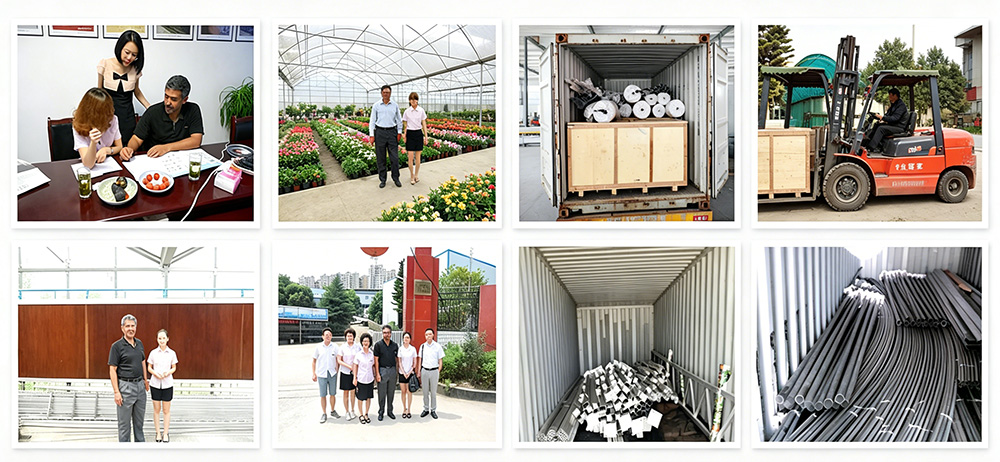
A bench house comes close to double the tray count of flat beds on the same ground, because trays are carried in levels instead of one layer on the floor. The exact figure is confirmed against your house size, tray dimensions and layer count.
Yes. Each level slides out on rails, so trays are watered, checked and picked from the aisle and every level receives even light and water. Rail travel is matched to your aisle width before the bench is fabricated.
The frame is galvanized for corrosion resistance in the damp air of a working nursery, so it carries the load of wet trays without rusting. The load rating is stated at quotation so the limit is known before you commit.
Yes. Bay length, layer count and aisle width are sized to your span, and the bench, rails and brackets ship as one set. That means the system drops into an existing greenhouse without custom fabrication on site.
Frame members, rails and brackets are bundled and crated to keep container volume low. The packing list and the loading date are confirmed in writing before dispatch.