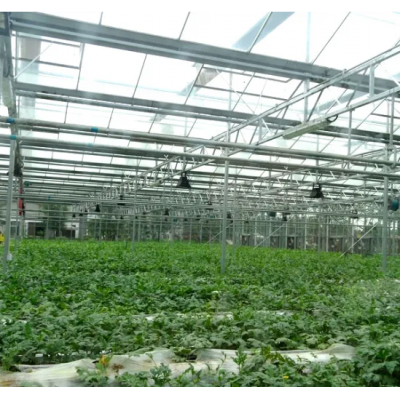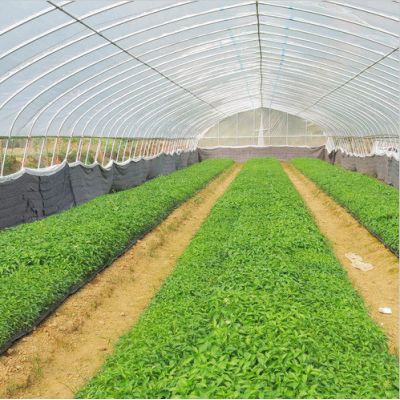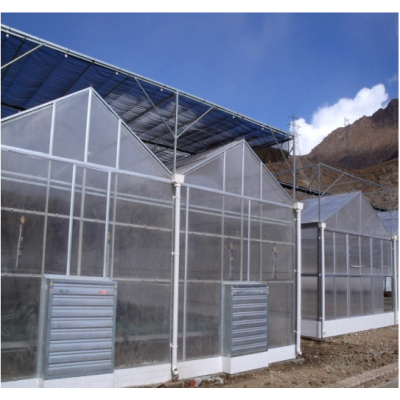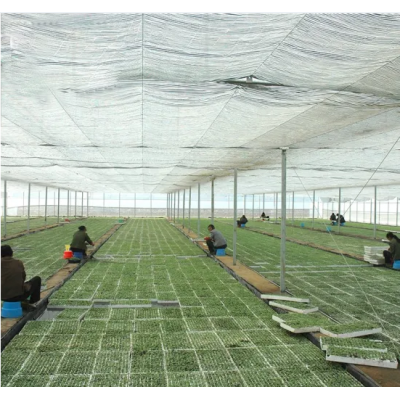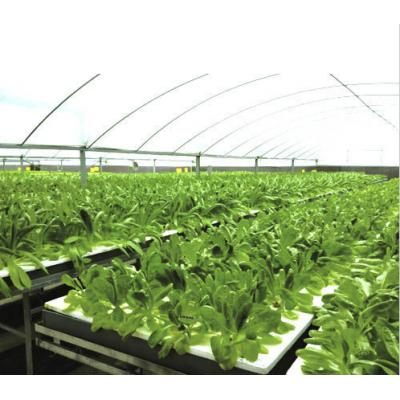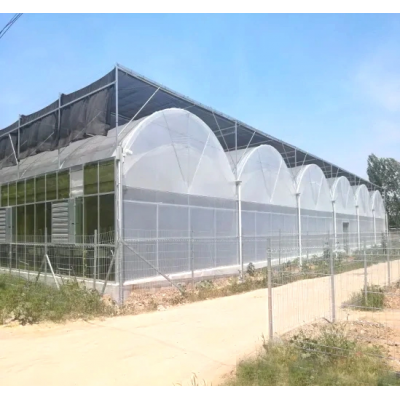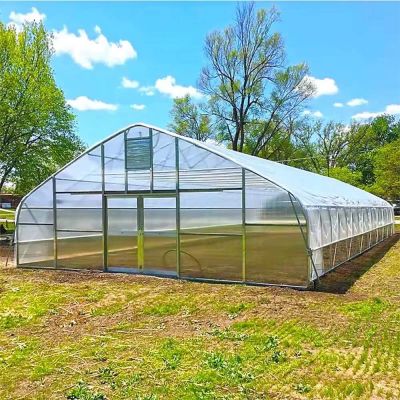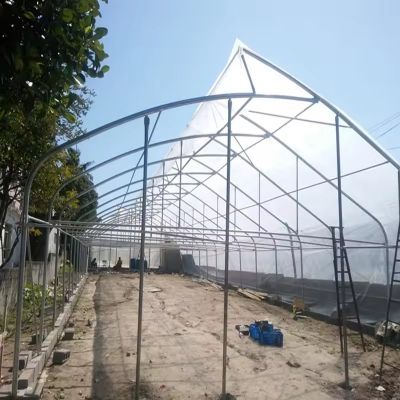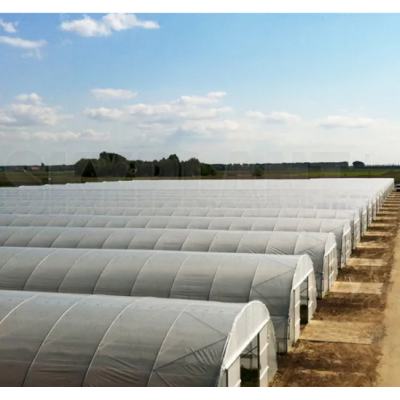
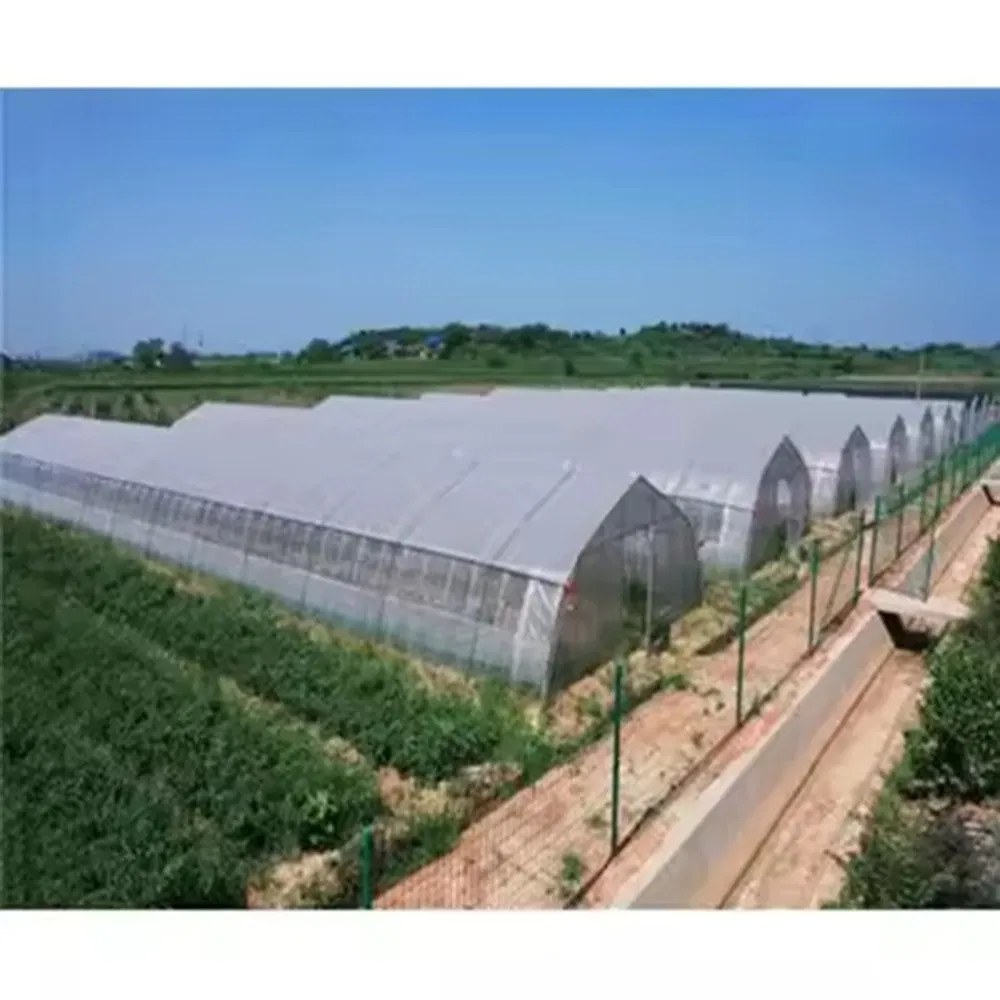
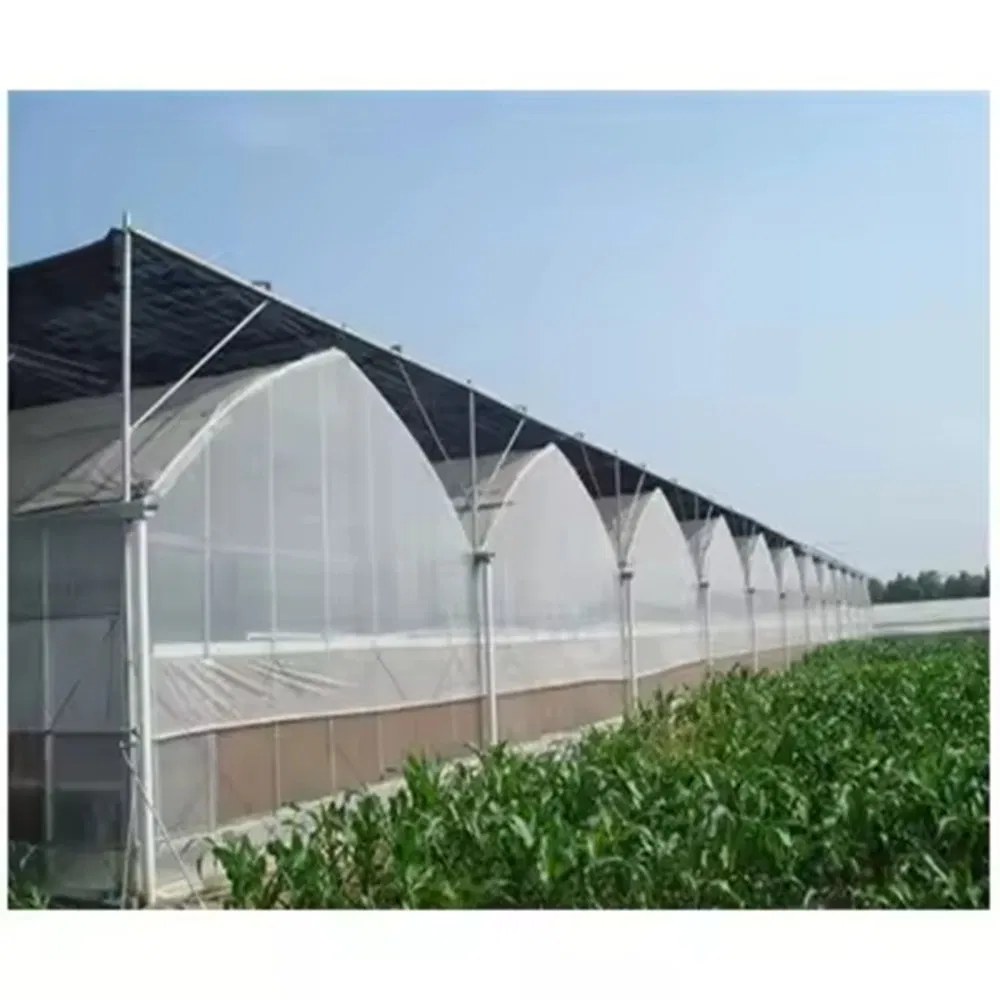
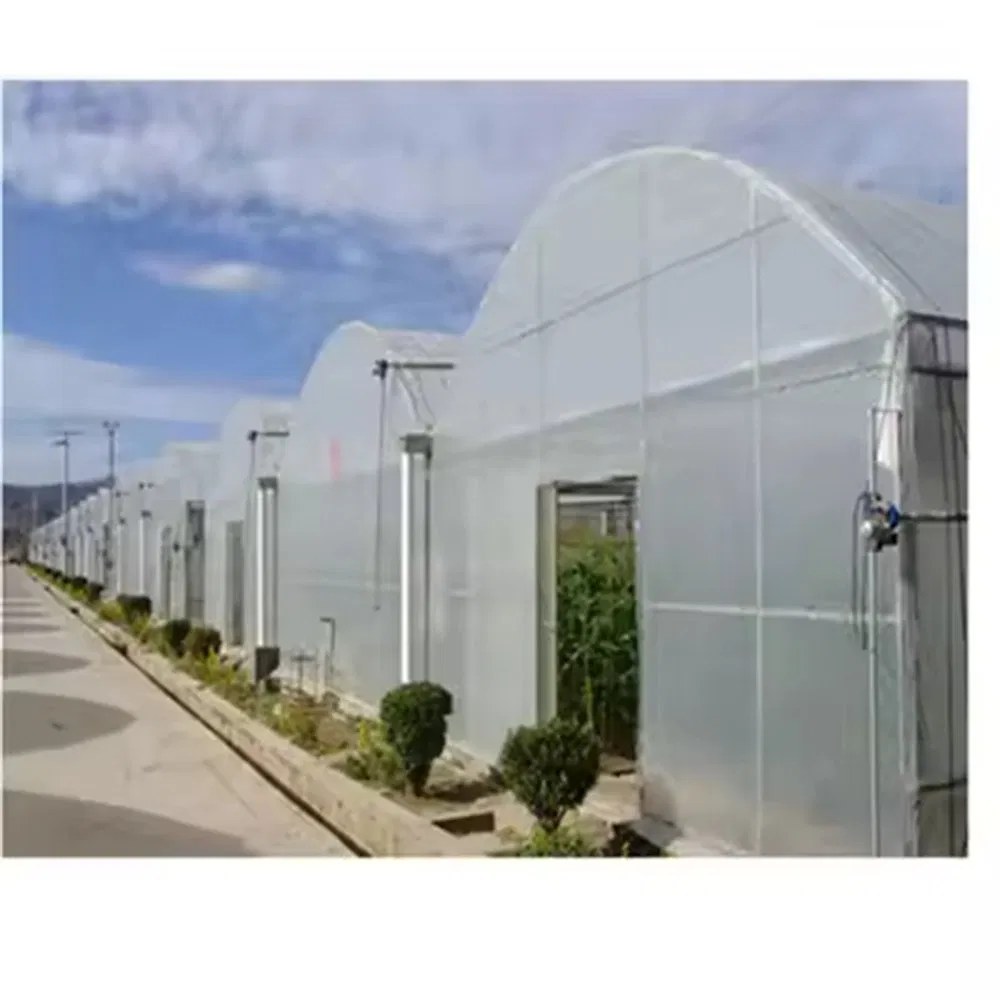
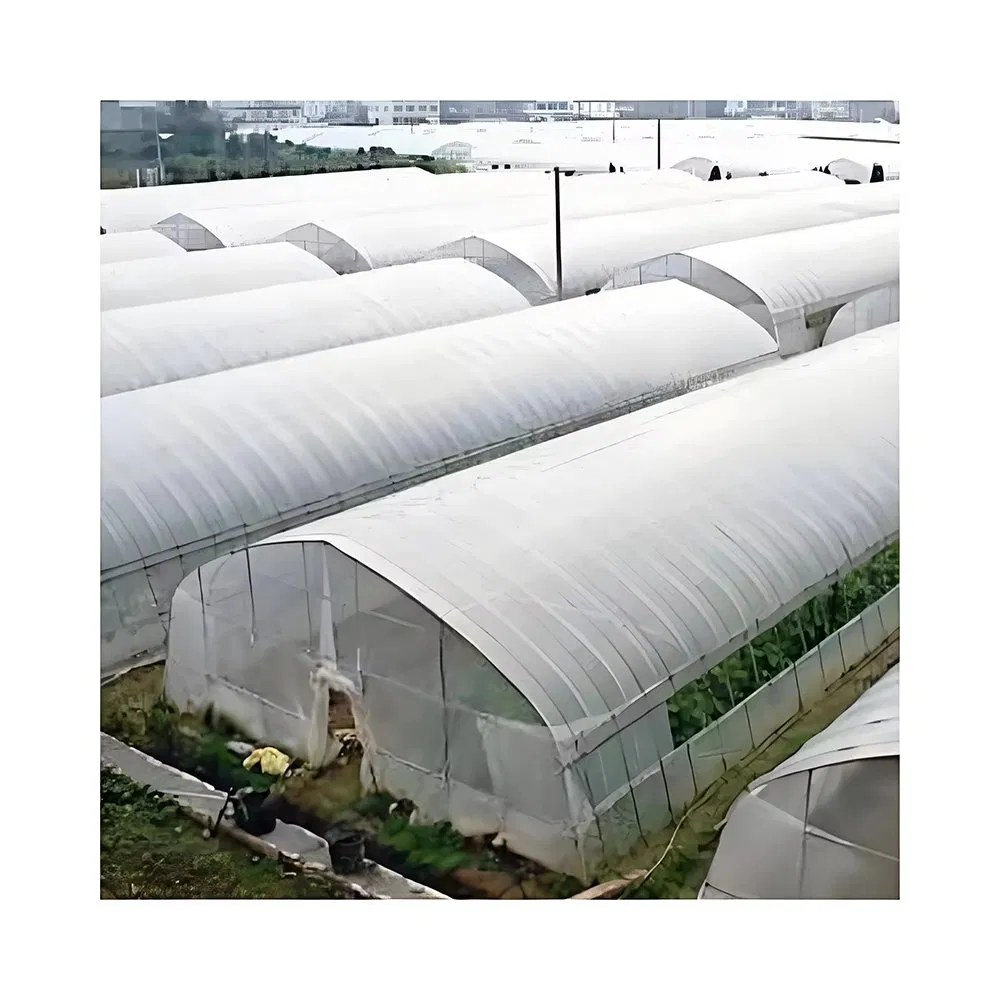
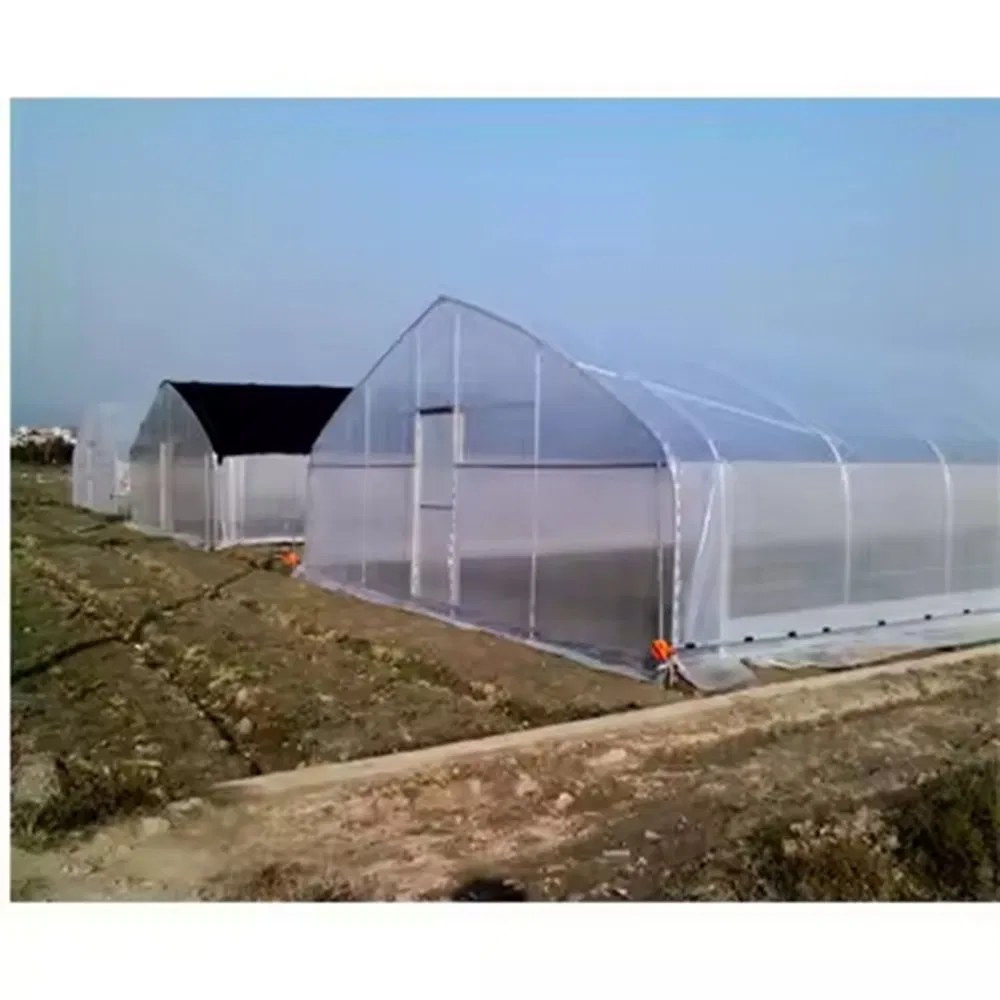
A high tunnel earns its place by holding a crop through weather it was not sown for. The cover keeps rain off the canopy and holds warmth in after sunset, and the walk-in height means the crop can be worked for the whole season rather than just planted. The frame here is hot dip galvanized pipe at 275 g/m2 of zinc, the arch runs from 25 to 60 mm depending on span, and the tunnel is measured to the site in width, length and height.
A tunnel is the least complicated way to put a roof over a crop, and the walk-in height is what separates it from a low frame. Once a grower can stand up inside, the house stops being a season starter and becomes a working space: pricking out, staking, picking and spraying all happen under cover instead of in the open. This tunnel is built around that single change, and everything else in the specification follows from it.
The cover does two jobs at once. It sheds rain, so the canopy stays dry and the fruit does not split or spot, and it holds warmth after sunset, so the crop is not starting each morning from air temperature. On a horticultural holding that is the difference between a crop that finishes and a crop that is cut short by the first wet fortnight.
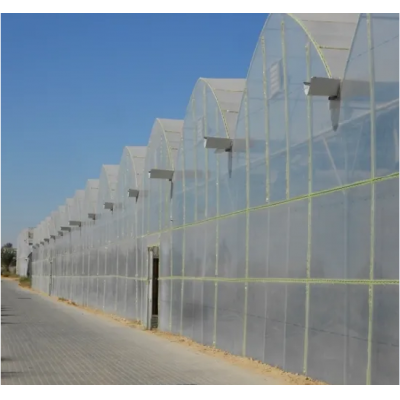
The trade is that a covered house has to be ventilated or it becomes a damp box. That is why the tunnel is built with openings on both sides and an insect screen option at those openings, rather than sealed and left. Houses of this shape sit on the tunnel greenhouse range on this site.
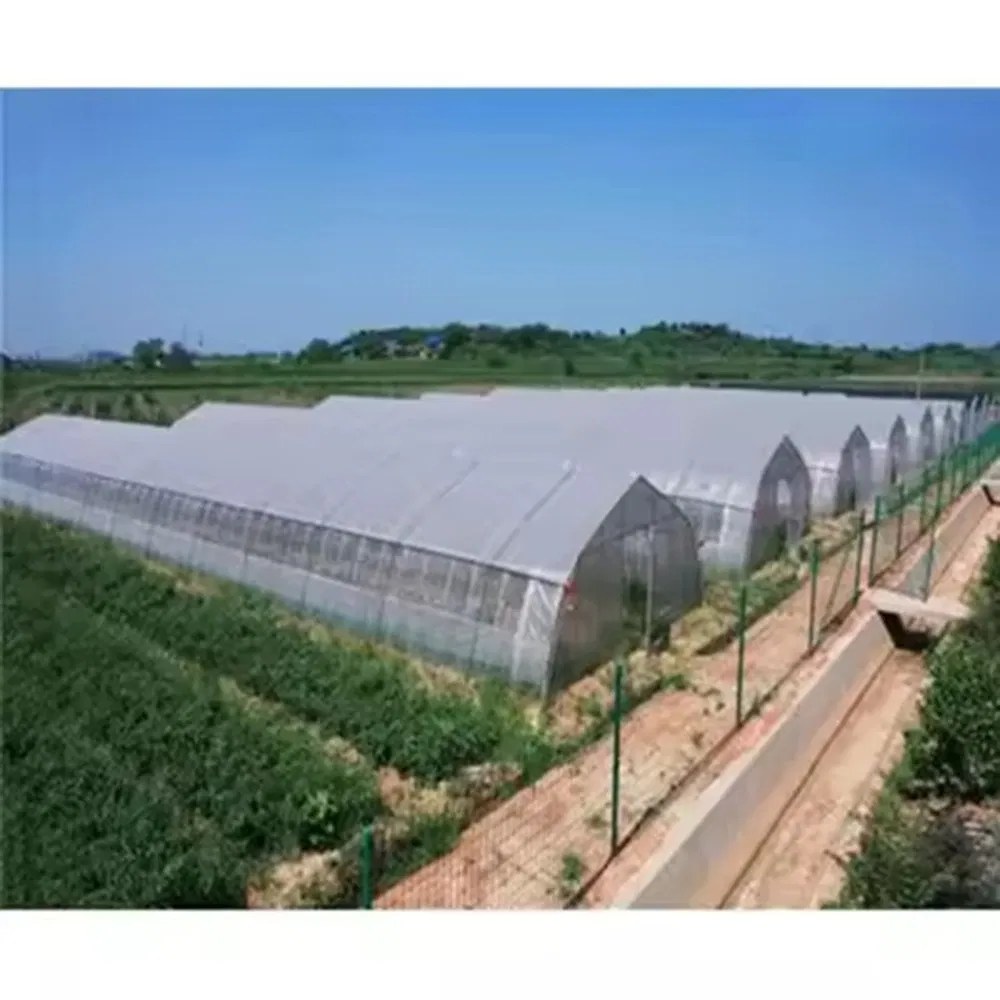
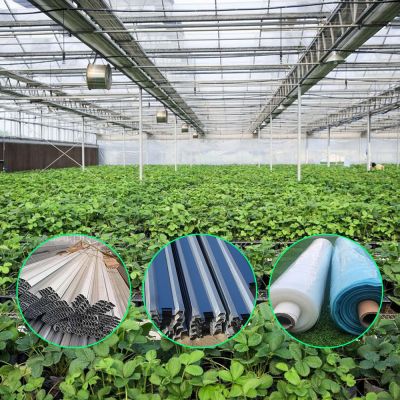
The frame is hot dip galvanized steel pipe with a zinc coating of 275 g/m2. The coating weight is the number that decides how long the frame lasts in a wet climate, and it is stated here rather than left to a general claim about being galvanized. Arch pipe diameter runs from 25 mm on the narrow spans to 60 mm on the widest, so the section follows the span instead of one size being used throughout.
The pipe is fabricated to the ordered dimensions in our workshop and arrives as a numbered kit, so the crew assembles a tunnel that already matches the site rather than cutting to fit on arrival.
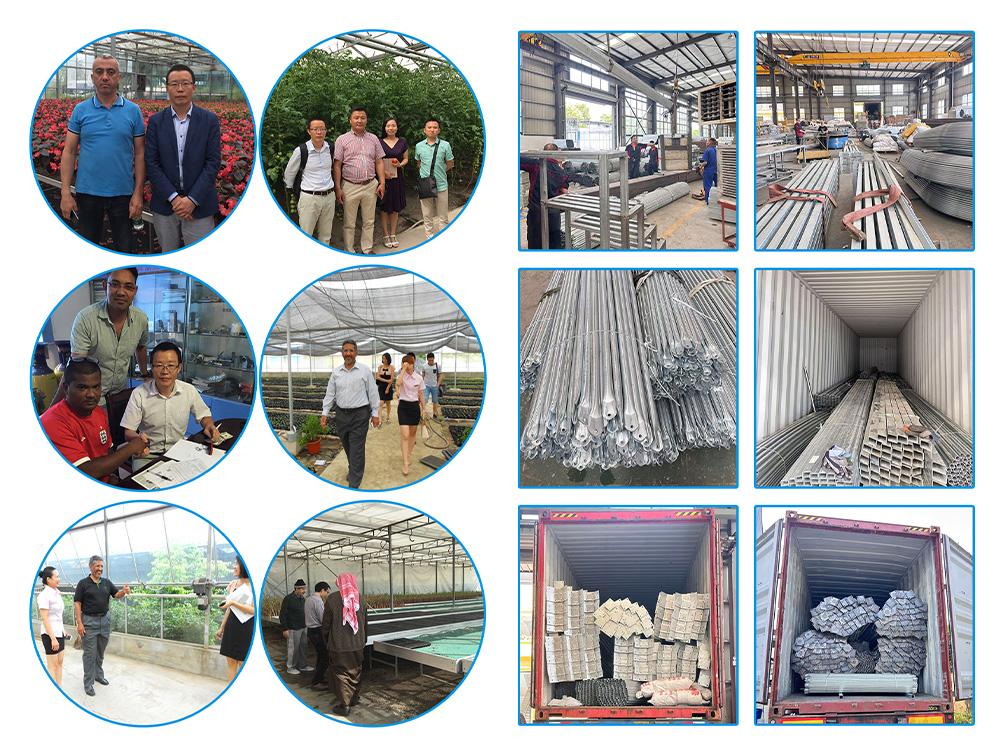
The cover is PEP film in 100, 150, 200 or 250 micron, and the film is specified for the job rather than only for thickness. It is treated against dripping, so condensation runs down the sheet instead of falling on the crop, and against fogging, dust and UV aging. Light transmission is above 89 per cent when new, with a diffusion figure of 53 per cent, which spreads the light so the crop below is lit evenly rather than in hard patches. A tunnel kit built on the same principle is described on the commercial single span greenhouse kit page.
| Structure | Single arch walk-in high tunnel, hot dip galvanized steel pipe |
| Zinc coating | 275 g/m2 |
| Arch pipe diameter | 25 / 32 / 40 / 50 / 60 mm by span |
| Width | 6 / 7 / 8 / 9 / 10 m, or to order |
| Length | 20 m to 100 m, or to order |
| Side height | 1.3 m or 2 m |
| Roof height | 3.3 m or 3.5 m |
| Cover film | PEP 100 / 150 / 200 / 250 micron |
| Light transmission | Above 89 per cent, diffusion 53 per cent |
| Wind load | 60 to 130 km/h |
| Snow load | 0.25 to 0.5 kN/m2 |
| Temperature range | -40 to 60 degrees C |
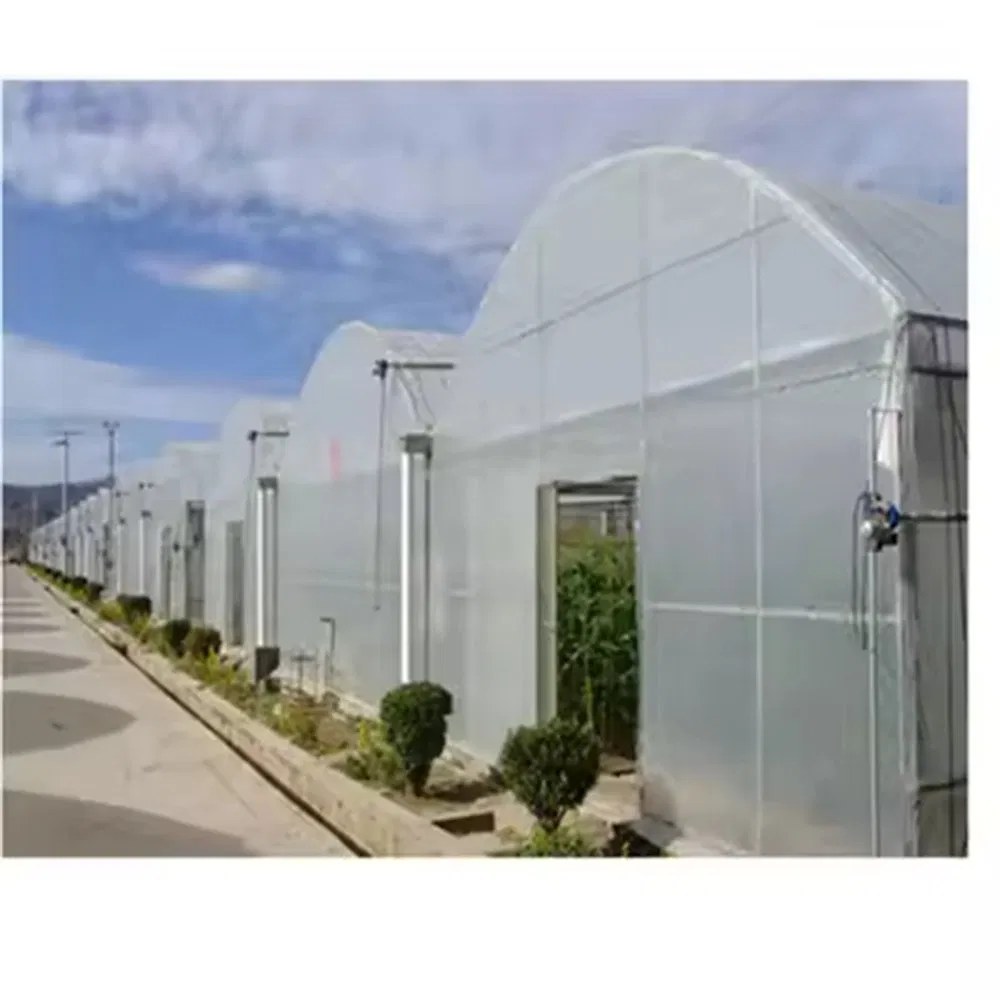
Openings on both sides give cross flow, which is the least costly cooling there is and the first thing to get right. Insect netting can be fitted at those openings so ventilation does not become an invitation. Beyond that the tunnel can be supplied with side or roof ventilation, a shading system, a heating option and a cooling option, and with drip or micro irrigation laid out to the bed plan.
Which of those is worth adding depends on the crop and the season rather than on the house. A tunnel run through a hot dry summer needs shade and airflow; the same tunnel in a cold wet winter needs the cover closed and the heat held. A single span house specified with a cooling system is described on the single span greenhouse with cooling system page.
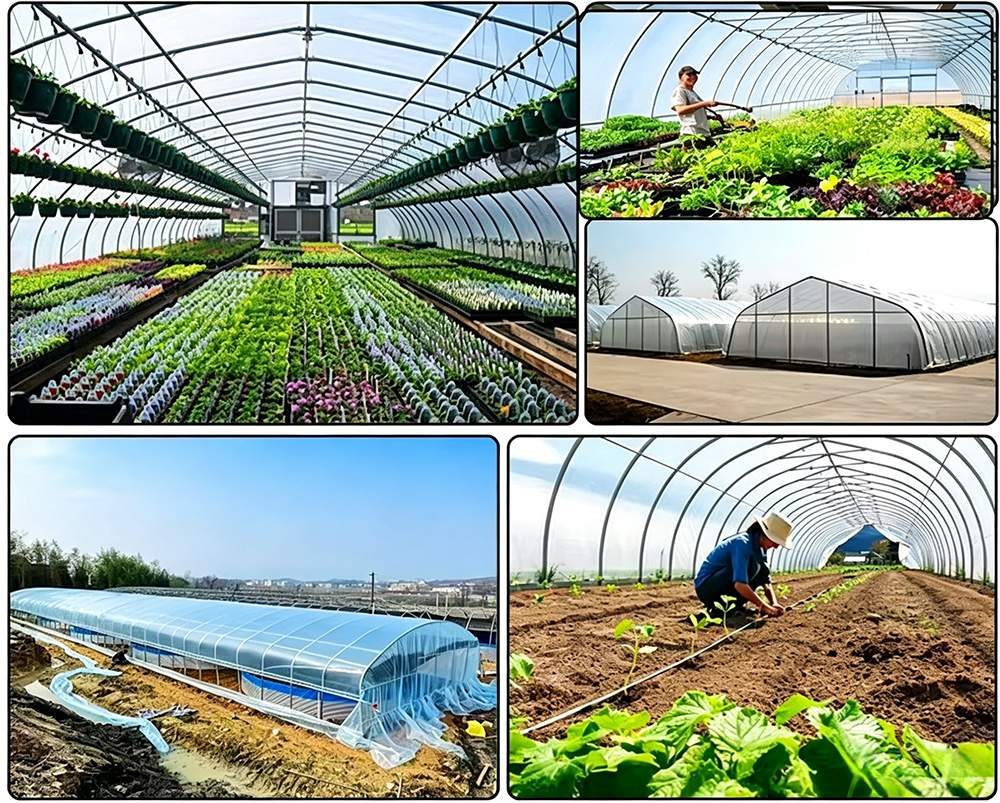
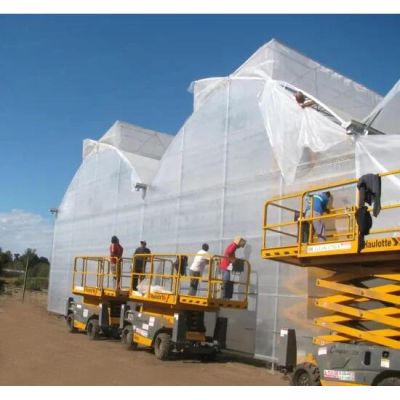
The tunnel arrives as pipe, fittings and film, and goes up on a prepared and levelled base. A working group of six is the normal crew: the first house takes about two days, and once the crew knows the sequence a house a day is realistic. The film is the part that needs calm weather, because a sheet pulled in wind will tear before it is tensioned.
After that the maintenance is small and regular. The film is checked at the fixings and at the ground line, where abrasion starts, and the frame is inspected where the coating has been cut by a tool or a knock. The film is a service item rather than a permanent part of the house, so it is replaced on a cycle and the frame is expected to outlast several covers.
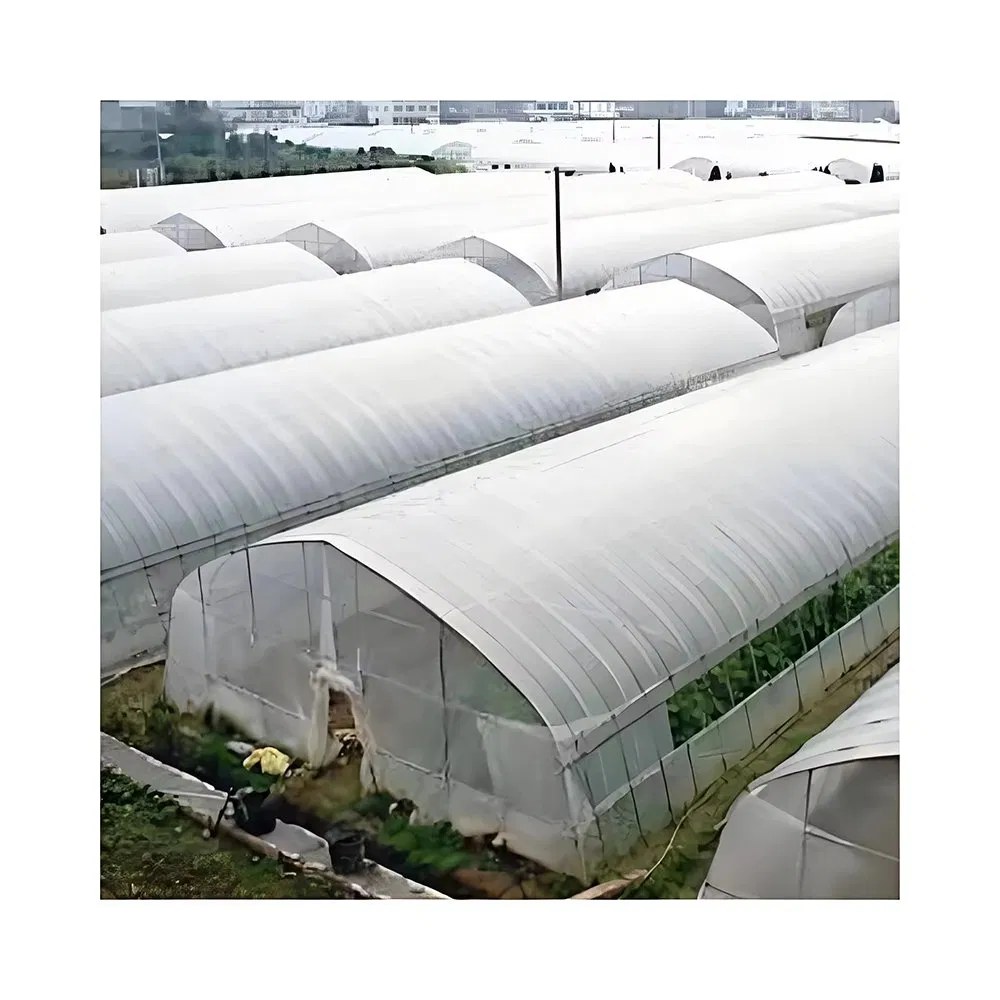
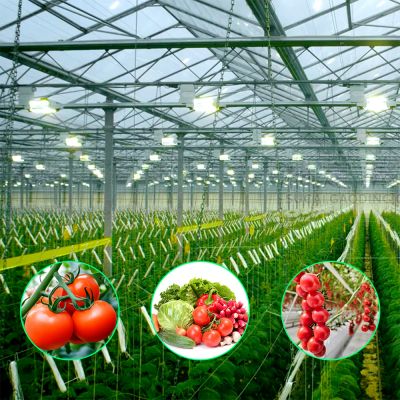
These tunnels are used for vegetable and salad production, for tomato and cucumber under cover, for soft fruit, for nursery stock and for flower crops that need the rain kept off. They suit a grower adding covered area without a steel building, a holding that wants several smaller houses rather than one large one, and buyers who need the width and length set to a site that is already laid out.
Buyers looking for suppliers of protected cropping structures in Europe can search the Europages business directory. Reporting on the seed and crop production sector is published by SeedWorld.
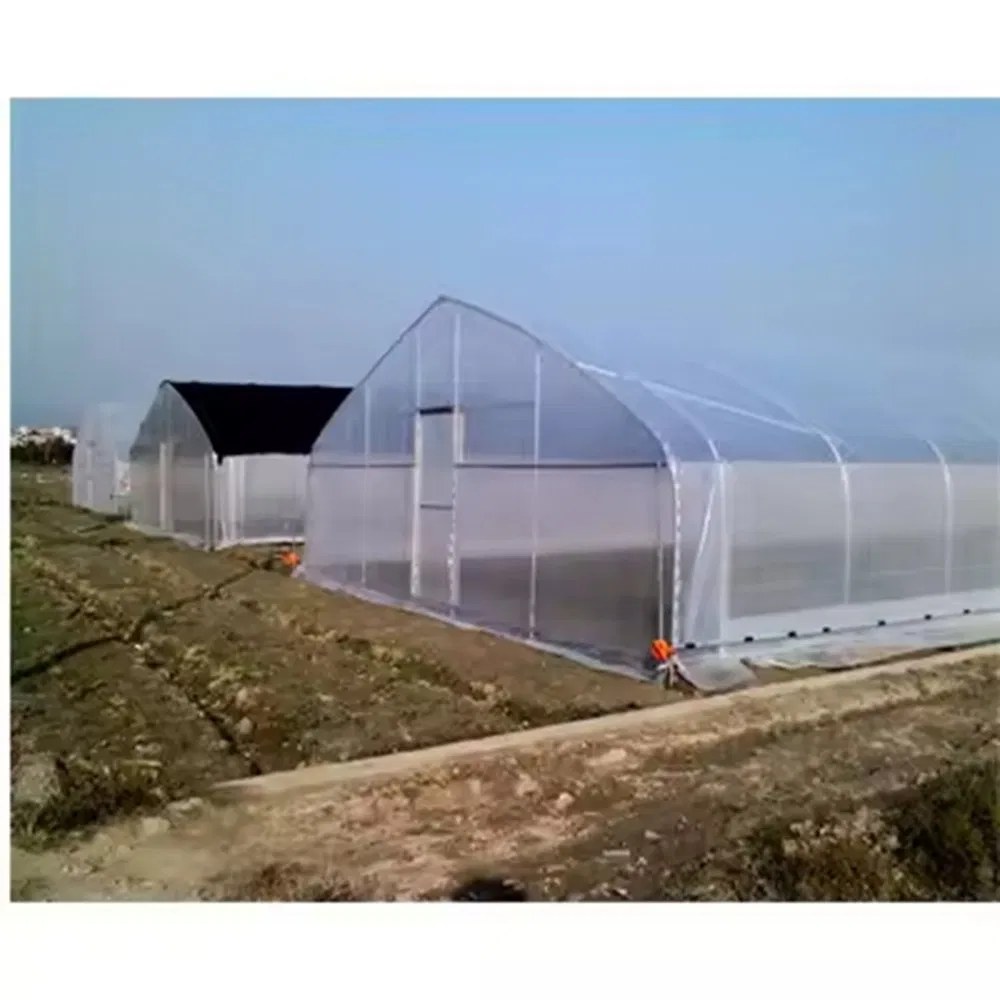
Vegetables, salad, tomato and cucumber, soft fruit, nursery stock and cut flowers. What they have in common is a need for rain cover and a longer season rather than a fully controlled climate.
Yes, if the frame is planned for it. Length runs from 20 to 100 m and the tunnel is built to the figure you give, so an extension is a matter of ordering the extra bays and a matching cover rather than replacing the house.
Yes. We customize span width, bay length, gutter height, covering material (film, PC sheet or glass) and ventilation configuration. Share your crop type, local climate and growing area, and our engineers will size the structure to match.
The hot-dip galvanized steel frame is designed for a 15-20 year service life in normal agricultural environments, with a double-sided zinc coating of 200-275 g/m². Film covers are replaced every 3-5 years, while glass and PC panels carry their own manufacturer warranties.
The hot-dip galvanized steel frame carries a 10-year structural warranty covering structural safety, plus a 5-year warranty against corrosion perforation. It is designed for a 15-20 year service life. Film covers carry a 3-5 year UV warranty depending on grade.
Send your growing area, span and length, crop type and local climate. If you already have a layout drawing, that is enough to start. Our engineers then return a quotation with a structure drawing and a bill of materials.