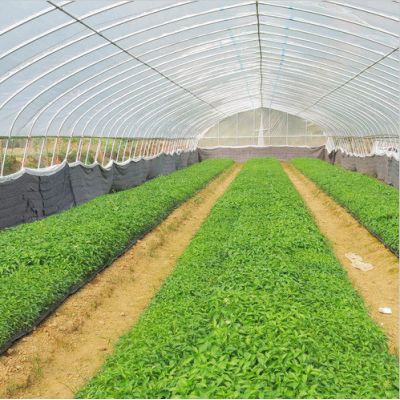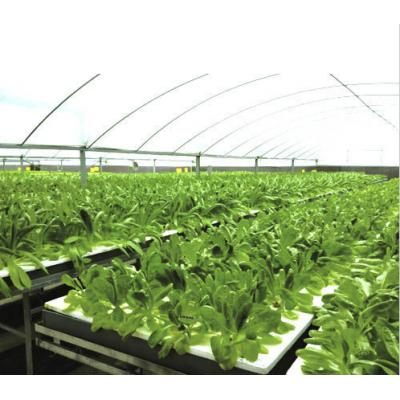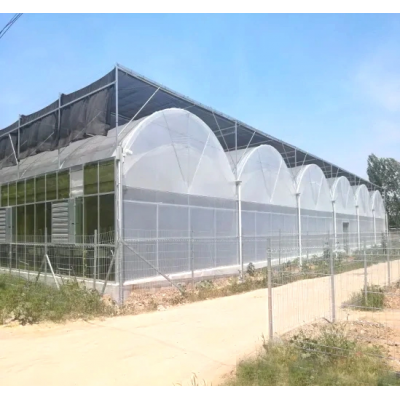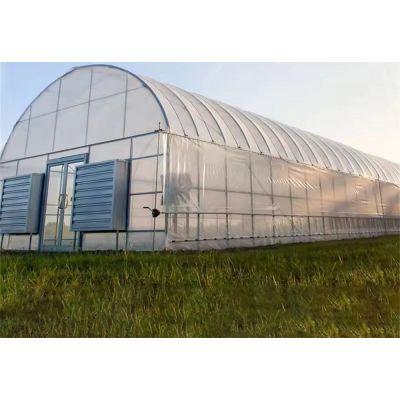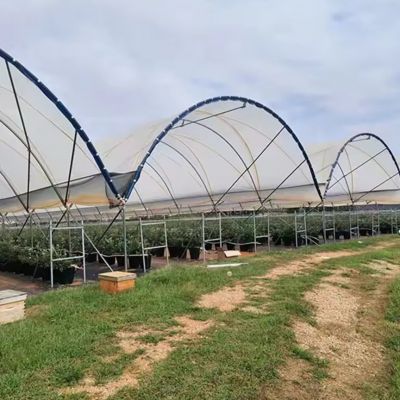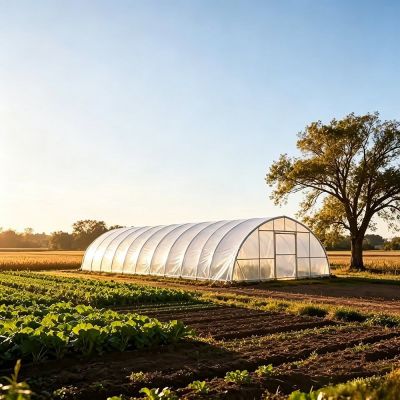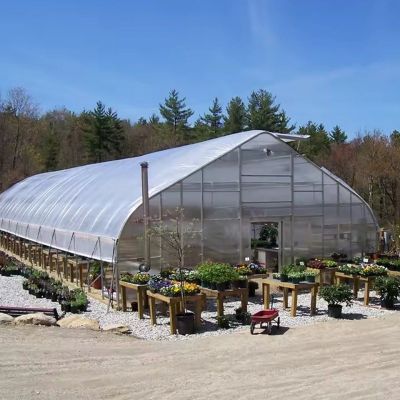
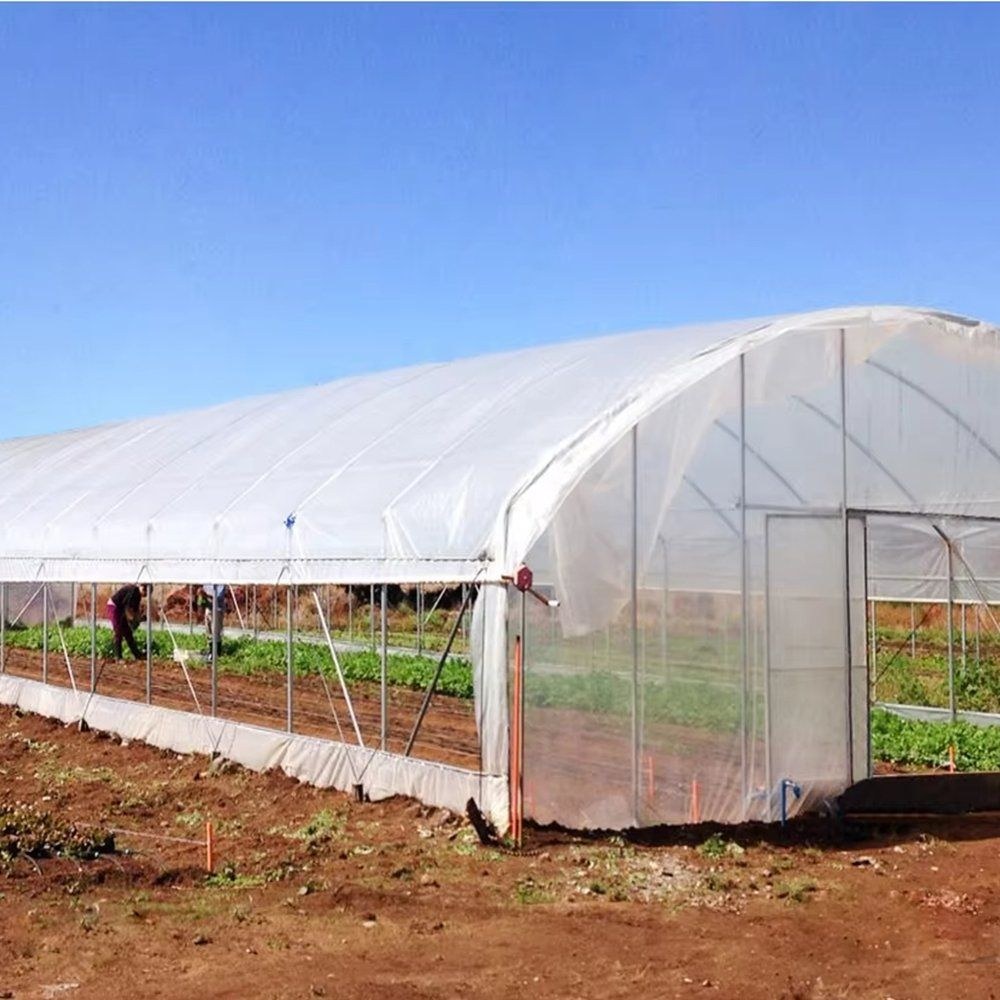
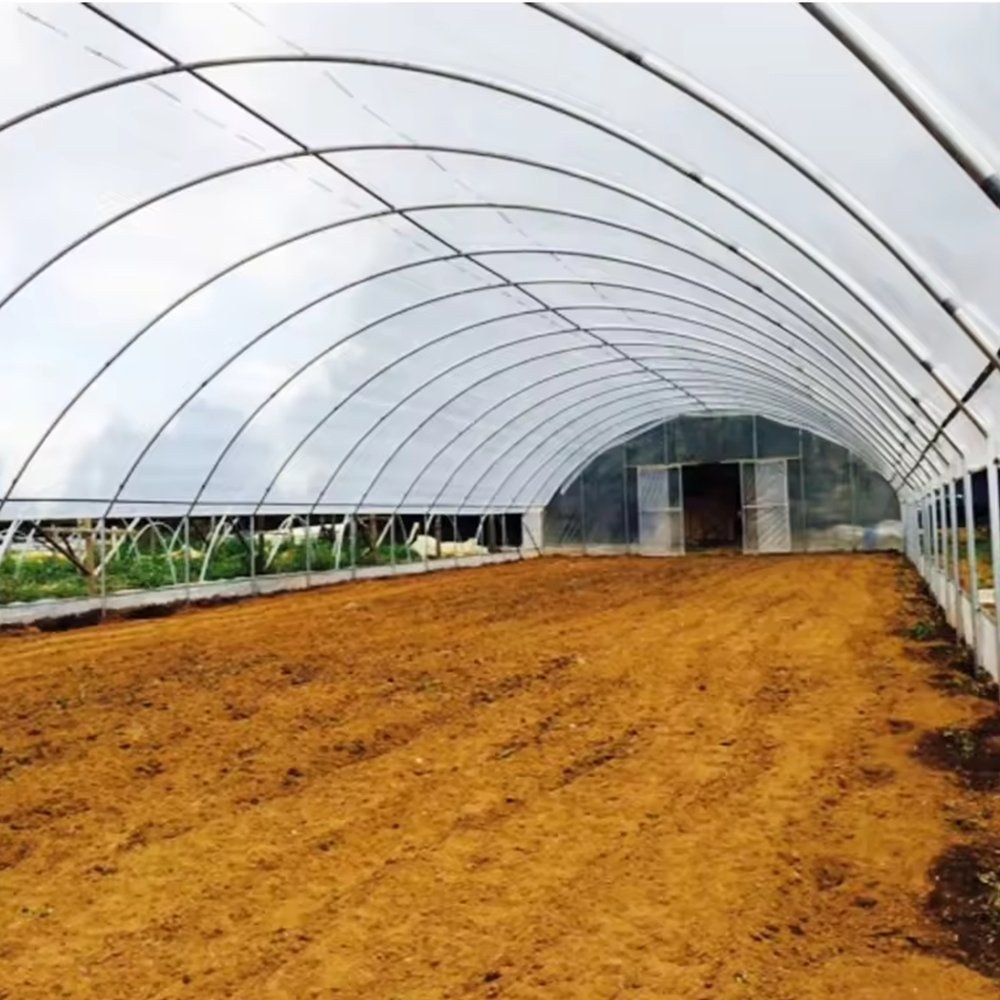
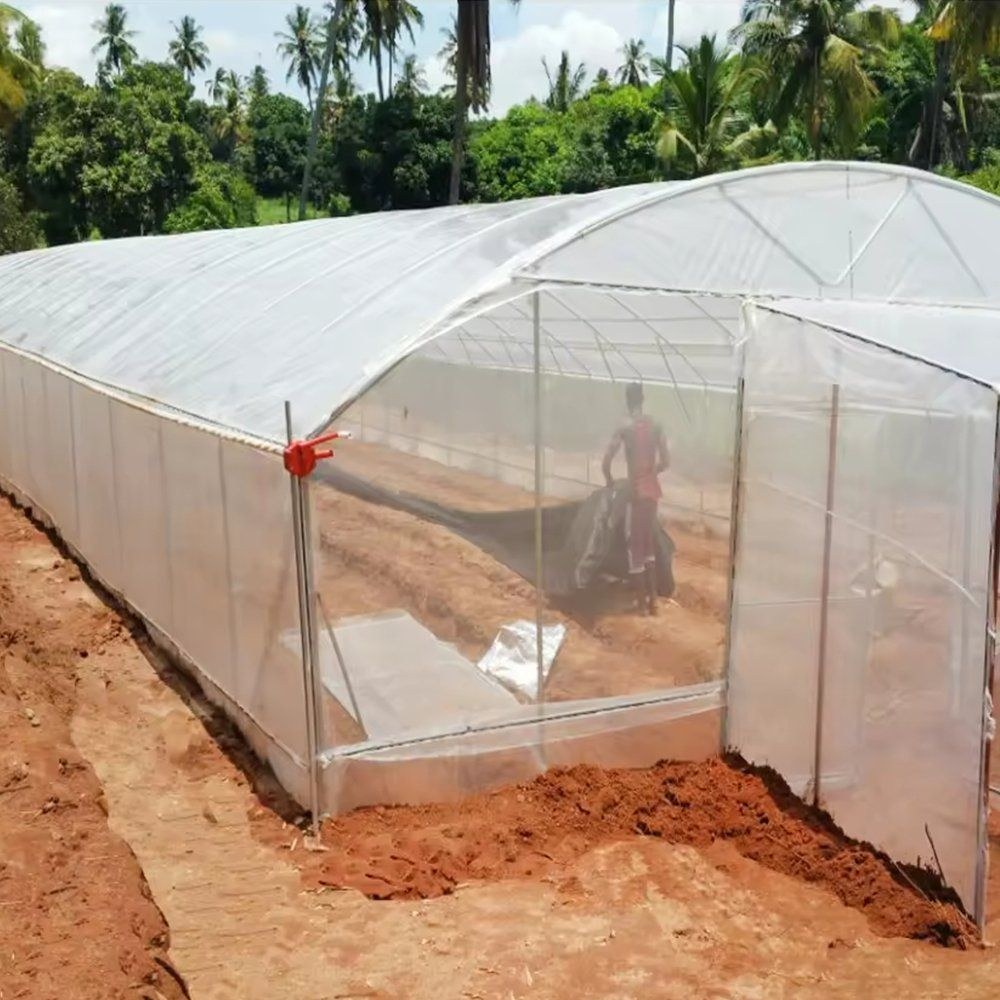
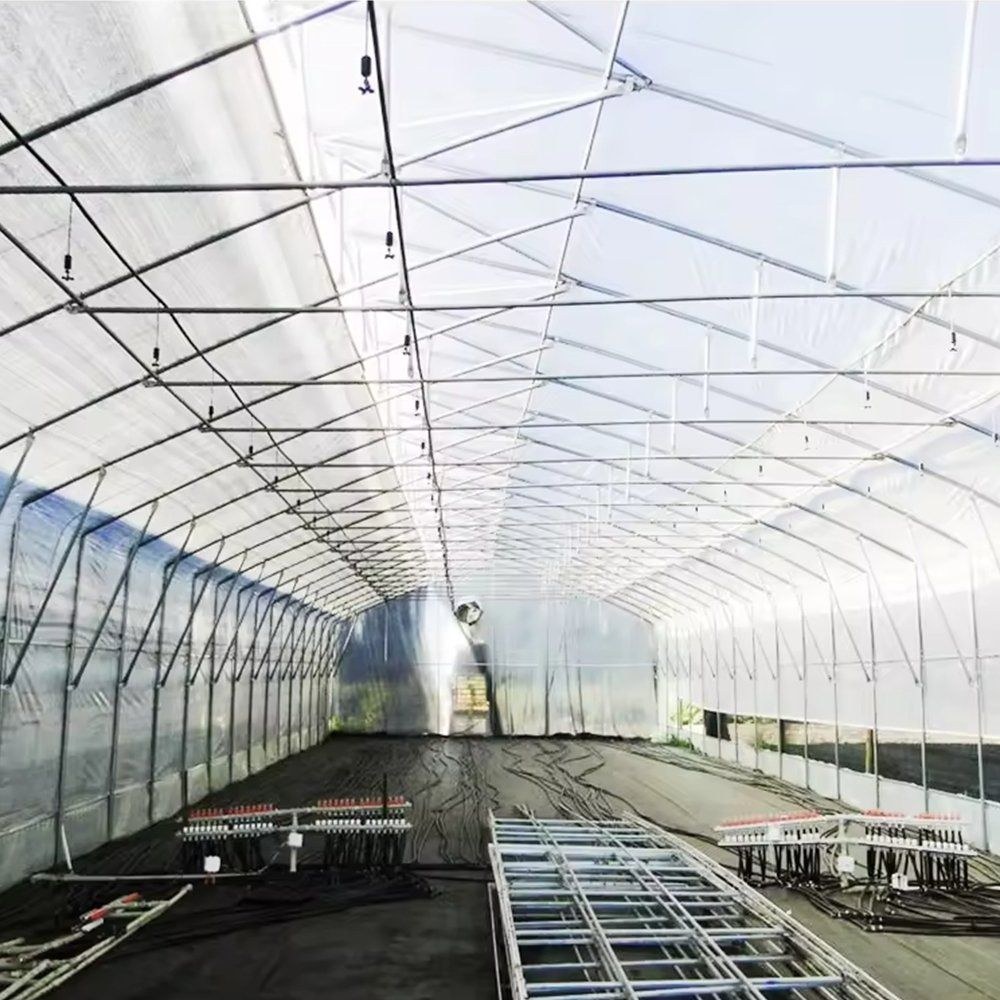
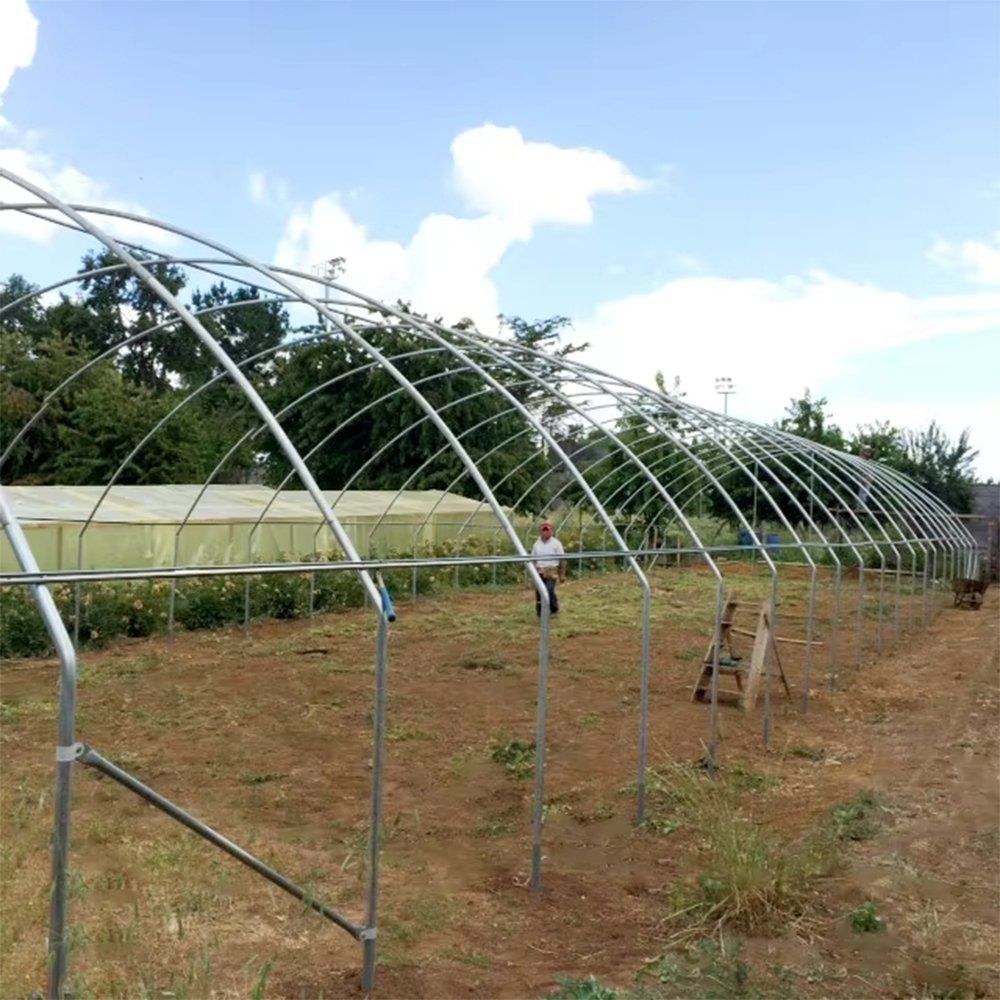
A round hoop throws snow off badly at the crown and drips it back onto the beds; a pointed arch breaks the load and sends water to the sides. This house is built on that one decision, with 2.5 mm hot dip galvanized arches from 32 to 60 mm depending on span, prefabricated and bolted so no welding burns the zinc. The film is three layer coextruded polyethylene, UV stabilised and treated against fog and drip. Sides open for ventilation, insect net optional.
A hoop house and a gothic house differ by one curve, and that curve decides what happens on the night snow settles. On a semicircular arch the crown is flat enough to hold a load; on a pointed arch the two slopes meet at an angle and the load slides. The same geometry gives more standing height at the shoulder, which is where the picking actually happens. Houses of this shape sit in the tunnel greenhouse range on this site.
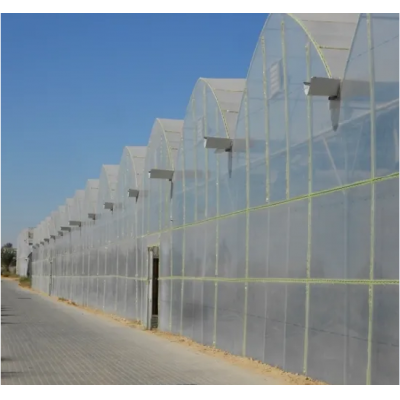
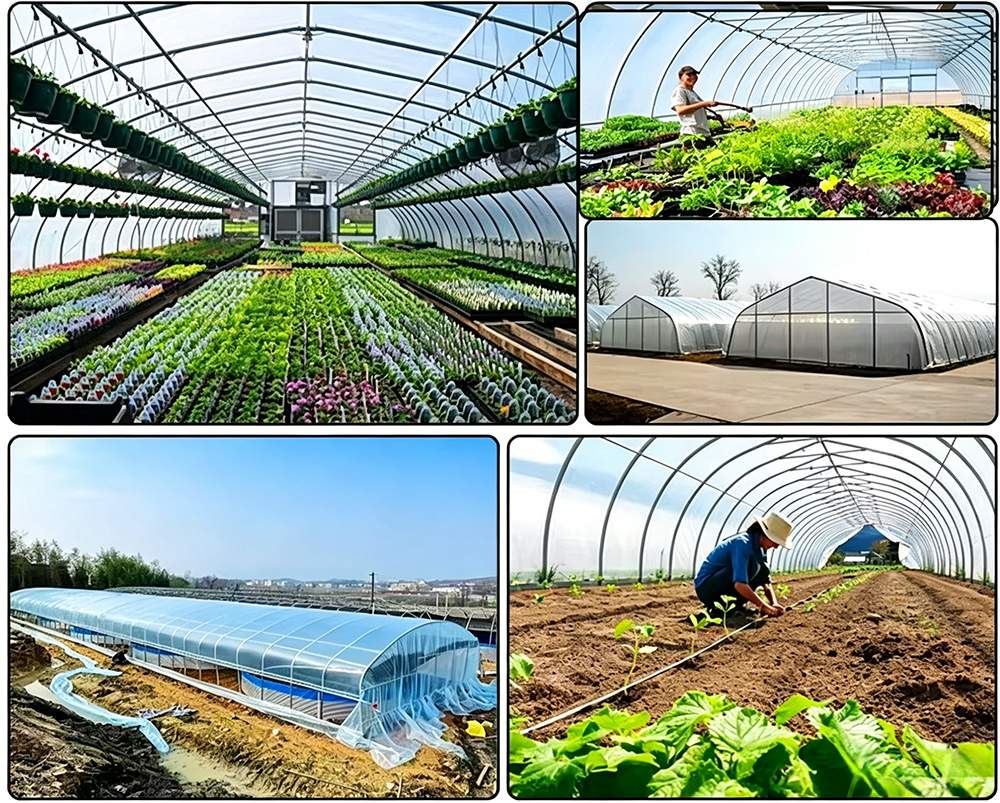
The arch on this house rises to a ridge rather than flattening across the top. Two things follow. Snow and hail leave the roof instead of sitting on it, and condensation that forms on the underside of the film runs down the slope to the side walls instead of dropping onto the plants from the highest point.
The second consequence is headroom. At the same apex height, a pointed section keeps more usable height out towards the sides, so a crop grown on the outer beds is not growing into a low ceiling.
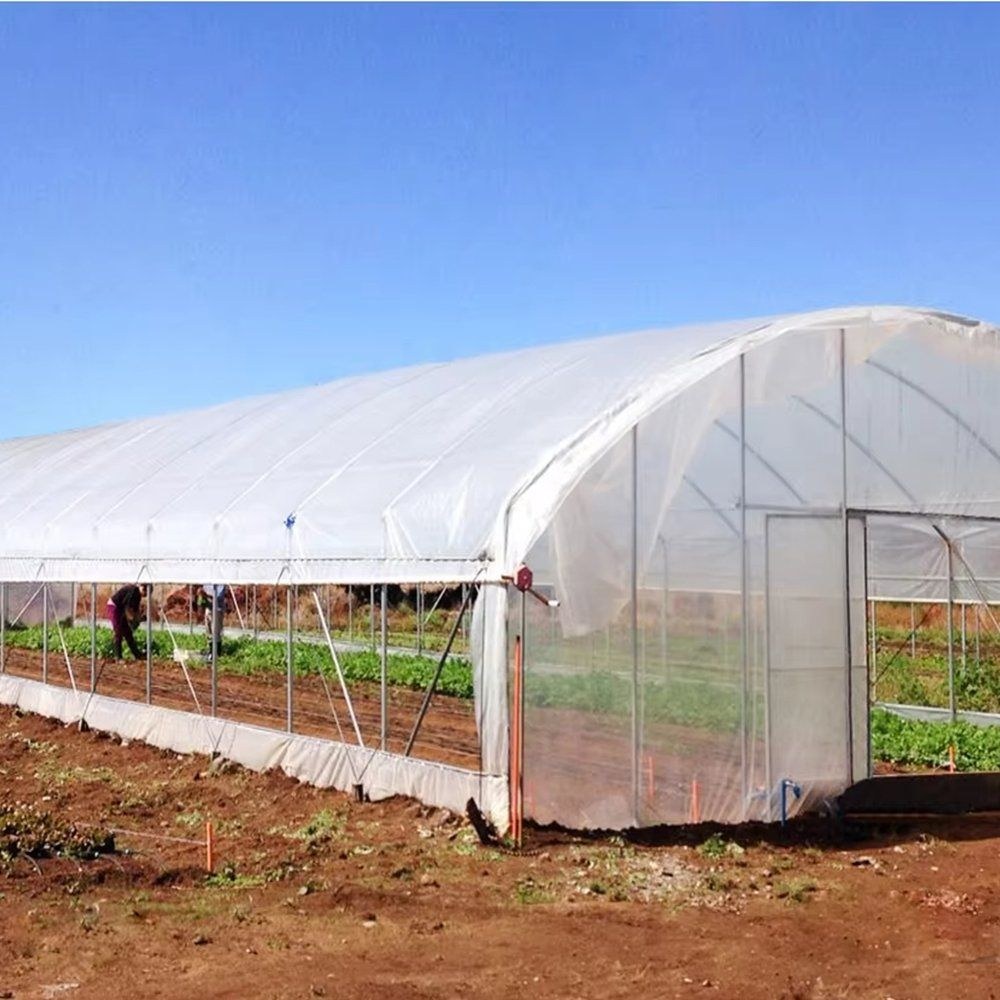
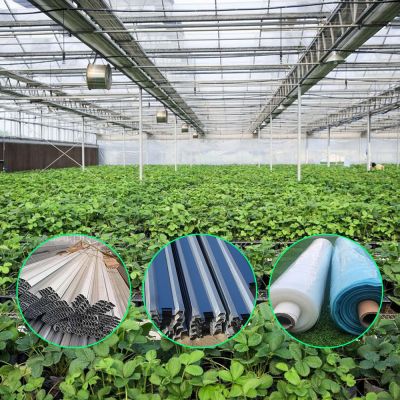
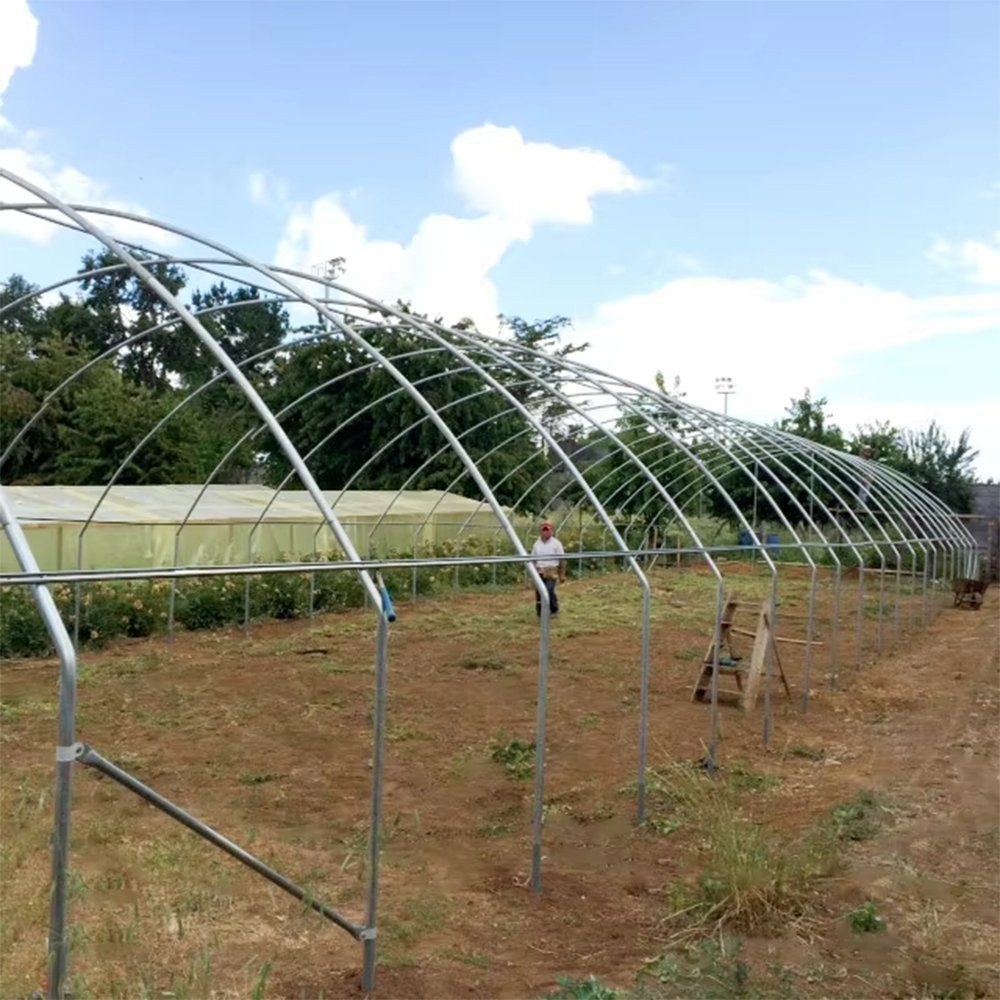
The arches are 2.5 mm wall hot dip galvanized steel pipe, sized by span: 32 mm on the narrow houses up to 60 mm on the wide ones. Everything arrives cut, drilled and numbered, and the frame is assembled with bolts and joining parts only. That matters for corrosion more than for speed: a welded joint burns the zinc back to bare steel, and that is where a frame in a wet climate starts to go.
The cover is three layer coextruded polyethylene with UV stabilisers, and the layers carry the additives that keep the film clear: anti-fog so condensation sheets rather than beads, anti-drip so it does not fall on the crop, plus dust and mildew resistance. The cover is a service item on a replacement cycle; the frame is not. A six by twelve metre gothic house on the same frame principle is described on the gothic hoop house page.
| Structure | Single span gothic arch tunnel, prefabricated bolted frame |
| Arch wall thickness | 2.5 mm |
| Round pipe diameter | 32 / 40 / 48 / 60 mm by span |
| Width | 6 m to 10 m, or 8 m to 12 m to order |
| Length | 20 m to 100 m, or to order |
| Wall height | 1 m to 2.5 m |
| Apex height | 3 m to 4 m, higher on request |
| Surface treatment | Hot dip galvanized, no welding on site |
| Cover film | Three layer coextruded PE, UV stabilised, anti-fog and anti-drip |
| Ventilation | Natural ventilation on both sides, manual control, optional |
| Insect screen | Available as an option |
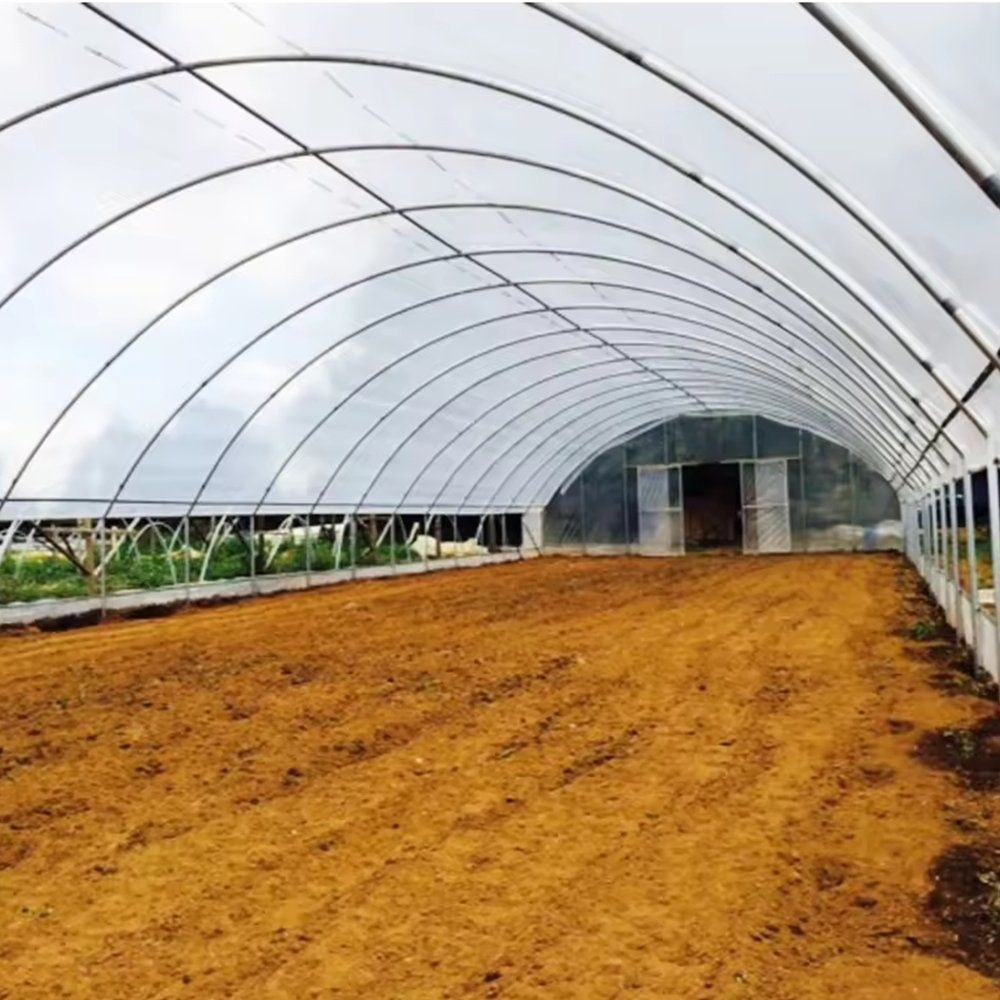
This house is ventilated at the sides, not at the ridge, and that is deliberate. A roll-up side wall moves a large volume of air at crop height, which is where the temperature and humidity that matter are measured. It also has no mechanism to seize: a hand crank and a tube, and a person walking the length of the house.
Insect netting can be fitted over the same opening, which turns the vents into filtered air rather than an open door for aphid and whitefly pressure. Whether that trade is worth the reduced airflow depends on the crop and the season, and it is a conversation worth having before the order rather than after.
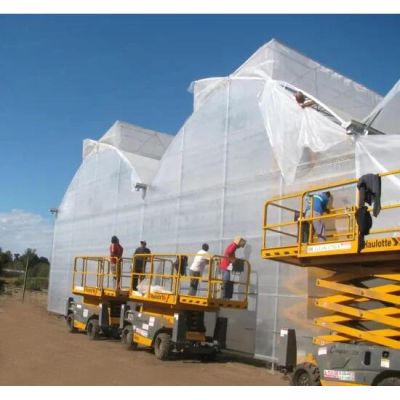
The frame is assembled from numbered parts with bolts, so the crew needs spanners and a level rather than a welder. The base is set first, then arches, purlins and bracing, and the film goes on last on a calm day. Because the parts are pre-drilled, the zinc stays intact at every joint.
On service life, the hot dip galvanized structure is quoted at more than ten years in agricultural use, with the film on a three to five year cycle. Guidance on protected horticulture and crop environment is published by NC State Horticultural Science, and farming and growing coverage by Agriland.
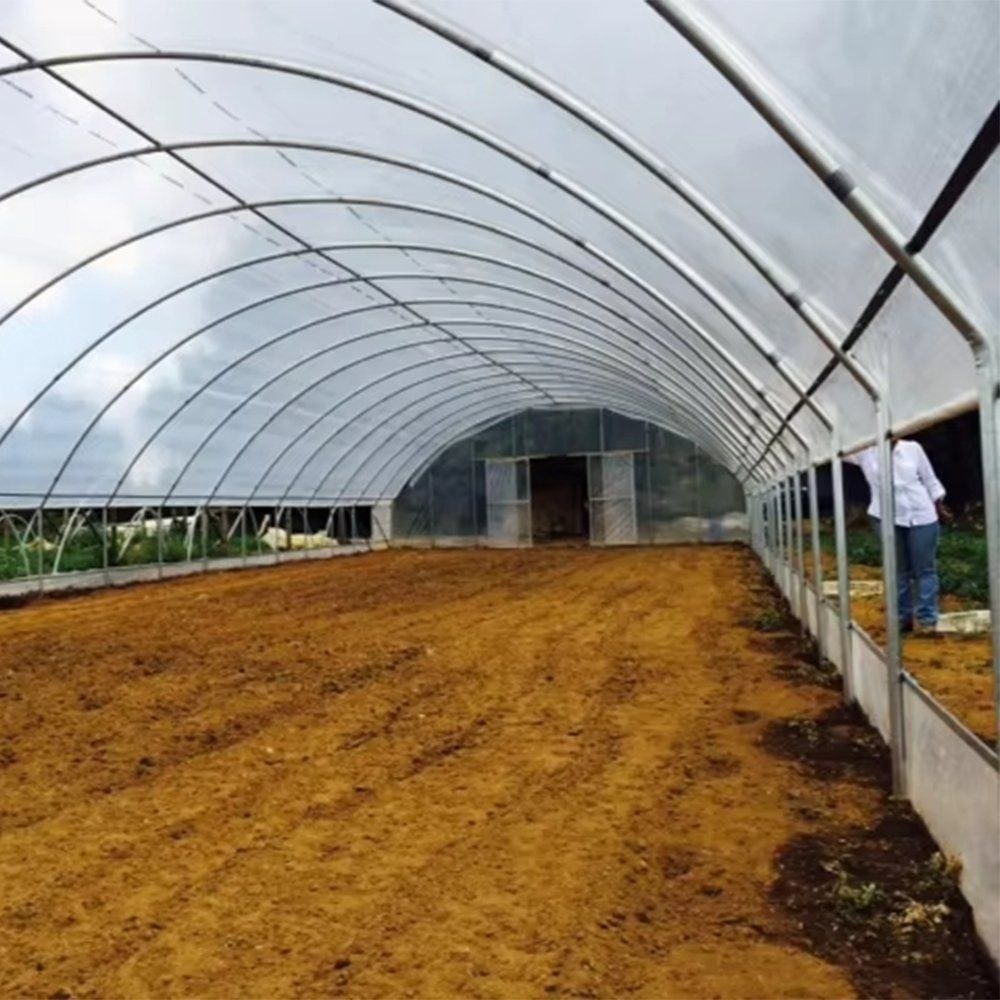
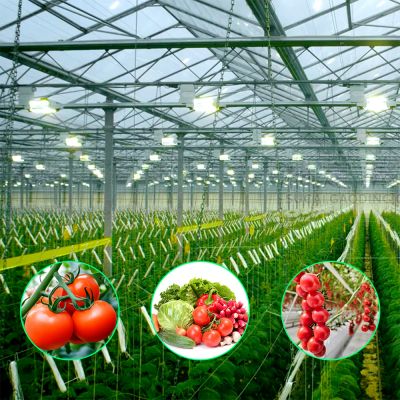
These houses are bought for tomato, pepper and cucumber, for strawberry, for lettuce and herbs, and for nursery stock. The pointed roof is worth the small extra cost wherever snow sits, and worth it anywhere the crop is grown close to the film and drip from the crown would mark the fruit. A house that ships as a full kit with ventilation fans is described on the single span polytunnel complete set page.
32, 40, 48 and 60 mm outside diameter, chosen by span. An eight metre house does not need the pipe a twelve metre house needs, and paying for the heavier section on a narrow span is money in the ground.
Yes. Natural ventilation on both sides is available as an option with manual control, and insect netting can be fitted to the same opening. Both are specified at order stage, because the frame details change.
Film suits low-cost tunnels on 3-5 year replacement cycles. Glass delivers the highest light transmission and the longest lifespan, at the highest cost. PC sheet insulates better than film and suits cold or high-humidity climates. The right choice depends on climate, crop and budget.
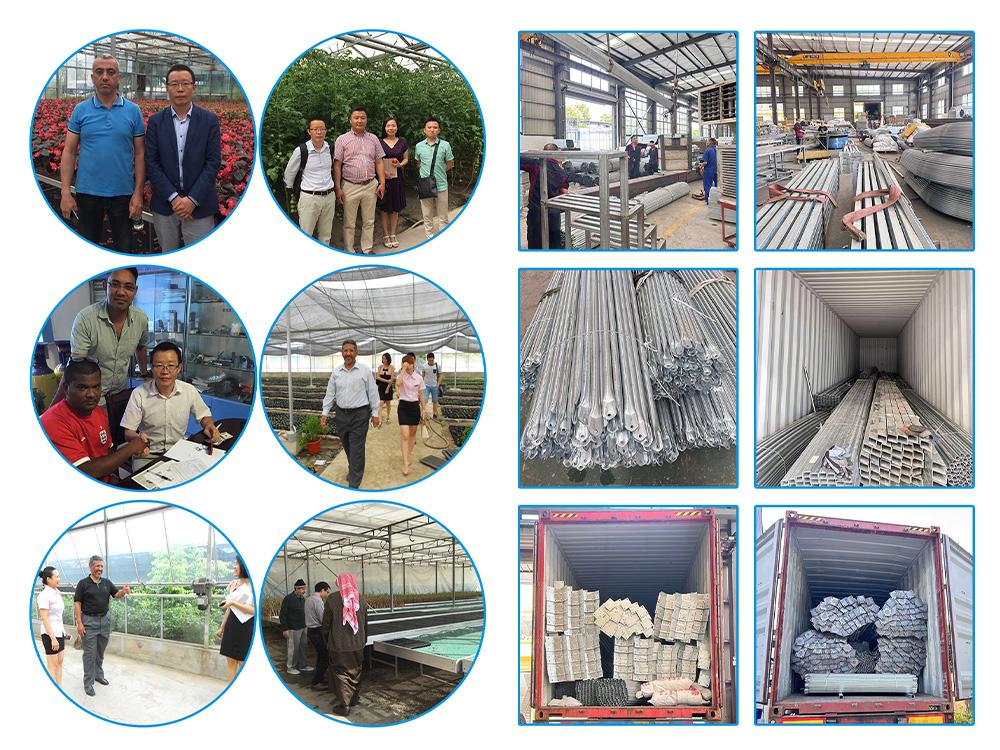
Ziyang Bozong Greenhouse Industry Co., Ltd. is a manufacturer based in Ziyang, Sichuan, China. We produce the hot-dip galvanized steel frame in-house, cutting and drilling to drawing, and supply covering materials, ventilation, cooling and irrigation systems as one coordinated package.
Send your growing area, span and length, crop type and local climate. If you already have a layout drawing, that is enough to start. Our engineers then return a quotation with a structure drawing and a bill of materials.
The hot-dip galvanized steel frame is designed for a 15-20 year service life in normal agricultural environments, with a double-sided zinc coating of 200-275 g/m². Film covers are replaced every 3-5 years, while glass and PC panels carry their own manufacturer warranties.