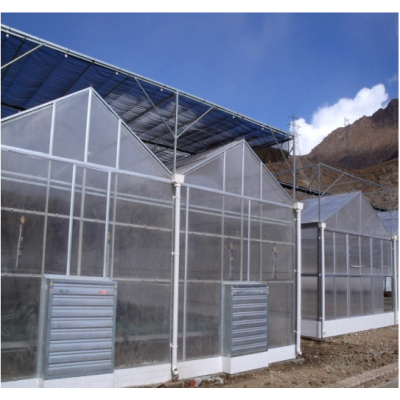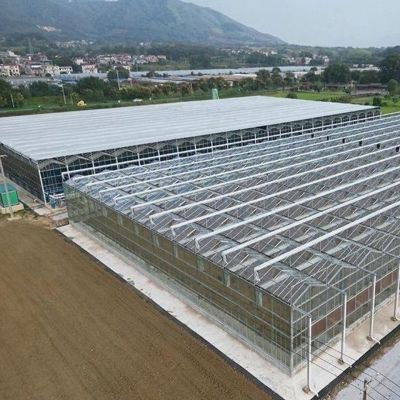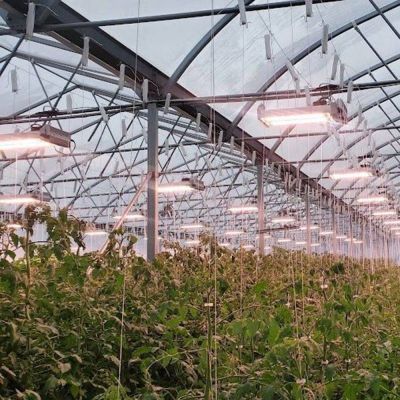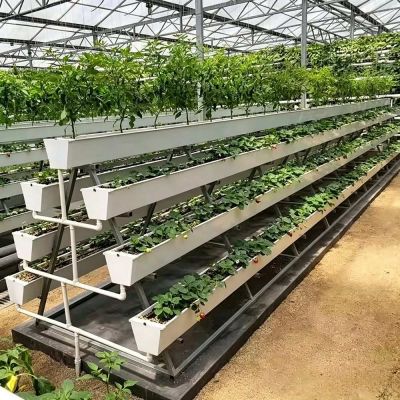
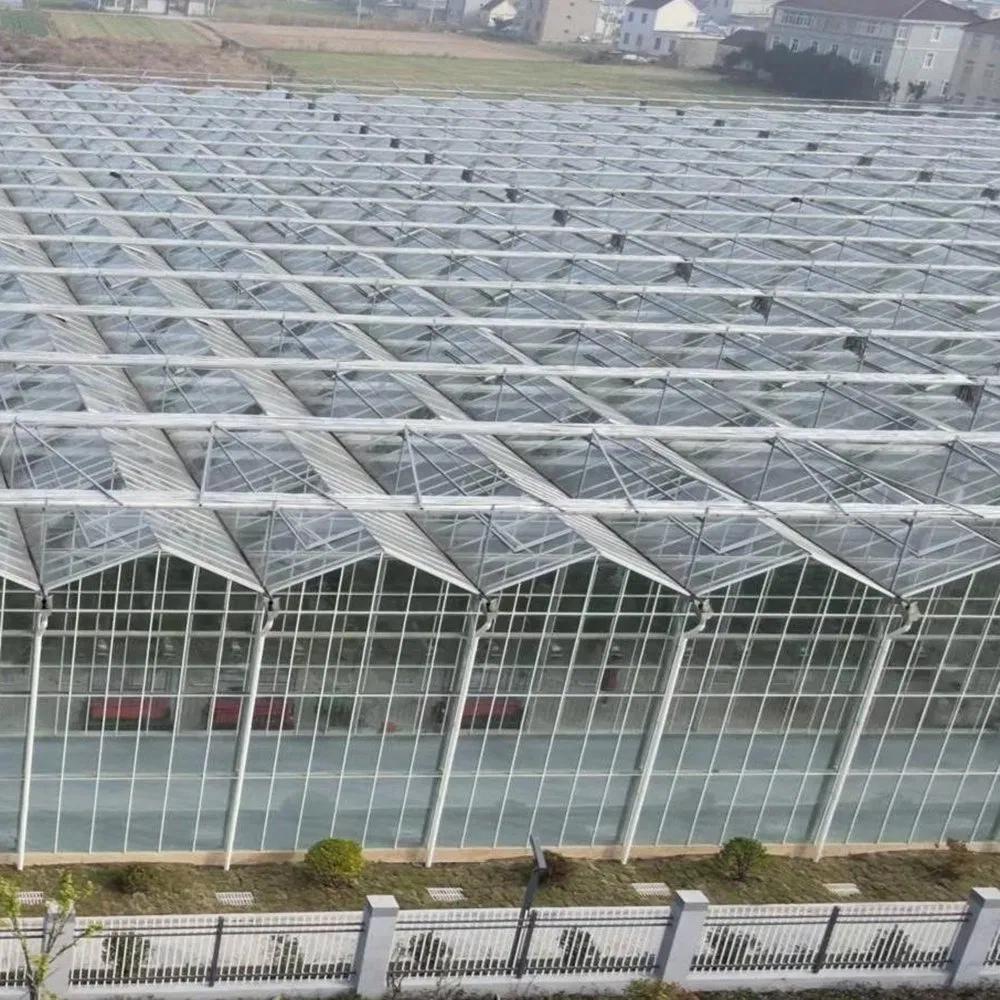
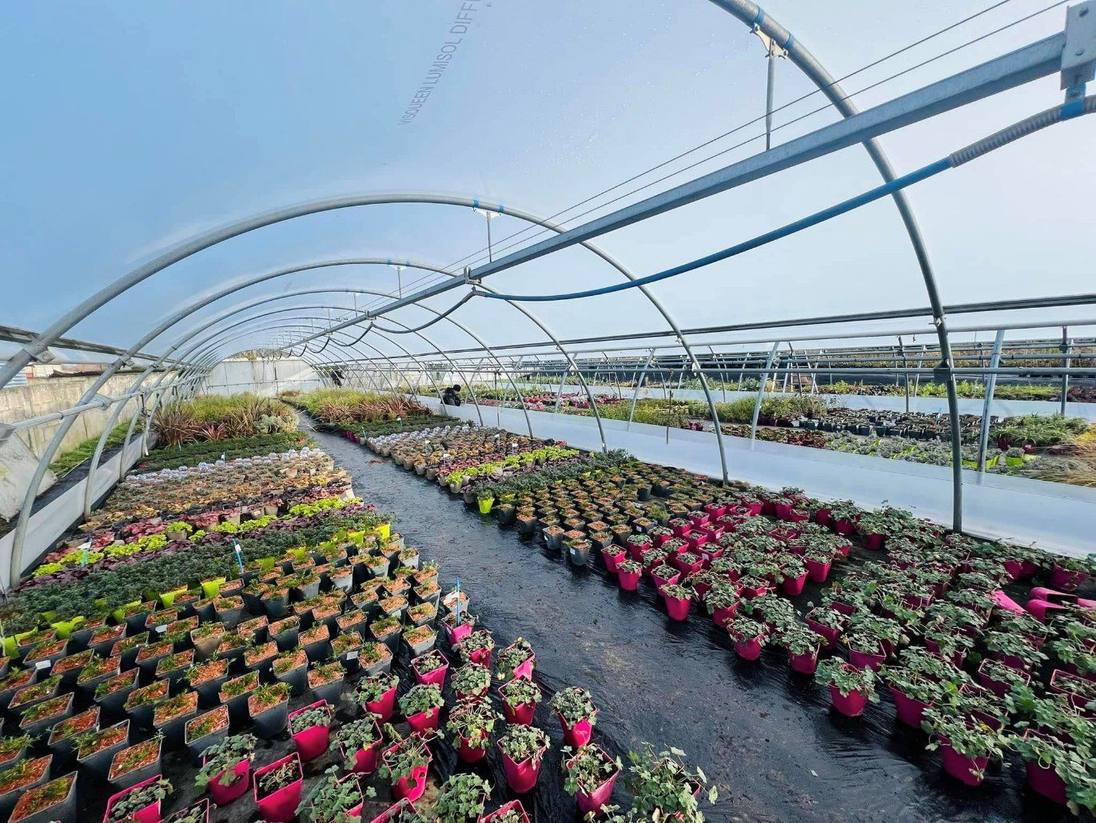
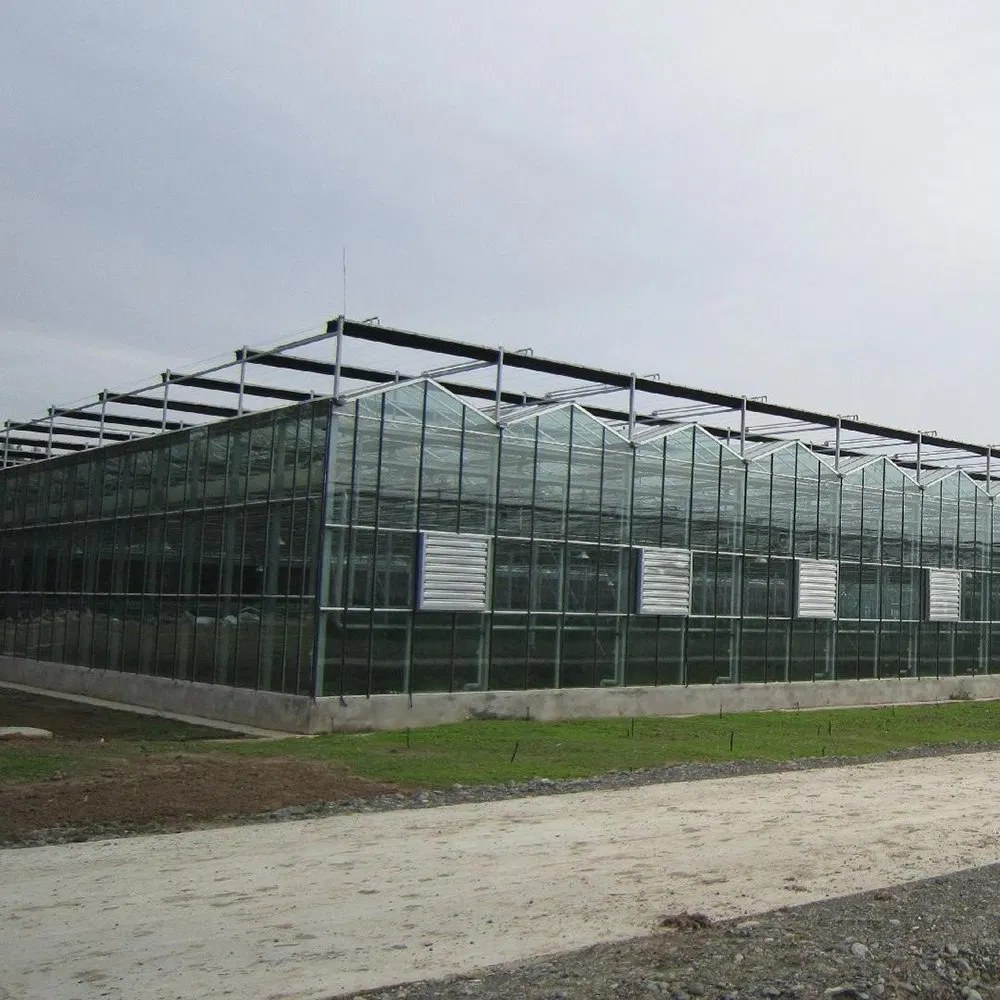
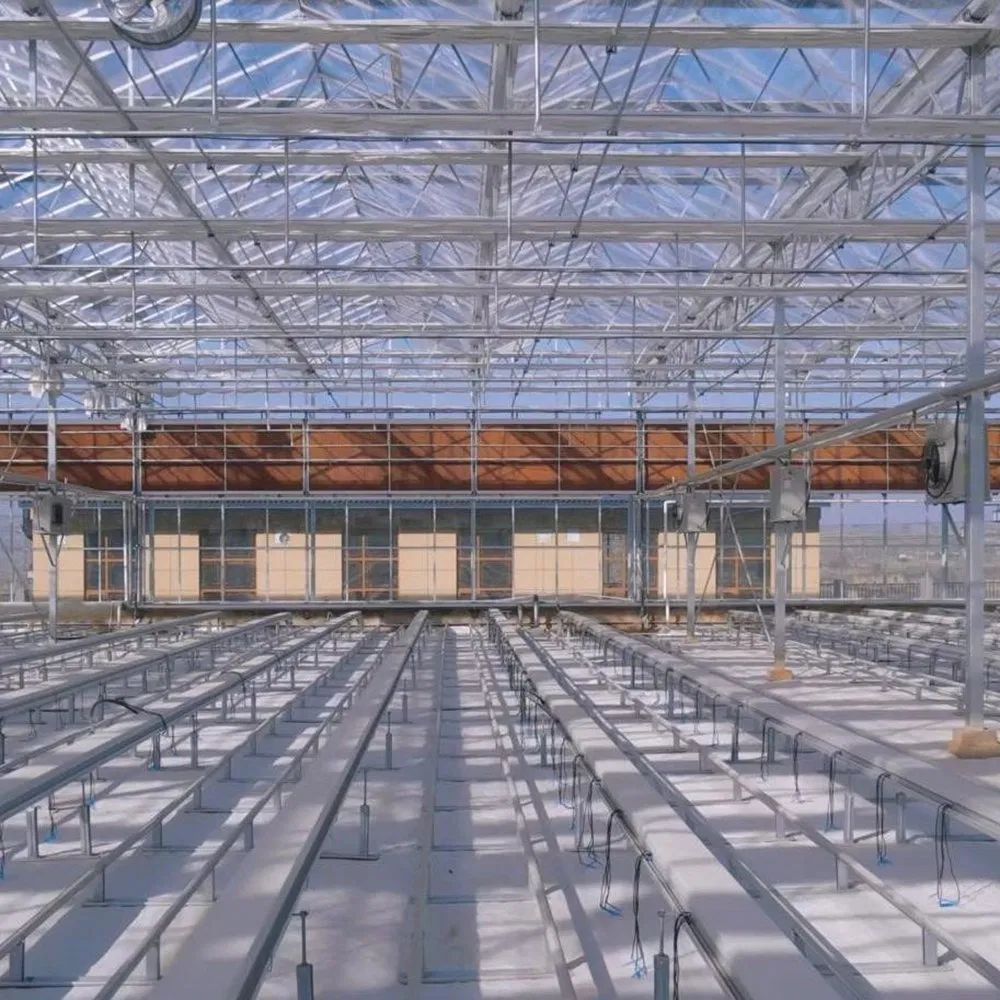
Climate design is mostly about how much air you can move and how fast the cover loses heat. This glass house answers both: roof vents along the ridge with side vents below, UV coated glazing that keeps its transmission, and 0.35 kilonewtons per square metre of wind and snow on the reference build. It is quoted for sites that get both a hot summer and a cold winter. It is the same frame the other glass houses use, quoted against a different set of weather.
Most climate problems in a greenhouse are ventilation problems wearing a costume. A house that can dump heat at the ridge in July is usually also a house that can be kept closed and warm in January. This glass house is quoted around that single idea, with UV coated glazing that does not haze and roof vents sized for the worst afternoon of the year. It belongs to the glass greenhouse section of this site.
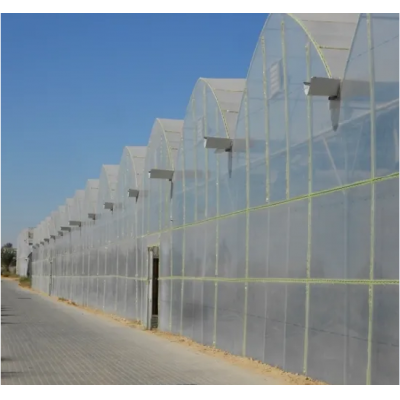
Heat collects at the ridge, so that is where it has to leave. Roof vents along the ridge do more for a summer afternoon than any amount of side opening, because side vents mostly move air at crop height. The two work as a pair: roof out, sides through.
Automated vent drives are worth specifying on a glass house even in a temperate climate, because glass heats faster than film and the difference between a vent opening at nine and at eleven can be a scorched crop.
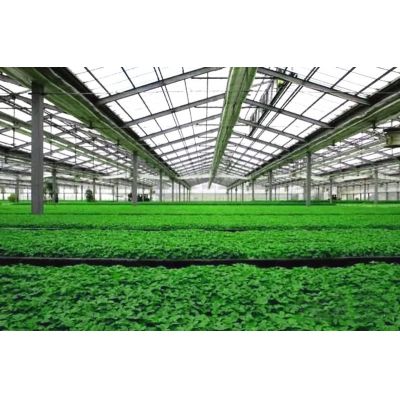
Glass is naturally UV stable, and the coating on these panels is there to protect the crop from the fraction that still passes, and to keep the glazing itself from hazing. Transmission is quoted at 90 to 95 percent and does not fall away with age the way a plastic cover does.
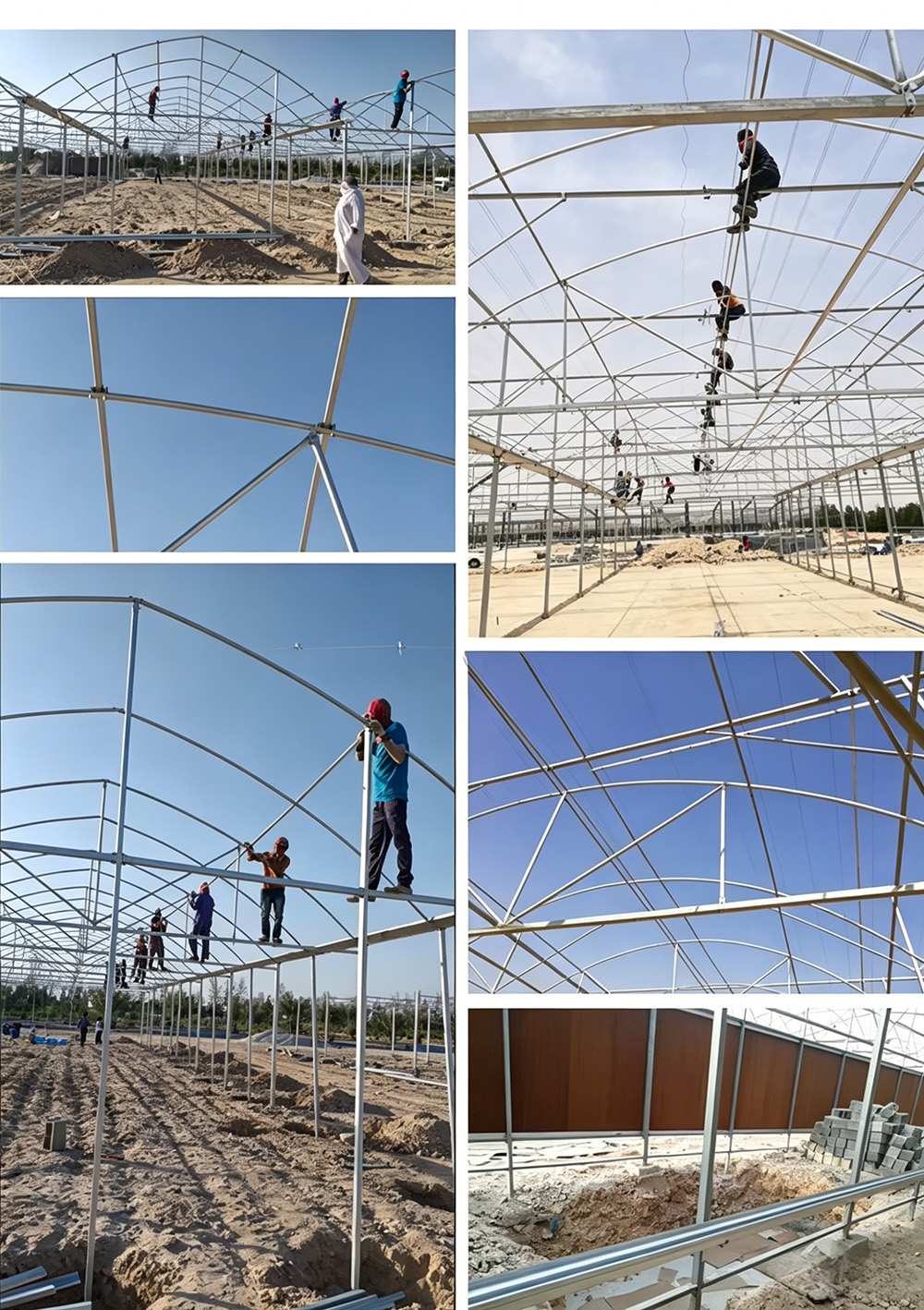
| Structure | Galvanized steel or aluminium alloy |
| Glazing | 4 or 5 mm float glass, 5 mm tempered option |
| Light transmission | 90 to 95 percent |
| UV protection | UV resistant coating on the glazing |
| Gable span | 8 m to 10.8 m |
| Total height | 4 m to 5.3 m |
| Wind and snow load | 0.35 kN/m2 each on the reference build |
| Ventilation | Roof vents, side vents, automated options |
| Heating | Optional, boiler or radiant |
| Insulation | Moderate, improved with double glazing |
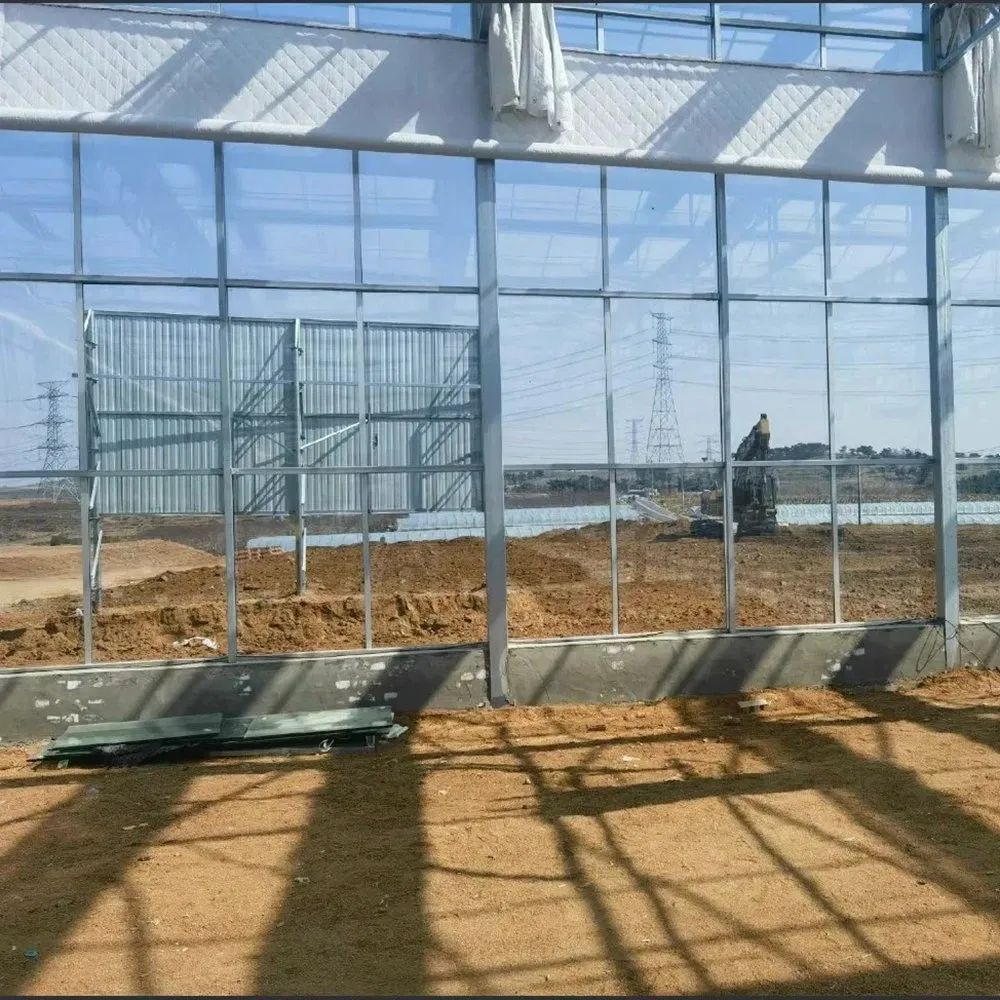
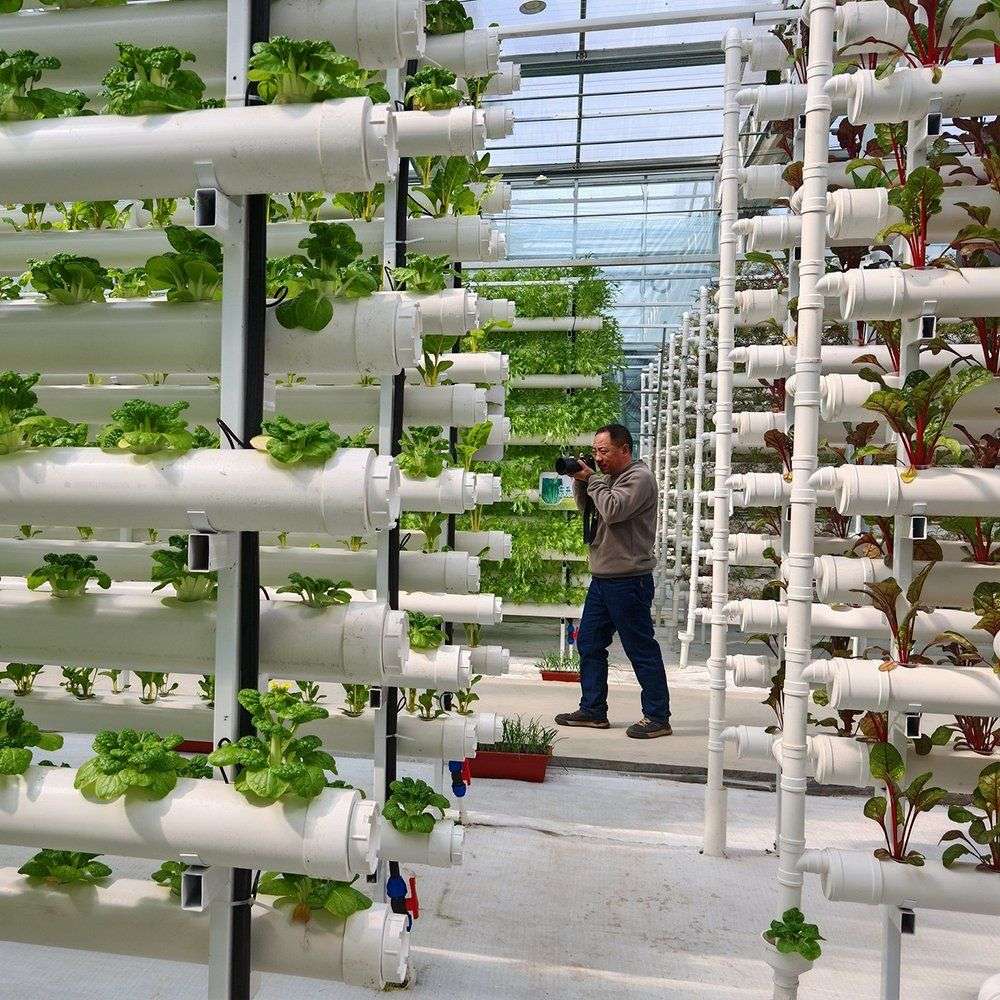
Two levers: vent area and shade. Vent area is fixed by the drawing, so it is the one to argue about at quotation stage. Shade is added later and can be external or internal, and on a glass house an external screen also takes hail.
Where the summer is humid rather than dry, a pad and fan wall is the usual addition. It is not part of this house as standard, but the frame can carry it and the electrical load should be planned with it in mind.
On the cold side the lever is the cover: single glazing loses heat quickly, double glazing cuts the loss and a thermal screen under the roof cuts it again. Both cost light, which is why the specification depends on how much of the year the house is in production rather than on the lowest night temperature.
Snow is the structural question. The reference build is rated at 0.35 kilonewtons per square metre for both wind and snow, and a site with heavier ground snow needs a heavier rating rather than a steeper promise. Guidance on protected cropping in varied climates is published by Michigan State University, and fresh produce trade coverage by FreshFruitPortal.
The compromise is always headroom: a house tall enough to buffer a hot afternoon is also harder to heat on a cold night, because volume scales faster than surface. Four to 5.3 metres total height is the usual balance, and a thermal screen is how growers in marginal climates buy back the winter without losing the summer.
A house with tempered glazing for public gardens is described on the tempered glass greenhouse page, and a smaller starter bay on the 15 by 30 metre starter glass house page.
Film suits low-cost tunnels on 3-5 year replacement cycles. Glass delivers the highest light transmission and the longest lifespan, at the highest cost. PC sheet insulates better than film and suits cold or high-humidity climates. The right choice depends on climate, crop and budget.
Ziyang Bozong Greenhouse Industry Co., Ltd. is a manufacturer based in Ziyang, Sichuan, China. We produce the hot-dip galvanized steel frame in-house, cutting and drilling to drawing, and supply covering materials, ventilation, cooling and irrigation systems as one coordinated package.
Send your growing area, span and length, crop type and local climate. If you already have a layout drawing, that is enough to start. Our engineers then return a quotation with a structure drawing and a bill of materials.
The hot-dip galvanized steel frame is designed for a 15-20 year service life in normal agricultural environments, with a double-sided zinc coating of 200-275 g/m². Film covers are replaced every 3-5 years, while glass and PC panels carry their own manufacturer warranties.
Yes, roof and side vents can both be driven automatically. Glass heats faster than film, so the gap between a vent opening at nine and at eleven can be the difference between a good afternoon and a scorched crop.
Yes, and it is the usual answer for a cold site. It cuts heat loss at night and costs some light, so it is specified against how much of the year the house runs rather than against the lowest temperature on record.