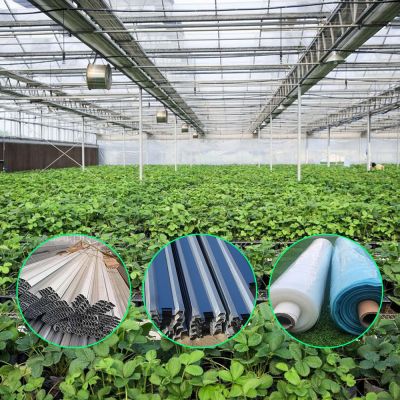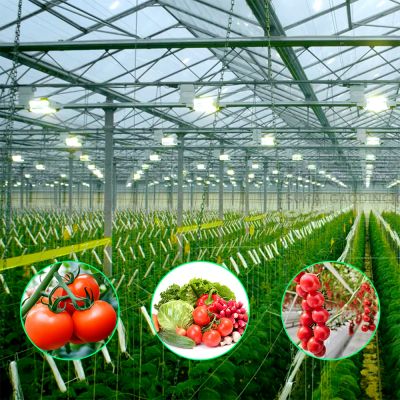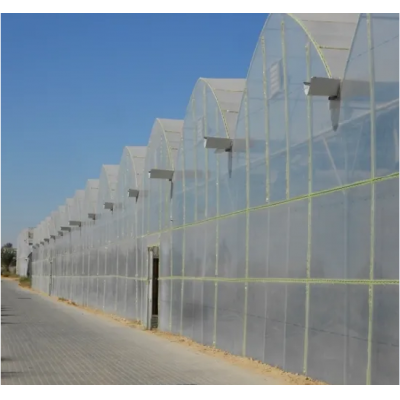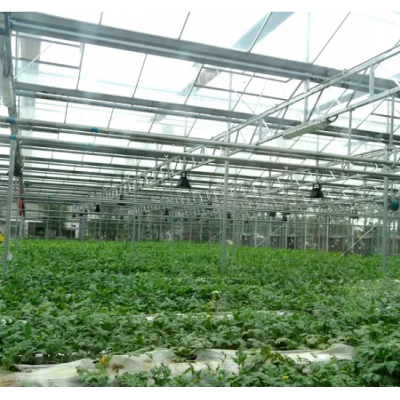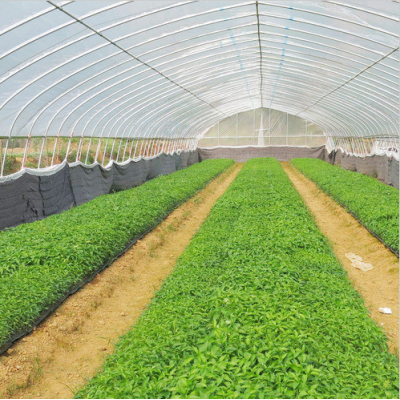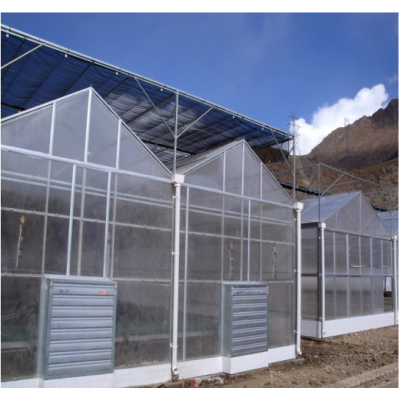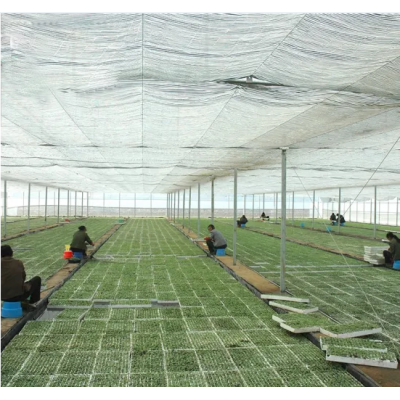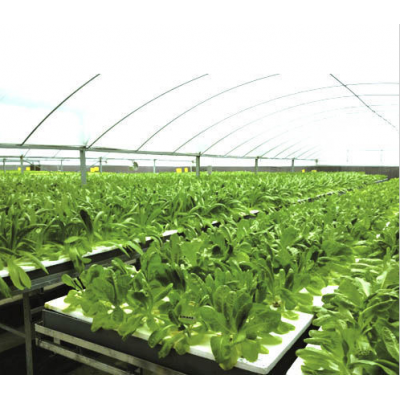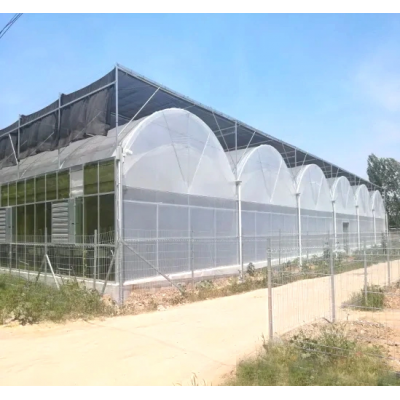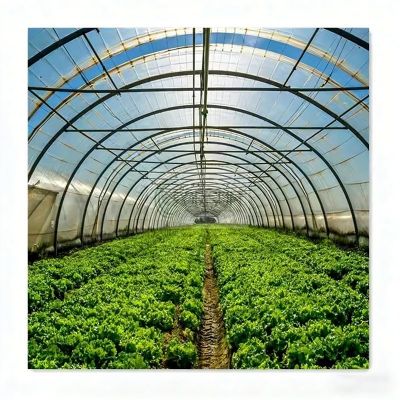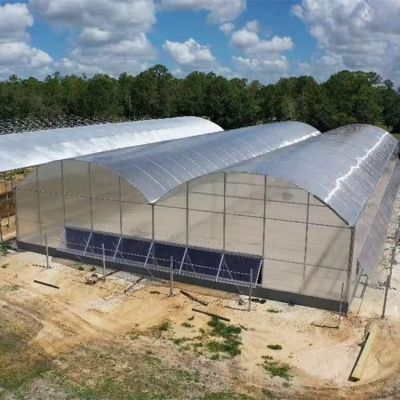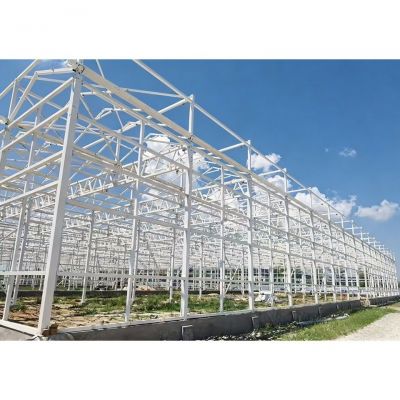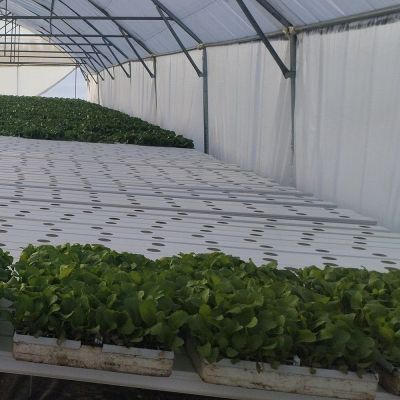
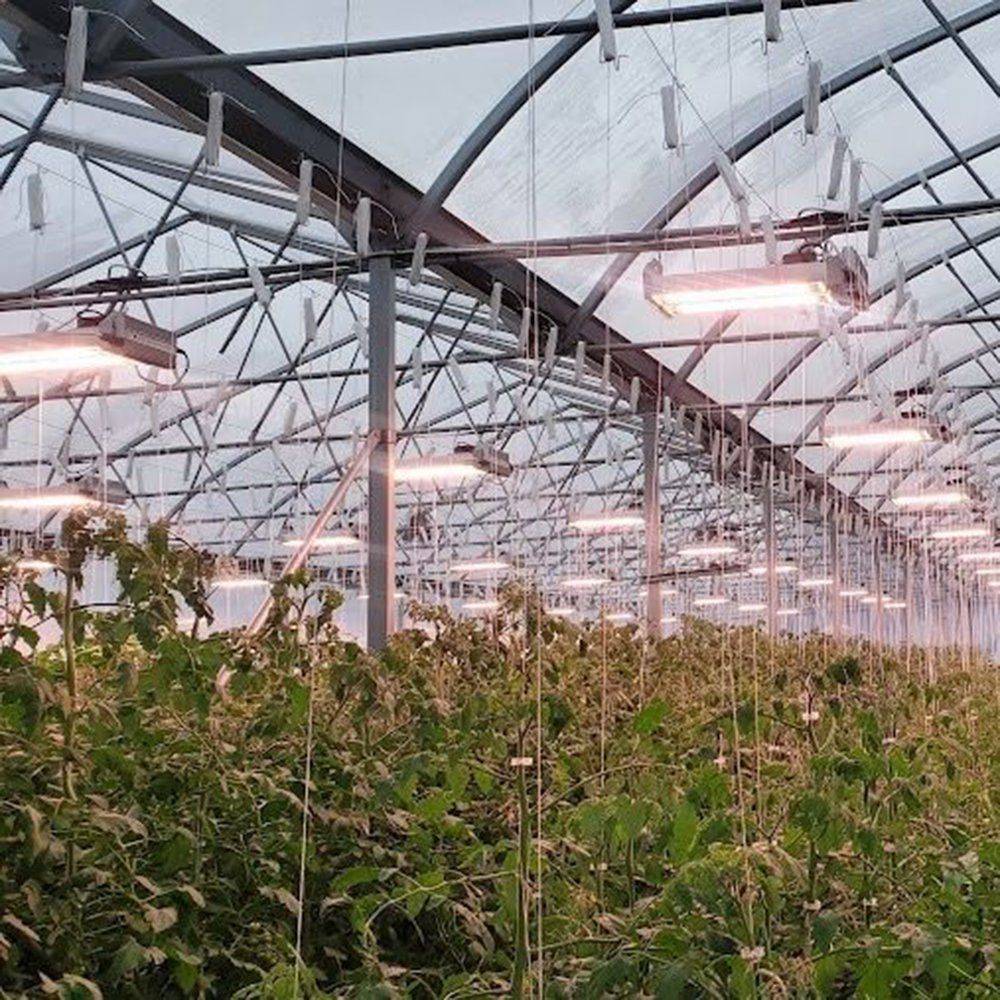
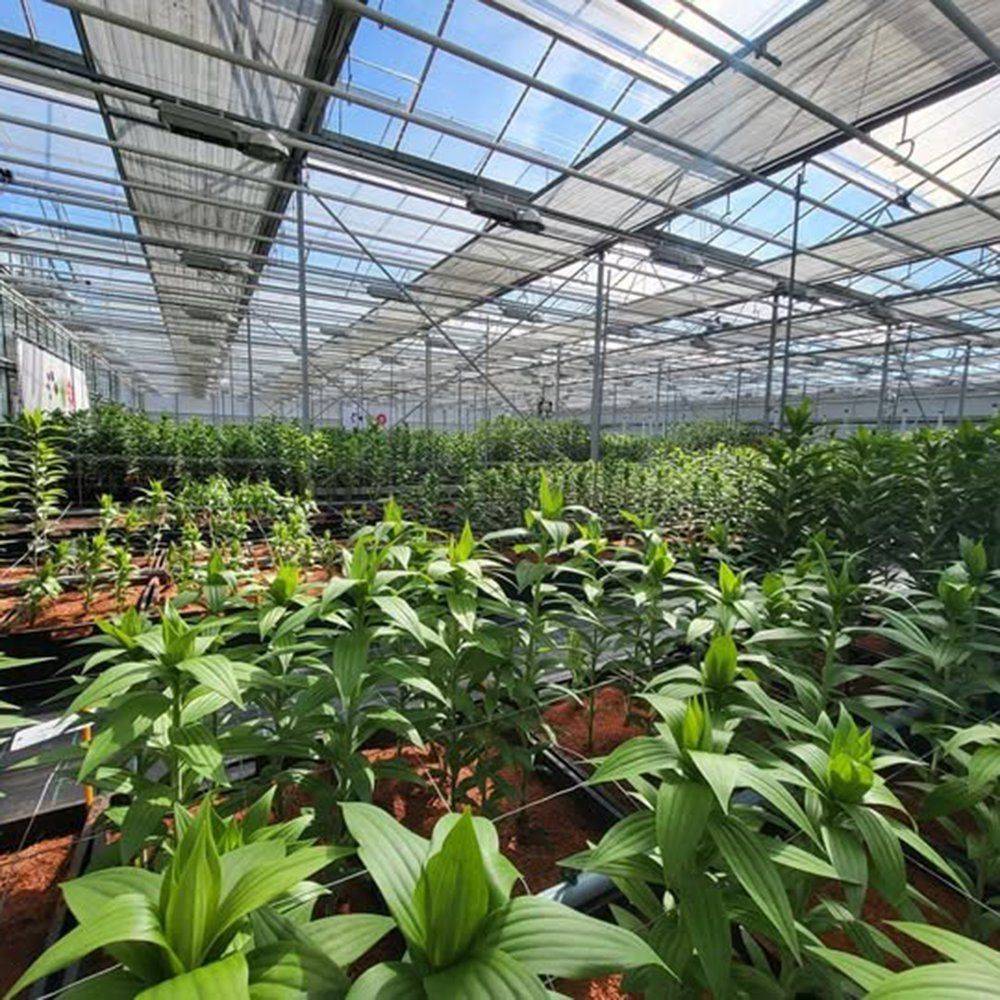
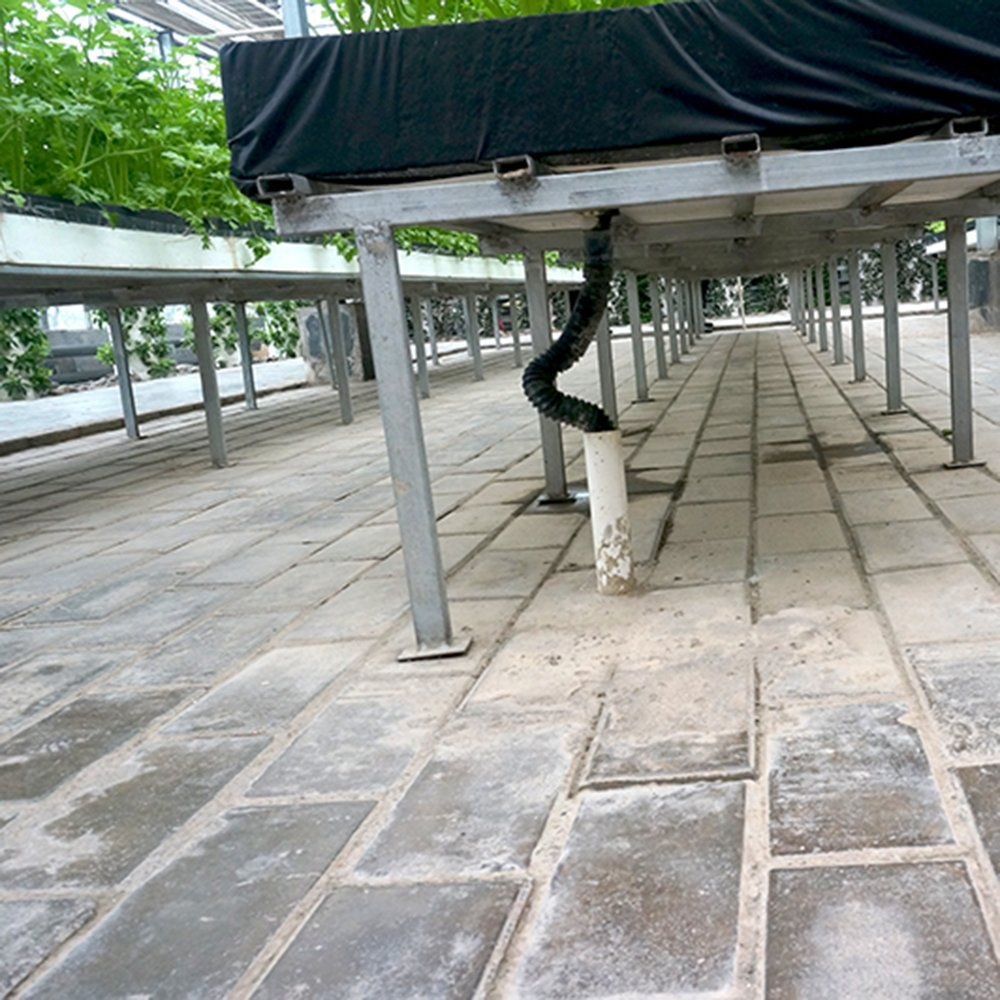
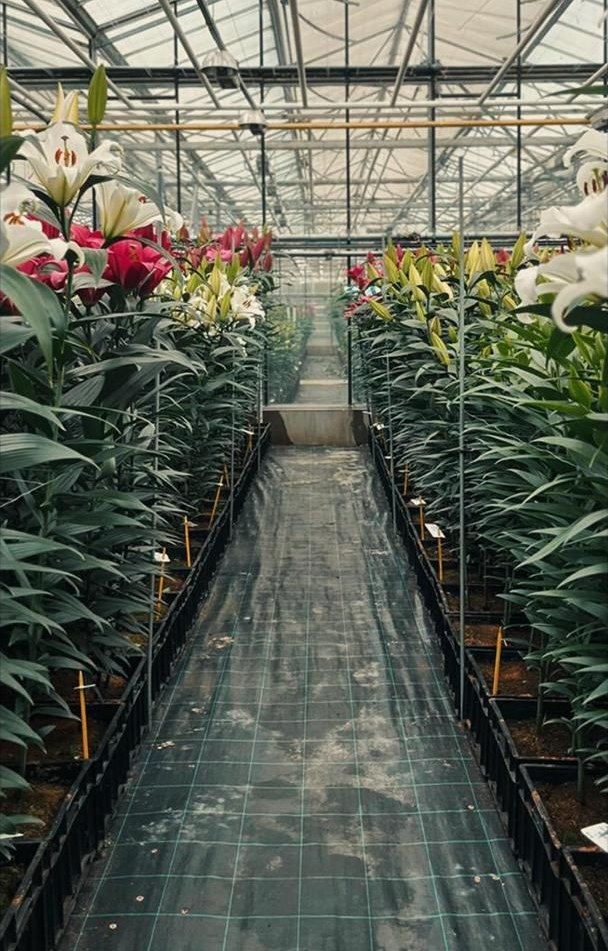
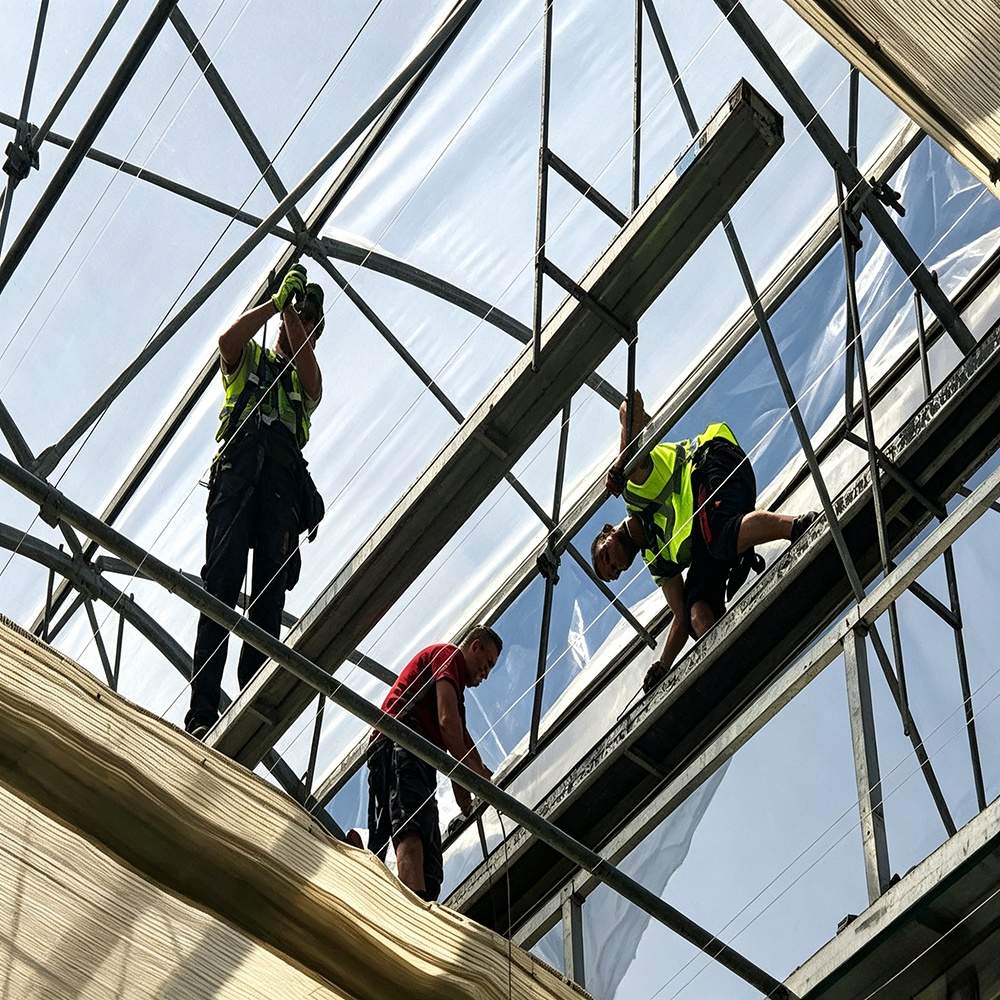
This commercial vegetable greenhouse is aimed at large scale farming, where the priority is steady yield rather than novelty. The frame is galvanized steel or aluminium alloy, and the covering is PO or PEP film with a UV resistant coating that transmits 90 to 95 percent of light. Roof vents and side vents, or an automated system, manage heat and humidity across a wide floor. Drip irrigation and shading can be integrated, and heating is optional where the season needs extending. The structure suits high density planting layouts.
At large scale, a vegetable greenhouse stops being about beating the weather on a single bed and starts being about holding a stable microclimate across a whole block. This commercial vegetable greenhouse is built for that job, with a galvanized frame, film covering and a ventilation set sized to the floor.
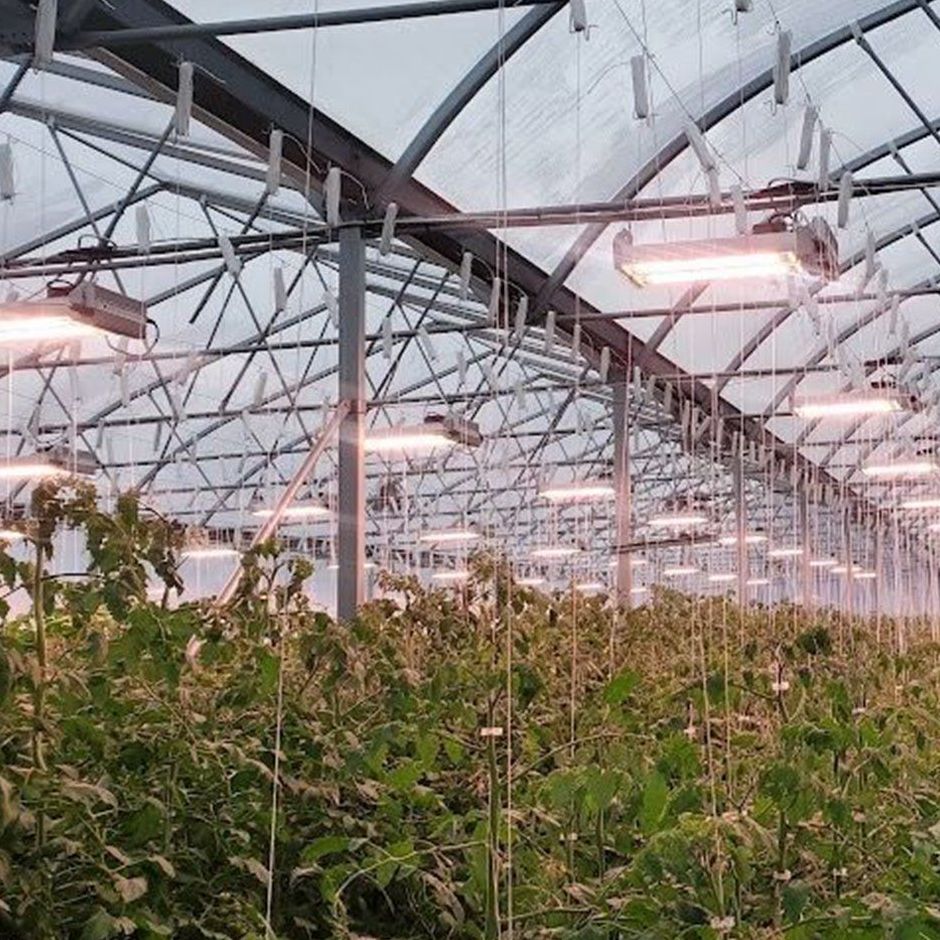
The frame is galvanized steel or aluminium alloy, chosen for corrosion resistance on a structure that will stand for years. The covering is PO or PEP film carrying a UV resistant coating, and it transmits 90 to 95 percent of available light, which is what drives the photosynthesis behind yield. Across a large floor, ventilation does the heavy lifting: roof vents and side vents, or an automated system, release the heat and humidity that build up through the day so the crop is not stressed at midday and chilled overnight. Drip irrigation and shading systems can be integrated into the same layout, which lets light, temperature and moisture be managed together rather than fought one at a time. Growers running commercial vegetable operations often follow extension guidance such as that published by Michigan State University horticulture, and trade reporting on FreshPlaza.
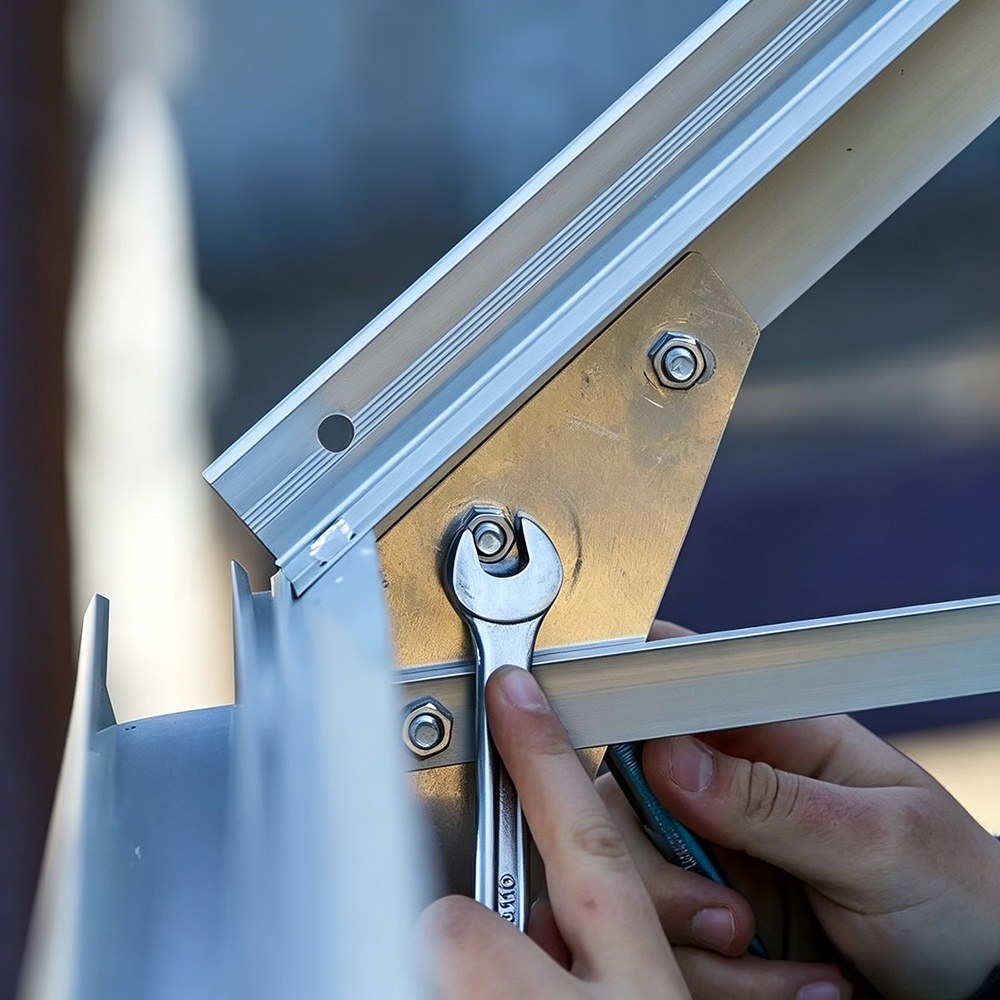
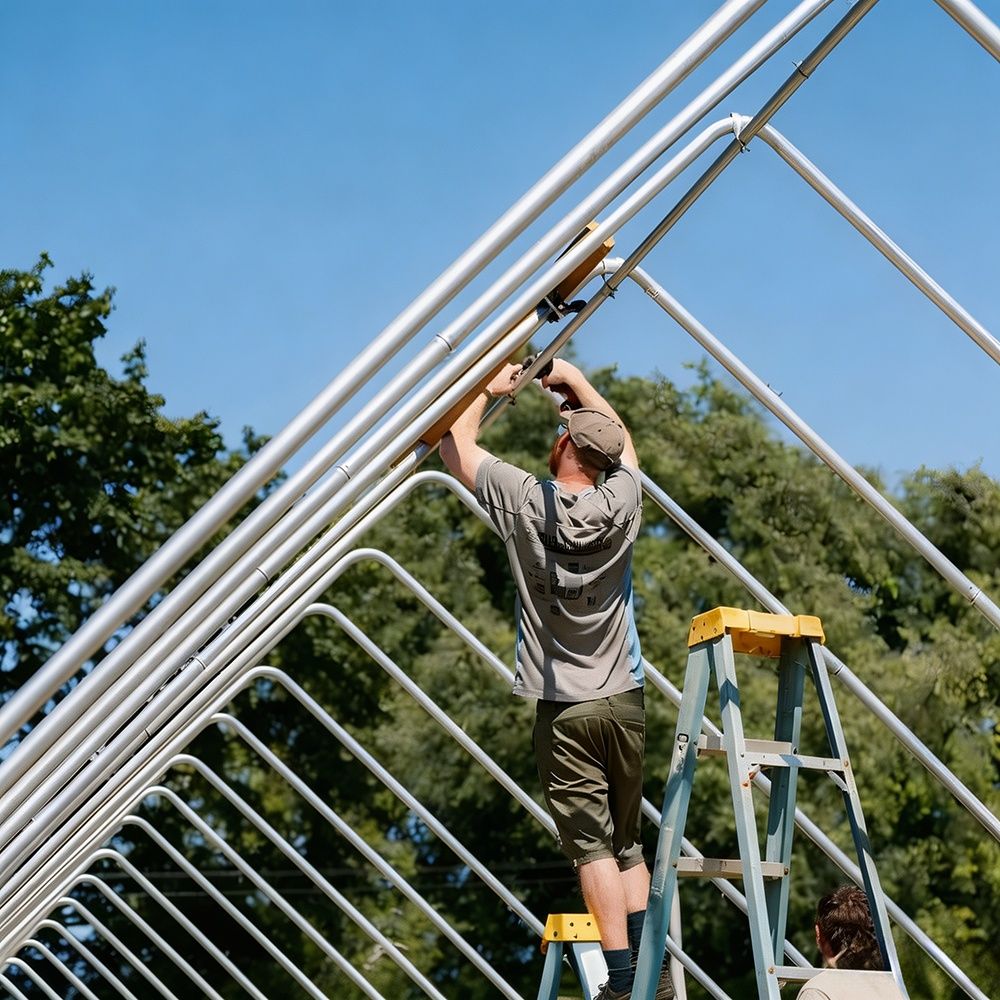
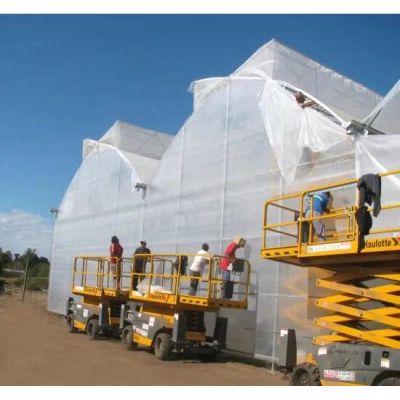
The frame arrives as pre drilled galvanized sections that bolt together on a prepared base, with no field welding required, and the cover is drawn over the structure once the frame is complete. Because the house is large, staging the build in bays keeps the work manageable and lets irrigation and shading be installed alongside. Film is the consumable element and normally lasts around three years, so replacement should be planned into the crop calendar rather than treated as an emergency. Between covers, check vent mechanisms before each season, keep the film tensioned and sealed at joints, and clear gutters and drainage across the full roof run.
These structures suit large scale vegetable production, and the same frame carries cut flowers, seedling operations and herb crops where yield stability and operational efficiency matter more than any single feature. The wide spans suit mechanical working and internal transport. Compare our film greenhouse range and the multi span greenhouse for agricultural use, or review our agricultural plastic film greenhouse for a field scale option.
The frame is designed to your span, length and height, and the structure can be staged in bays. Send us your site plan and we will confirm a layout that suits your working widths.
Yes. Drip irrigation and shading systems are designed into the same layout, so light, temperature and moisture can be managed together rather than as separate retrofit projects.
Around three years under normal use. UV resistant film holds transmission and strength longer, and the cover can be replaced on site without dismantling the frame.
Not for most vegetable crops in mild regions, since the house relies on solar gain with ventilation control. Heating is optional and normally reserved for the coldest weeks or for crops with a minimum night temperature requirement.
Send your required span, length and height, your crop, and your local wind and snow loads. We reply with a layout drawing and a full quotation covering frame, film, ventilation and fittings.