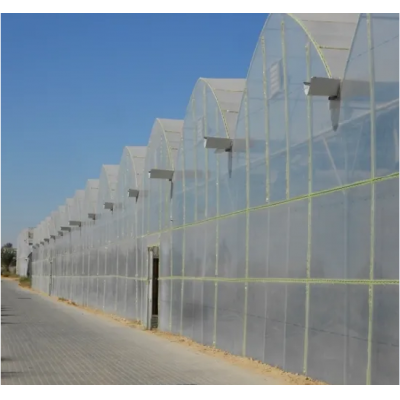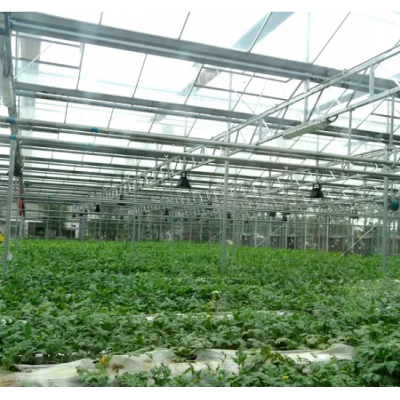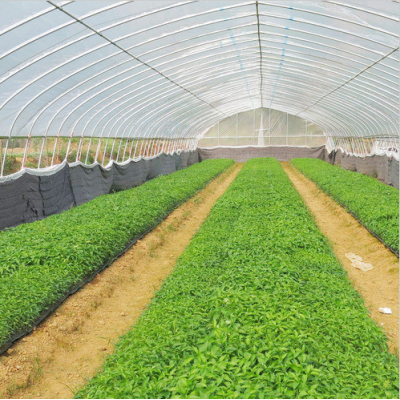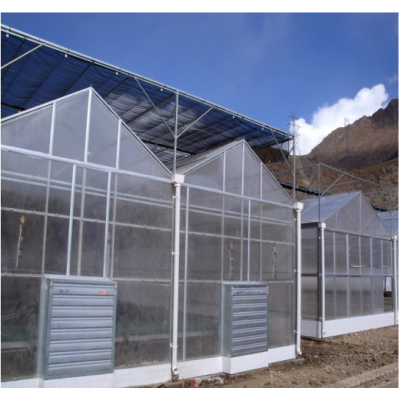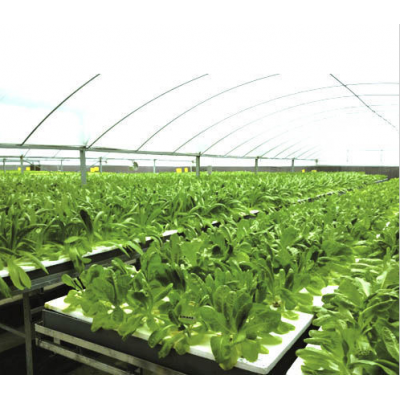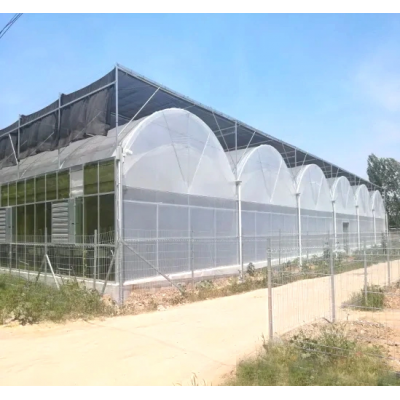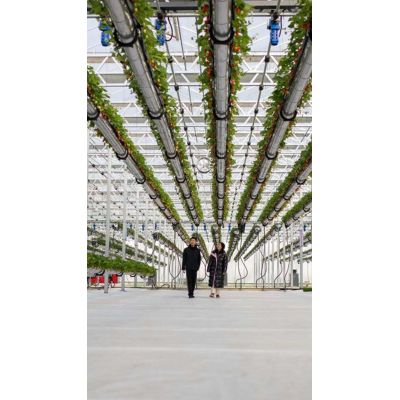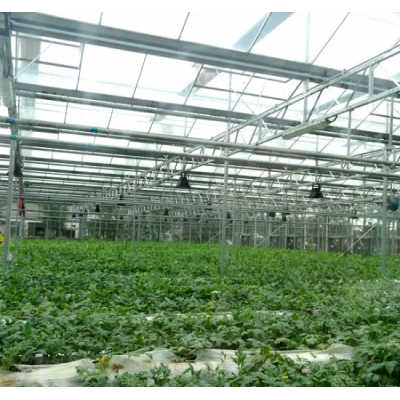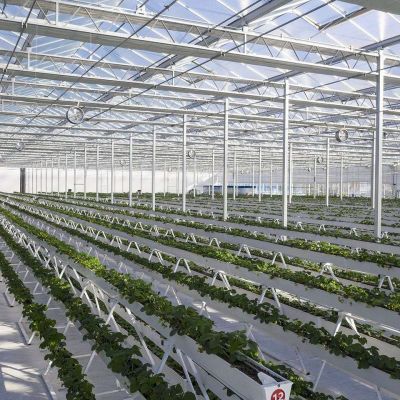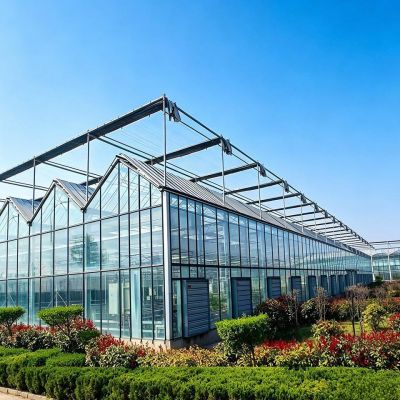
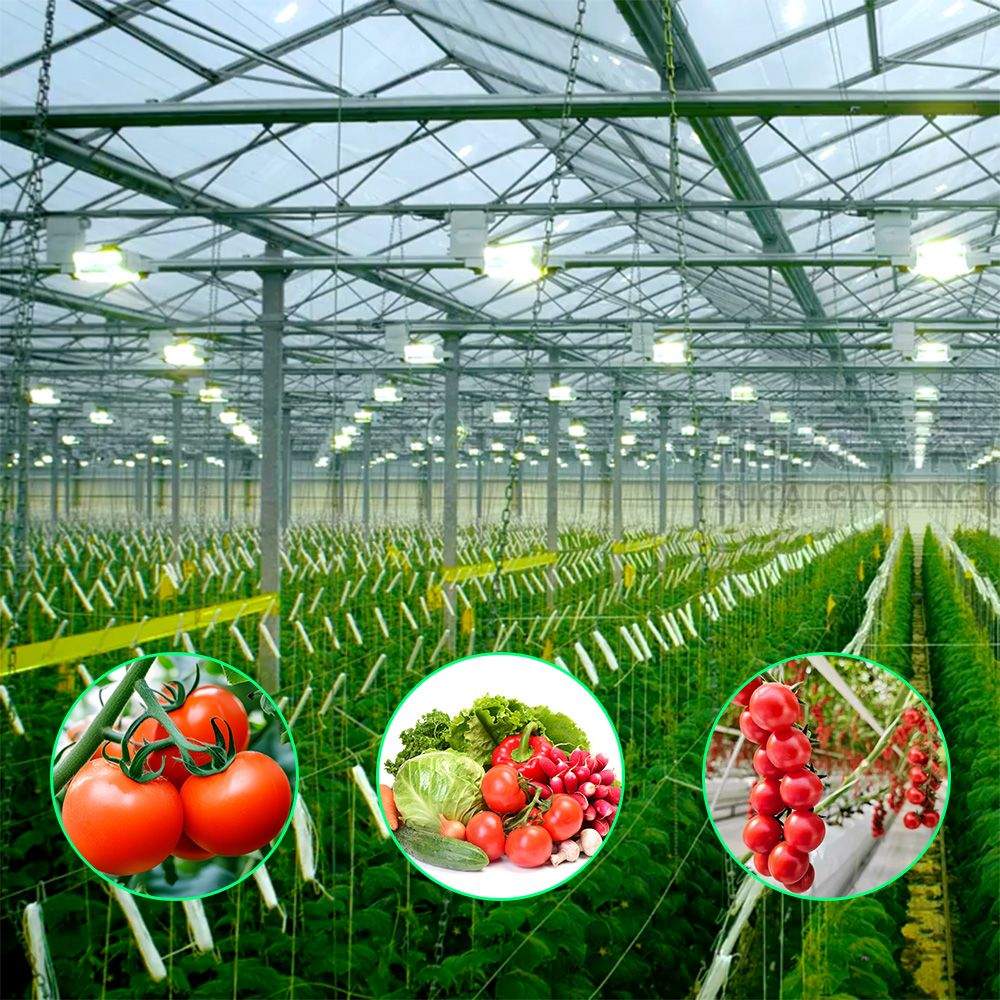
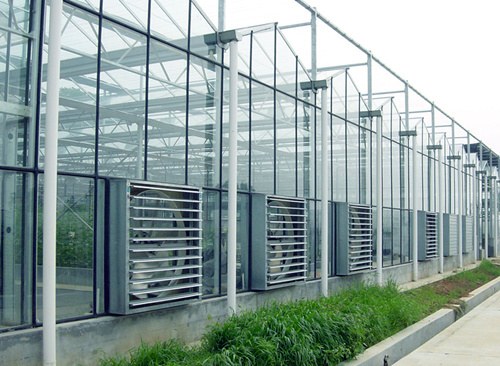
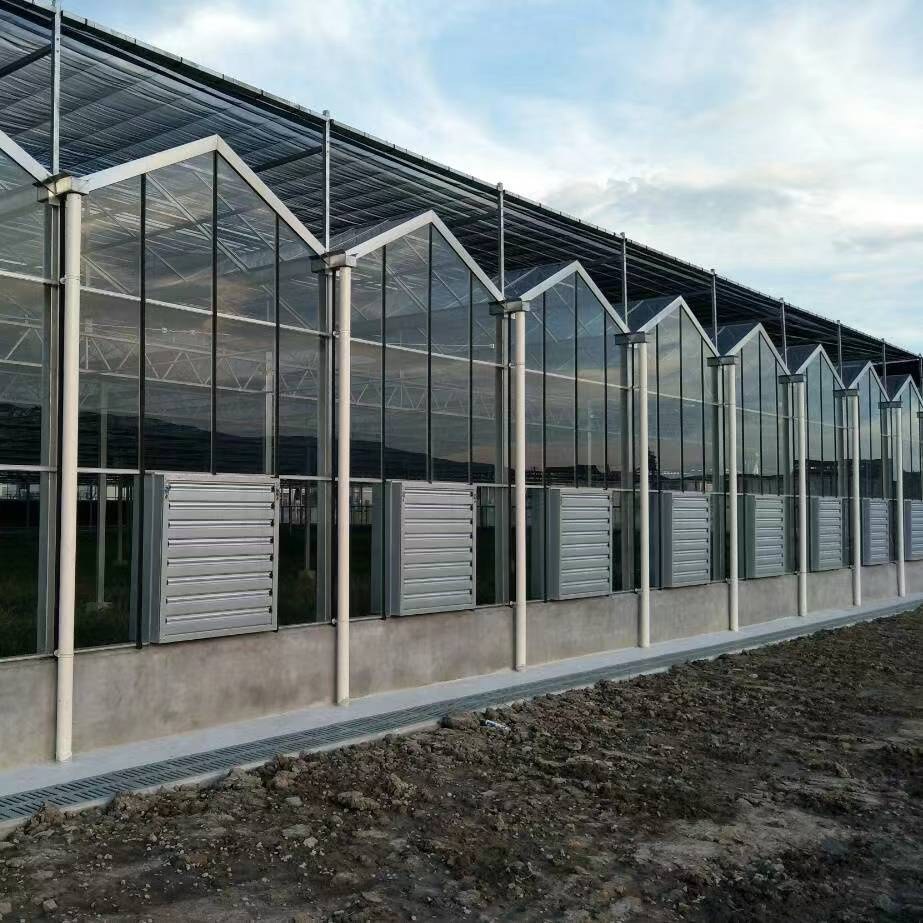
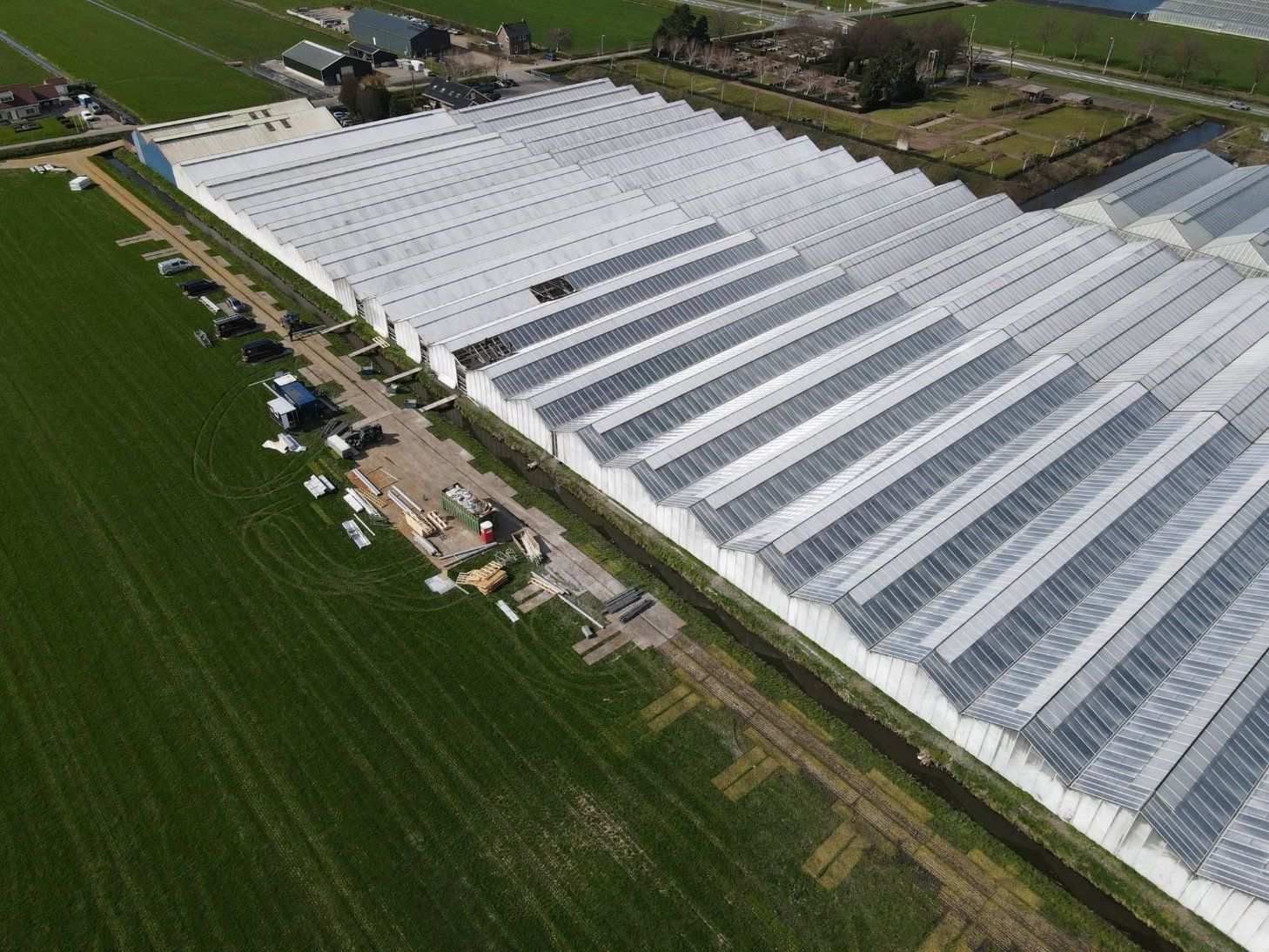
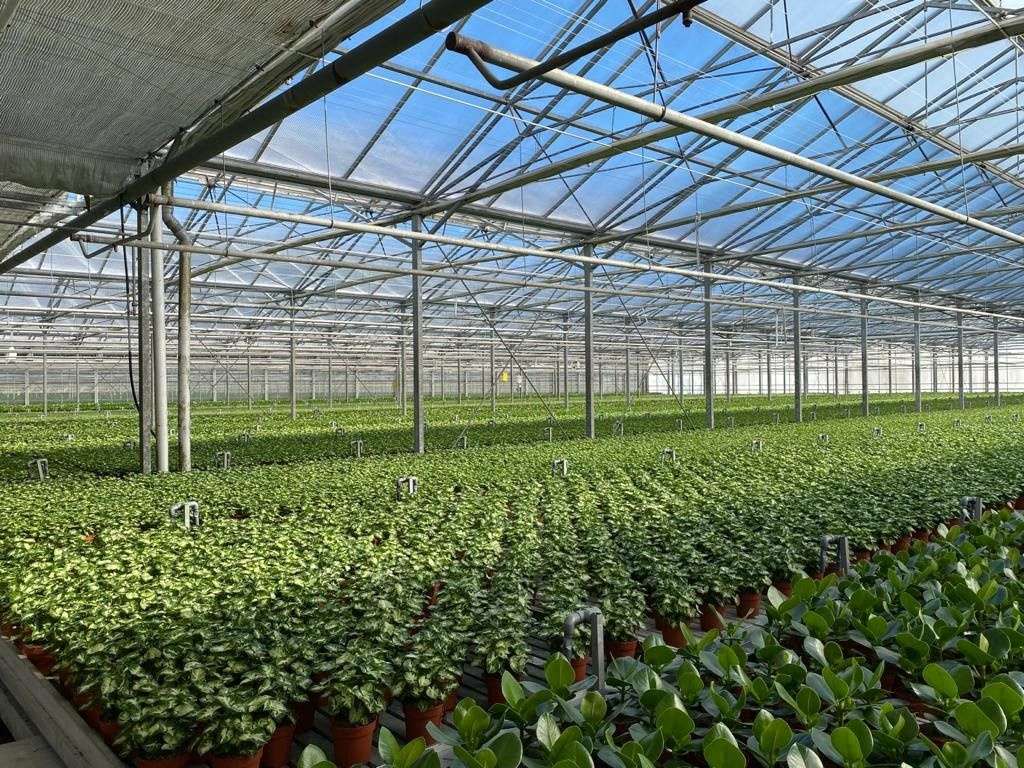
This commercial vegetable glass greenhouse is built for year round cultivation, where consistent light and stable temperature decide crop quality. The covering is 4 mm or 5 mm float glass, or 5 mm tempered glass, with light transmission above 90 percent. A hot dip galvanized steel pipe frame carries the gable structure, with spans from 8 m to 10.8 m and total heights between 4 m and 5.3 m. Glass has a low coefficient of thermal expansion, so panels hold their shape through seasonal temperature swings, and the smooth surface keeps dust from blocking light. Applications include vegetables, cut flowers, nursery stock and research planting.
Growers moving from film or panel covers to glass usually want two things: more light, and a structure that keeps its shape for decades. This commercial vegetable greenhouse delivers both. It uses 4 mm or 5 mm float glass, or 5 mm tempered glass, over a hot dip galvanized steel pipe frame, and it transmits more than 90 percent of available daylight. That combination supports year round cultivation in temperate and cold climates.
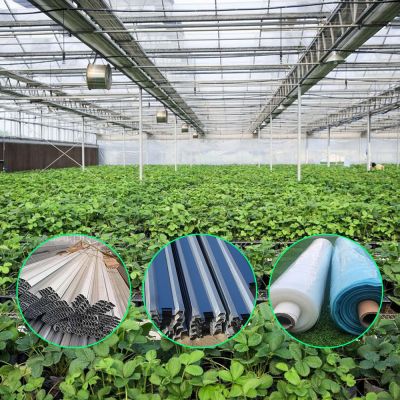
The frame is fabricated from hot dip galvanized steel pipe, a treatment that coats the inside and outside of every section and protects cut ends and bolt holes. Spans run from 8 m to 10.8 m with total structure heights of 4 m to 5.3 m, and the gable roof sheds rain and snow efficiently. Glass covering has a low coefficient of thermal expansion, so panels stay dimensionally stable as temperatures swing between summer and winter. The smooth glass surface also resists dust build up, which keeps light transmission steady across the season. Growers planning protected vegetable programmes often follow extension guidance such as that published by Michigan State University horticulture, and trade reporting on FreshPlaza.
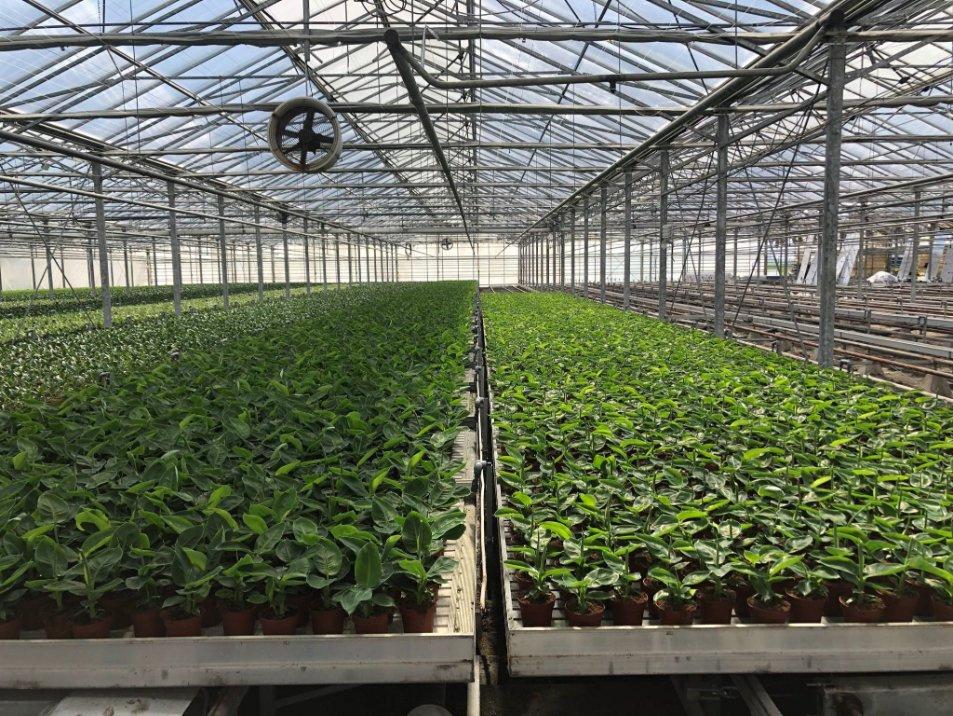
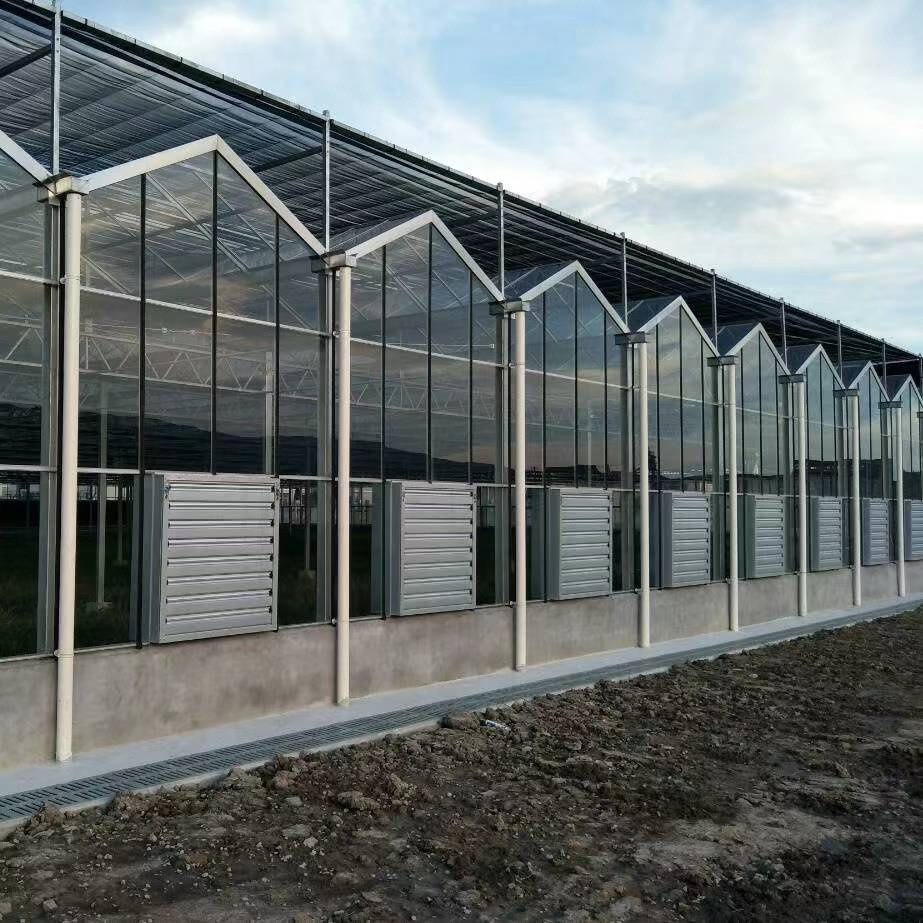
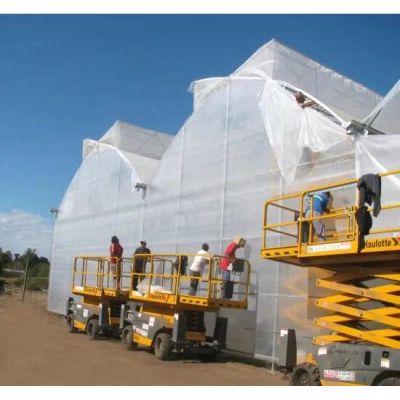
The greenhouse arrives as a pre fabricated kit with labelled frame sections, glazing panels and fittings. Site assembly is bolted, so no field welding is required and a trained crew can complete a standard house in a predictable time. Because the design tolerates varied terrain, complex ground conditions rarely need heavy preparation. Maintenance centers on inspection: check glazing seals at the start of each season, wash glass to keep transmission above 90 percent, and confirm that drainage channels stay clear. Galvanized steel needs no repainting under normal use.
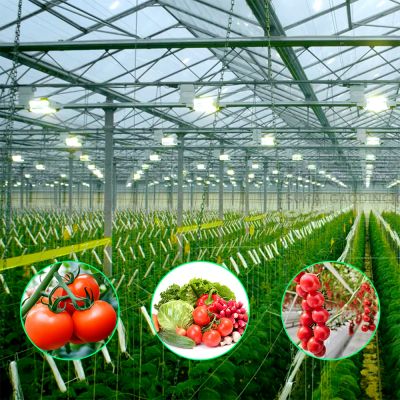
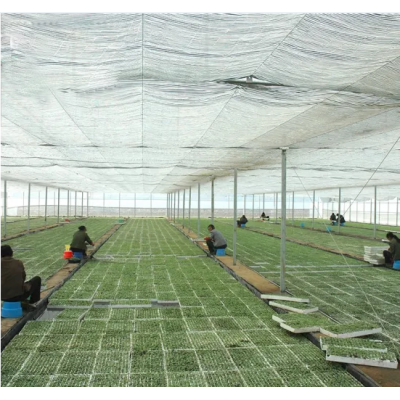
These houses suit vegetable production across all four seasons, where glass gives better winter light than film covers. Cut flower growers value the even illumination for stem length and colour consistency, while nursery operations use the controlled environment for propagation. Research and demonstration planting also benefits from the stable, repeatable conditions that glass provides. Compare our full glass greenhouse range and the temperature controlled glass greenhouse, or review our multi span greenhouse options for larger blocks.
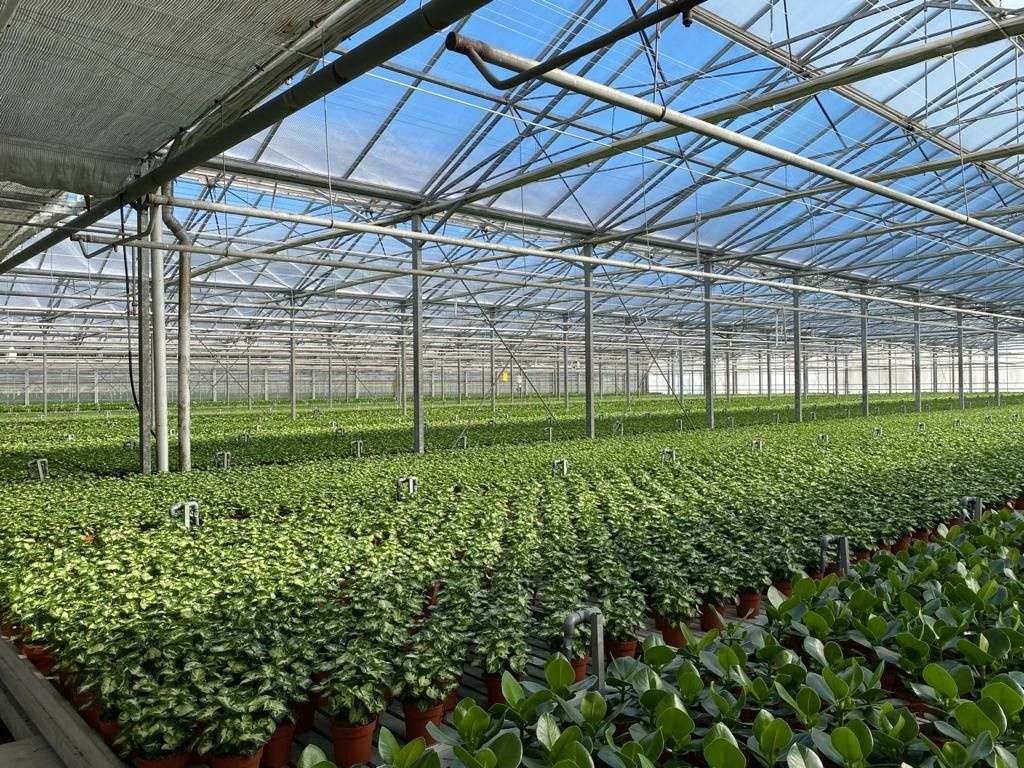
Float glass in 4 mm or 5 mm suits most commercial vegetable houses and offers good value. Tempered glass costs more but resists impact better, so it is often chosen for hail prone regions or for low roofs near walkways.
With clean panels, transmission exceeds 90 percent. Regular washing keeps that figure stable, since dust and algae on glass reduce available light noticeably over a season.
With normal use and routine inspection, the galvanized structure is expected to serve for 15 to 20 years. The covering glass performs for 15 years or more depending on handling and local conditions.
We provide a structural warranty and an anti-corrosion warranty on the galvanized frame. Covering warranty is separate and depends on the glass type selected. Ask our team for the current terms before ordering.
Send your span, length, height and local wind and snow loads, plus your target crop. We reply with a layout drawing and a full quotation covering frame, glazing, ventilation and fittings.