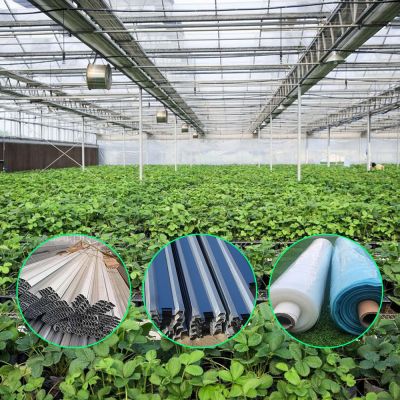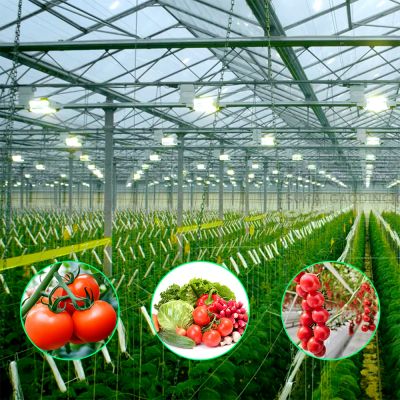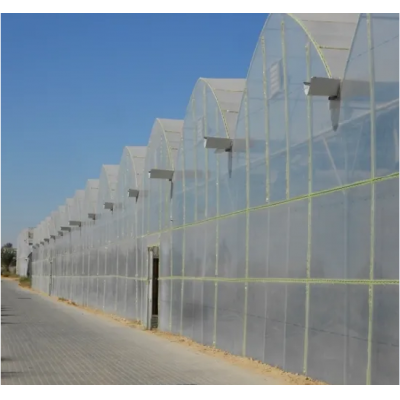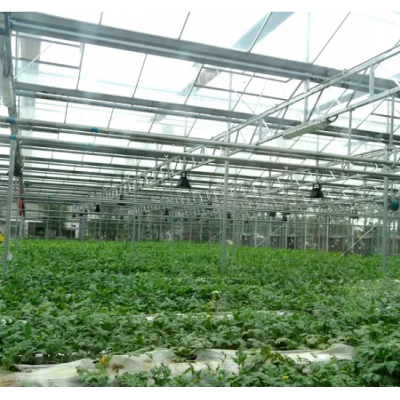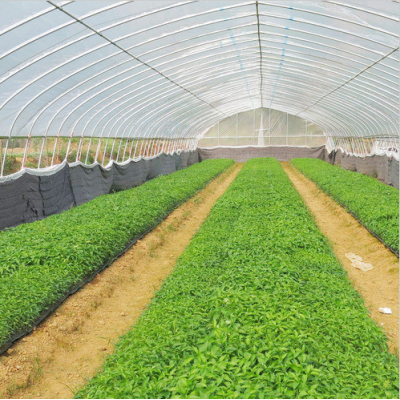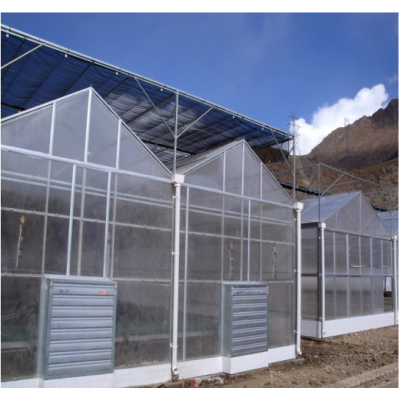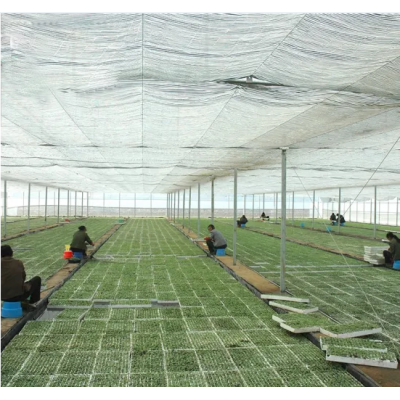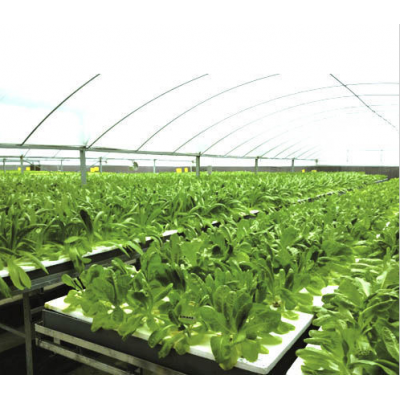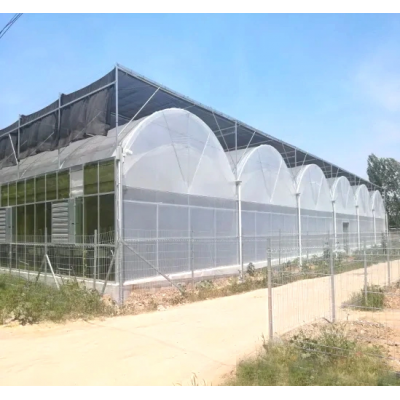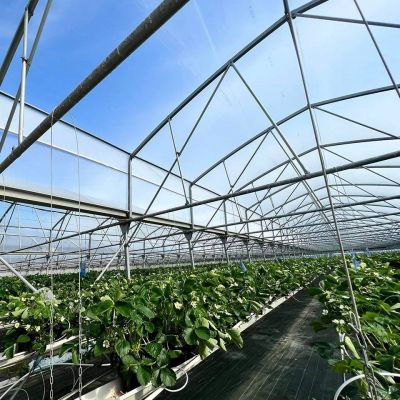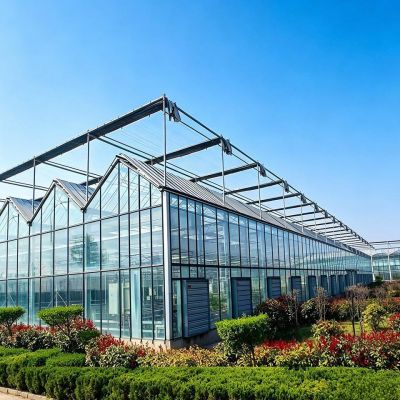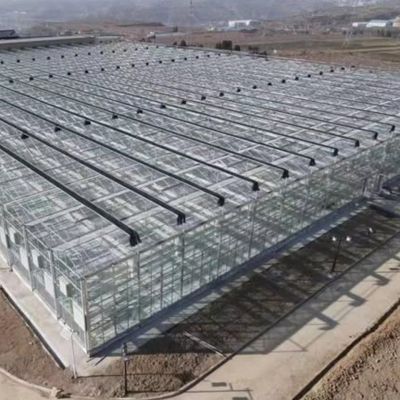
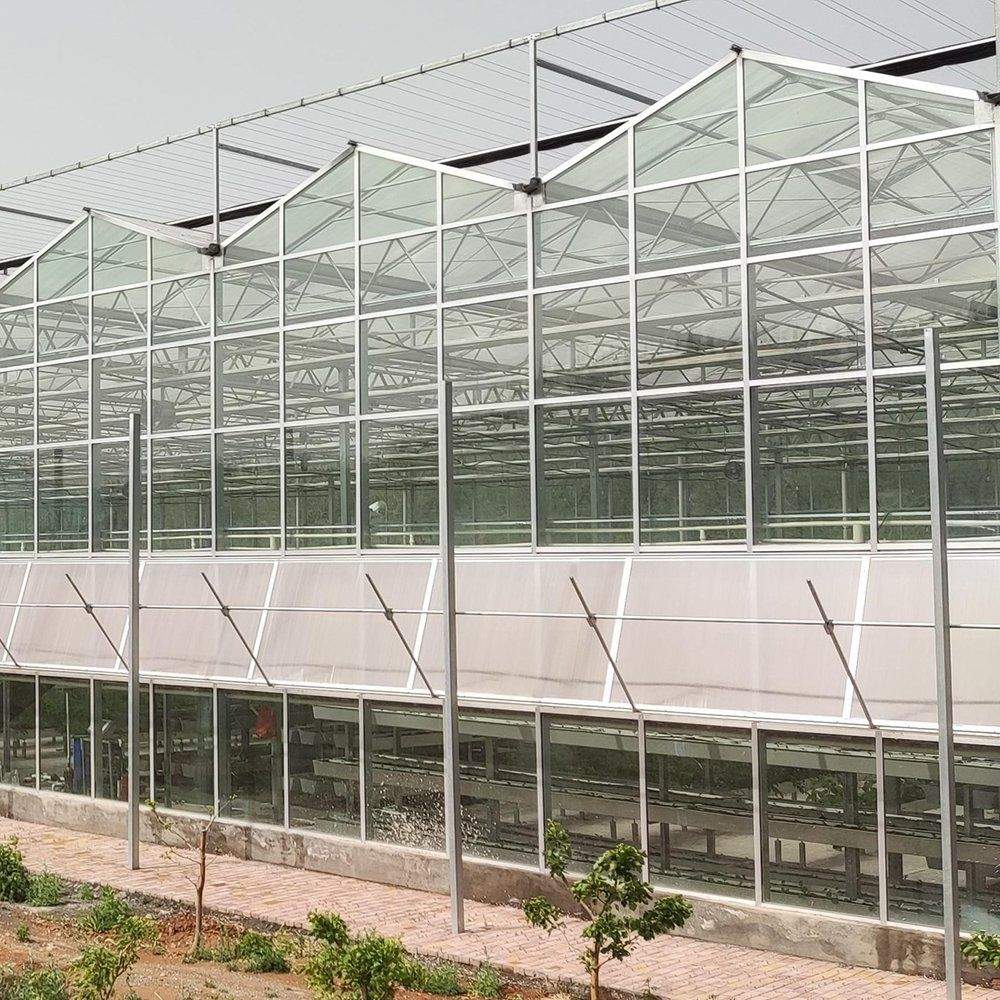
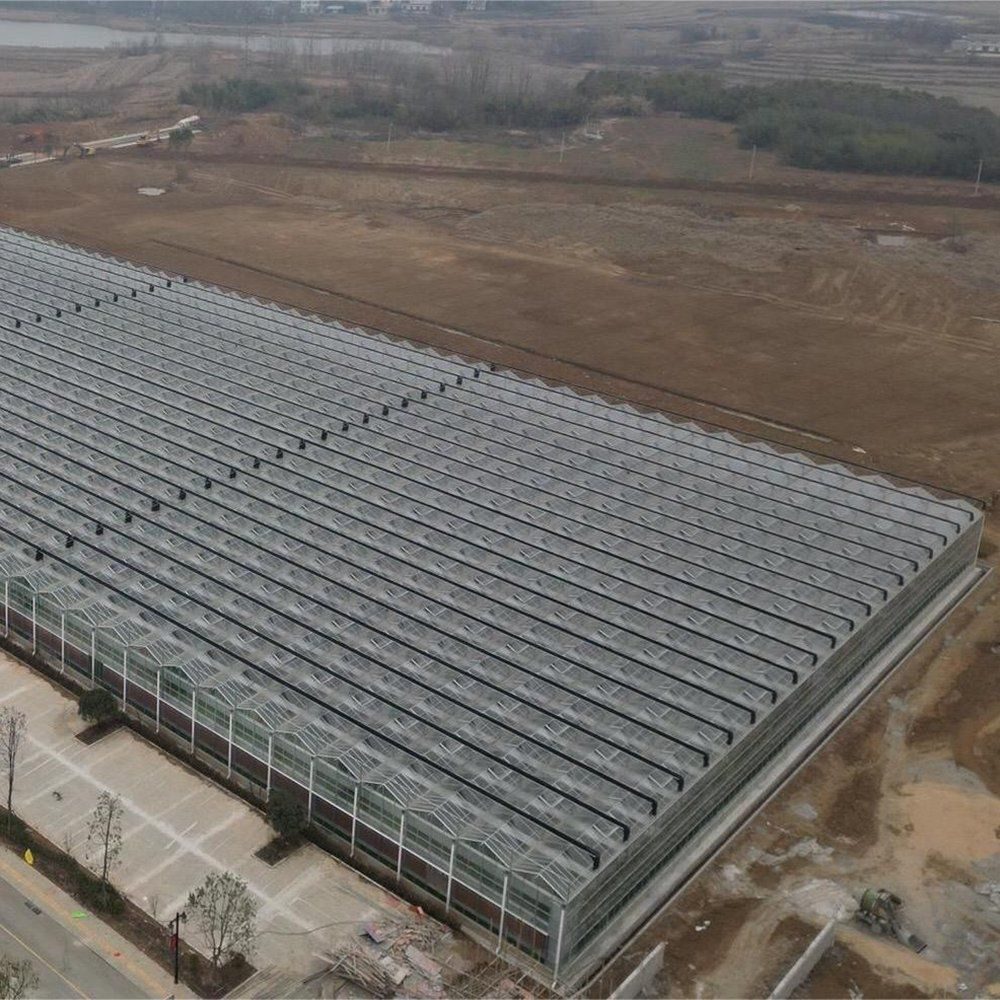
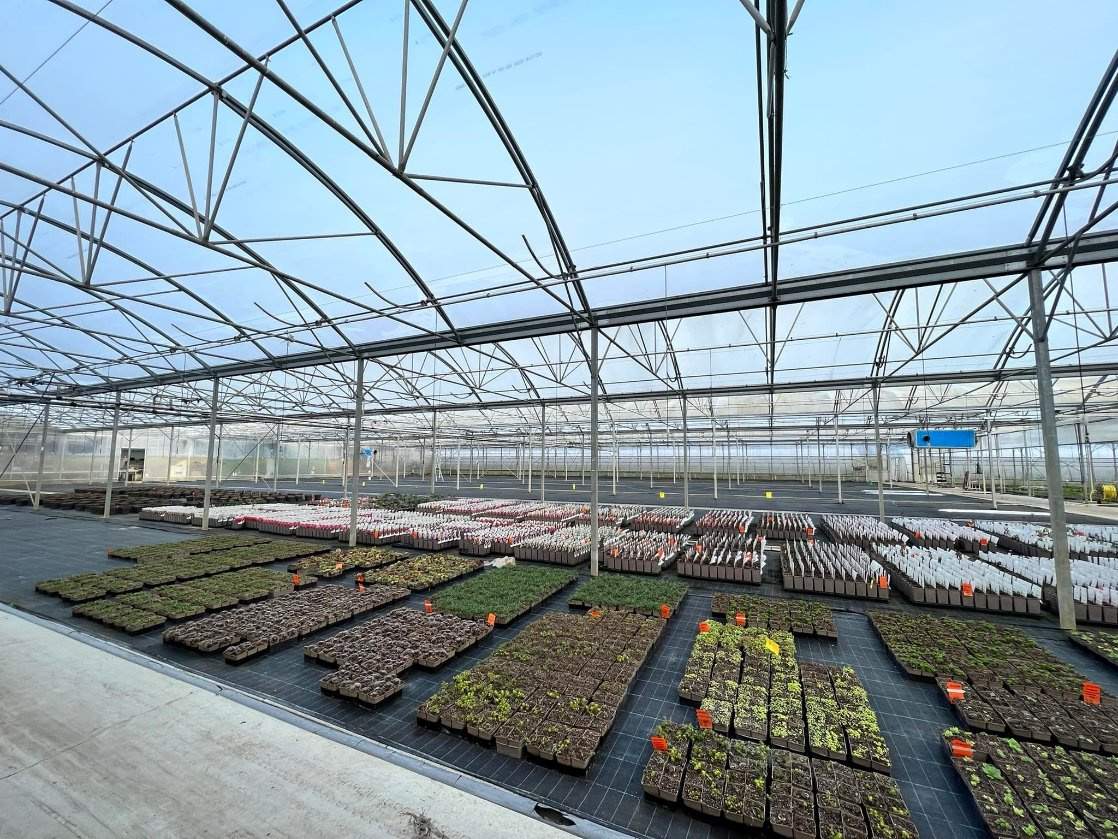
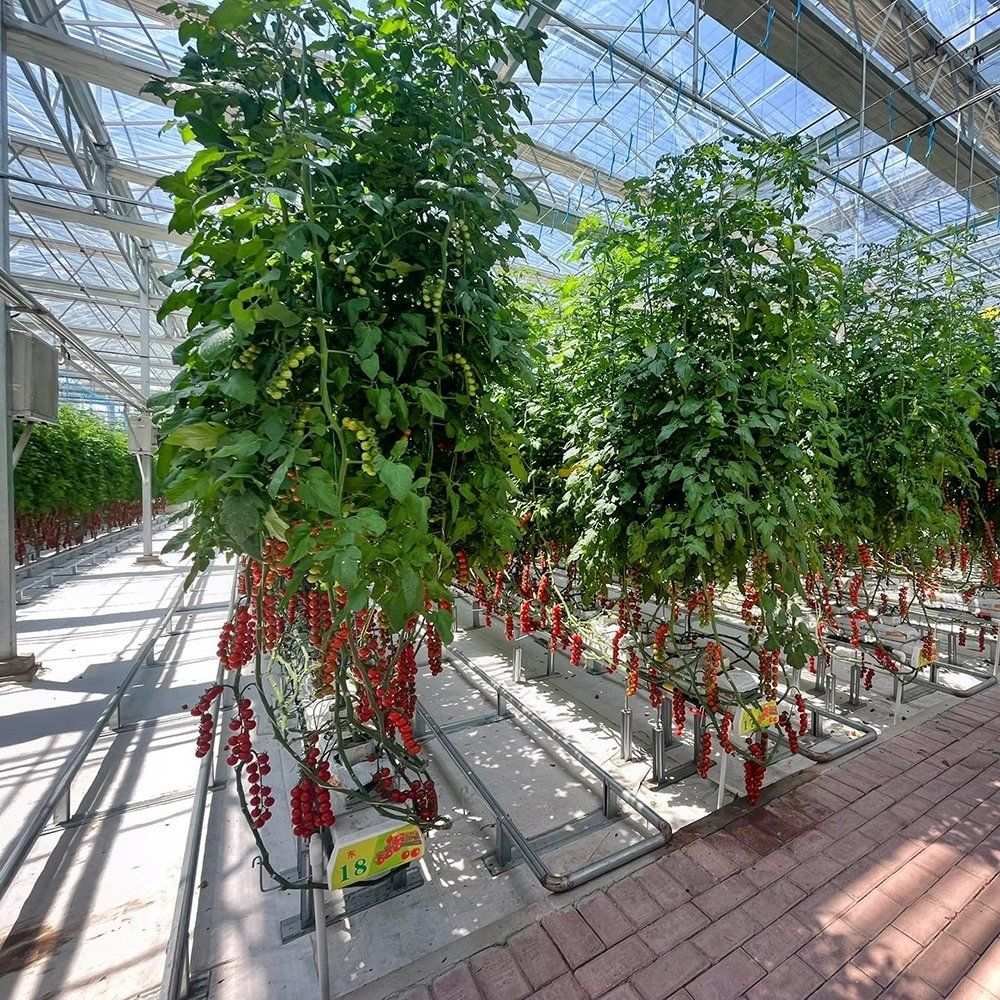
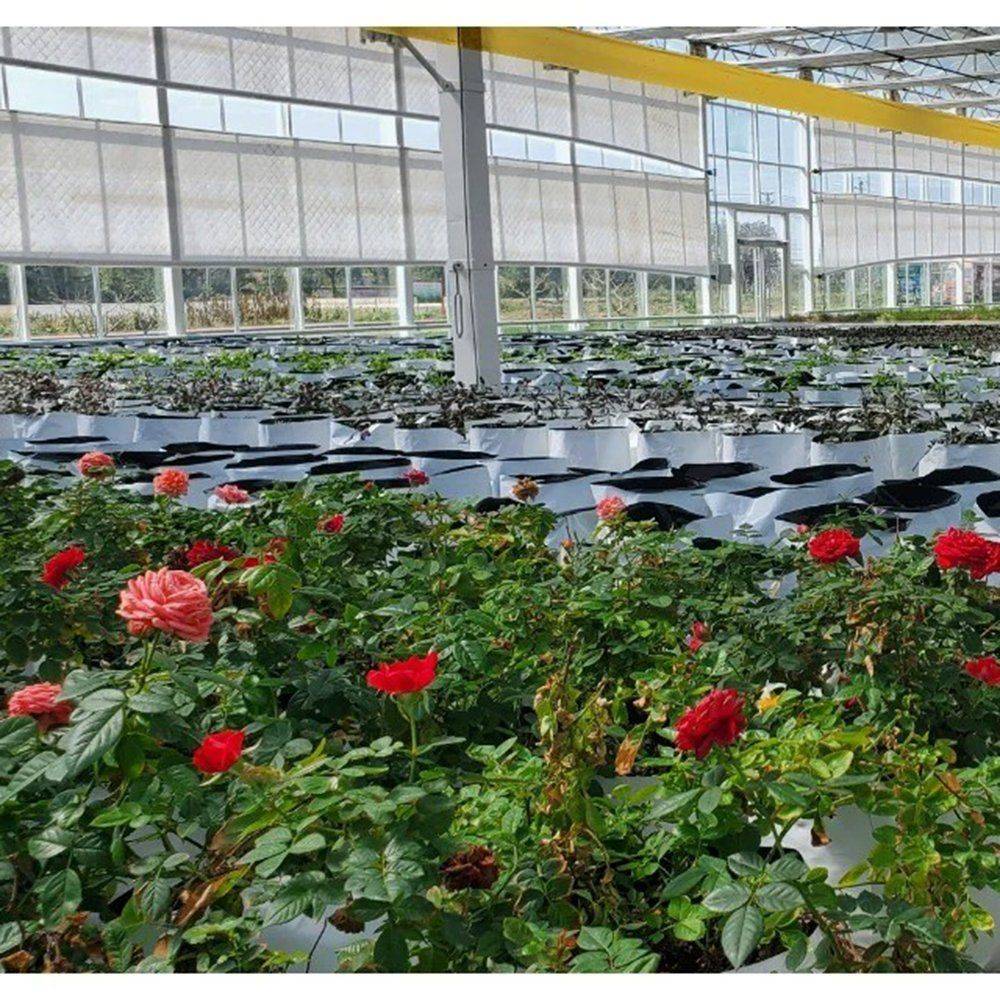
This temperature controlled glass greenhouse is built around a hot-dip galvanized steel frame with 4mm tempered glass panels, delivering 91% light transmission and 98% haze for diffused light that reduces leaf burn. Each bay joins spans with a sealed aluminum gutter, and glass bays can be ordered from 8m to 12m wide with total lengths from 10m to 100m. Optional boiler or radiant heating keeps internal temperature stable through winter, making the structure suitable for commercial seedling nurseries, vegetable growers and flower producers. Flat-pack shipping cuts container volume, and OEM options cover span width, vent type and glass thickness. Service life is 15-20 years under normal agricultural conditions.
Glass greenhouses hold light better than any other covering, and that difference shows up directly in crop performance. This model pairs 4mm tempered glass with a hot-dip galvanized steel frame, so the structure stays rigid through temperature swings while delivering 91% light transmission and 98% haze. The result is bright, diffused light that pushes seedling growth without the leaf burn that direct glare causes.
The frame is fabricated from hot-dip galvanized steel pipe with a double-sided zinc coating of 200-275 g/m2, which is what carries the 15-20 year service life figure. The glazing is 4mm tempered glass, available in float or fully tempered grade, with a UV resistant coating that keeps panels from yellowing or cracking. A sealed aluminum gutter runs between bays, collecting condensation and tying adjacent spans into one continuous roof. Gable roofs, roof vents and side vents are all configurable, so the ventilation layout can be matched to the local climate rather than forced into a fixed design.
The table below lists the standard configuration. Spans, length, height and glass thickness can all be adjusted for a specific project.
| Greenhouse Span | 8m / 9m / 10m / 11m / 12m |
| Greenhouse Length | 10m - 100m or client demand |
| Greenhouse Height | 3m - 8m |
| Structure Material | Hot-dip galvanized steel pipe |
| Covering Material | 4mm tempered glass |
| Light Transmission | 90% - 95% |
| Ventilation | Roof vents, side vents or automated systems |
| Heating | Optional (boiler or radiant heating) |
| Wind / Snow Load | 0.35 kN/m2 each |
| Packing | Shipping by container |
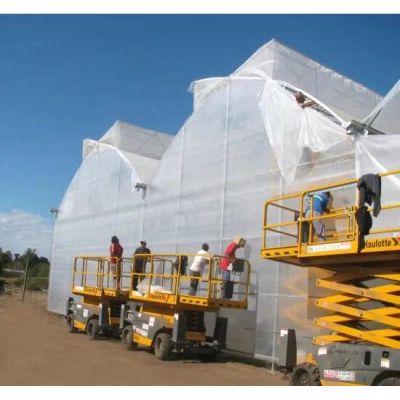
Panels are delivered flat-packed, which cuts container volume by roughly 30% compared with pre-assembled frames and lowers freight cost per square meter. Our engineering department prepares a layout drawing for each order, and where a project requires it we send engineers to the site to guide installation. Day-to-day maintenance is limited to washing the glazing to keep light transmission high and checking gutter seals before the rainy season. For projects comparing covering options, our guide to the glass greenhouse range sets out how glazing choice affects light, insulation and cost.
These structures are used mainly for seedling raising and nursery production, where high light transmission helps young plants establish quickly through late autumn and winter. Because temperature can be held steady with optional heating and automated vent control, the same building suits year-round flower production, vegetable cultivation and research work. A Venlo glasshouse layout is the usual choice for commercial nurseries working at scale, while projects that need tighter climate control often compare it against a scientific research greenhouse with glass and PC covering. Growers tracking how protected cultivation performs across regions can review data published by FAO, and trade coverage of glasshouse investment worldwide is reported by FreshPlaza.
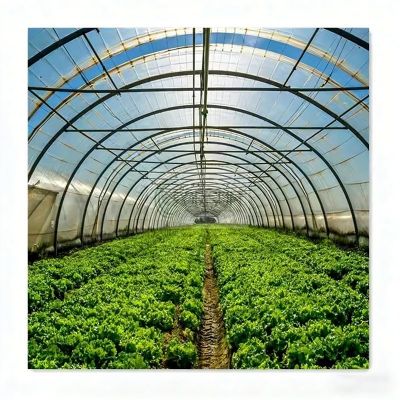
Glass delivers 91% light transmission against roughly 85-88% for a clean film cover, and it holds that figure for far longer. Film degrades under UV and typically needs replacing every 3-5 years, while tempered glass panels keep their clarity for the life of the structure. For seedling production, where light levels in late autumn and winter decide how quickly plants establish, that difference is the main reason growers move from film to glass.
Yes. Spans are available from 8m to 12m and total length runs from 10m to 100m, with height from 3m to 8m. Vent type, glass thickness and roof form can also be adjusted. Send us the site dimensions and the crop you plan to grow, and we will work out the span and bay layout that fits.
The hot-dip galvanized steel frame is designed for a 15-20 year service life in normal agricultural environments, with a double-sided zinc coating of 200-275 g/m². Film covers are replaced every 3-5 years, while glass and PC panels carry their own manufacturer warranties.
The hot-dip galvanized steel frame carries a 10-year structural warranty covering structural safety, plus a 5-year warranty against corrosion perforation. It is designed for a 15-20 year service life.
To quote accurately we need the span width and total length you have in mind, the maximum height, your local wind and snow loads, the crop you intend to grow, and whether heating or automated ventilation will be included. Destination port and order quantity also affect the final figure. Share those details and we will return a priced layout drawing.