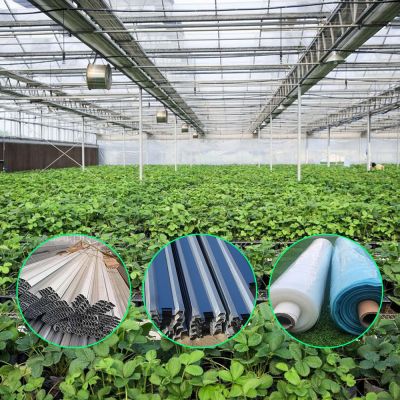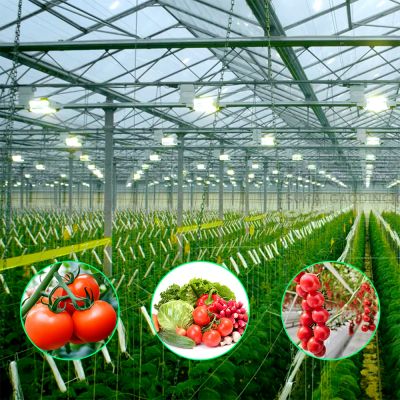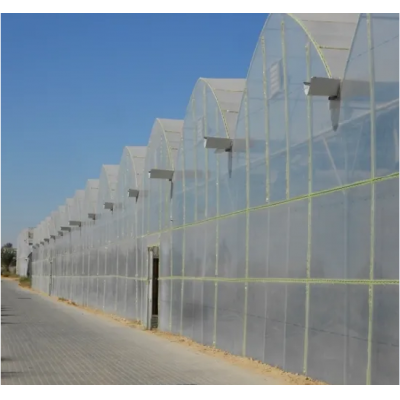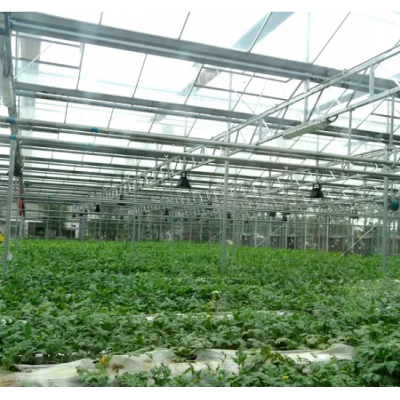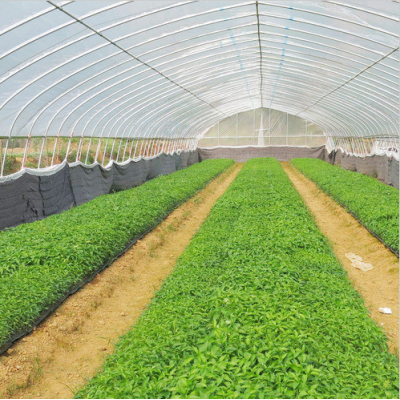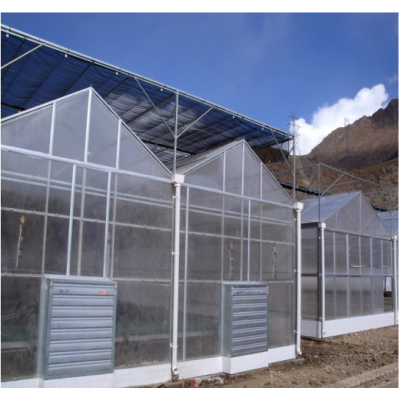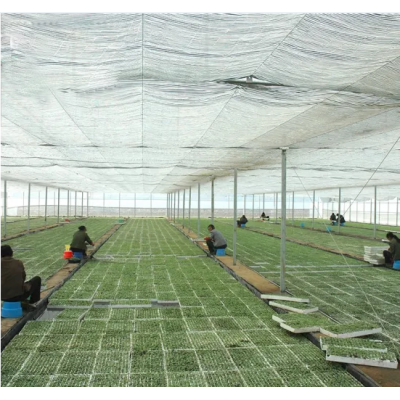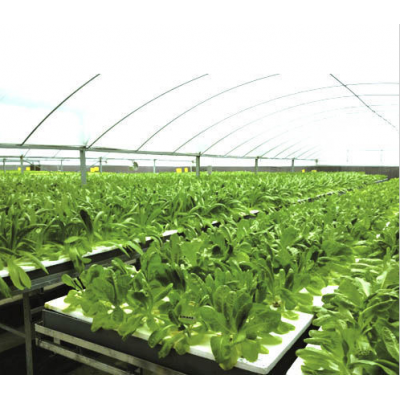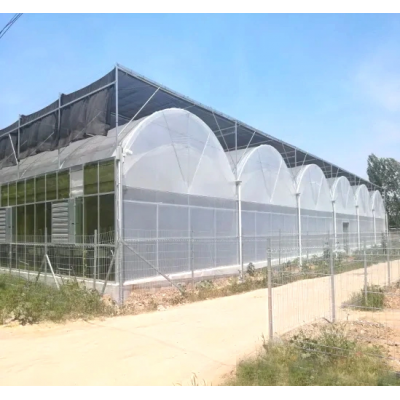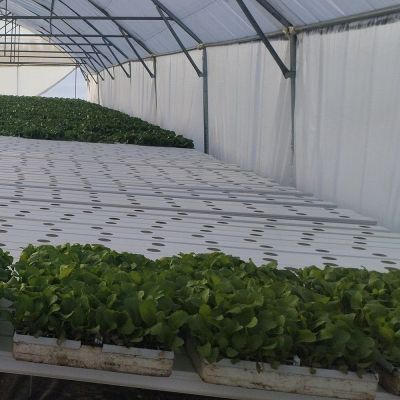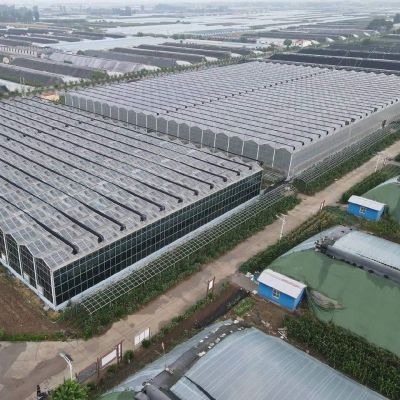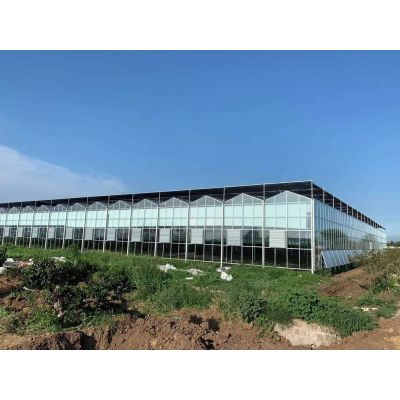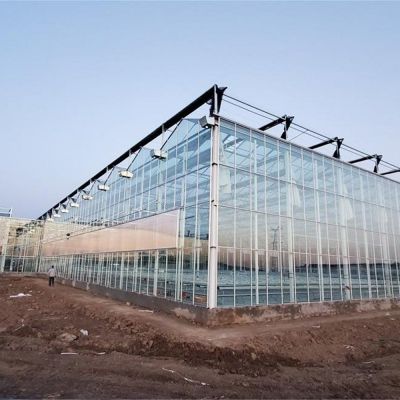
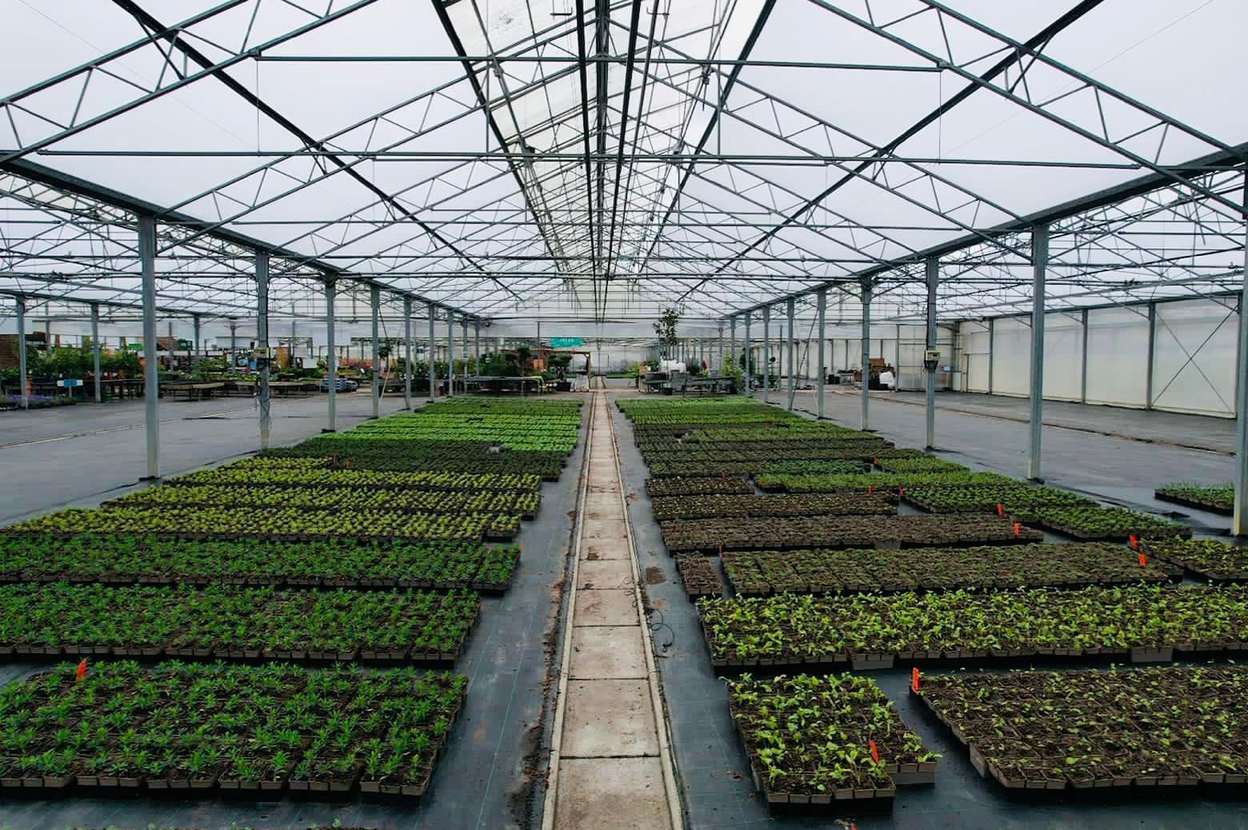
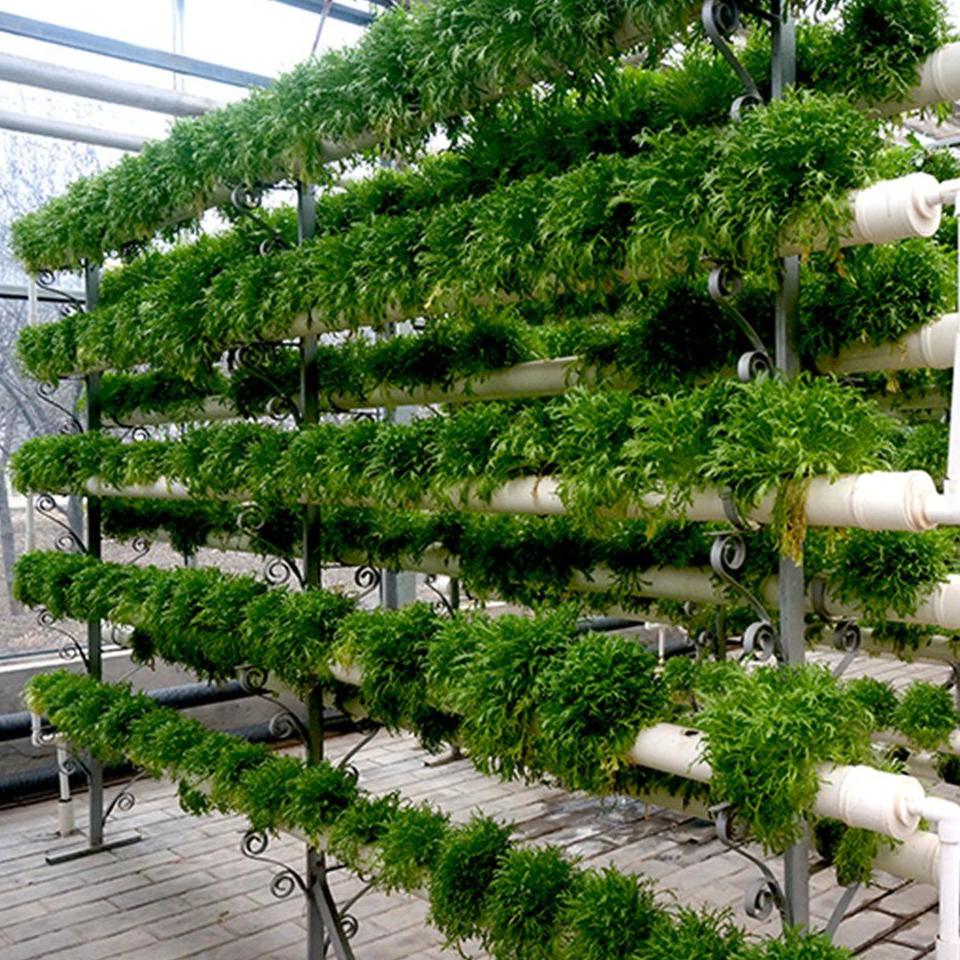
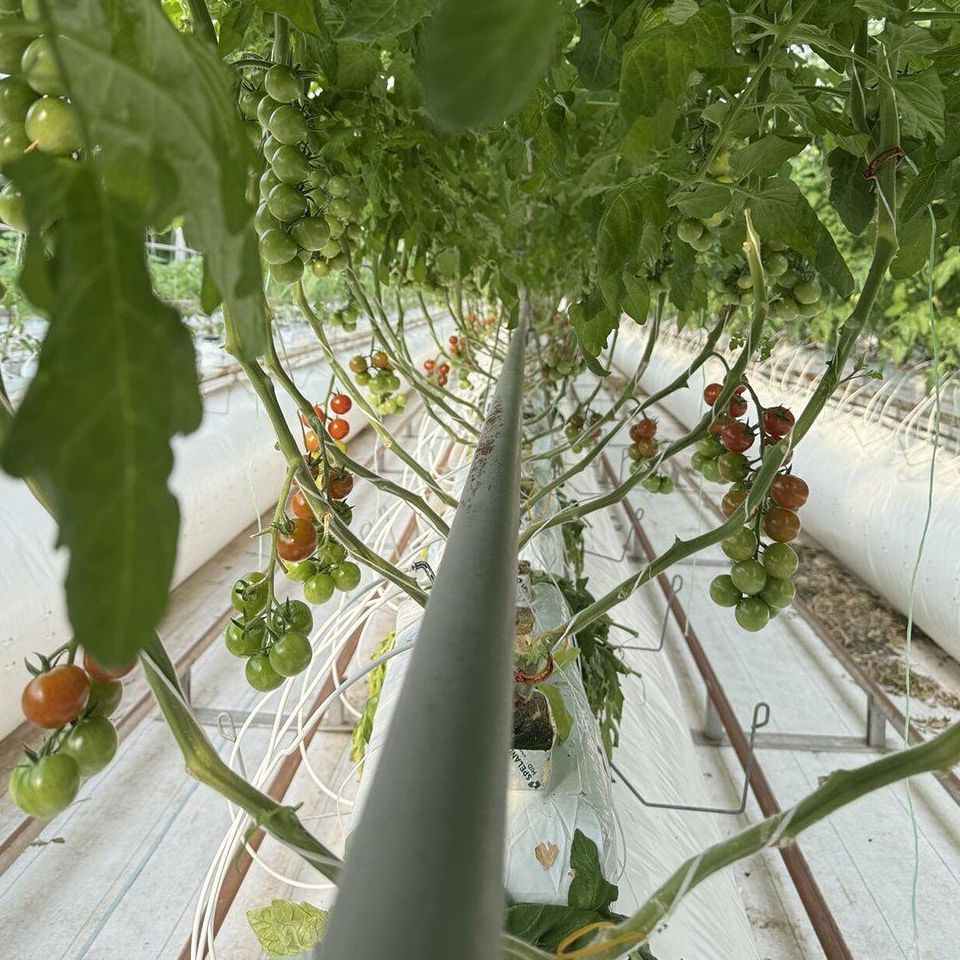
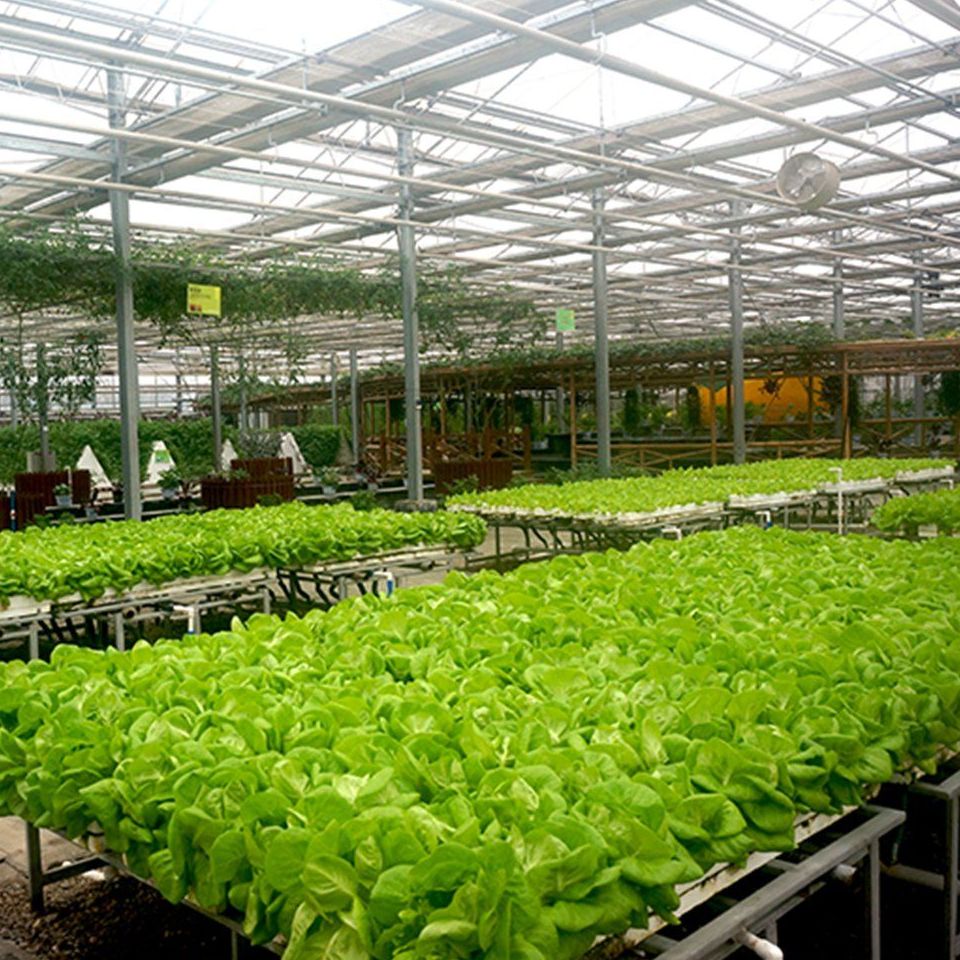
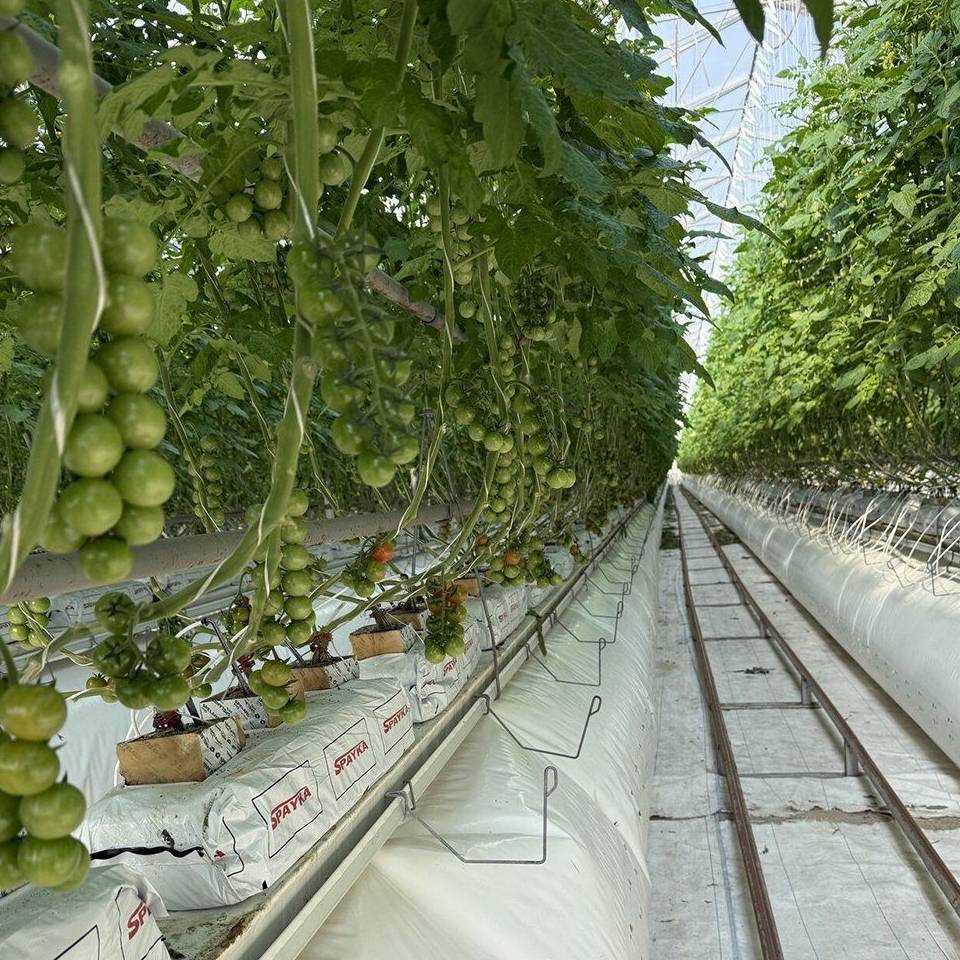
This smart glass greenhouse combines a hot dipped galvanized frame with 4 mm tempered glass at 91 per cent light transmission, and adds motorised roof vents, shade screens and a control panel that can be reached remotely. Span runs 8 m to 12 m, length 10 m to 100 m and height 3 m to 8 m or to order. The same house is used for soil beds, benches and hydroponic systems, so vegetables, fruit, cut flowers and young plants can be carried under one roof. Components are flat packed for container shipping and customised to the site.
A modern glass house is judged on two things: the quality of the structure, and how much of the climate work it does by itself. This smart glass greenhouse is put together with both in mind. The frame and glazing give a stable environment, and the control layer takes over the routine decisions so the crop does not depend on somebody being on site at the right hour.
The cover is 4 mm tempered glass set into a hot dipped galvanized steel frame. Tempering is used for safety as much as for light: a broken pane breaks into small blunt pieces rather than long shards over a crop. Light transmission is 91 per cent, and glass holds that figure year after year rather than degrading in the sun the way a film cover does. The galvanized frame carries the glazing load across multi span bays, with span from 8 m to 12 m and height from 3 m to 8 m, so the house keeps a usable volume of air above the crop.
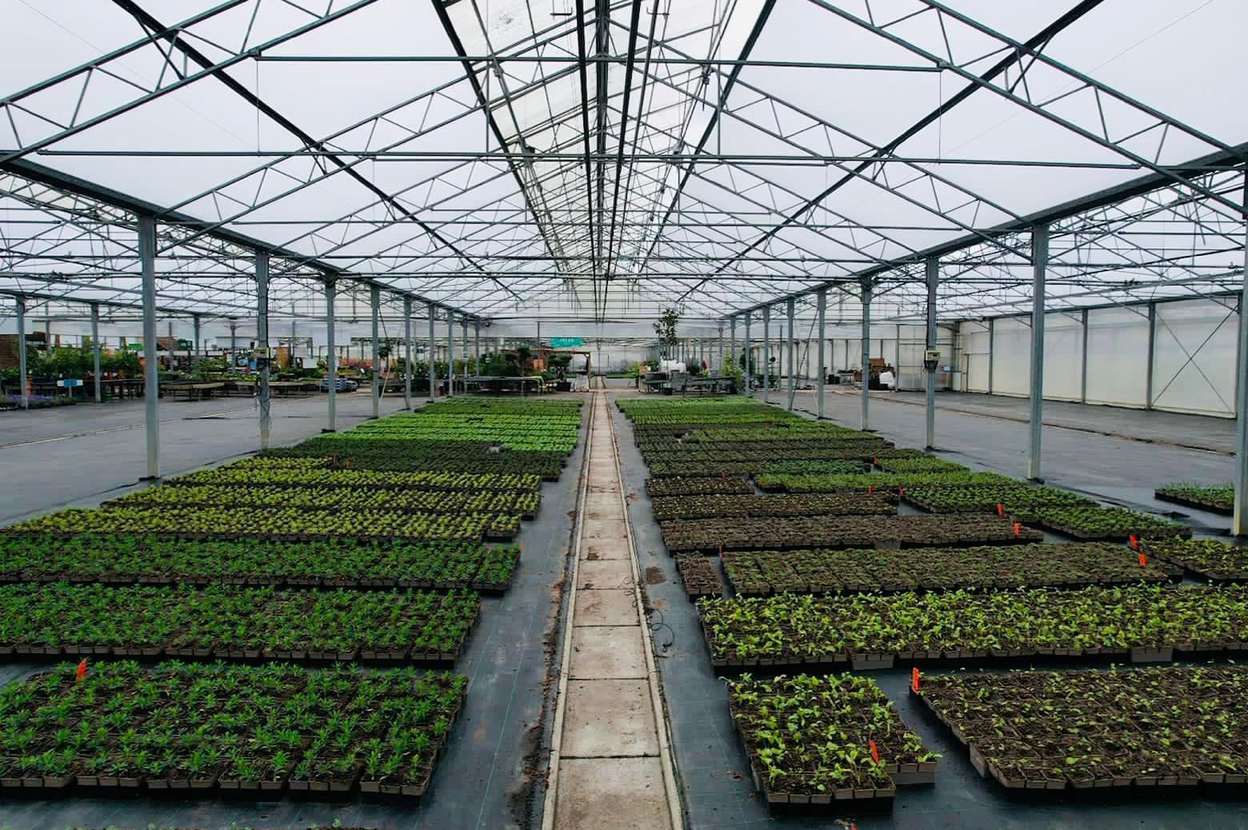
Motorised roof vents, shade screens and a control panel come together as one system, with remote monitoring so the house can be watched from off site. That matters most at the edges of the day: a vent that opens on temperature rather than on a clock keeps the crop inside its band through a fast morning warm up, and a screen that closes early holds heat that would otherwise be lost through the glass. Set points and daily curves are changed from the panel rather than by reaching each window.
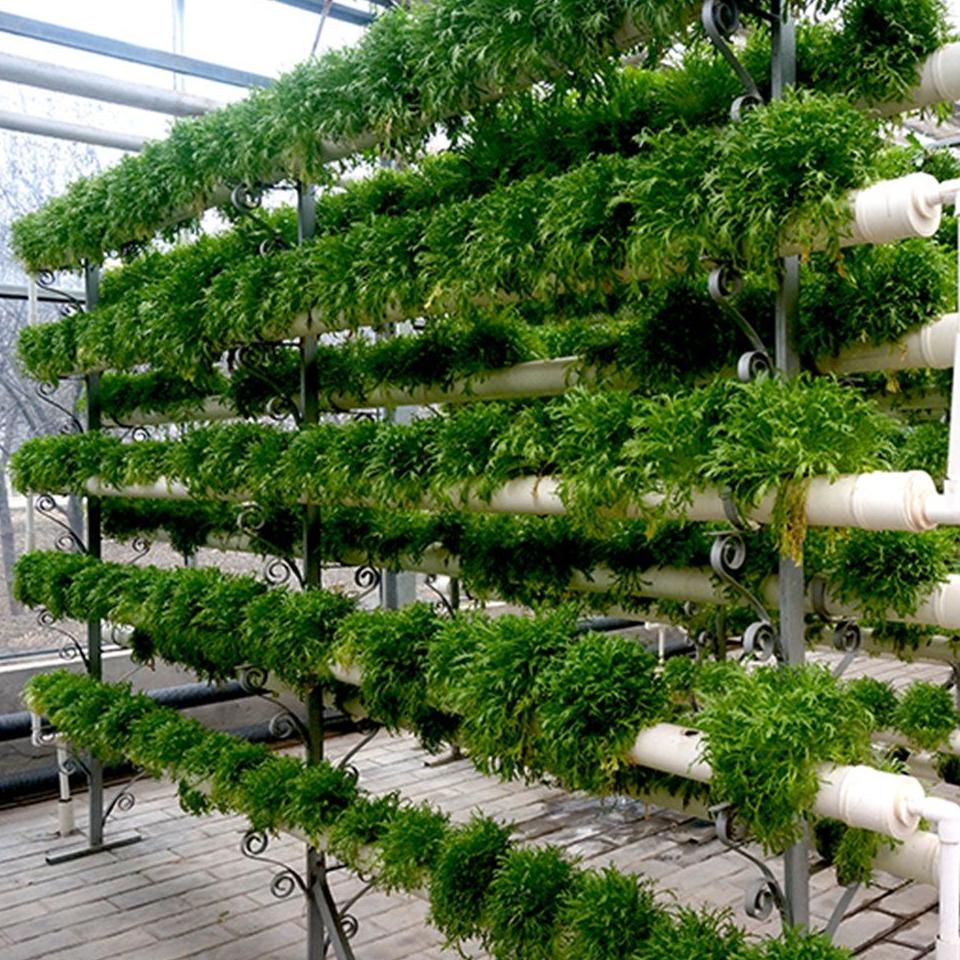
| Structure material | Hot dipped galvanized steel frame |
| Covering material | 4mm tempered glass |
| Roof shape | Arch roof, multi span |
| Light transmission | 91% |
| Span | 8m / 9m / 10m / 11m / 12m |
| Length | 10m to 100m, or to client demand |
| Total height | 3m to 8m |
| Control | Motorised roof vents, shade screens, control panel with remote monitoring |
| Cropping | Soil beds, benches or hydroponic systems |
| Service life | 15 to 20 years for the frame under normal growing conditions |
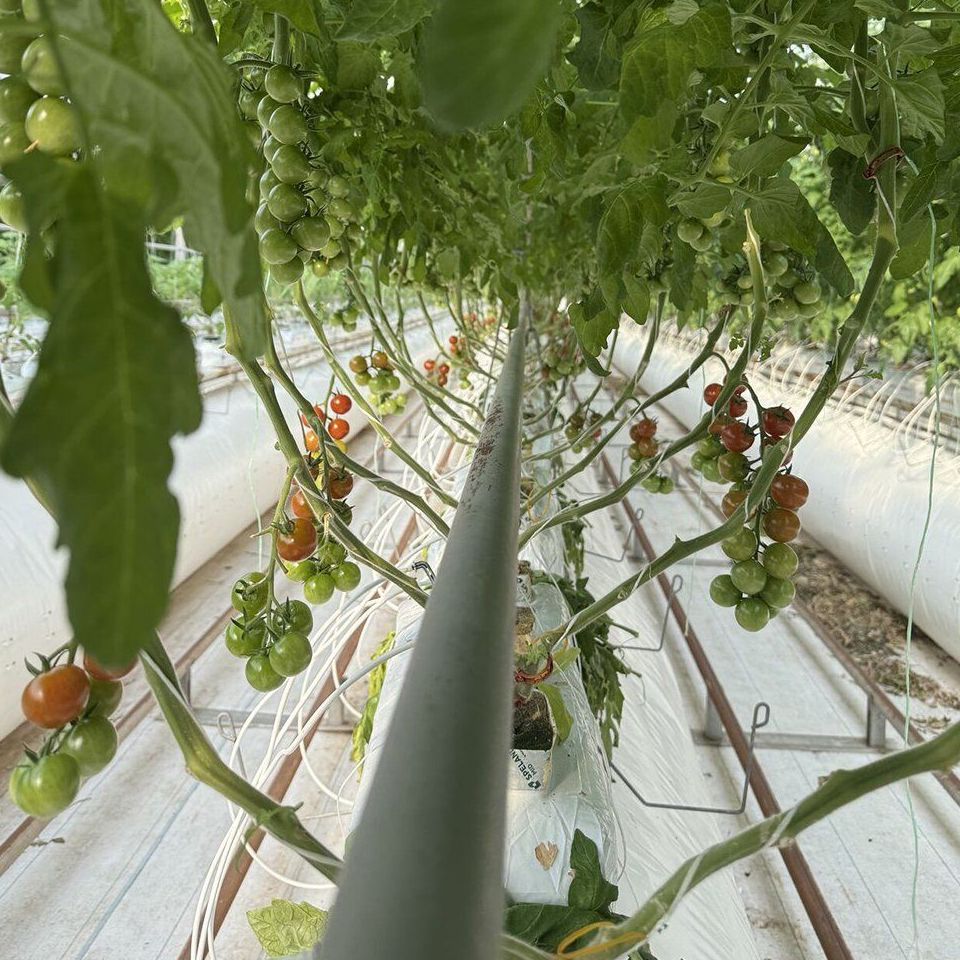
The house is not tied to one growing method. Soil beds are the simplest route, benches lift the crop to working height and suit young plants and cut flowers, and hydroponic systems can be fitted where water and nutrient use need to be tight. Because the climate is controlled centrally, the same structure can carry several systems in different bays without each one needing its own equipment. Industry guidance from AIPH covers commercial protected production across ornamentals and vegetable crops.
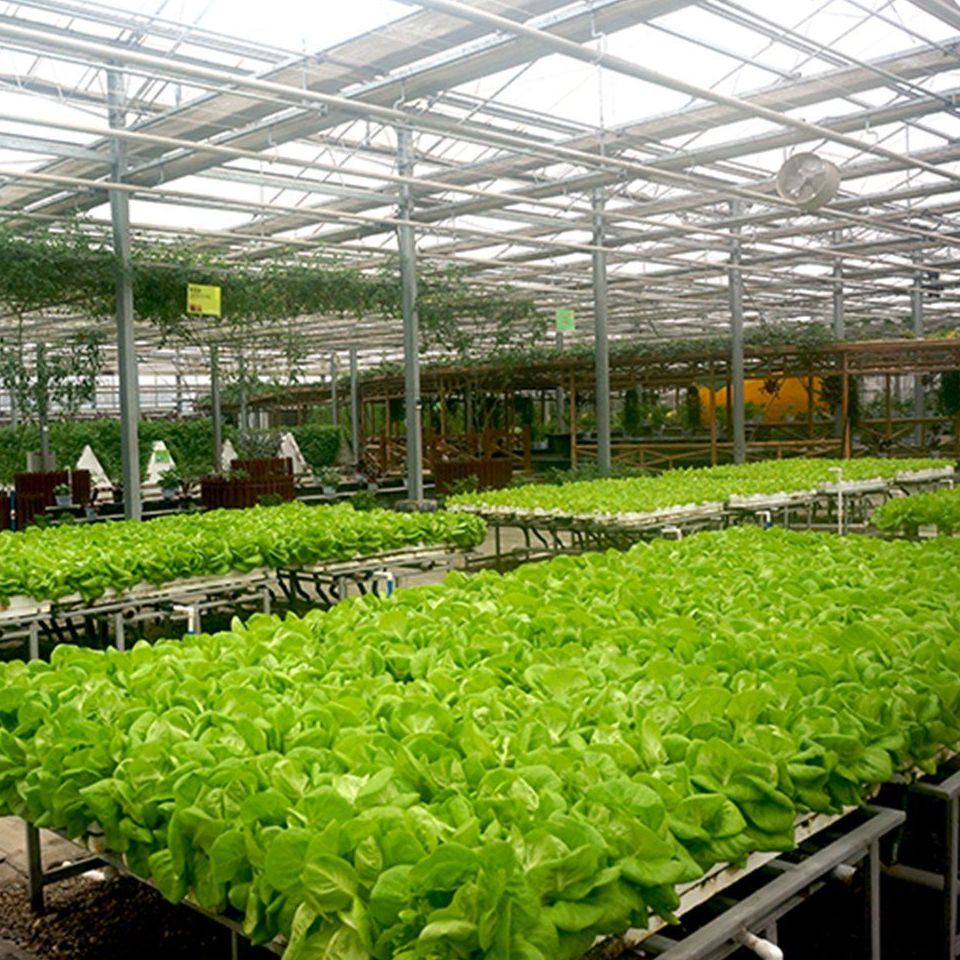
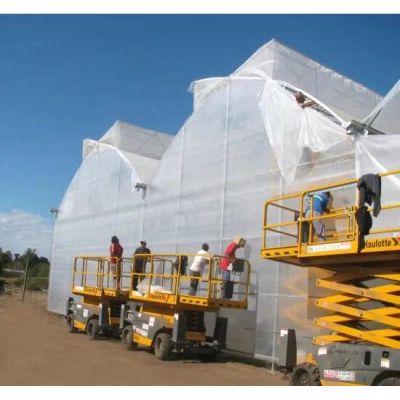
Components ship flat packed to keep freight volume down for container shipment, and the house is built to the site survey rather than to a standard plan. Installation runs in a fixed order: foundation, frame and gutters, glazing, then vents, screens and control. Our engineers can travel to site to guide installation when required.
Routine work is limited. Wash the glass before the light season so transmission is not lost to dust, check glazing clips and seals after storm season, service vent motors and screen drives, and calibrate the sensors so the controller is acting on sound readings. Glass is not a consumable and a damaged pane is replaced on its own.
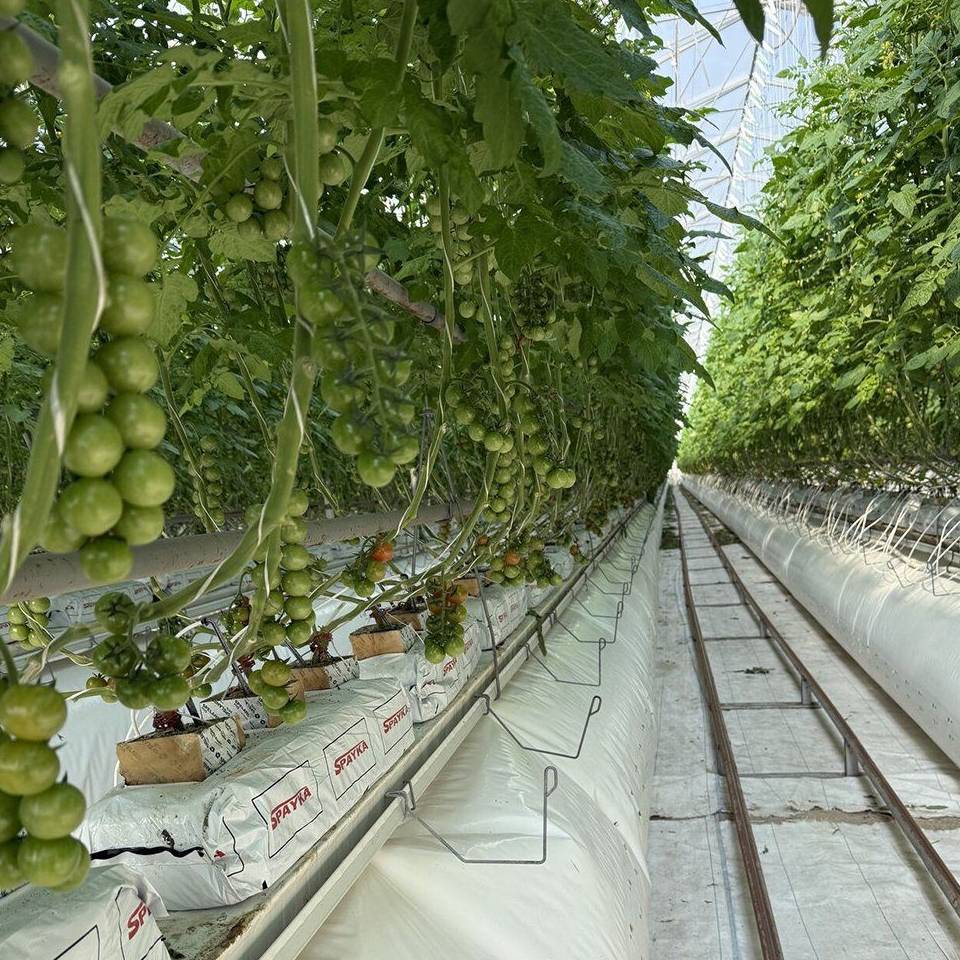
The house suits vegetable production, fruit crops, cut flowers and young plant raising, and it is at its most useful where labour is short and the climate is variable. Trade reporting on HortWeek follows how commercial growers plan protected production through the year. Compare the glass greenhouse range, or look at the glass house and the large PC greenhouse for other options in the same family.
Motorised roof vents, shade screens and a control panel with remote monitoring. The system acts on temperature and light rather than a fixed clock, and set points can be changed from the panel.
The cover is 4 mm tempered glass, which breaks into small blunt pieces if damaged, with a light transmission of 91 per cent.
The hot dipped galvanized steel frame is rated for 15 to 20 years under normal growing conditions. Glass holds its transmission for many years and panes are replaced individually.
We provide a 10 year structural warranty and a 5 year anti-corrosion warranty on the galvanized frame. Details are set out in the contract for each project.
Send your site dimensions, the crops and growing system you plan to use, the level of automation you need and your local wind and snow loads. We reply with a layout drawing and a full quotation.