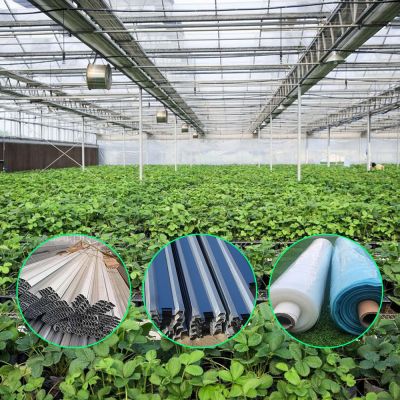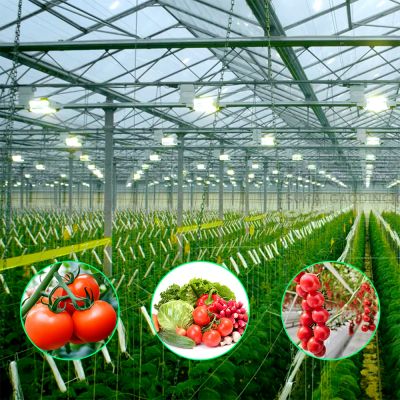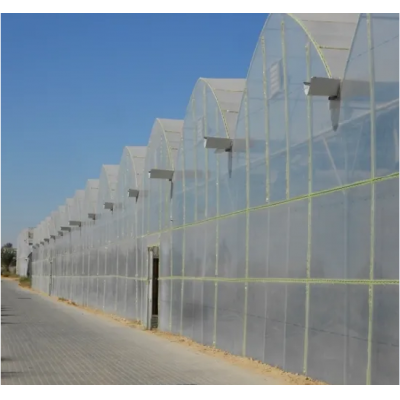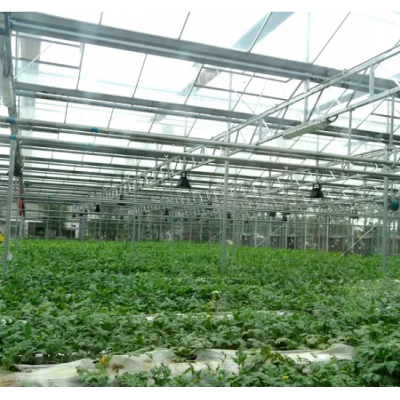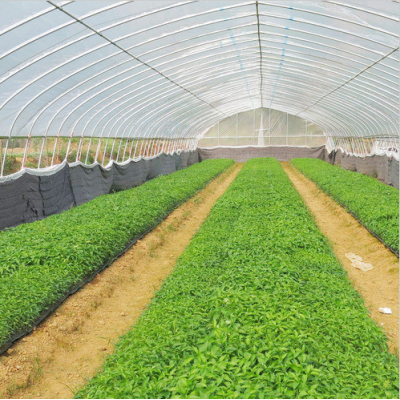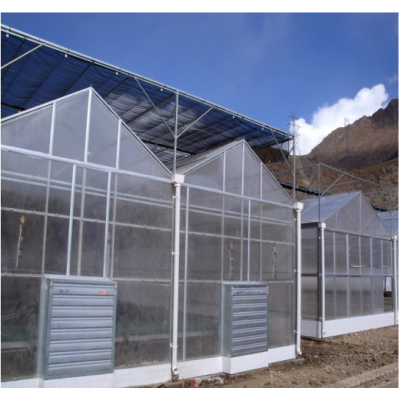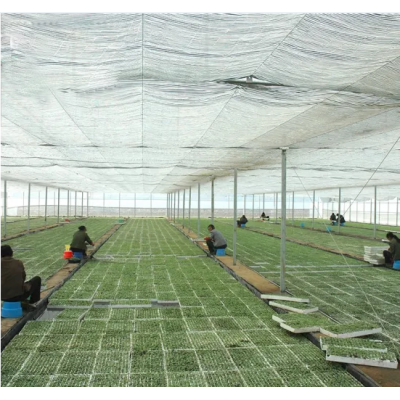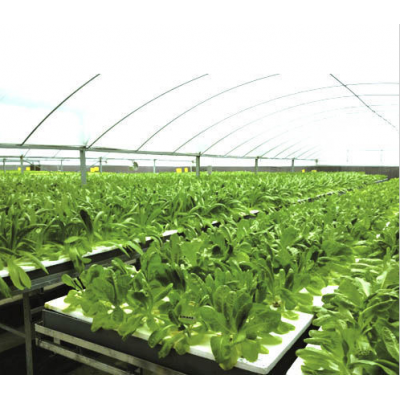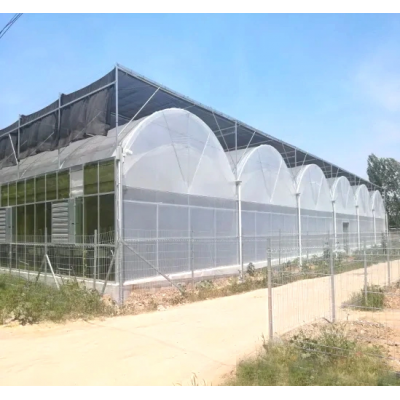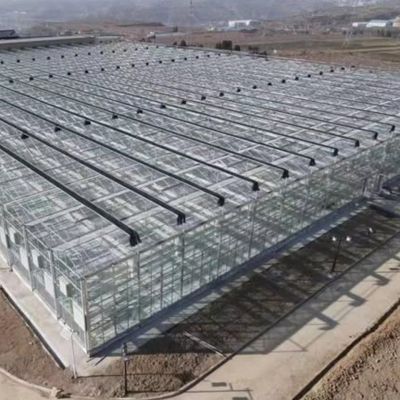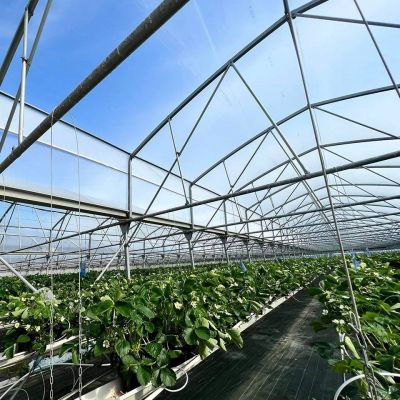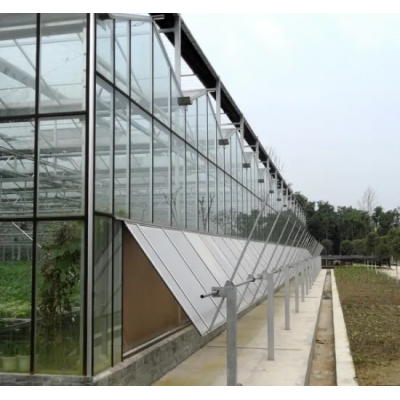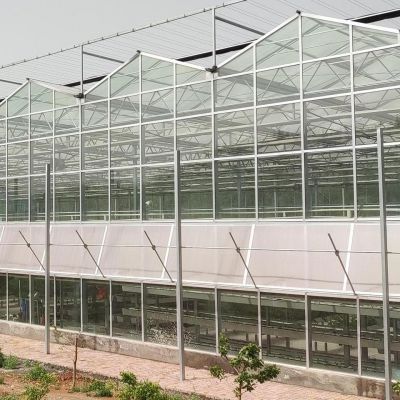
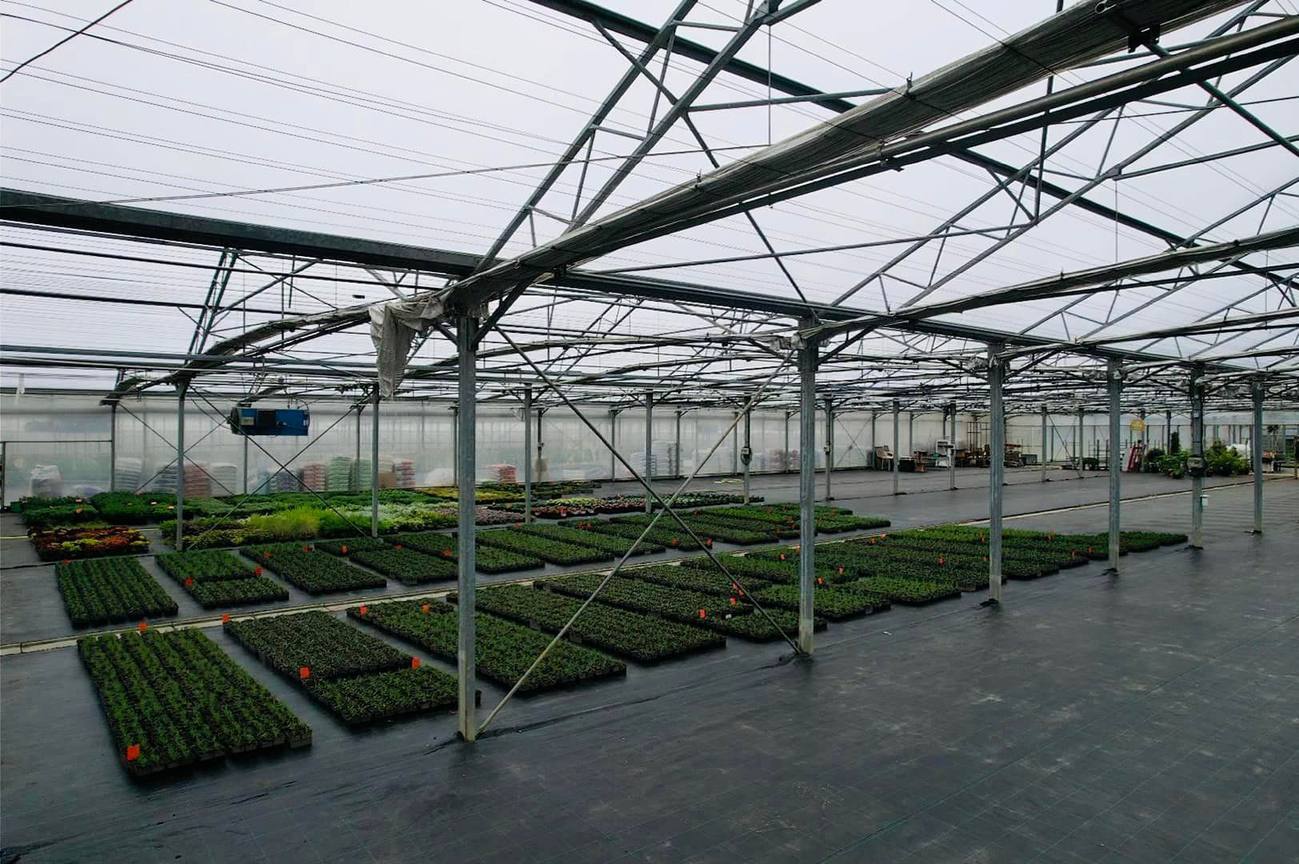
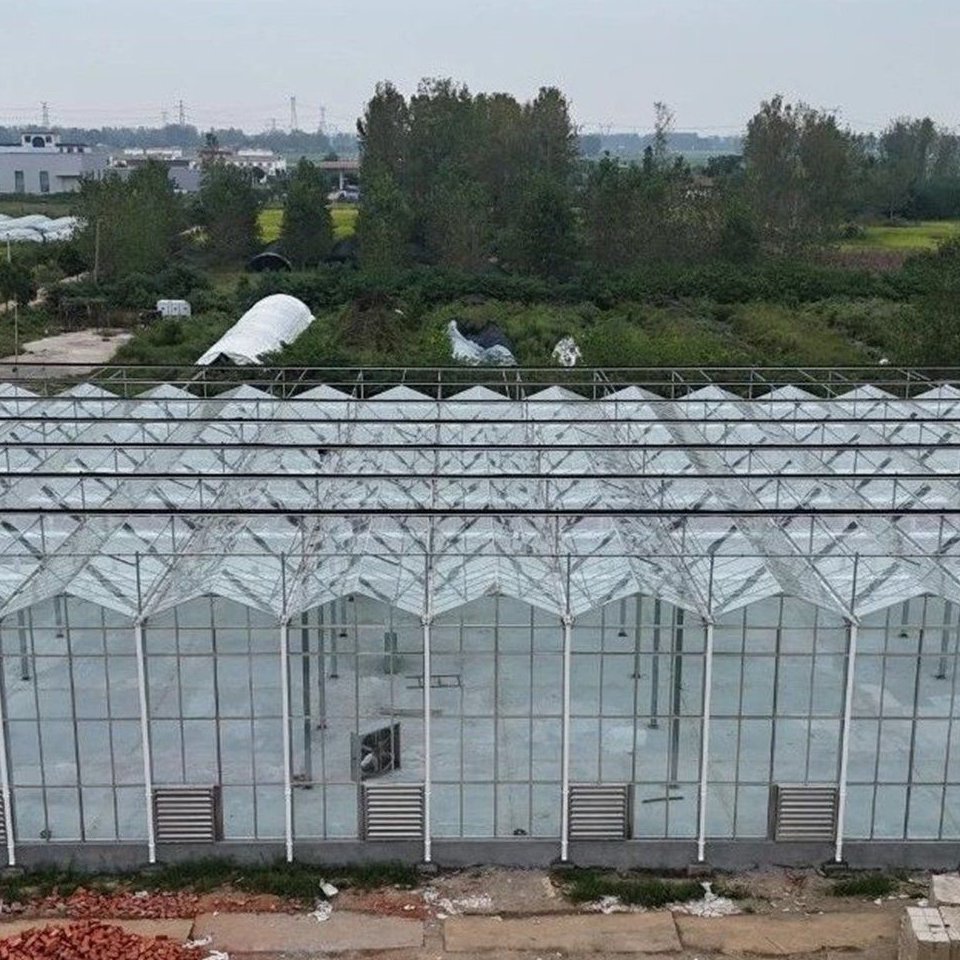
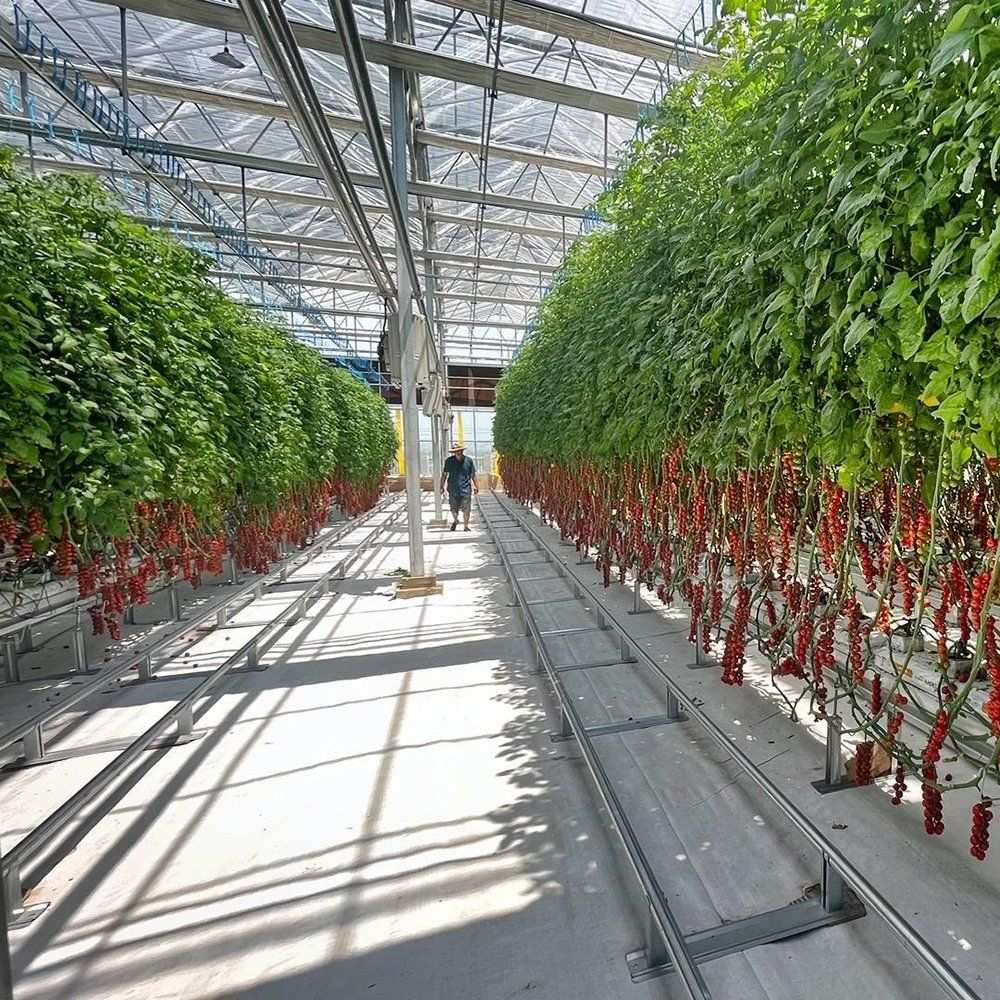
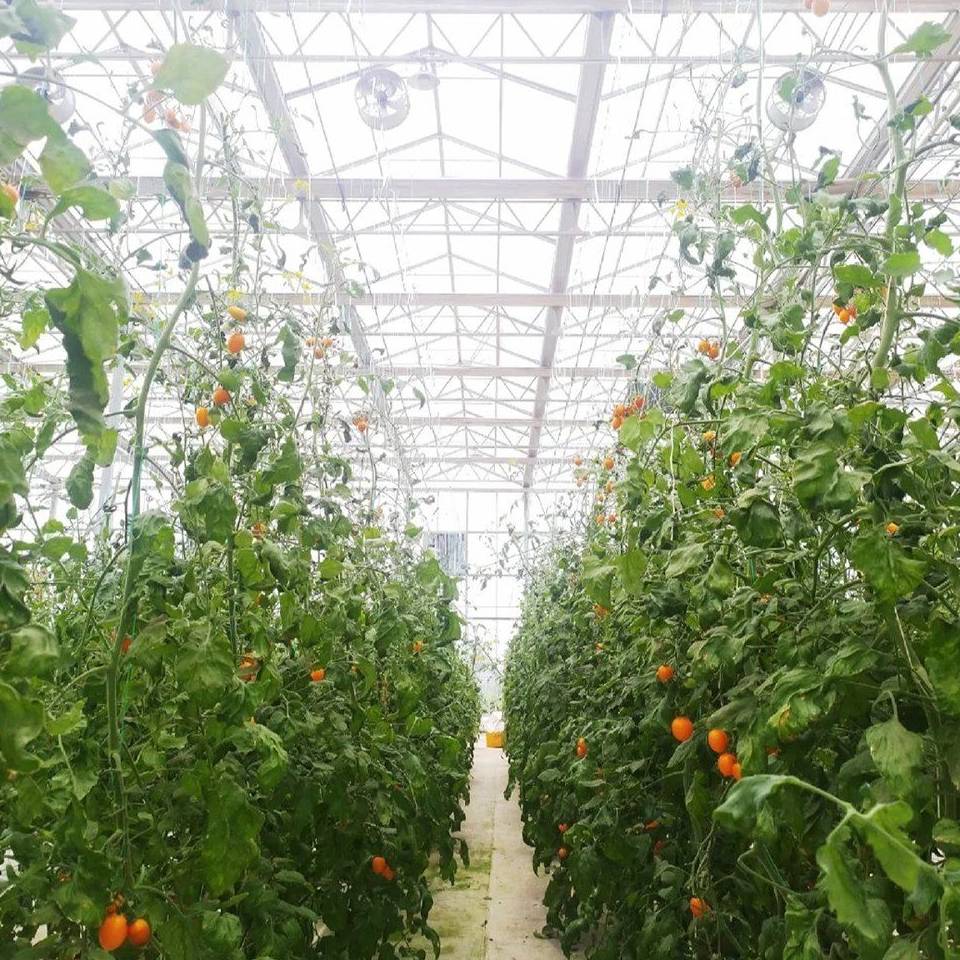
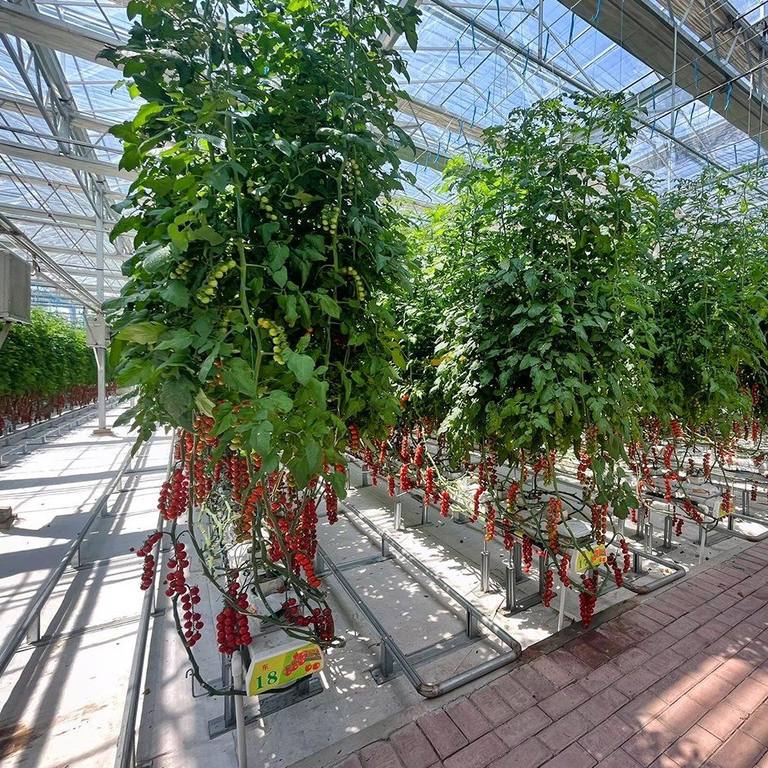
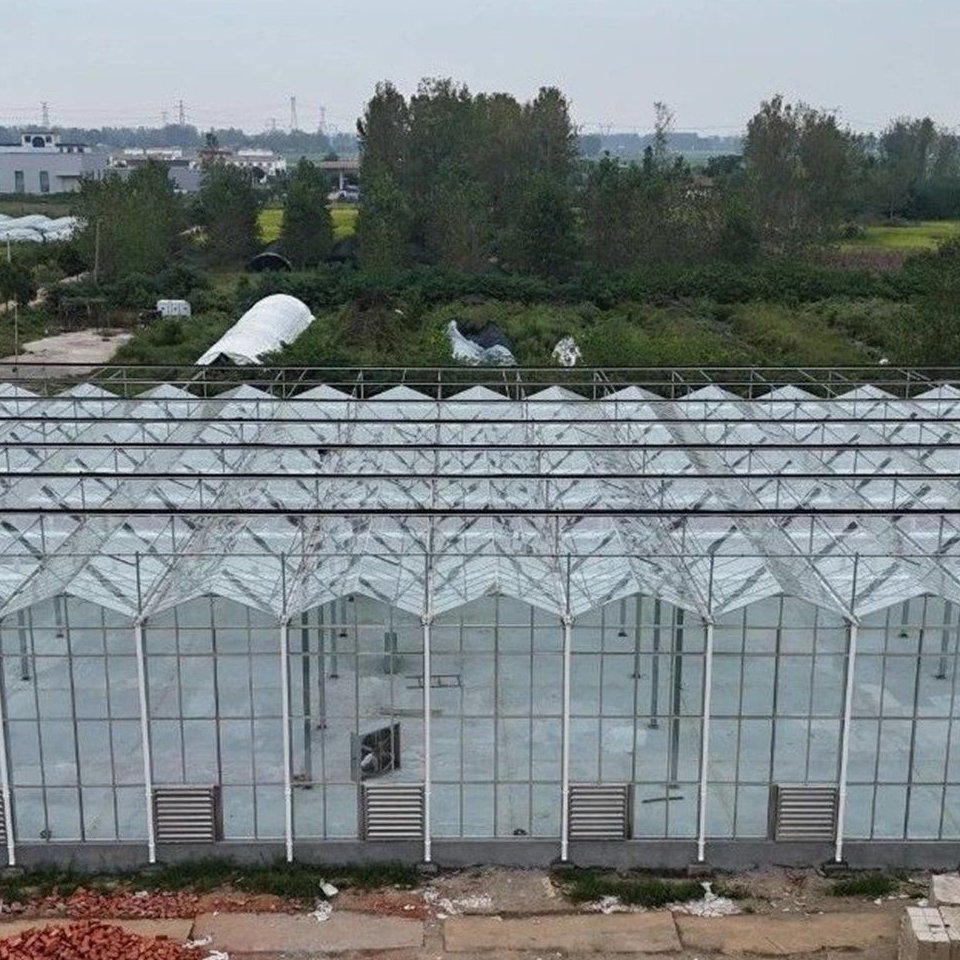
This industrial smart glass greenhouse splits one building into independent climate zones, each with its own sensors and its own ventilation and irrigation settings. A hot dip galvanized steel frame carries a glass cover with 90 to 95 per cent light transmission, and the controller reads temperature, humidity, light and CO2 zone by zone before acting on vents, fans, screens and water. Span runs 8 m to 12 m, height 3 m to 8 m and length 10 m to 100 m or to client demand, so the house is built around the block it serves. It suits commercial vegetable, flower and seedling production where several crops share one site.
A glass house is only as useful as the control inside it. Where one crop needs a warm, dry canopy and another wants cool, humid air, a single set of vents and one irrigation line cannot serve both. This industrial smart glass greenhouse is built the other way round: the covered area is divided into independent climate zones, each with its own sensors and its own settings, so seedling bays, flowering bays and fruiting bays can be carried side by side in one building.
Sensors in every zone report temperature, humidity, light level and CO2 back to one controller. The controller compares each reading with the set point held for that zone and acts on it by itself: roof vents open, circulation fans start, a screen closes, or an irrigation valve opens. Because the zones are addressed separately, a warm flowering bay and a cooler seedling bay keep their own conditions under one roof instead of averaging out to a climate that suits neither. Zone set points and daily curves are edited from a screen at the office or from an app, and the log is kept for review.
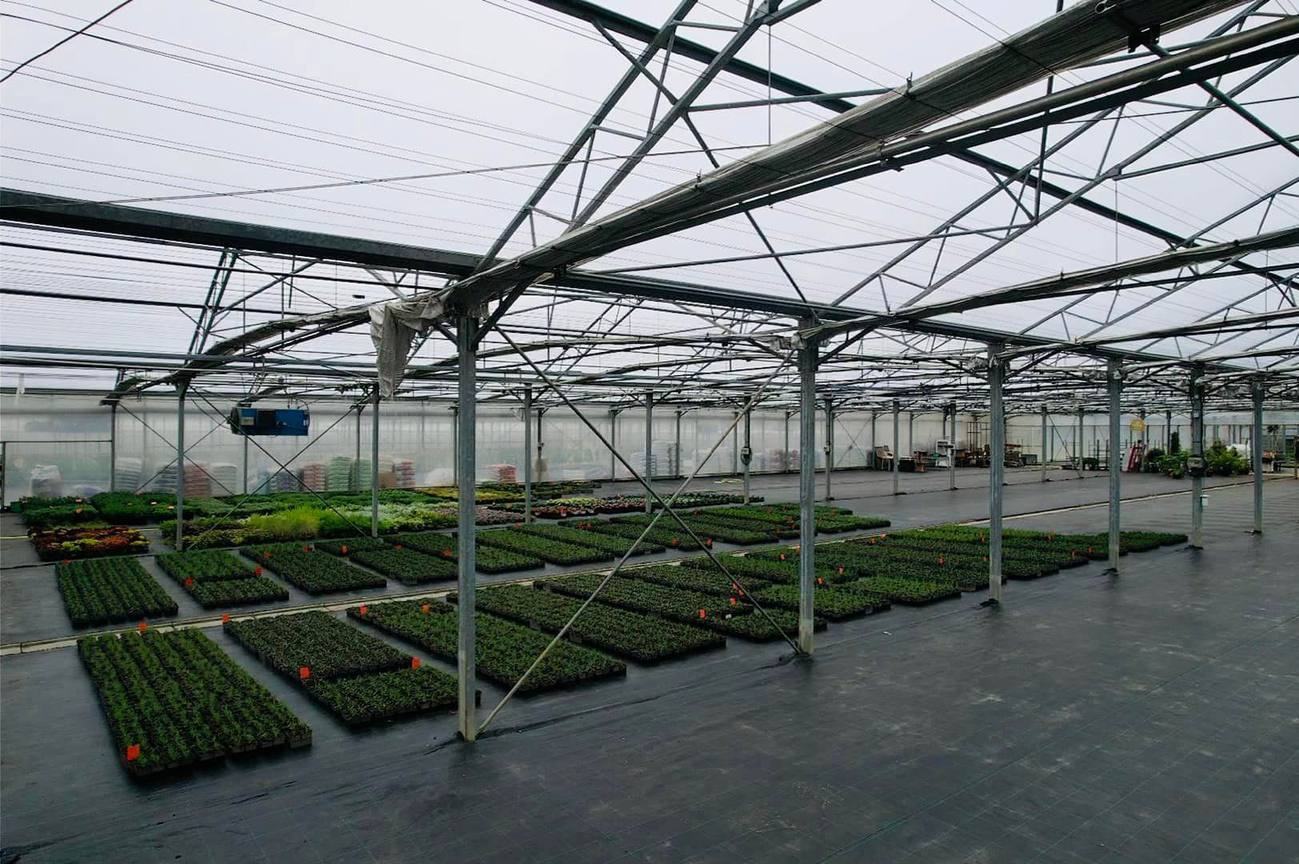
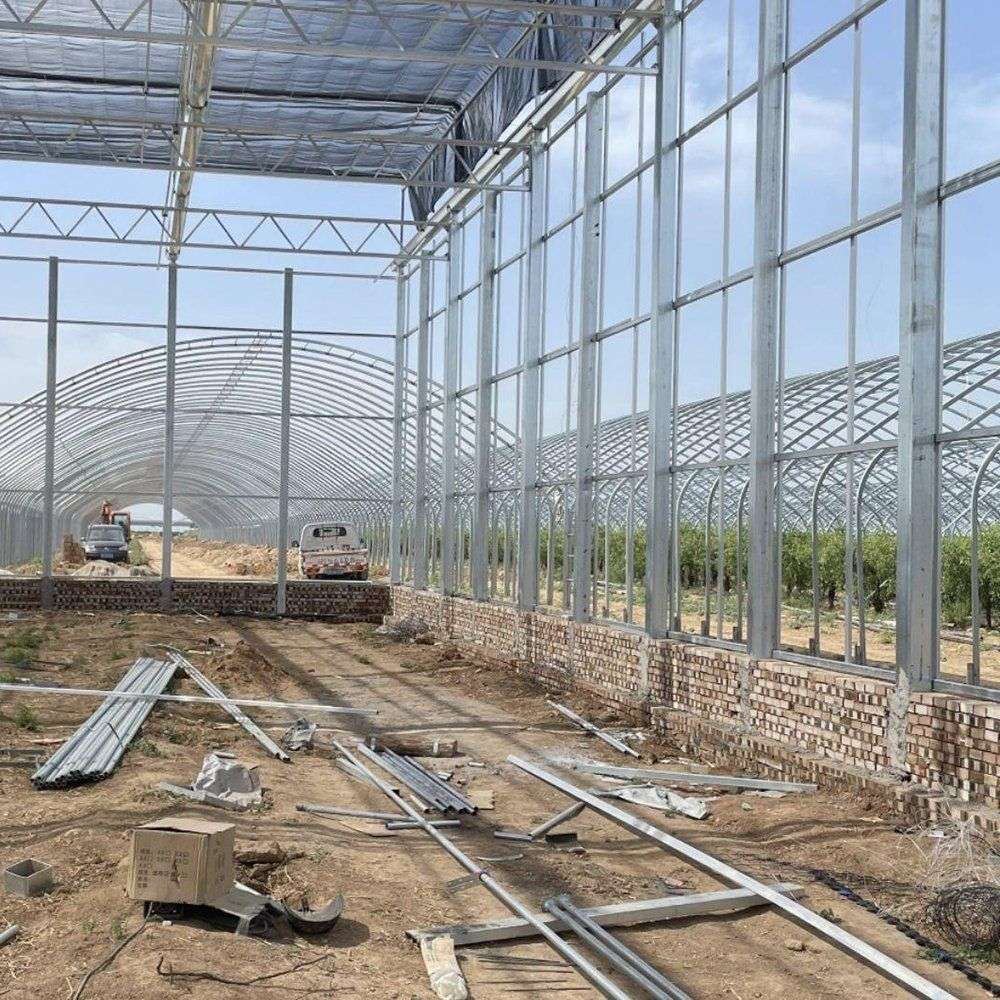
The frame is built from hot dip galvanized steel pipe, formed into columns, gutters and roof members and bolted together on site. The zinc coating is what carries the structure through the humid air of a working house, and it is the reason the frame is rated for a 15 to 20 year service life rather than a decade. Glass is fixed into aluminium glazing bars on the roof and walls, and the gable roof runs in a multi-span arrangement on gutters, so roof water is collected in one place and the bay below stays clear of posts.
The cover is glass: 4 mm or 5 mm float glass, or 5 mm tempered glass where impact and safety matter. Light transmission sits between 90 and 95 per cent, and glass holds that transmission far longer than a film cover. A torn or cracked pane is replaced on its own without disturbing the frame or the crops below.
| Structure material | Hot dip galvanized steel pipe |
| Covering material | 4 mm or 5 mm float glass, or 5 mm tempered glass |
| Roof shape | Gable roof, multi-span on gutters |
| Span | 8m / 9m / 10m / 11m / 12m |
| Length | 10m to 100m, or to client demand |
| Total height | 3m to 8m |
| Light transmission | 90% to 95% |
| Wind load | 0.35 kN per sq m |
| Snow load | 0.35 kN per sq m |
| Climate zones | Independent zones, each with its own sensors and set points |
| Service life | 15 to 20 years for the frame under normal growing conditions |
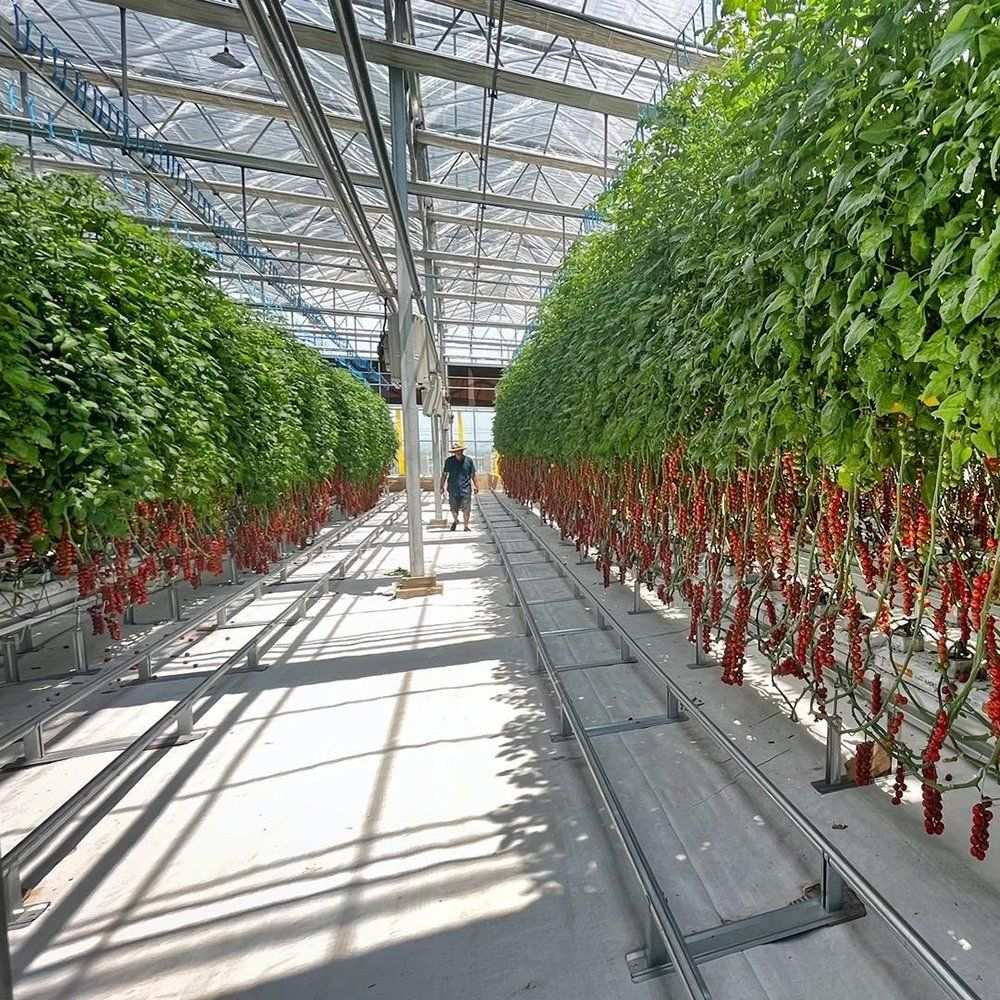
Ventilation, irrigation, screens and heating are tied to the same controller, so a change in one zone does not have to be repeated by hand across the house. Watering is triggered from soil or substrate readings rather than a fixed clock, and fans follow the gap between actual and target temperature. Reports of the last days and weeks are kept, which makes it easier to see why a bay drifted and to correct the curve. Energy is the other half of the design: solar integration and heat recovery can be added so that heat already paid for is moved back into the house instead of leaving through the roof. Extension services such as NC State University publish trials on greenhouse climate control that show why zone level management matters in commercial production.
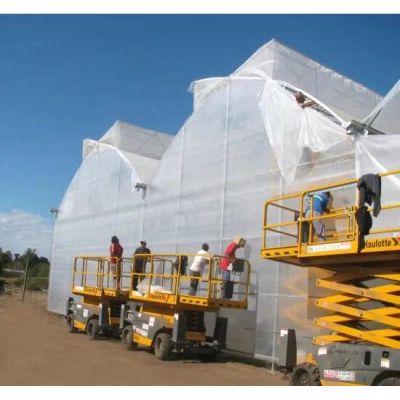
The house ships as a knockdown kit: galvanized pipe, glazing bars, gutters and glass. Work follows a fixed sequence of foundation, columns, gutters and roof, glazing, then fit out of vents, screens and irrigation. Our engineers can travel to site to guide installation when required, and the drawings are issued against the site survey rather than a standard plan.
Routine work is limited. Wash the glass before the light season so transmission is not lost to dust, check seals and glazing clips after storm season, service vent motors and clean filters on the irrigation lines. Glass is not a consumable in the way film is, so the cost of ownership over the life of the house is mostly the frame and the control system.
Zone level control pays off wherever more than one crop shares a site. Vegetables such as tomato and cucumber, cut flowers, pot plants and young seedlings all want different bands, and in this house each can be given its own. The same structure works for research and trial blocks, where several treatments have to run at once under identical light. Trade reporting on GrowerTalks follows how commercial growers plan this kind of protected production. Compare the glass greenhouse range, or look at the farm glass greenhouse and the Venlo glass greenhouse with roof vent for other layouts in the same family.
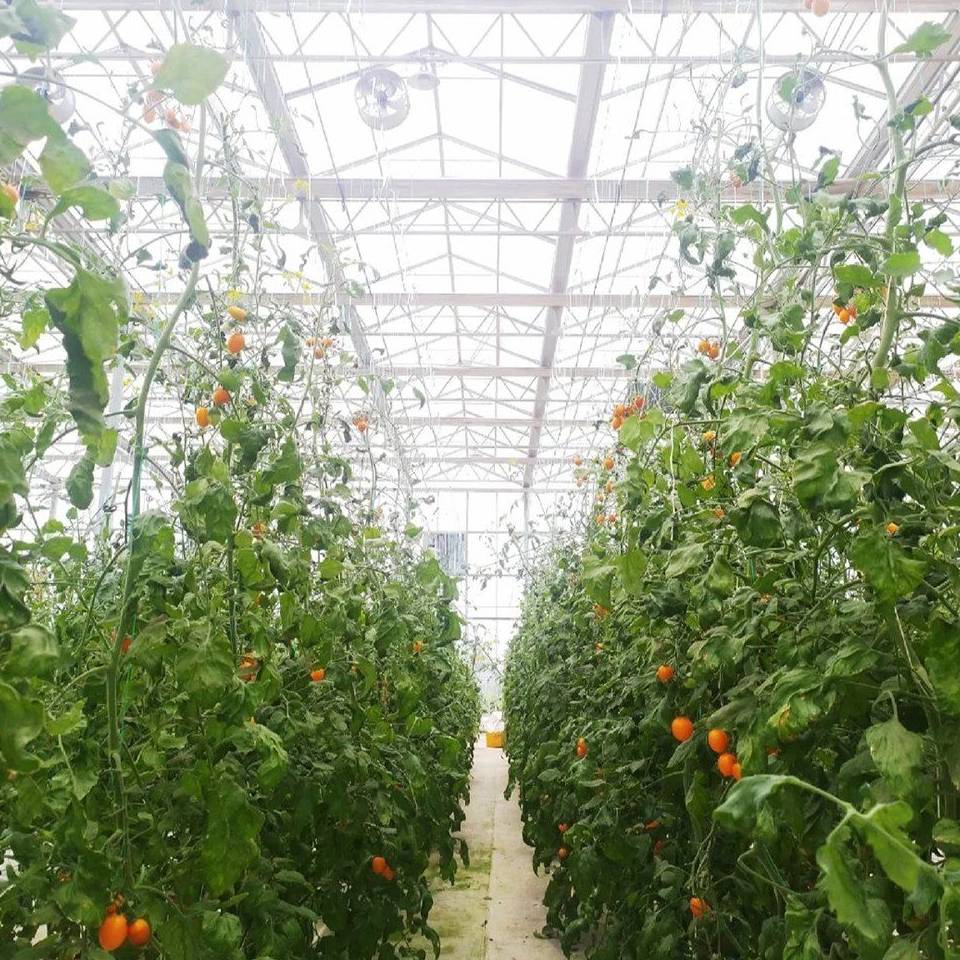
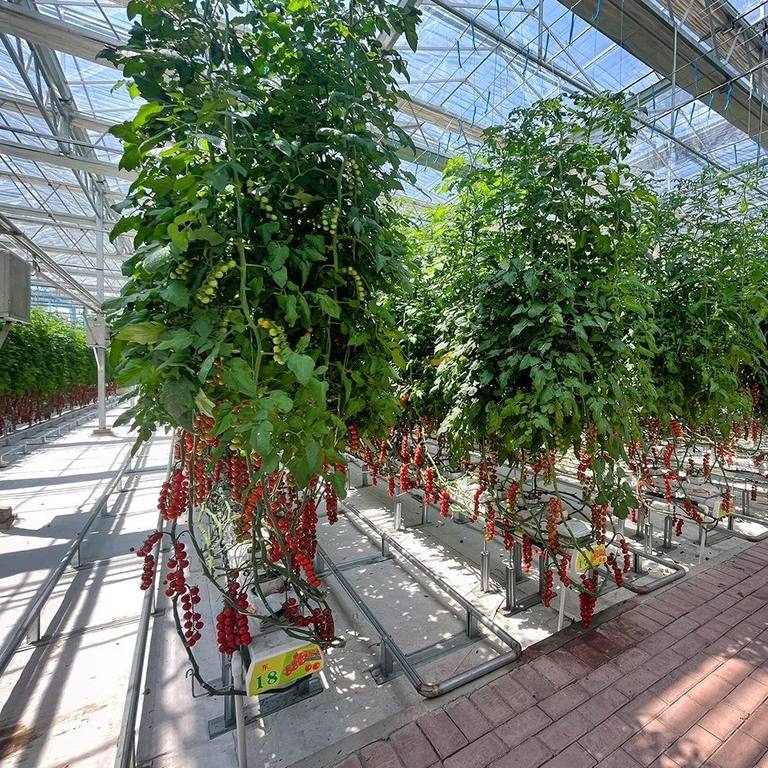
The covered area is divided into separate climate zones. Each zone has its own sensors for temperature, humidity, light and CO2, and its own set points for vents, fans, screens and irrigation, so different crops can be grown together without sharing one climate.
The frame is hot dip galvanized steel pipe with glass fixed into aluminium glazing bars. The cover is 4 mm or 5 mm float glass, or 5 mm tempered glass, with light transmission of 90 to 95 per cent.
The hot dip galvanized steel frame is rated for 15 to 20 years under normal growing conditions. Glass holds its transmission for many years and is not a consumable in the way a film cover is.
We provide a 10 year structural warranty and a 5 year anti-corrosion warranty on the galvanized frame. Details are set out in the contract for each project.
Send the site dimensions, the crops or crops you plan to run, the number of zones you need and your local wind and snow loads. We reply with a layout drawing and a full quotation covering frame, glass, vents, screens, irrigation and control.