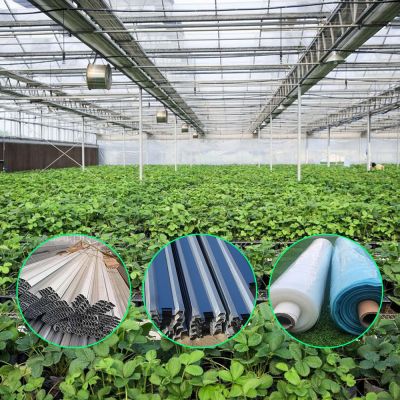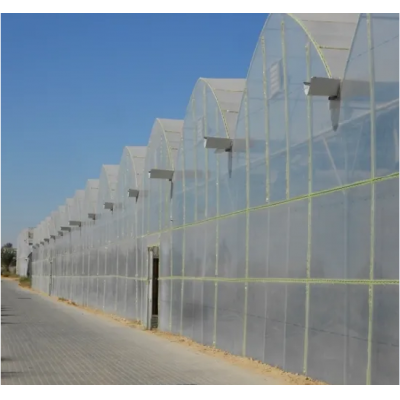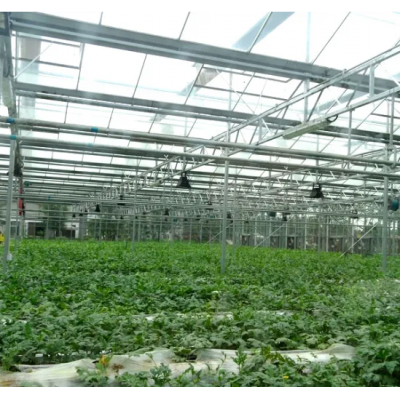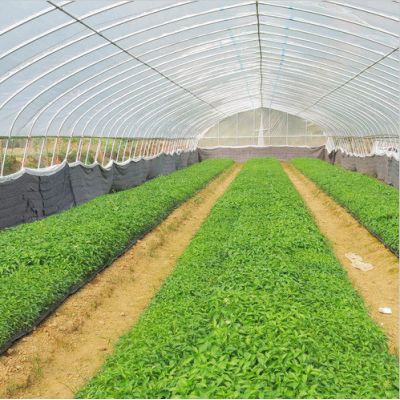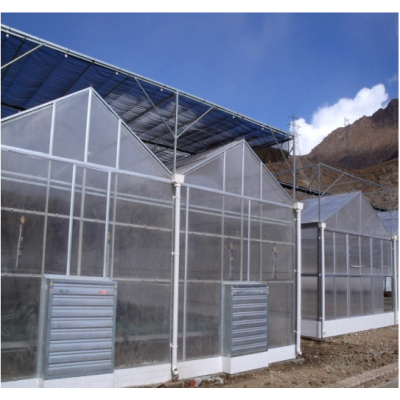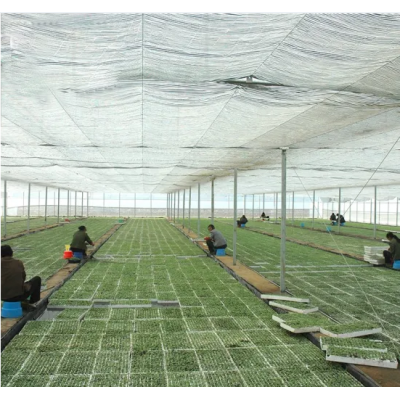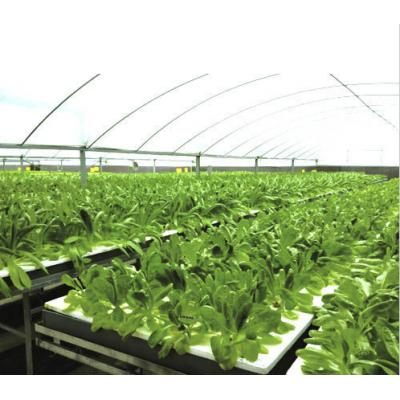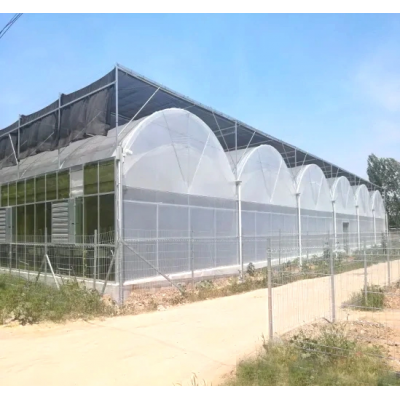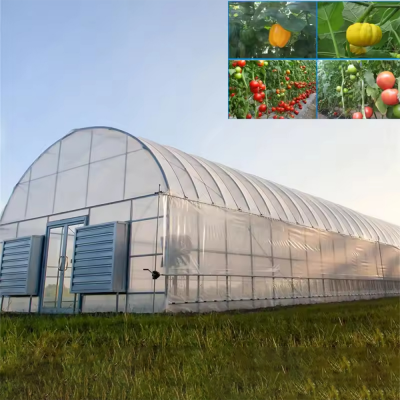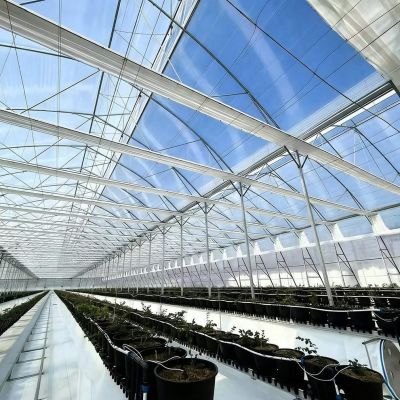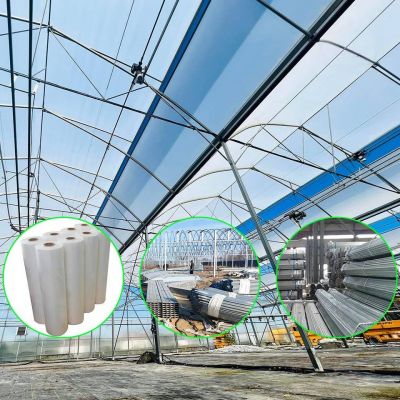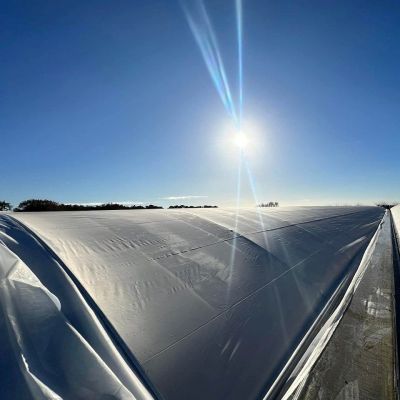

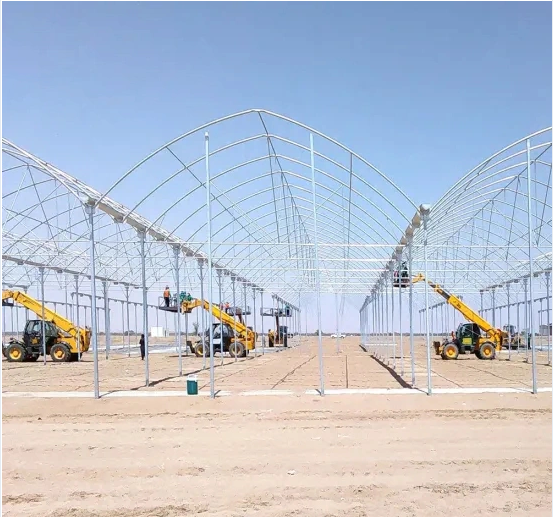


This steel greenhouse structure is the frame-and-cover package that turns open ground into a covered growing area. The skeleton is fabricated from hot-dip galvanized steel pipe with a double-sided zinc coating of 200-275 g/m2, and the covering is polyethylene film held in aluminium fixing channels. Spans of 6.4, 8, 9.6 and 10 metres are available, with total structure height from 4.3 to 6.5 metres, so the house can be sized around your plot rather than the other way round. The frame is bolted, not site-welded, which keeps the arch and purlin lines true and allows later extension. Film at 0.12 mm or 0.15 mm suits your climate, with a 15-20 year frame service life.
Most greenhouse problems that show up in year three were decided at the frame stage. A structure that was assembled with thin pipe or site welding will not hold its arch line once the film tightens, and every re-cover after that fits worse than the last. This steel greenhouse is built the other way round: the frame is sized and galvanized first, then the covering is cut to fit it. That order is why these houses still take a taut cover after a decade of wind.
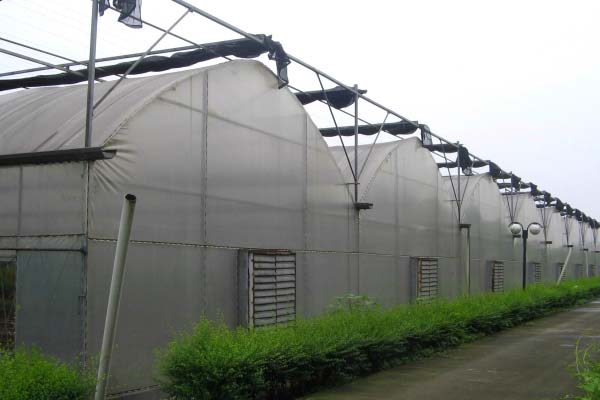
All structural members are hot-dip galvanized steel pipe, coated inside and out with 200-275 g/m2 of zinc. Hot-dip coating is what carries the corrosion guarantee, because the coating is metallurgically bonded to the steel rather than painted on, so a scratch does not become a rust run. Arch sections, purlins, gutter beams and bracing are jig-fabricated and bolted together with galvanized fasteners. There is no welding on site, which means the geometry you signed off in the drawing is the geometry you get on the ground. The frame is designed for a 15-20 year service life in normal agricultural conditions.
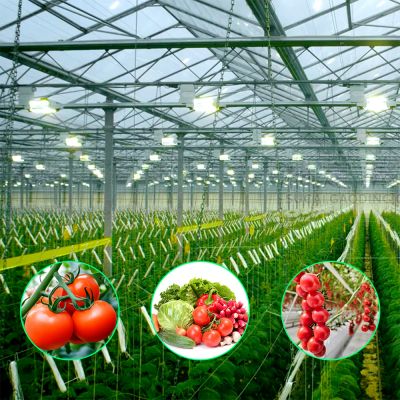
Standard spans run at 6.4, 8, 9.6 and 10 metres, with total structure height from 4.3 to 6.5 metres. Span choice is usually driven by how much machinery has to work inside and how the plot drains: a 6.4 metre span drains simply but limits turning room, while a 10 metre span gives a clear working bay and is the usual choice for multi-span commercial houses. Ridge height is set to the crop - taller for trellised tomato and cucumber, lower for lettuce and seedling benches. We confirm the bay layout against your plot dimensions before fabrication so that no awkward strip of land is left unused along the boundary.
The structure supports single or double layer film, commonly at 0.12 mm or 0.15 mm thickness. Double-layer covering with an air gap between the sheets gives noticeably better insulation and cuts heat loss, which is why it is the standard choice for cold-climate projects; single layer suits mild climates and lower budgets. Film is tensioned into aluminium fixing channels with spring wire so it does not flap, and side or ridge ventilation openings are framed into the structure in advance. Film transmits up to 90 percent of available light and the UV-stabilized grades hold up for several seasons before replacement. Growers evaluating frame versus covering cost will find that the plastic film greenhouse page covers the covering side of the decision in more detail.
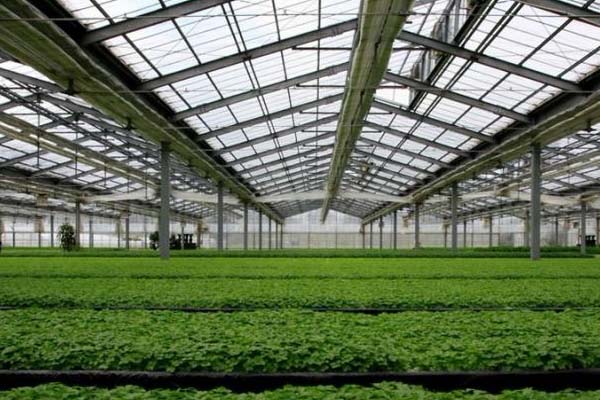
These structures are used for commercial vegetable production, cut flower and ornamental growing, fruit such as strawberry, seedling and transplant nurseries, and research plots where uniform bays are needed. The same frame takes internal benching for propagation, greenhouse irrigation mains and cooling pads, so a single skeleton can serve several cropping plans over its working life. Where the summer load is the limiting factor, combining the house with wet curtain cooling keeps temperatures inside the range that fruiting crops will set in. Structural and covered-cultivation guidance from FAO and industry reporting from HortiDaily are useful starting points when specifying a house for a new site.
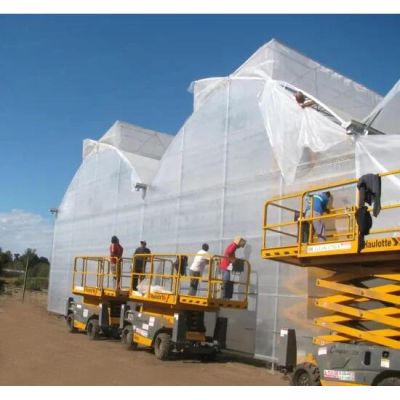
We supply foundation brackets and setting-out drawings so the ground can be prepared before the steel arrives, and the frame is then erected in bays with a small team and standard lifting equipment. Most of these houses go up in days rather than weeks once the foundation points are established. Steel needs to be on site ahead of your planting window, so we confirm the loading date in writing and build production around your deadline. Installation manuals ship with every order and our engineers can attend site to supervise the first bays if your team has not assembled this type of structure before.
Hot-dip galvanizing forms a metallurgically bonded zinc layer of 200-275 g/m2 on both faces of the pipe. It protects cut edges and scratch damage far better than paint, which matters in the humid, fertiliser-rich air inside a greenhouse. It is also why the frame carries a corrosion guarantee instead of a cosmetic finish warranty.
Yes. Gutter-connected bays can be added to lengthen the structure, and because joints are bolted rather than welded the frame can also be dismantled and re-erected elsewhere. We keep the fabrication drawings on file so an extension uses matching pipe sections and brackets rather than improvised parts.
The hot-dip galvanized steel frame is designed for a 15-20 year service life in normal agricultural environments, with a double-sided zinc coating of 200-275 g/m2. Film covers are replaced every 3-5 years, while glass and PC panels carry their own manufacturer warranties.
The hot-dip galvanized steel frame carries a 10-year structural warranty covering structural safety, plus a 5-year warranty against corrosion perforation. It is designed for a 15-20 year service life.
Send the plot dimensions and orientation, the crop, whether the covering should be single or double layer, and the local wind speed and snow load. If benching, irrigation or ventilation are already planned, include those as well so the frame openings can be prepared during fabrication instead of being cut on site.