

An agricultural greenhouse irrigation system covers everything between the water source and the plant: the tank or mains supply, pump, filtration, main and branch lines, drip line or micro-sprinklers, and the valves and controller that decide when each bay is watered. Drip lines place water at the root zone and keep the foliage dry, which suits tomato, cucumber and pepper crops, while micro-sprinklers are used for nursery trays and leafy greens. A dosing unit can inject nutrient solution so feeding and watering happen in one pass. Every system is sized from house area, crop and water quality, and ships with a layout drawing and bill of materials.
Water is the part of a greenhouse that growers notice last and feel first. A house can be well framed and well covered, but if the water arrives unevenly the crop tells you within a week: wet corners, dry rows and a root zone that never settles. An irrigation system exists to remove that variation, so every plant in the house is fed the same amount at the same time.
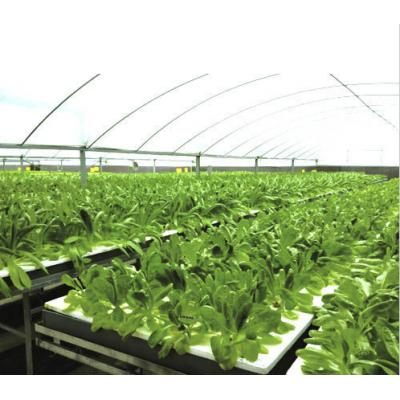
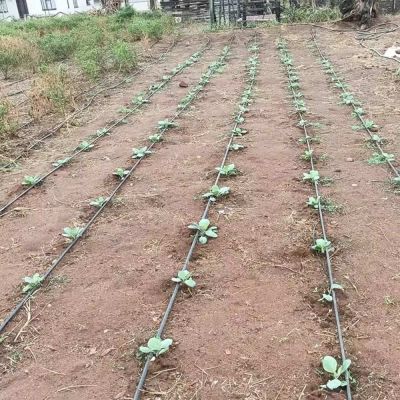
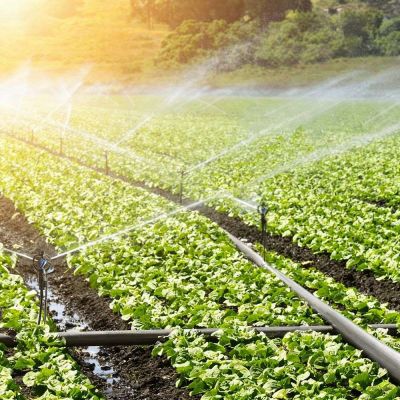
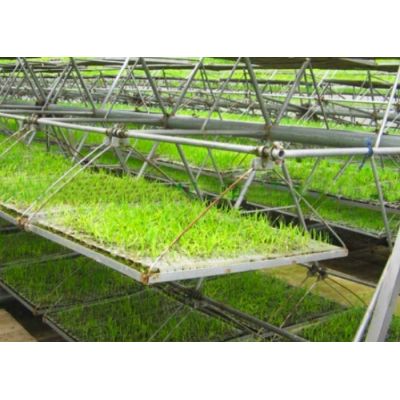
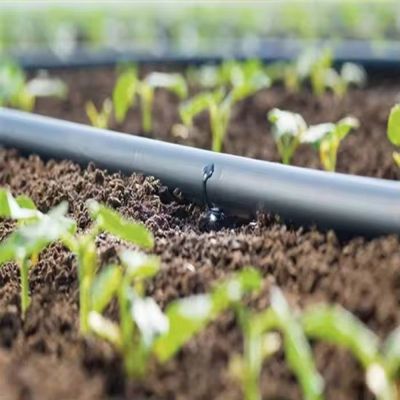
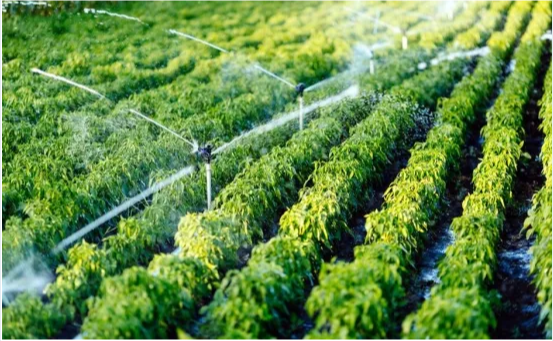
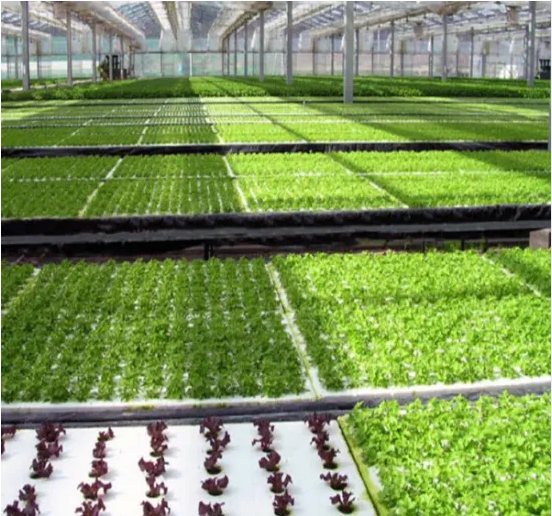
Drip lines run along the plant row and release water at the root zone through emitters. The foliage stays dry, weeds between the rows get less water, and the crop can be fed at the same time. Micro-sprinklers throw water over a wider circle and are usually chosen for nursery trays, seedling benches and leafy crops where the canopy is dense. Many houses end up with both: drip on the production rows and micro-sprinklers in the propagation bay.
The package starts at the water source and ends at the plant. It includes the tank or mains connection, the pump, a filtration unit, main and branch pipework, the drip line or micro-sprinkler heads, isolation and air valves, and the timer or controller that sets the watering cycle. Where nutrients are injected, the dosing point sits after the filter so the solution reaches the emitters evenly. Everything is supplied against a layout drawing and a bill of materials.

Capacity is worked out from the house area, the crop, the growing medium and the local climate, not from a catalogue number. Water quality decides the filtration grade: sand and organic matter need a sand filter, hard water may need treatment before the dosing point, and fine emitters need finer screening to protect against blocking. Rows longer than about 60 metres usually call for pressure-compensating emitters so the first plant and the last plant receive the same volume.
Systems are assembled with standard fittings and do not need specialist tools. The routine is simple: check the source and pump daily, flush filters on a schedule, walk the rows to confirm emitters are running, and clean or replace any head whose flow has dropped. Automation is optional but worthwhile on a commercial house - a timed controller and a dosing unit take the guesswork out of feeding, and automatic control can tie irrigation to light, temperature or substrate moisture.
The same equipment serves vegetable production, nursery and seedling work and soilless growing, and it is usually specified together with the structure itself. Growers comparing delivery methods can look at our drip irrigation system in more detail, or start from the full range of greenhouse irrigation systems. On the practice side, FAO publishes guidance on agricultural water management, and Greenhouse Grower covers irrigation and fertigation for commercial growers.
Drip lines suit row crops such as tomato, cucumber and pepper because water goes to the root zone and the foliage stays dry. Micro-sprinklers suit nursery trays, seedling benches and dense leafy crops where a wider wetting pattern is needed. Many growers run drip on the production rows and micro-sprinklers in the propagation area.
Yes. A dosing unit is fitted after the filtration stage so nutrient solution reaches every emitter evenly, and a controller can run feeding and watering in the same cycle. Injection rates are set from your recipe and the volume your house needs.
The hot-dip galvanized steel frame is designed for a 15-20 year service life in normal agricultural environments, with a double-sided zinc coating of 200-275 g/m². Film covers are replaced every 3-5 years, while glass and PC panels carry their own manufacturer warranties.
The hot-dip galvanized steel frame carries a 10-year structural warranty covering structural safety, plus a 5-year warranty against corrosion perforation. It is designed for a 15-20 year service life.
Send your growing area, crop type, water source and local climate, and tell us whether you plan to inject nutrients. If you already have a layout drawing, that is enough to start; our engineers then return a quotation with a system layout and a bill of materials.