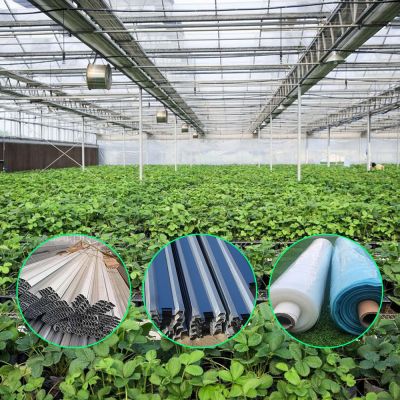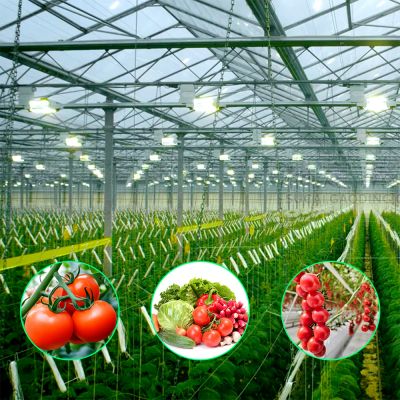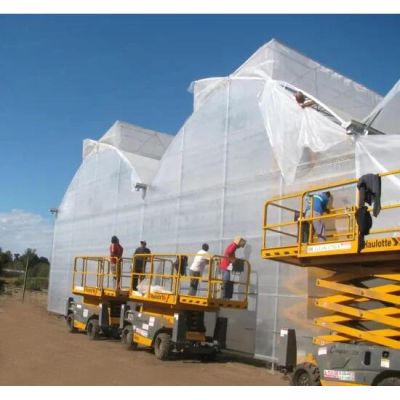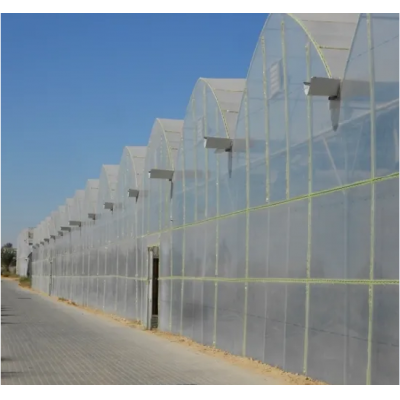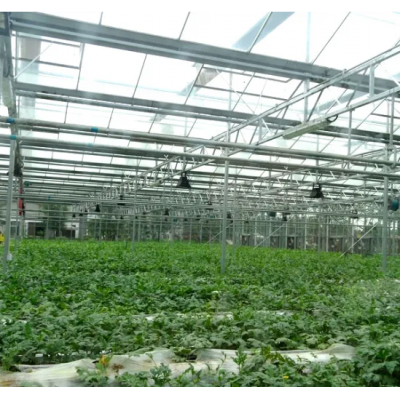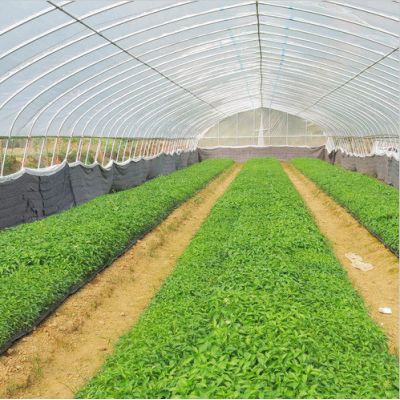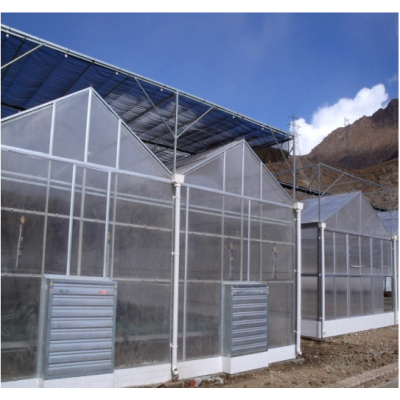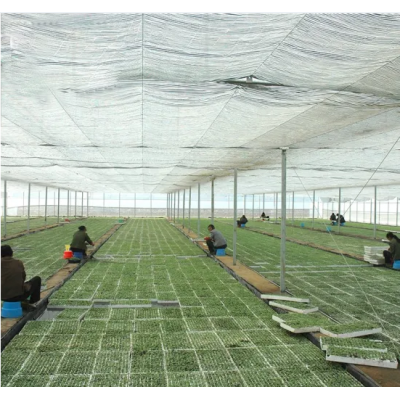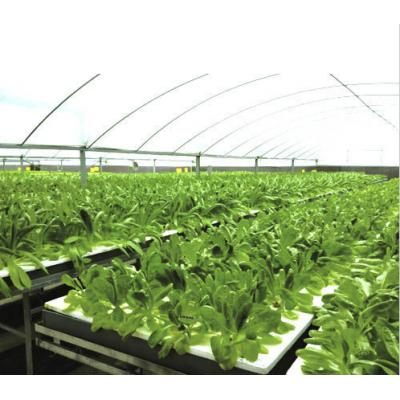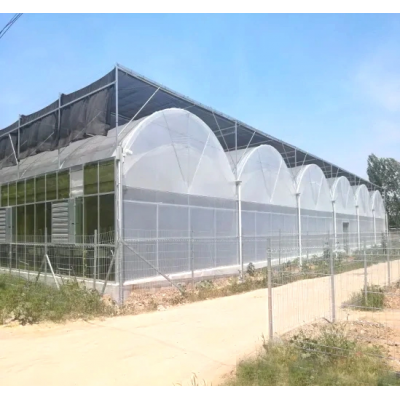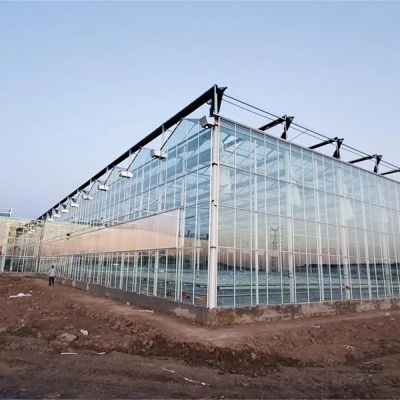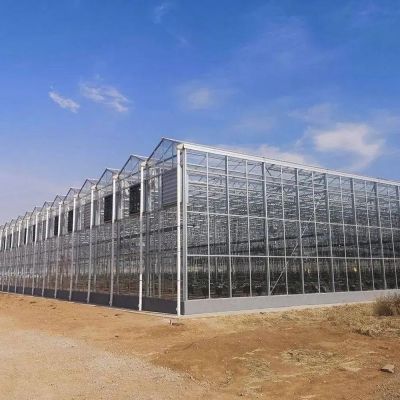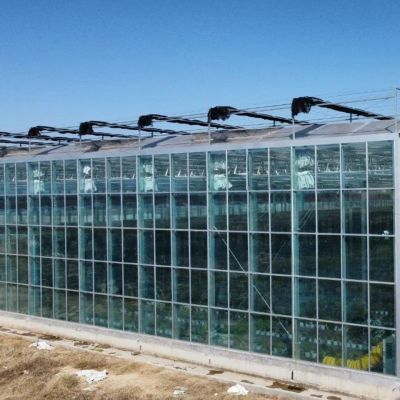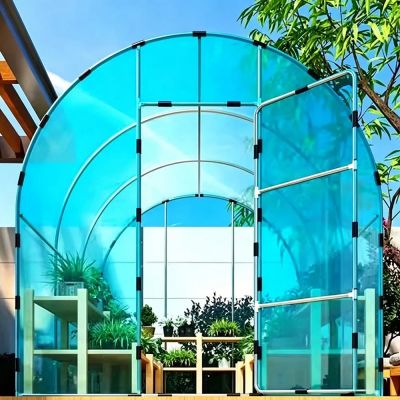
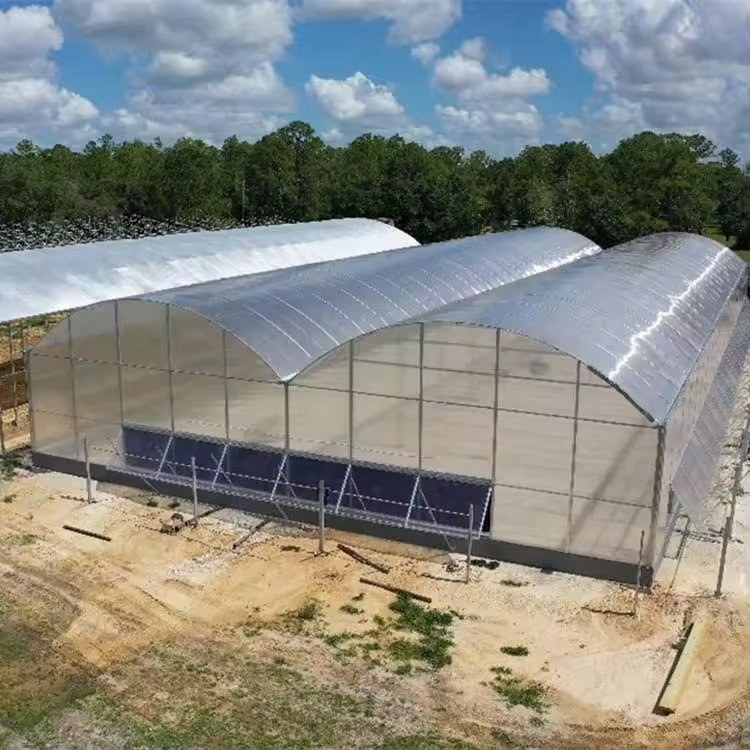
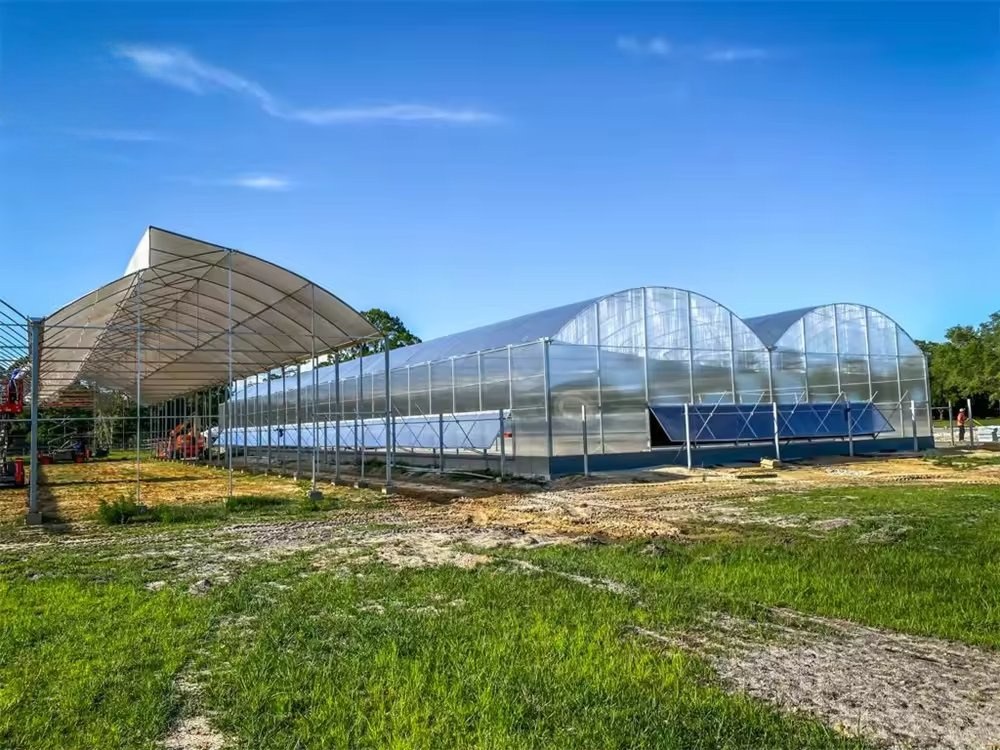
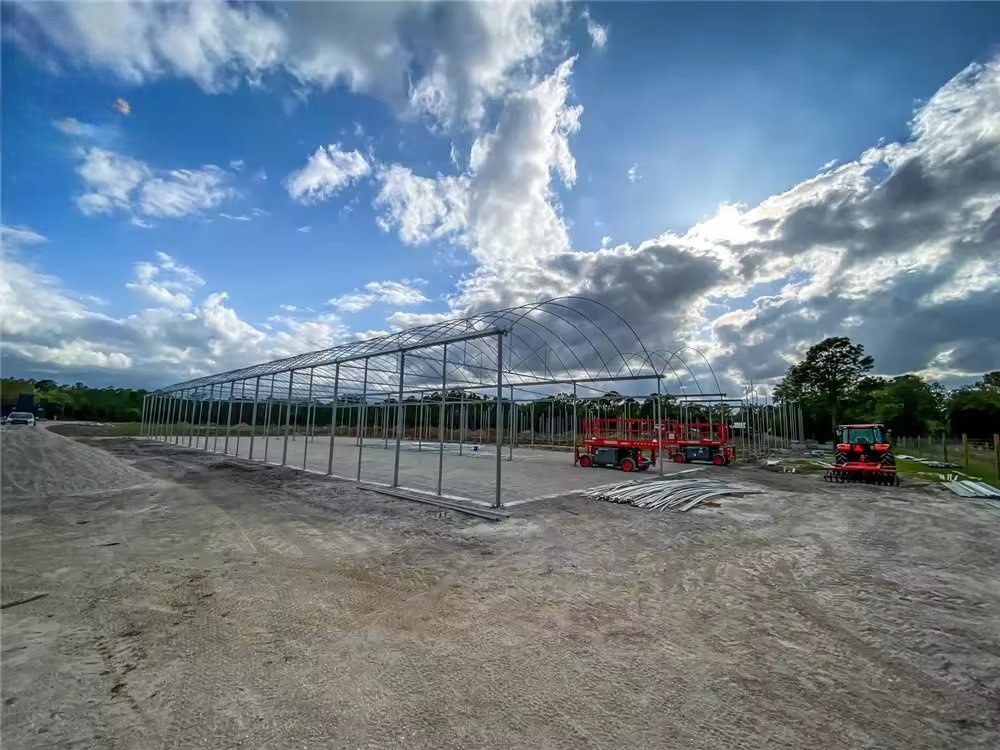
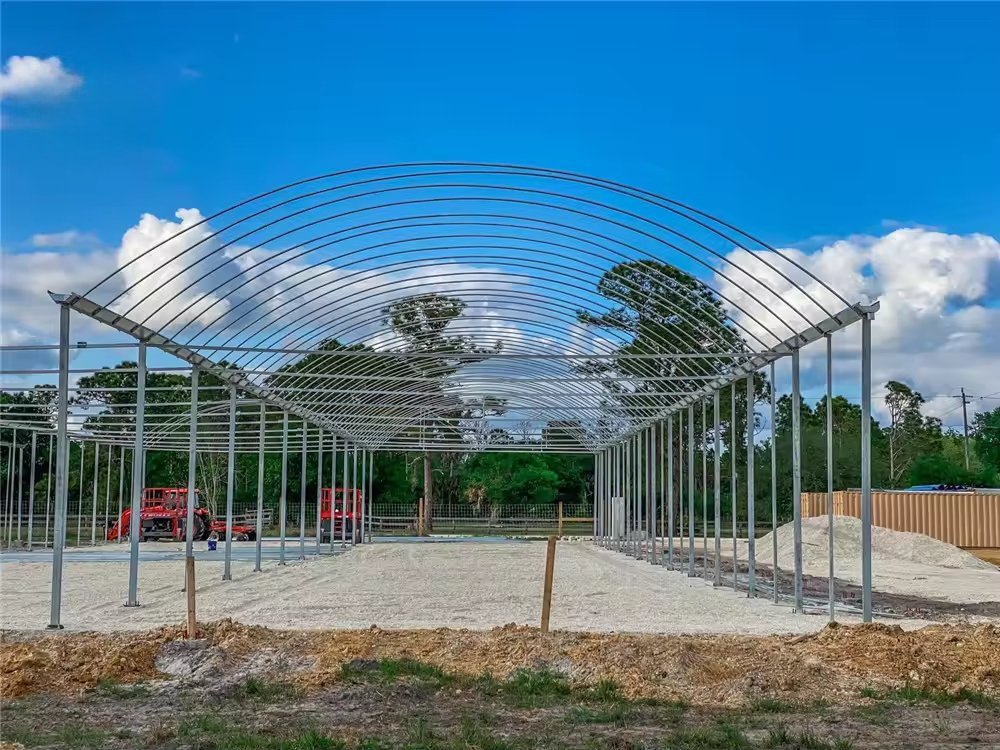
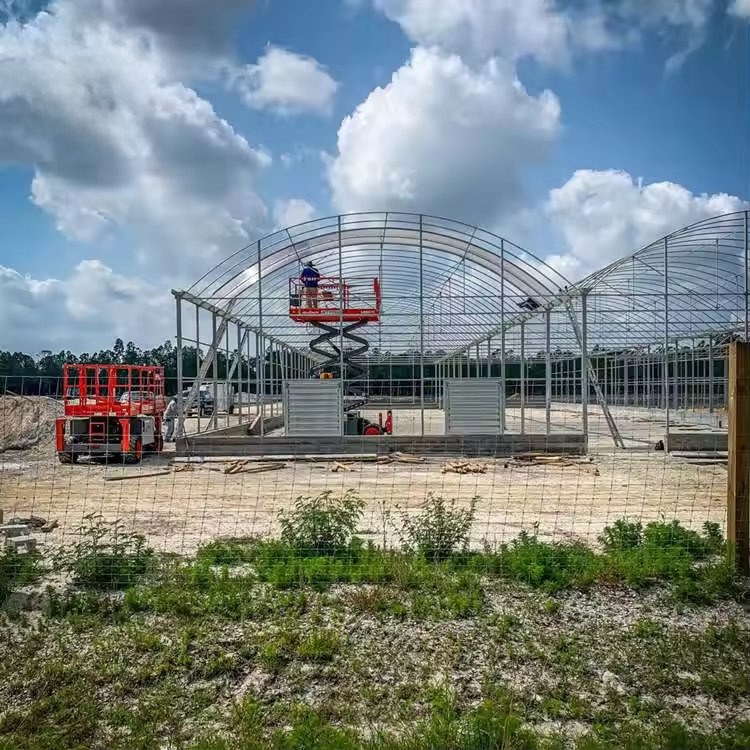
Polycarbonate is the cover for growers who want insulation as well as light, and for a tomato crop that is often the difference between a house that holds a night temperature and one that does not. This listing quotes a large PC sheet house with single spans of nine point six to twelve metres, bays of four metres, heights of four point five to eight metres, wind and snow figures, and a crop load of fifteen to thirty kilograms per square metre.
A tomato crop wants a warm night and a bright day, and those two pull in opposite directions on the cover. PC sheet leans towards the warm night. This page covers the large PC house in this listing, part of the polycarbonate greenhouse range on this site.
A twin wall PC sheet traps a layer of still air between the walls, and that layer is what slows heat loss at night. On a tomato crop the payoff is a lower heating bill or a wider safety margin on a cold night, at the cost of a little light against glass. In a hot climate the same insulation becomes a liability at midday unless shading is planned.
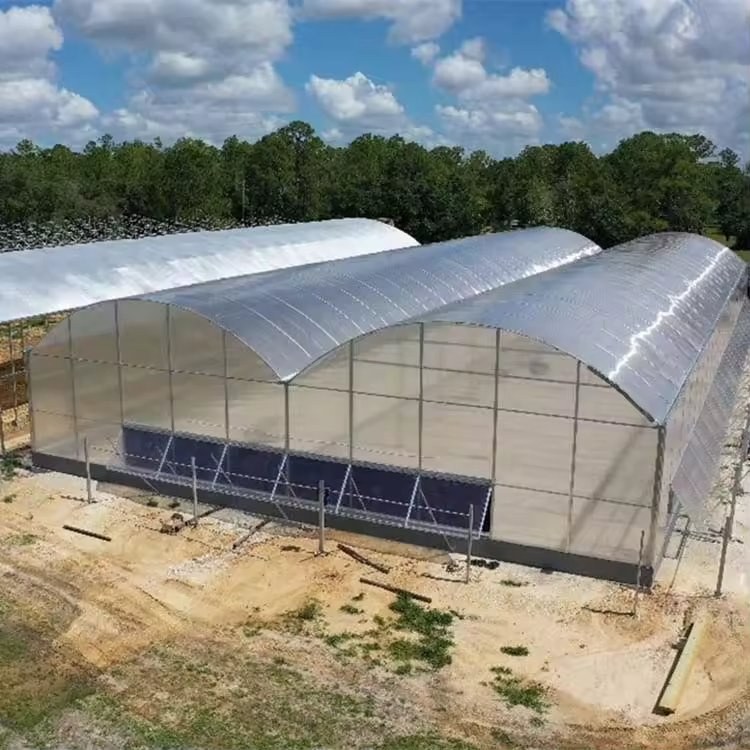
Single spans are quoted at 9.6, 10.8 and 12 metres, with bays of 4 metres and heights from 4.5 to 8 metres. Longer bays and taller gutters both help a trellised crop, because the crop is lowered and stripped repeatedly and the work happens at the wire, not at the floor.
The custom fields widen the range to spans of eight to twelve metres and lengths of ten to a hundred metres. Height is the number to settle first on a tomato house: it sets how much crop can hang before the wire is lowered.
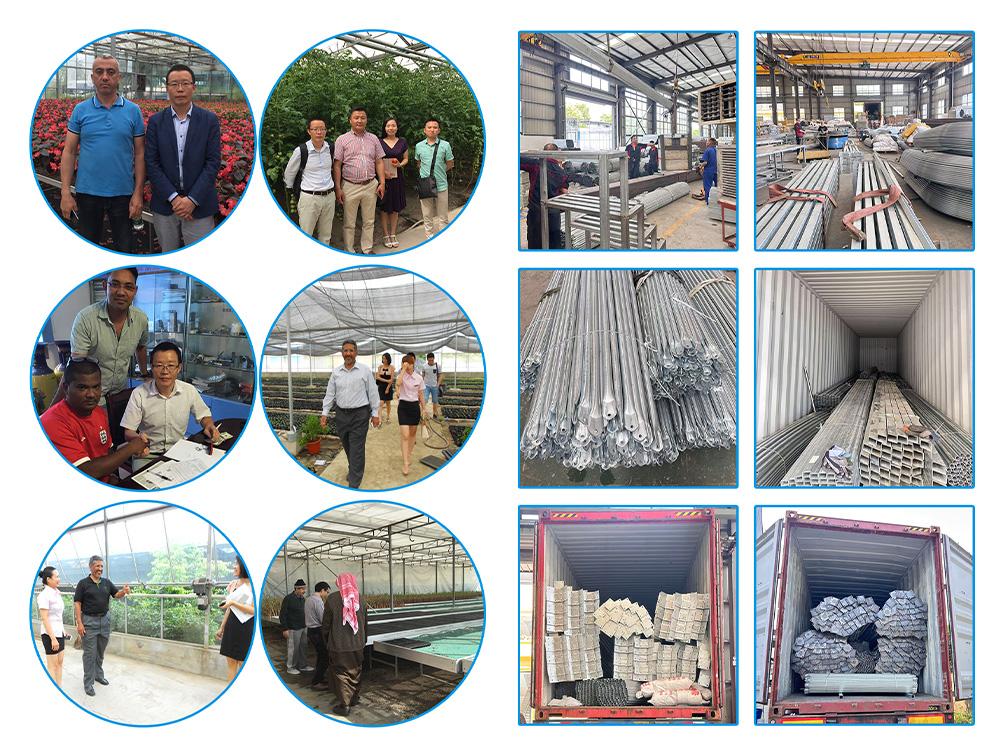
| Type | Large polycarbonate sheet greenhouse |
| Single span width | 9.6, 10.8 or 12 m |
| Single bay width | 4 m |
| Height | 4.5 to 8 m |
| Wind resistance | 120 (as listed) |
| Snow resistance | 30 to 55 kg/m² |
| Maximum rain quantity | 140 mm/h |
| Crop loading | 15 to 30 kg/m² |
| Frame | Hot dip galvanized steel |
| Packing | Safe packing for container freight |
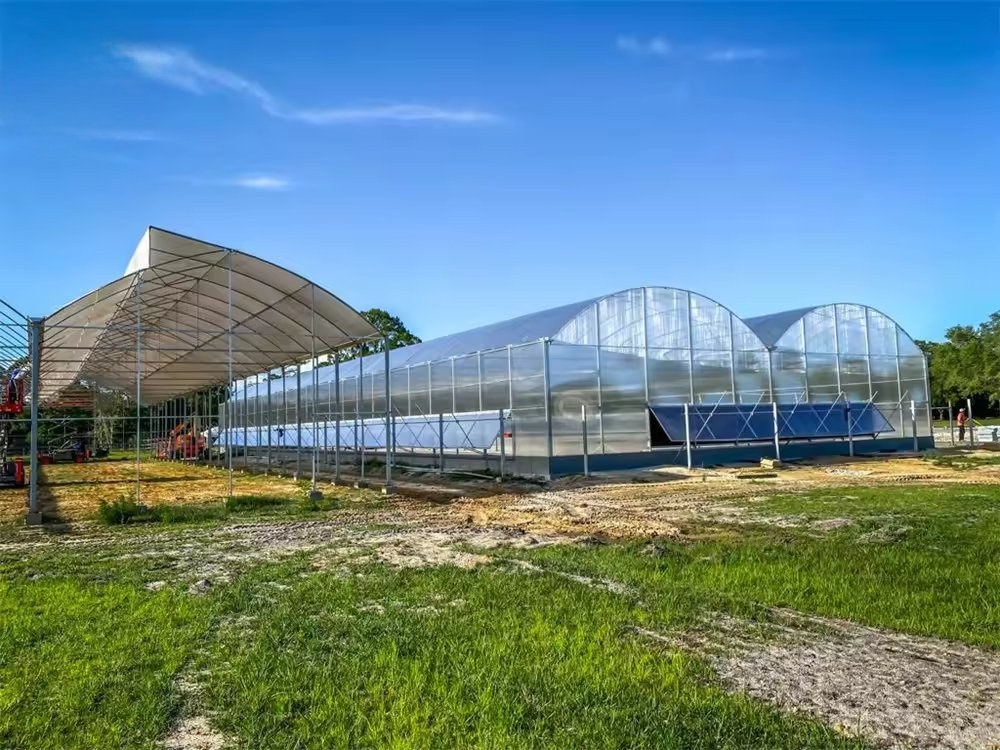
The listing allows fifteen to thirty kilograms per square metre of crop load. A full tomato crop at the end of a truss is heavy, and the load moves as the crop is lowered: the number is not just the fruit, it is the fruit plus the wire tension plus whatever hangs alongside. Ask for the truss drawing at the top of the range you intend to use.
The difference between fifteen and thirty is a factor of two, and it is the kind of line that gets copied without being read. If the crop is a low wire system, fifteen is generous; if it is a high wire with fruit left on to the end, thirty is the figure to design to.
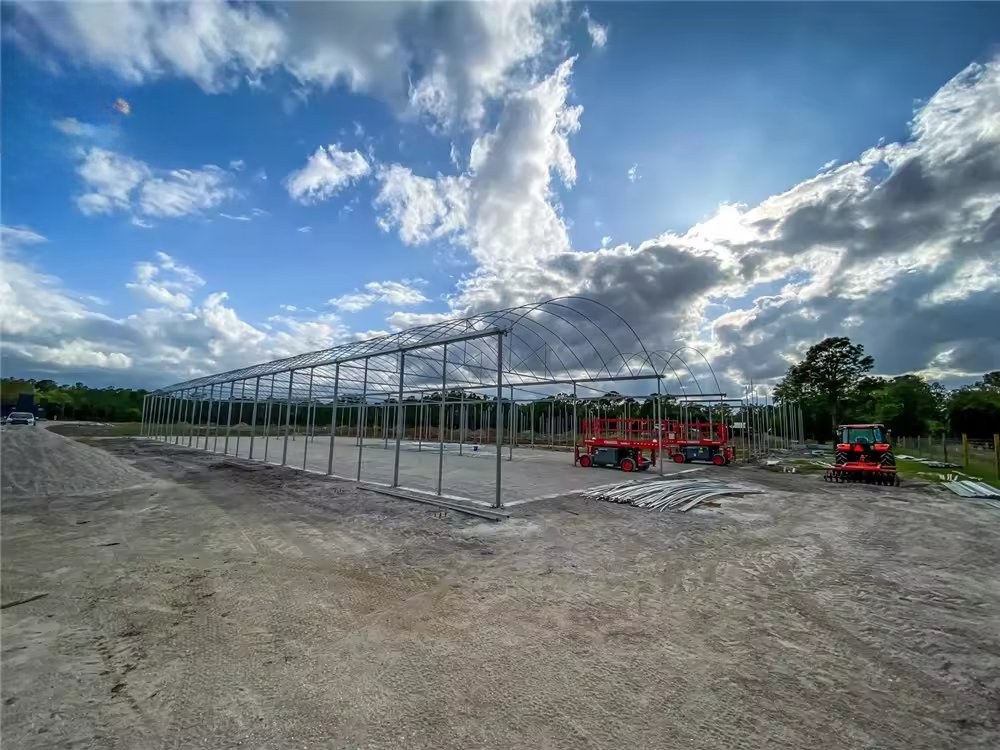
A house described as in stock is one that can ship from existing material rather than from a production run. The trade-off is that the span and height may be fixed to what is on the shelf, while length is cut to order. That is usually acceptable for a first house and awkward for a house that has to fit between two existing buildings.
Ask two questions before relying on stock: which span and height combination is actually available, and whether the cover is in the same shipment. A frame that arrives without its sheets is not in stock in any useful sense.
PC houses with different spans are described on the twin wall PC house page and the commercial PC panel house page.
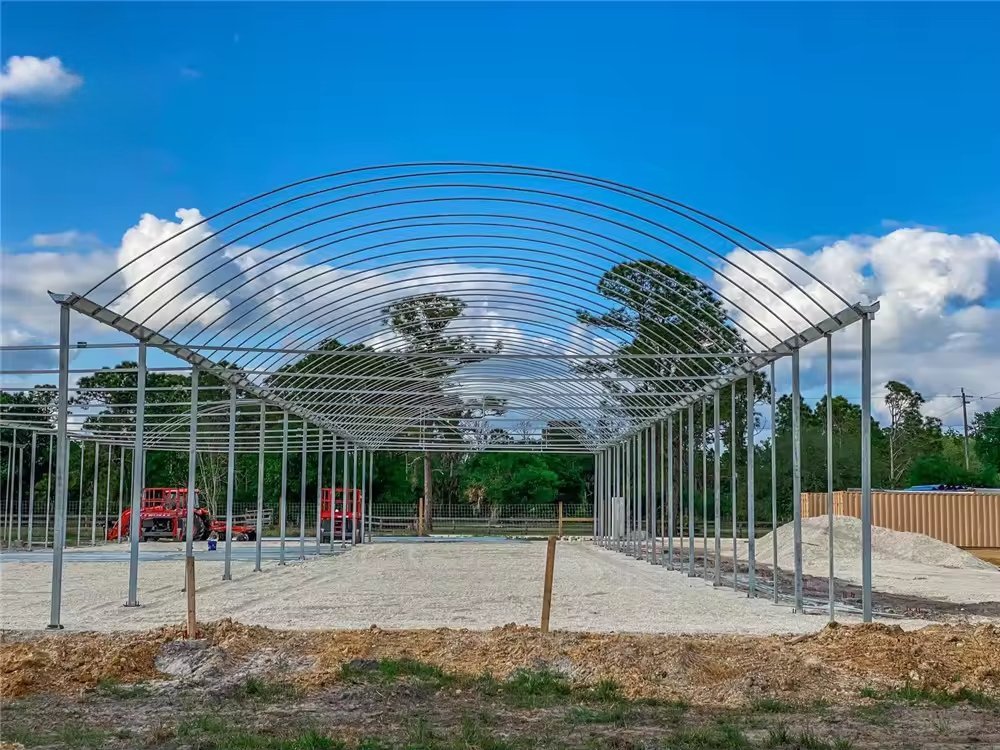
PC sheet runs colder on the inside face than glass in the same conditions, and water gathers in the channels if they are not capped. Two details matter: the anti-drip layer on the inner face, and the U-profile capping at the ends so the flutes stay dry and clean.
Screening is the other half. A thermal screen under a PC roof gives the night back twice, once from the sheet and once from the screen, and a shade screen above the crop is what keeps a midday peak manageable in summer. Both are quoted with the project.
Horticultural research on protected cropping is published by ISHS, and international horticultural news by HortiDaily.
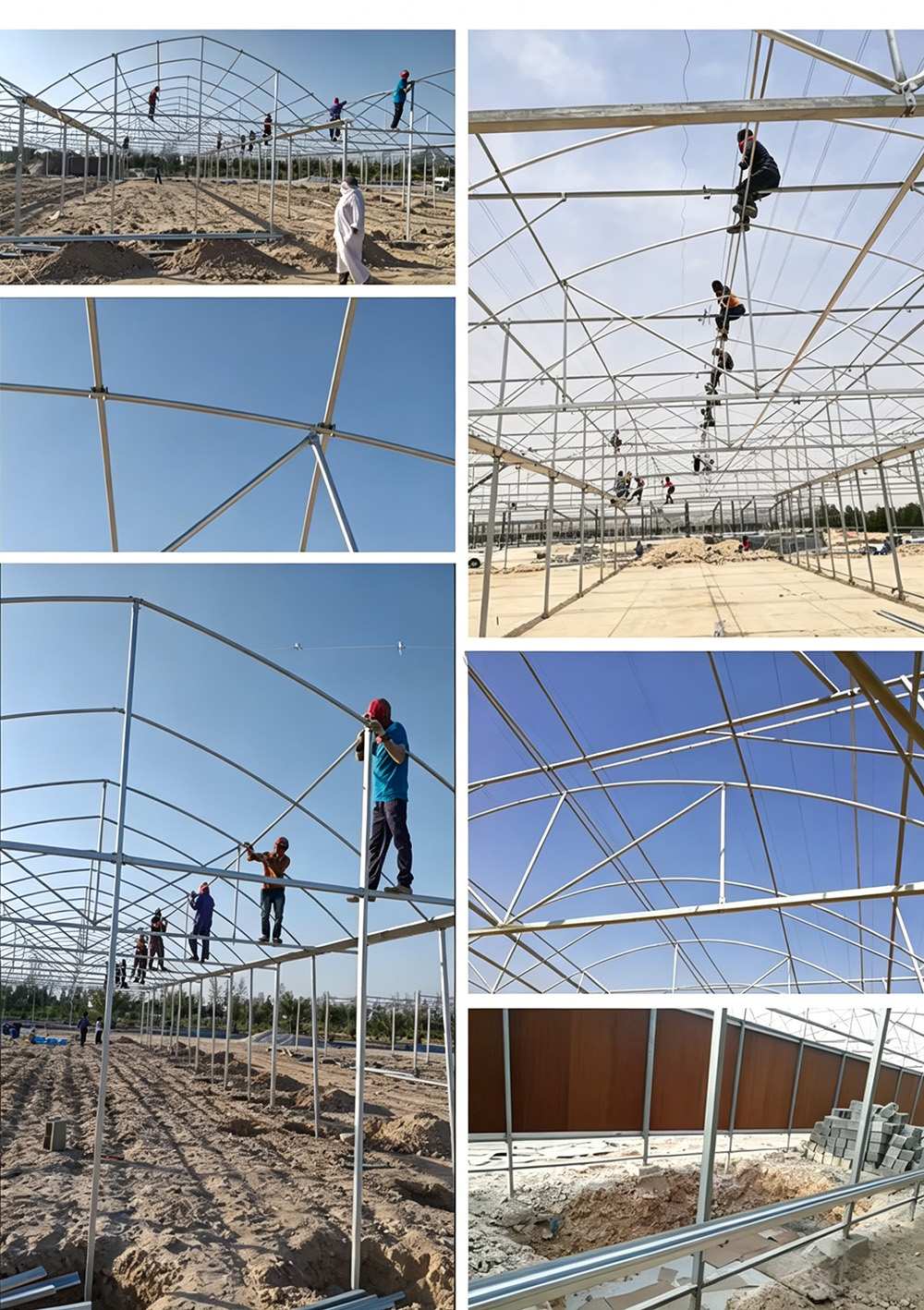
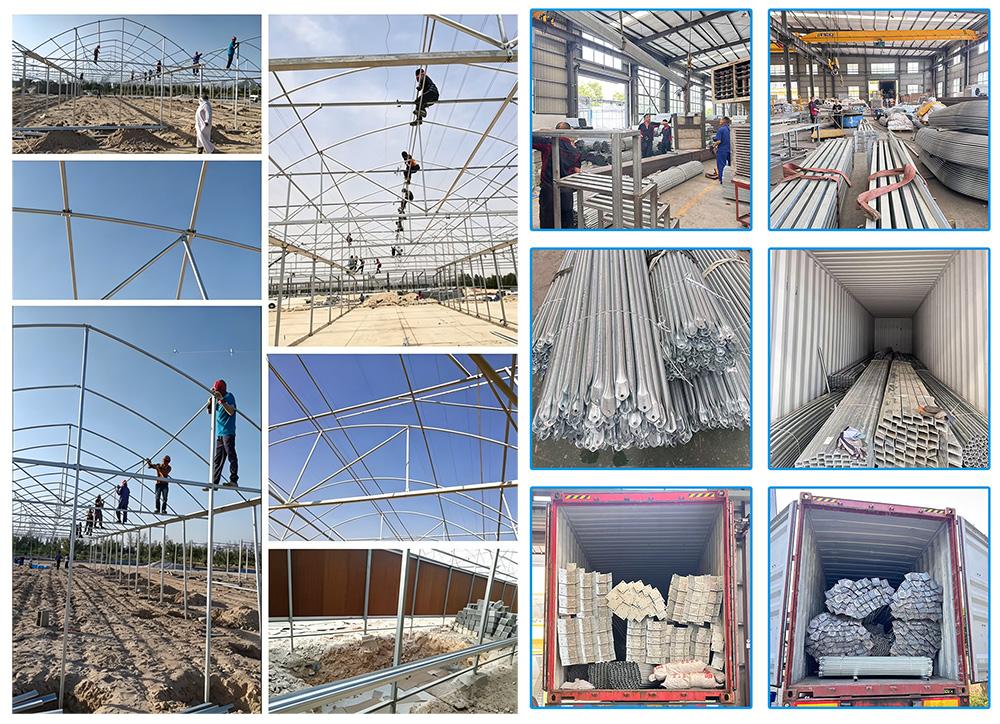

A standard multi-span greenhouse is typically erected in 2-4 weeks, depending on the span, the number of bays and site access. Foundation work and glazing are the two stages that set the pace, and both are scheduled before the frame arrives.
Yes. We customize span width, bay length, gutter height, covering material (film, PC sheet or glass) and ventilation configuration. Share your crop type, local climate and growing area, and our engineers will size the structure to match.
Film suits low-cost tunnels on 3-5 year replacement cycles. Glass delivers the highest light transmission and the longest lifespan, at the highest cost. PC sheet insulates better than film and suits cold or high-humidity climates. The right choice depends on climate, crop and budget.
Send your growing area, span and length, crop type and local climate. If you already have a layout drawing, that is enough to start. Our engineers then return a quotation with a structure drawing and a bill of materials.
The listing describes it that way, but stock changes weekly. Ask which span and height are available now, and whether the PC sheets ship with the frame. Treat the answer as the real specification rather than the catalogue range.
The listing does not quote a sheet thickness, so it is a quotation item. Thicker multiwall sheet insulates better and cuts light slightly; on a tomato house the usual choice is a twin wall sheet sized to the local winter rather than the thickest available.