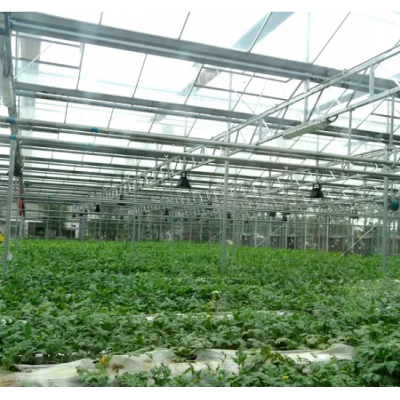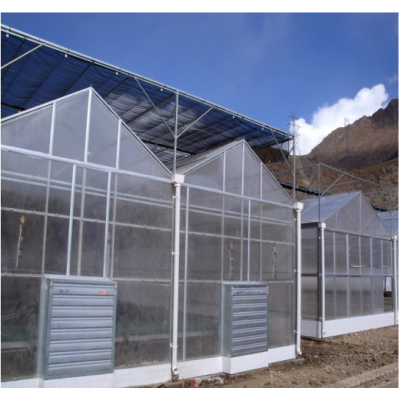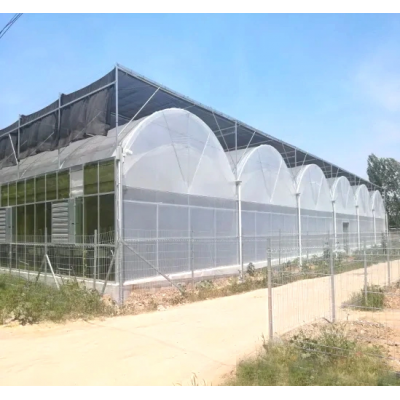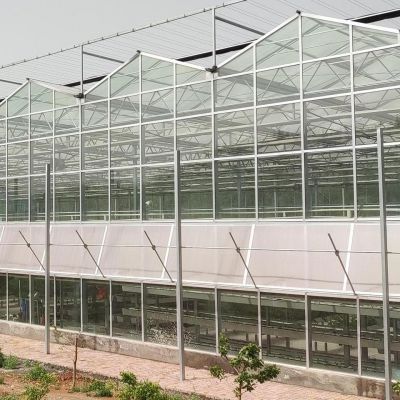
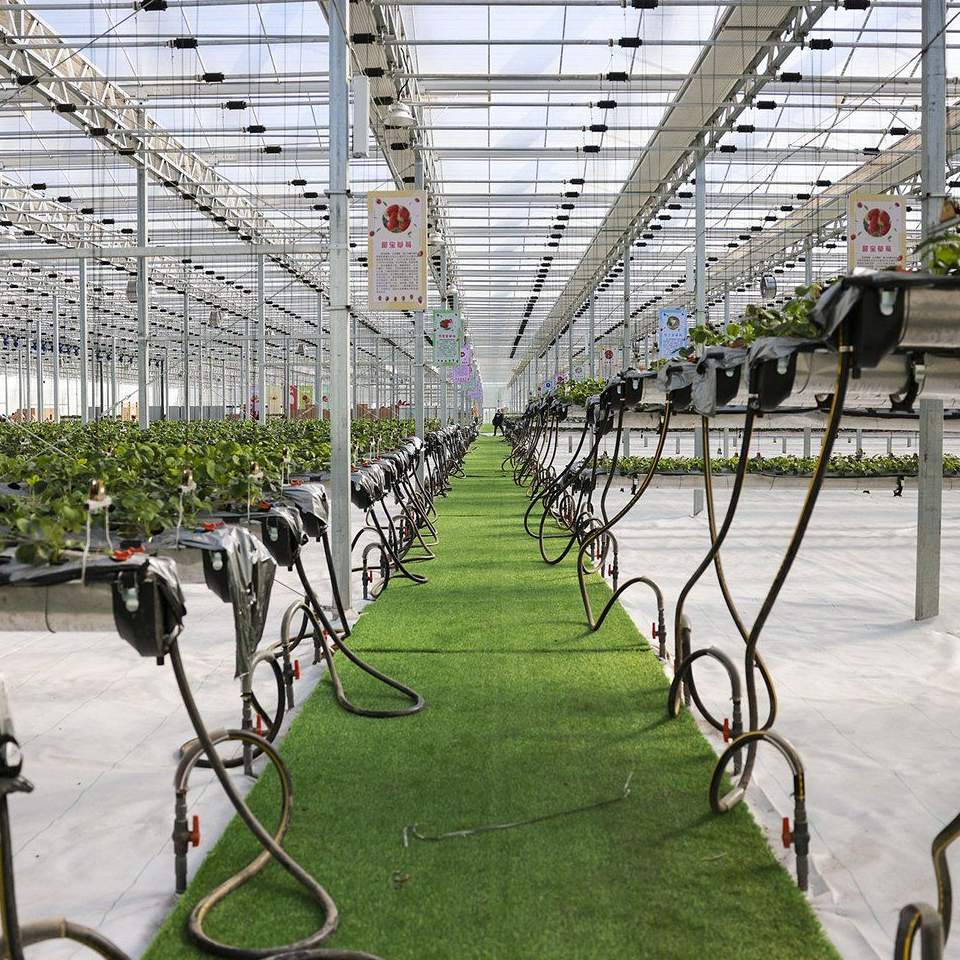
This commercial glass greenhouse kit is supplied complete, with the frame, glazing, ventilation and fixings matched to each other so the house arrives as one system rather than as parts from separate suppliers. Tempered glass over a hot dip galvanized steel frame holds its light transmission as it ages, which matters on a tomato or vegetable crop where the light the plant actually receives decides the yield. Spans run 8 m to 12 m, gutter height 3 m to 4.5 m and the house is built 10 m to 100 m long. It suits wholesale buyers, commercial growers and projects building a large covered area in one go.
A large glazed house is usually the biggest single item a grower buys, and it fails at the seams rather than in the steel. The frame is ordered from one place, the glass from another, the vents from a third, and nobody owns the question of whether the three work together on the first bright afternoon. Supplying the house as one kit settles that before anything is ordered: the loads, the openings and the fixings are matched.
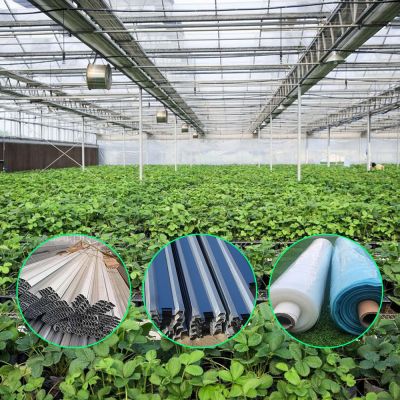
The kit is a complete house: hot dip galvanized steel frame, aluminium glazing bars, tempered glass, ventilation openings and the fixings that hold the covering in place. Galvanizing is applied by hot dipping, so the zinc layer is bonded to the steel at cut ends and bolt holes as well as on the tube faces, which is what keeps a working house standing through years of condensation running down the frame. Spans run from 8 m to 12 m with a gutter height of 3 m to 4.5 m, and the ridge reaches between 3 m and 8 m depending on the span chosen.
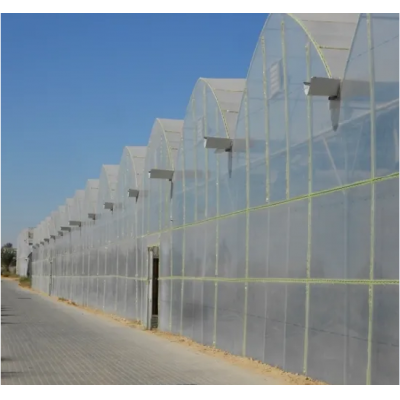
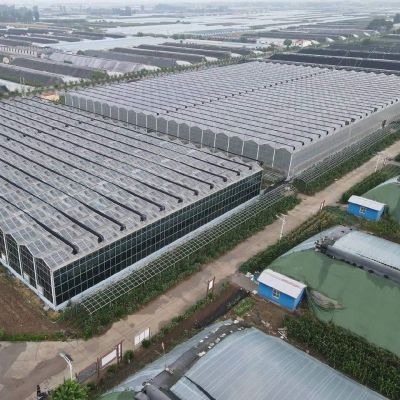
Length is set from 10 m to 100 m by adding bays, so a wholesale buyer can take a large covered area in one order and still extend the range later without changing the section. Because the openings ship with the frame, the vent areas and the drive sizes are set for the house they are going on rather than being selected separately. The rest of the glazed family is listed on the glass greenhouse range page on this site.
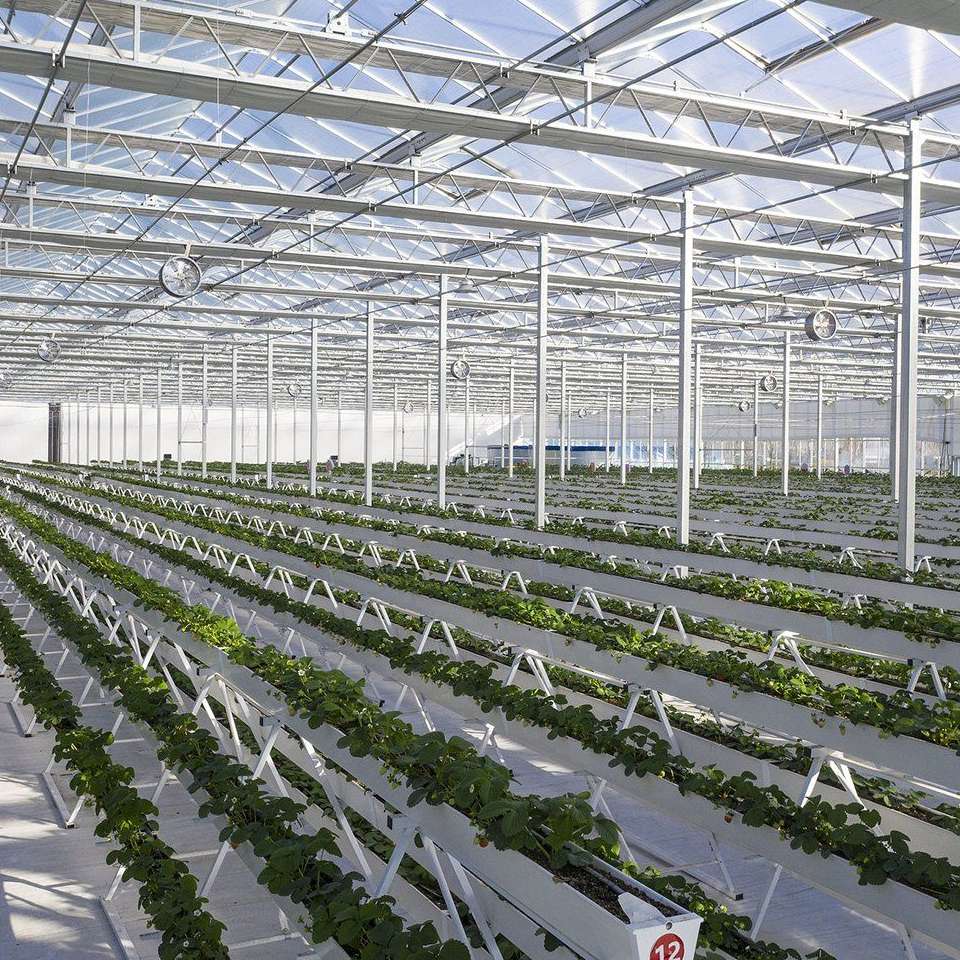
Glass is chosen for what it does over years rather than what it costs at the start. It keeps its light transmission as it ages, where a film cover slowly loses it, and it holds that transmission across the whole roof rather than in the middle of a span. On a tomato or vegetable crop the light the plant actually receives is the main yield variable, which is why a grower who intends to run the house for twenty years usually ends up comparing glass against film on the whole cost rather than on the unit price.
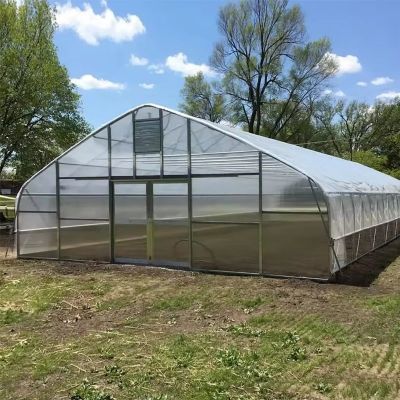
The rigid covering also changes how the house behaves in wind, because nothing flaps or chafes against the frame, and it changes the maintenance cycle, because glass does not need replacing every few seasons. The trade off is that glazing has no give, so the frame has to go up square and the foundation has to suit it. A panel version of the same frame principle, for the buyer who wants a lighter covering, is described in the farm glass greenhouse.
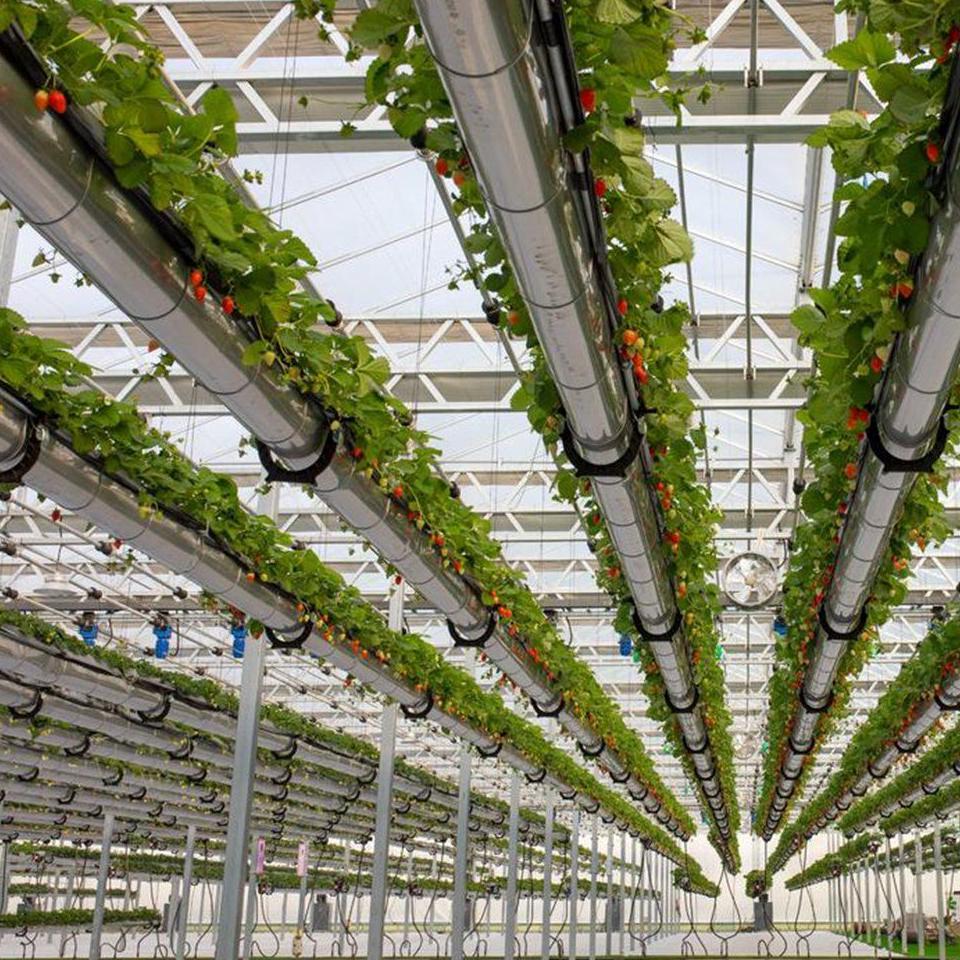
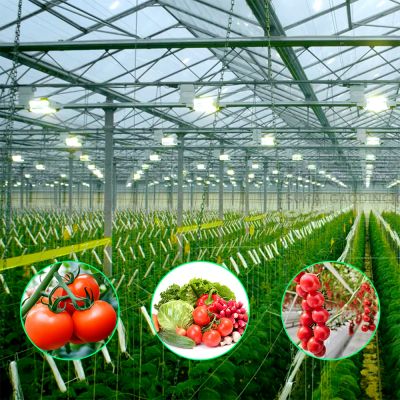
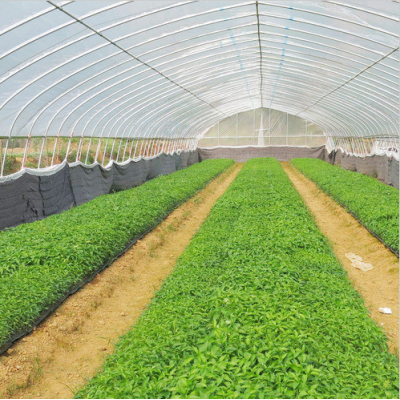
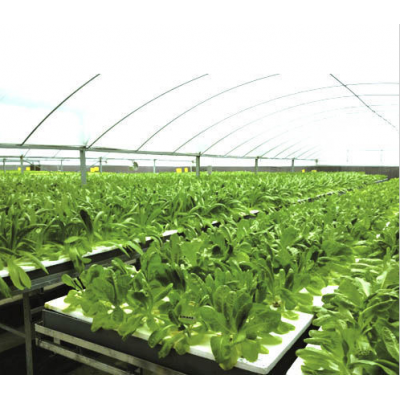
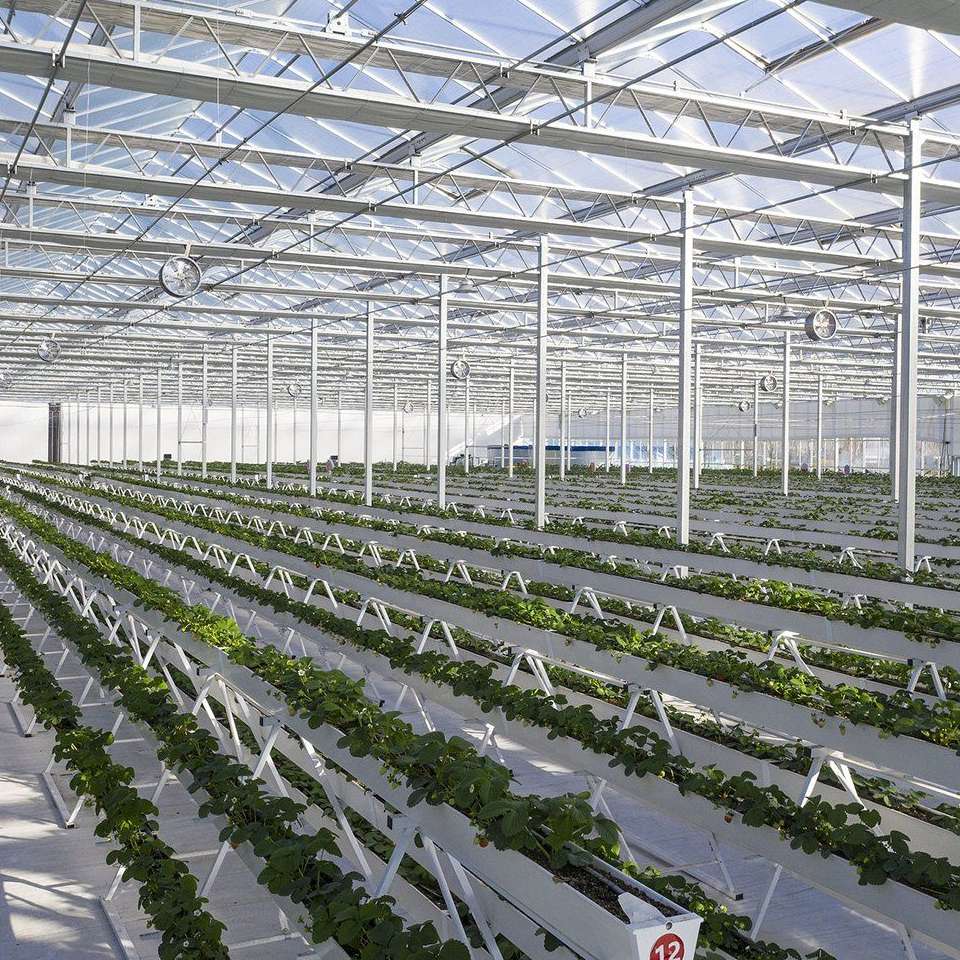
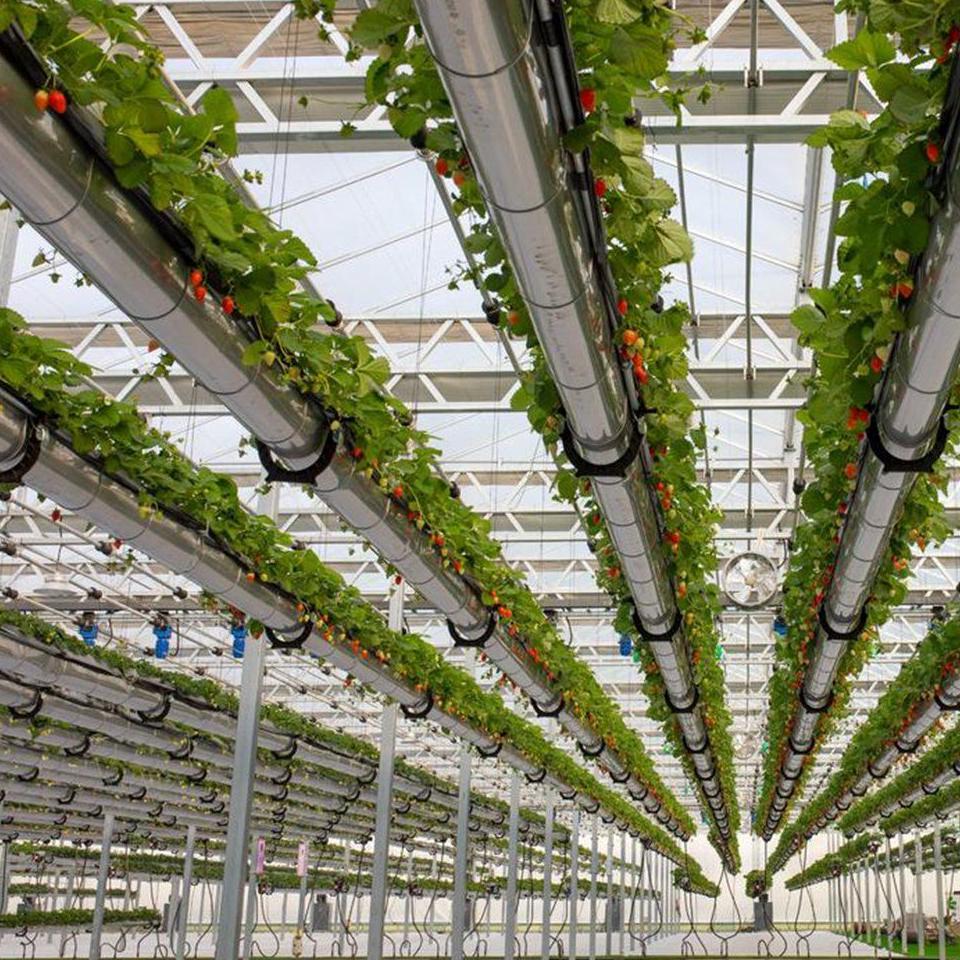
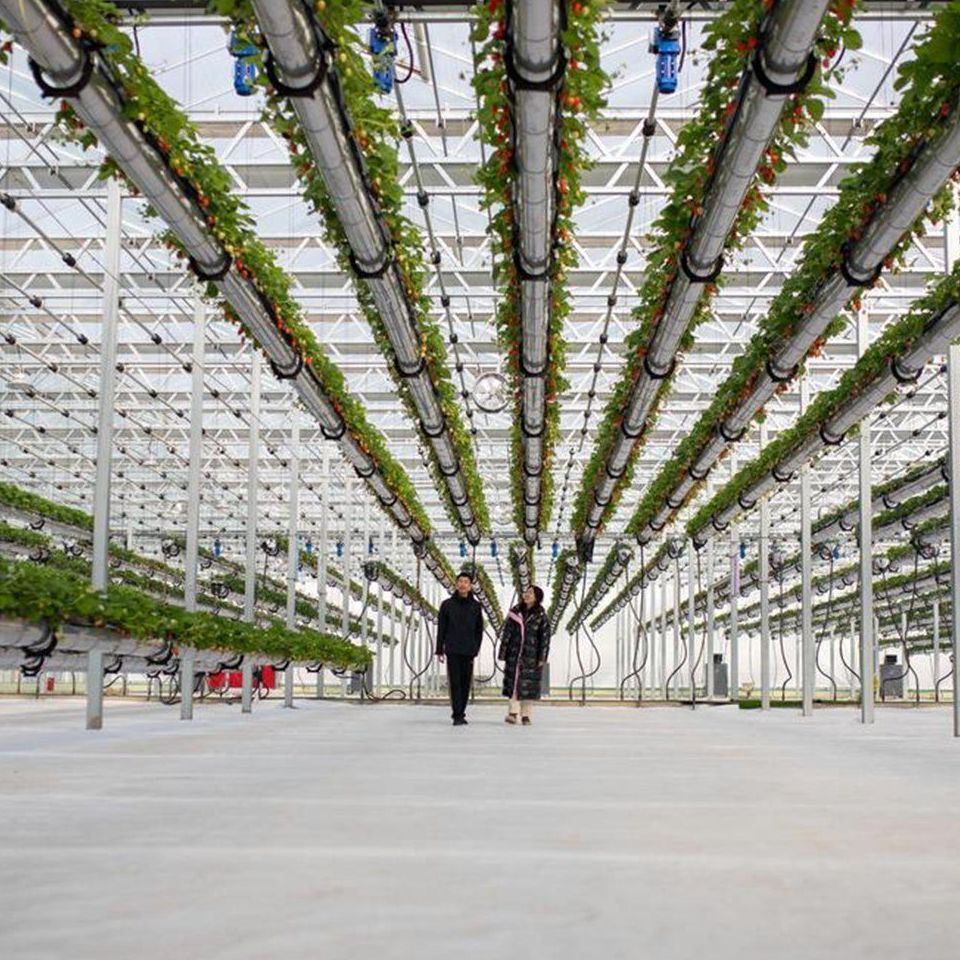
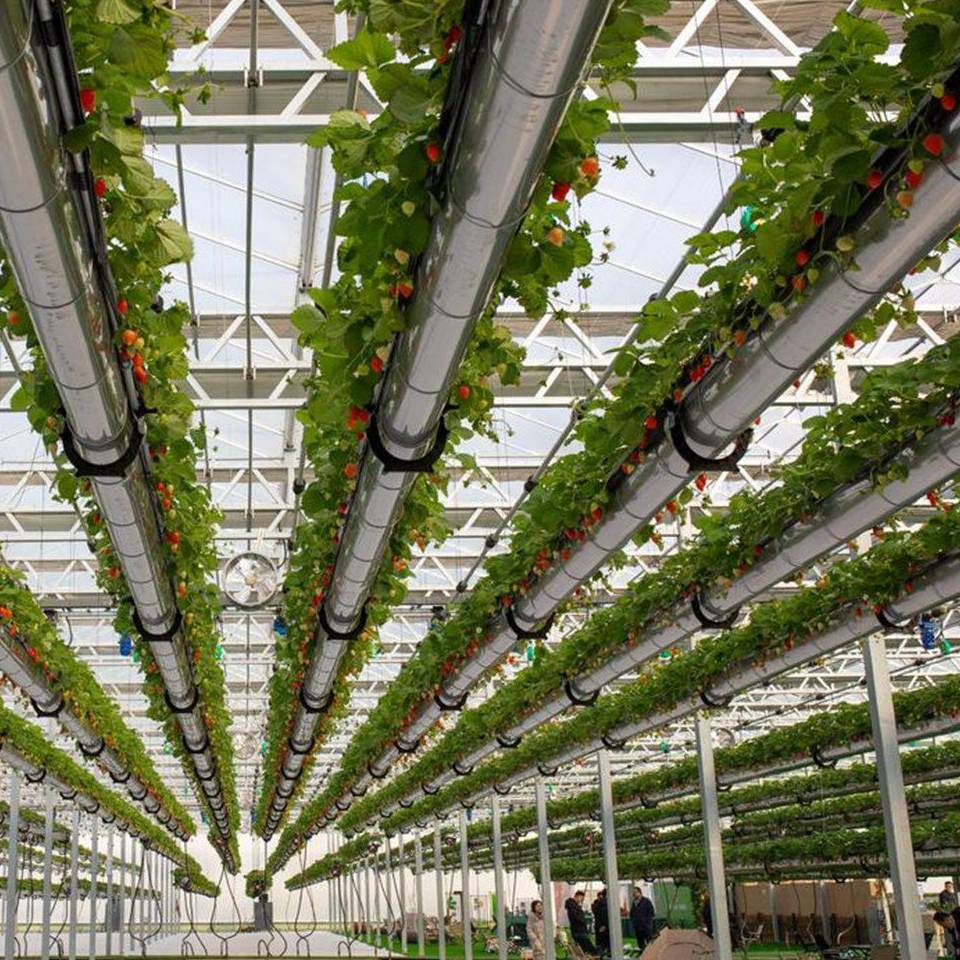
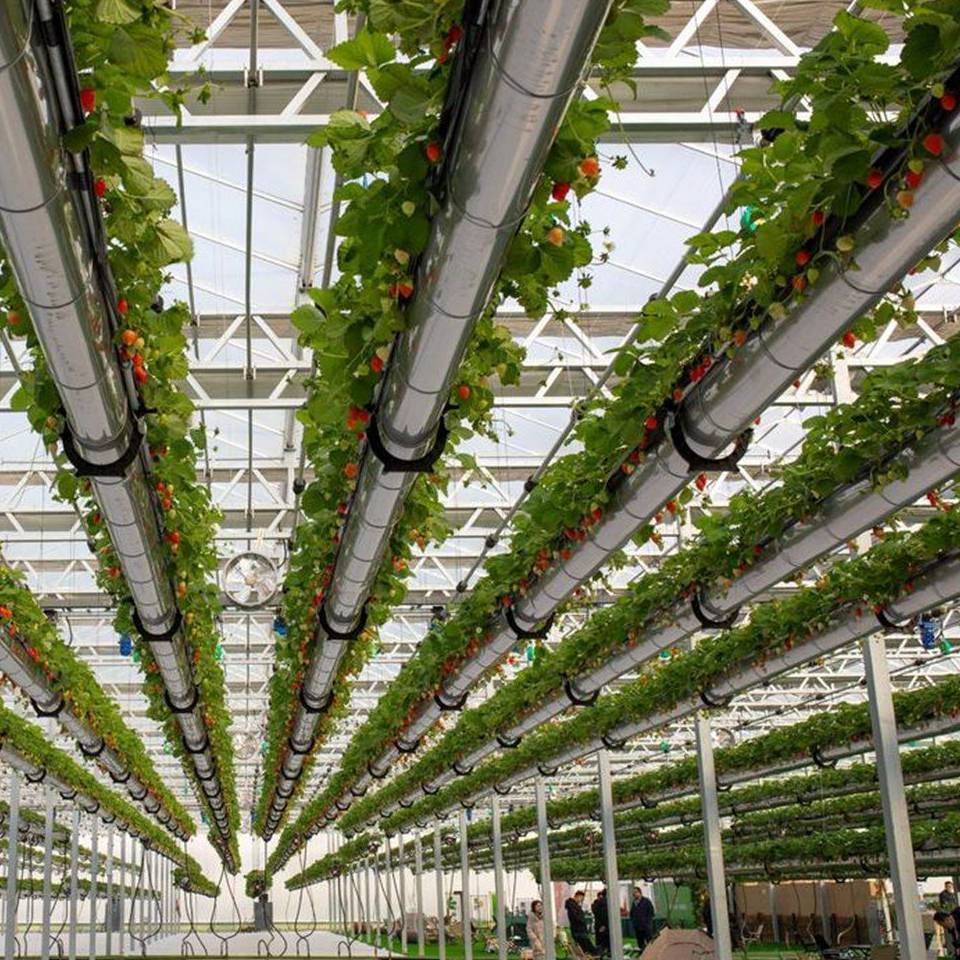
A glazed house carries the crop on a high wire system, which is what the images of V shaped rows show: the plants are trained upward and outward from a central line, so the fruit hangs into the aisle where it can be picked without pushing through foliage. That layout needs a clear span and a stiff frame, both of which the multi span glazed structure gives, and it needs the ridge height to run the training wires above the crop.
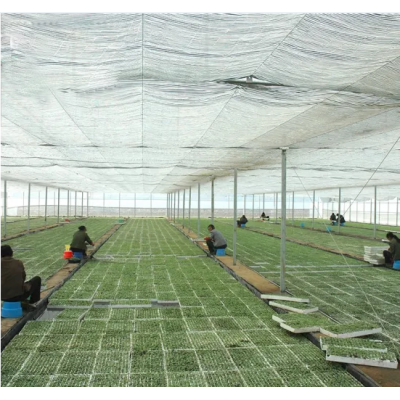
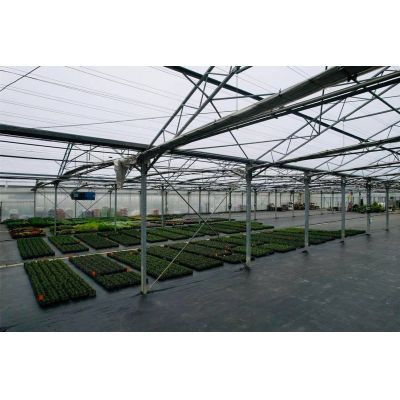
The same house is used for leafy crops on benches and for young plant raising, where the repeatable environment matters more than the floor area. A single crop option in the same family is described in the greenhouse for tomatoes. Research on protected vegetable production, including crop water use and nutrition, is published by UF/IFAS through its agricultural extension programme.
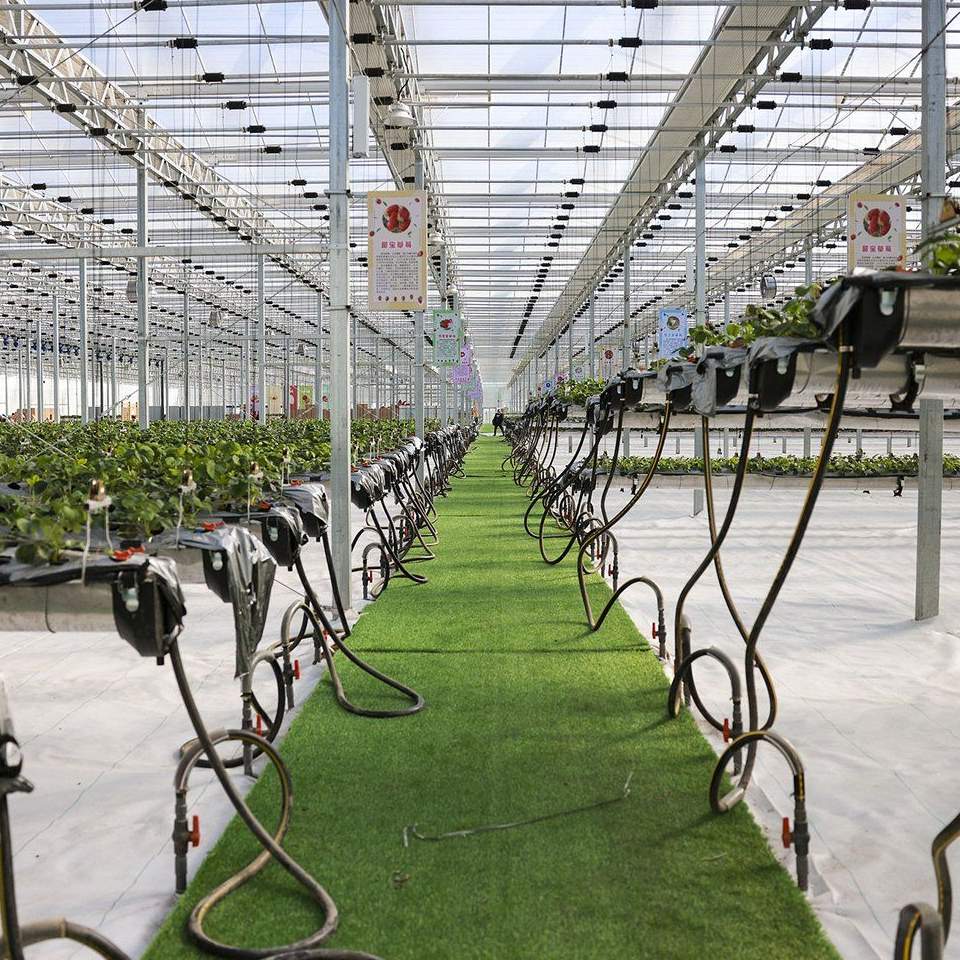
The table below lists the standard kit. Span, length, glazing and ventilation are set to the site and to the crop.
| Greenhouse span | 8 m / 9 m / 10 m / 11 m / 12 m |
| Greenhouse length | 10 m to 100 m, or built to client demand |
| Gutter height | 3 m to 4.5 m |
| Ridge height | 3 m to 8 m |
| Structure | Hot dip galvanized steel tube, aluminium glazing bars |
| Cover | Tempered glass glazing |
| Kit contents | Frame, glazing, vents and fixings |
| Crops | Tomato, vegetables, leafy greens and young plants |
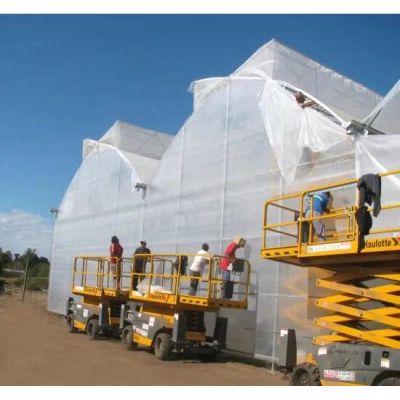
The kit ships as a bolted package with frame, glazing bars and glass cut to the drawing. Work starts on a level pad and a foundation that suits the frame, because glazing has no give in it and a structure that is out of square will not take the panes cleanly. The frame goes up and is squared, then the glazing, and the vents are commissioned last against a finished house so the openings can be set to the crop it will run. A house of this size is standing in three to five weeks on a prepared site.
Maintenance is mostly glass and gear. Seals and fixings should be checked each season and the panes washed once or twice a year, because dust and algae cut light transmission more than growers expect, and on a crop grown for yield that loss is real money. Vent drives and their gearboxes should be exercised before each season rather than left to prove themselves on the first hot day, and the gutter outlets need clearing so water leaves the roof where it should.
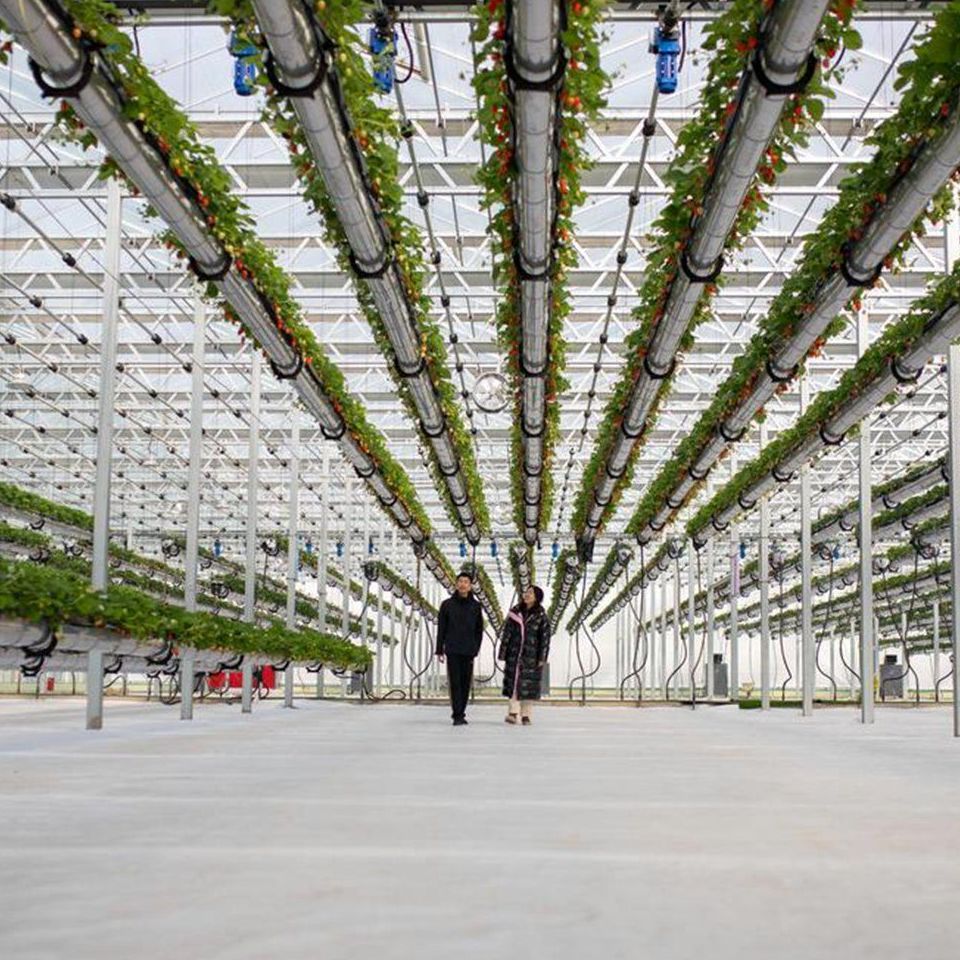
Houses of this type are used for commercial tomato and vegetable production, for leafy crops on benches, and for young plant raising where the environment has to be repeatable. They suit wholesale buyers and larger projects because the covered area is ordered as one system and the range can be extended bay by bay as the business grows.
Growers and buyers planning that kind of investment follow commodity prices and market conditions as closely as they follow the crop, and regional agriculture reporting such as Agriwatch covers the price side of the business. The practical question at quotation stage is usually the same for every buyer: what the house will be used for in ten years, not only at handover.
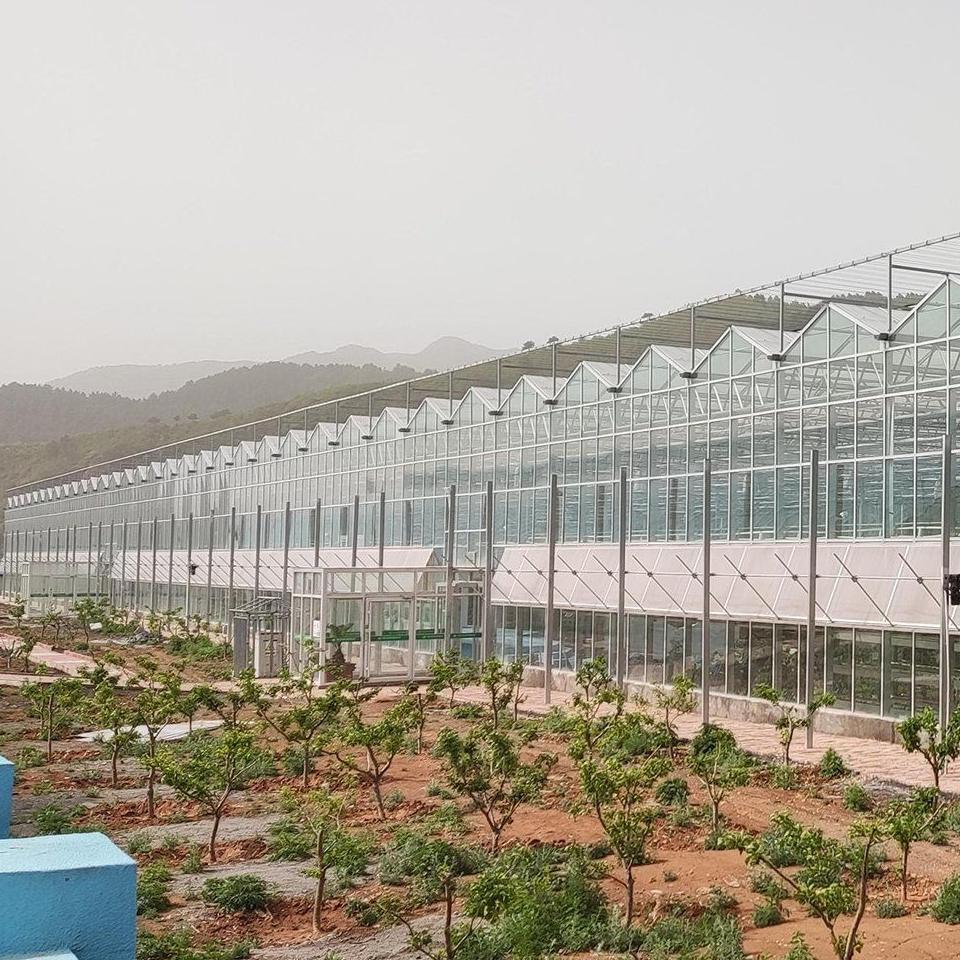
The frame, the tempered glass and glazing bars, the ventilation openings and the fixings, supplied together and matched. That means the vent areas and drive sizes are set for the house they are going on rather than chosen separately.
Glass keeps its light transmission as it ages and holds it across the whole roof, and it does not flap or need replacing every few seasons. On a crop grown for yield, where the light the plant receives is the main variable, that difference usually decides the choice over a twenty year life.
The galvanized steel frame is rated for 15 to 20 years under normal growing conditions, and tempered glass glazing keeps its light transmission for 20 years or more when it is cleaned and left undamaged.
We provide a 10 year structural warranty and a 5 year anti-corrosion warranty on the galvanized frame. Details are set out in the contract for each project.
Send your site dimensions, the crops and bench layout you plan to use and your local wind and snow loads. We reply with a layout drawing and a full quotation.