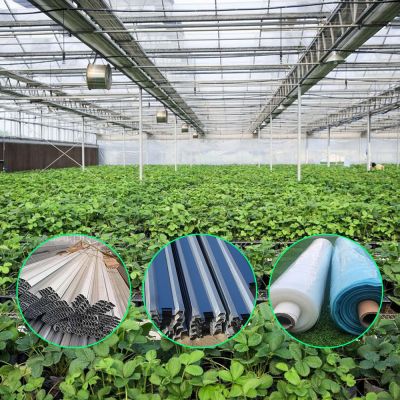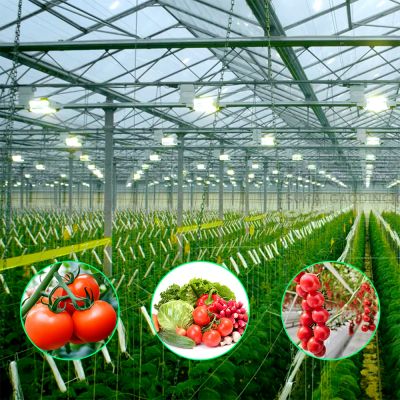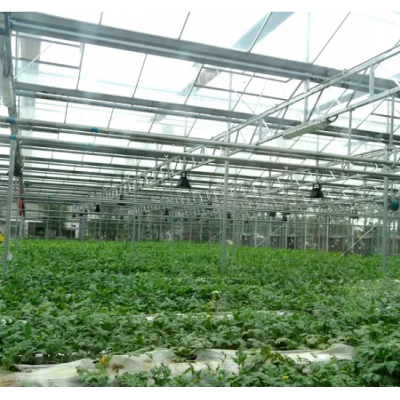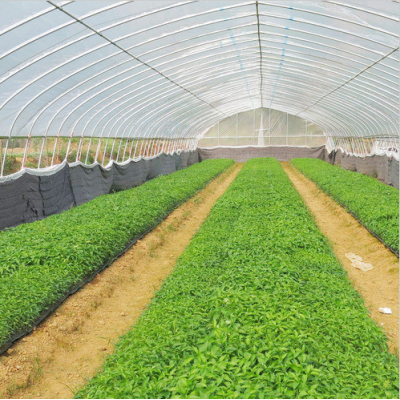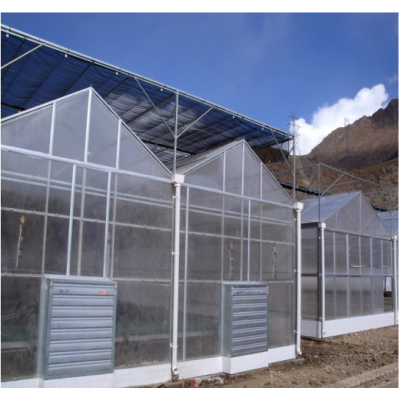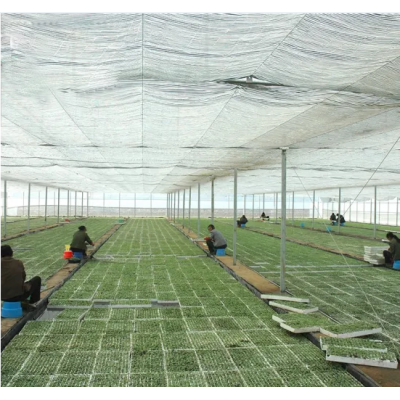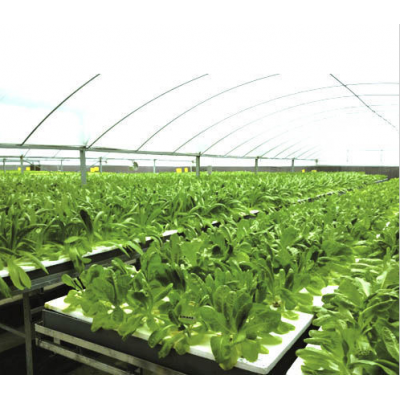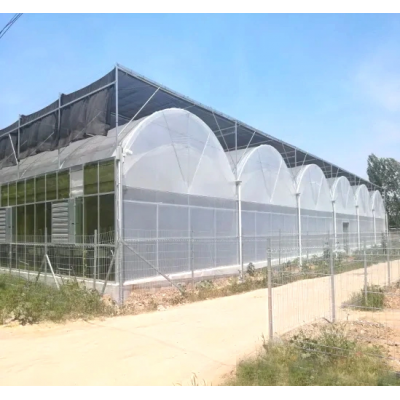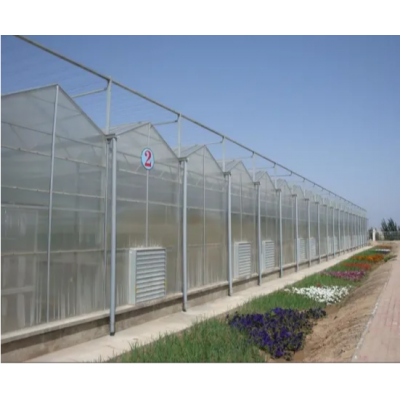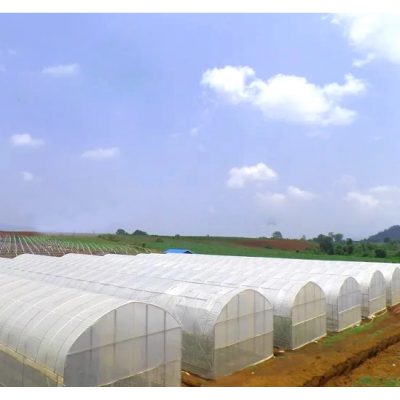
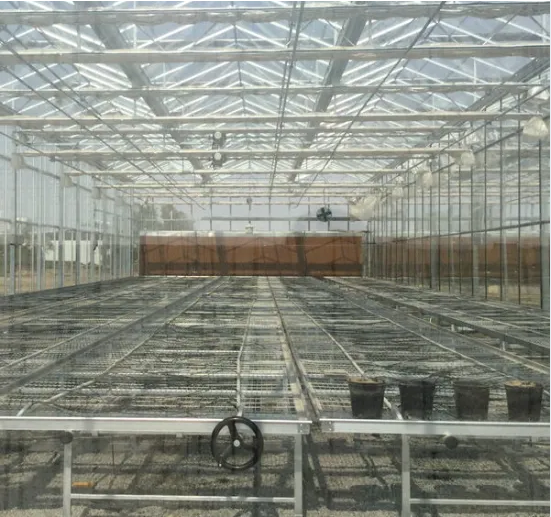
A multi-span film greenhouse with an irrigation system is the setup tomato growers choose when they want climate and water handled in one house. The bays link at the gutter, so the canopy uses almost all of the floor, and the film keeps the build economical while spreading daylight evenly across the crop. Drip and sprinkler lines run from a single manifold, so each row gets the same amount of water without hand watering. The frame is galvanized for corrosion resistance and braced for snow and wind loads. We size span width, bay count and irrigation capacity to your plot and crop, and supply the structure with the film, bracing and foundation brackets needed for a stable build. Tell us your land area and we will confirm the layout before you order.
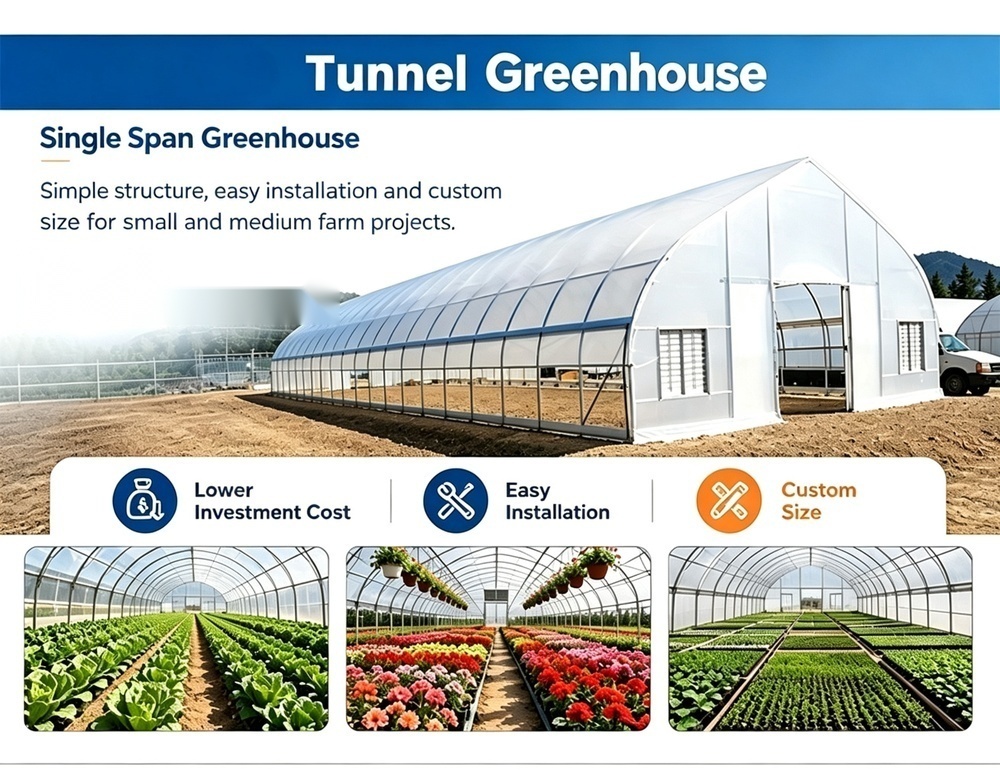
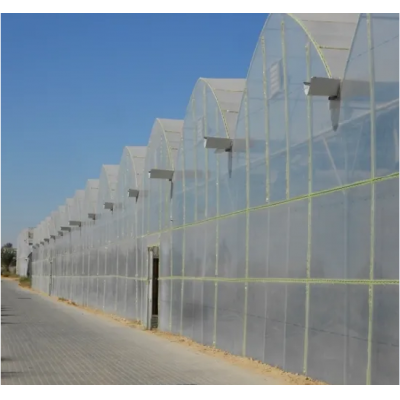
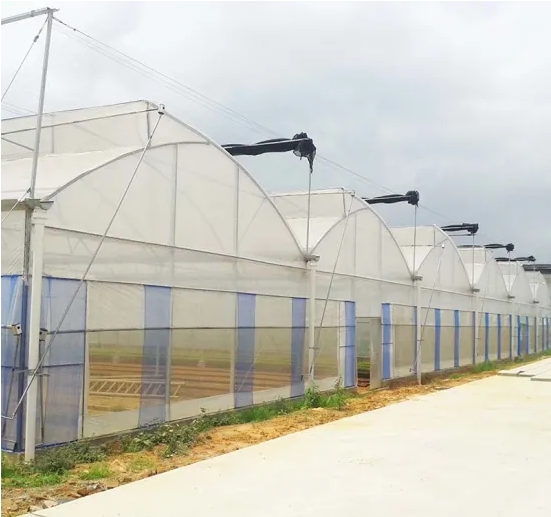
A film greenhouse earns its ground when the crop fills more of the floor than the walls do, and a tomato house needs that floor most of all. The multi-span film greenhouse strings bays together at the gutter, so covered area grows in clean steps and the canopy uses almost all of the land. Where a row of single tunnels wastes ground between houses, a multi-span layout turns that space into tomato rows.
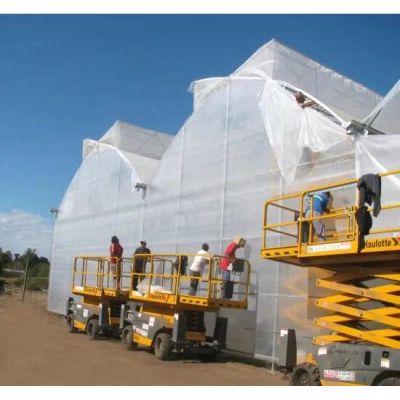
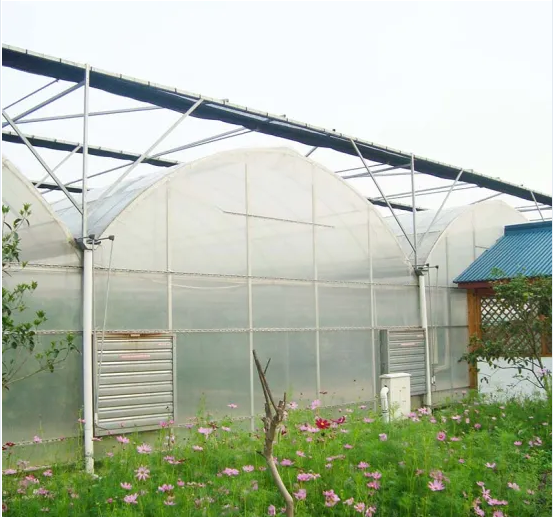
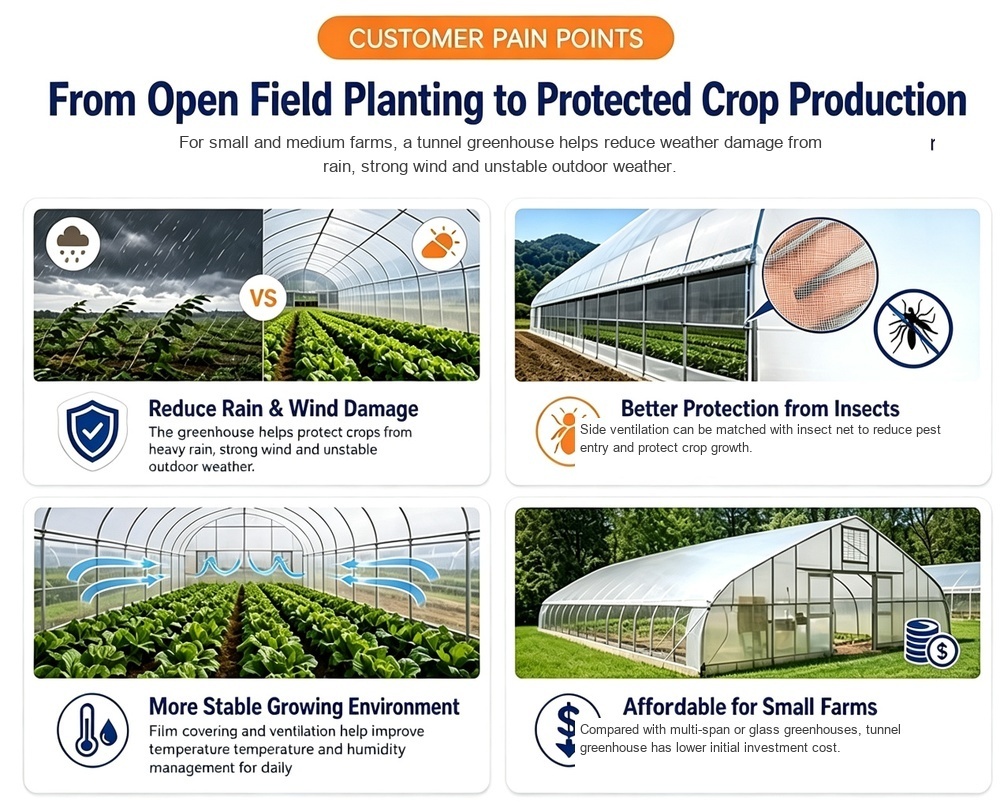
This multi-span film greenhouse is clad with agricultural film over a galvanized steel frame, and the irrigation system is built into the house rather than added later. It is built for tomato operations that need dependable climate and steady water, the point where a single tunnel no longer pays for the labour inside it.
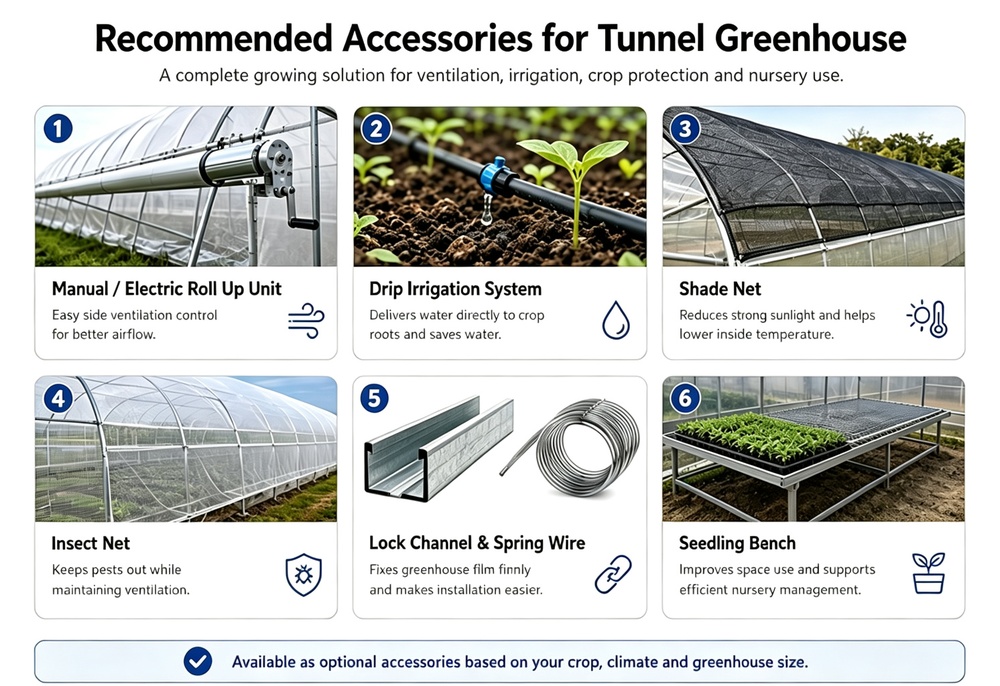
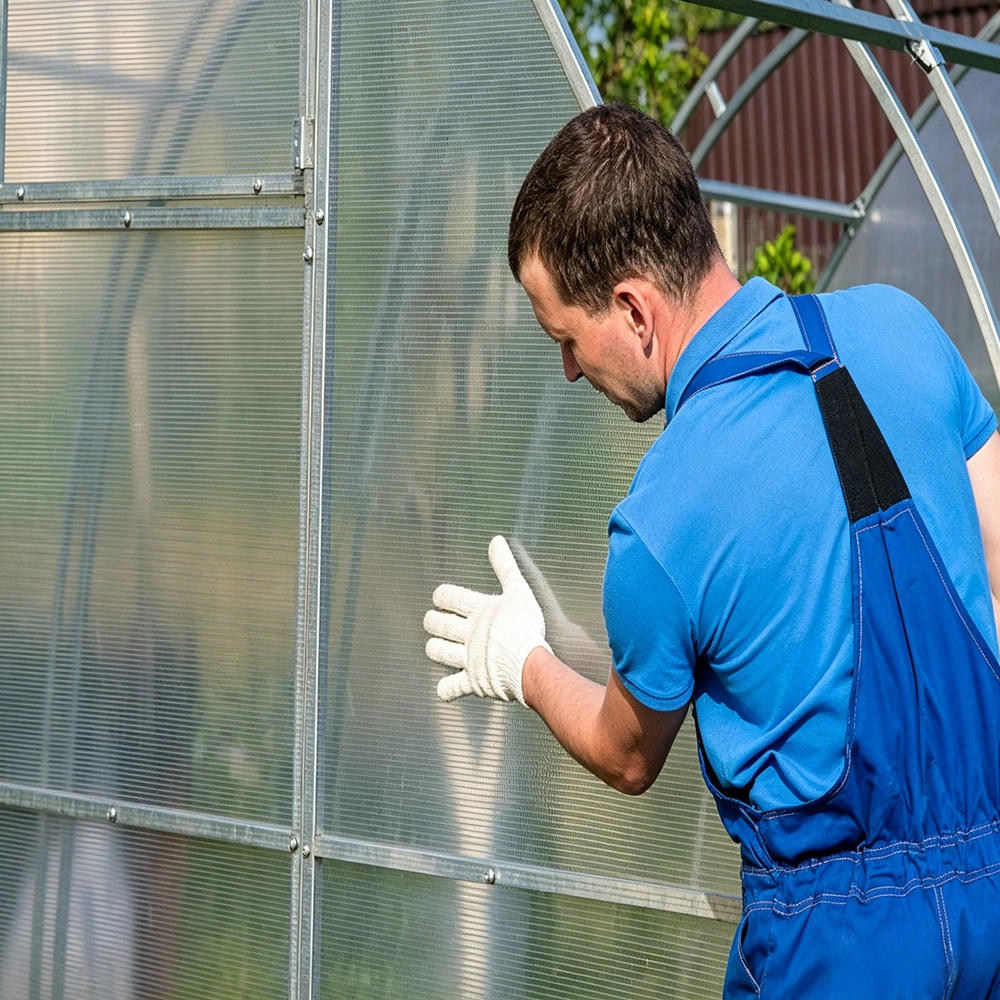
Gutter-connected multi-span bays - Bays link at the gutter so the floor is almost all canopy, and picking carts move down clean aisles instead of fighting posts. In our installs, growers gain noticeable floor compared with single tunnels on the same land.
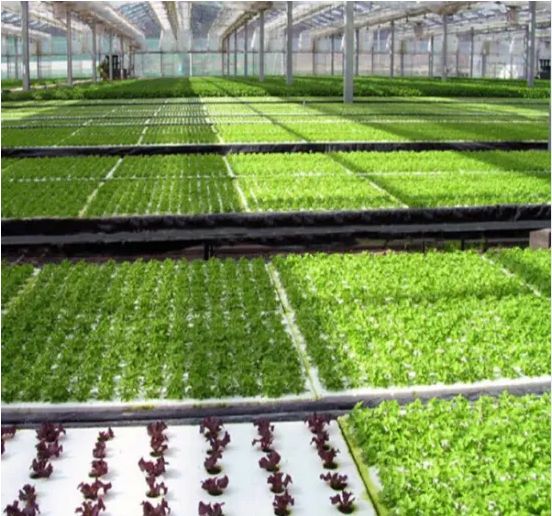
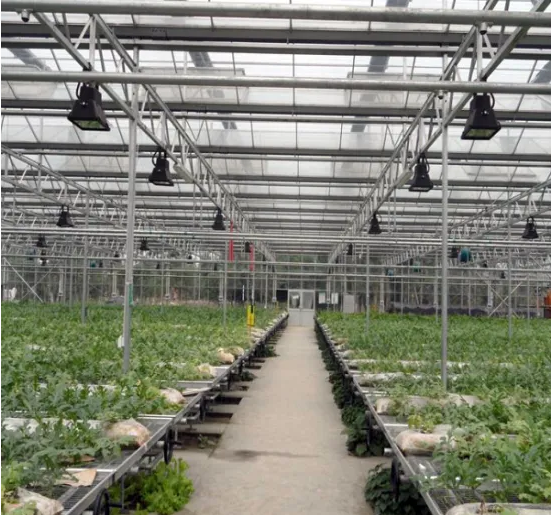
Irrigation built into the structure - Drip and sprinkler lines run from one manifold, so each row gets the same water without hand watering. The system is sized with the house, not retrofitted after the frame goes up.
Agricultural film that spreads light - The film keeps the structure economical while passing daylight across the crop, so tomato lines grow evenly from one bay to the next.
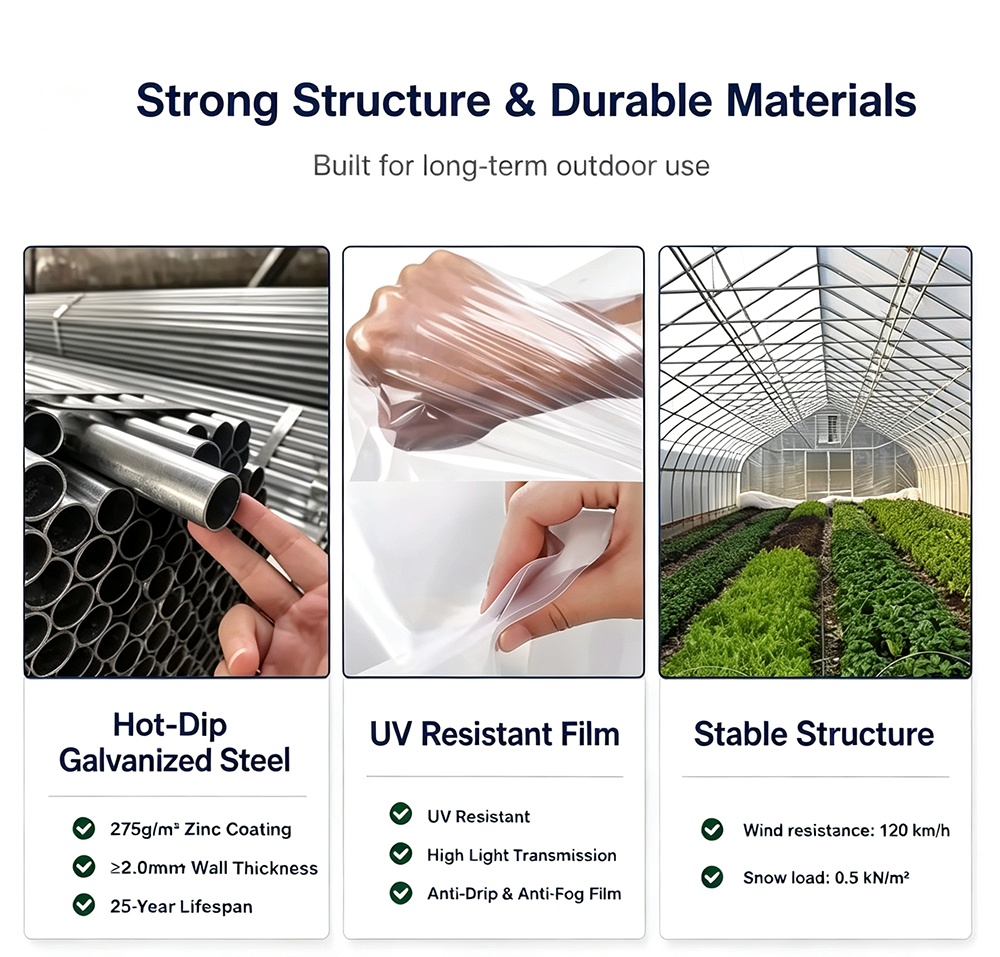
Galvanized steel frame rated for service - The frame is galvanized for corrosion resistance and braced for snow and wind loads, so the house carries the climate as well as the crop. The galvanized steel frame is rated for 15-20 years of service and backed by a 10-year structural warranty.
Configurable for tomato rotations - We adjust span width, bay count and irrigation capacity to your crop plan, and supply the film, bracing and foundation brackets for a stable build.
This film greenhouse suits operations that grow tomatoes at scale, and it pairs naturally with the water and climate gear a tomato house needs, from a hydroponic drip irrigation system to agricultural plastic film greenhouses for expansion.
Floor is the point - We design the bay layout to convert your land into canopy, not into walls and posts. The multi-span plan is chosen because it gives tomato growers more growing rows per hectare than single tunnels.
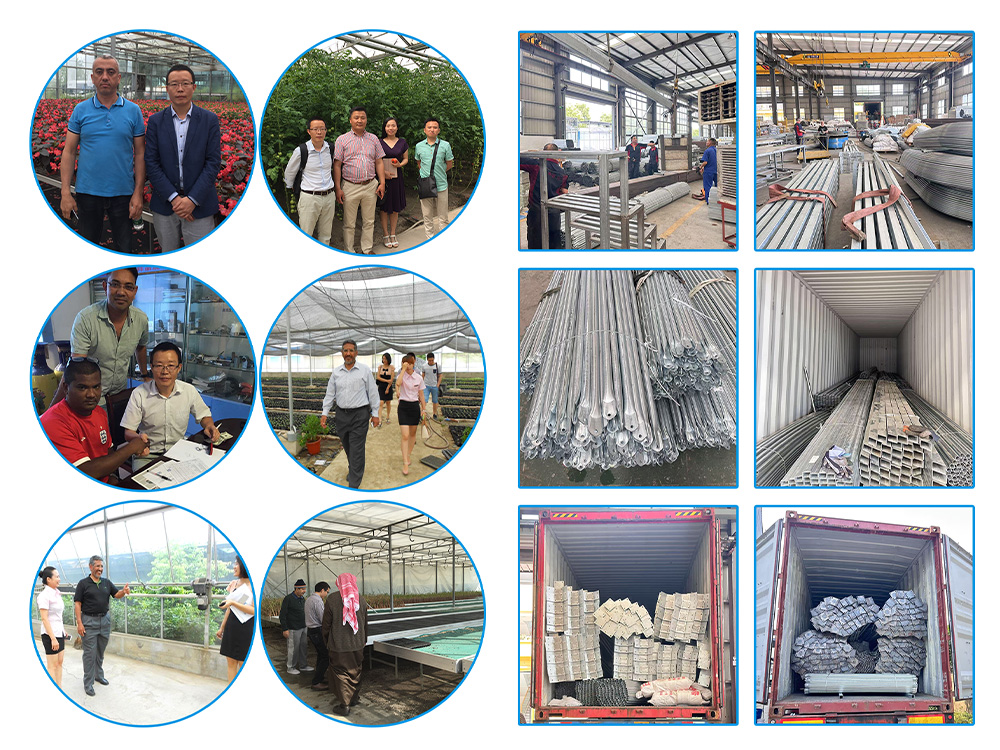
One supplier for structure and water - Frame, film, gutters, vents and the irrigation manifold ship as one package, so the cover fits the frame and the lines arrive from one set of drawings. We also build greenhouses for sale in other spans for growers who step up later.
Engineers who have built at scale - Our team has supervised multi-span installations across Asia, Africa and South America, and we flag snow and wind loads before fabrication rather than after a storm.
Delivery around your planting window - Greenhouse steel must be on site before the season. We confirm the loading date in writing and schedule production around your deadline.
Honest about limits - We state the wind and snow rating at quotation and do not promise a house for loads it was not designed for. Crop and structure references from FAO and trade coverage from Horticulture Week are useful starting points.
Q: What is the lifespan of different types of greenhouses?
A: Up to 3-5 years for film, 20+ years for glass and polycarbonate greenhouses. Film covers require replacement every 3-5 years, while the hot-dip galvanized steel frame is designed for a 15-20 year service life in normal agricultural environments. Glass and PC panels offer longer service life with minimal maintenance, making them ideal for permanent installations. Our greenhouse frames use hot-dip galvanized steel pipes with a double-sided zinc coating of 200-275 g/m², providing uniform, dense, and strongly adherent protection specifically engineered for high-humidity greenhouse environments and long-term corrosion resistance.
Q: How long does it take to install a commercial greenhouse?
A: Installation typically takes 2-4 weeks depending on project size and complexity. Standard multi-span greenhouses can be erected in 10-20 working days by our experienced technical team at Ziyang Bozong. On-site assembly time varies based on local conditions and project scale, but we provide detailed installation manuals and remote guidance to streamline the process.
Q: Can you customize greenhouse specifications for my farm?
A: Yes, we offer full customization including dimensions, span width, height, covering materials, and ventilation systems. Simply share your crop type, local climate conditions, and growing area requirements, and our engineering team at Ziyang Bozong will design a tailored solution that optimizes your growing environment and maximizes ROI.
Q: What is your warranty policy for greenhouses?
A: Our hot-dip galvanized steel frame carries a 10-year structural warranty covering structural safety, and a 5-year warranty against corrosion perforation. The frame is designed for a 15-20 year service life in normal agricultural environments. Film covers include a 3-5 year UV warranty depending on the grade selected, while glass and PC panels are covered by manufacturer warranties. Ziyang Bozong provides technical support and replacement parts throughout the lifespan of your greenhouse.
Q: What is the advantage of a multi-span greenhouse over multiple single-span tunnels for large-scale commercial production?
A: The primary advantage is land utilization efficiency. Multi-span greenhouses eliminate the gaps between individual tunnels—typically 1-2 meters per gap depending on drainage and access requirements—which can represent 10-15% of total land area in large single-span installations. This additional growing area translates directly to higher production capacity within the same land footprint. Beyond land savings, the continuous interior space simplifies equipment movement, reduces travel time for workers and machinery, enables more efficient irrigation system layout, and creates uniform growing conditions across the entire structure—supporting consistent crop quality and simplified management protocols.
How much floor does a multi-span house give me? - Bays link at the gutter, so almost all the covered area is usable canopy rather than walls and aisles. We confirm the bay layout against your land area.
Is the irrigation system included? - Drip and sprinkler lines run from one manifold sized with the house, so each row gets the same water. We confirm capacity against your crop and climate.
Does it handle snow and wind? - The galvanized frame is braced for snow and wind loads. We state the rated load at quotation so you know the limit before you commit.
Can I mechanize inside it? - The gutter-connected bays keep interior posts to a minimum, which leaves room for sprayers, trolleys and harvesting carts to move down the house.
How is it packed for export? - Frame members, film and brackets are bundled and crated to keep container volume low. We confirm the packing list and loading date in writing.
Mark Wu, Co-founder & Lead Engineer at Ziyang Bozong Greenhouse. I have spent over a decade designing greenhouse structures for export, and the tomato houses I have seen waste the most ground are the ones with too many interior posts. The gutter-connected layout on this multi-span film greenhouse comes from measuring what single tunnels cost growers in lost floor, not from a brochure.
Have you run a Ziyang Bozong multi-span film greenhouse with irrigation? Leave a review and share your bay layout, the crops you grew and how the structure handled the seasons - it helps other tomato growers plan.