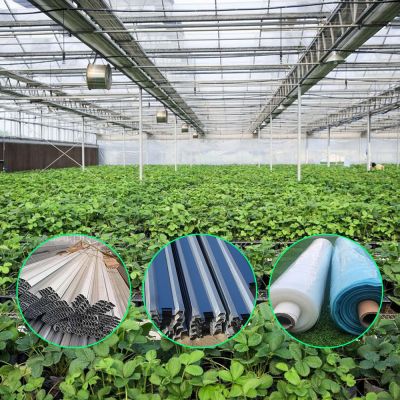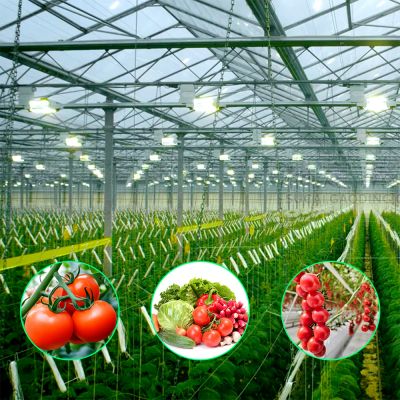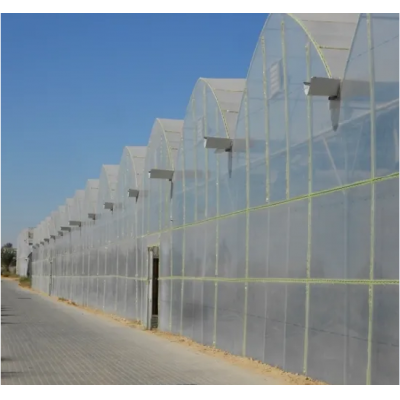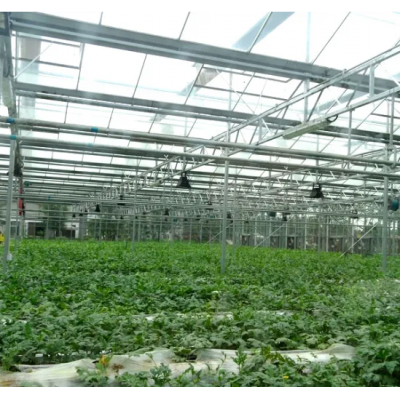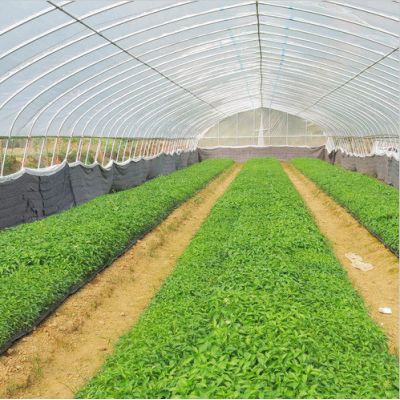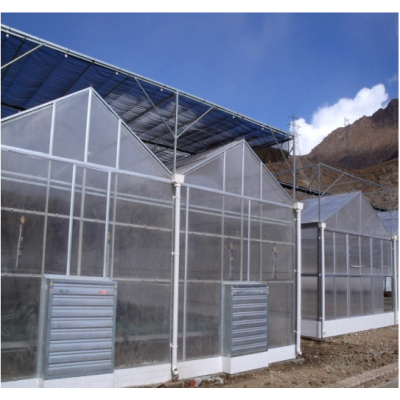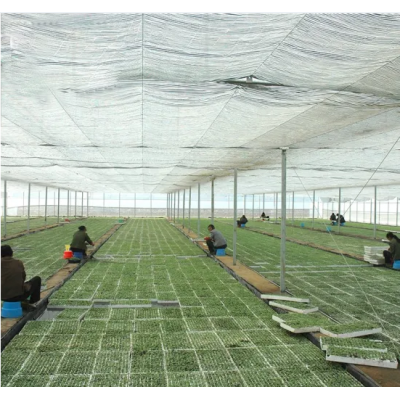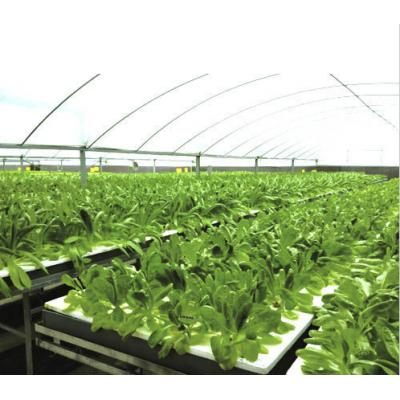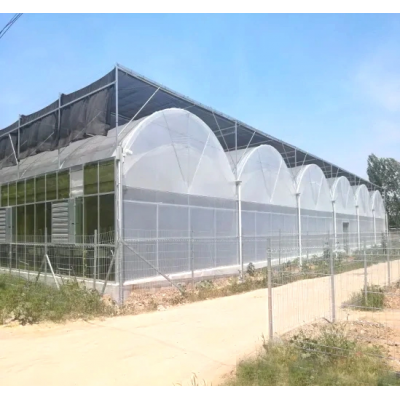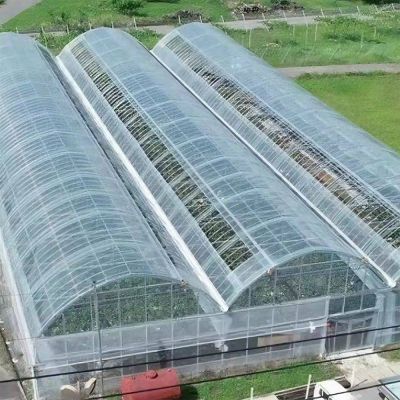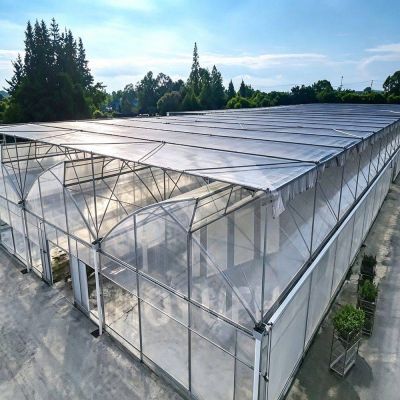


A commercial vegetable greenhouse is judged on how much of its floor actually carries crop. Joining bays at the gutter removes the strips of ground and the end walls that separate single tunnels, so the covered area is almost all growing rows and machinery moves down clean aisles instead of around houses. PE film keeps the structure economical while spreading daylight evenly across the crop, and this house is vented at the ridge, so warm air leaves through convection rather than through fans running all day. The galvanized steel frame is braced for the snow and wind loads on your site, and span width, bay count and ridge height are set from your crop plan before fabrication.
On a vegetable farm the greenhouse is only worth its cost if the floor under it produces. That is the whole argument for a multi-span layout: bays joined at the gutter give up the walkways and end walls that separate single tunnels, and the covered area becomes growing rows from one side of the house to the other.
Separate tunnels each carry their own end wall and their own strip of ground between houses, and on a large block that adds up to a real loss of canopy. Connecting the bays at the gutter removes those gaps and keeps interior posts to a minimum, which leaves the aisles clear for sprayers, trolleys and harvesting carts. Lettuce, spinach and herbs run in repeated short cycles through the same bays, while tomato and cucumber lines occupy the house for a whole season - either way the layout stays workable because span width and bay count are set from the rotation you plan to run.
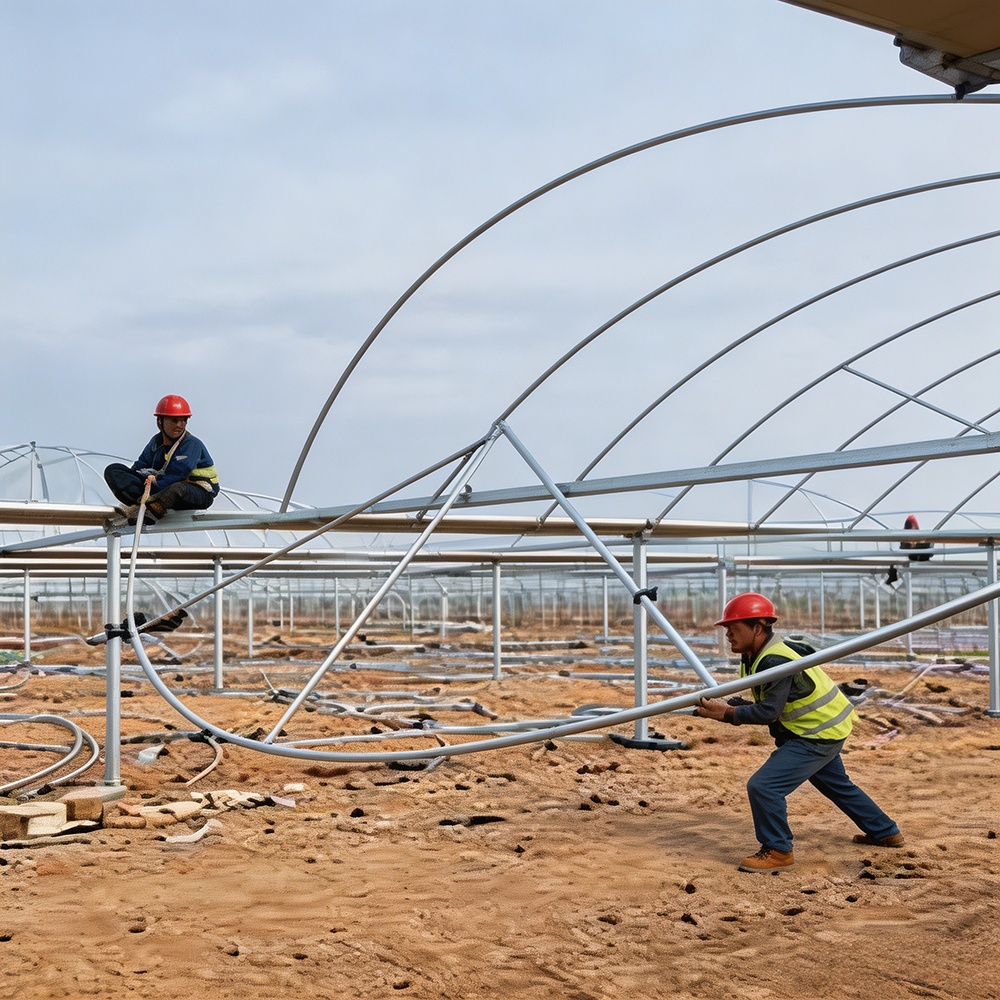
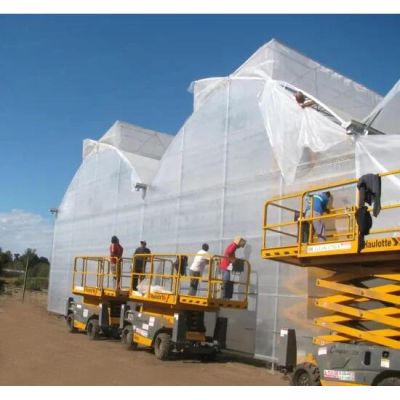
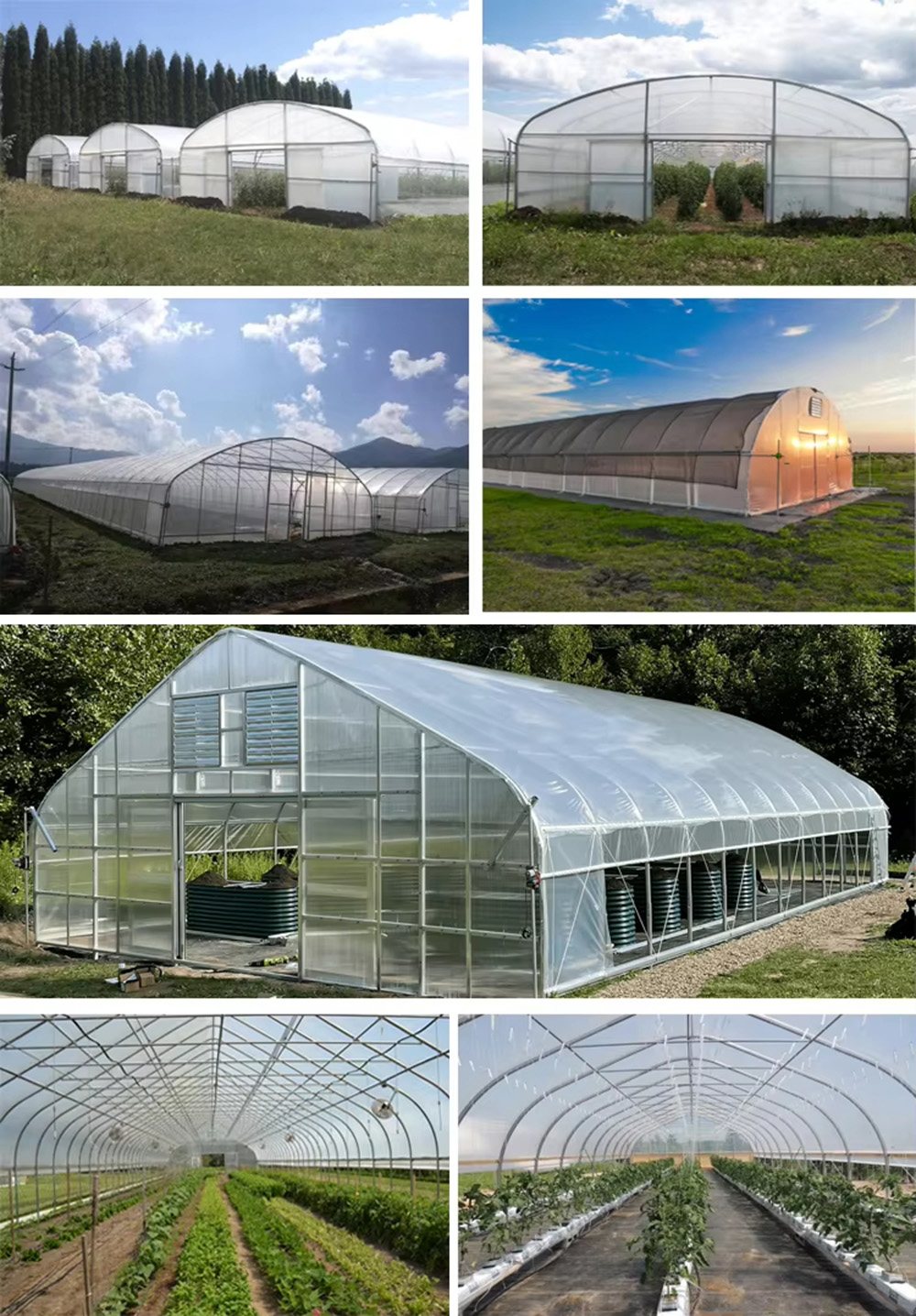
The frame is hot-dip galvanized steel, braced for the snow and wind loads on the site rather than for a catalogue figure. PE film covers the house economically and spreads daylight across the crop, so lines grow evenly from the ridge to the gutter instead of running tall under the middle and short at the walls. Venting is at the ridge, which is the most economical way to shed heat: warm air leaves at the highest point and cooler air is drawn in low, so the house runs through the warm months without fan power. Film is a separate layer renewed on its own cycle, so the covering can be replaced without touching the frame.
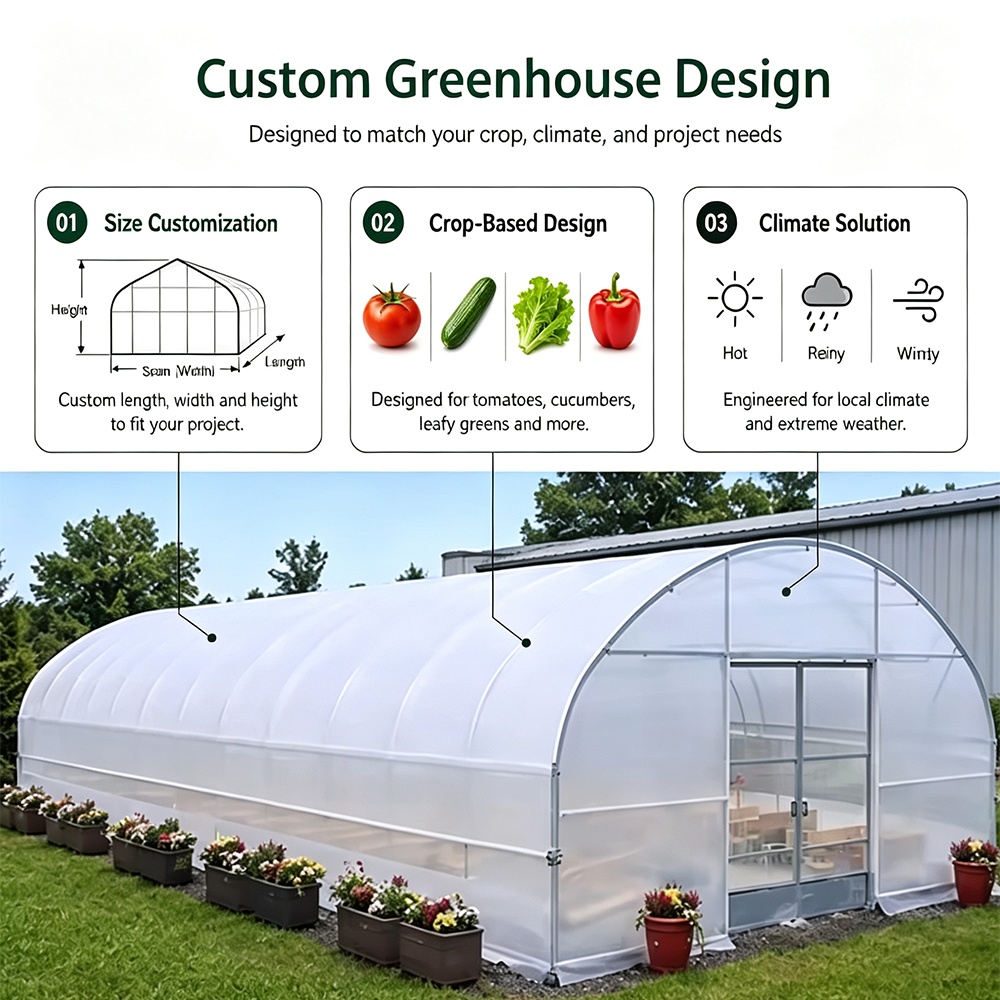
Span, bay length, gutter and ridge height, and the number of bays are set from your plot. Where the crop needs it, drip irrigation and fertigation are designed in at order stage so the pipe runs and the manifold sit in the right place before the frame is fabricated. Buyers comparing structures at this scale can look across the multi-span greenhouse structures range, and a lower-cost first house with the same geometry is covered by the large film greenhouse option. Where the plot suits a single arch instead, the tunnel greenhouse for vegetable growing is the equivalent starting point.
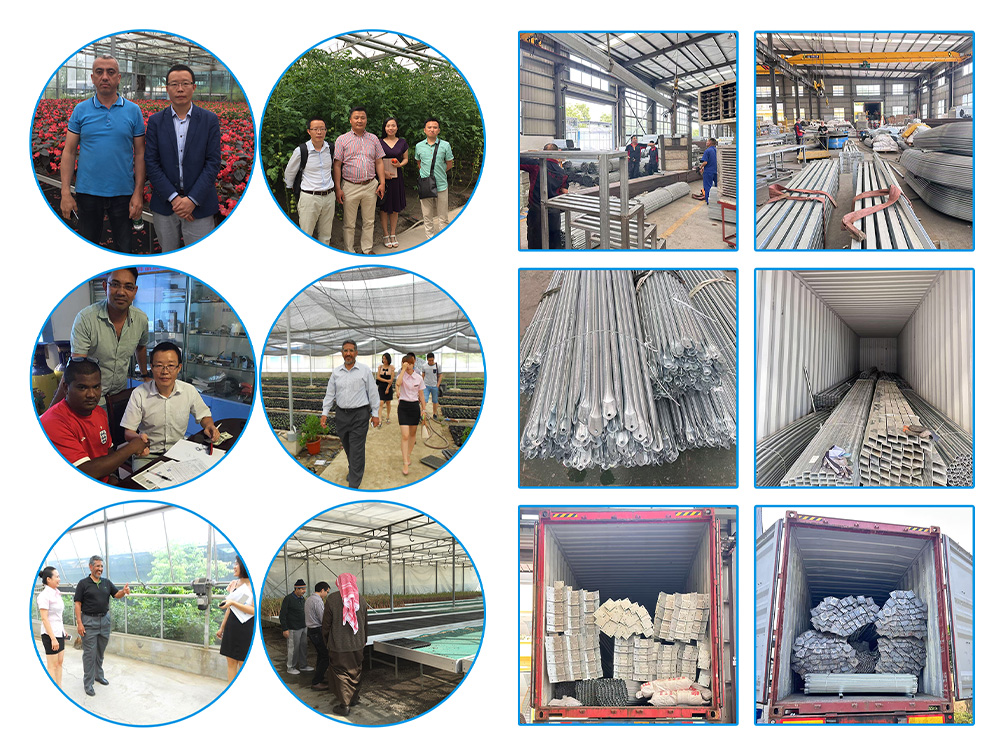
Tube is roll formed and drilled to the drawing, galvanized, then bundled with the film, bracing and foundation brackets so the cover fits the frame and everything arrives from one set of drawings. Greenhouse steel has to be on site before the planting window opens, so the loading date is confirmed in writing and production is scheduled around your season. Our engineers supervise installations on request and stay reachable for guidance through the build. Vegetable growing practice and greenhouse water management are covered by AIPH, the international grower association, and by Produce Grower.
It carries anything from repeated short cycles of lettuce, spinach and herbs to full-season tomato and cucumber lines, plus seedling and transplant production and off-season vegetables. Span width, bay count and ridge height are set from the rotation you plan to run, so the house can be matched to the crop rather than the other way round.
Floor area is the main reason. Single tunnels each have their own end walls and a strip of ground between houses, which on a large block takes a share of the site out of production. Connecting bays at the gutter removes those gaps and keeps interior posts to a minimum, so more of the covered area carries crop and machinery can move down the aisles.
The hot-dip galvanized steel frame is designed for a 15-20 year service life in normal agricultural environments, with a double-sided zinc coating of 200-275 g/m². Film covers are replaced every 3-5 years, while glass and PC panels carry their own manufacturer warranties.
The hot-dip galvanized steel frame carries a 10-year structural warranty covering structural safety, plus a 5-year warranty against corrosion perforation. It is designed for a 15-20 year service life, and film covers carry a 3-5 year UV warranty depending on grade.
Send your growing area, the crops and rotation you plan, your water source and the local wind and snow conditions. With that we can set the span, bay count, ridge height and any irrigation or fertigation package, and return a quotation with a structure drawing and a bill of materials.