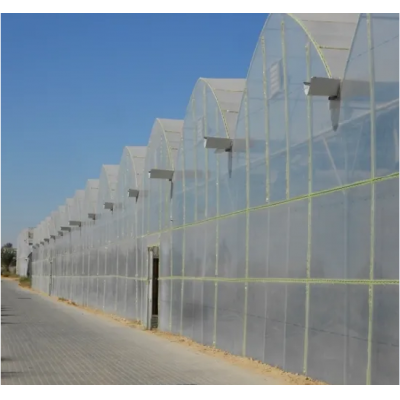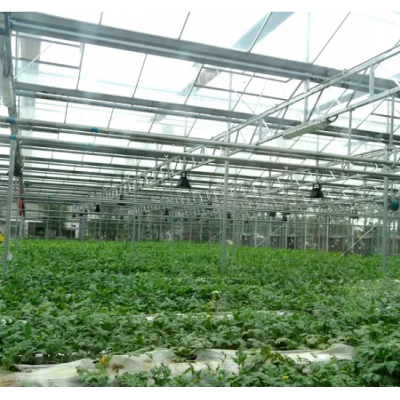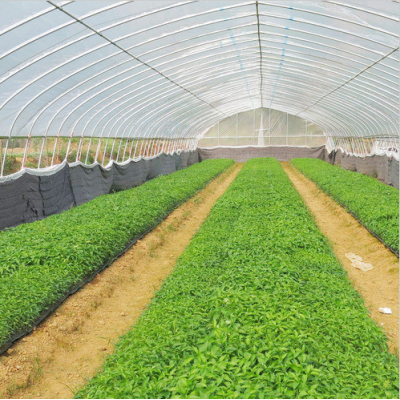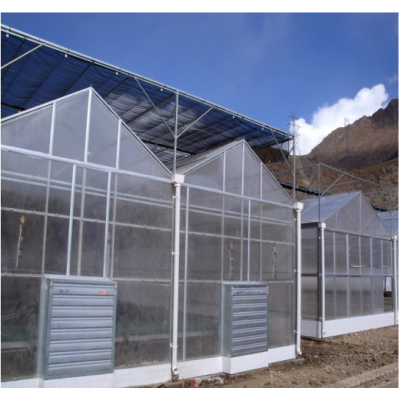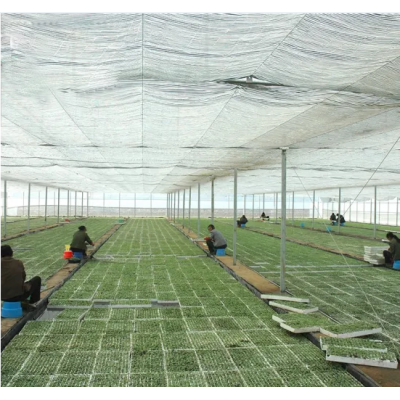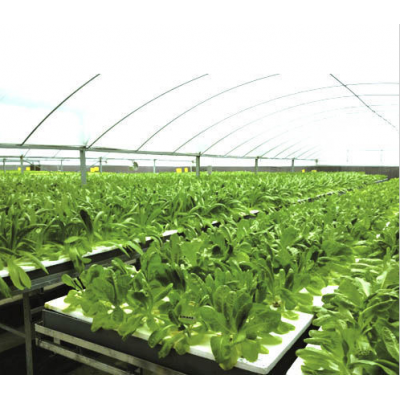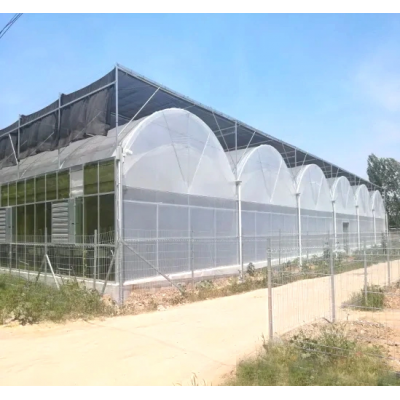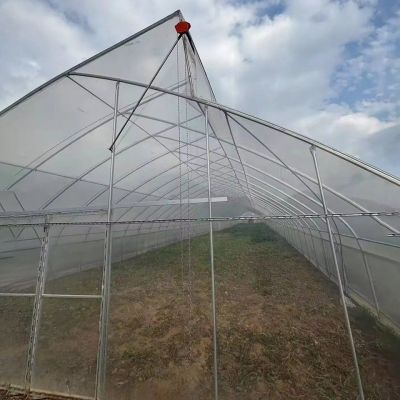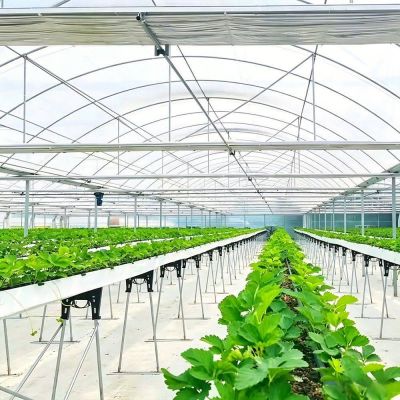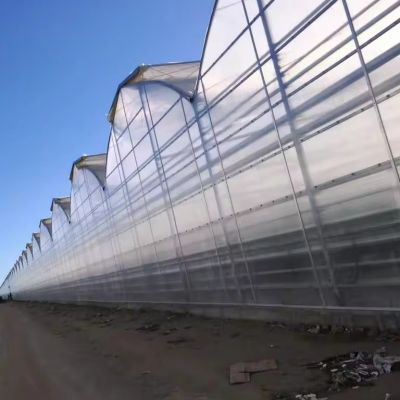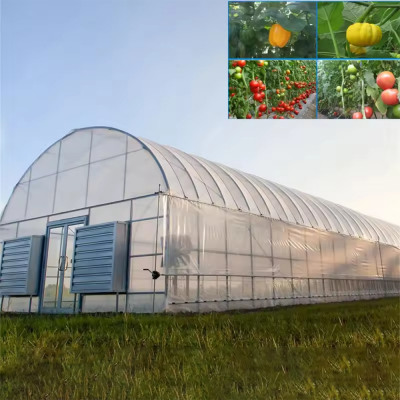
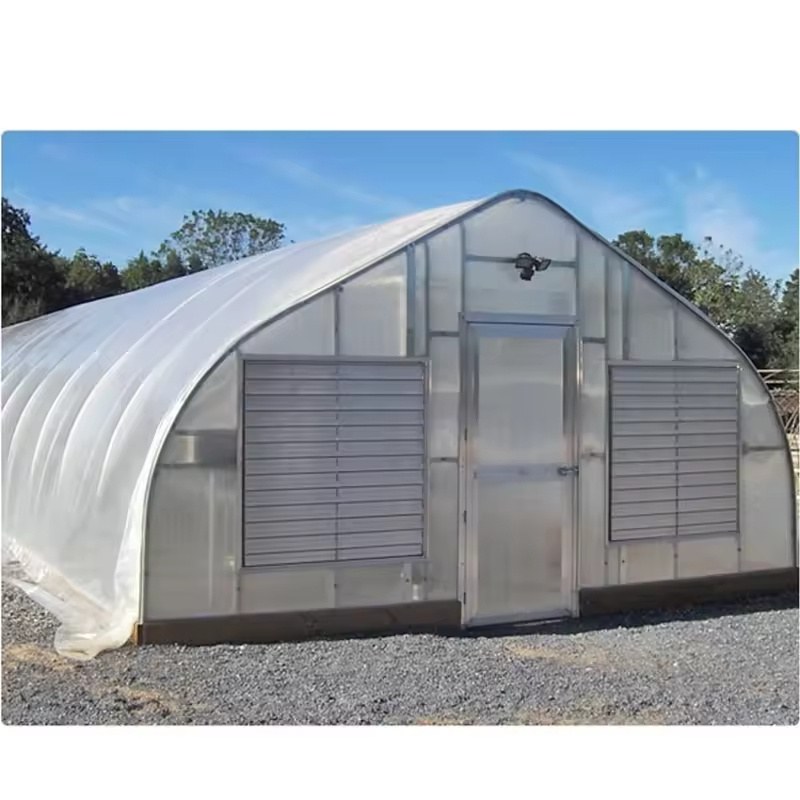
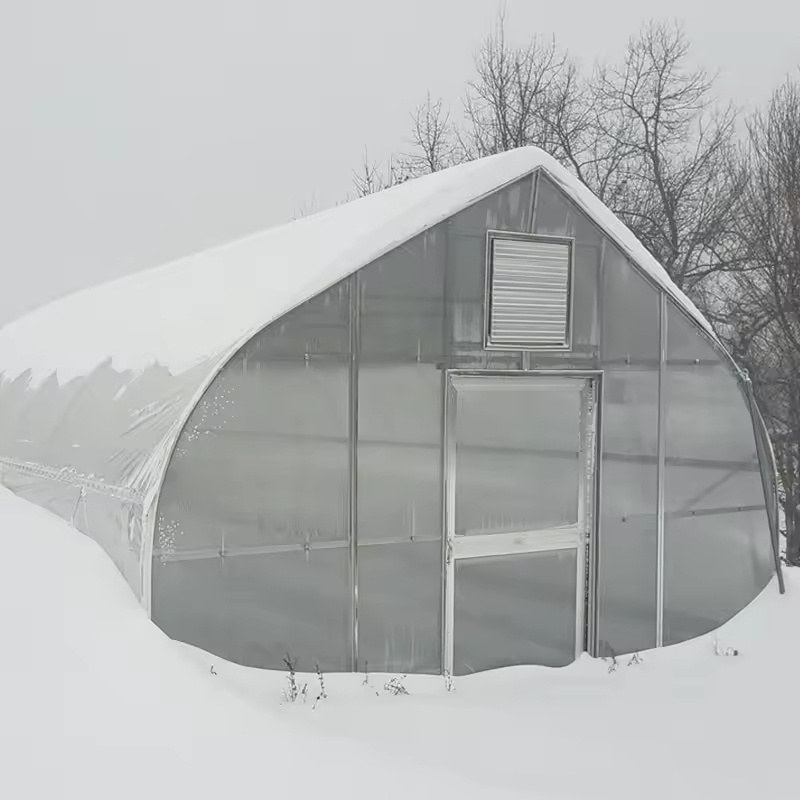
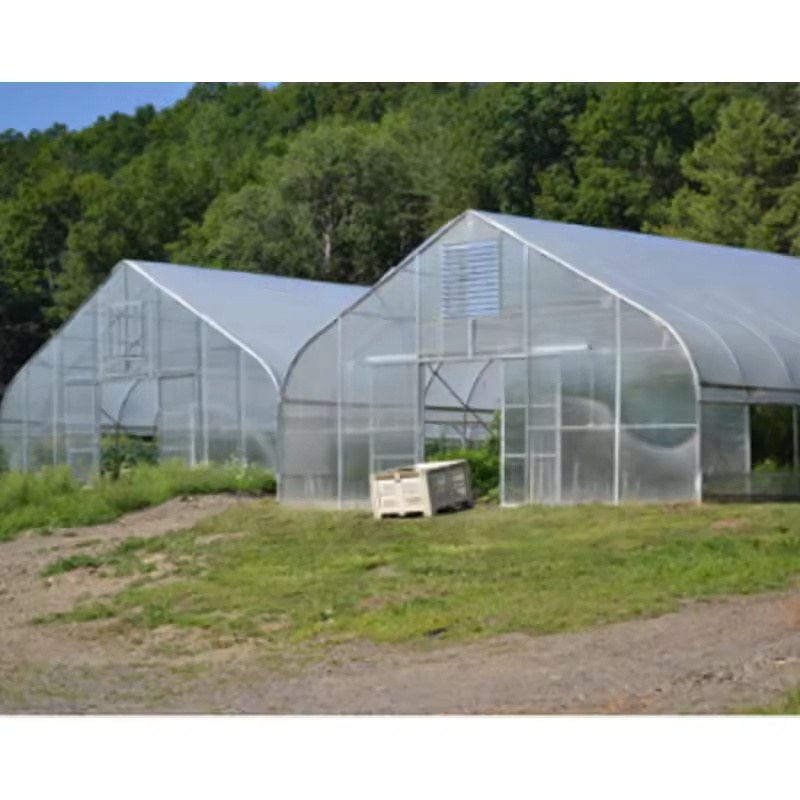
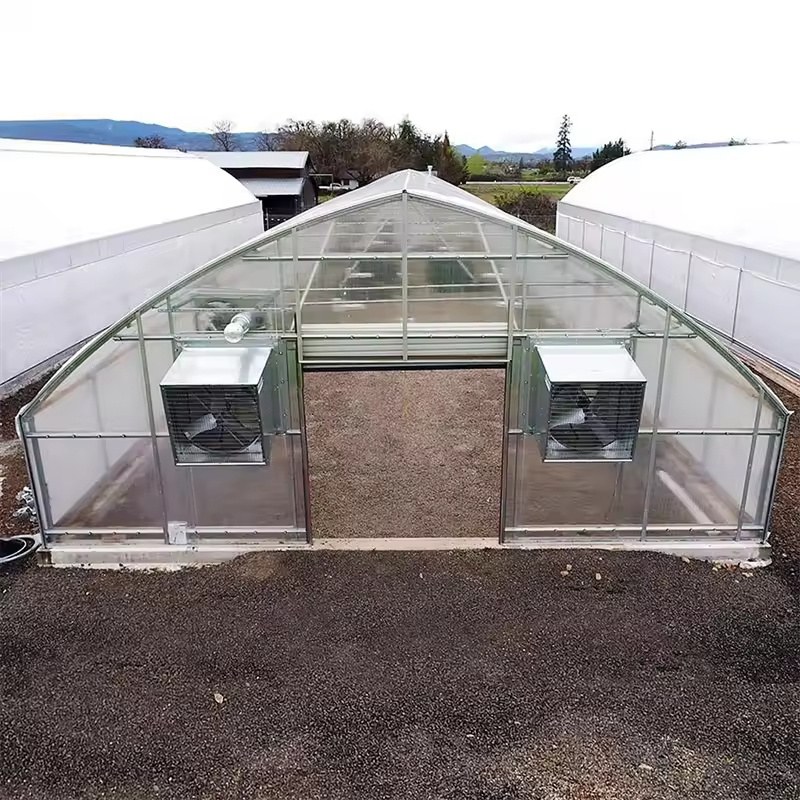
This house is an arch film greenhouse built for a climate that puts snow on the roof. The arch throws the load outward instead of holding it flat, and the sides roll up so the house can be closed down on a cold morning and opened out again the same afternoon, which is what a tomato crop needs in a short season. The frame is hot dip galvanized steel, bolted rather than welded on site, and the cover is a three layer compressed PE film. Spans run from 8 m to 12 m and length from 10 m to 100 m.
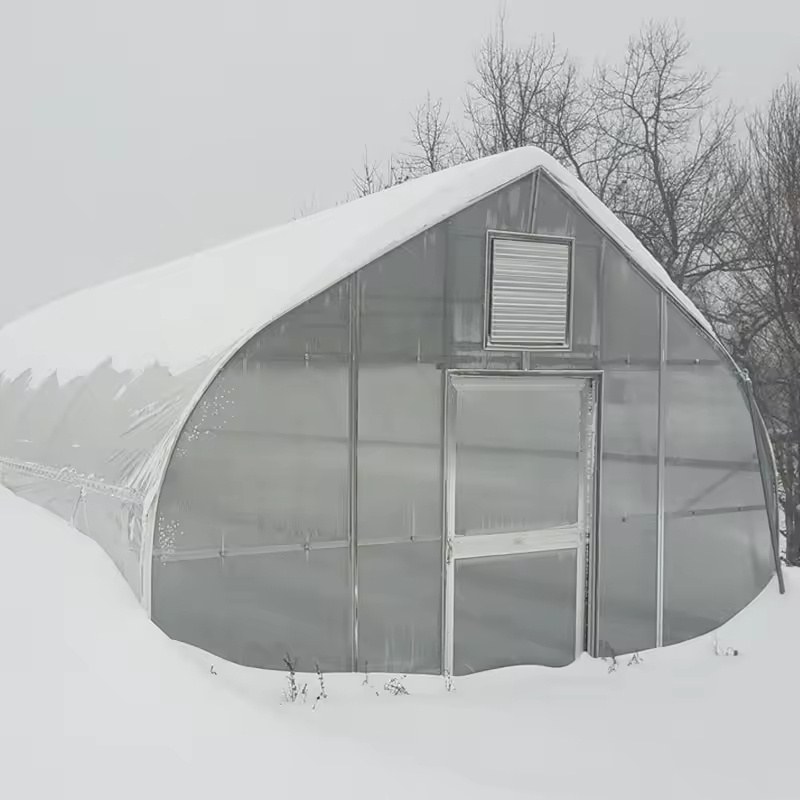
Snow is the load a film house is least able to argue with. It arrives overnight, it is heavy, and it sits exactly where the frame is thinnest. The two things that decide whether the house is still standing in the morning are the shape of the roof and how quickly the covering lets the load go.
A curved profile has no flat area for snow to settle on, so the load starts to slide as soon as it builds past the point where friction holds it. That is the whole principle behind an arch house in a snow climate, and it is why the profile matters more than the thickness of the cover. Where snow is wet and sticky, the cover surface and the pitch of the shoulder are what let it move rather than the strength of the hoop.
The other half is heat. A house that is being run slightly warmer than the outside air keeps the underside of the film above freezing, so the snow at the contact face melts and slides instead of locking on. That is a running decision rather than a build decision, and it is the reason the same house sheds well on one site and poorly on another. Houses of this family are grouped on the film greenhouse range page on this site.
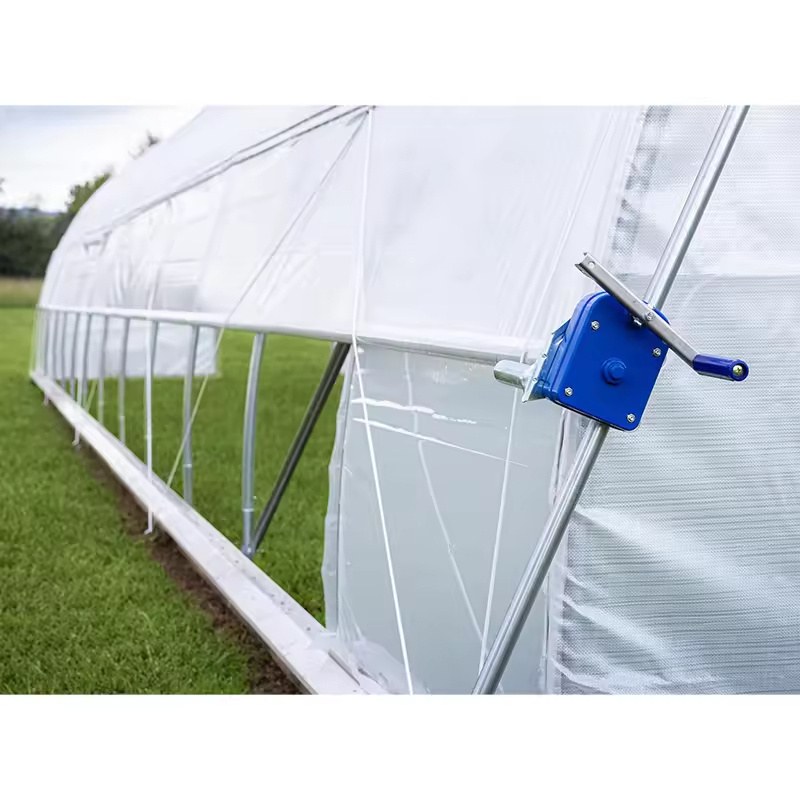
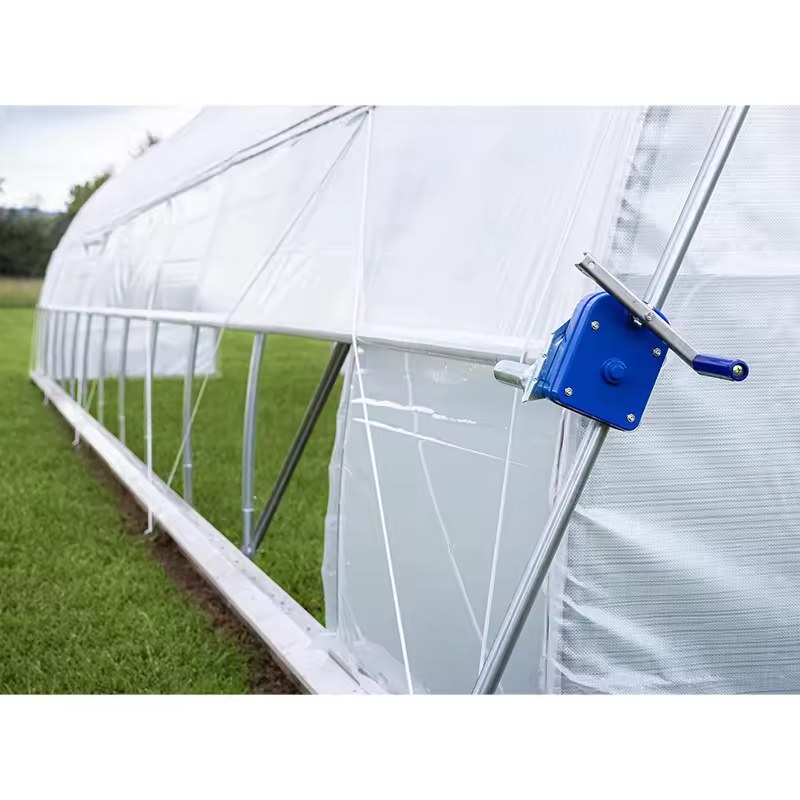
Roll up sides put the opening at the height of the plants rather than under the ridge. In a cold climate that is what makes the house usable across a long shoulder season: the sides can be cracked open on a bright morning to clear the humid layer that built up overnight, and closed again before the temperature drops in the afternoon, without the house being thrown open.
Both walls roll on their own tube, so the opening runs the full length of the house and is worked from one handle on each side. On a tomato crop the benefit shows in the canopy, which stays dry into the evening and is far less likely to be marked by condensation. A house with the same side arrangement on a wider bay is described in the single span film house with roll up side walls.
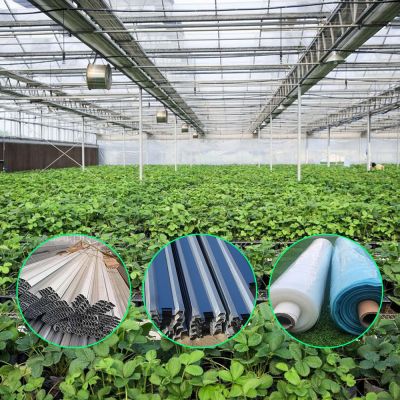
The frame is hot dip galvanized steel, galvanized after the sections are formed, so the zinc reaches the bore of the tubes, the cut ends and the inside of every drilled hole. Hoops, purlins and the base rail are bolted rather than welded on site, which leaves the coating intact and lets a bent hoop be unbolted and replaced instead of cut out. In a house that carries snow that matters, because the member to be replaced is usually one that has taken a hit.
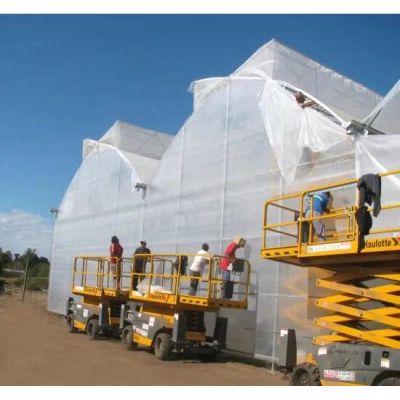
The cover is a three layer compressed PE film. The layers carry their additives separately, so the anti condensation face keeps working for longer than a single layer sheet does, and the outer layer carries the UV stabiliser. Film is held on the hoops and the base rail with clips, so a panel can be released and retensioned without a full recover. A multi span house with the same roll up side walls is described in the commercial multi span house with roll up sides.
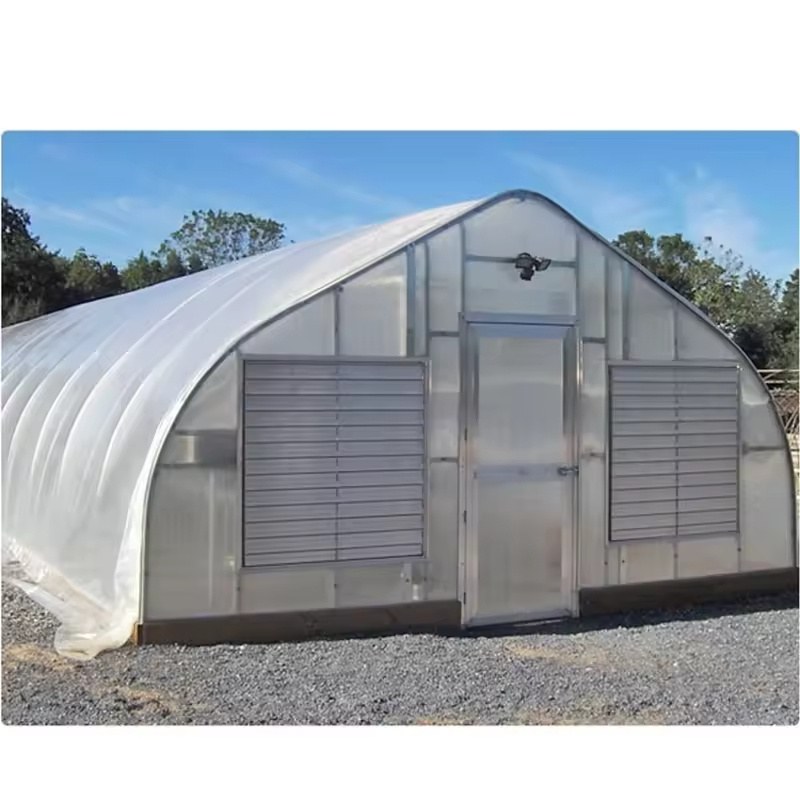
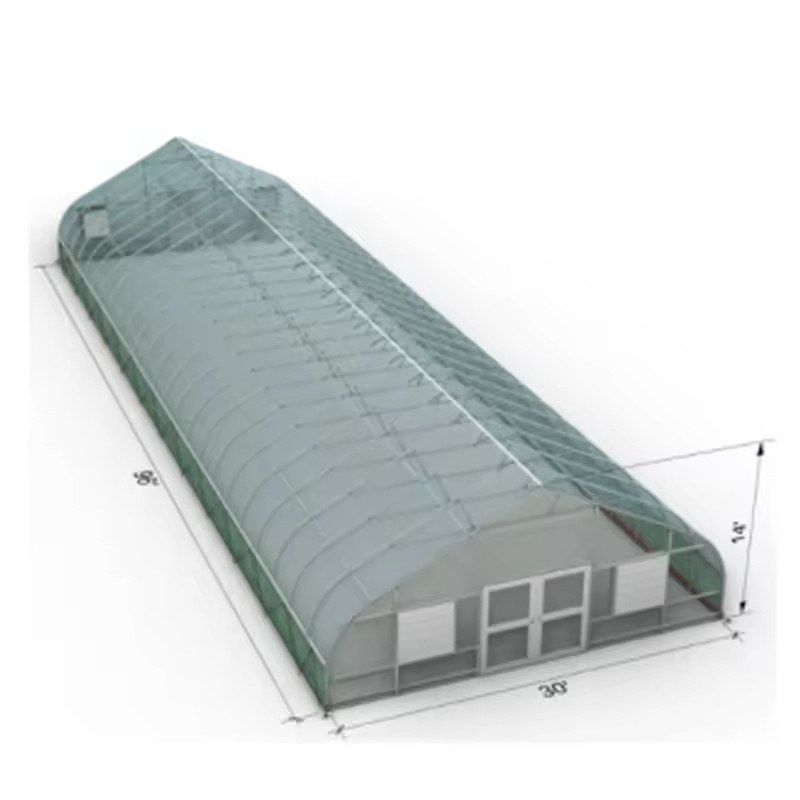
The table below is the standard build. Span, length, height, cover and the side wall gear are set to the site and to the crop.
| Greenhouse span | 8 m / 9 m / 10 m / 11 m / 12 m |
| Greenhouse length | 10 m to 100 m, or built to client demand |
| Greenhouse height | 3 m to 8 m, or custom |
| Structure material | Hot dip galvanized steel pipe, bolted assembly |
| Cover material | Three layer compressed PE film |
| Roof type | Arch roof, multi span, gutter connected between bays |
| Side ventilation | Roll up film side walls on both sides |
| Cooling | Fan and pad cooling system optional |
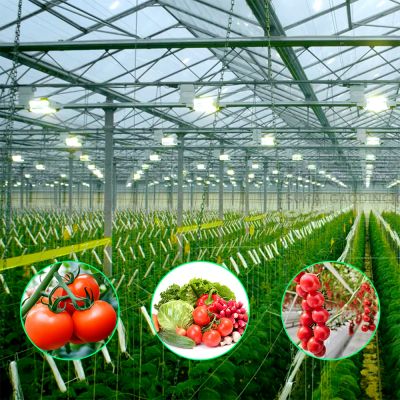
| Crops | Tomato, cucumber, leafy vegetables, fruit and flowers |
| Customisation | Span, length, height, cover and vent positions set to the site |
The kit arrives formed and drilled with the fittings, so the work on site is bolting and tensioning rather than fabrication and no welding is done at any point. Ground posts or a base rail are set to the drawing first, the hoops and purlins go up bay by bay, and the film is pulled over and tensioned from the ridge down before the side walls are wound on.
Maintenance in a snow climate has two extra items. The side wall gear is greased and the roll up tubes are checked before the season turns, because a stiff tube is what stops a wall being closed on a cold afternoon. The frame is walked after a heavy fall, and any hoop that has taken a load is checked at the shoulder rather than at the crown, since that is where an arch deforms first.
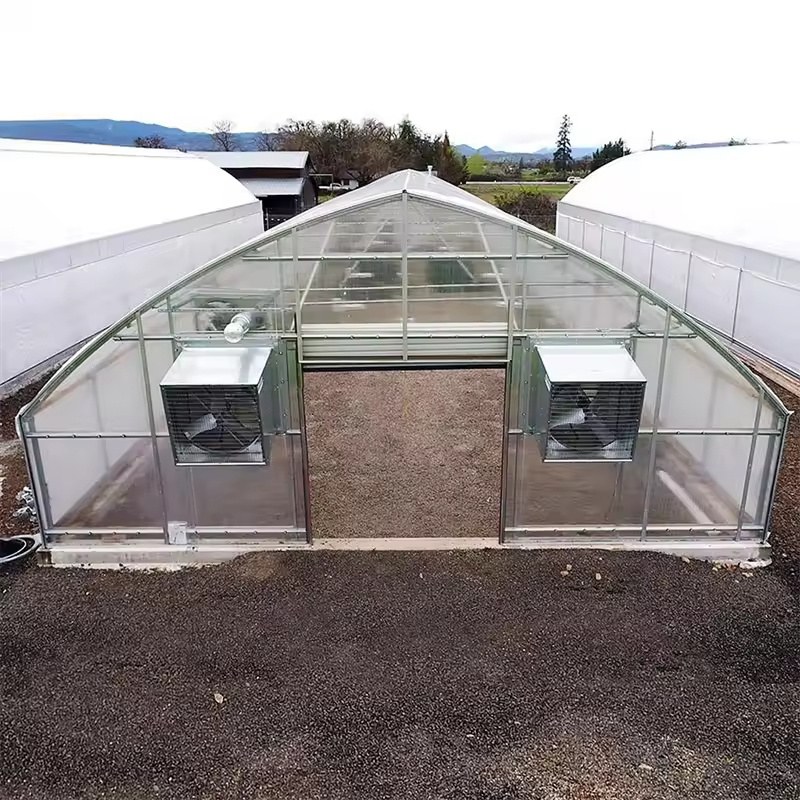
Houses of this type are used for tomato and cucumber production in a short season, for leafy vegetables and for winter cropping where the house has to be closed on a cold morning and opened again in the afternoon. They suit growers in a snow belt who need a roof that lets the load go, farms that are extending a block one bay at a time, and operations that expect to add heating, cooling or a control system to the same frame later.
Standards for structures and for steel products are published by DIN. Production and market reporting on protected and indoor growing is published by VerticalFarmDaily. The specification that matters is the one that still suits the crop ten years from now.
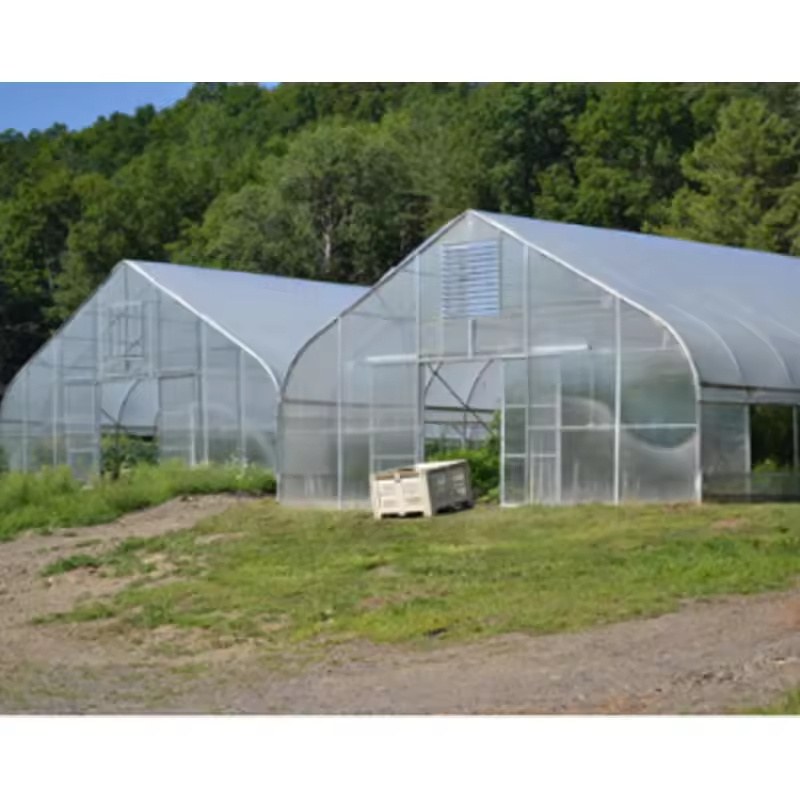
The curve leaves no flat area for snow to settle on, so the load starts to slide once it builds past the point where friction holds it. Keeping the house slightly warmer than outside also melts the contact face, which is why the same house sheds well on one site and poorly on another.
Because they open at the height of the plants. In a cold climate that lets the house be cracked open to clear the humid layer and closed again within the same morning, which a ridge opening alone does not do for the canopy.
The galvanized steel frame is rated for 15 to 20 years under normal growing conditions. The film cover runs on a shorter cycle than the frame, typically 3 to 5 years depending on UV exposure at the site.
We provide a 10 year structural warranty and a 5 year anti-corrosion warranty on the galvanized frame. Details are set out in the contract for each project.
Send your site dimensions, the crops you plan to grow and your local snow and wind figures. We reply with a layout drawing and a full quotation.