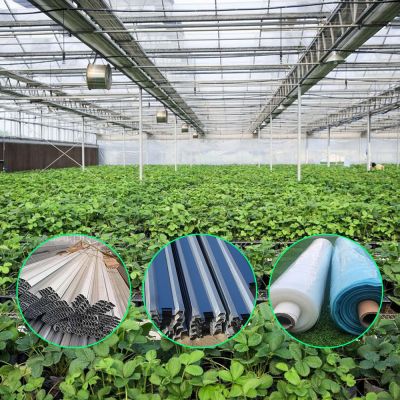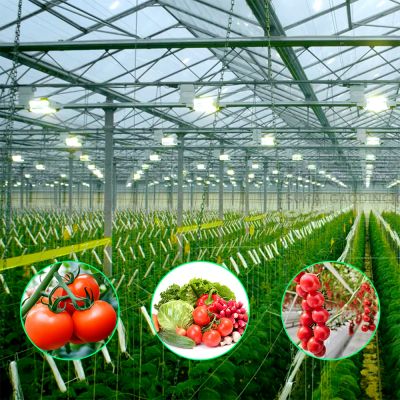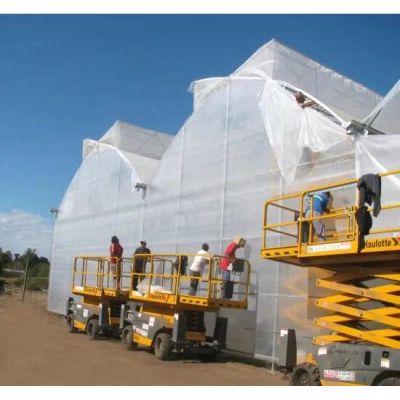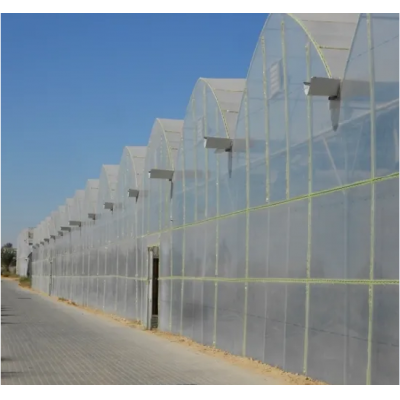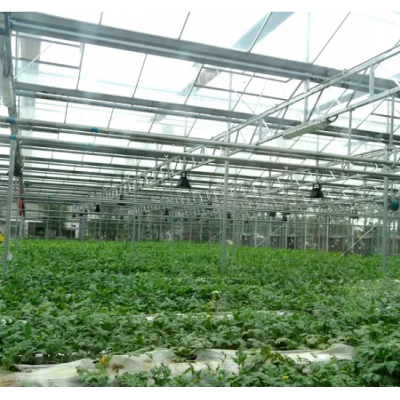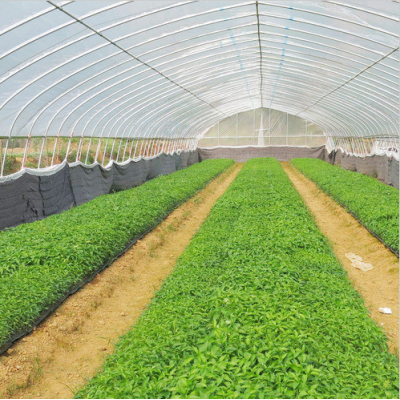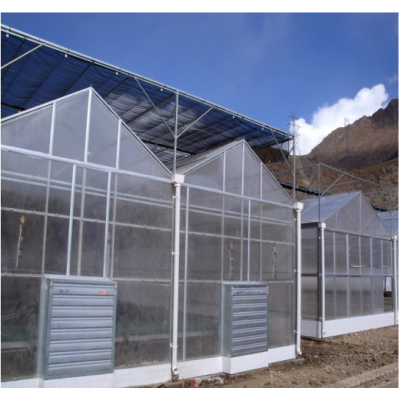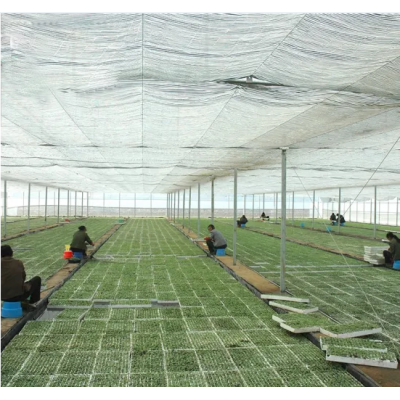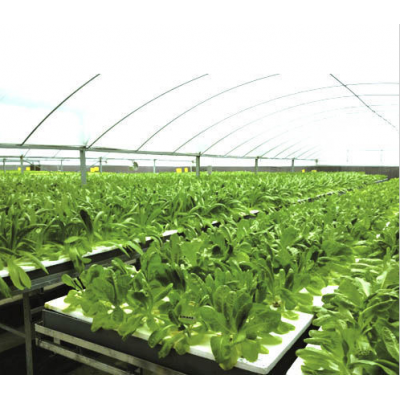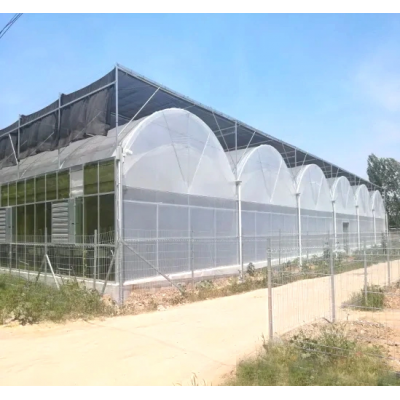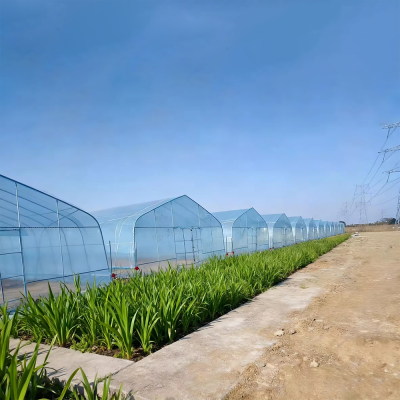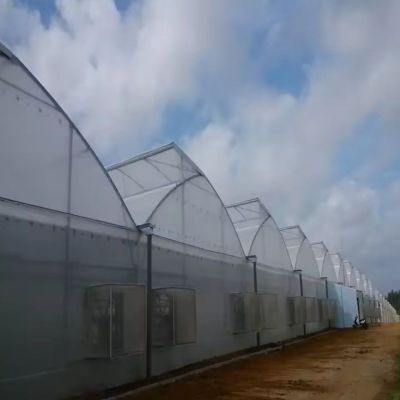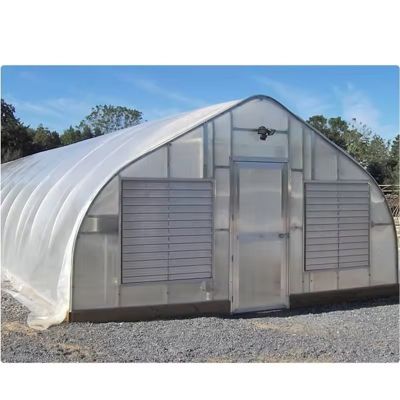
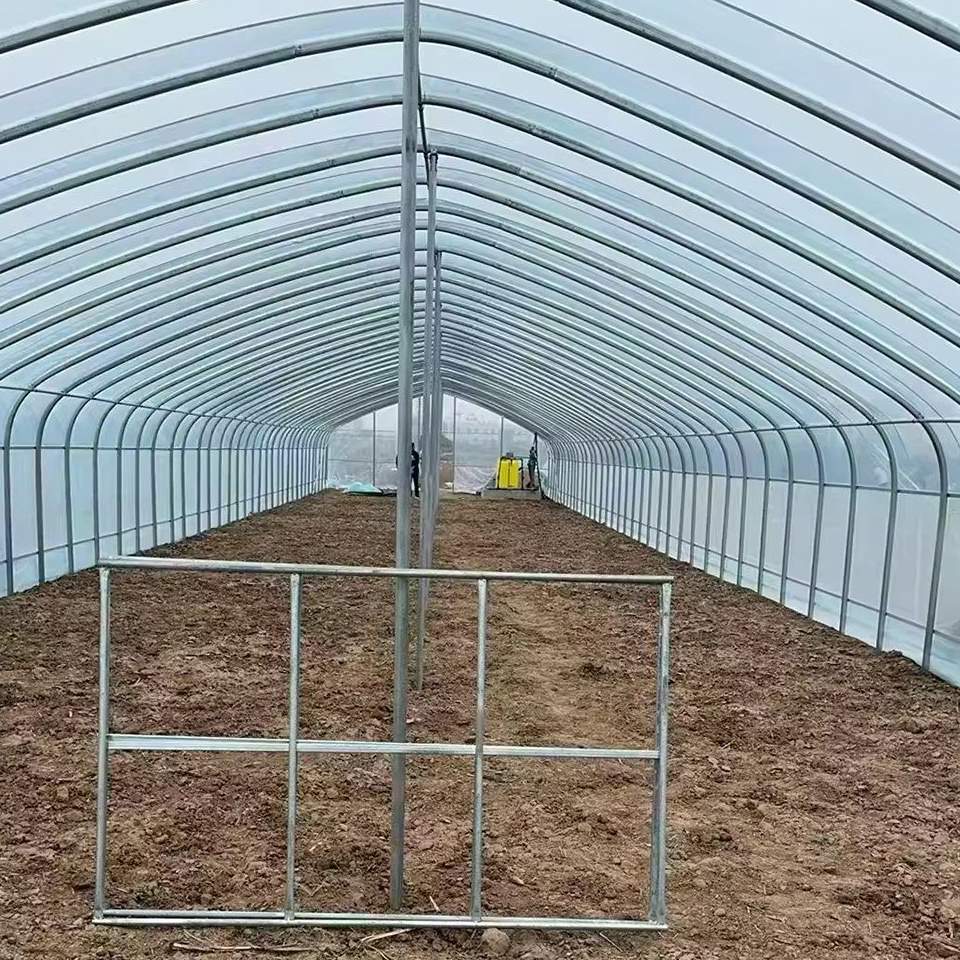
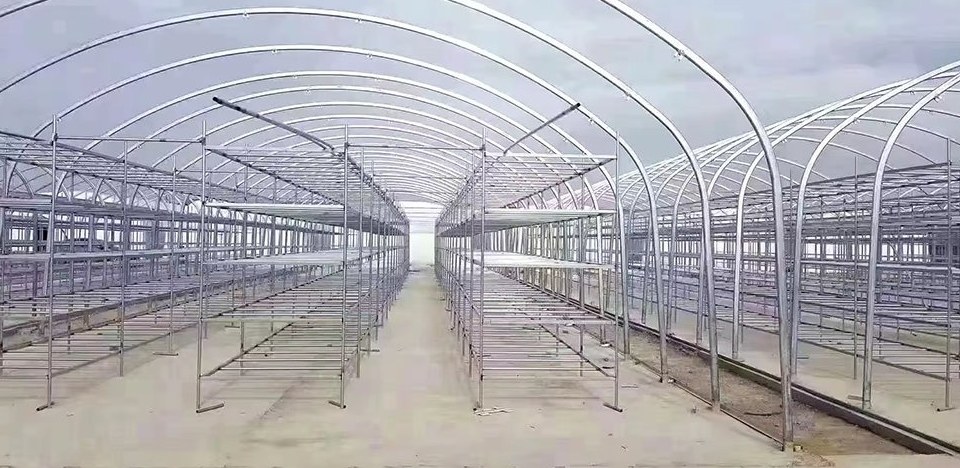
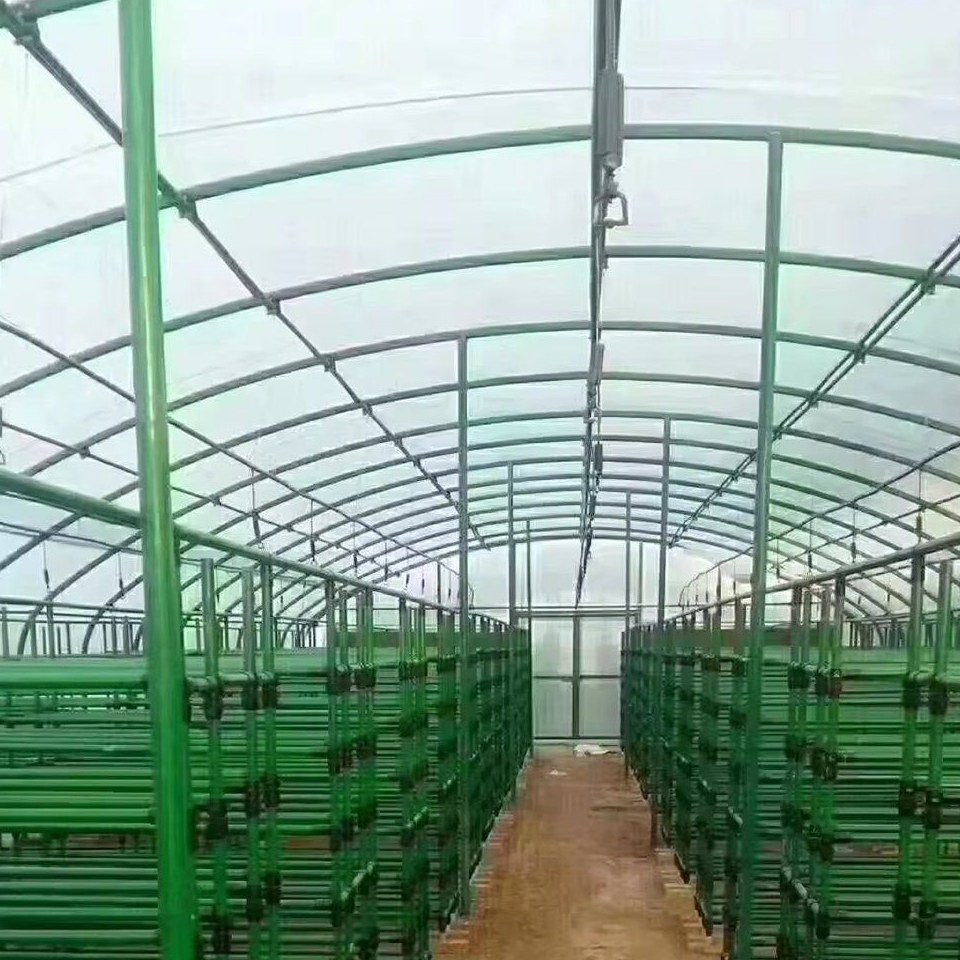
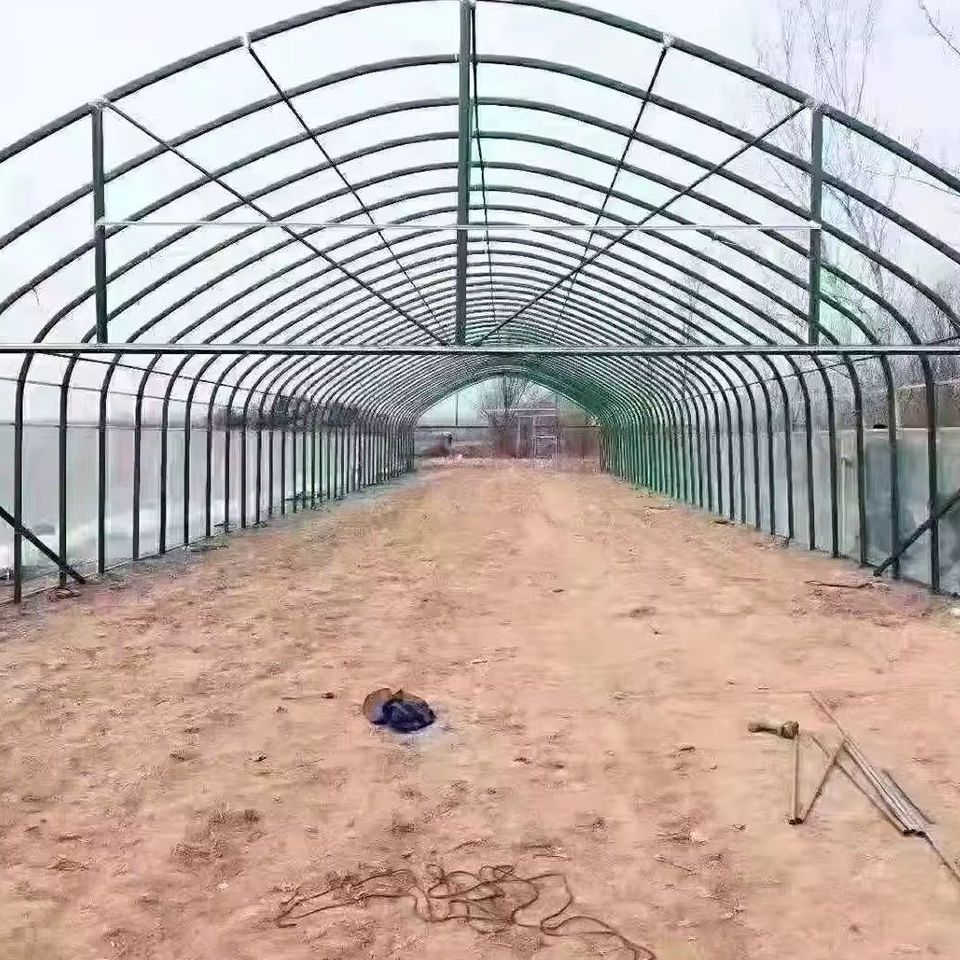
The house is a multi span structure with arched bays tied by gutters, and the cover runs as two layers of PE film rather than one. The air held between the layers is the insulating element, so the house loses heat more slowly than a single skin of the same area and condensation forms less readily on the inner face. The arches are galvanized steel, supplied in 2.2 mm section, and the structure is offered in 120 g/m2 galvanized or 275 g/m2 hot dip galvanized finish. Roll up side vents run both long walls for passive cooling. Span is set from 8 m to 12 m and length from 10 m to 100 m.
A film house is usually the most economical way to put a crop under cover, and the usual reason it stops being economical is the heating. Two answers to that are available before anything is added to the house: run the cover as two layers instead of one, and build the bays as a multi span range so they share their dividing walls. Both changes are made in the structure rather than in the equipment, so neither one adds a running part to maintain.
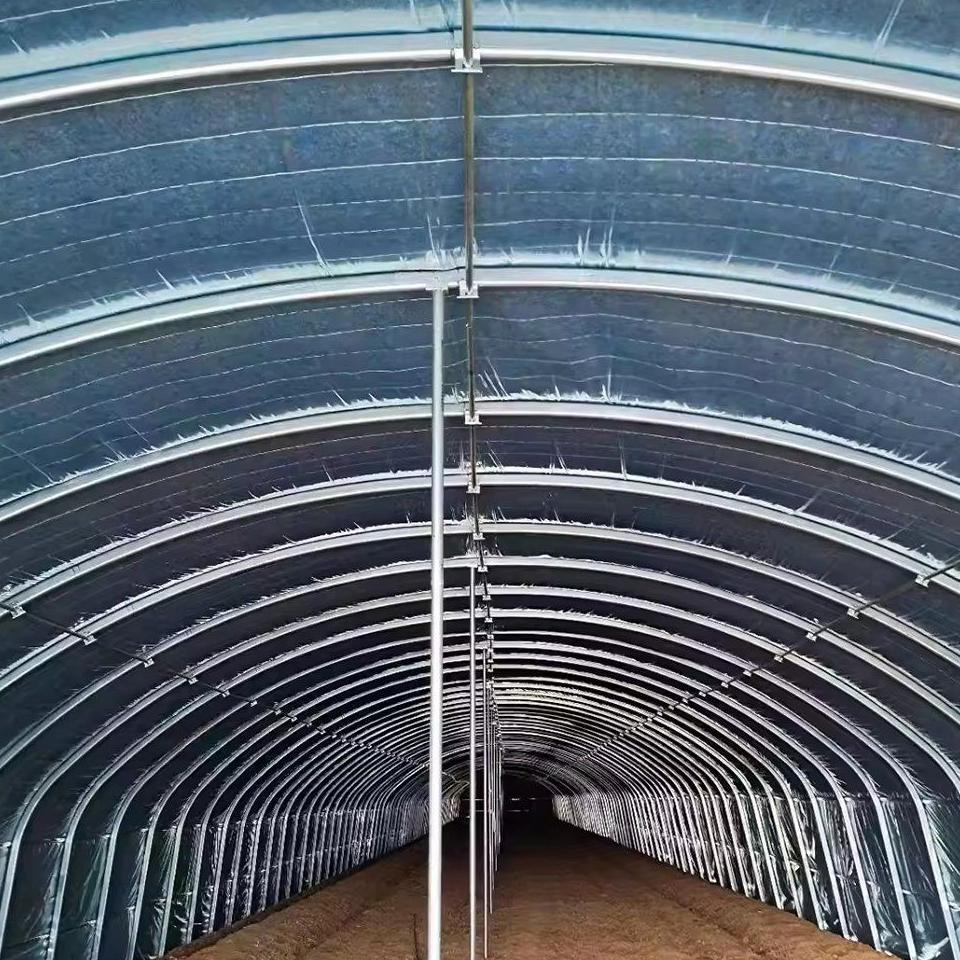
Two film layers with air held between them turn the cover itself into the insulating element. The trapped air slows the rate at which heat passes through, so the house holds its night temperature with less heating than a single skin of the same area, and the inner surface stays warmer, which means condensation forms less readily above the canopy. On a crop grown in solution that matters twice over, because the root zone has no soil to buffer a cold night.
Built as a multi span range, the bays share gutters and dividing walls under one roof line, so the floor area has less external surface facing the weather than the same crop spread across separate tunnels. The wider multi span family is listed on the multi span greenhouse range page on this site.
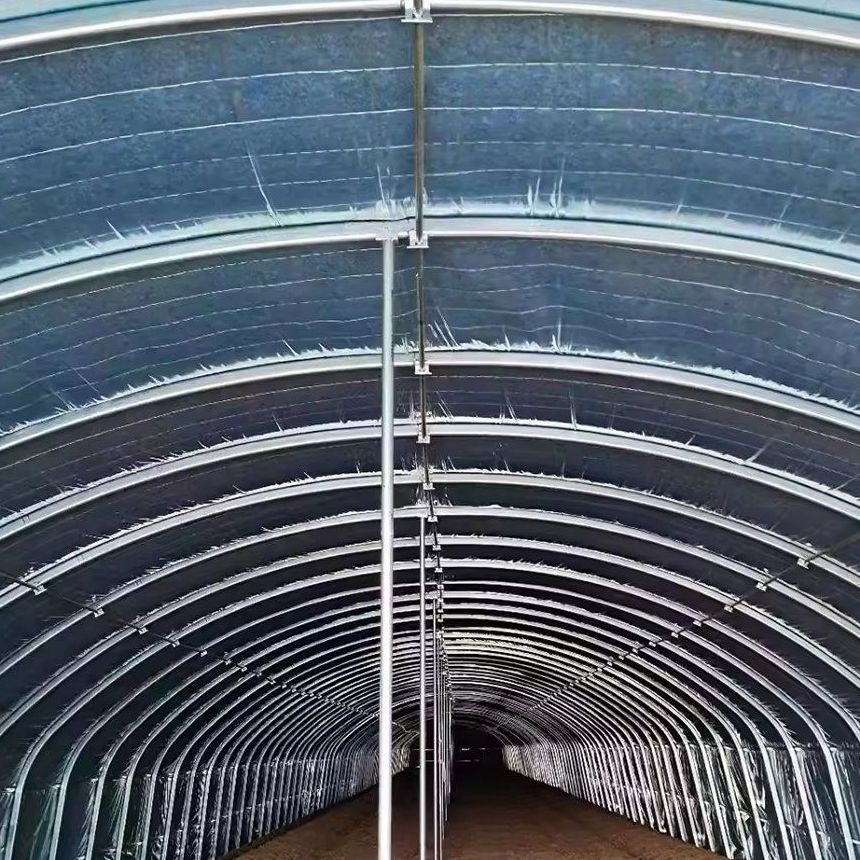
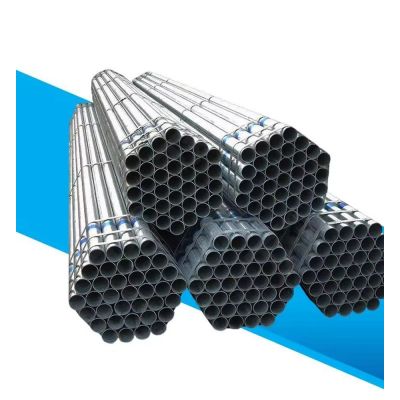
The arches are galvanized steel pipe at 2.2 mm section, and the structure is available in two coating weights: 120 g/m2 galvanized for a sheltered site, or 275 g/m2 hot dip galvanized where the frame will sit in wet soil at the base or the site is exposed. The coating weight is the number that decides how the house ages, because the failure mode on a film house is not structural. It is rust starting where the arch meets wet ground and at any drilled or cut point that was not protected.
The arches are tied with purlins and the joints are bolted with the fittings supplied, so no welding is done on site and the coating is not burned back at a connection. The house is rated for wind speeds up to 120 kilometres per hour, and the section is checked against the span and the exposure at the site rather than taken from a single catalogue size. A house on the same double layer principle is described in the multi span film house with an inflated double layer cover.
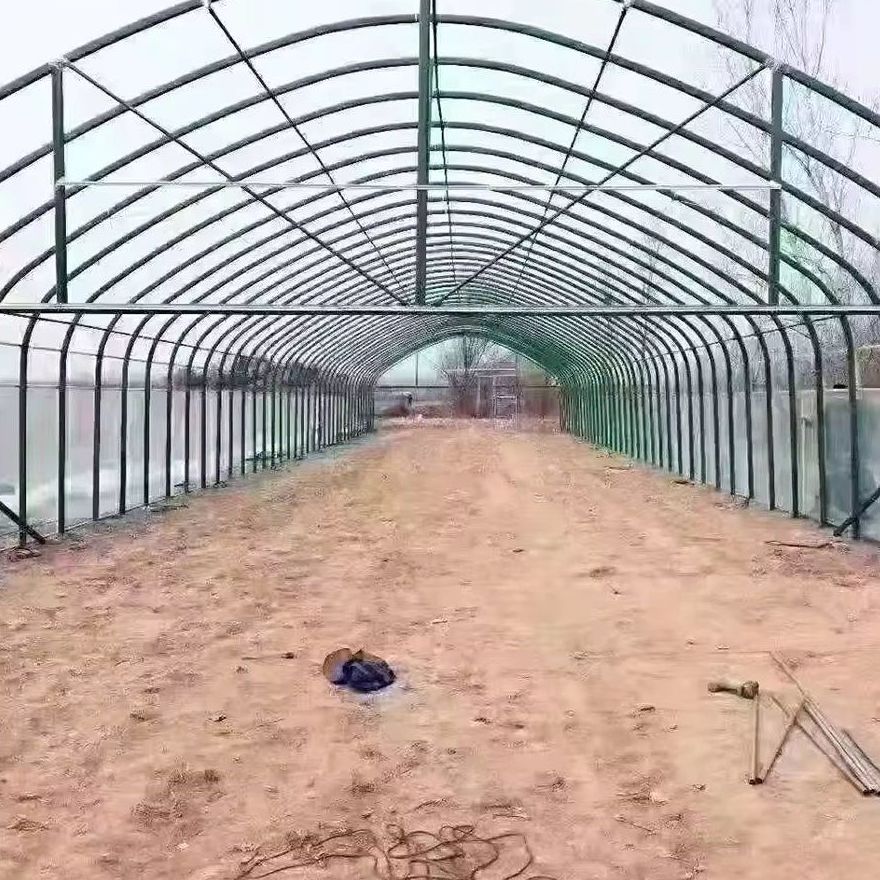
The cover is a three layer coextruded PE film. The inner layer carries the anti-drip treatment, which is the one that matters on a leaf crop: condensation forming on the inside face and falling onto the canopy is how leaf disease moves through a bay. Film is renewed on a roll over the bay rather than panel by panel, so the replacement is planned for the end of a season instead of done in a hurry after weather damage.
Ventilation is by roll up side vents along both walls, with natural or machine operation, and the openings also take insect net. Cooling, irrigation, shading and a film rolling system can all be specified on the same order. Where the house is used for hydroponic or soilless production, the channels and return runs are designed into the frame layout so the fall of the gutters and the fall of the growing system agree. A soilless house of this type is described in the hydroponic greenhouse system.
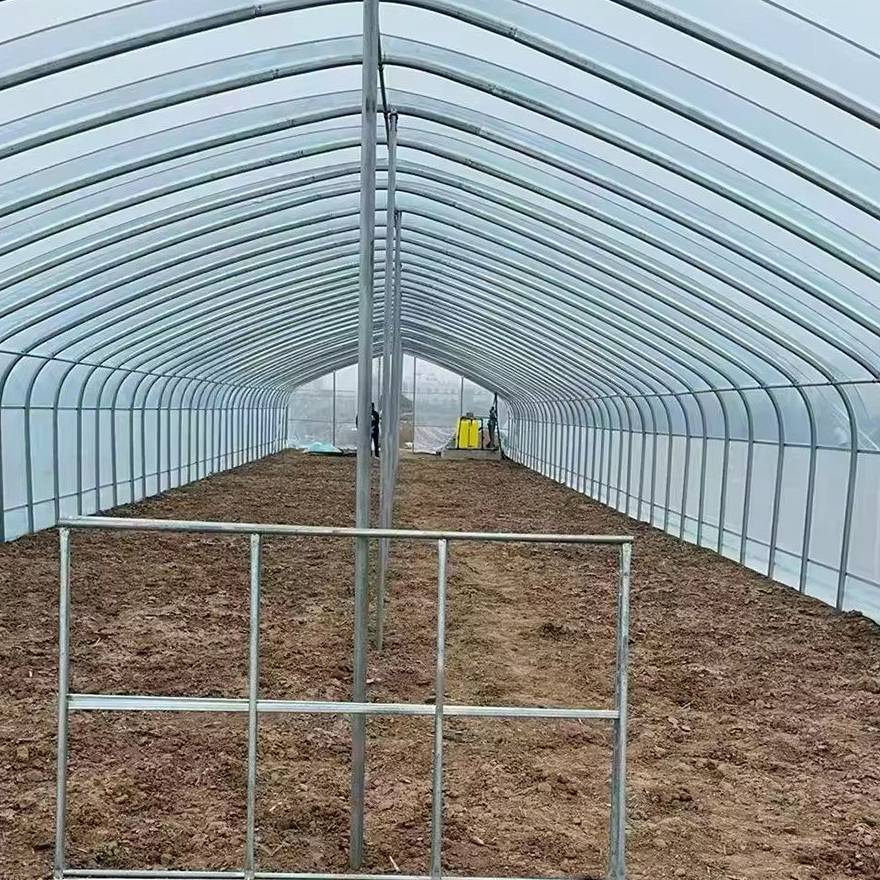
The table below is the standard build. Span, length, height, cover and ventilation are set to the site and to the crop.
| Greenhouse span | 8 m / 9 m / 10 m / 11 m / 12 m |
| Greenhouse length | 10 m to 100 m, or built to client demand |
| Greenhouse height | 3 m to 8 m |
| Structure material | Galvanized steel arches, 2.2 mm section, bolted assembly |
| Coating options | 120 g/m2 galvanized, or 275 g/m2 hot dip galvanized |
| Cover material | Three layer coextruded PE film, anti-drip inner face |
| Cover build | Two layers with air held between them |
| Ventilation | Roll up side vents on both walls, natural or machine operation |
| Wind resistance | Up to 120 km/h |
| Options | Cooling, irrigation, ventilation, shading and film rolling systems |
| Crops | Vegetables, fruit, cut flowers and hydroponic leafy crops |
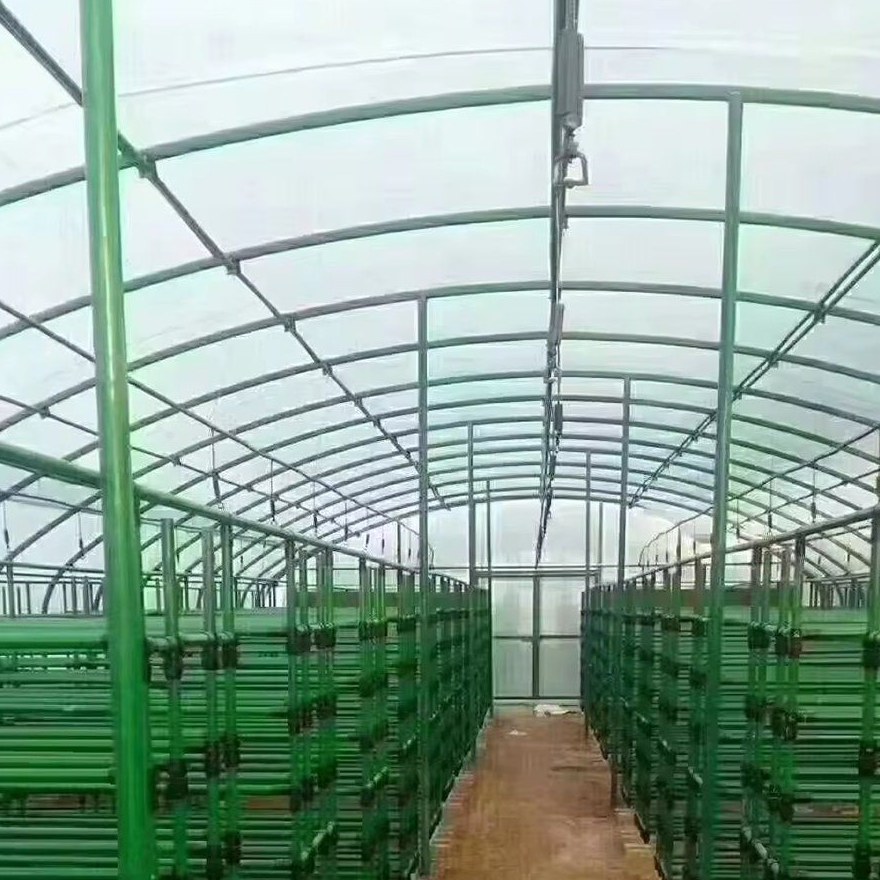
The steel arrives cut, drilled and coated, and is assembled with bolts, so the work on site is raising and squaring rather than fabrication. Base plates or ground posts are set to the same layout as the gutters, because a multi span house shows any error along the whole gutter line. The arches are tied with purlins as they go up and the film is pulled over last, both layers in the same operation where the house is specified double skinned.
Maintenance is short and mostly visual. The base is the item to check every season, because that is where the arch meets wet soil and where a coating failure shows first. After that: film tension along the base rail and the purlins, the side vent gear before the season turns, the drainage outside the wall so water does not stand against the posts, and the insect net where it has been fitted, because a net that has torn away from its fixing lets pests in along the whole wall.
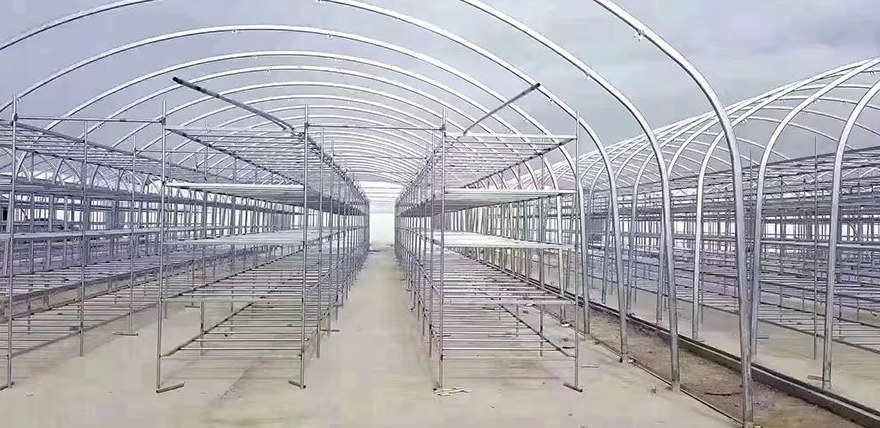
Houses of this type are used for vegetables grown on a long season, for soft fruit, for cut flowers and for hydroponic leafy crops. They suit commercial growers who want the light of a film cover with better heat retention than a single skin, and distributors buying flat packed frames and rolled film for projects where the house has to be raised by the buyer’s own team.
Standards for the steel, the galvanized coating and the covering films used in structures of this kind are published by BSI, and EN 13206 remains the reference for agricultural covering films in the European market. Commercial horticulture reporting, including how large protected cropping projects are specified and operated, is published by HortWeek. The question that decides the specification is normally the crop the house will be running in ten years, not only at handover.
The air held between the two layers is the insulating element, so the cover slows heat loss instead of only blocking wind and rain. The house holds its night temperature with less heating than a single skin of the same area, and the inner surface stays warmer, which reduces condensation above the canopy.
120 g/m2 galvanized suits a sheltered site with a dry base. Where the frame stands in wet soil at the base, or the site is exposed, 275 g/m2 hot dip galvanized is the sensible choice, because the base is where a greenhouse frame fails first and a heavier coating buys time at exactly that point.
The galvanized steel frame is rated for 15 to 20 years under normal growing conditions. The film cover runs on a shorter cycle than the frame, typically 3 to 5 years depending on UV exposure at the site.
We provide a 10 year structural warranty and a 5 year anti-corrosion warranty on the galvanized frame. Details are set out in the contract for each project.
Send your site dimensions, the crops you plan to grow and your local wind and snow loads. We reply with a layout drawing and a full quotation.