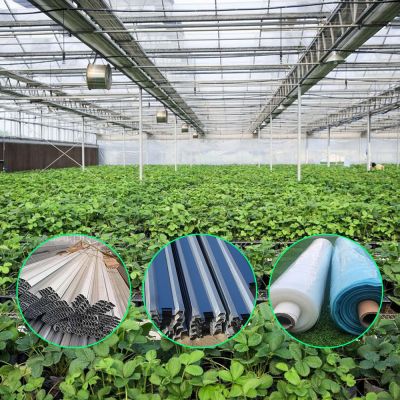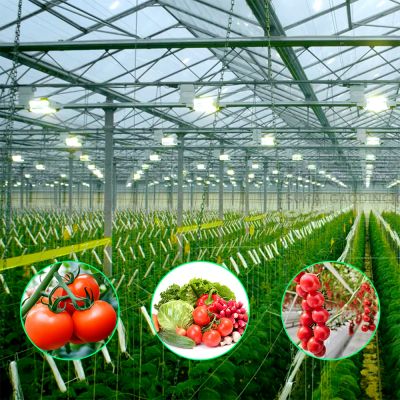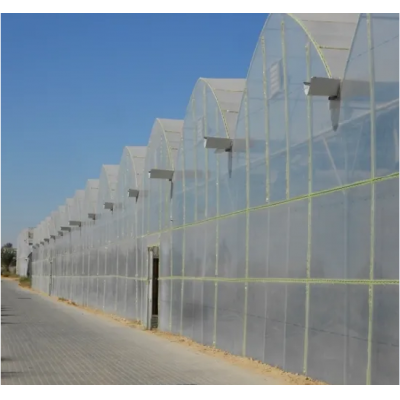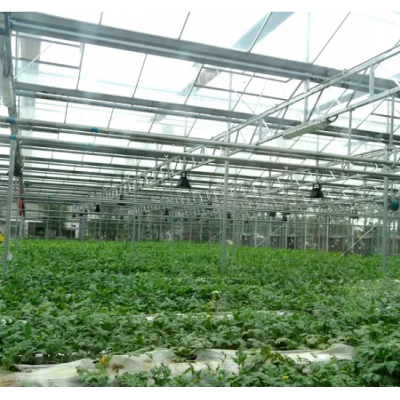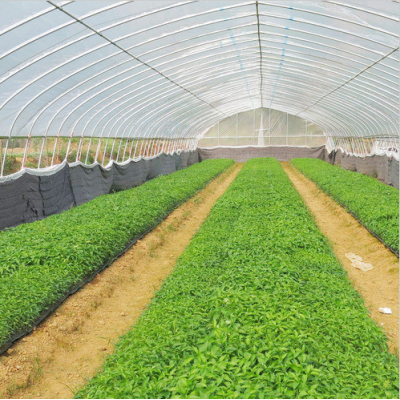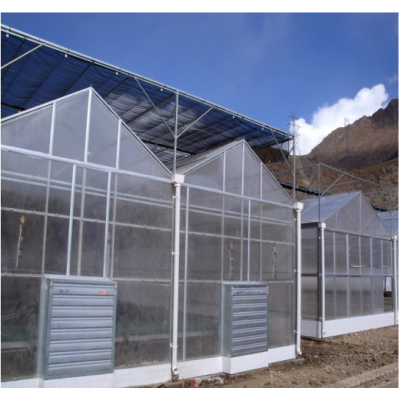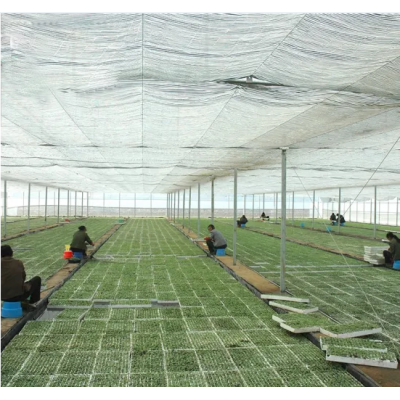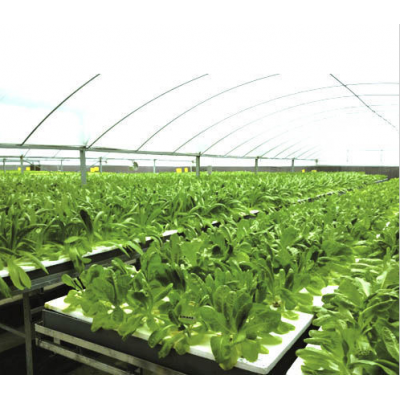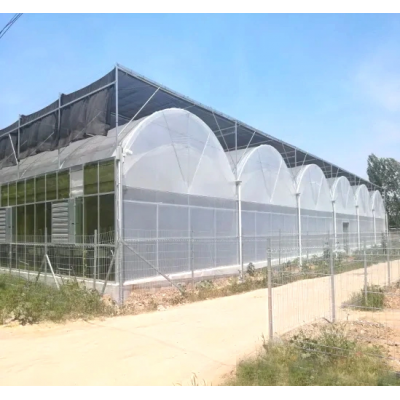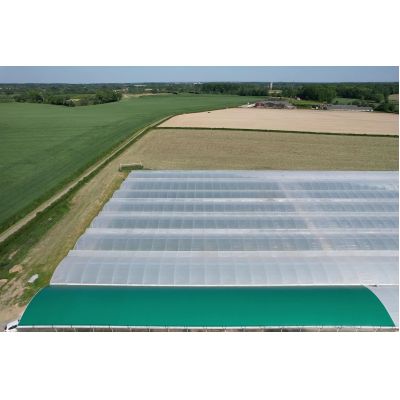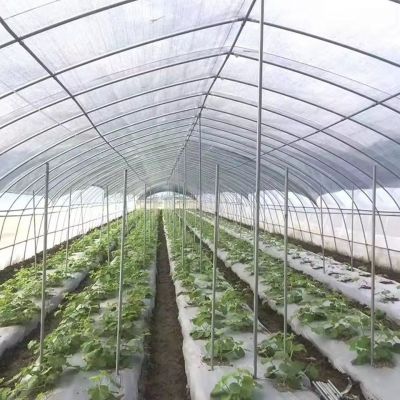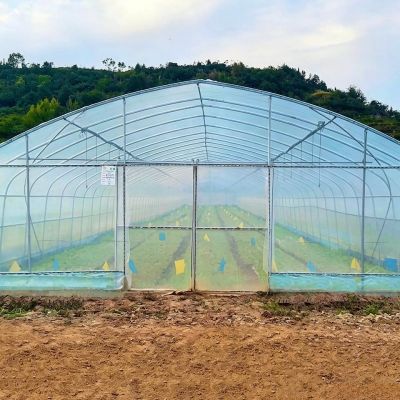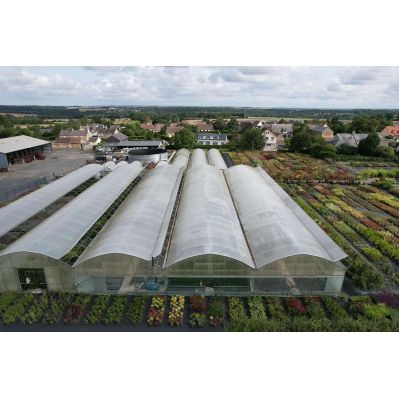
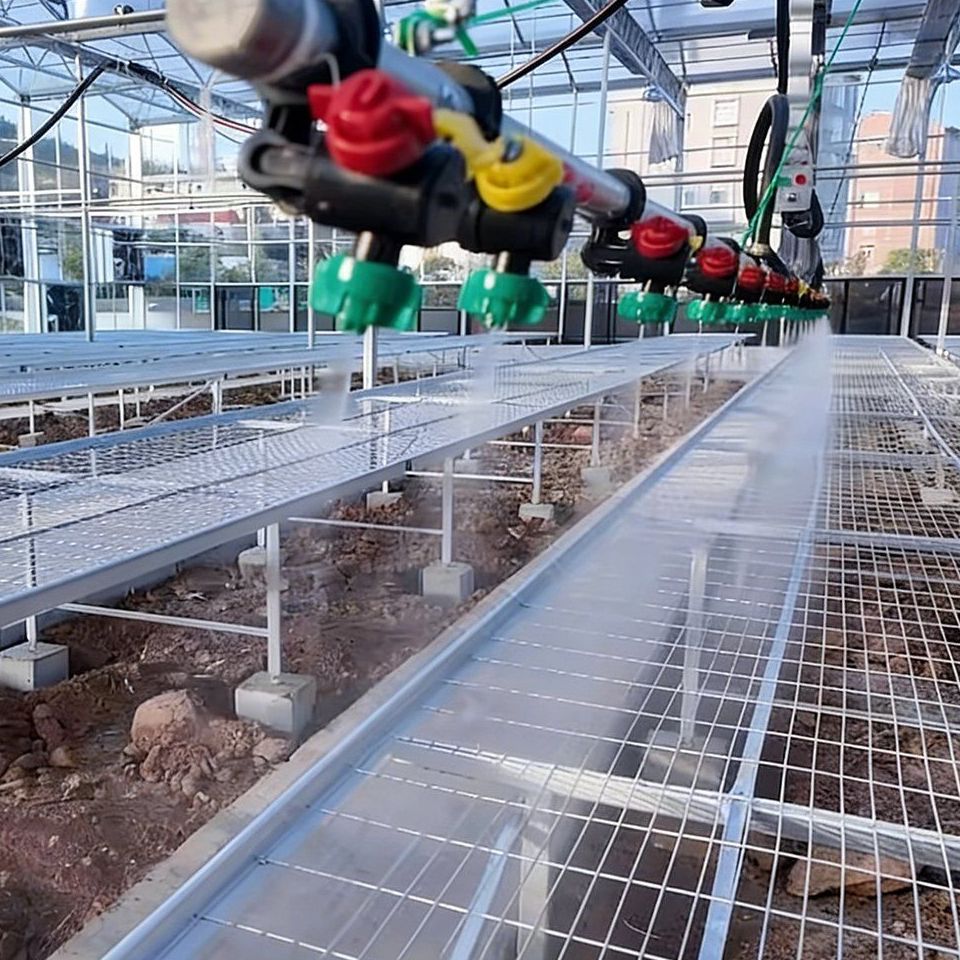
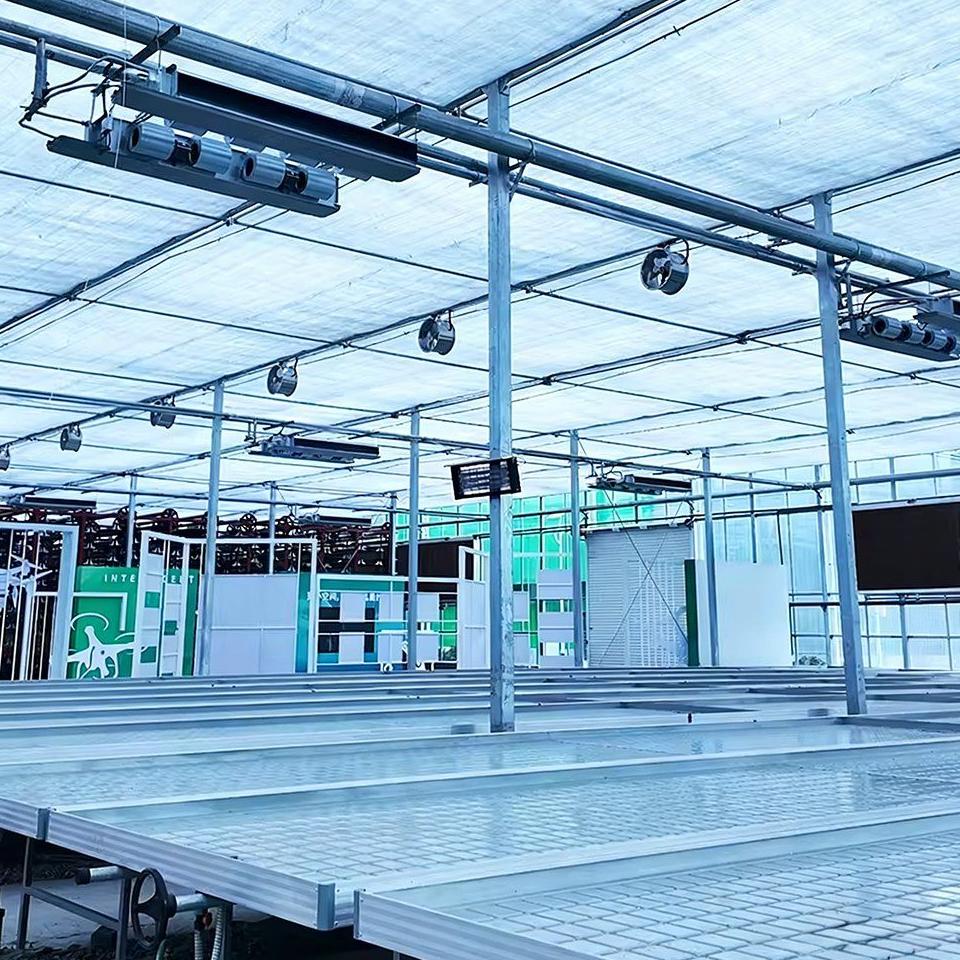
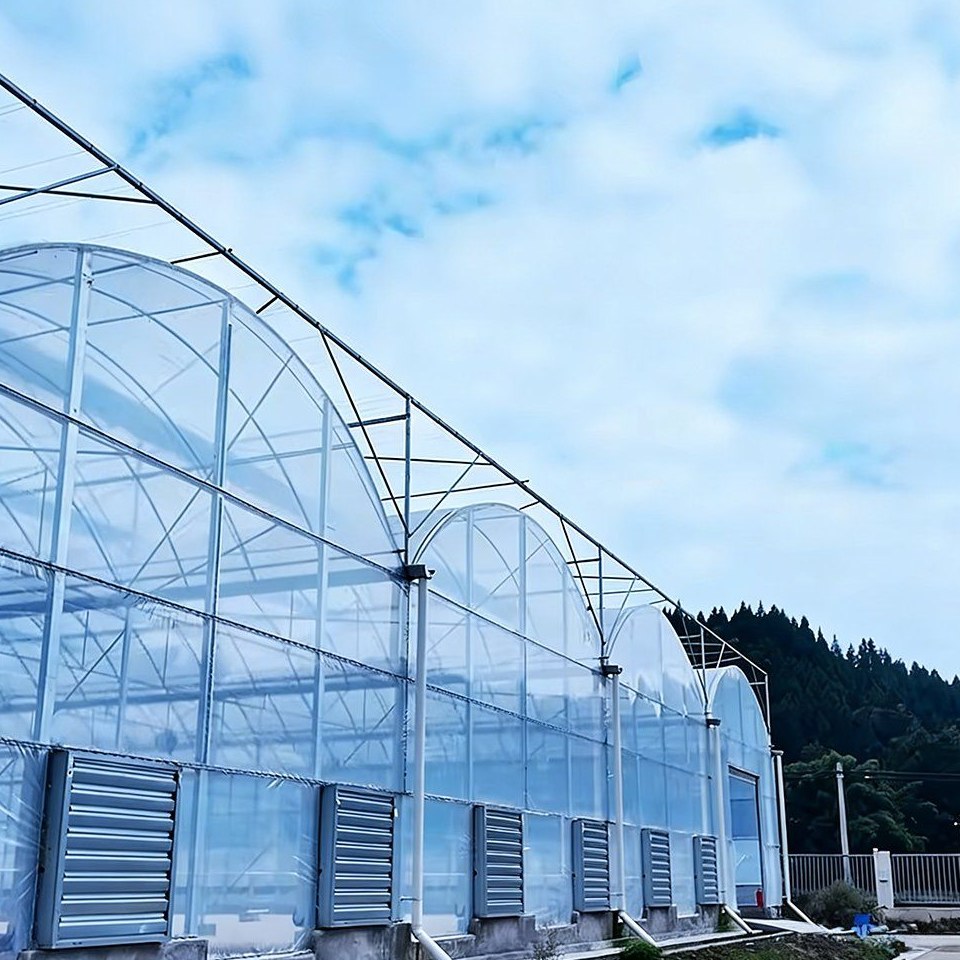
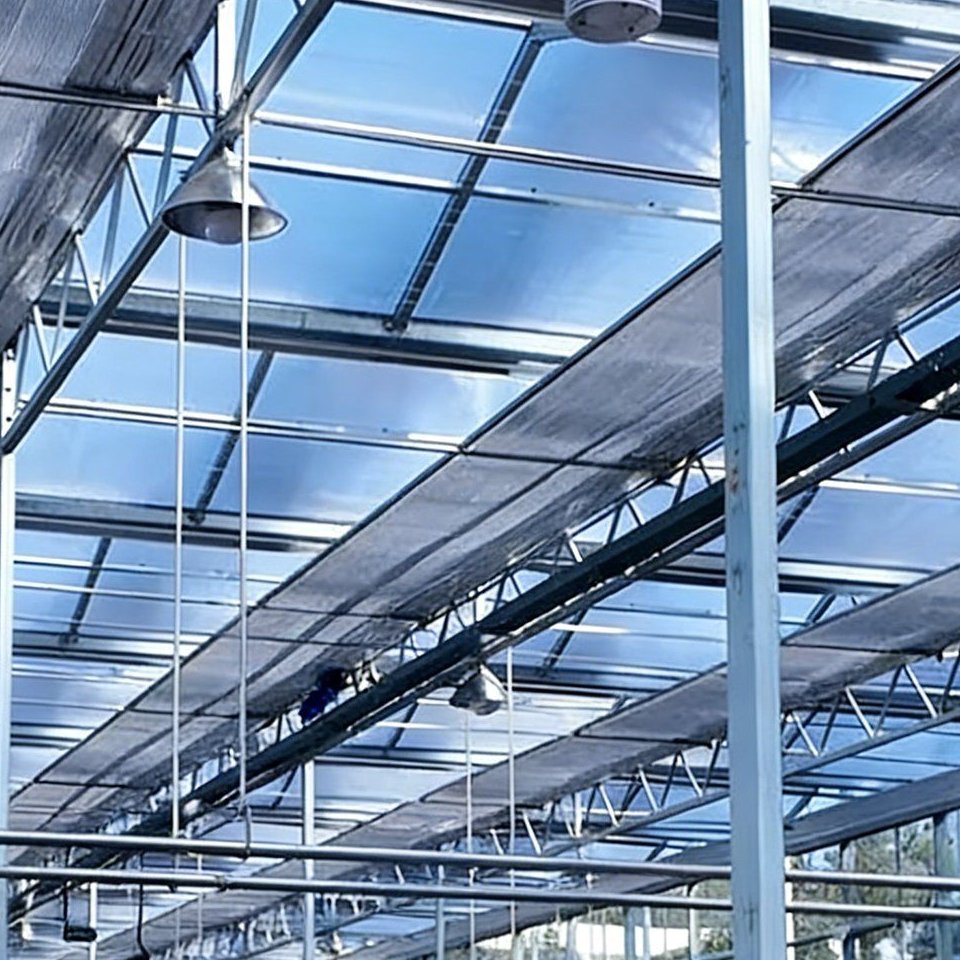
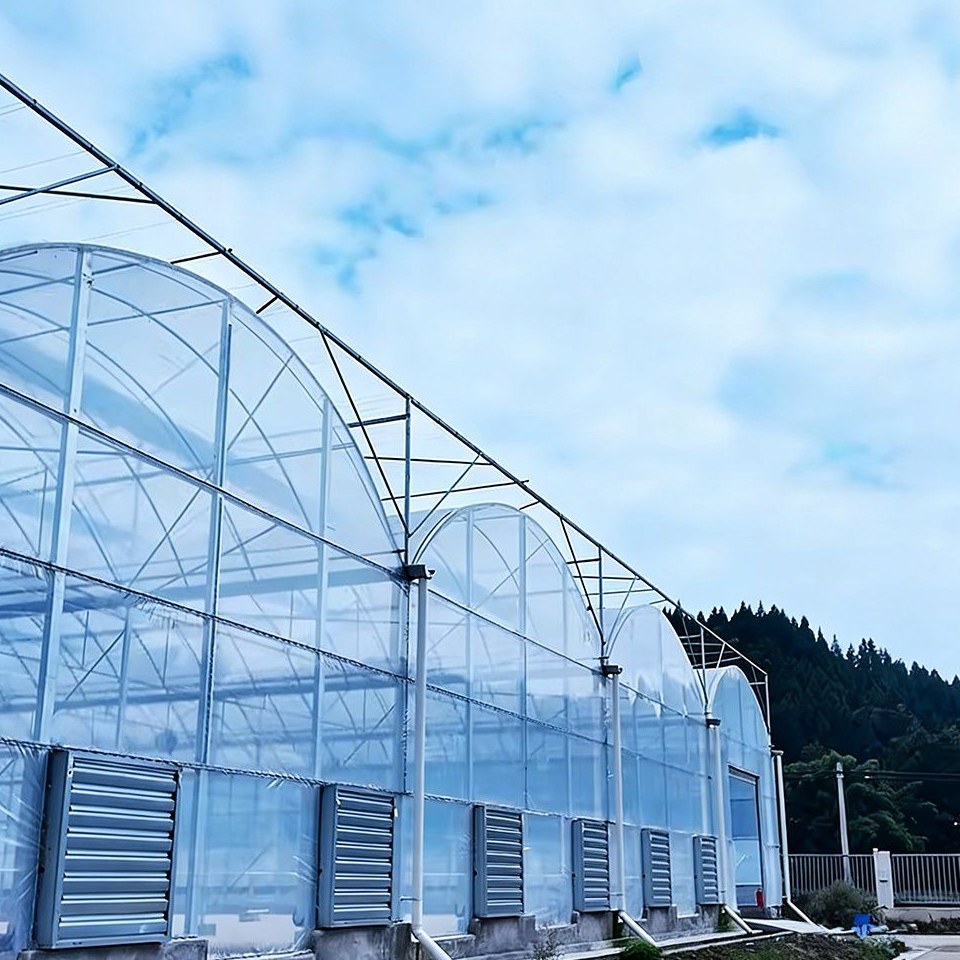
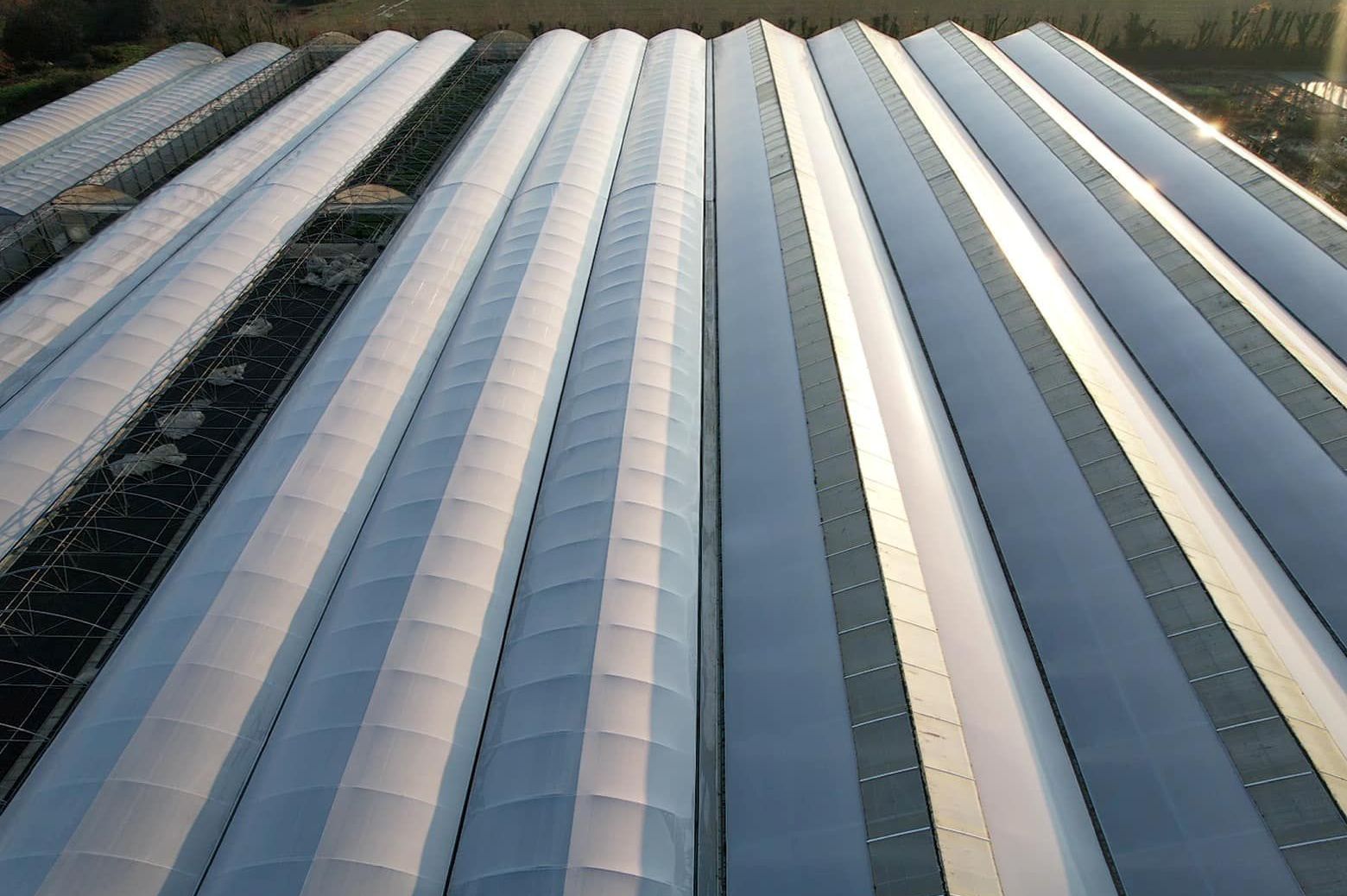
This single span hydroponic greenhouse covers a clear bay with film above 90 per cent light transmission on a hot dip galvanized steel frame, laid out for growing in channels rather than soil. With no post line inside the bay, the channel runs, drain and service walkways follow straight lines from gable to gable. The frame is engineered to 0.45 kN per sq m wind and 0.35 kN per sq m snow load. Nutrient delivery, dosing and tankage are planned with the structure, so the house arrives as a complete growing system for tomato and cucumber.
A hydroponic tomato crop is a plumbing job with a plant on top. Nutrients have to reach every channel at the same strength, the drain has to return at the same rate it is fed, and the climate above has to be held steady because the root zone cannot buffer anything. This single span hydroponic greenhouse is planned as that system rather than as a cover with equipment added later.
One clear bay is the right shape for growing in channels. Feed lines, returns and the service walkway follow straight lines from gable to gable without stepping around a post line, and trolleys can run the full length for crop work. Because there is no internal gutter to duck under, the working height stays usable across the whole floor. The film cover above runs above 90 per cent light transmission, which matters more in a hydroponic house than over soil: with no soil to draw on, the crop depends entirely on the light the cover passes.
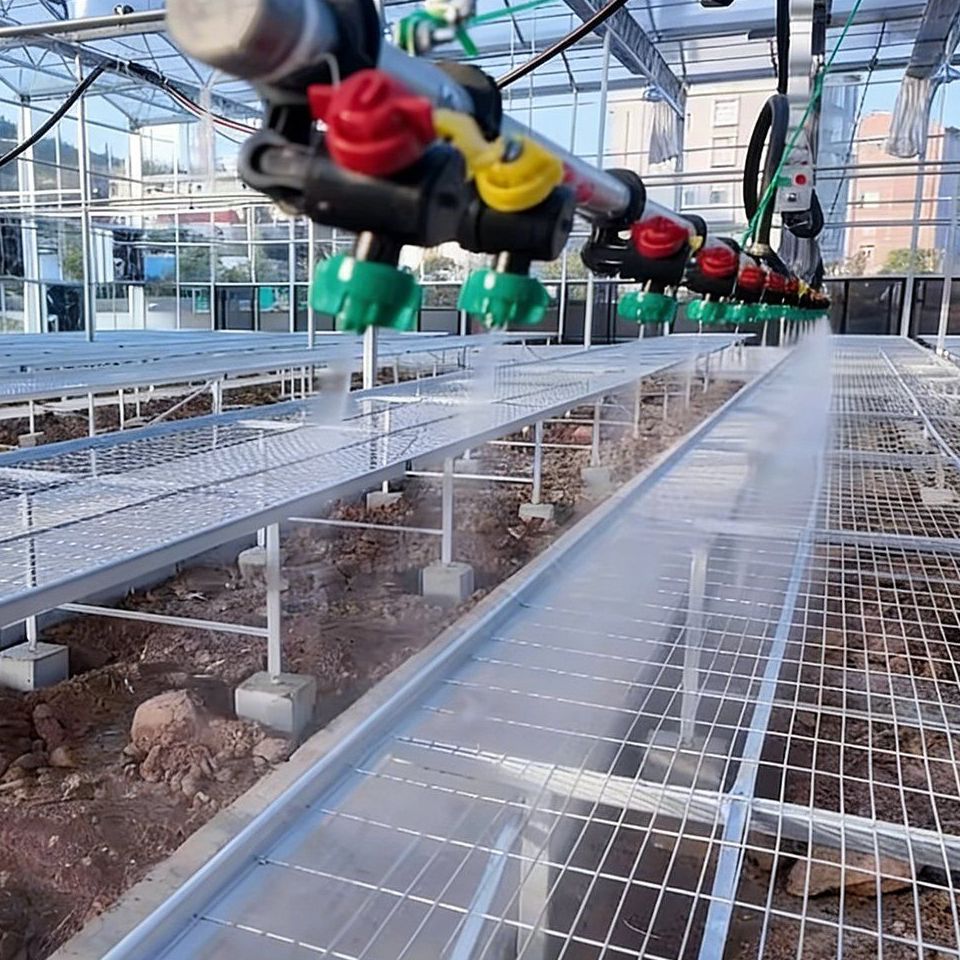
The frame is hot dip galvanized steel, sized for intensive year round production with minimal maintenance, and engineered to a wind load of 0.45 kN per sq m and a snow load of 0.35 kN per sq m. Galvanizing before fabrication is what keeps the structure sound in a house where the humidity never drops far, and it is why the frame is rated for a 15 to 20 year service life. The film cover is supplied in rolls, so a torn cover is replaced over the existing frame without taking the structure or the crop down.
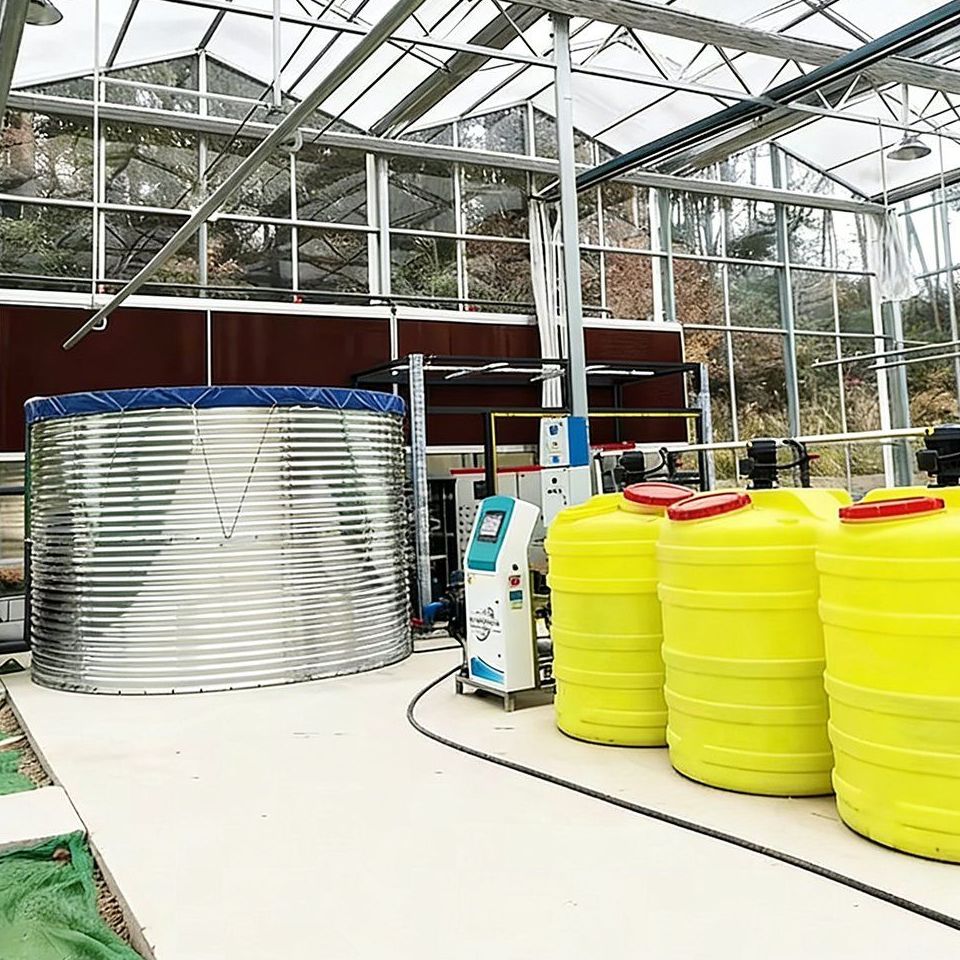
| Structure material | Hot dip galvanized steel frame |
| Covering material | Plastic film, above 90% light transmission |
| Roof shape | Arch roof, single clear span |
| Wind load | 0.45 kN per sq m |
| Snow load | 0.35 kN per sq m |
| Growing system | Hydroponic channels with feed and return lines |
| Supply | Complete system: frame, film, tanks, dosing and channels |
| Crops | Tomato and cucumber |
| Service life | 15 to 20 years for the frame under normal growing conditions |
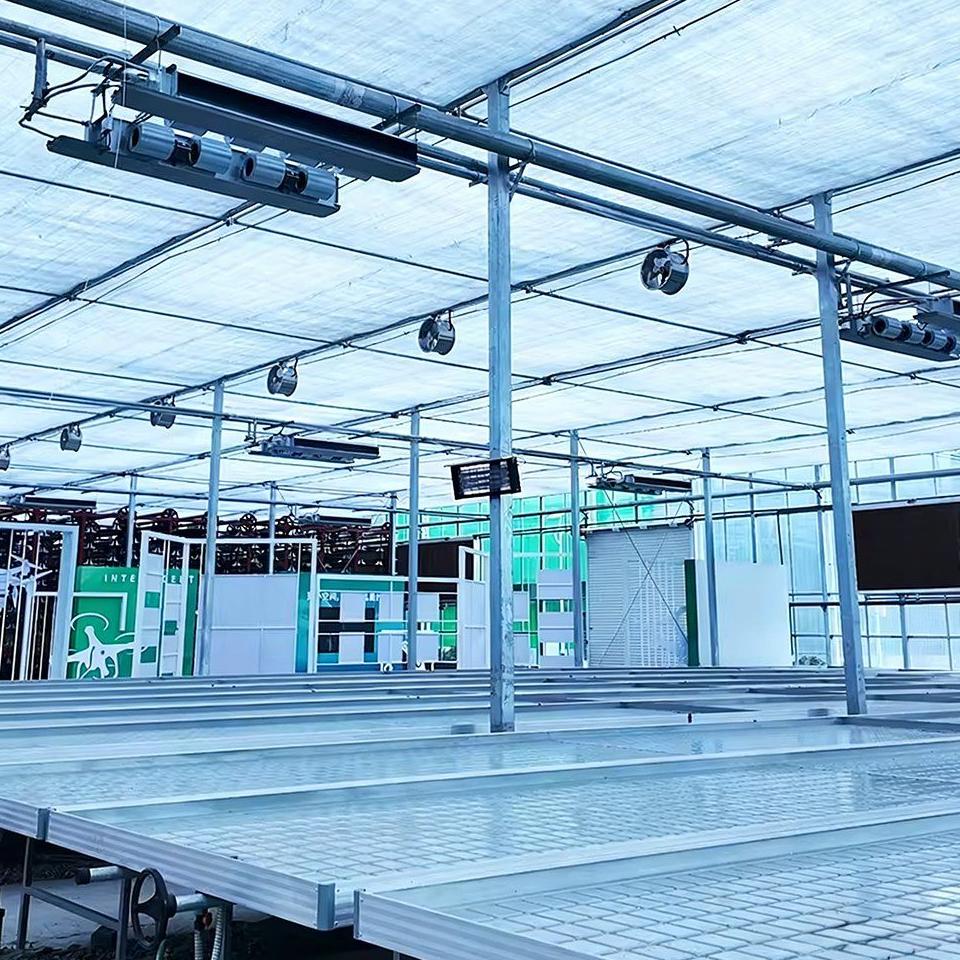
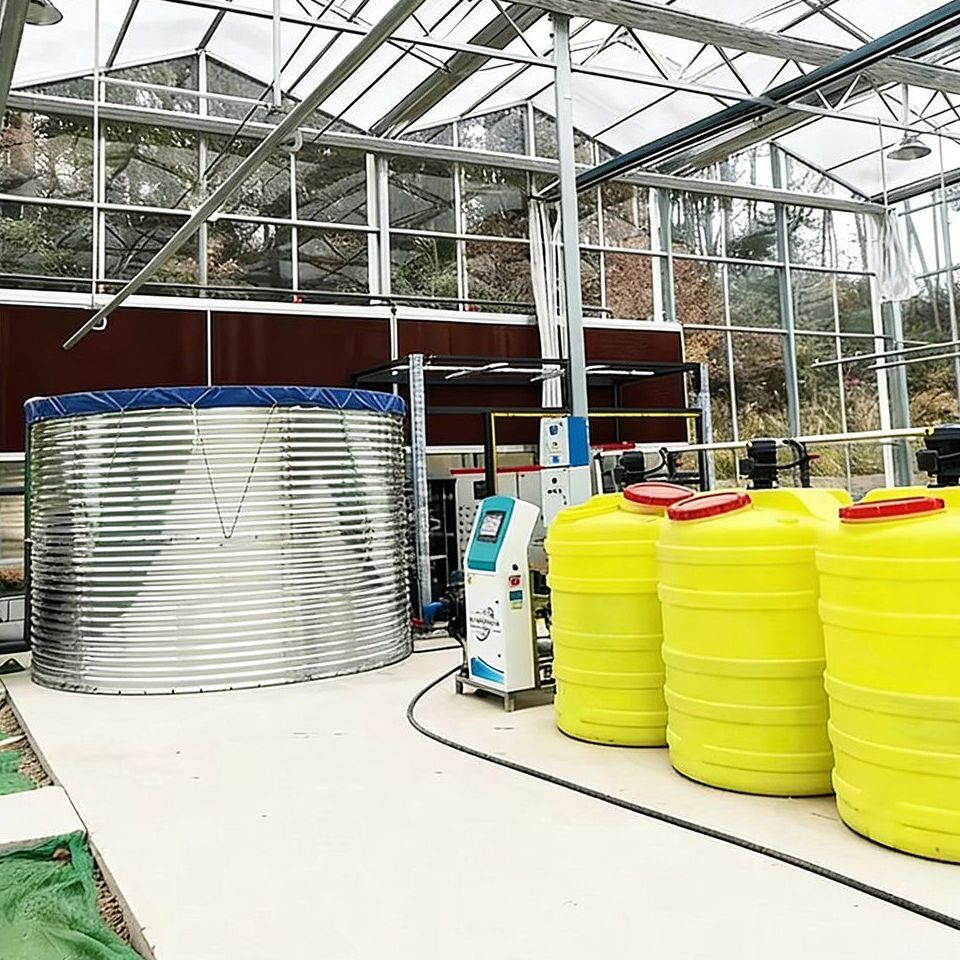
Nutrient solution is mixed in tanks at the gable end, dosed to the strength the crop needs and fed to the channels through a manifold, with the drain returned for reconditioning. Because the root zone holds no reserve, the feed has to be reliable rather than generous, which is why the tank, dosing and return are designed with the house rather than fitted afterwards. Climate works alongside it: ventilation and fans keep the canopy active without drying it, and the film above holds warmth on cold nights. Standards from BSI cover the structural requirements a project specification should be checked against.
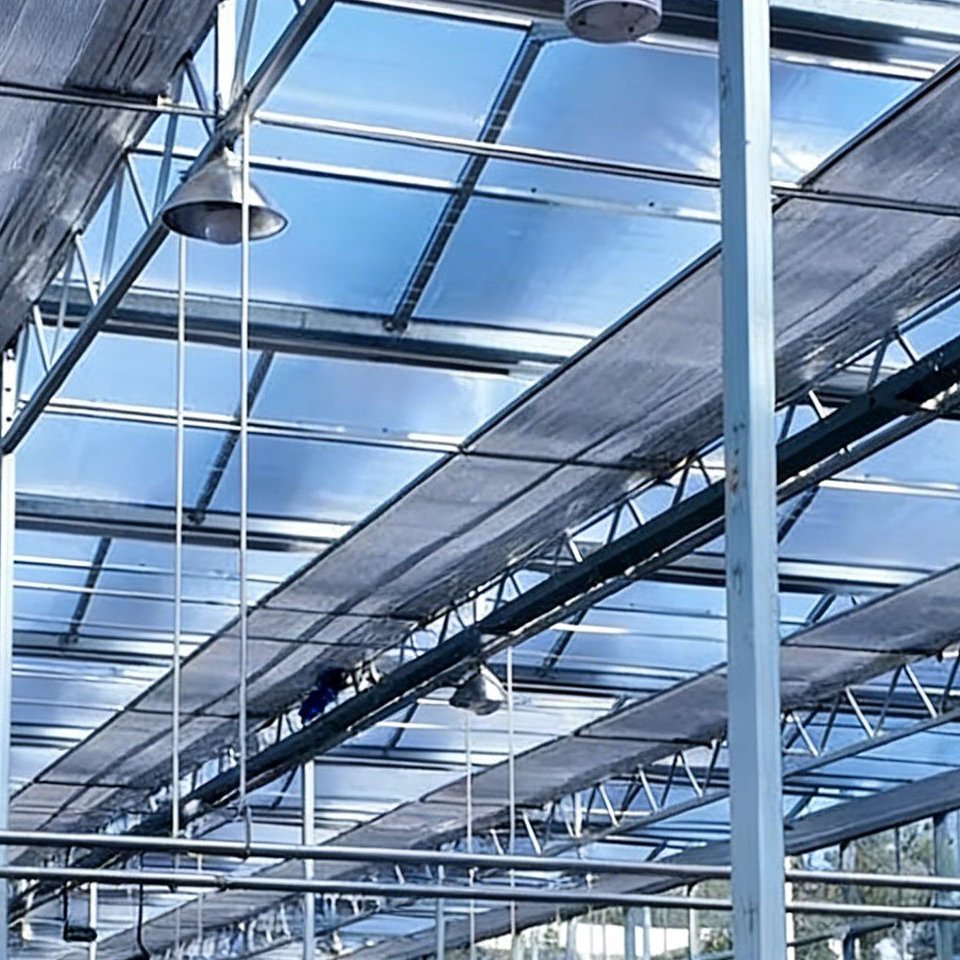
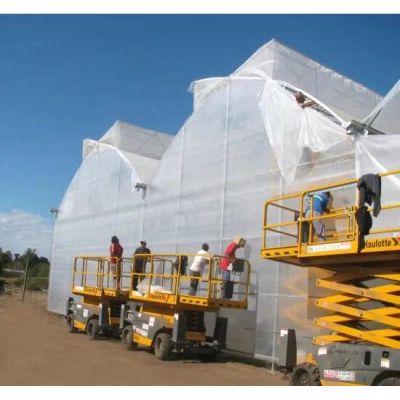
The house ships as a kit of galvanized members, film rolls and system components. Work follows a fixed order: set the foundation, raise the frame and tie the purlins, install tanks, dosing and channel runs, then tension the film and fit vents and doors. Commissioning includes flushing and balancing the feed so every channel receives the same flow. Our engineers can travel to site to guide installation when required.
Routine work is limited. Check film tension at the start of each season, flush and clean the feed lines on the cycle the crop needs, service the dosing unit and circulation fans, and inspect the frame after storm season. Film is the consumable part of the house and is replaced on a three to five year cycle.
The house suits hydroponic tomato and cucumber production, and the same structure is used for leafy crops on rafts and for propagation where clean root conditions matter. Market reporting on FloralDaily follows how commercial protected production is planned. Compare the hydroponics system range, or look at the greenhouse hydroponics and the hydroponic system for lettuce for other options on the same frame system.
The frame and film cover, the hydroponic channel runs, feed and return lines, nutrient tanks and dosing equipment. Tanks and dosing are planned with the structure rather than added later.
With no soil to draw on, the crop depends entirely on the light the cover passes. The film runs above 90 per cent light transmission for that reason.
The hot dip galvanized steel frame is rated for 15 to 20 years under normal growing conditions. The film cover is replaced on a three to five year cycle.
We provide a 10 year structural warranty and a 5 year anti-corrosion warranty on the galvanized frame. Details are set out in the contract for each project.
Send your site dimensions, the crop and channel layout you plan, your water analysis and your local wind and snow loads. We reply with a layout drawing and a full quotation.