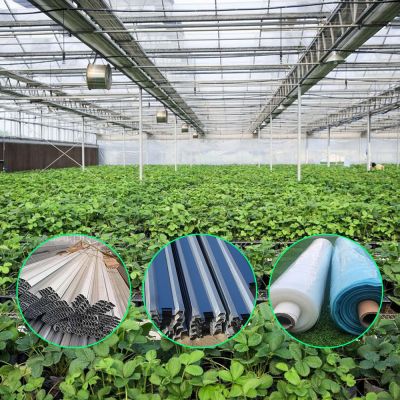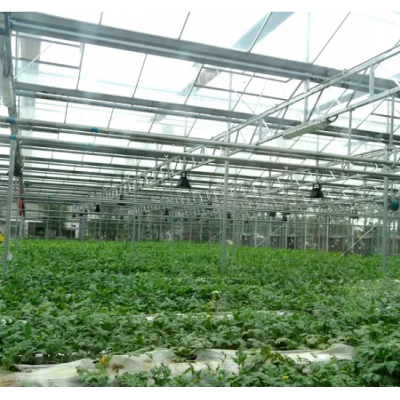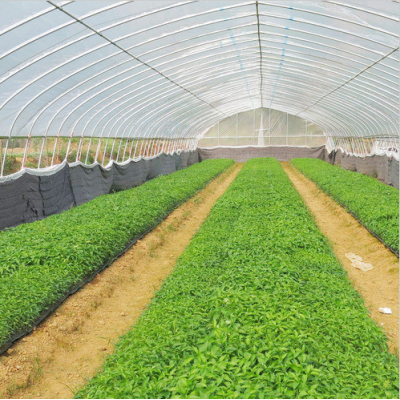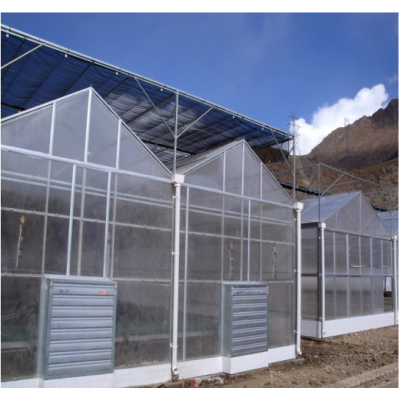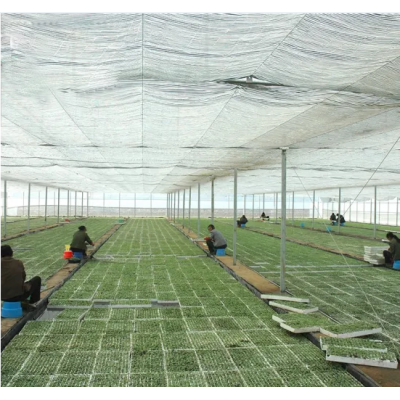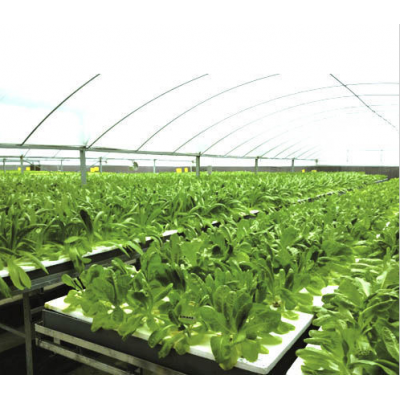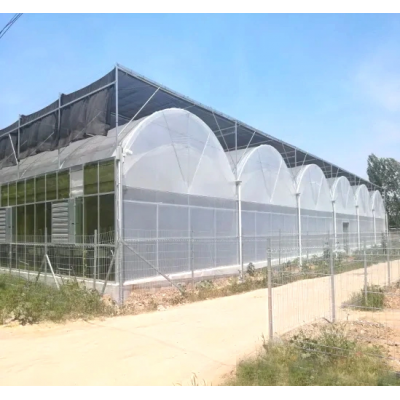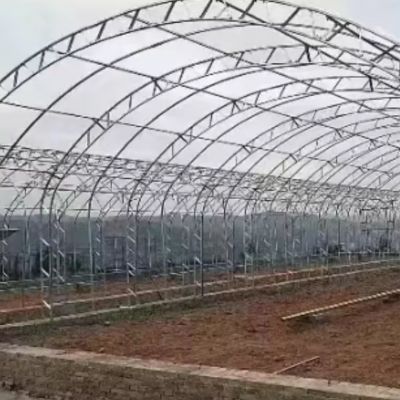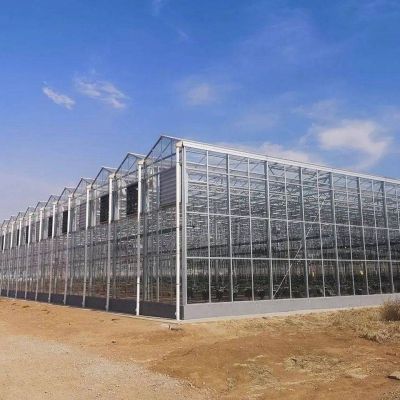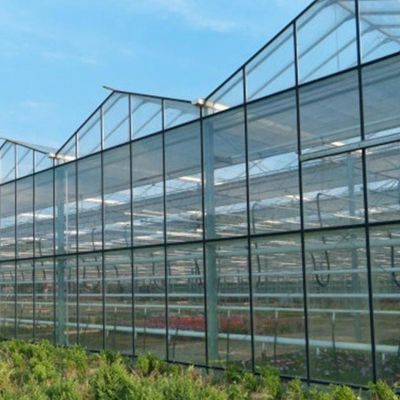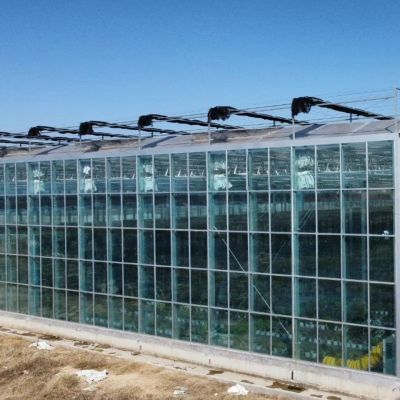
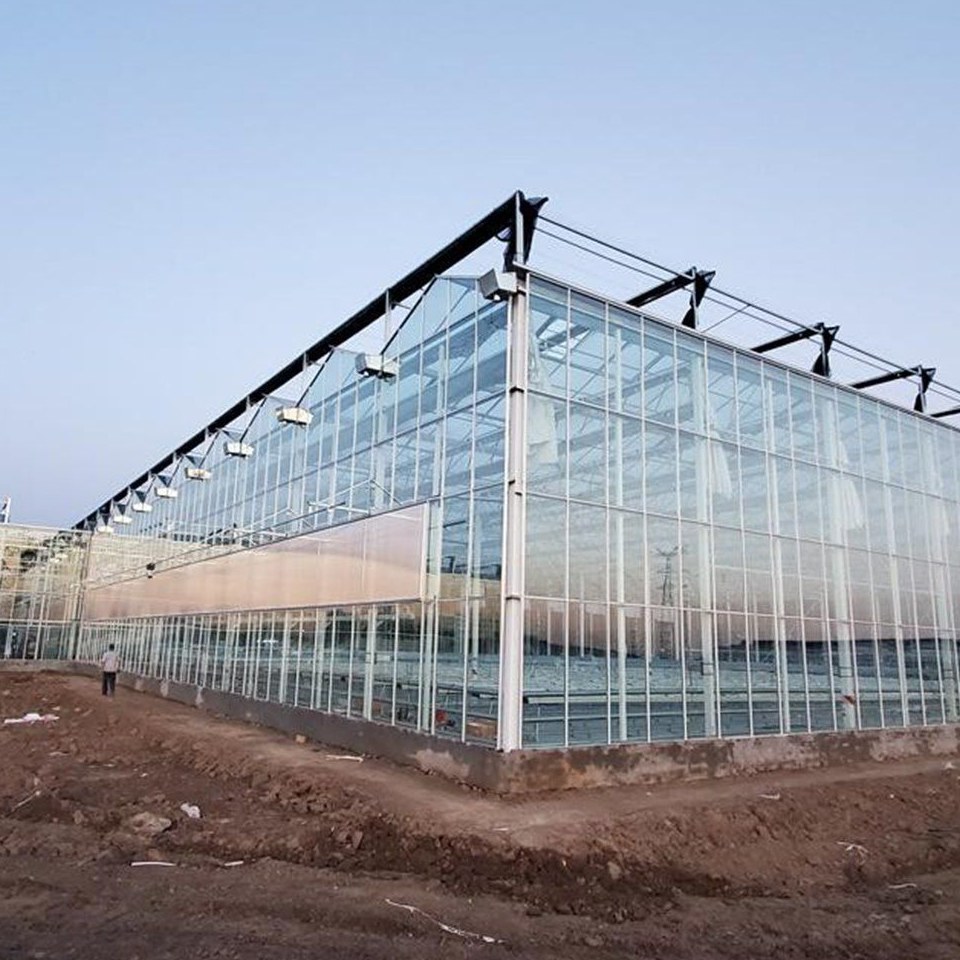
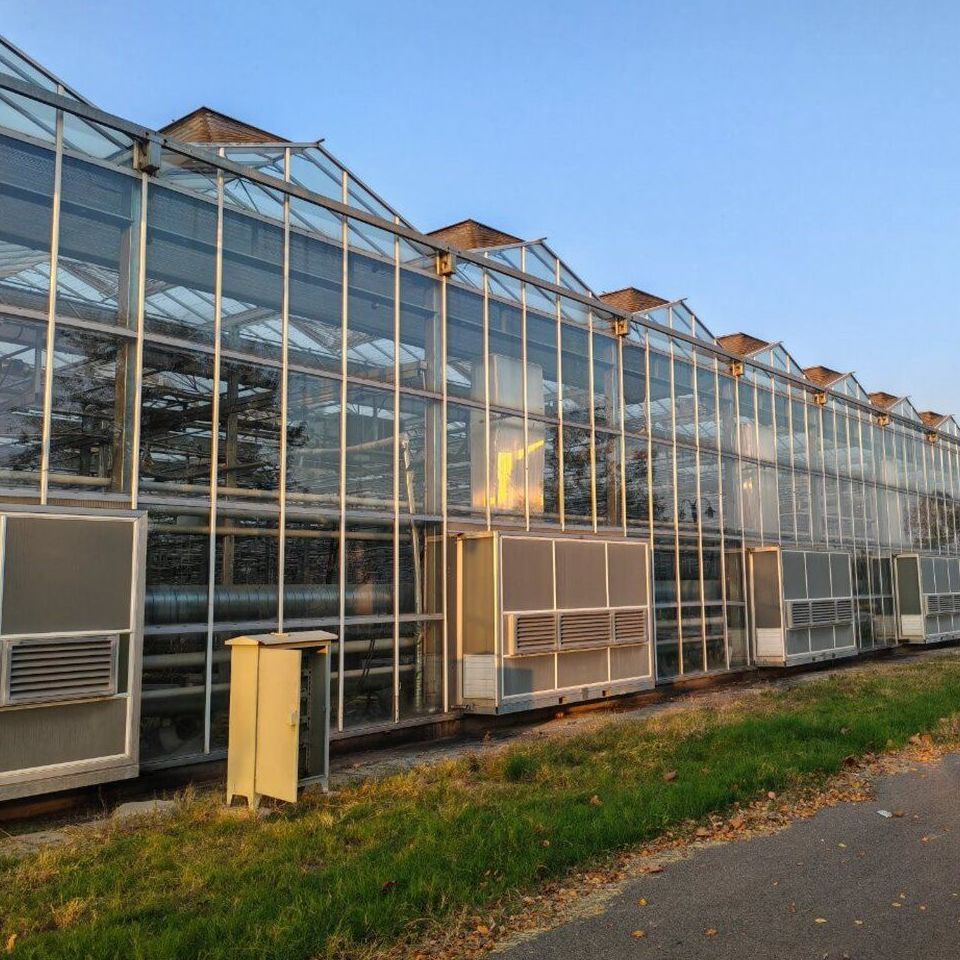
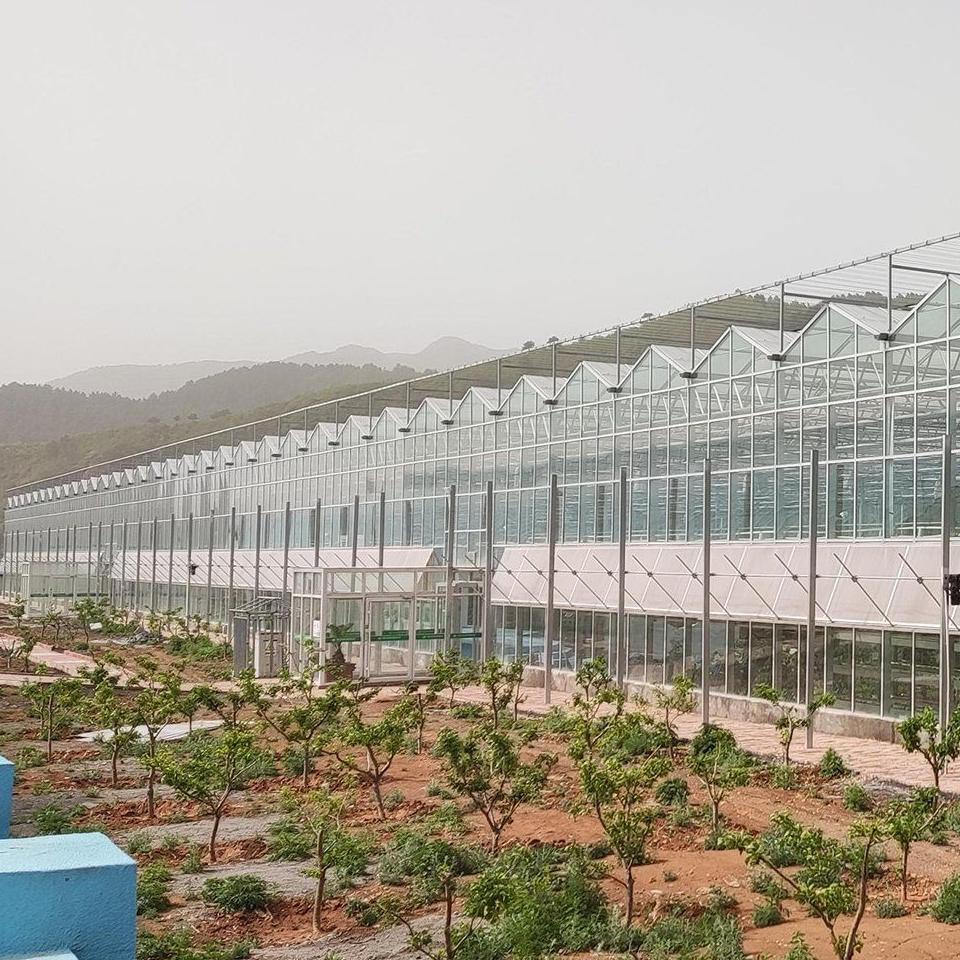
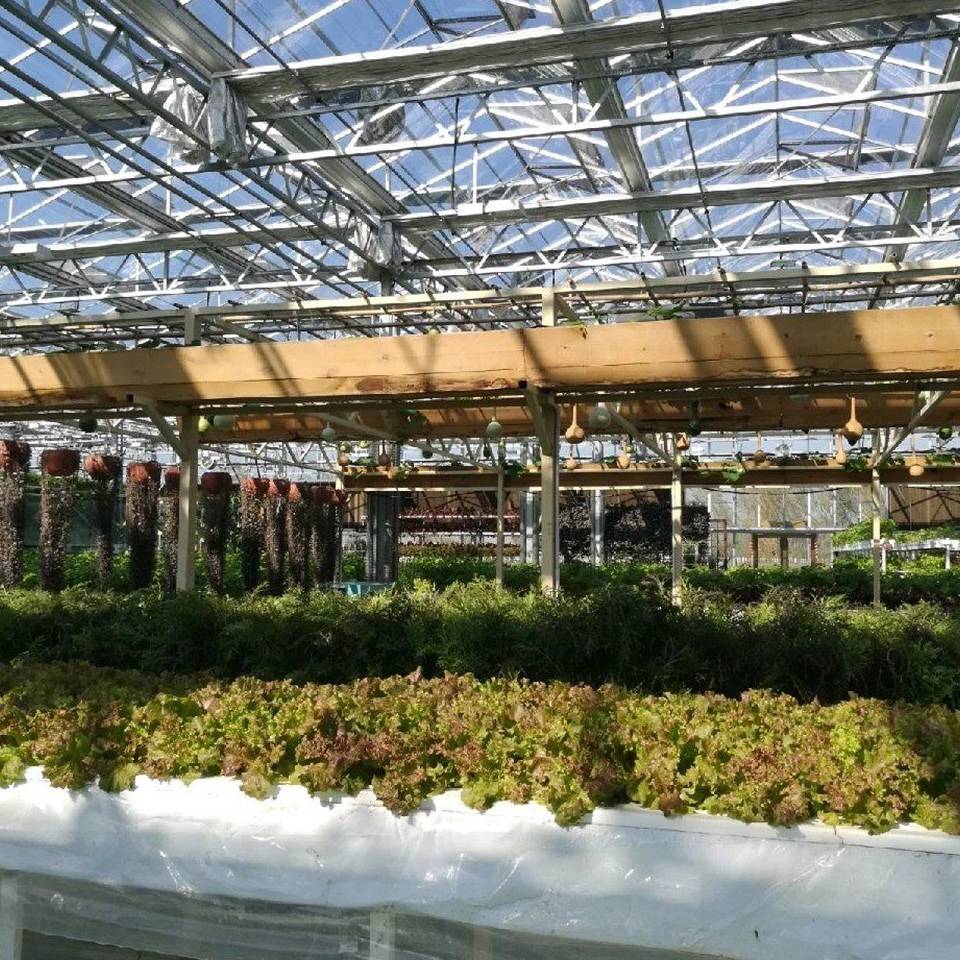
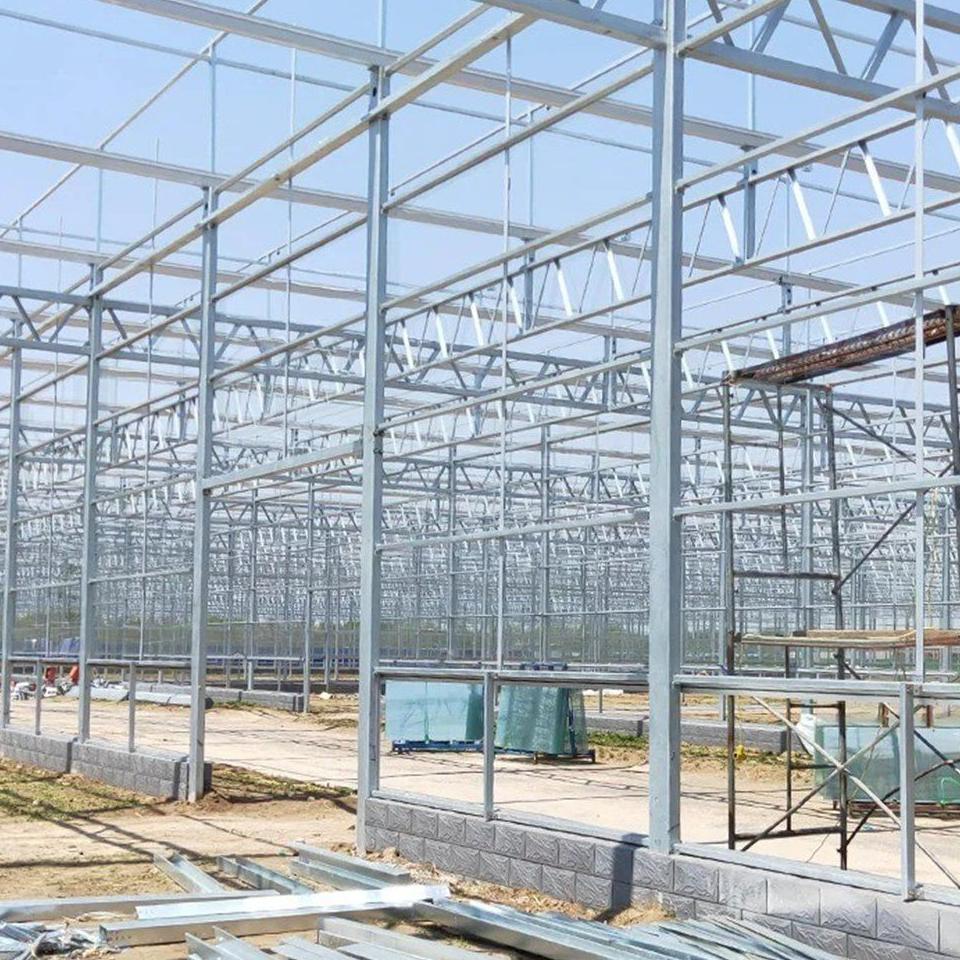
The house ships as a kit: hot dip galvanized steel frame, aluminium glazing bars and twin wall polycarbonate sheet, cut and drilled to the same drawing. The glazing bars are a grooved channel extrusion, so the panel is gripped along every edge rather than pinned at points, which is what holds a sheet down in wind and keeps the joint closed through a season of condensation. Twin wall sheet traps air inside the panel, so the cover itself insulates, and the sheet transmits 90 to 95 percent of available light. Panels are 8 mm or 12 mm, and a cracked sheet is released from its channel and slid out on its own. Spans run from 8 m to 12 m.
A kit house is bought before it is understood. The order arrives as a frame, a set of panels and a box of fixings, and the question that decides whether the build goes well is whether those three things were cut to the same drawing. Supplying them together moves that problem to the supplier, and it is the reason a panel house bought as a kit goes up faster than one assembled from parts sourced separately.
The kit is a hot dip galvanized steel frame, aluminium glazing bars, twin wall polycarbonate panels and the fixings that hold the covering, all cut and drilled to the same drawing before they ship. Galvanizing is applied by hot dipping, so the zinc is bonded to the steel and reaches the inside of the tube, the cut ends and the wall of every drilled hole, which is what keeps a working house standing through years of condensation running down the frame.
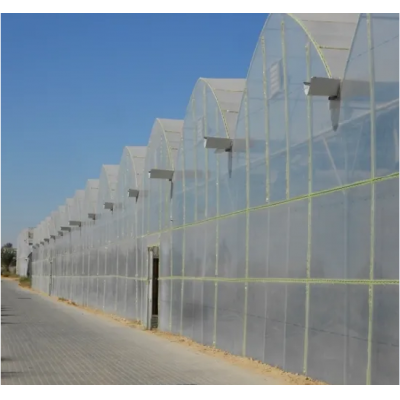
Because the parts are matched, an extension later uses the same glazing bars and the same fixing pattern as the original house. Span is set from 8 m to 12 m, the ridge reaches 3 m to 8 m, and length is built from 10 m to 100 m by adding bays rather than by ordering a different panel. The rest of the panel family is listed on the polycarbonate greenhouse range page on this site.
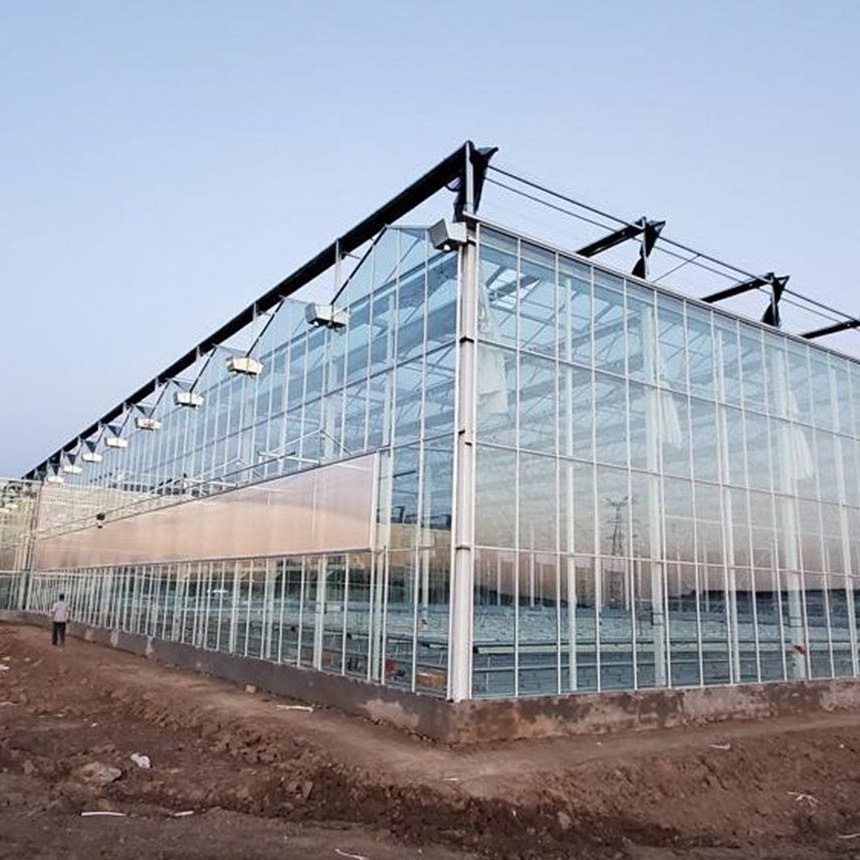
The covering is twin wall polycarbonate hollow sheet at 8 mm or 12 mm, and the thicker sheet is specified where the site is colder or the crop needs a tighter temperature band. The panel is two skins with a cellular core, and the air held in that core is the insulating layer, so the house holds its night temperature more steadily than a single skin cover of the same area. Light transmission is 90 to 95 percent, and both grades carry a UV resistant coating.
Panels are held in aluminium glazing bars on a gasket rather than fixed directly to steel, which lets the sheet move slightly as it warms and cools without cracking at the fixing point. A cracked or soiled panel is released from its channel and a new one slid in, so repair is a small job rather than a re-cover. A house on the same frame with a galvanized frame and a larger panel format is described in the large polycarbonate panel greenhouse.
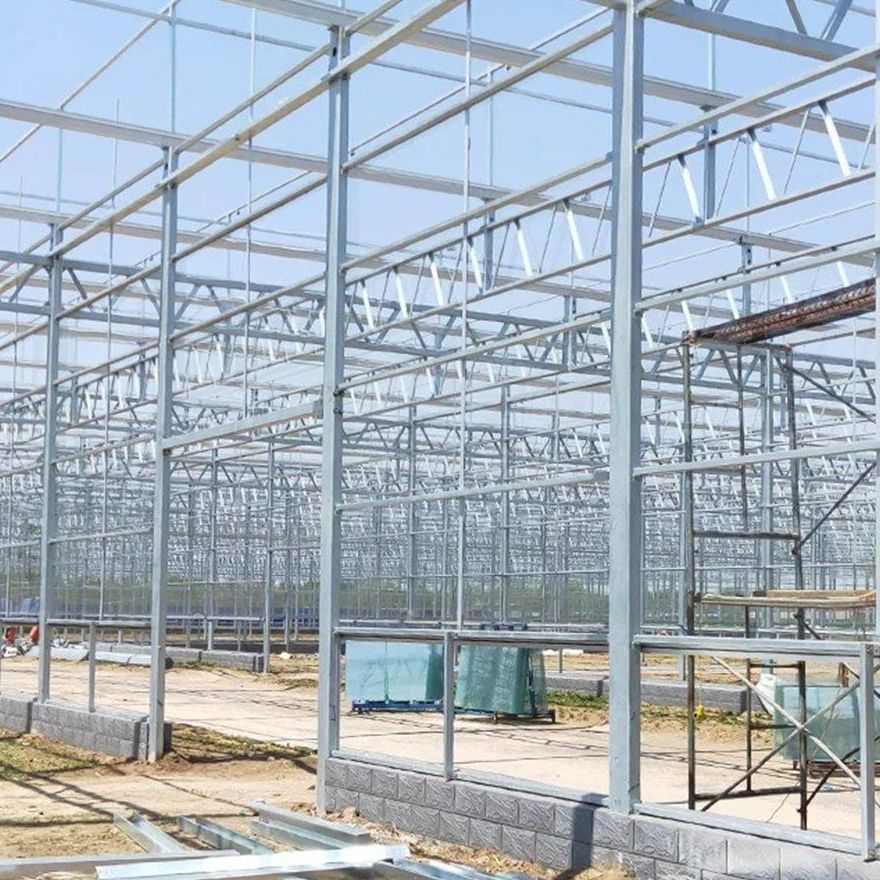
The frame is hot dip galvanized steel with aluminium extrusion for the glazing bars and the gable frames. Alloy does not need painting and does not rust, which is what keeps a door running true after years of use. Everything is bolted rather than welded on site, so the coating survives assembly and a damaged member is unbolted and replaced rather than cut out.
Ventilation runs through roof vents and side vents, worked by hand or on an automated system, and heating from a boiler or radiant pipe is optional. Where the house is used for research or propagation, holding a temperature band matters more than peak transmission, and the vent gear is normally put on a controller for that reason. A panel house aimed specifically at flower crops is described in the insulated panel house for flower crop growing.
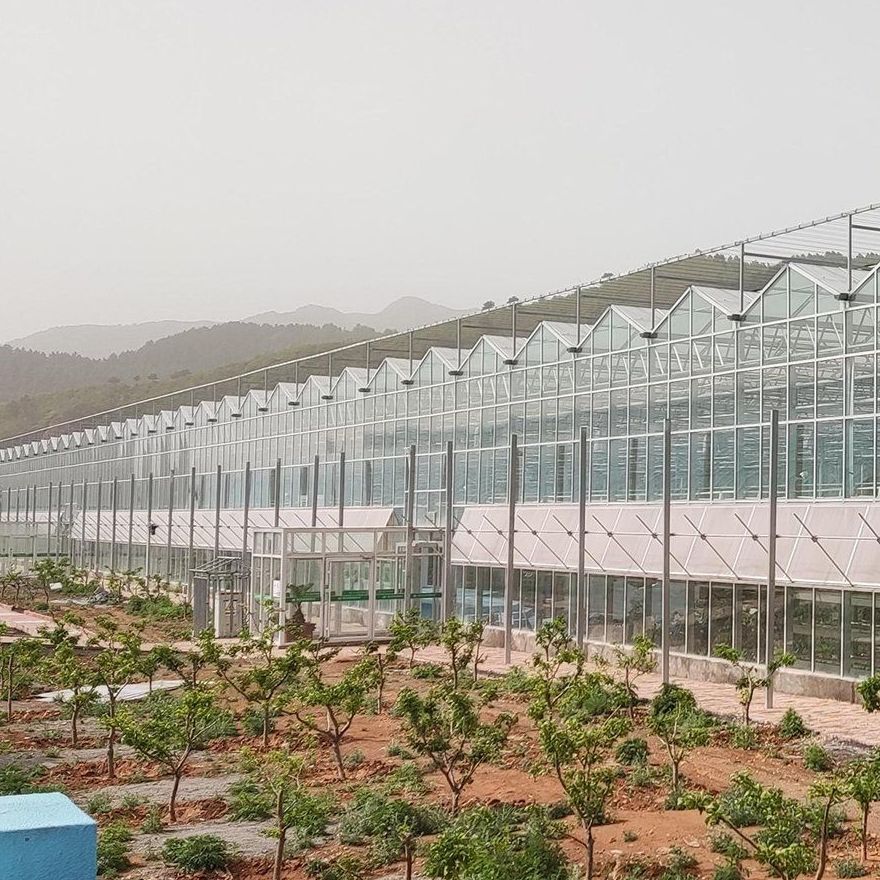
The table below is the standard kit. Span, length, height, panel and ventilation are set to the site and to the crop.
| Greenhouse span | 8 m / 9 m / 10 m / 11 m / 12 m |
| Greenhouse length | 10 m to 100 m, or built to client demand |
| Greenhouse height | 3 m to 8 m |
| Frame | Hot dip galvanized steel, aluminium glazing bars |
| Cover material | Twin wall polycarbonate hollow sheet, 8 mm or 12 mm |
| Light transmission | 90 percent to 95 percent |
| Glazing system | Grooved channel extrusion with gasket, panel replaced individually |
| Kit contents | Frame, glazing bars, panels and fixings |
| Ventilation | Roof vents and side vents, manual or automated |
| Heating | Optional, boiler or radiant pipe |
| Applications | Research, seedling nursery, flowers, experimental bases, vegetables |

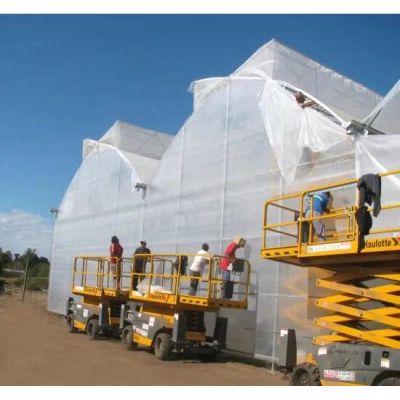
Assembly starts with the base, because a panel house shows any error in the foundation along its length. Base plates or ground posts are set to the drawing first, the frame is erected and squared bay by bay, and the panels go on last, each held in its glazing bar on the gasket. Because the panels are rigid and already cut, the covering stage is quicker than tensioning a film cover, and no welding is done at any point. A house of this size is normally standing in two to four weeks on a prepared site.
Maintenance is lighter than on a film house because the cover is not on a replacement cycle. The routine jobs are checking panel fixings and gaskets after the first season, washing the sheets once a year because dust cuts light transmission more than growers expect, and keeping gutters and downpipes clear. Panel end closures are worth checking as well, since an open flue lets dust and insects into the core of the sheet and reduces the insulation the panel was bought for.
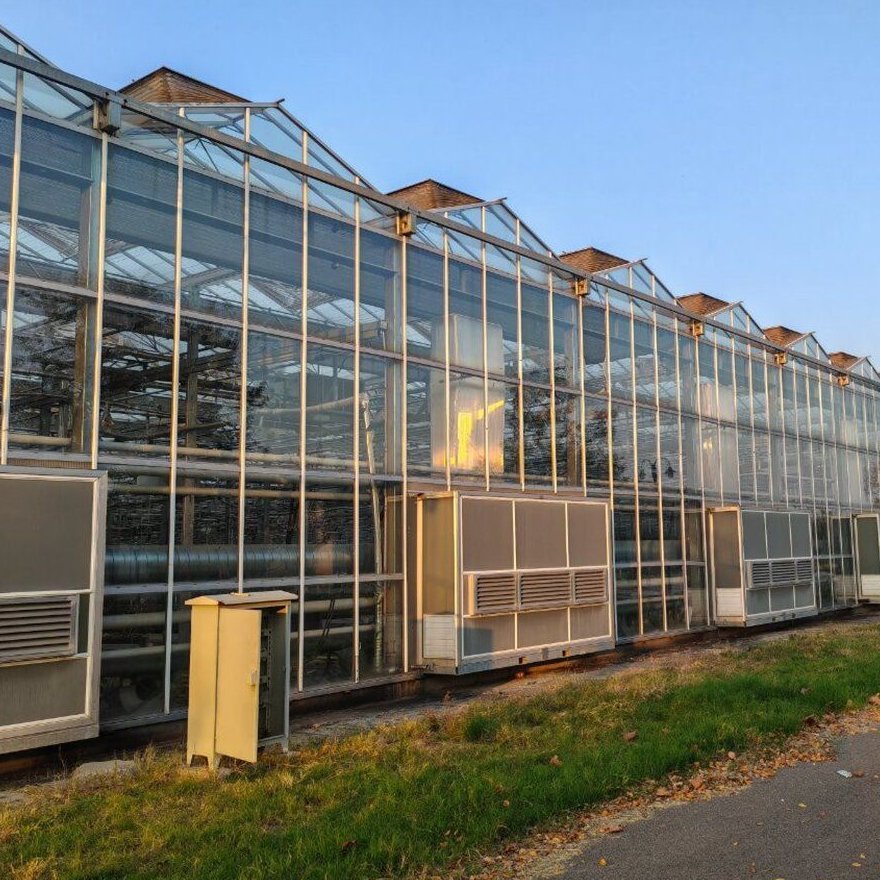
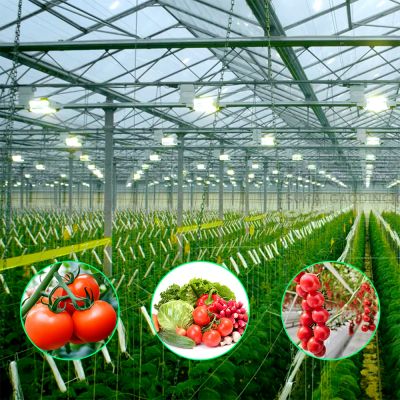
Kits of this type are used for research and experimental bases where conditions have to be repeatable, for seedling and nursery work, for cut flowers and pot plants, and for vegetables grown on a long season. They suit growers who want a permanent covering rather than a renewable one, and buyers who want the house delivered as one matched package rather than assembled from separate suppliers.
Research and extension material on protected crop production, including work on the growing environment inside covered houses, is published by Michigan State University through its department of horticulture. Practical farming and market reporting for growers, including production and price coverage, is published by Farmer's Weekly South Africa. The question that decides the specification is normally the crop the house will be running in ten years, not only at handover.
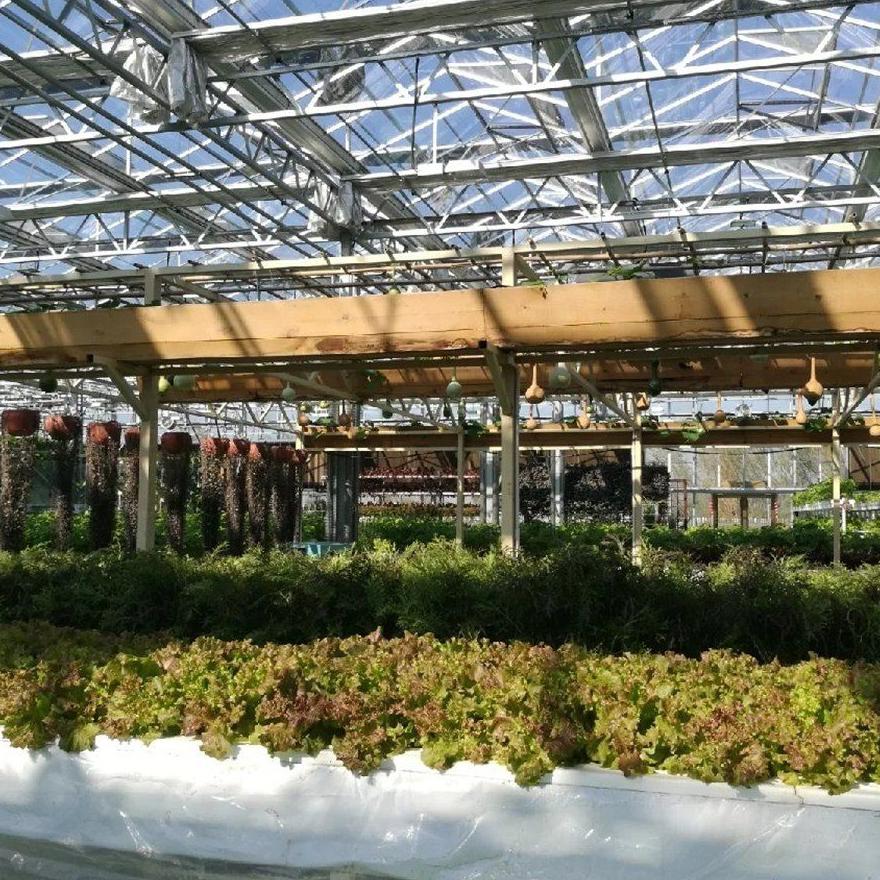
The hot dip galvanized steel frame, aluminium glazing bars, twin wall polycarbonate panels and all the fixings, cut and drilled to the same drawing. That is what makes the house a bolting job on site rather than a fabrication job, and it removes the need to source fittings separately.
Twin wall sheet is two skins with a cellular core, and the air held in that core is the insulating layer. The house holds its night temperature more steadily than a single skin cover of the same area, and the panel is rigid, so nothing flaps against the frame and there is no re-tensioning to schedule.
The galvanized steel frame is rated for 15 to 20 years under normal growing conditions. Polycarbonate panels keep their light transmission for 20 years or more when they are cleaned and left undamaged.
We provide a 10 year structural warranty and a 5 year anti-corrosion warranty on the galvanized frame. Details are set out in the contract for each project.
Send your site dimensions, the crops you plan to grow and your local wind and snow loads. We reply with a layout drawing and a full quotation.