A Venlo roof in PC sheet is a compromise that suits a lot of sites: the repeated small ridges give a stiff roof over a wide span, and the PC cladding insulates better than glass while weighing less. This listing quotes that house on a hot dip galvanized frame, in spans from eight to twelve metres, lengths from ten to a hundred metres and heights from three to eight metres, with the cladding and the ventilation quoted per project. It is a sensible choice where hail is a risk or where night heat is the limiting factor, and it costs more than film to buy.
PC sheet and a Venlo roof are a natural pair: the roof shape keeps the trusses shallow over a wide span, and the cladding adds insulation without the weight of glass. This page covers the house in this listing, part of the polycarbonate greenhouse range on this site.
A Venlo roof is a row of small ridges rather than one big gable. In PC that matters because the cladding is fixed in short panels between glazing bars, and short panels deflect less than long ones. The result is a house that spans widely without a deep truss over the crop.
The cladding is also the insulation. A multiwall sheet traps still air, which is what slows heat loss at night, and on a crop that is sold on timing that is often worth more than the light lost against glass.
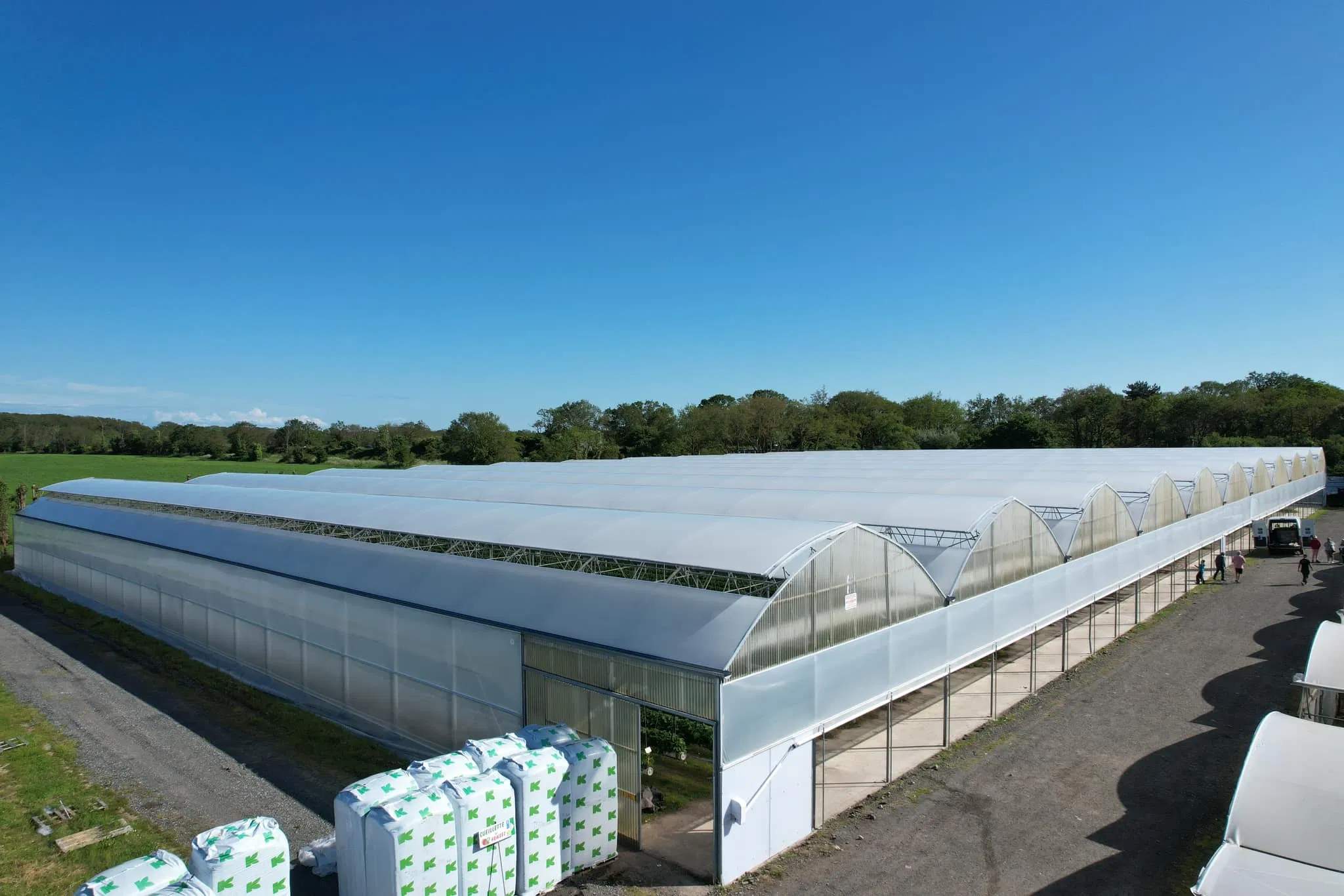
Spans run from eight to twelve metres, lengths from ten to a hundred metres, and heights from three to eight metres, all built to order. Height is the number to settle first: on a Venlo section the gutter height sets the working space under the truss, and the ridges add air volume above it.
Length is a layout choice. A long run gives a sprayer or a harvest trolley a straight path, and it spreads the ventilation load along one line instead of several end walls.
| Roof type | Venlo, multi span, repeated small ridges |
| Cladding | PC sheet, grade and thickness confirmed at quotation |
| Frame | Hot dip galvanized steel |
| Span | 8 to 12 m, built to order |
| Length | 10 to 100 m, built to site |
| Height | 3 to 8 m |
| Crops | Vegetables, fruit and flowers |
| Ventilation and screens | Quoted with the project |
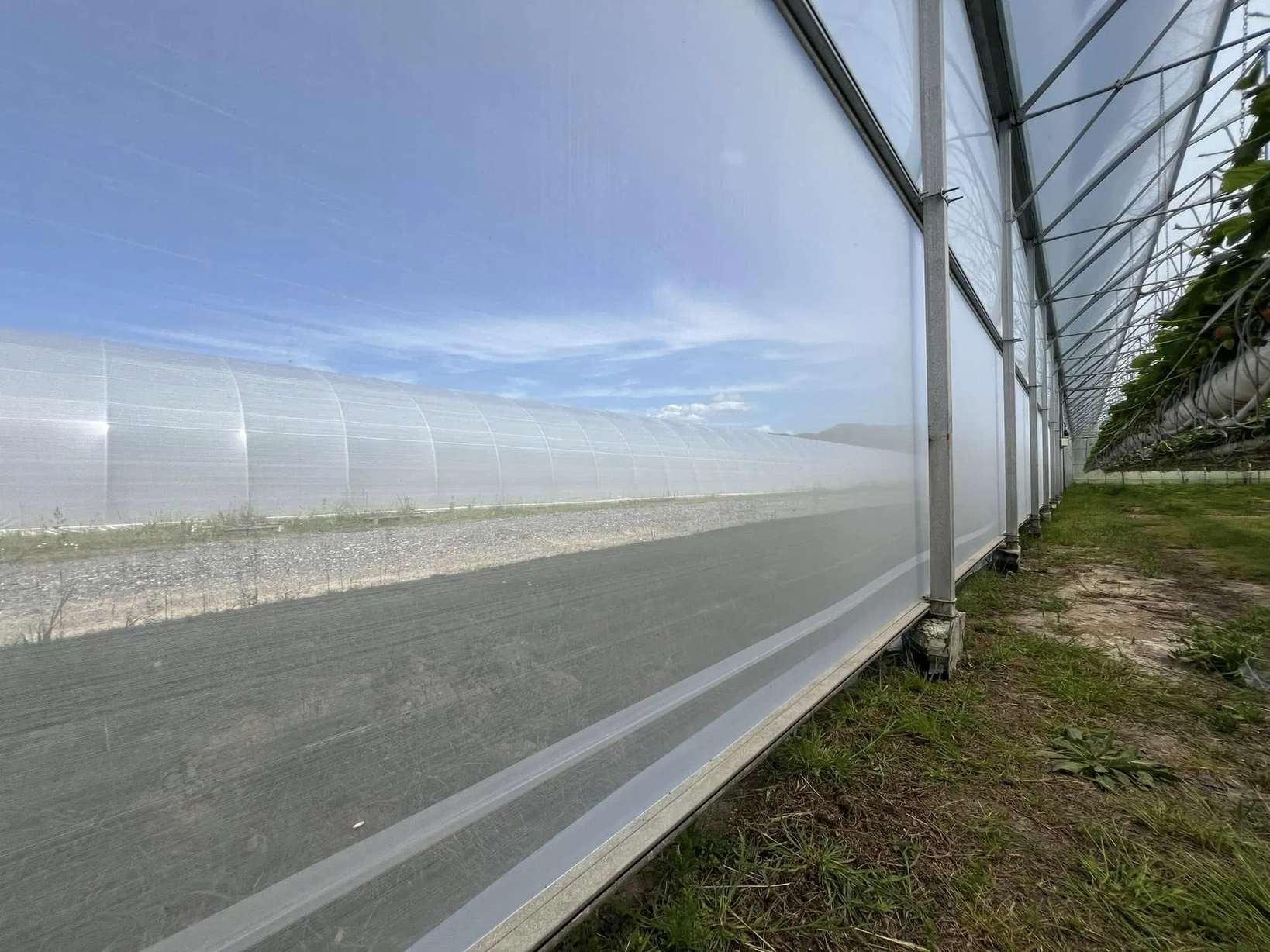
Against glass, PC loses a little light and gains insulation and impact resistance. Against film, PC costs more up front and lasts longer, and it does not flap, which matters on a wide roof where a loose cover wears against the frame.
The practical decision is usually hail and labour. A site that gets hail every few seasons, or a site where recovering a film house is difficult, tends to justify PC even at the higher capital cost.
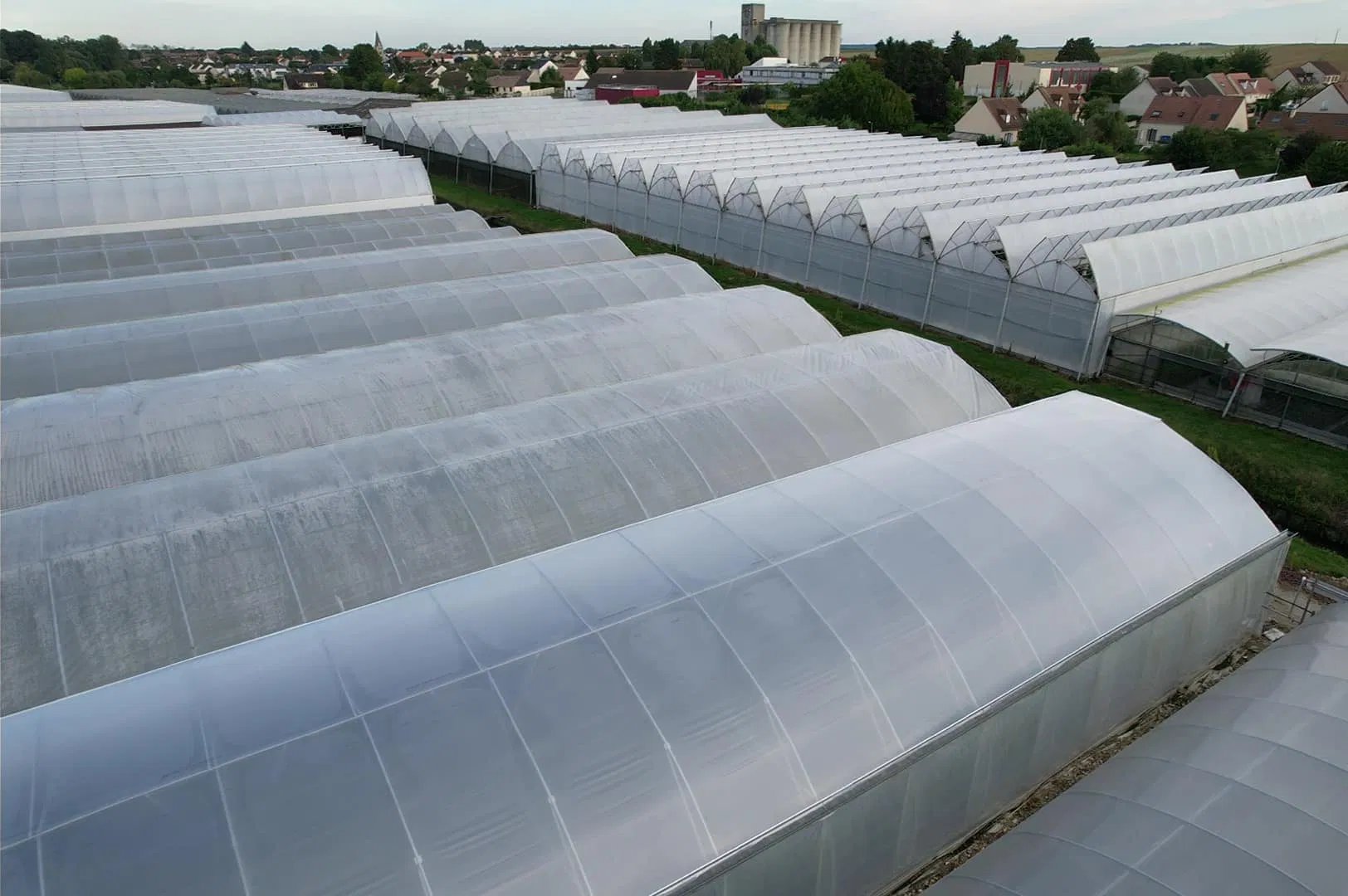
PC sheet already insulates, and a thermal screen adds a second barrier for the night. The two together change the economics of a cold site: a house that would need heating to hold a temperature can often be run on screens alone for part of the year.
The screen has a cost too, in light and in maintenance. Screens that stay closed too long in spring cost more yield than they save in heat, which is why the control strategy matters as much as the screen itself.
PC houses with a kit format are described on the twin wall PC kit page, and a PC house with a hydroponic seedbed on the PC house with hydroponic seedbed page.
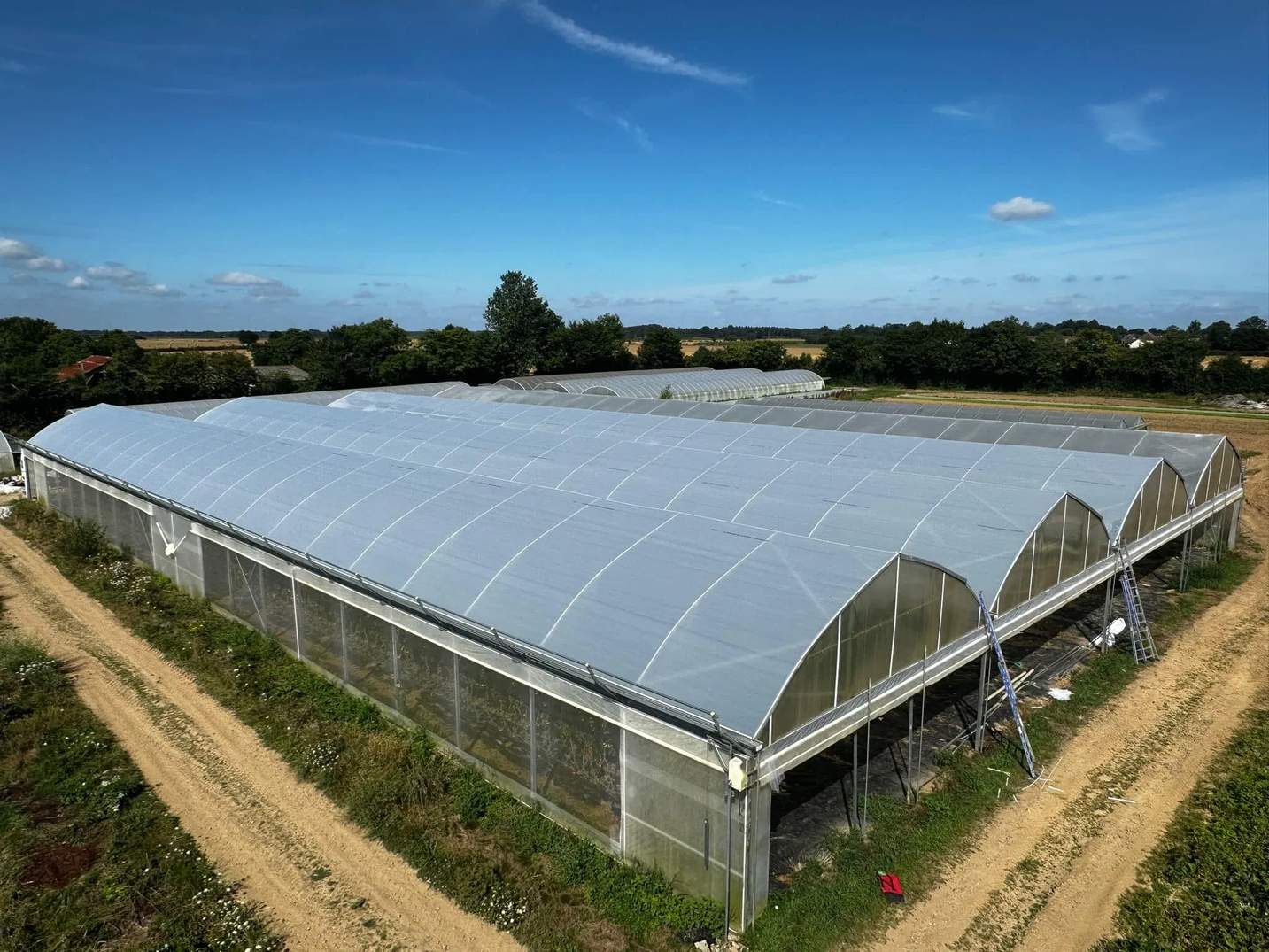
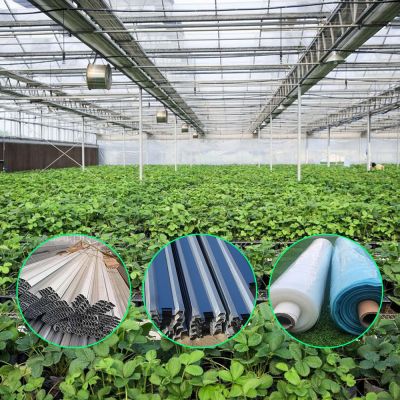
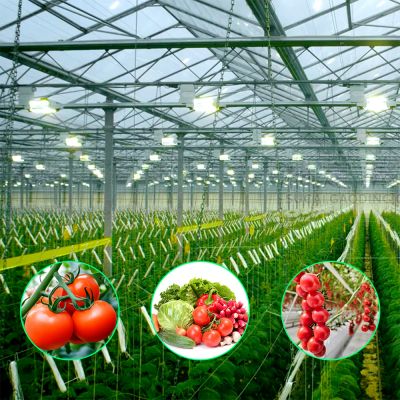
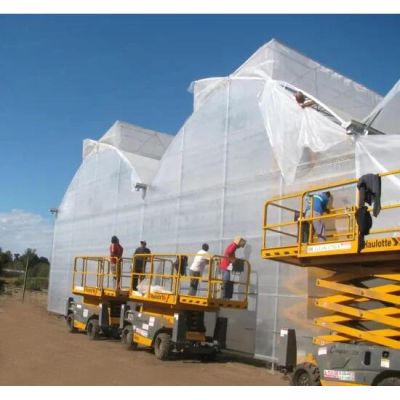
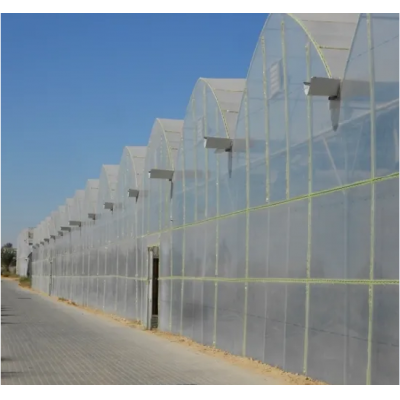
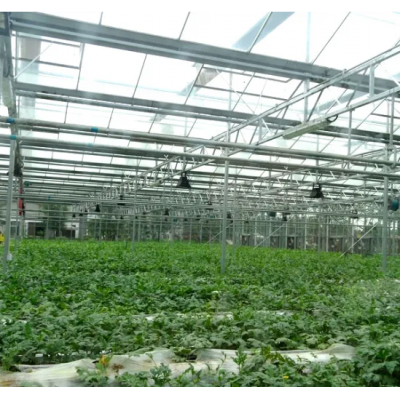
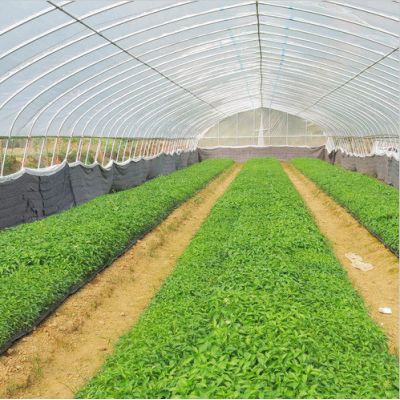
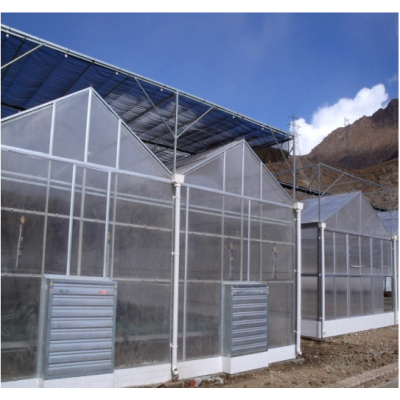
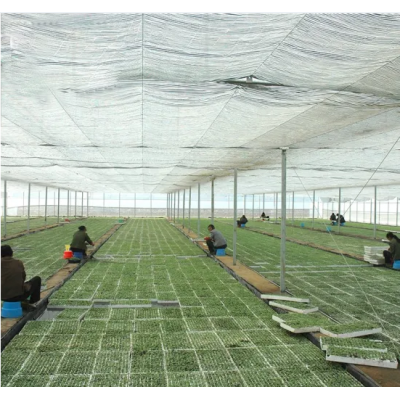
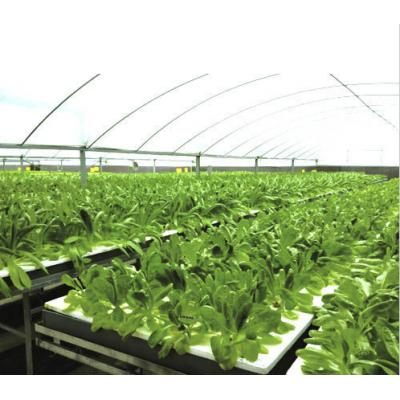
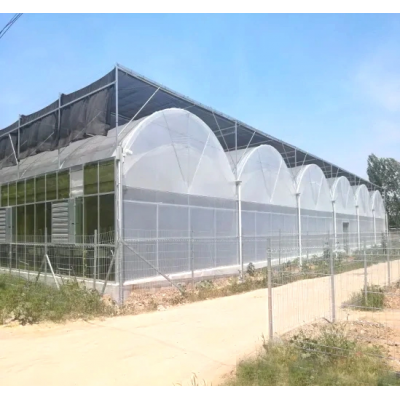
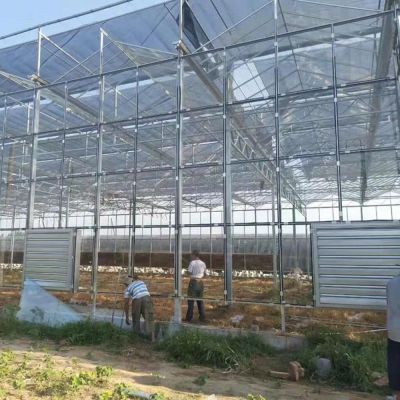
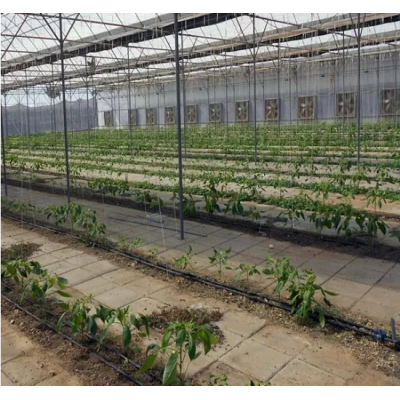
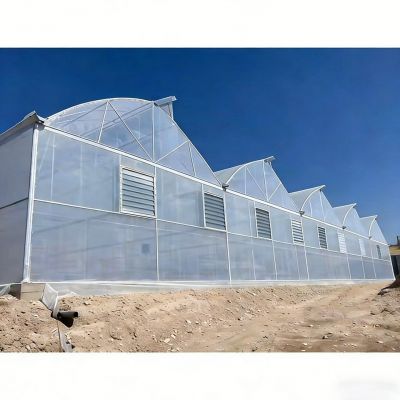
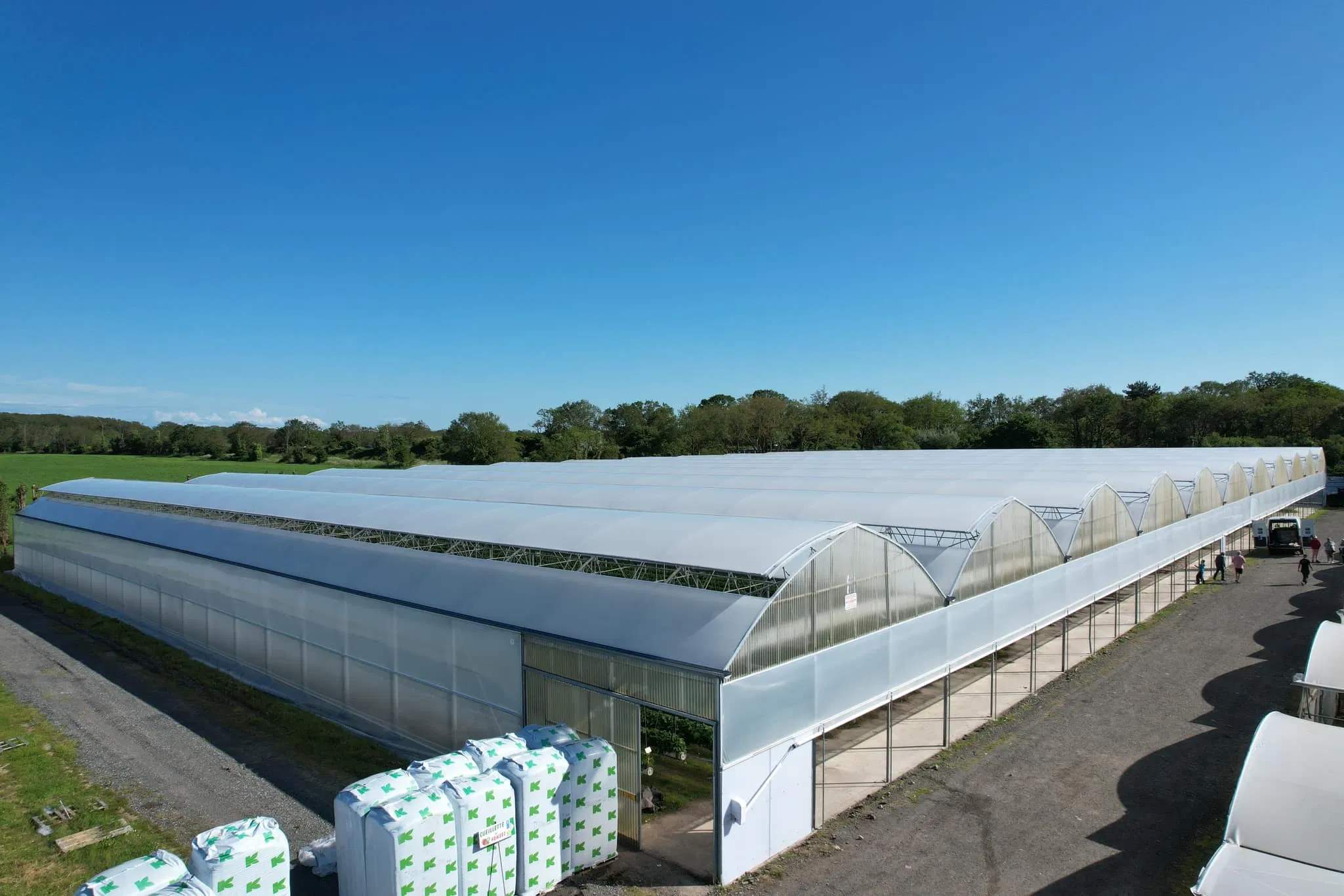
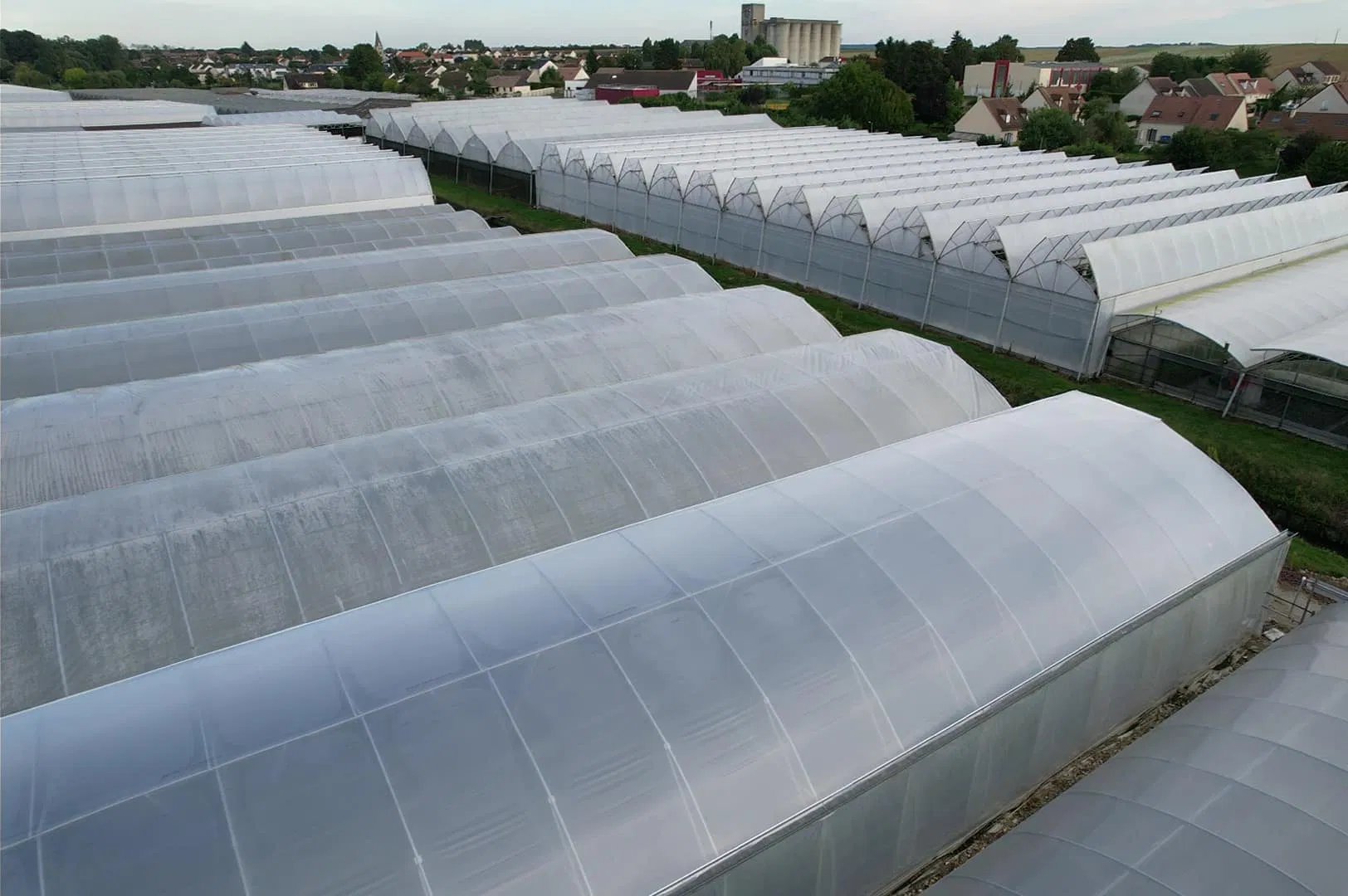
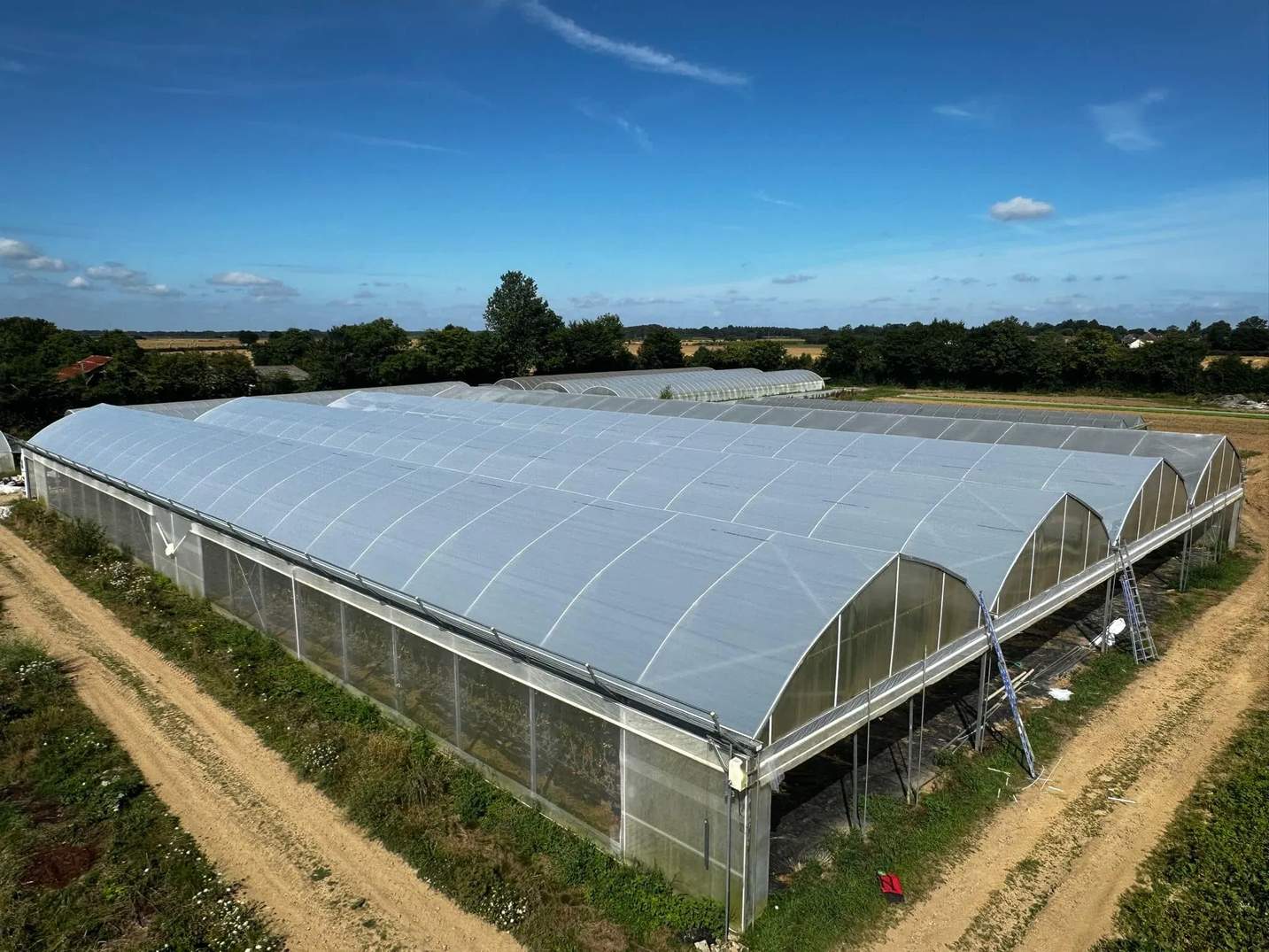
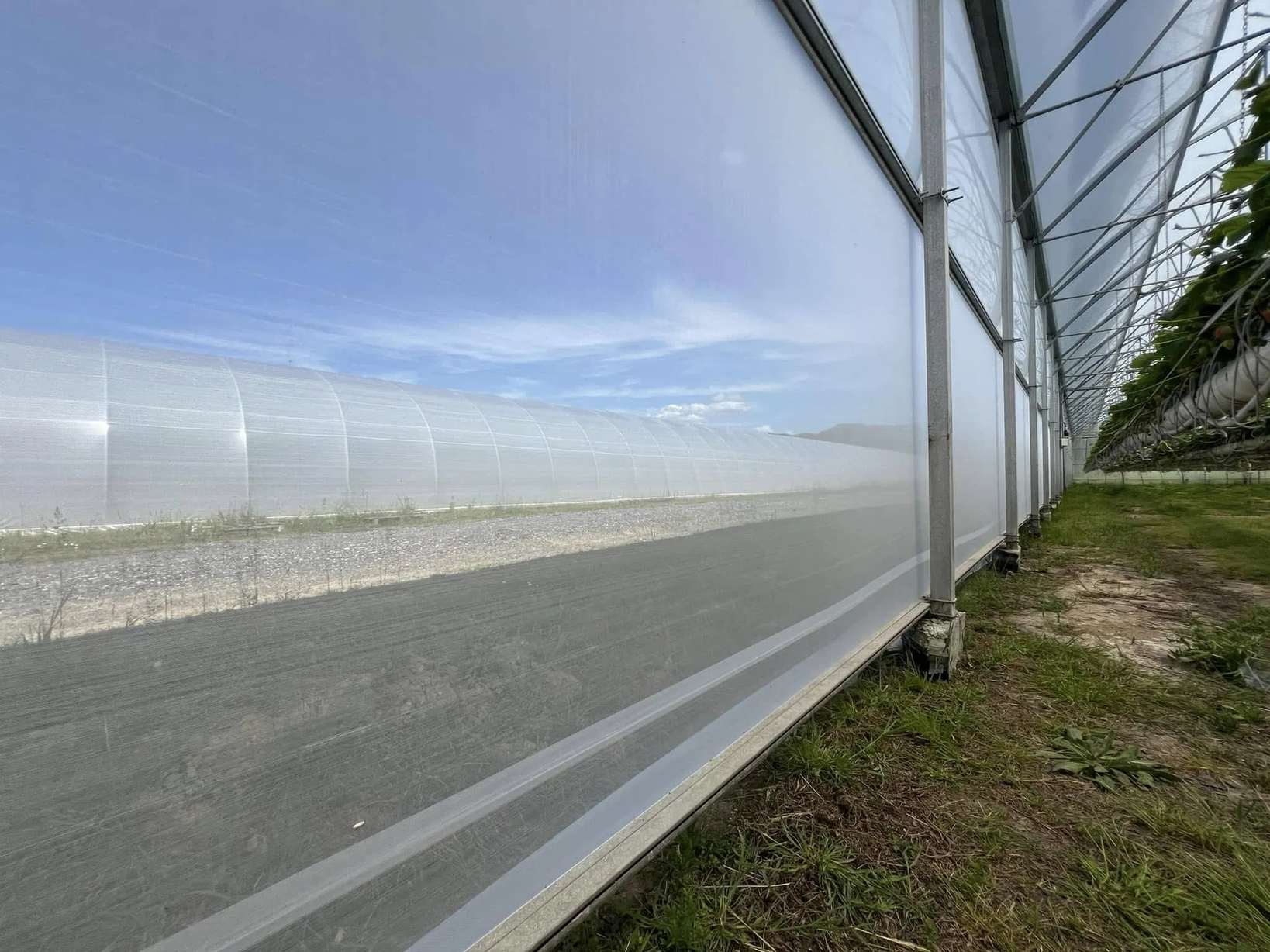
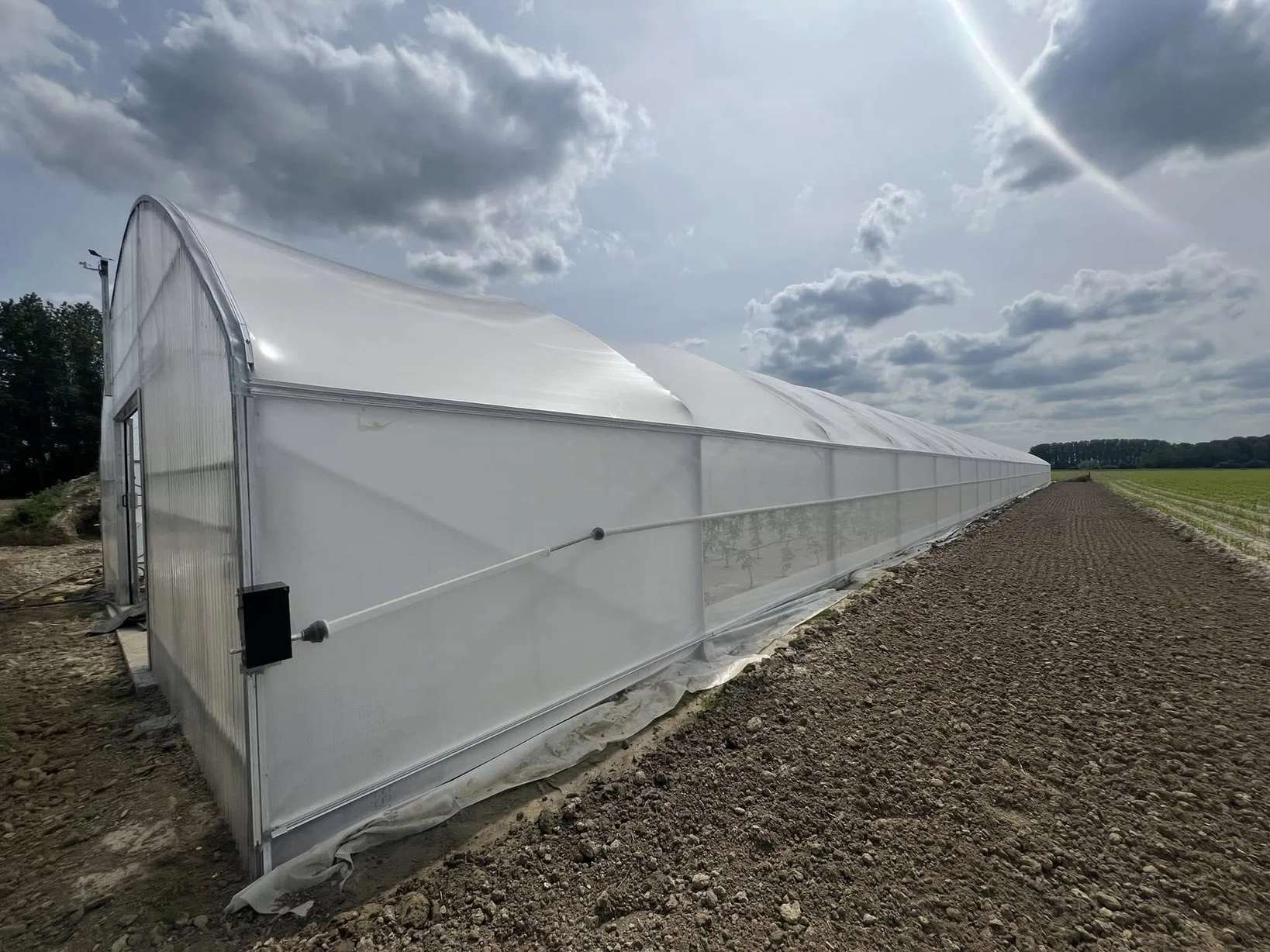
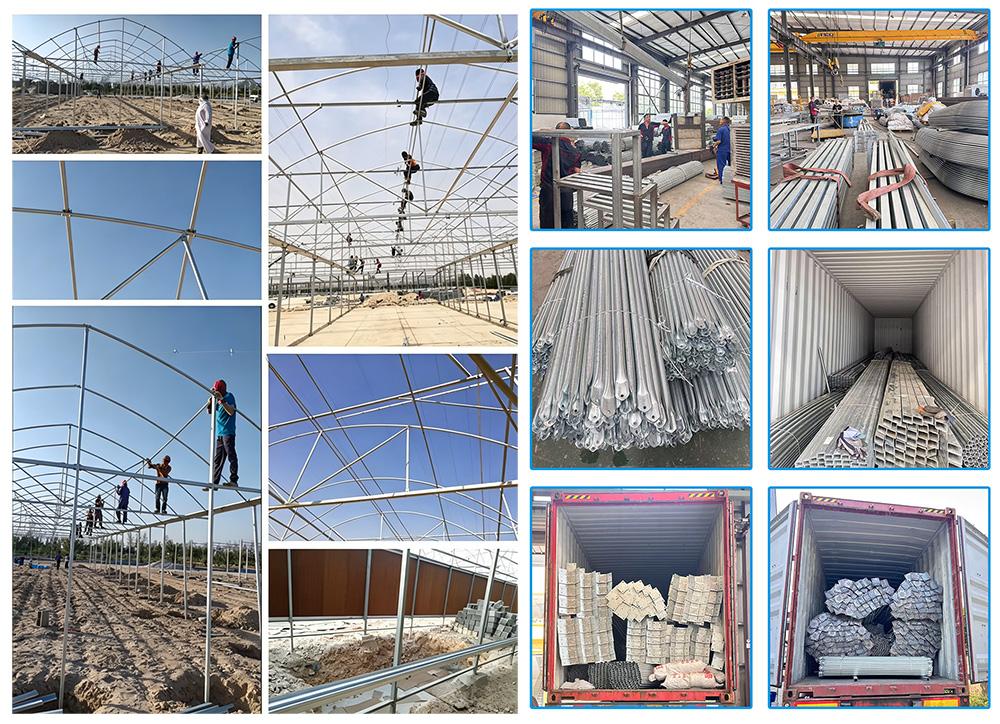
The photographs in this listing show the same multi span frame under film rather than under PC, which is common when a manufacturer builds one frame in several covers. Read them as a picture of the structure and the site layout, not as a picture of the cladding: the PC version is quoted on the same frame with different glazing bars and fixings.
AgriLand-UK publishes farming and horticulture coverage at AgriLand, and international horticultural trade coverage at HortiBiz.
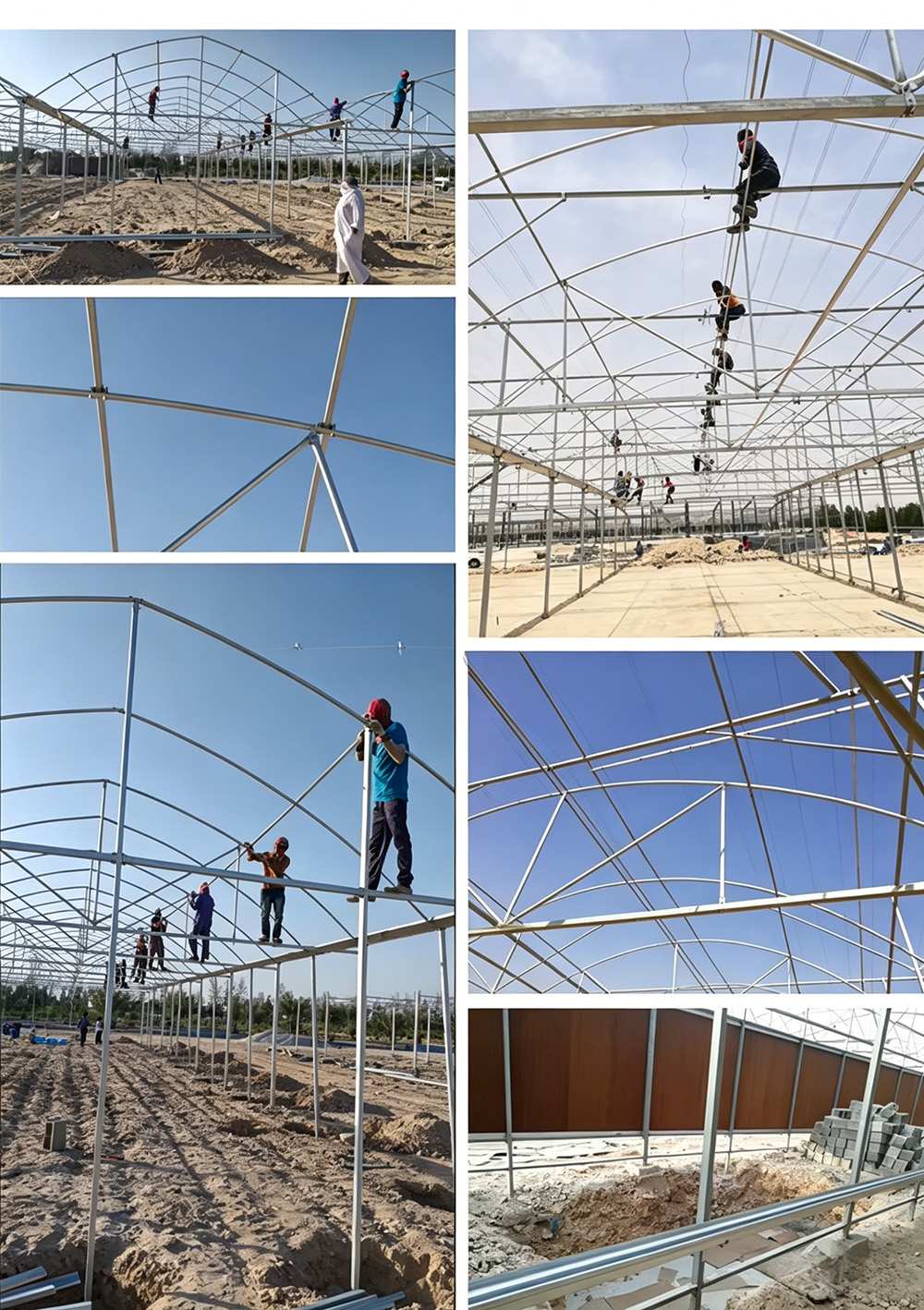

The hot-dip galvanized steel frame is designed for a 15-20 year service life in normal agricultural environments, with a double-sided zinc coating of 200-275 g/m². Film covers are replaced every 3-5 years, while glass and PC panels carry their own manufacturer warranties.
A standard multi-span greenhouse is typically erected in 2-4 weeks, depending on the span, the number of bays and site access. Foundation work and glazing are the two stages that set the pace, and both are scheduled before the frame arrives.
Yes. We customize span width, bay length, gutter height, covering material (film, PC sheet or glass) and ventilation configuration. Share your crop type, local climate and growing area, and our engineers will size the structure to match.
Film suits low-cost tunnels on 3-5 year replacement cycles. Glass delivers the highest light transmission and the longest lifespan, at the highest cost. PC sheet insulates better than film and suits cold or high-humidity climates. The right choice depends on climate, crop and budget.
They show the frame under film. The PC build uses the same structure with different glazing bars and fixings, and it is quoted separately. If the cladding matters to you, ask for a photograph of a completed PC house before ordering.
Yes. A PC panel is replaced individually, in the same way as a glass pane, which is one of its practical advantages over a film cover that has to be released along the whole bay.