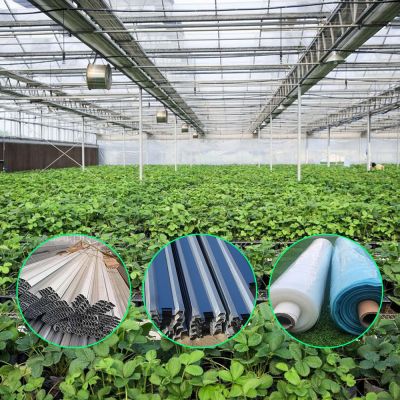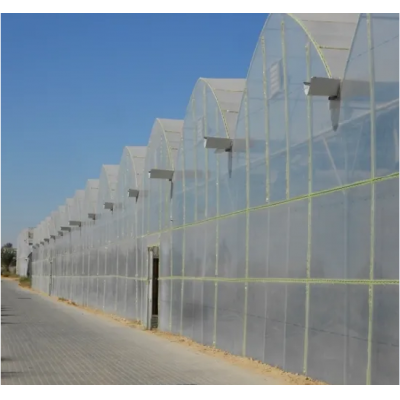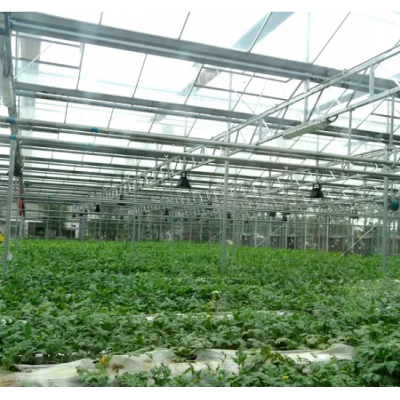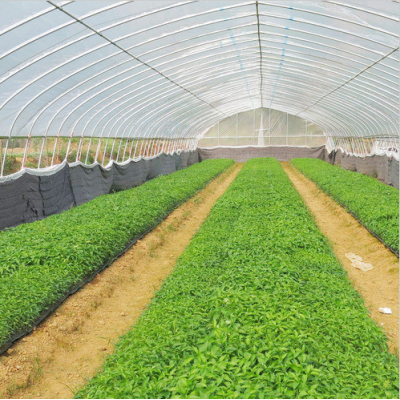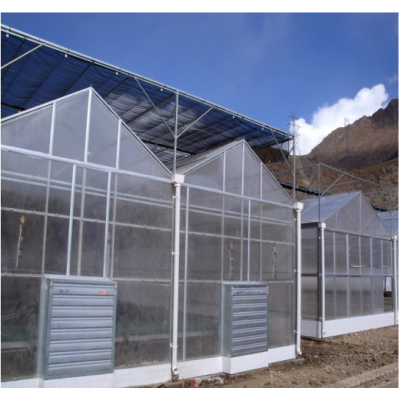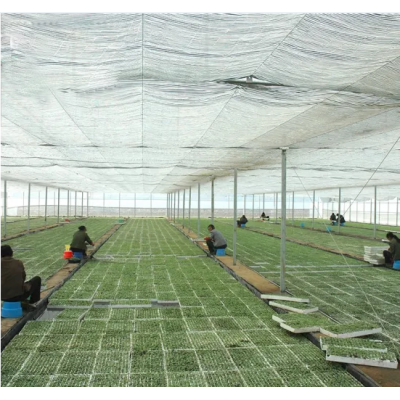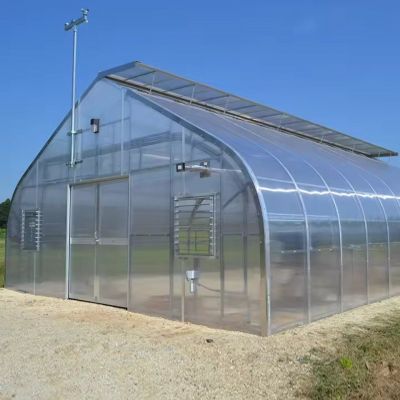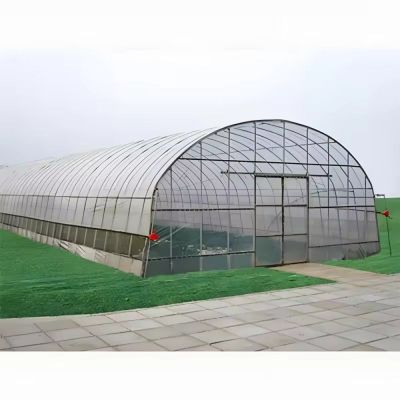
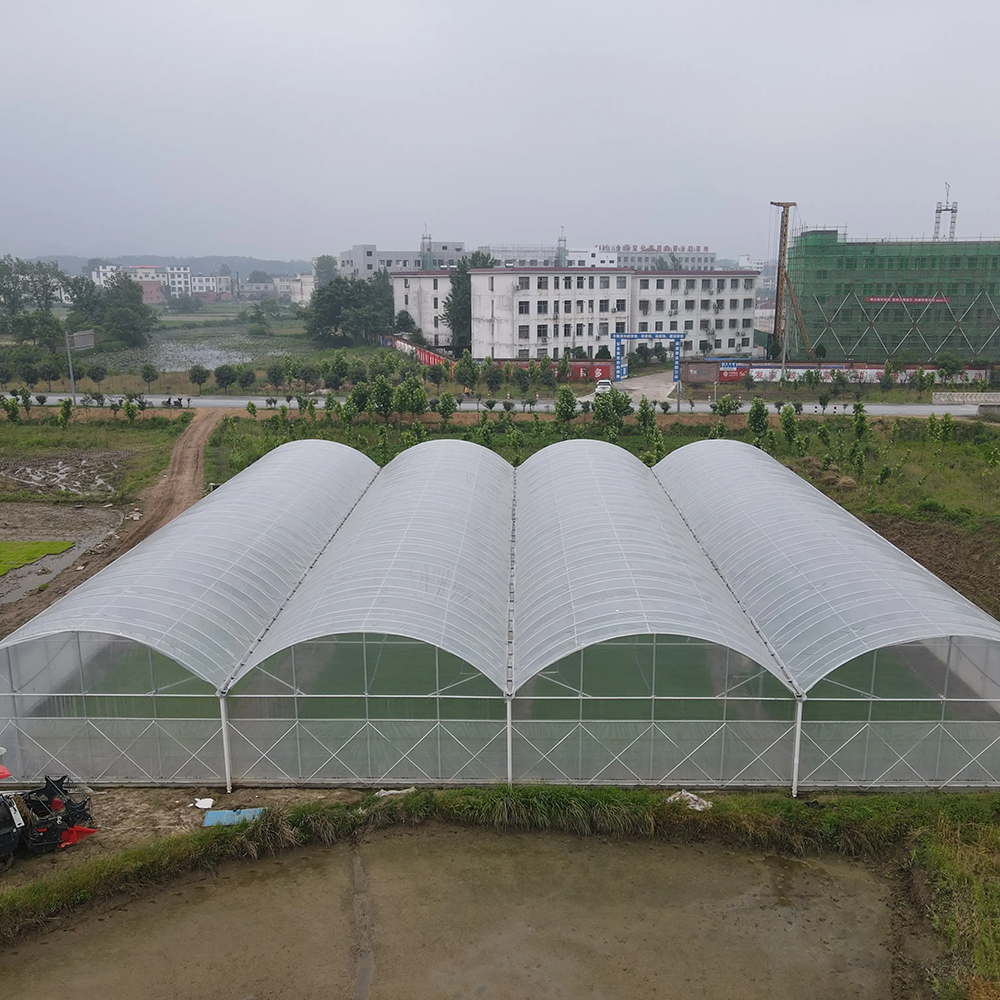
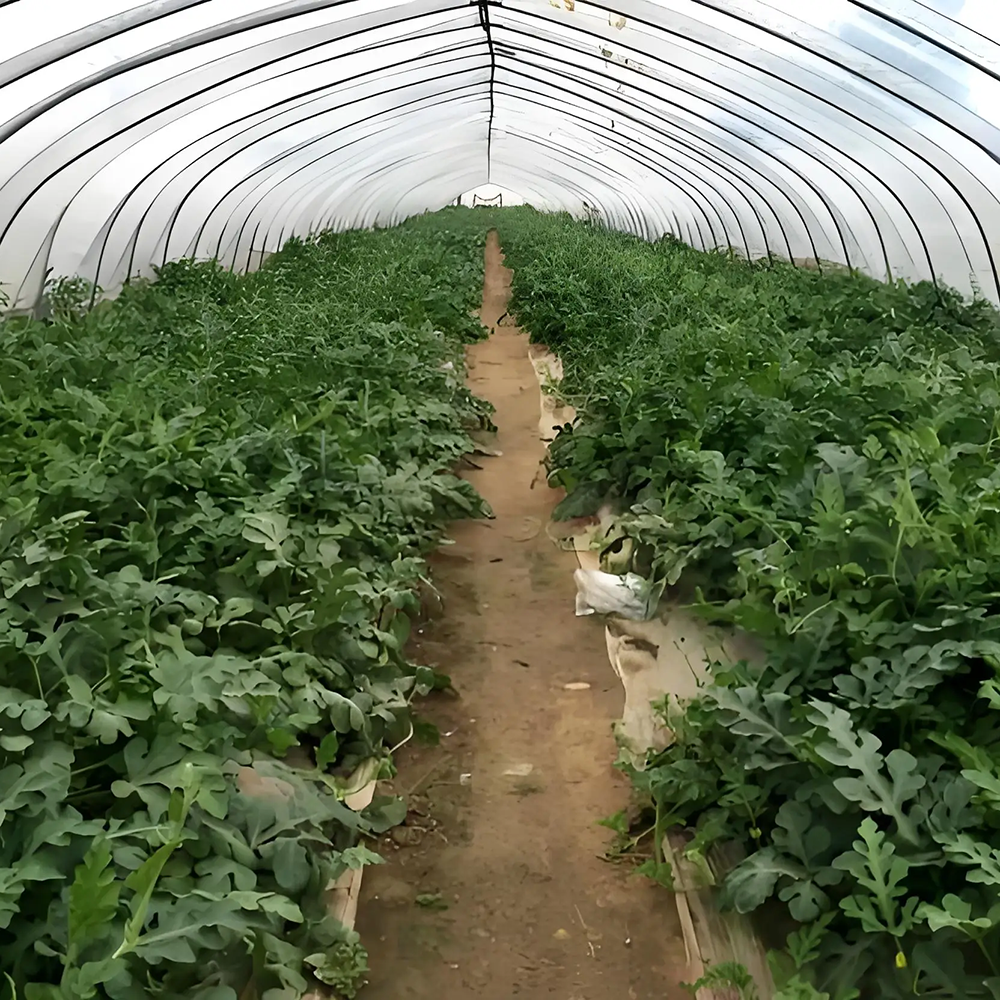
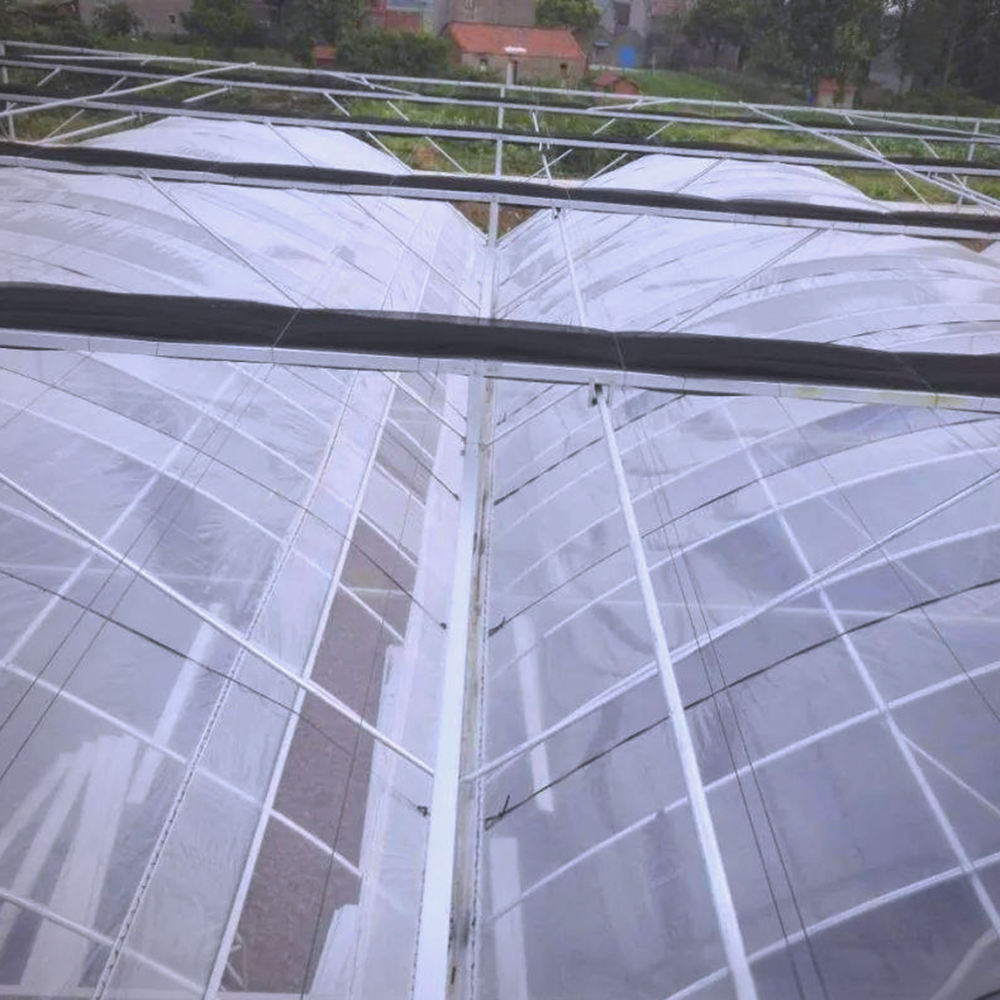
This plastic film greenhouse is a single or multi-span polytunnel built for growers who need a working structure rather than a display unit. The frame is hot-dip galvanized steel pipe, and the covering is UV-stabilized PE film that transmits up to 90 percent of available light while holding a steady microclimate inside. We supply the complete package: frame, film, fixing channels, ventilation windows and foundation brackets. Spans and ridge heights are set to your plot, and optional drip irrigation, shading or cooling systems can be added at the same time. It suits vegetable and flower production, seedling raising, fruit growing and small-scale aquaculture, with a 15-20 year service life for the frame.
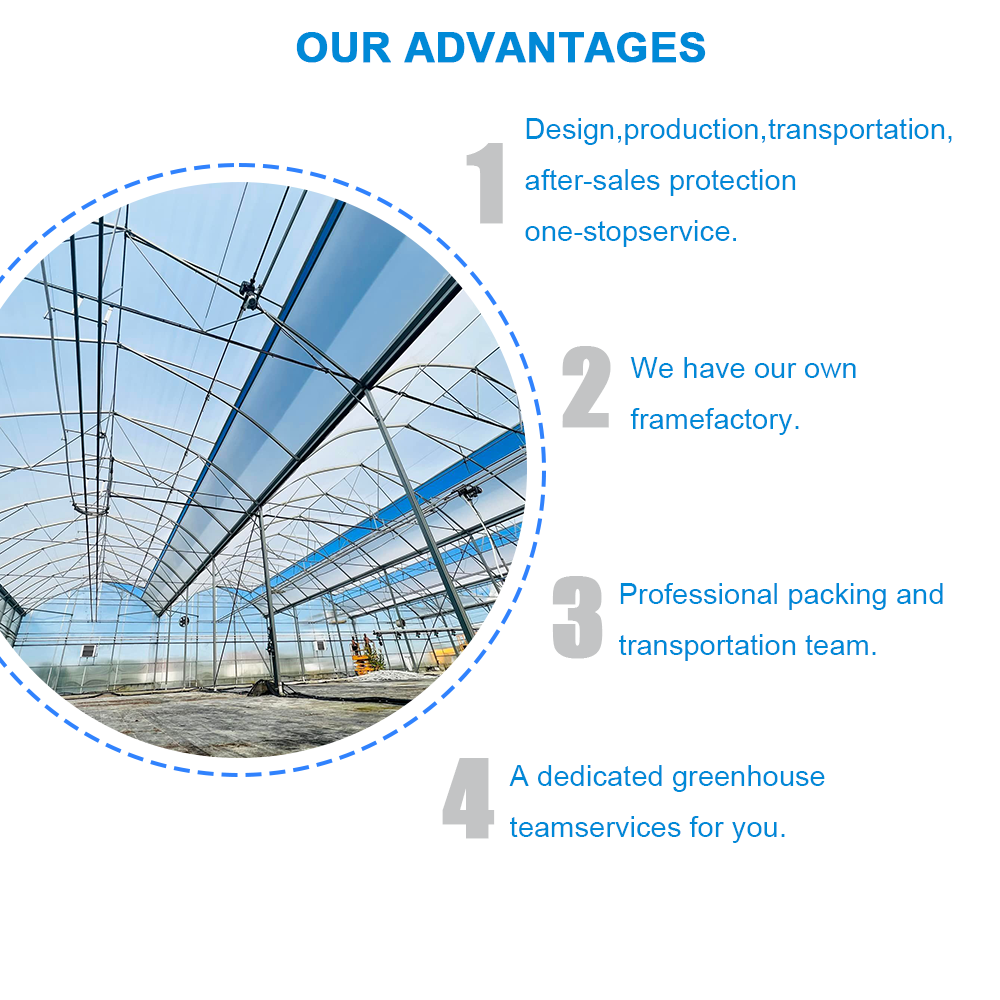
A plastic film greenhouse earns its keep by holding a stable microclimate at a price a working farm can justify. Unlike glass or polycarbonate, film covering is light, quick to install and economical to replace when it finally weathers - which is why most vegetable, flower and seedling operations start here. The structure underneath is what decides whether that film last three seasons or five, and whether the frame is still straight after a windy spring. This polytunnel is built around a hot-dip galvanized steel pipe frame with UV-stabilized PE film, and we size the span and ridge height to the plot you actually have.
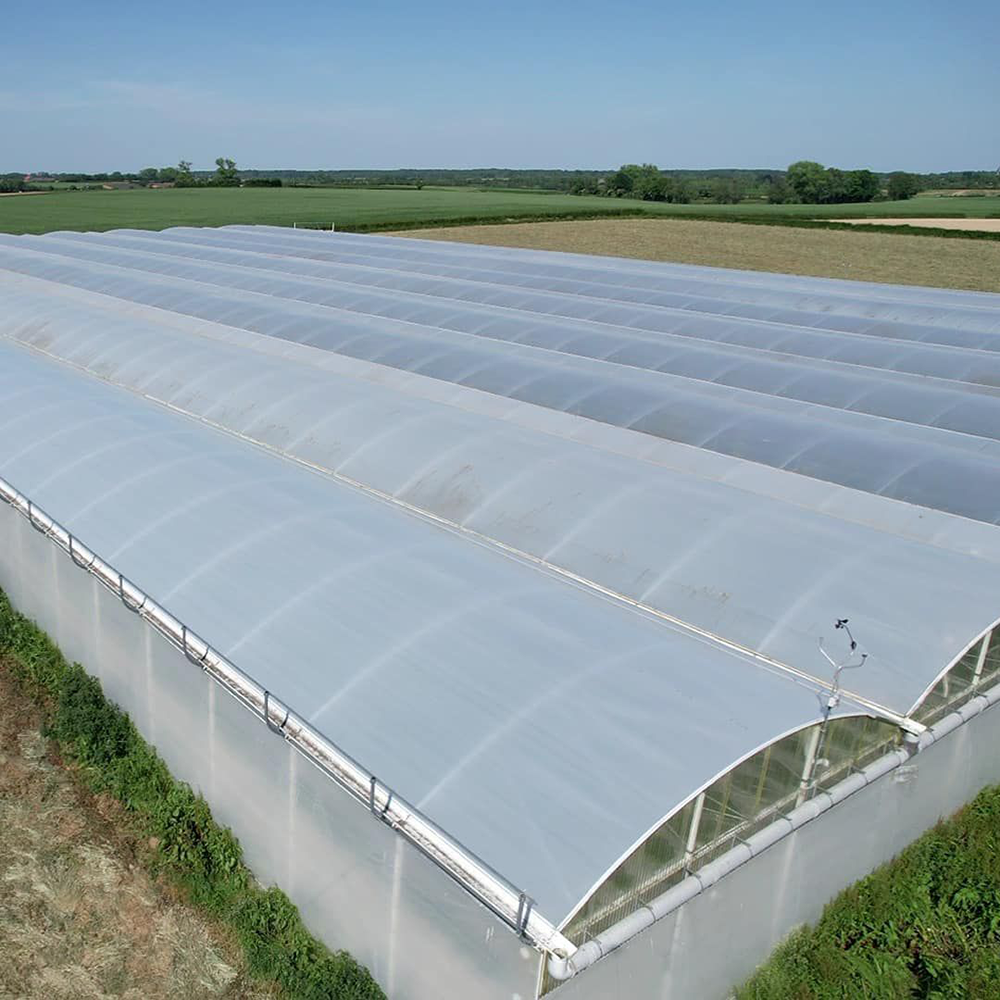
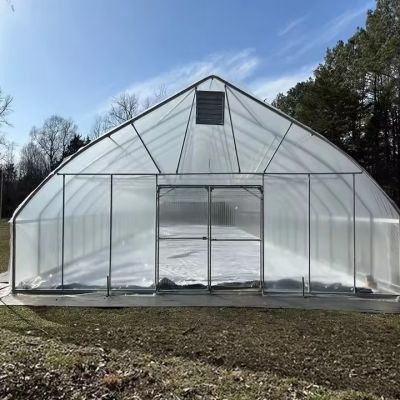
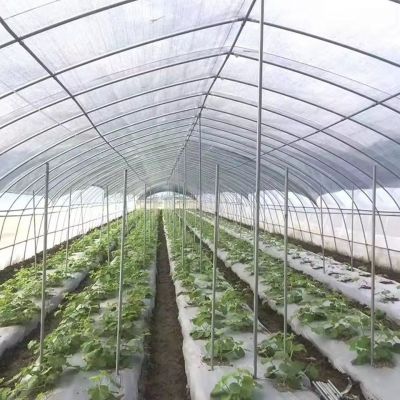
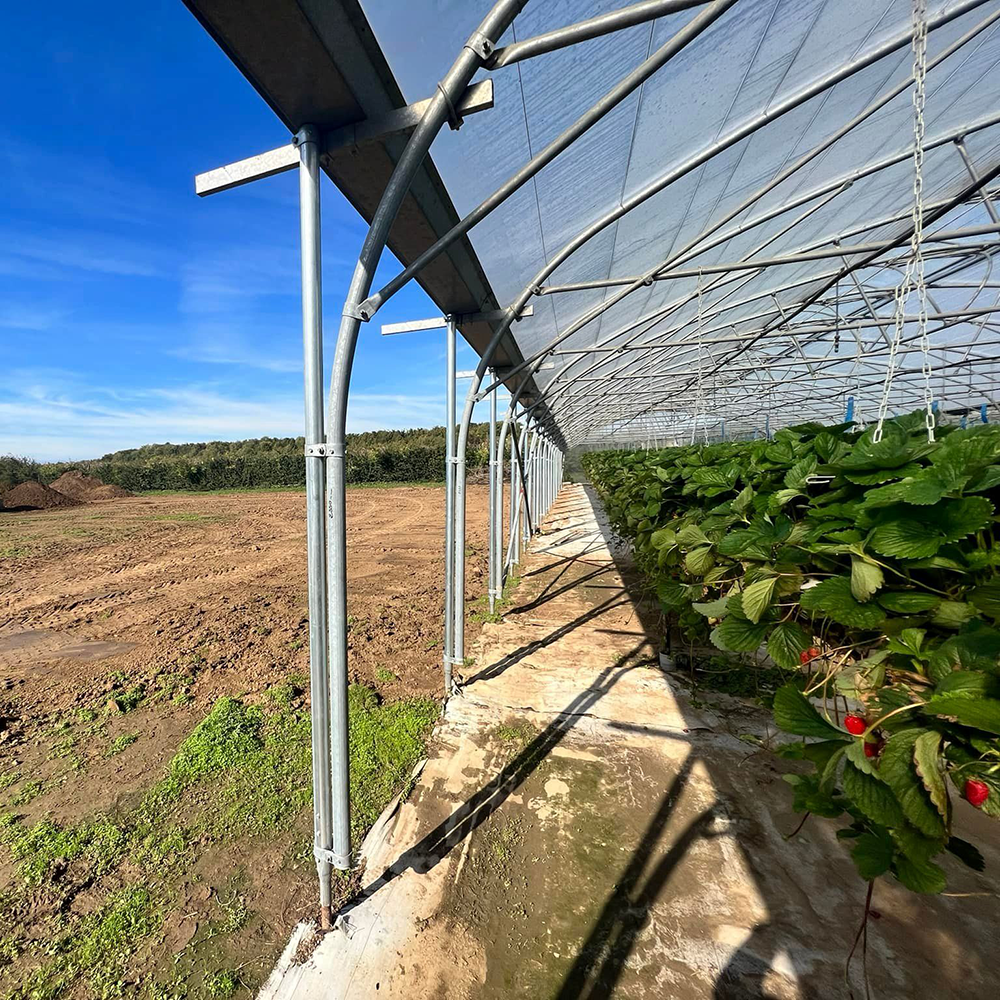
The frame uses hot-dip galvanized steel pipe throughout, with a double-sided zinc coating of 200-275 g/m2 that resists corrosion in the humid air a greenhouse holds. Joints are bolted through the pipe rather than welded on site, so the arch and purlin lines stay true and the structure can be taken down and moved if your cropping plan changes. The covering is UV-stabilized polyethylene film sized to the span, held in aluminium fixing channels with spring wire so the surface stays taut and does not flap in wind. Film transmits up to 90 percent of available light, and the anti-drip grade keeps condensation from falling onto the crop.
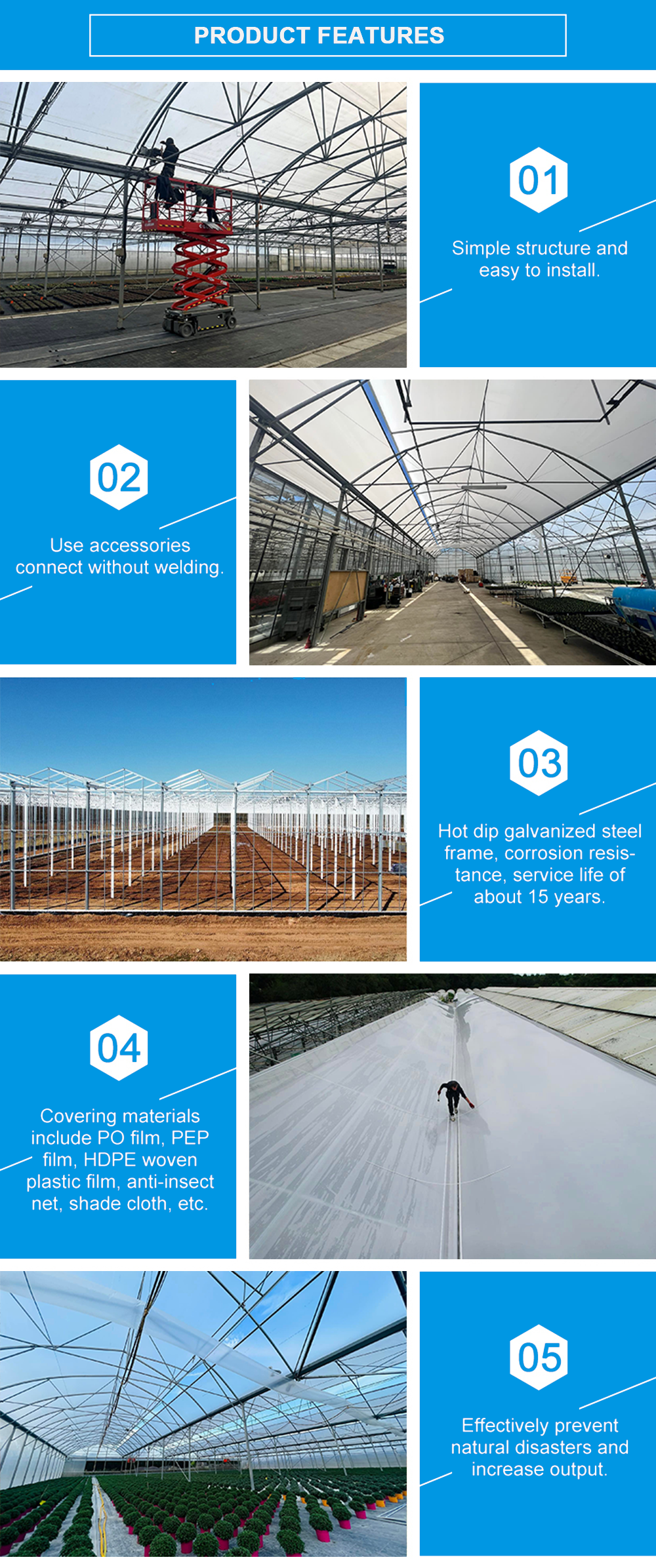
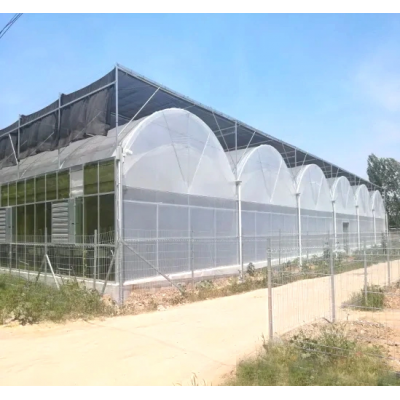
We build single-span tunnels for narrow plots and multi-span houses where land is tight, with spans from 6.4 to 10 metres and ridge heights from 4.3 to 6.5 metres depending on the crop and the machinery you need to run inside. Because bays are configurable, a polytunnel can be laid out around an existing irrigation main, a loading bay or a boundary rather than forcing the site to fit a catalogue size. Tell us the plot area, the crop and the local wind and snow conditions, and we will confirm a bay layout before fabrication.
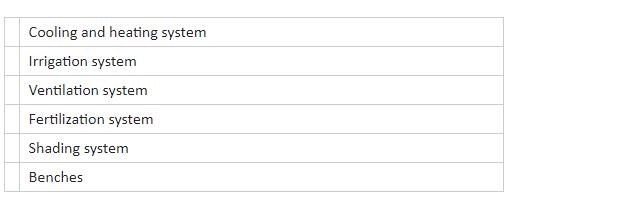
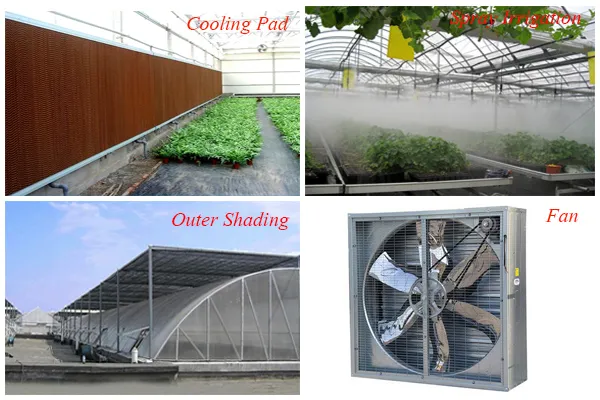
The house is supplied as a structure, and the climate systems are added to suit the crop. Common additions include drip irrigation and fertigation, ridge or side ventilation, internal and external shading, cooling pads and circulation fans, heating, and benching for propagation work. Because we make the frame in our own workshop, brackets and openings for these systems are prepared before the steel is finished, so nothing has to be cut or drilled on site. Cooling, shading and ventilation equipment is covered in more detail in our wet curtain cooling systems and greenhouse circulation fans pages.
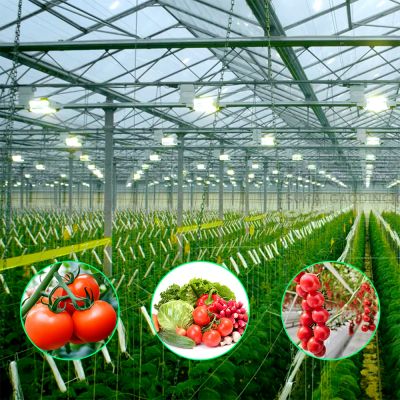
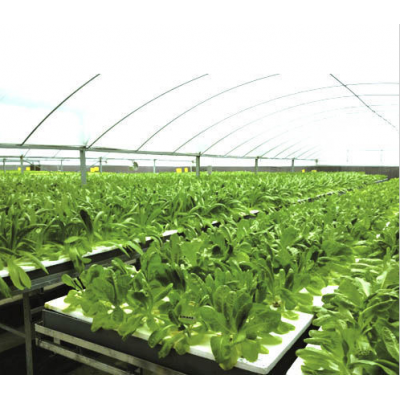
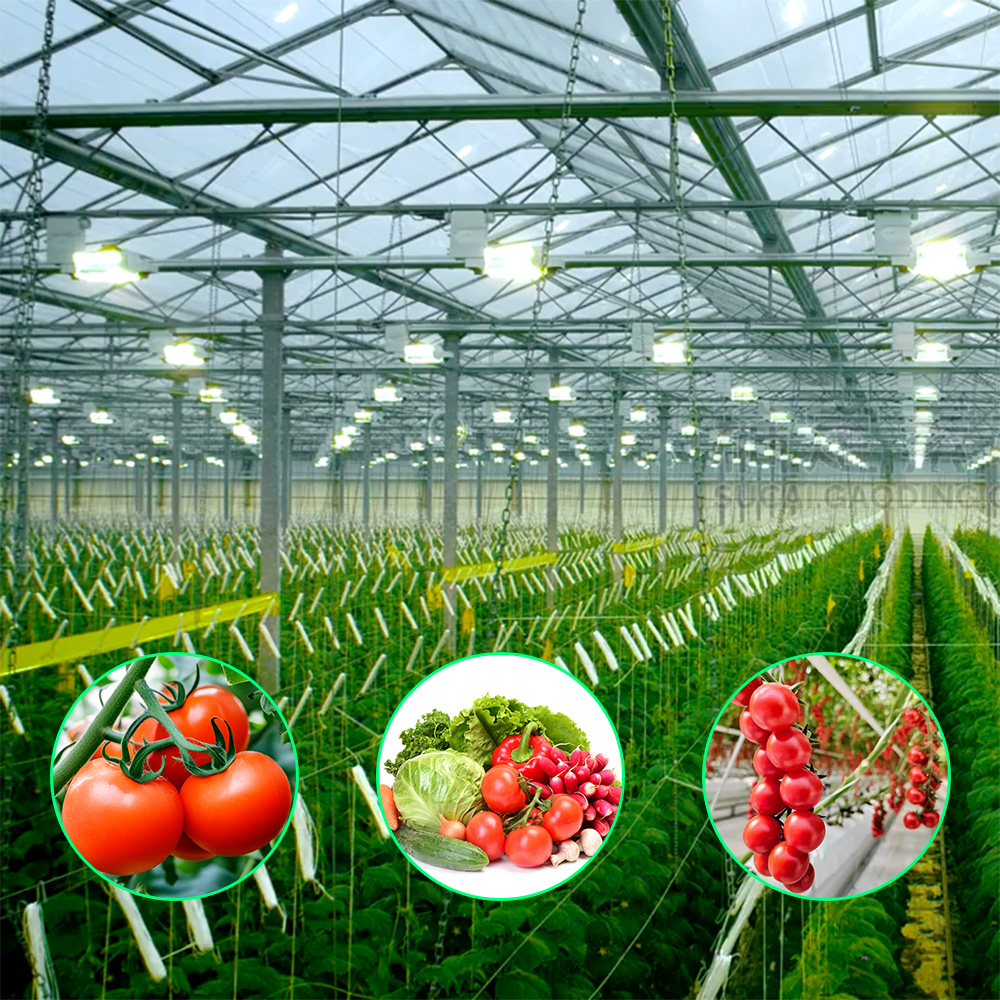
Film houses are the default choice for vegetable production, where lettuce, tomato, pepper and leafy crops benefit from season extension without a permanent building; for flower and ornamental growers who need uniform light; for seedling and transplant nurseries; for fruit such as strawberry; and for small-scale aquaculture where a warm covered volume is needed. Growers comparing covering materials will find that film carries the lowest initial investment and the shortest replacement cycle, which suits land where the cropping plan changes or the site may be redeveloped. Our lettuce greenhouse is a good example of a single-span film house set up for one specific crop. Structure and climate design guidance published by AIPH and trade reporting from Produce Grower are useful references when you are planning a covered growing area.
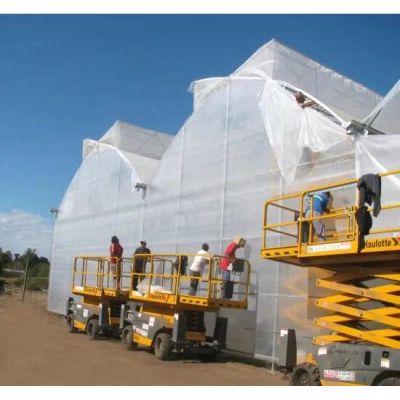
Frames are produced in our own workshop and bundled with the film and hardware for container loading, which keeps freight volume and handling down. Steel has to be on site before your planting window, so we confirm the loading date in writing and schedule production around your deadline. Installation drawings and standard manuals ship with every order, and our engineers can travel to site to supervise assembly if your team would rather not erect the first bay alone.
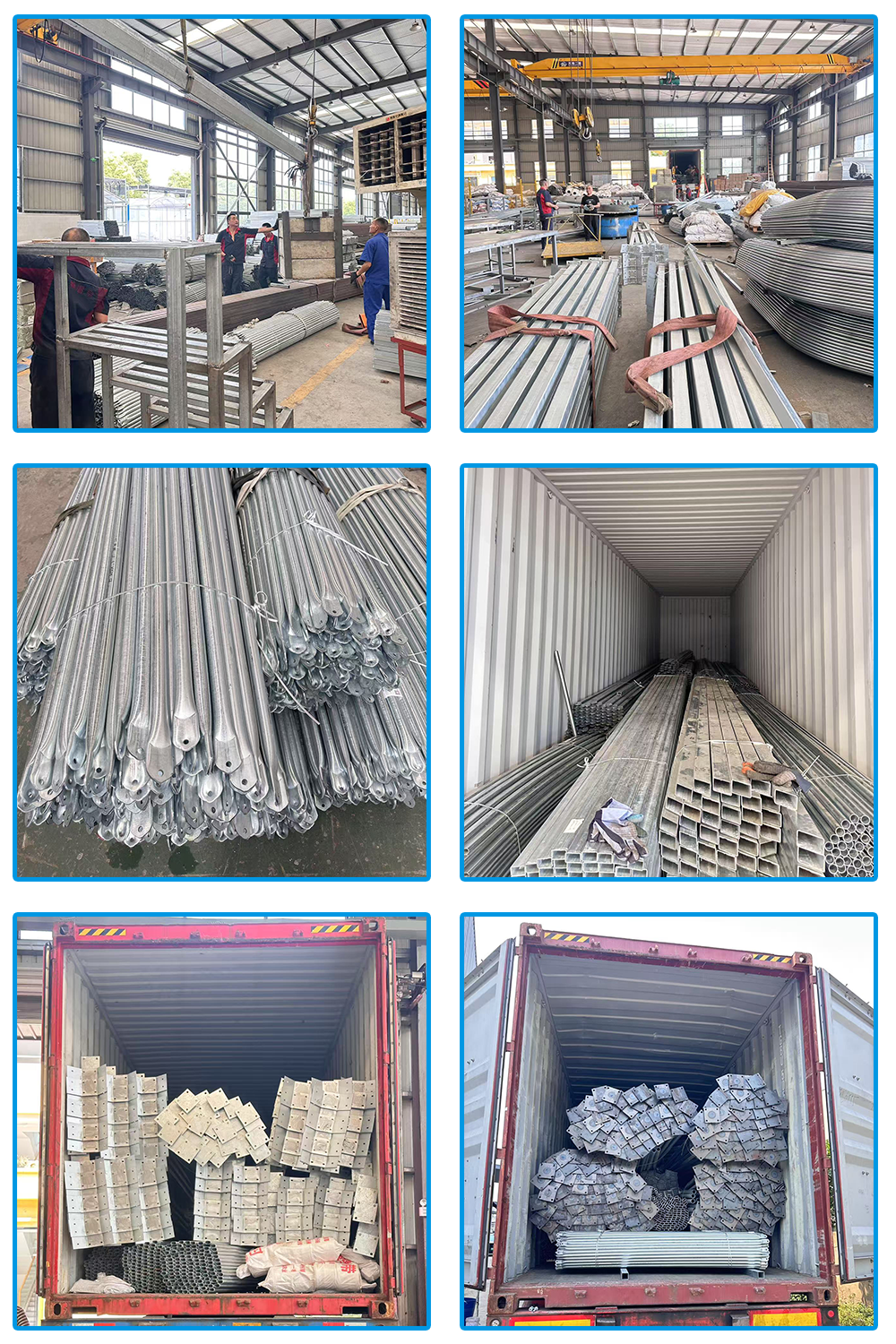
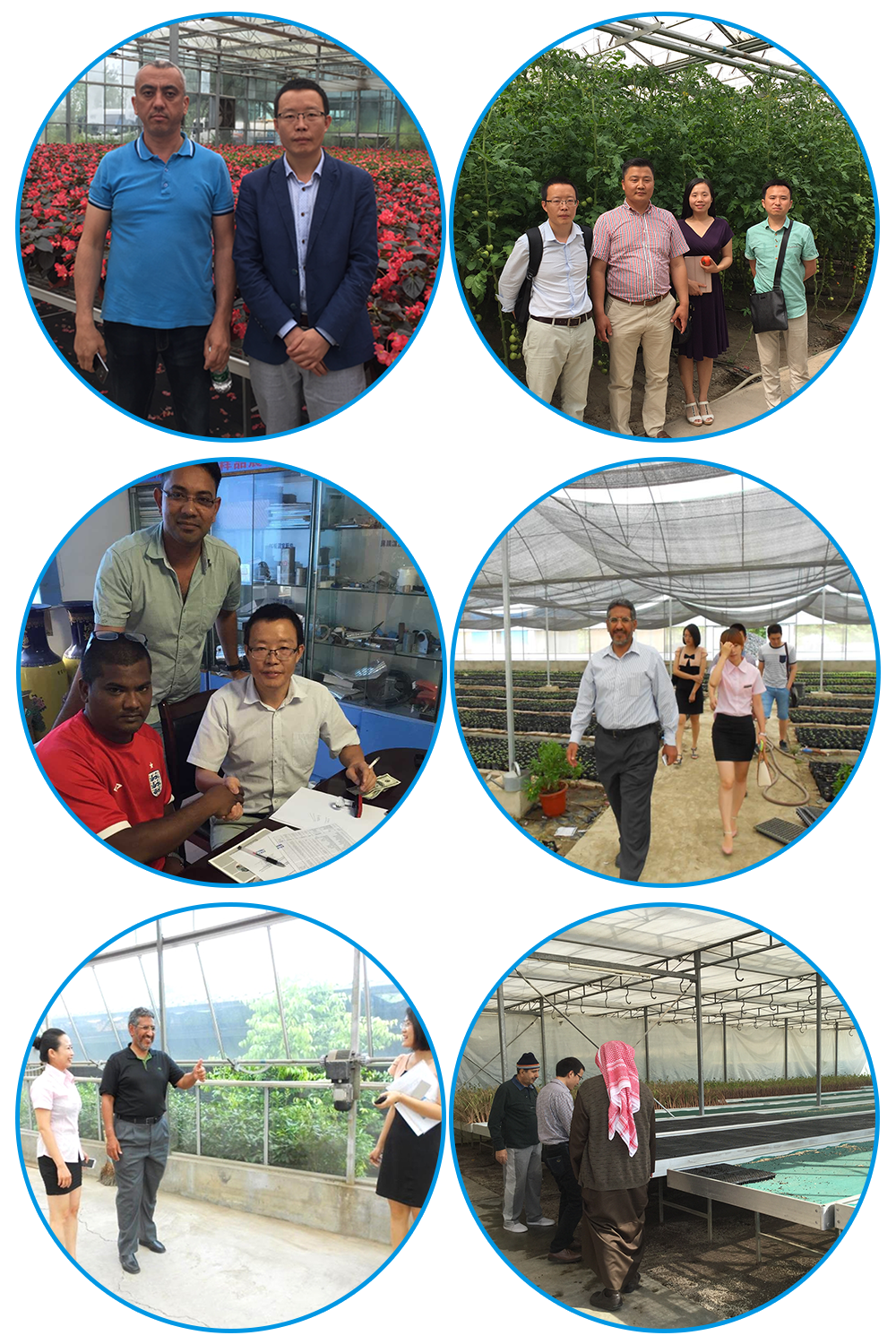
Growers and importers visit our factory and workshop each season to check frames and discuss layouts, and many of those projects are still running the same structure years later. If you are planning a film greenhouse for a vegetable or flower operation, send the plot area, the crop and the local wind and snow conditions and we will come back with a bay layout and a written quotation.
Film covers are replaced every 3-5 years in normal use, depending on UV exposure, wind and how tightly the film is tensioned. We supply both standard and anti-drip UV-stabilized grades, and the frame is sized to accept a range of film thicknesses so you are not locked into one supplier when it comes time to re-cover.
Yes. Because joints are bolted rather than welded, bays can be added to lengthen a multi-span house, and a single-span tunnel can be dismantled and re-erected on another part of the farm. We keep the frame drawings on file so that a later extension uses matching pipe and brackets.
The hot-dip galvanized steel frame is designed for a 15-20 year service life in normal agricultural environments, with a double-sided zinc coating of 200-275 g/m2. Film covers are replaced every 3-5 years, while glass and PC panels carry their own manufacturer warranties.
The hot-dip galvanized steel frame carries a 10-year structural warranty covering structural safety, plus a 5-year warranty against corrosion perforation. It is designed for a 15-20 year service life.
Send the plot area and shape, the crop you intend to grow, whether you need single or multi-span, and the local wind speed and snow load. If you already know which systems you want - irrigation, ventilation, shading or cooling - include those, and we will quote the structure and the systems together rather than leaving you to match parts from different suppliers.