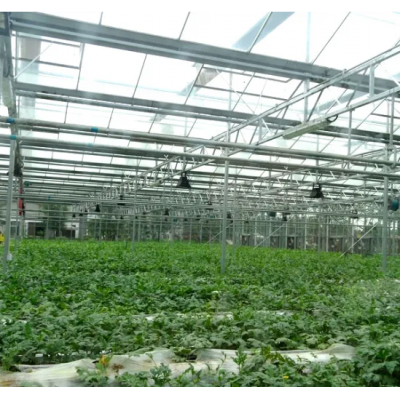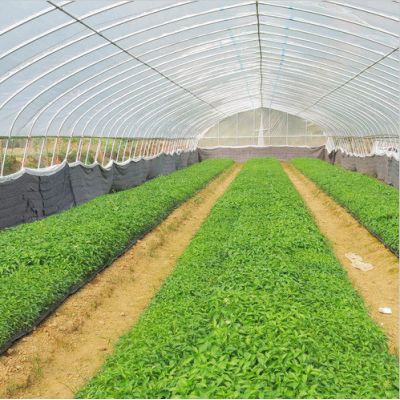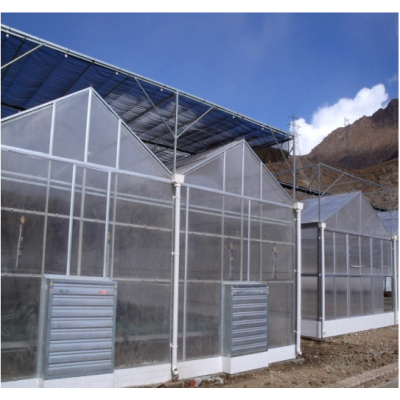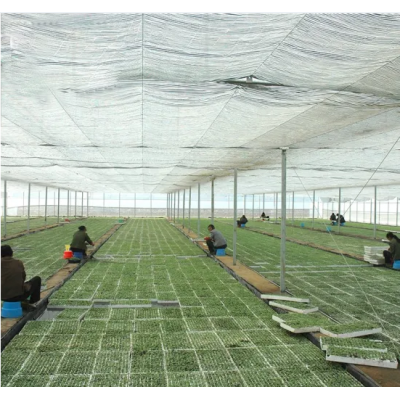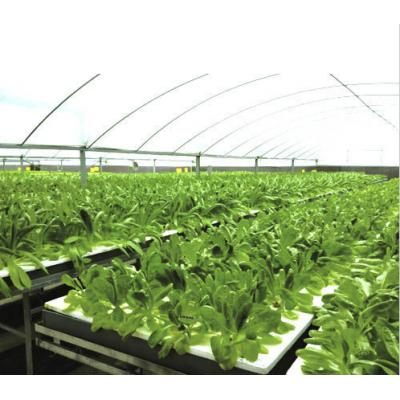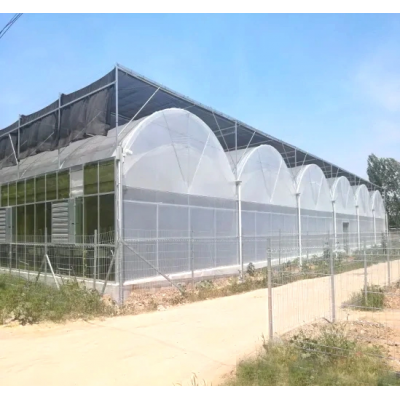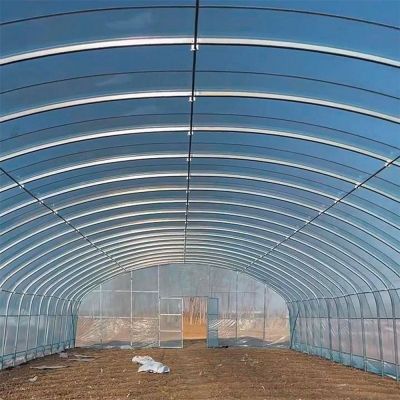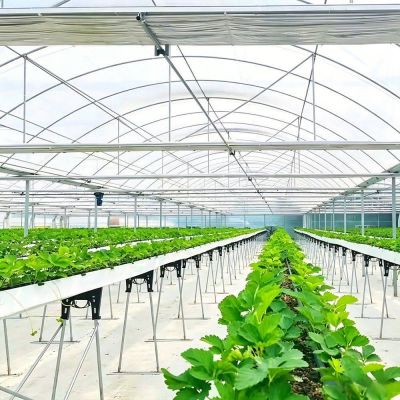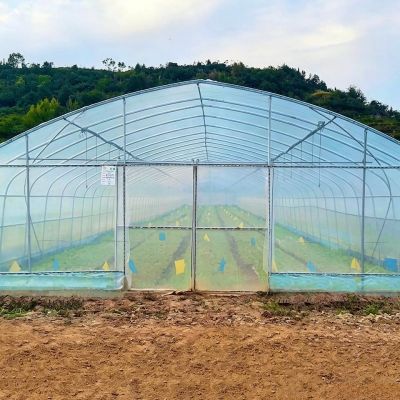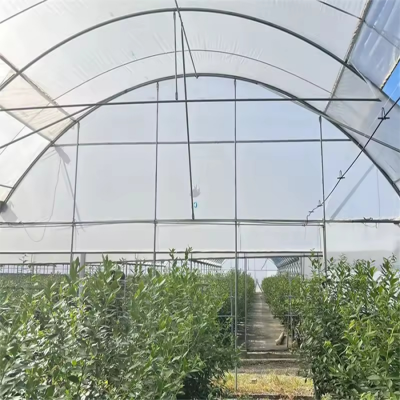
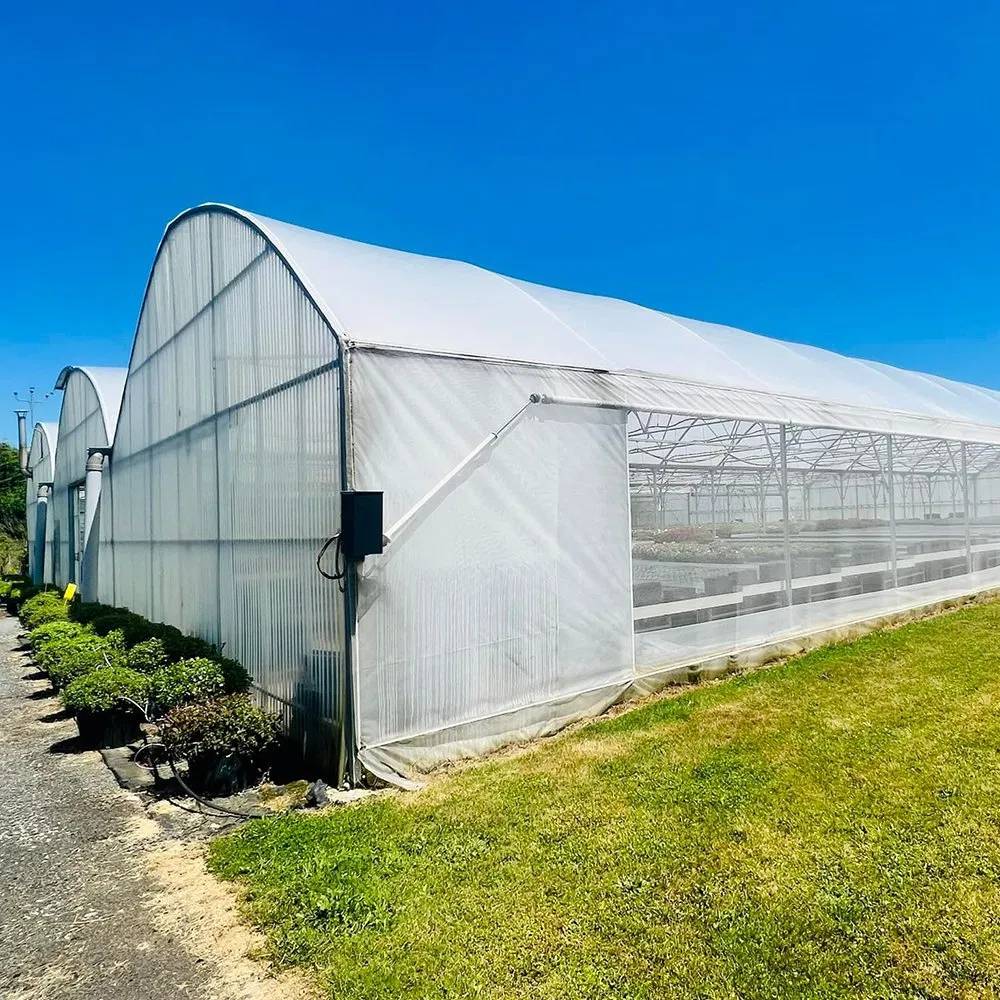
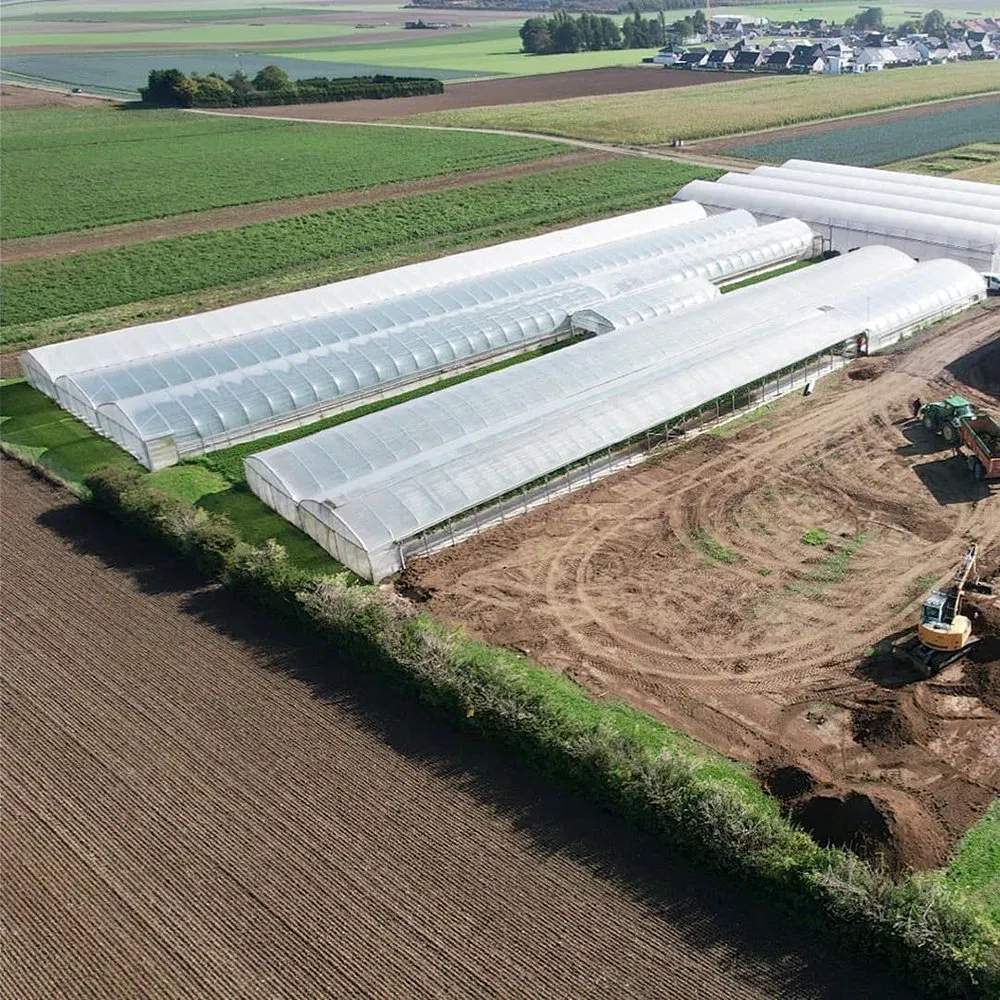
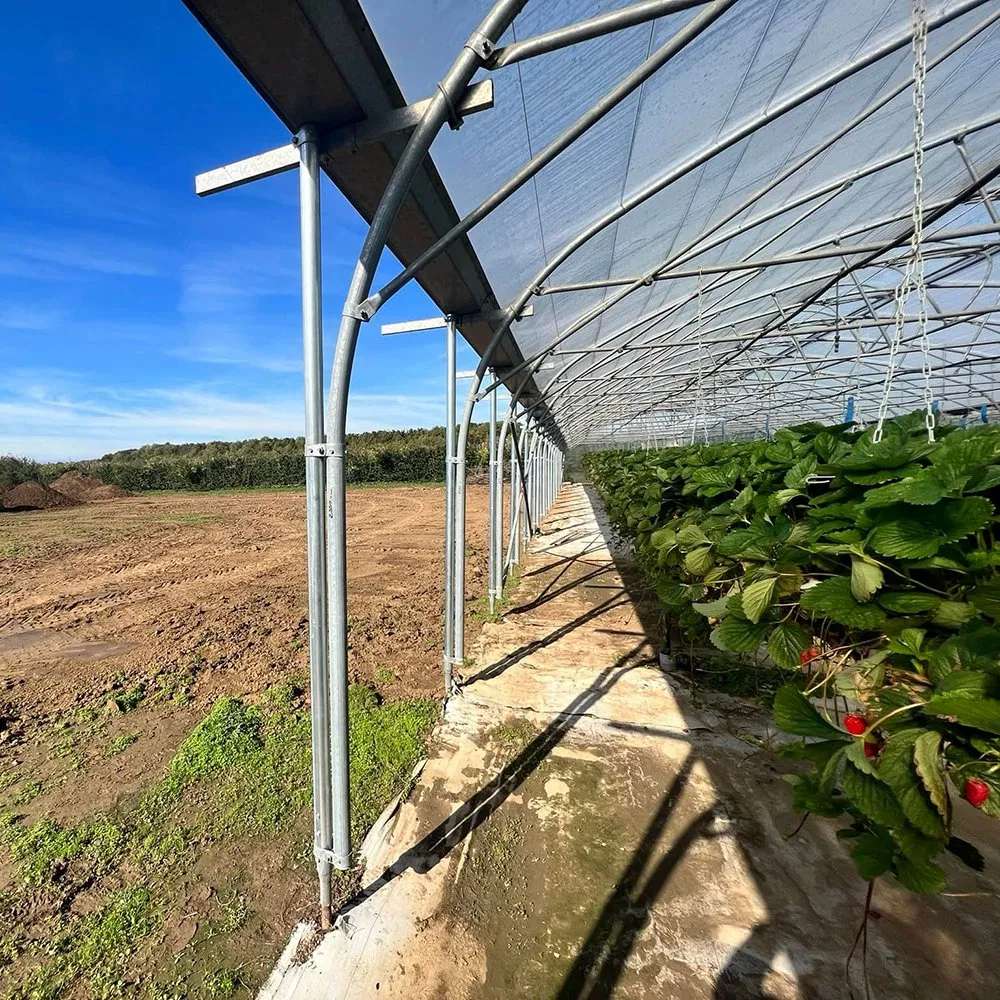
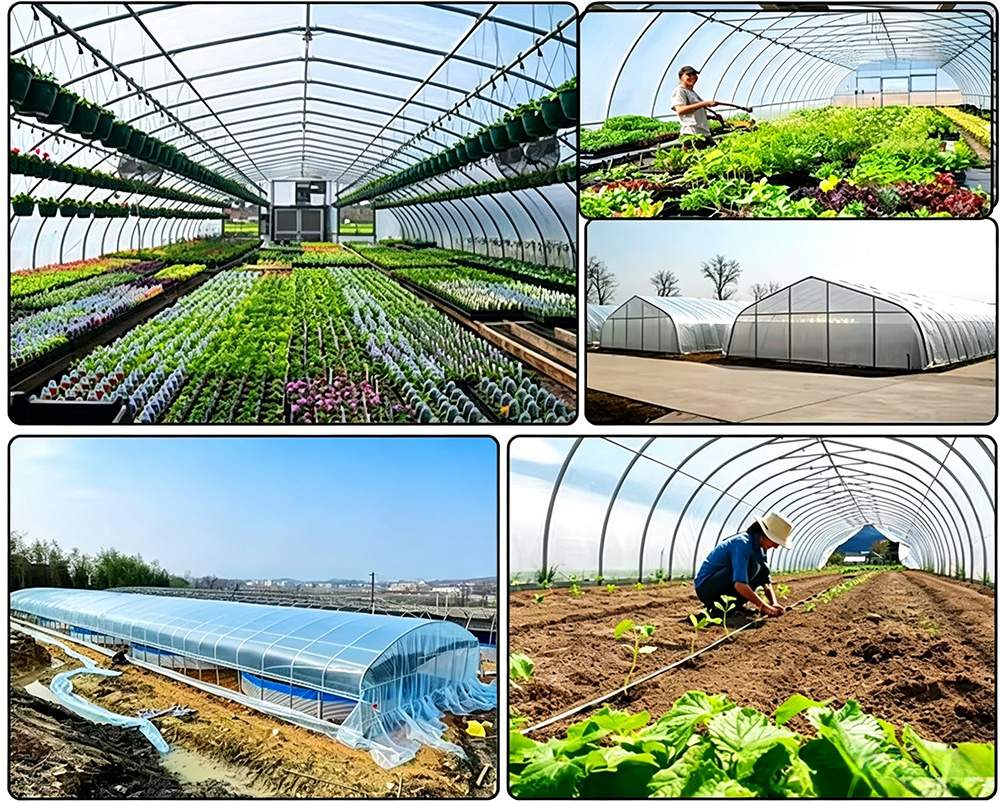
A sunlight greenhouse earns its name in winter, when the cover has to collect what sun there is and hold the heat after dark. This listing quotes a film house for year round vegetables on a galvanized steel or aluminium alloy frame, in spans from eight to twelve metres, with a PO or PEP cover listed at ninety to ninety five percent transmission and a film life of about three years, plus roof and side vents and optional heating for the coldest weeks.
A sunlight greenhouse is a film house designed around the winter sun rather than the summer crop. The cover has to transmit as much low-angle light as possible, the structure has to hold heat after sunset, and the vents have to dump humidity without dumping the heat that was collected. This page covers the house in this listing, part of the film greenhouse range on this site.
Passive solar is a design intention, not a component. It means the house is oriented to collect winter light, the cover is chosen for transmission rather than for shade, and the structure has enough mass and enough closure to slow heat loss overnight. On the film side, the practical lever is a double layer: the air gap between two sheets is what slows the loss, not the thickness of either sheet.
The listing puts insulation at moderate and notes that a double layer improves it. That is an honest description of a film house: it will hold a few degrees over outside, and it will not behave like a heated glasshouse in a hard frost.
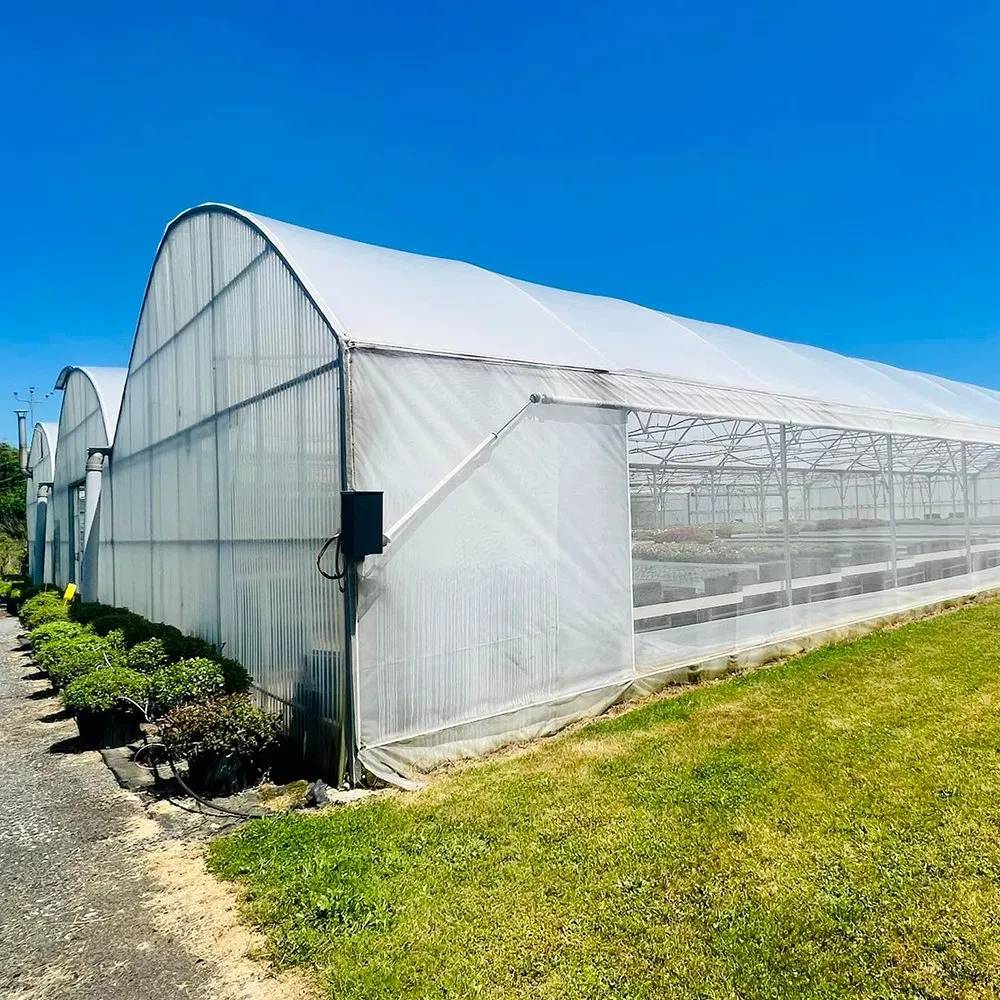
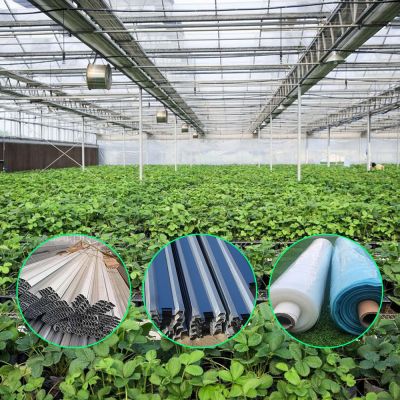
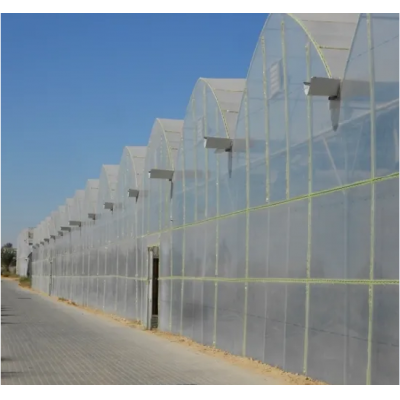
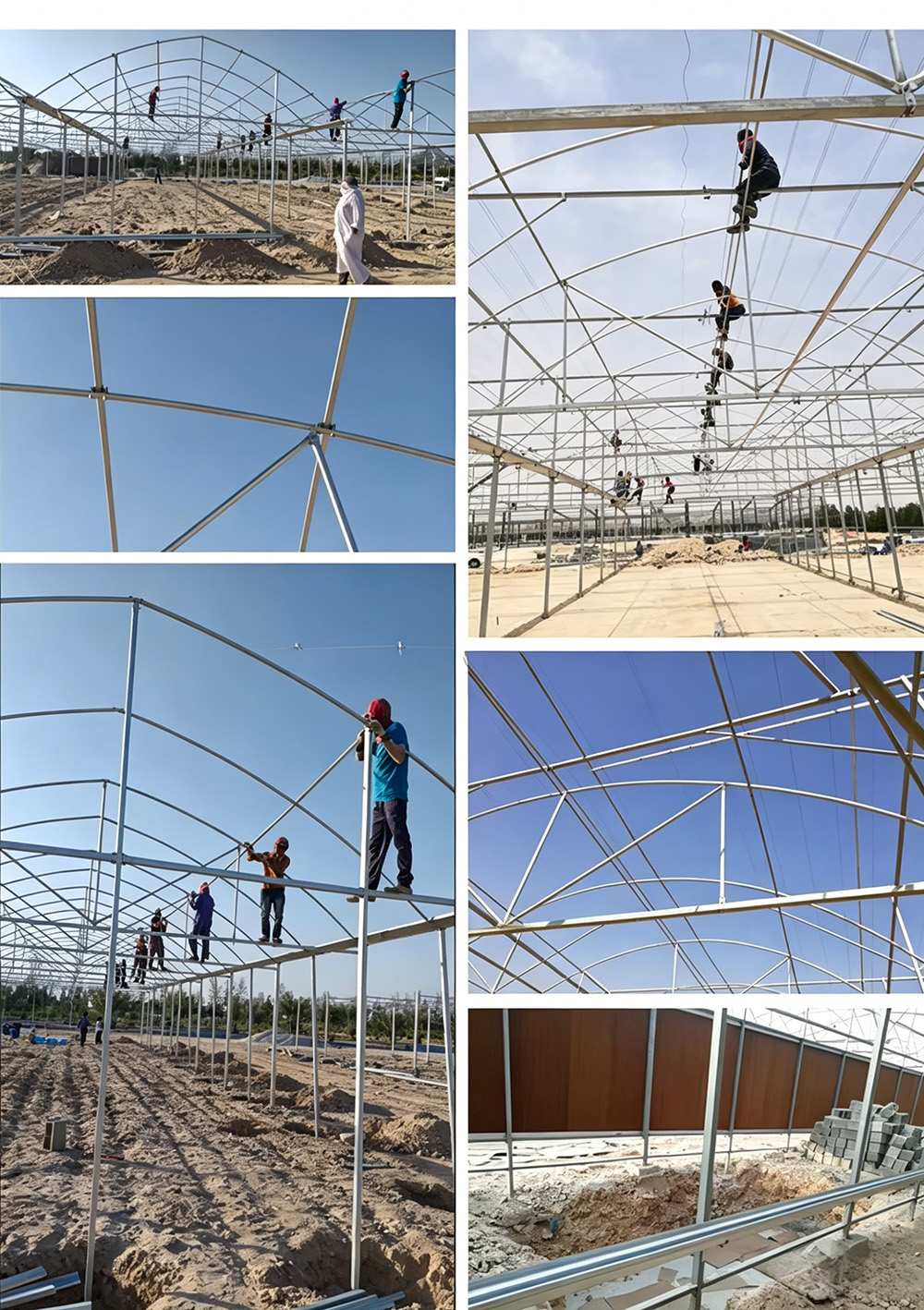
The frame is galvanized steel or aluminium alloy, spans run from eight to twelve metres, lengths from ten to a hundred metres, and heights from three to eight metres. Aluminium weighs less and costs more; galvanized steel is the usual choice where snow load matters. Both are quoted for this range.
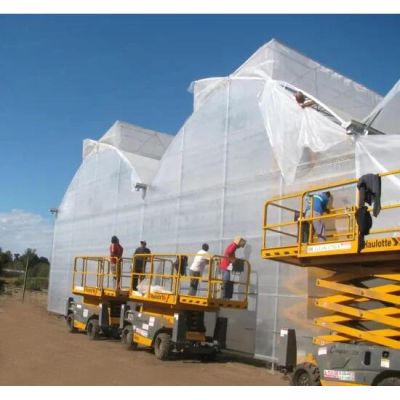
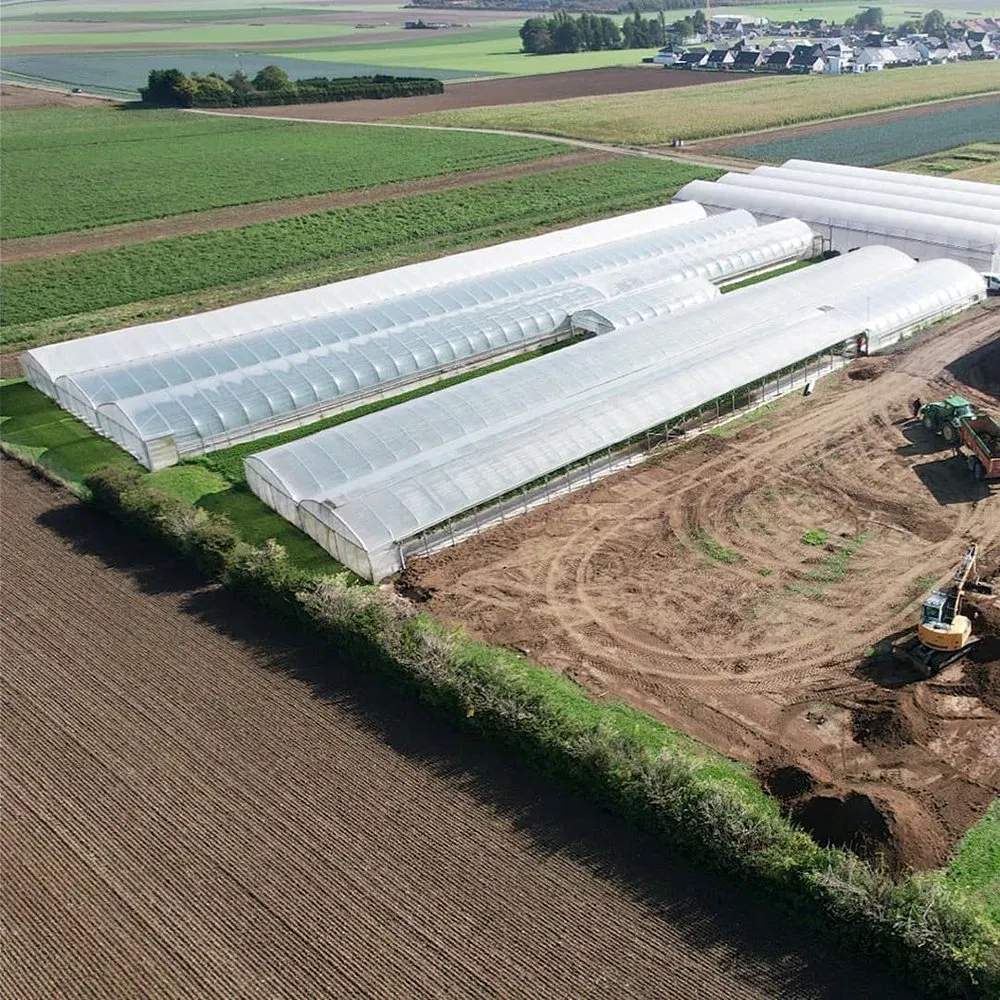
The cover is PO or PEP film with a UV resistant coating, listed at ninety to ninety five percent light transmission and about three years of life. Three years is the number to build a budget around, because a cover that has yellowed still works, just with less light at the exact time of year the house was built for.
| Structure material | Galvanized steel or aluminium alloy |
| Covering material | PO or PEP plastic film |
| Light transmission | 90 to 95 percent |
| UV protection | UV resistant coating |
| Film life | About 3 years |
| Insulation | Moderate, improved with a double layer |
| Ventilation | Roof vents and side vents, manual or automated |
| Heating | Optional, boiler or radiant heating |
| Span | 8 to 12 m, built to order |
| Length and height | 10 to 100 m long, 3 to 8 m high |
The two jobs conflict. Closing the house at dusk keeps heat in and also keeps humidity in, and in a vegetable crop that humidity ends up on the leaves. The usual compromise is to ventilate briefly at dawn rather than at dusk, accepting a small heat loss in exchange for drying the canopy before the sun is on it.
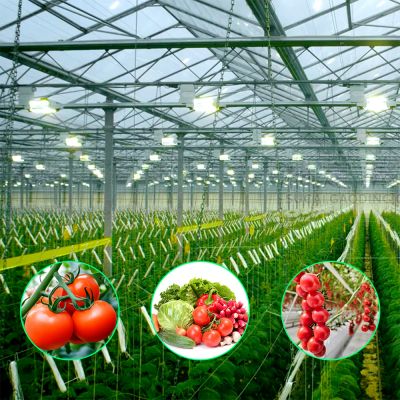
Automated roof and side vents help here because the timing matters more than the amount. A house that opens at eight in the morning instead of ten has dried its crop by the time the temperature climbs, and that is the difference between a routine season and a botrytis season.
Two related film houses are described on the low cost arch film house page and the double layer multi span house page.
No structure can compensate for a site in the shade. A sunlight greenhouse wants its long axis east to west and its glazed face toward the winter sun, with nothing tall to the south. Those three decisions are made before the frame is ordered and they cost nothing to get right.
Wind is the second site factor. A house on an exposed ridge loses heat faster than the same house in a sheltered valley, and a windbreak hedge or fence at a sensible distance does more for the winter crop than an extra layer of film.
Heating is listed as optional, with a boiler or radiant heating named. In a passive solar house the heating is a top-up rather than the main source, and radiant heat is the better fit: it warms the crop and the soil surface instead of the air at the ridge, so it can run at a lower set point.
The decision point is usually a single crop date, not the whole winter. If the house has to hold a temperature through one cold month to hit a market window, the heating pays; if it only has to survive the month, a second film layer and better sealing may be enough.
Research on protected cropping and controlled environments is published by Purdue University, and Australian farm coverage by Farm Weekly.
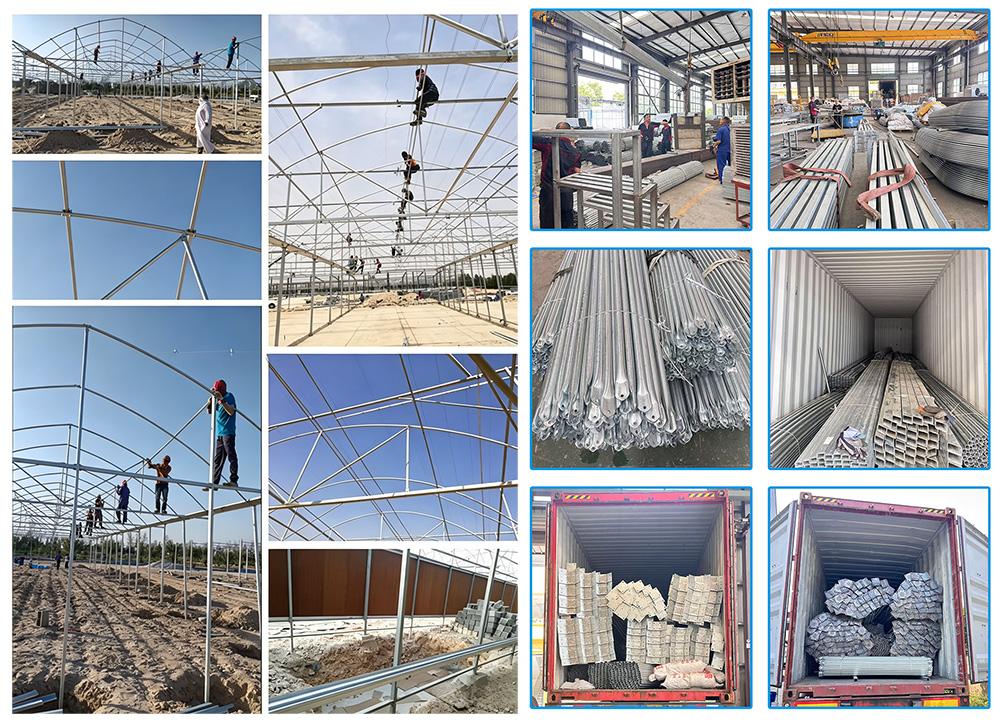
The hot-dip galvanized steel frame is designed for a 15-20 year service life in normal agricultural environments, with a double-sided zinc coating of 200-275 g/m². Film covers are replaced every 3-5 years, while glass and PC panels carry their own manufacturer warranties.
The hot-dip galvanized steel frame carries a 10-year structural warranty covering structural safety, plus a 5-year warranty against corrosion perforation. It is designed for a 15-20 year service life. Film covers carry a 3-5 year UV warranty depending on grade.
Film suits low-cost tunnels on 3-5 year replacement cycles. Glass delivers the highest light transmission and the longest lifespan, at the highest cost. PC sheet insulates better than film and suits cold or high-humidity climates. The right choice depends on climate, crop and budget.
Send your growing area, span and length, crop type and local climate. If you already have a layout drawing, that is enough to start. Our engineers then return a quotation with a structure drawing and a bill of materials.
That depends on the outside temperature, the wind and the cover. A double layer film house slows heat loss and stays a few degrees above outside, but it is not a heated glasshouse. If a specific night temperature is a requirement, put the number in the enquiry and the heating option can be sized against it.
The listing does not specify a rear wall or an insulation build up, so treat that as a design item for the project rather than a catalogue feature. Send the local winter minimum and the crop, and the engineers will propose a section with the wall and cover build up drawn in.