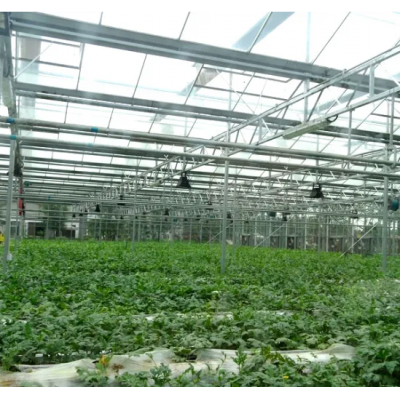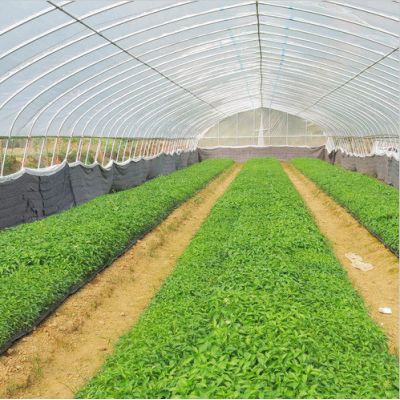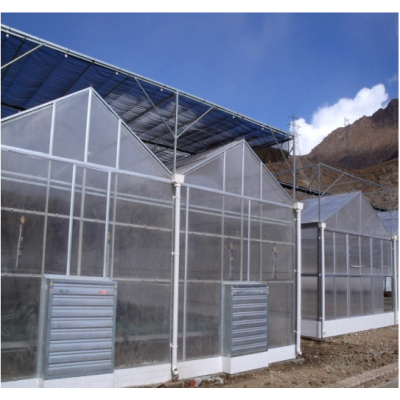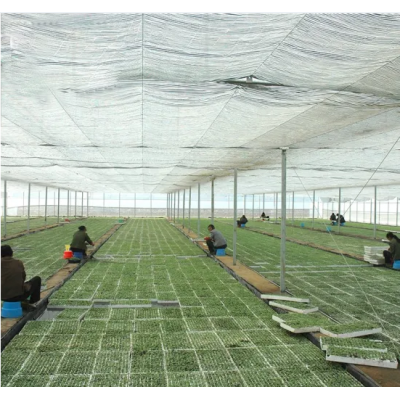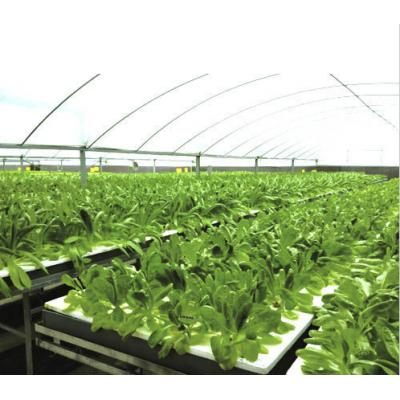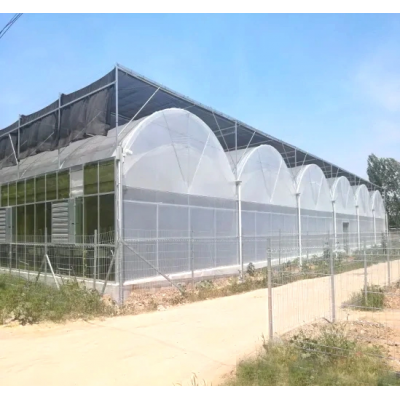


Circulation fans do not heat or cool a greenhouse; they remove the still air that lets one corner of the house drift away from the rest. Running across the crop, they keep temperature and humidity even through the canopy, cut the condensation that forms on cold surfaces overnight, and keep carbon dioxide moving into the leaf instead of sitting in the boundary layer. Each fan has a moisture-proof design for a house that is wet for much of the year, and both air volume and blade speed can be adjusted to suit the crop stage and the season. The result is a house that runs more evenly, and a climate that costs less energy to keep on target.
Most greenhouse problems that look like a disease or a feeding fault start as still air. The warm patch above the crop, the damp corner behind the end wall and the leaf that stays wet for hours after irrigation are all places where air has stopped moving. A circulation fan is the least costly piece of equipment in the house to fix that, because it does not try to change the climate, only to even it out.
Still air lets a layer of moisture sit against the leaf, and that layer is where fungal disease gets its start. Moving the air breaks up the boundary layer, so leaves dry faster after irrigation and after sunset. The same movement carries carbon dioxide into the canopy instead of letting it pool near the floor, and it stops cold air from settling in low corners on clear nights, which is where chilling damage usually appears first.
Greenhouse air is close to saturated for much of the year, so a fan that is not moisture proof will not last. These units use a moisture-proof design through the motor enclosure and wiring, which is the difference between a fan that runs for years and one that fails in the first humid season. Both air volume and blade speed can be adjusted, so the house can be run gently over young plants and harder once the canopy closes over.
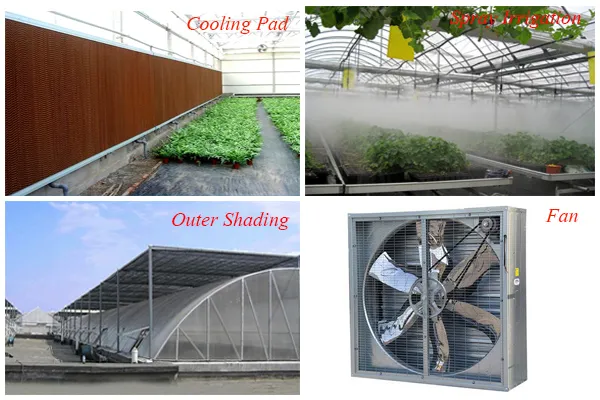
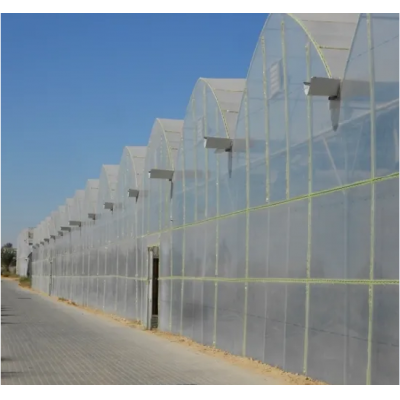
A fan pushes air a limited distance before the jet loses its shape, so placement matters more than the number of units. Horizontal fans along the ridge move air the length of the house; fans mounted above the crop throw it down into the canopy where the disease pressure is. In multi-span houses the aim is a gentle, continuous circuit through the bays rather than a strong draught in one aisle. Where a wet curtain cooling system is installed, circulation fans along the house even out the temperature between the pad end and the fan end, which is where the greatest difference builds up.
A circulation fan uses a fraction of the power of a heating or cooling system, which is why growers run them continuously rather than in short bursts. Low noise matters when the same workers are grading and packing inside the house. Maintenance is simple: keep the guard and blades clean, because a dusted blade loses its balance and its airflow, check the mounting and the cable gland for water ingress, and confirm the speed control still responds. Fans are usually wired into the same panel as the rest of the climate equipment, so they can be tied to the greenhouse automation that already runs venting and irrigation.
Circulation fans are specified in vegetable, flower, seedling and propagation houses, and in closed or semi-closed houses they are part of the basic climate kit rather than an extra. They are normally ordered alongside the cooling system range, which covers pads, fans and ventilation together. For background on protected cropping practice, FAO publishes guidance on greenhouse and protected cultivation, and FloralDaily covers protected flower and plant production.
It depends on the house volume, the length of the air path and how dense the canopy becomes, because a fan only moves air effectively over a limited distance. We work the number and the positions out from your house drawing and the crop, and include the layout in the quotation.
Yes. The units use a moisture-proof design through the motor enclosure and wiring, which is what allows them to run in air that is close to saturated for much of the year. Keep the guard clean and check the cable gland for water ingress at each service.
The hot-dip galvanized steel frame is designed for a 15-20 year service life in normal agricultural environments, with a double-sided zinc coating of 200-275 g/m². Film covers are replaced every 3-5 years, while glass and PC panels carry their own manufacturer warranties.
The hot-dip galvanized steel frame carries a 10-year structural warranty covering structural safety, plus a 5-year warranty against corrosion perforation. It is designed for a 15-20 year service life, and film covers carry a 3-5 year UV warranty depending on grade.
Send your house dimensions, the crop and the canopy height you finish the season with, plus the power supply available on site. With that we can size the fans, set the positions on a layout drawing and quote with a bill of materials.