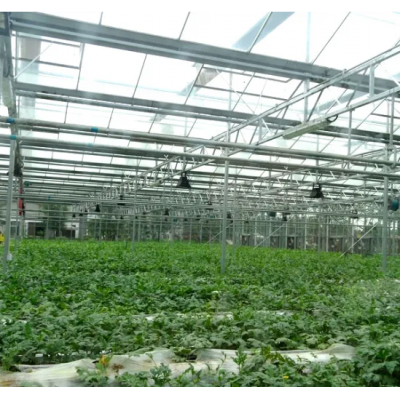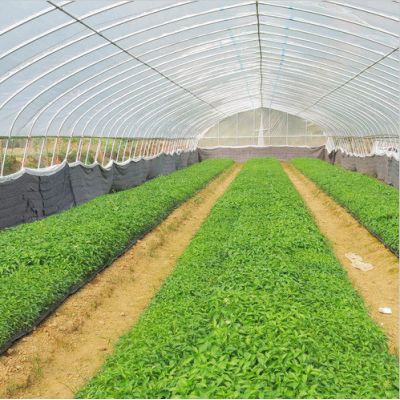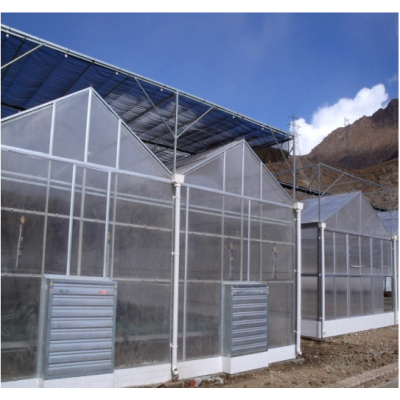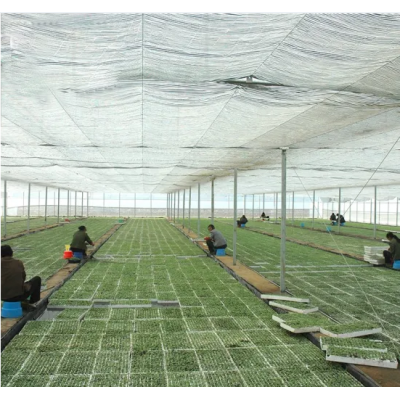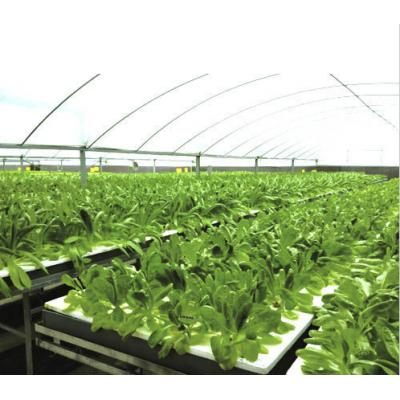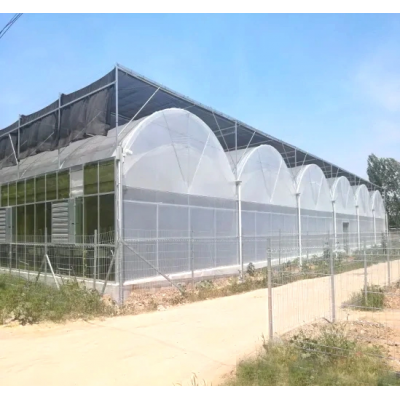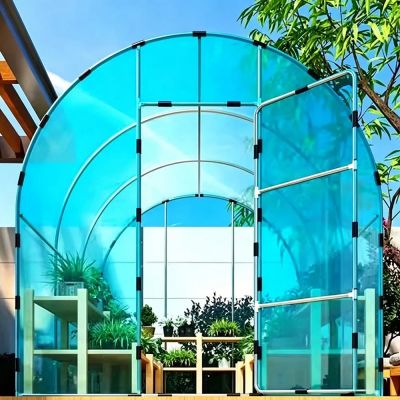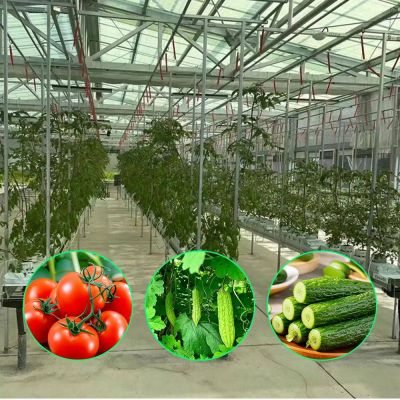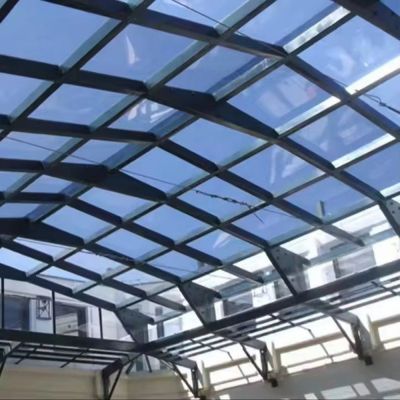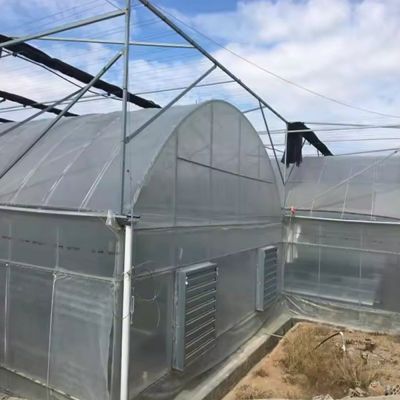
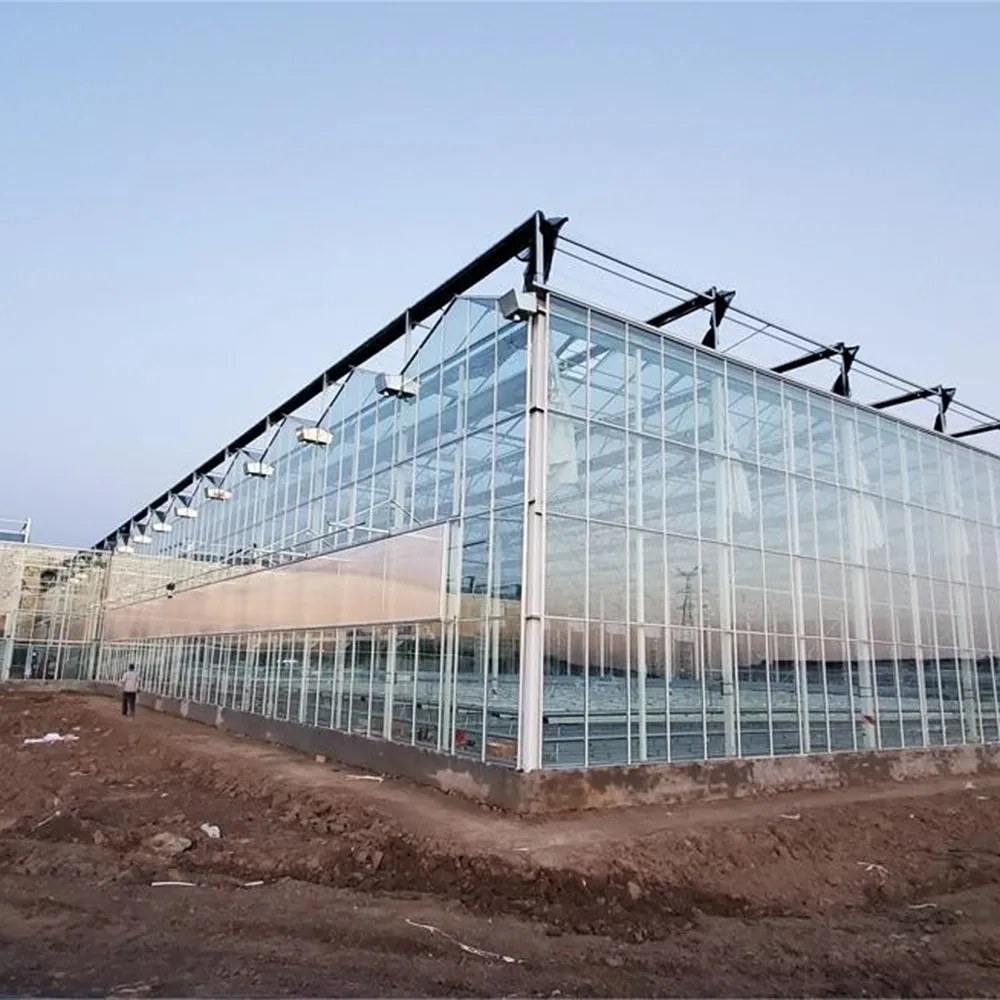
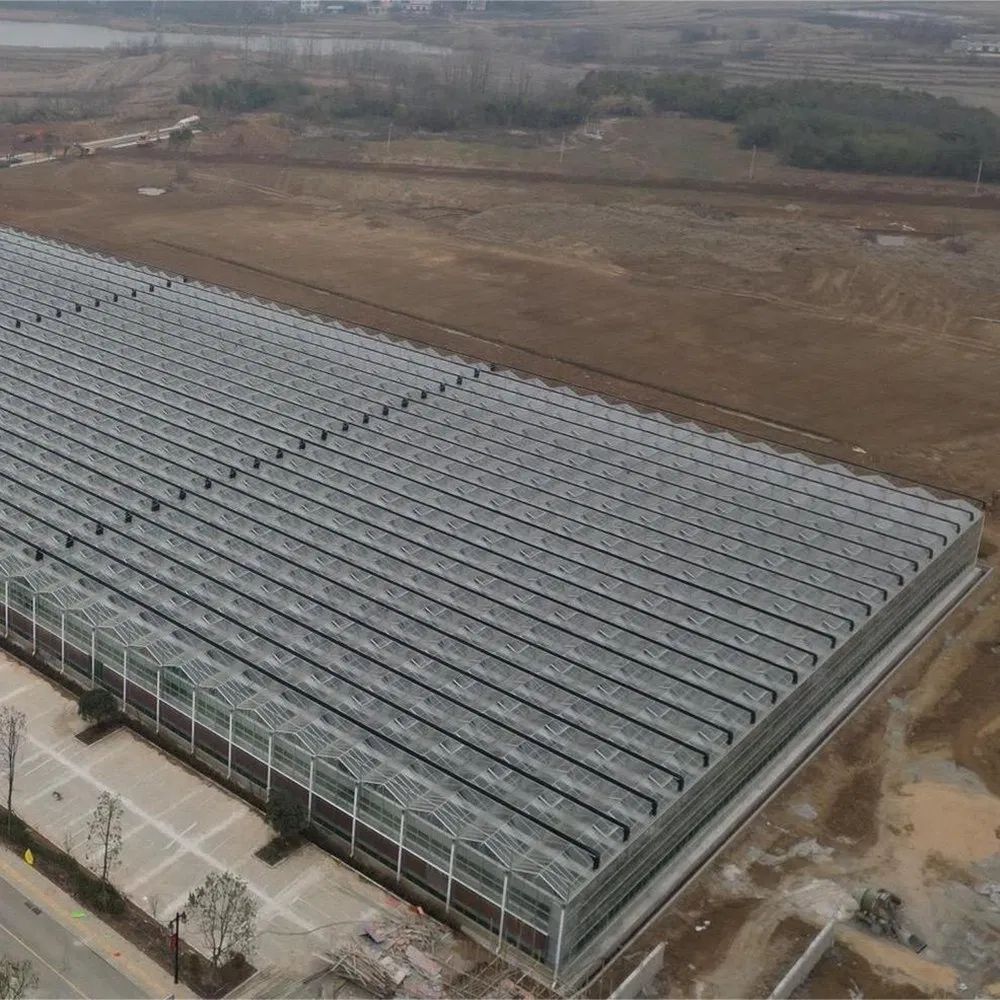
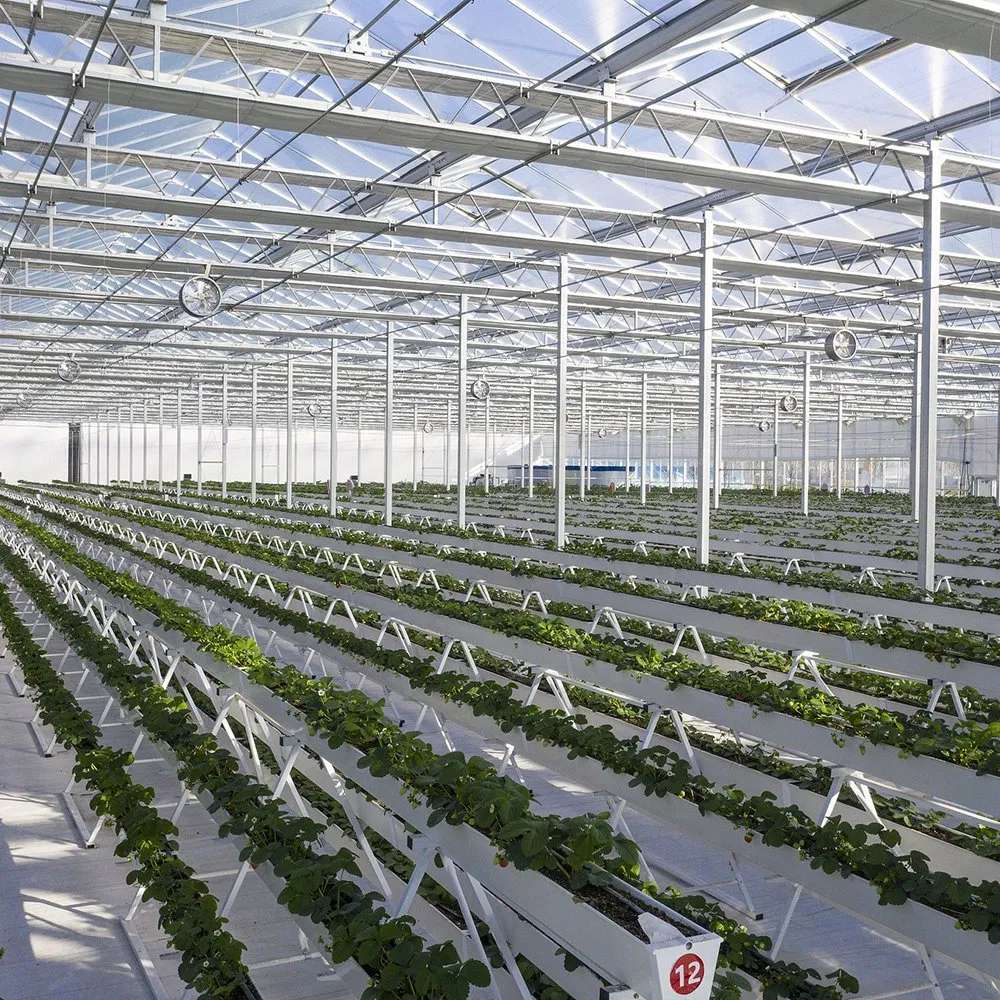
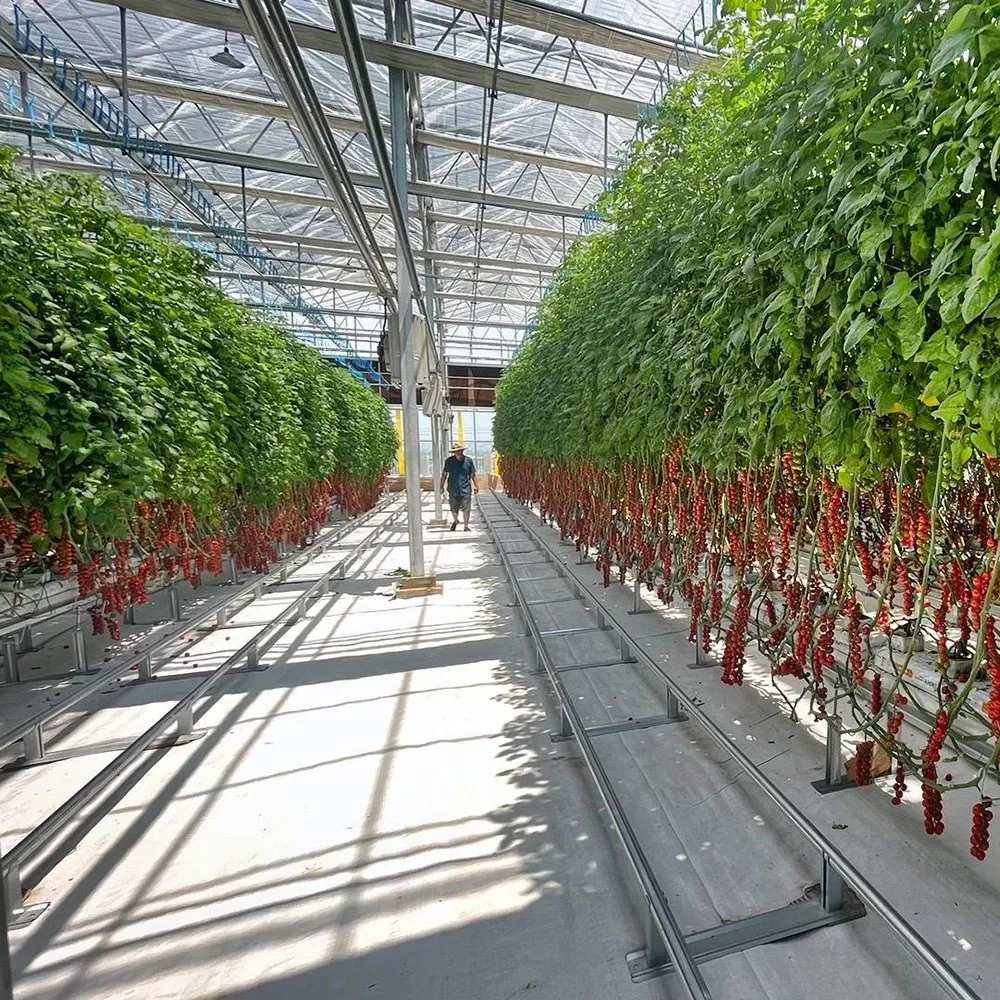
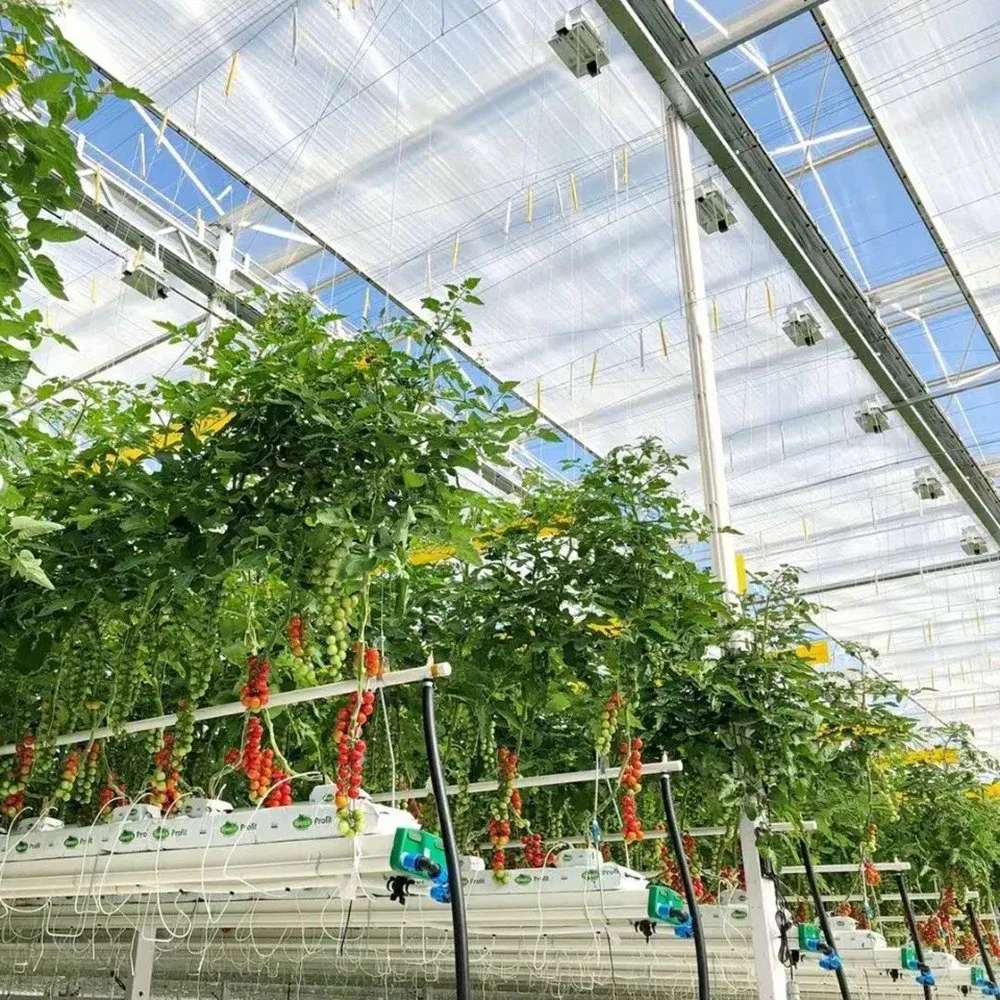
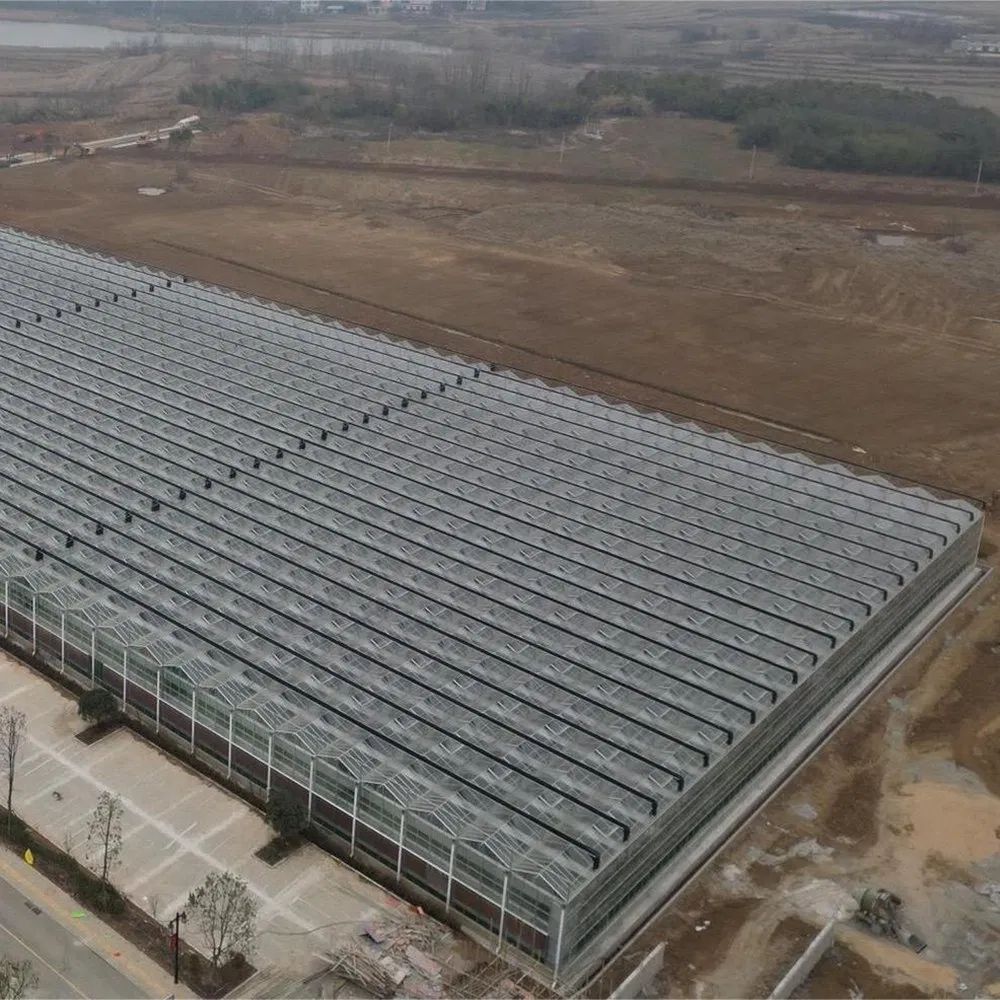
Polycarbonate is chosen at scale for two reasons: it insulates, and it survives hail. This range carries 8 or 12 mm hollow sheet in a grooved channel frame that holds the panels against wind, on hot dip galvanized steel, in bays of 6.4 to 10 metres and heights to 7.5 metres. It is the sheeting for a cold or hail-prone site that still wants glass-like light. At this scale it is the sheeting that closes the business case rather than the cheapest option on the sheet.
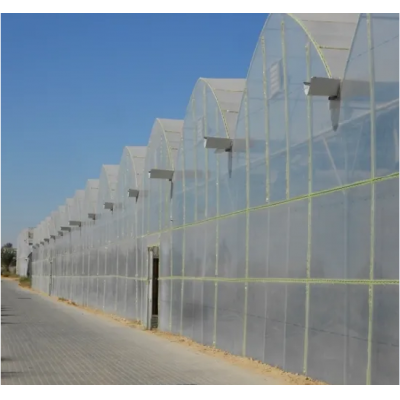
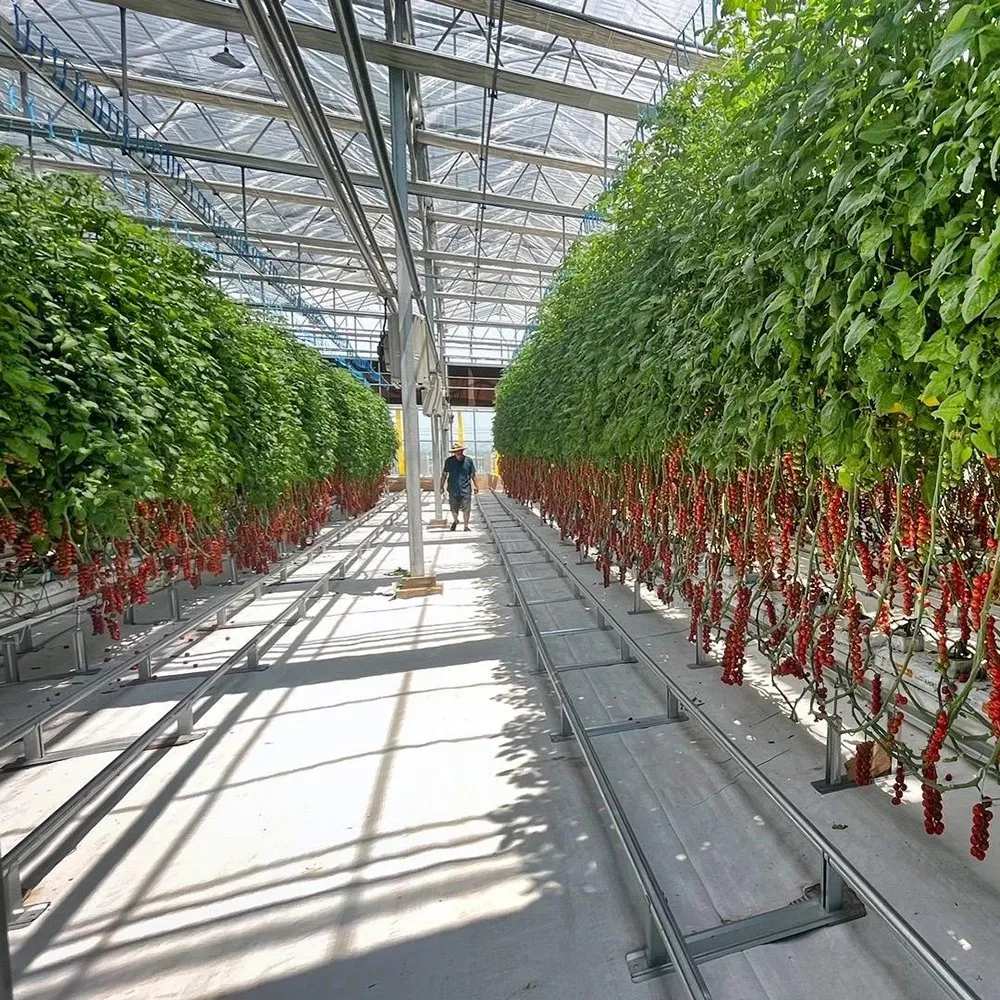
Film costs least and glass is clearest, and polycarbonate sits between them doing neither job badly. On a large range in a cold or hail-prone region it is often the only sheeting that closes the business case, because a hail event that would take out a glass roof leaves PC panels intact. This house is a multi span range built around that. It belongs to the polycarbonate greenhouse section of this site.
Two properties matter: the air cells inside a hollow sheet, and the impact behaviour of the material. The cells are what insulate — a 12 mm multiwall sheet behaves like a much thicker single skin — and the material takes a hit that would break glass, without producing shards over a crop.
What it costs is light. Transmission is quoted at 90 to 95 percent when the sheet is new and clean, and the honest note is that a hollow sheet picks up dust in the cells over the years and needs washing to keep that figure.
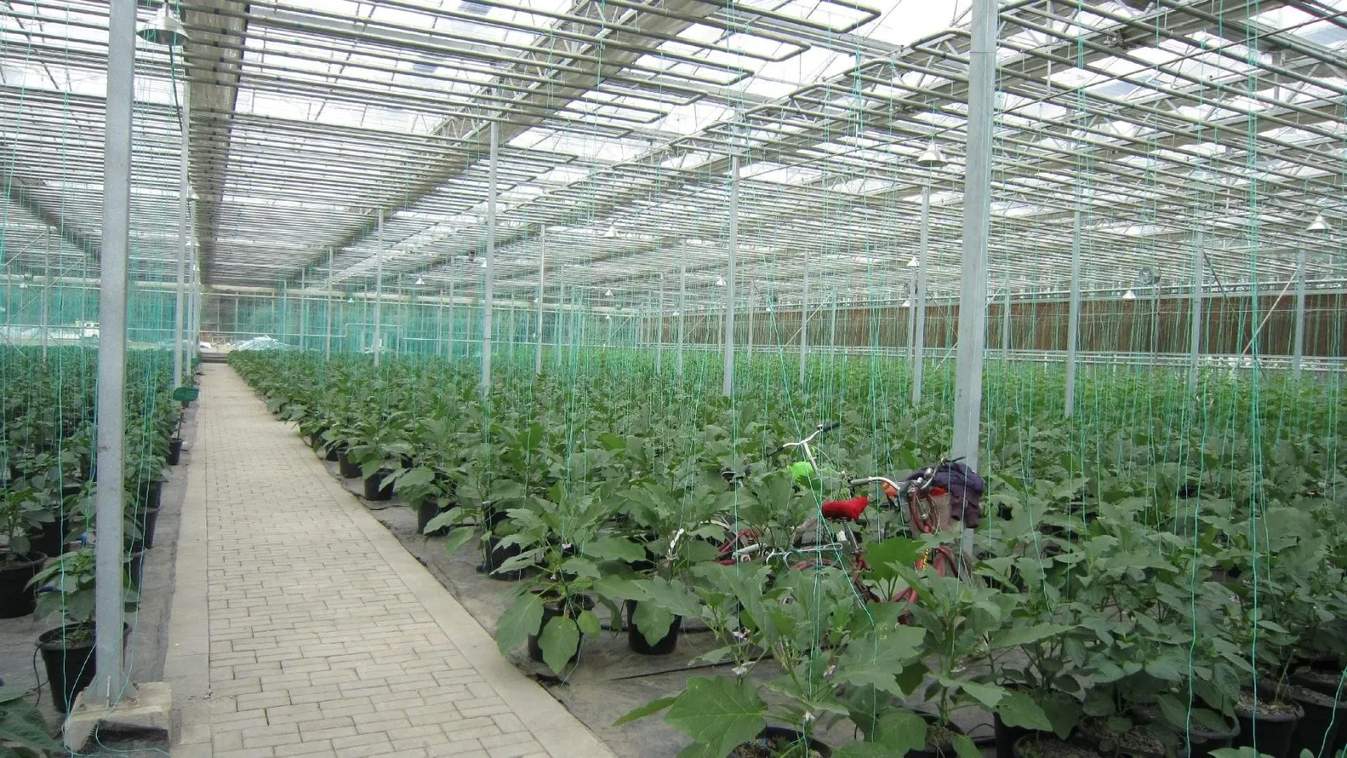
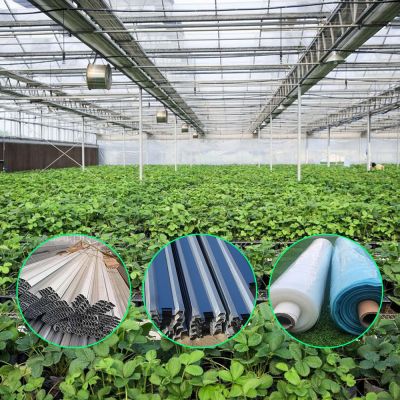
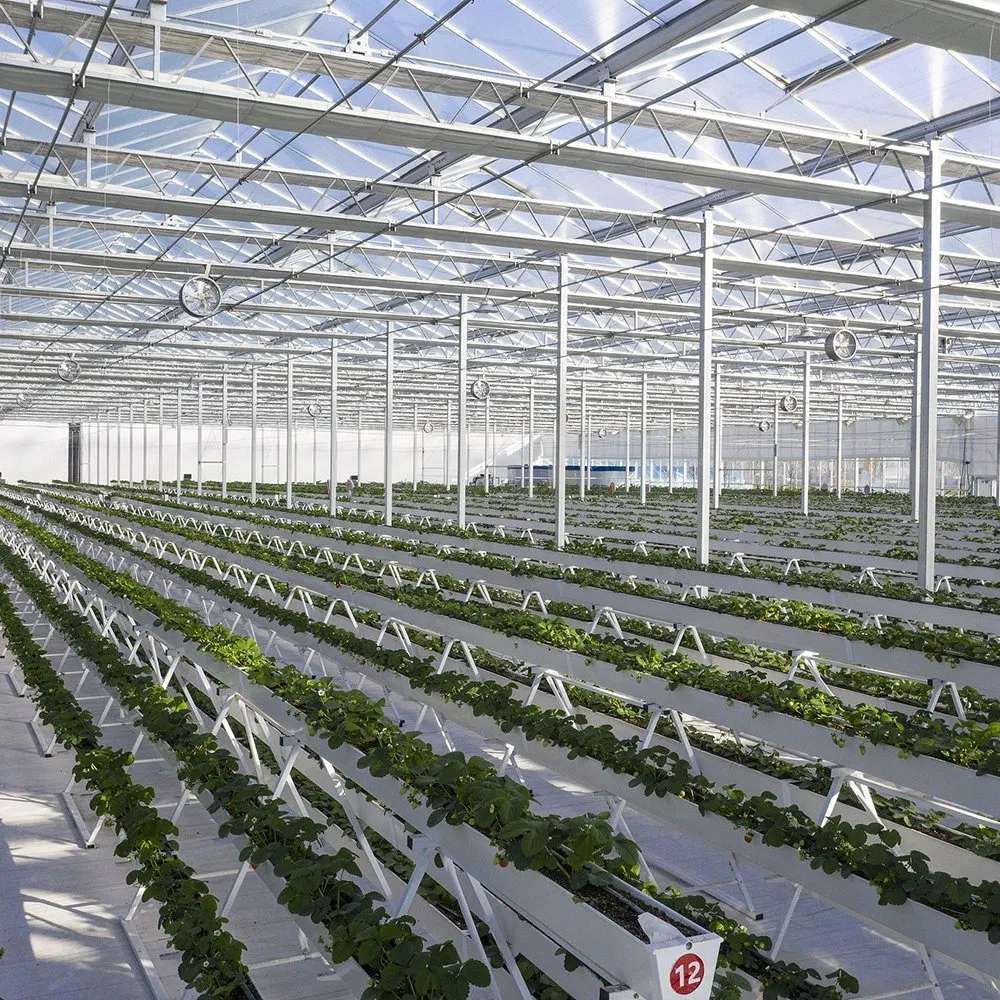
Panels are 8 mm or 12 mm polycarbonate hollow sheet, held in a grooved channel frame rather than clamped on the surface. The channel is what stops a panel lifting in wind and what keeps the fixing line out of the weather. The frame is hot dip galvanized steel pipe, with aluminium sections available where the detailing matters more than the span.
| Type | Multi span polycarbonate panel greenhouse |
| Covering | 8 mm or 12 mm polycarbonate hollow sheet |
| Frame | Hot dip galvanized steel pipe, aluminium option |
| Panel fixing | Grooved channel profile, panels set into the frame |
| Span | 6.4 / 8 / 9.6 / 10 m, wider to order |
| Length | 10 m to 100 m or to order |
| Total height | 4 m to 7.5 m |
| Light transmission | 90 to 95 percent |
| Sheet life | 10 to 15 years |
| Ventilation | Roof vents, side vents, automated options |
A hollow sheet insulates because the air in the cells cannot circulate. That cuts the night heat load, which is why PC is specified where the winter bill matters. The same structure makes condensation behave differently too: water forms on the inner face and runs to the gutter rather than dripping from a sagging film.
What a hollow sheet does need is clean cut ends and closed edges. An open-ended panel fills with dust and algae and stops being either insulated or transparent, and that is a detail settled at installation, not at purchase.
Polycarbonate is quoted at roughly two hundred times the impact resistance of glass and eight times that of acrylic, which is the number that matters on a hail belt. On fire behaviour, the sheet melts rather than propagating a flame, which is a material property rather than a fire rating.
Neither property removes the need for the frame: a panel that stays intact still has to be held down in a gale, which is what the channel profile is for.
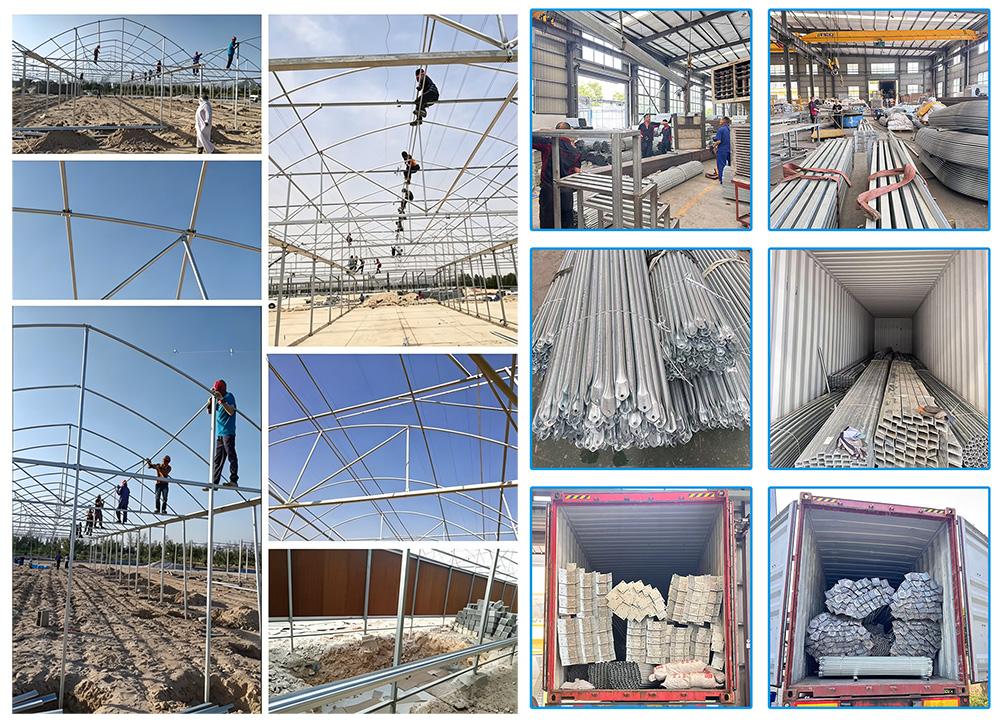
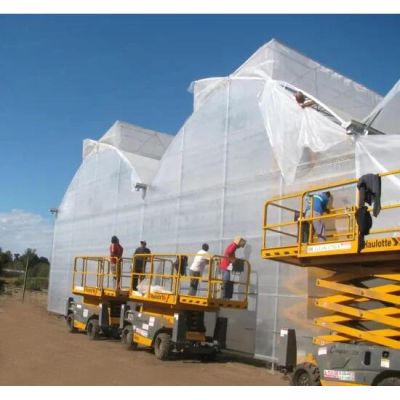
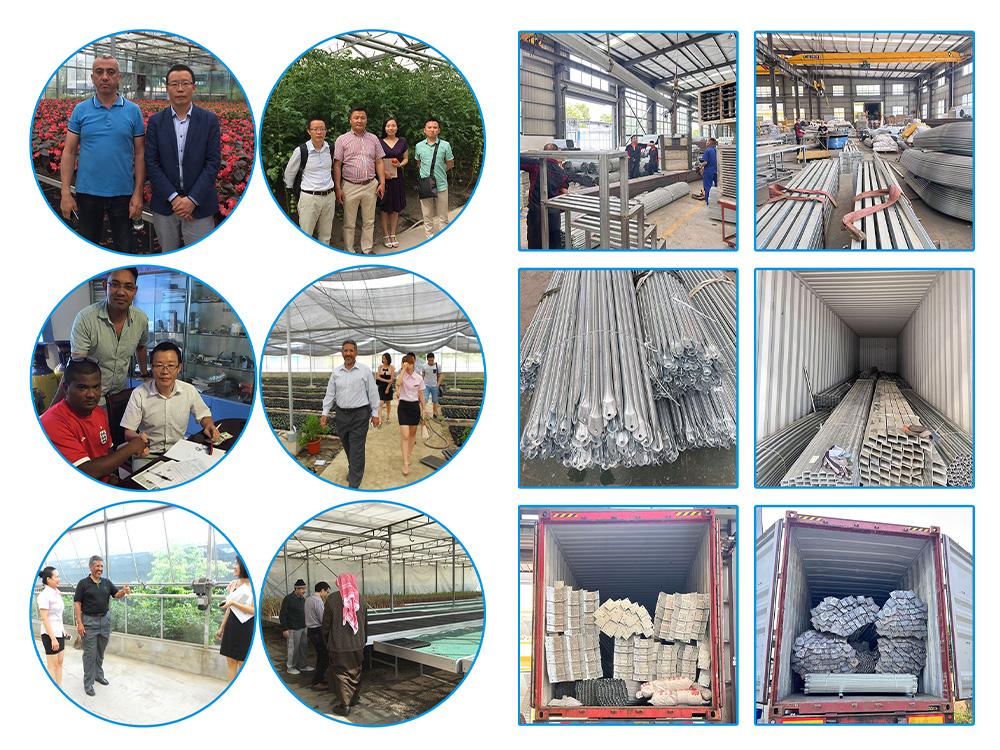
At this scale the house is laid out around machinery and around the delivery. Panels ship crated by size, frames ship as bundles, and the sequence on site is frame first, then glazing bay by bay. Getting the bay module right at enquiry is what keeps the crates in step with the steel.
A tempered glass house for flower crops is described on the UV resistant flower glass house page, and a PC range for vegetables and fruit on the polycarbonate multi span greenhouse page.
Protected cultivation and food production guidance is published by FAO, and fresh produce trade coverage by Perishable News.
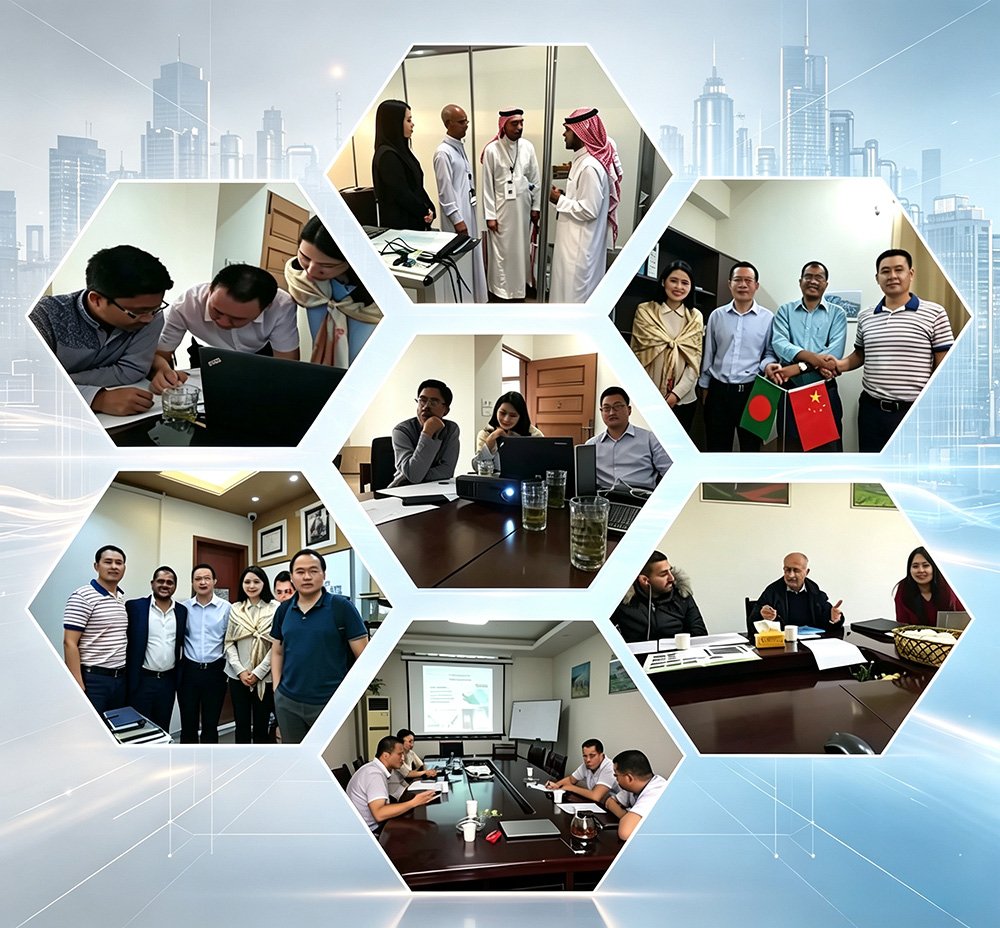
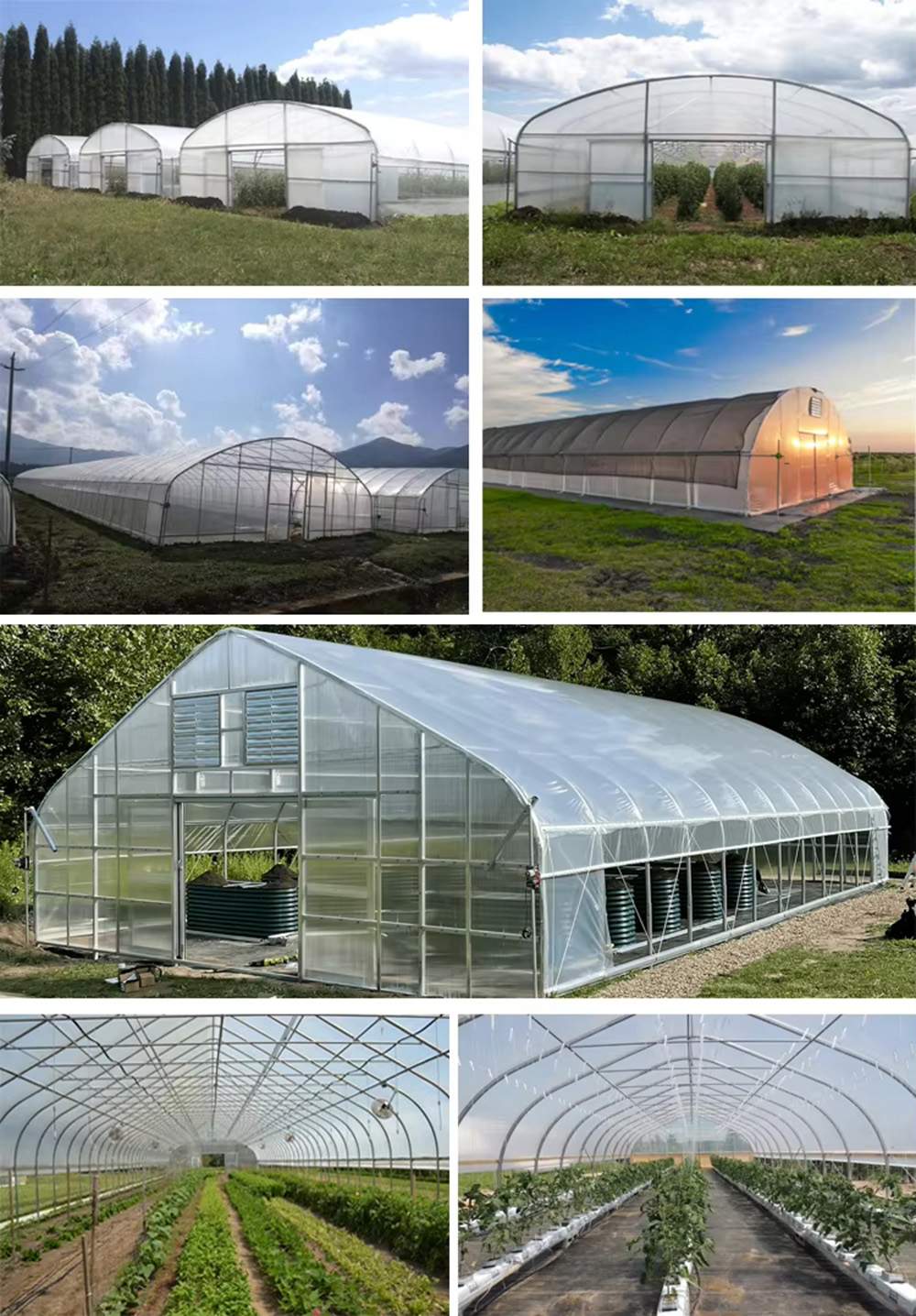
A standard multi-span greenhouse is typically erected in 2-4 weeks, depending on the span, the number of bays and site access. Foundation work and glazing are the two stages that set the pace, and both are scheduled before the frame arrives.
Film suits low-cost tunnels on 3-5 year replacement cycles. Glass delivers the highest light transmission and the longest lifespan, at the highest cost. PC sheet insulates better than film and suits cold or high-humidity climates. The right choice depends on climate, crop and budget.
The hot-dip galvanized steel frame is designed for a 15-20 year service life in normal agricultural environments, with a double-sided zinc coating of 200-275 g/m². Film covers are replaced every 3-5 years, while glass and PC panels carry their own manufacturer warranties.
Yes. We customize span width, bay length, gutter height, covering material (film, PC sheet or glass) and ventilation configuration. Share your crop type, local climate and growing area, and our engineers will size the structure to match.
8 mm or 12 mm hollow sheet. Twelve insulates better and is the usual choice on a cold site; eight is lighter and costs less, and often enough in a mild climate. Both are held in the same channel profile.
In a grooved channel frame, so the panel edge sits inside the profile rather than being clamped on the surface. That is what stops a panel lifting, and it keeps the fixing line out of the weather.