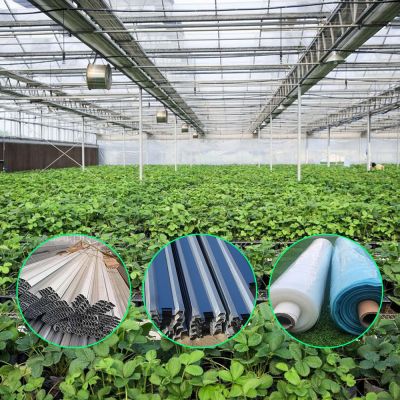
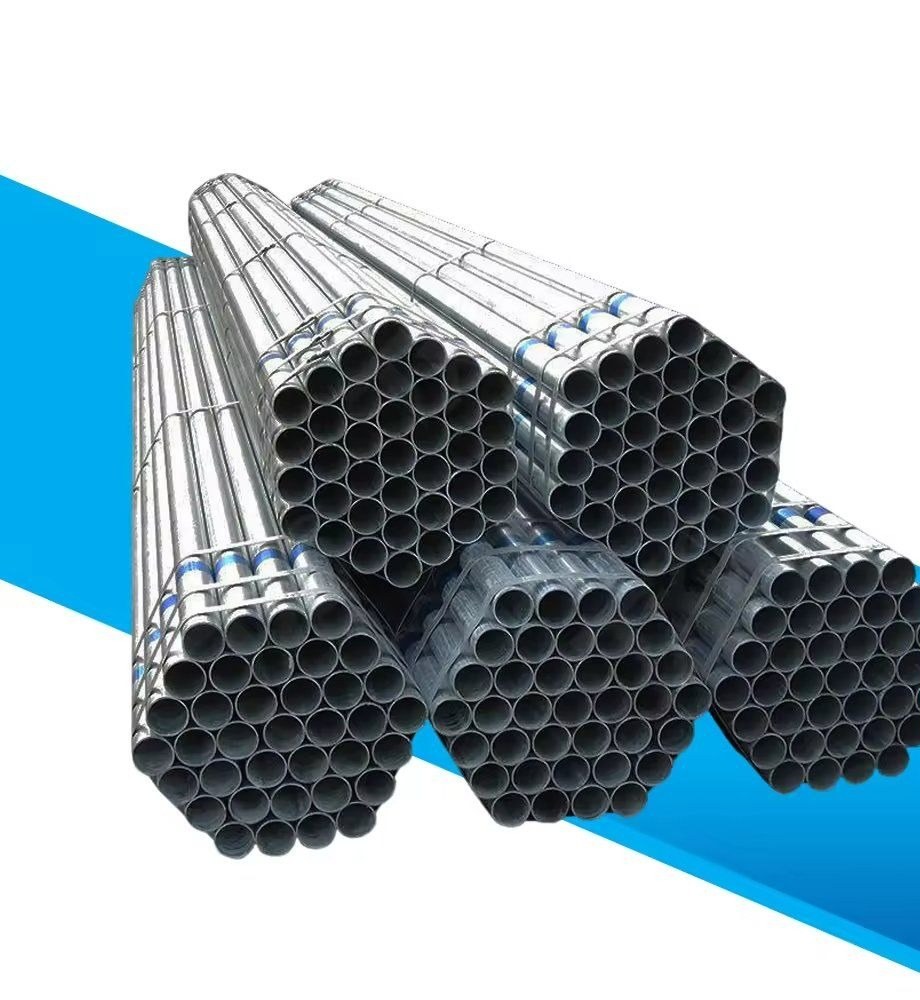
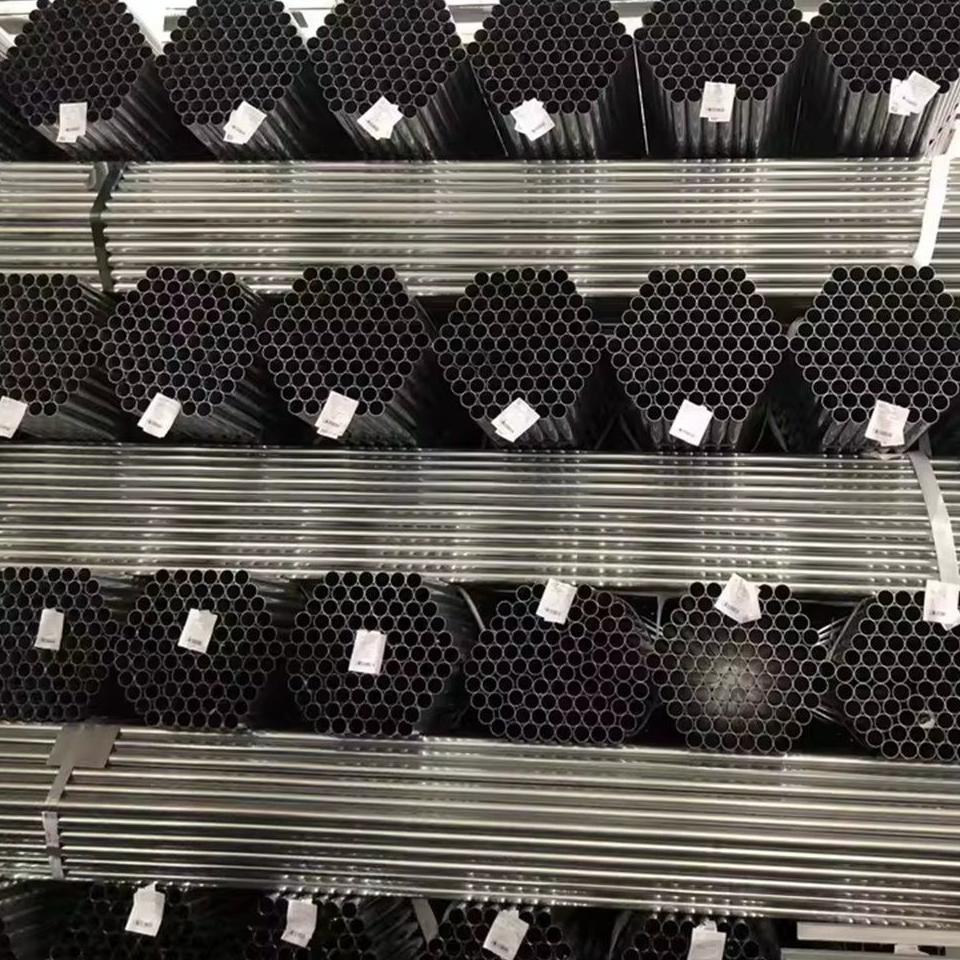
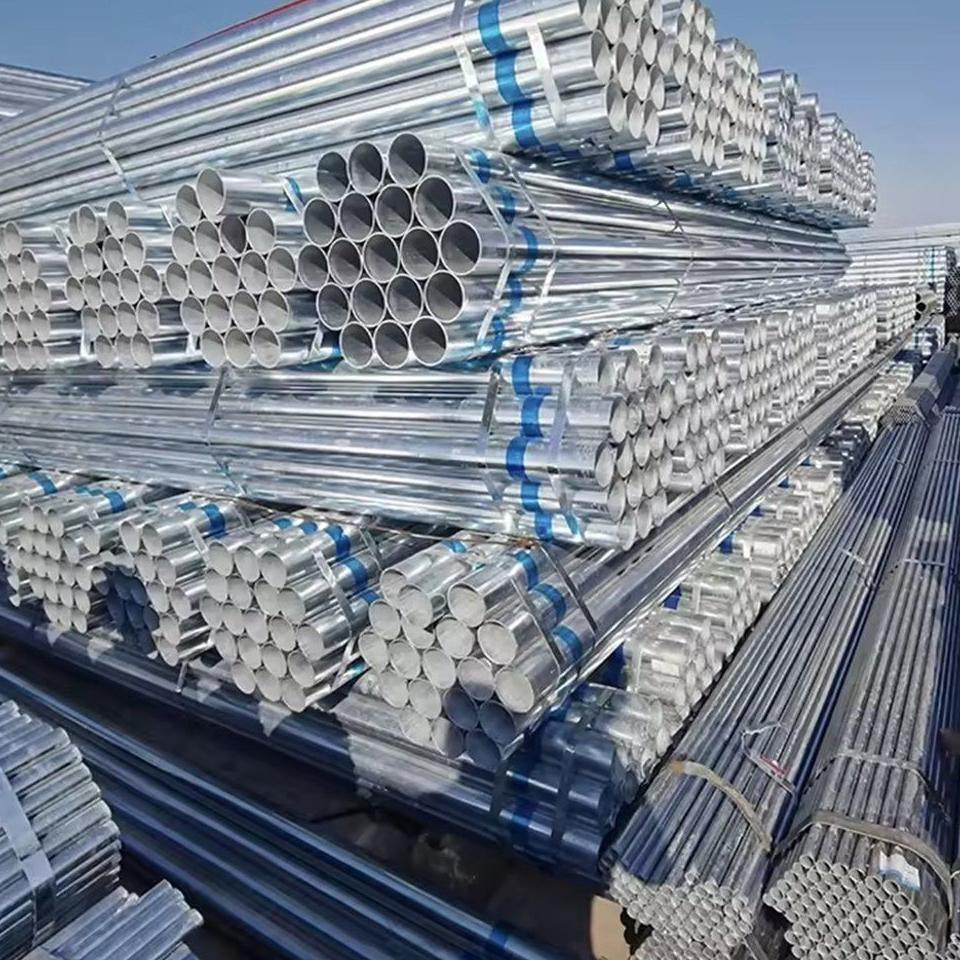
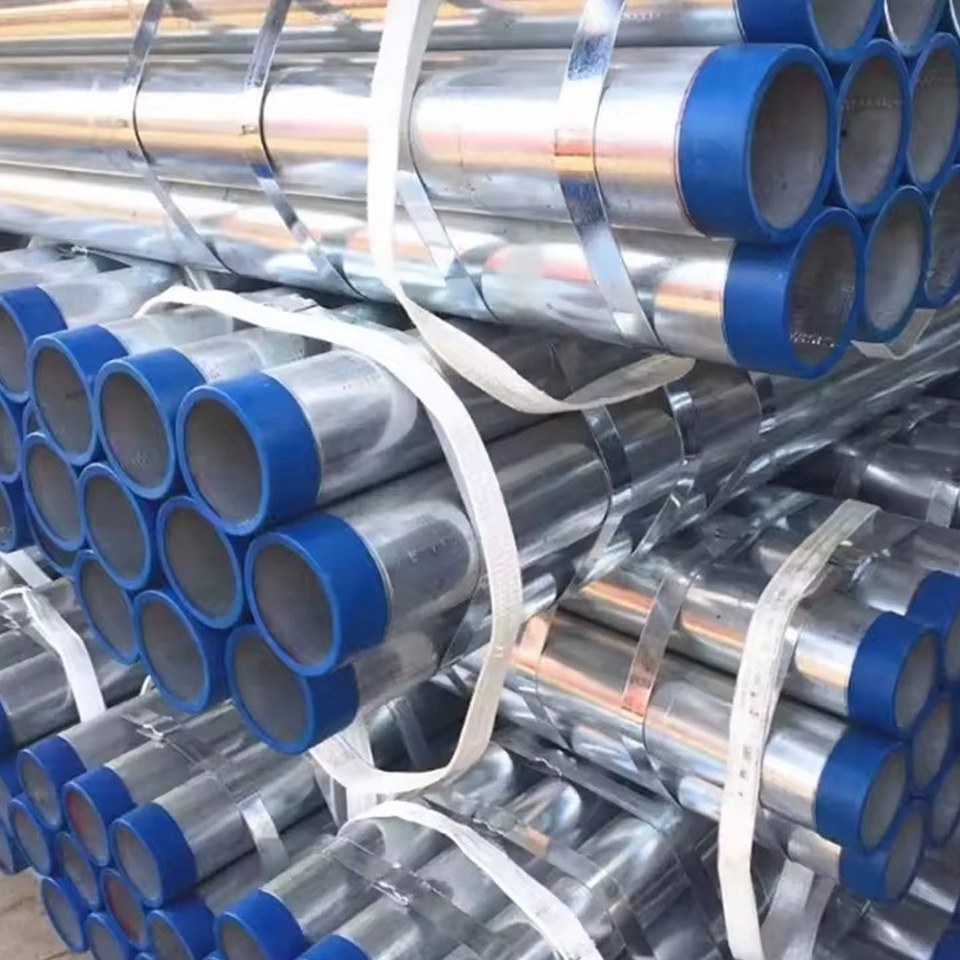
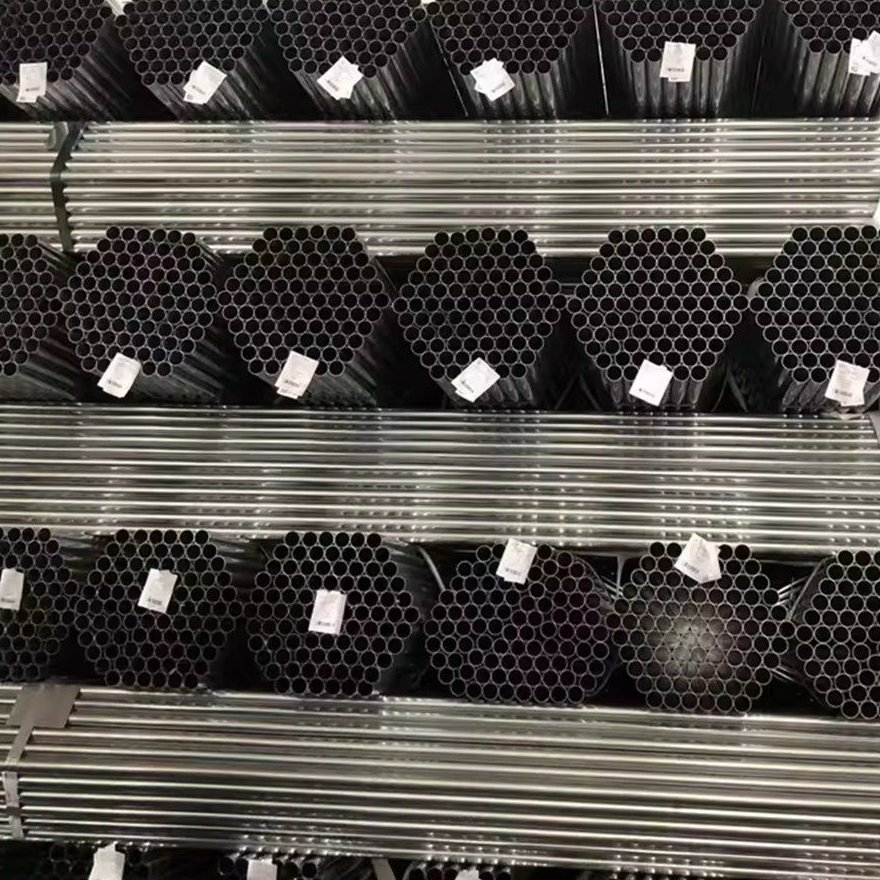
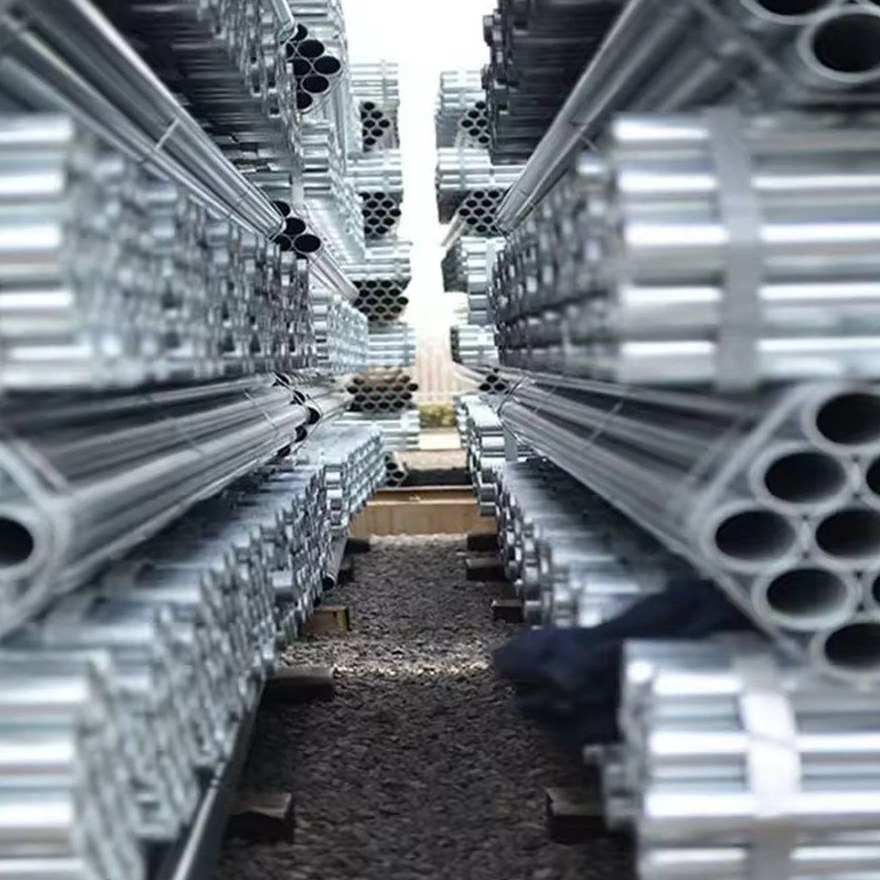
The pipe is hot dip galvanized after forming, so the zinc is bonded to the steel rather than applied as a surface coat, and it reaches the bore and the cut ends as well as the outside. That decides how a frame ages: a skeleton fails first at the drilled hole and the cut end, which is where a painted tube gives up. Sections run from DN15 at 21.3 mm outside diameter up to DN100 at 114.3 mm, with the wall thickness matched to the duty, so a 6 m span arch and the main column of a multi span house are drawn from the same supply. Pipe is bundled with steel strips and wrapped in plastic film for shipping.
A greenhouse frame is judged twice: once on the day it is raised, and again in year eight when the crop is under it and nobody wants to hear about the structure. The second judgement depends on almost nothing except how the steel was protected, which is why the pipe specification decides more about a house than its span does.
Condensation runs down the inside of a greenhouse frame every morning it is closed. The places that fail first are the drilled bolt hole, the cut end and the inside face of the tube, because those are the points where water collects and where a surface coating is thinnest or absent. Hot dipping answers all three: the tube is immersed in molten zinc after forming, so the coating is metallurgically bonded and reaches the bore, the cut ends and the wall of every hole.
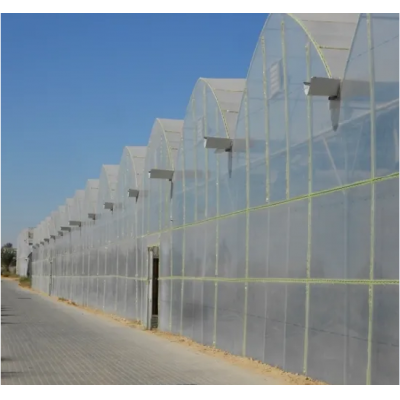
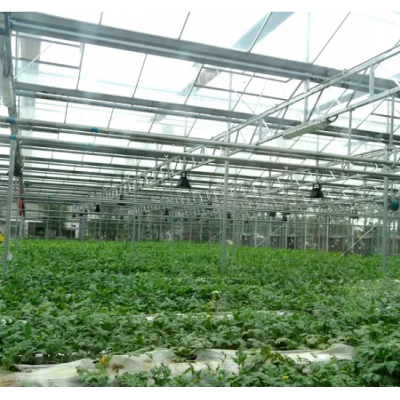
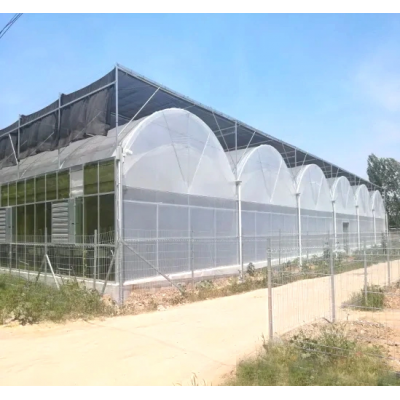
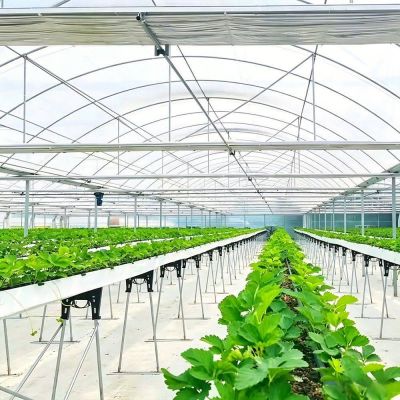
The joining method matters for the same reason. A welded joint burns the zinc back from the weld and leaves a ring of bare steel around it, which is where corrosion starts in a bolted-then-welded frame. Practically, that means the frame should be cut, drilled and then galvanized, and assembled with clamps and bolts rather than welded on site. A finished greenhouse built on this pipe is described in the galvanized frame greenhouse structure.
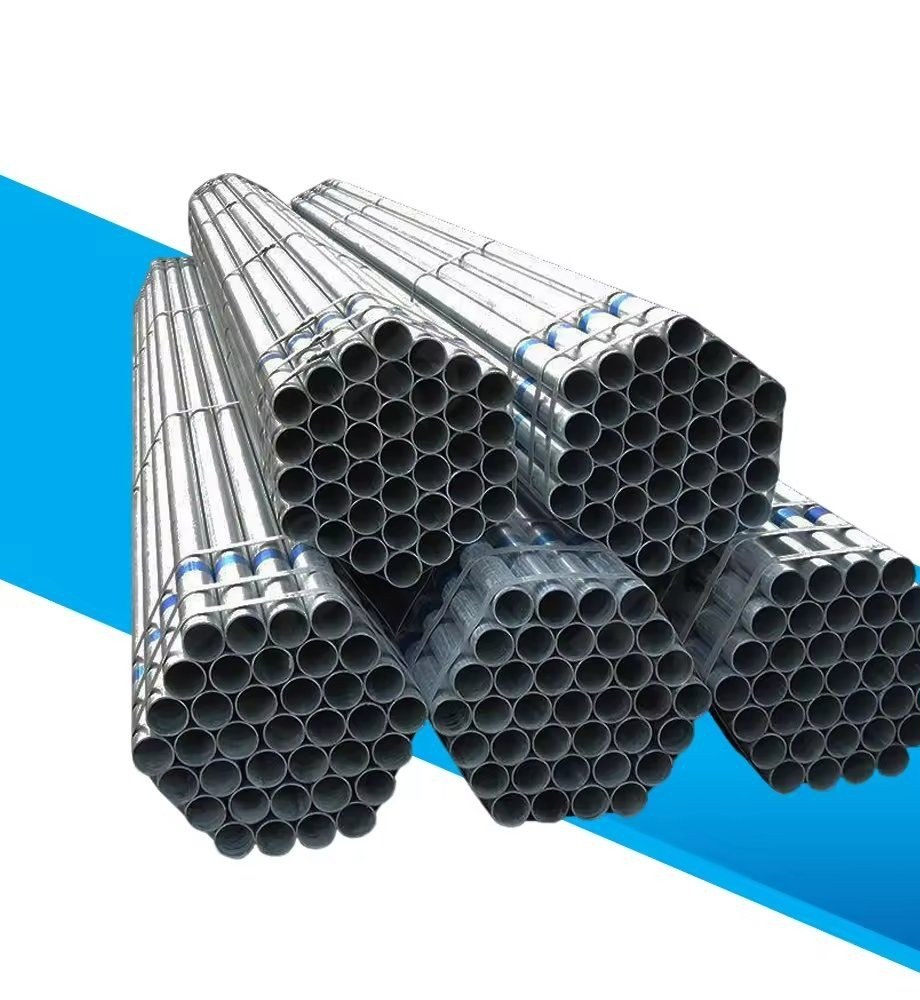
The range runs from half inch to four inch nominal bore, which is 21.3 mm to 114.3 mm outside diameter. Wall thickness is matched to the duty rather than fixed across the range: the small sizes used for pull rods and film rolling rods run 1.5 mm to 2.0 mm, the arch and column sizes run 1.8 mm to 2.5 mm, and the large sizes used for main columns, trusses and multi span frames run 2.5 mm to 3.5 mm.
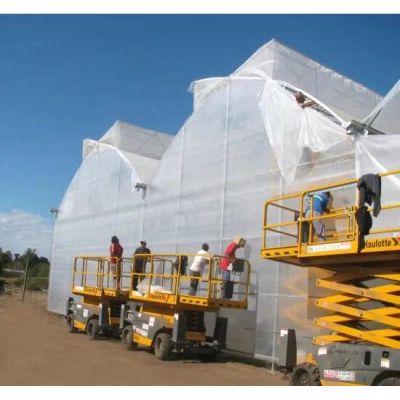
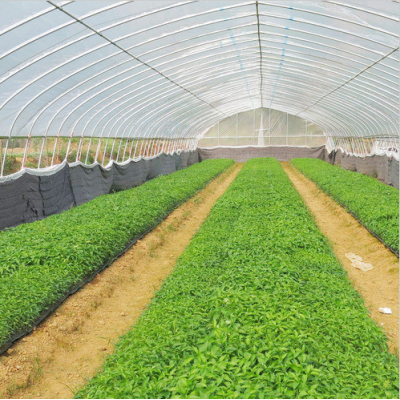
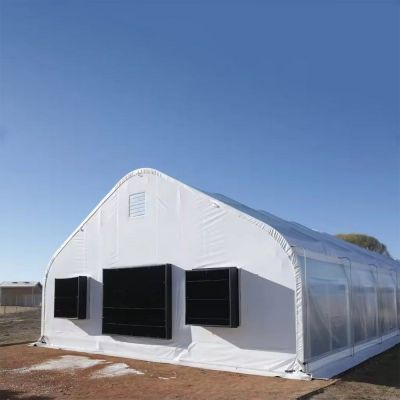
Specifying pipe by nominal bore alone is not enough on a greenhouse, because the same bore is used for several duties at different load. What decides the section is the span, the snow load and the wind speed at the site, measured against the duty the member carries. The steel is non alloy, hot rolled, and supplied to ASTM standard with a galvanized finish. A completed multi span house on this pipe is described in the multi span film greenhouse with a galvanized steel frame. The film houses these frames go into are listed on the film greenhouse range page on this site.
The table below sets out the sizes most often used on commercial greenhouses, with the duty each one normally carries. It is a starting point for a quotation rather than a substitute for a structural drawing.
| DN15 / 1/2 inch | 21.3 mm outside diameter, pull rod, clamping groove, small support |
| DN20 / 3/4 inch | 26.9 mm outside diameter, arch frame, tie rod, film rolling rod |
| DN25 / 1 inch | 33.7 mm outside diameter, universal arch frames and columns on 6 to 8 m spans |
| DN32 / 1 1/4 inch | 42.4 mm outside diameter, column, main arch, diagonal brace |
| DN40 / 1 1/2 inch | 48.3 mm outside diameter, column, main arch, truss |
| DN50 / 2 inch | 60.3 mm outside diameter, large span main columns and main beams |
| DN65 / 2 1/2 inch | 76.1 mm outside diameter, main frame of large greenhouses |
| DN80 / 3 inch | 88.9 mm outside diameter, heavy duty columns and trusses |
| DN100 / 4 inch | 114.3 mm outside diameter, main columns of large span connected houses |
The table below is the standard supply. Diameter, wall thickness and length are set to the frame drawing.
| Product | Hot dip galvanized round steel pipe |
| Size range | DN15 to DN100, 21.3 mm to 114.3 mm outside diameter |
| Wall thickness | 1.5 mm to 4.0 mm, matched to the duty |
| Section | Round; square, rectangular and hydraulic sections also available |
| Technique | Hot rolled, non alloy, hot dip galvanized finish |
| Standard | ASTM |
| Processing service | Bending, welding, cutting and OEM to drawing |
| Packing | Bundled with steel strips, wrapped in plastic film |
| Delivery time | 7 to 15 days |
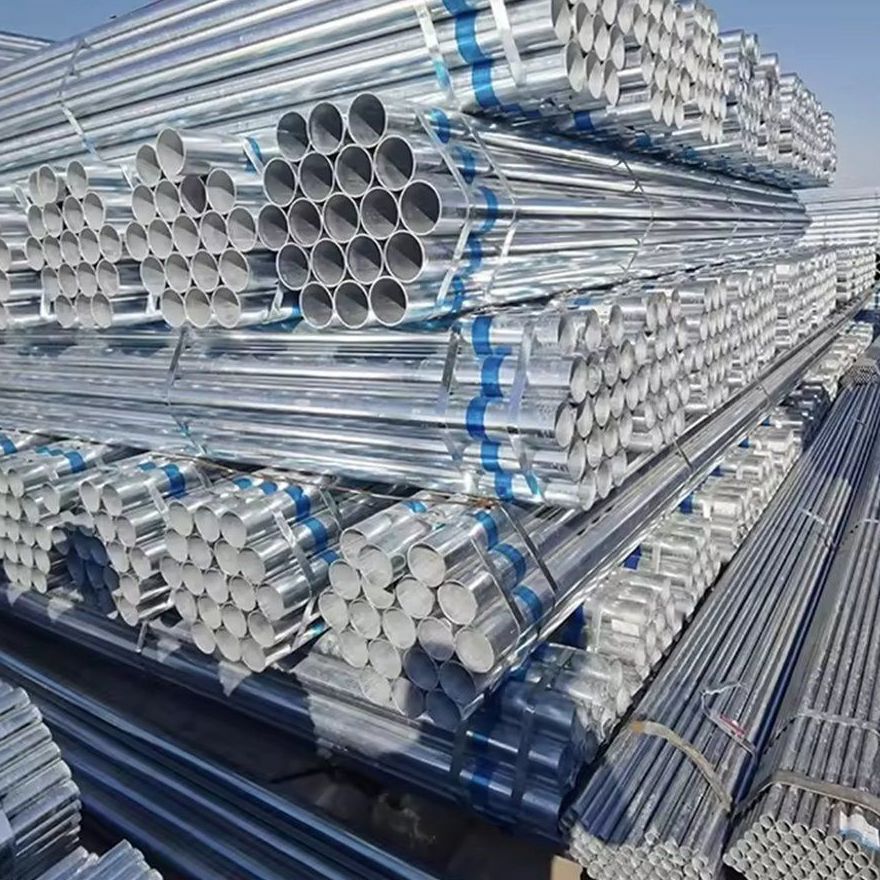
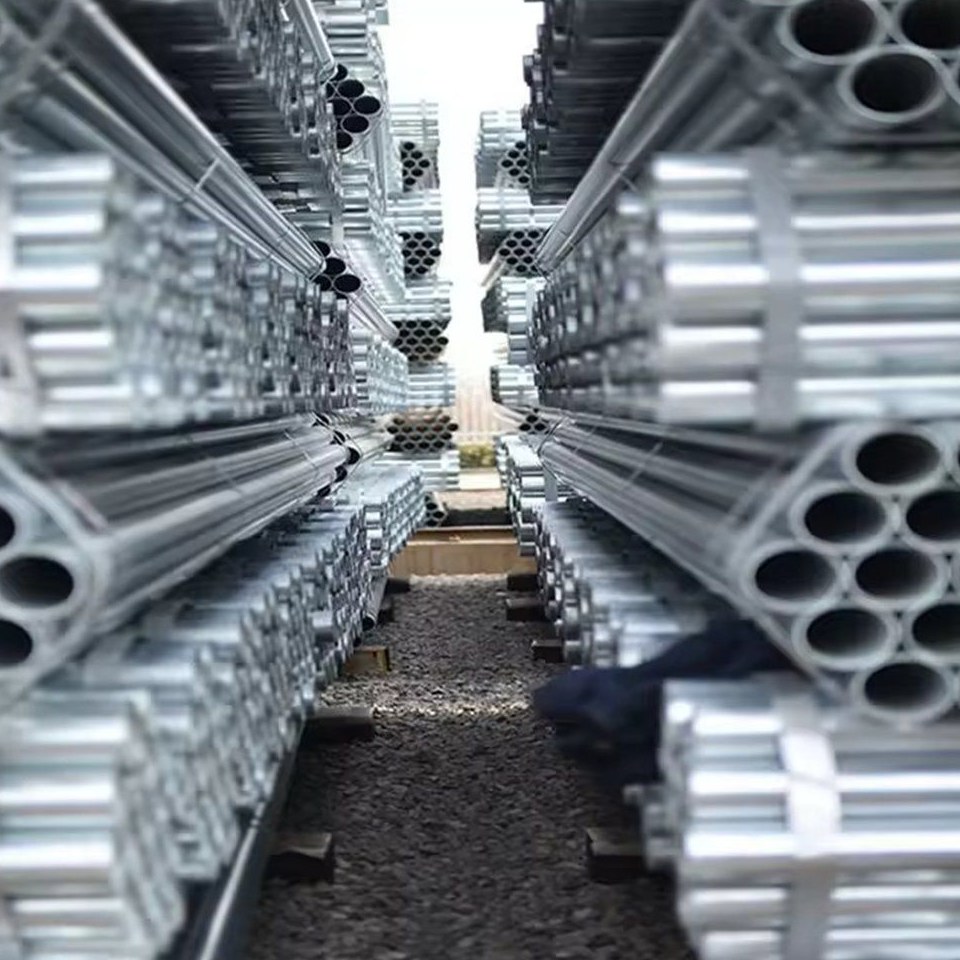
Pipe is supplied in bundles held with steel strips and wrapped in plastic film, which is what keeps the coating intact through a container and a yard before the frame is raised. Cut ends are the part to watch on arrival: a bundle that has been dragged rather than lifted will show bright metal at the ends, and that is where rust starts. Handling with slings rather than forks is worth insisting on.
Fabrication should be planned so that cutting and drilling happen before galvanizing, not after. Where a member has to be cut on site, the exposed end is the one place the coating cannot protect, so a cold galvanizing repair compound is applied to the cut face and to any hole drilled on the site. The frame itself is then bolted rather than welded, which is what keeps the coating whole at every connection and allows a damaged member to be unbolted and replaced.
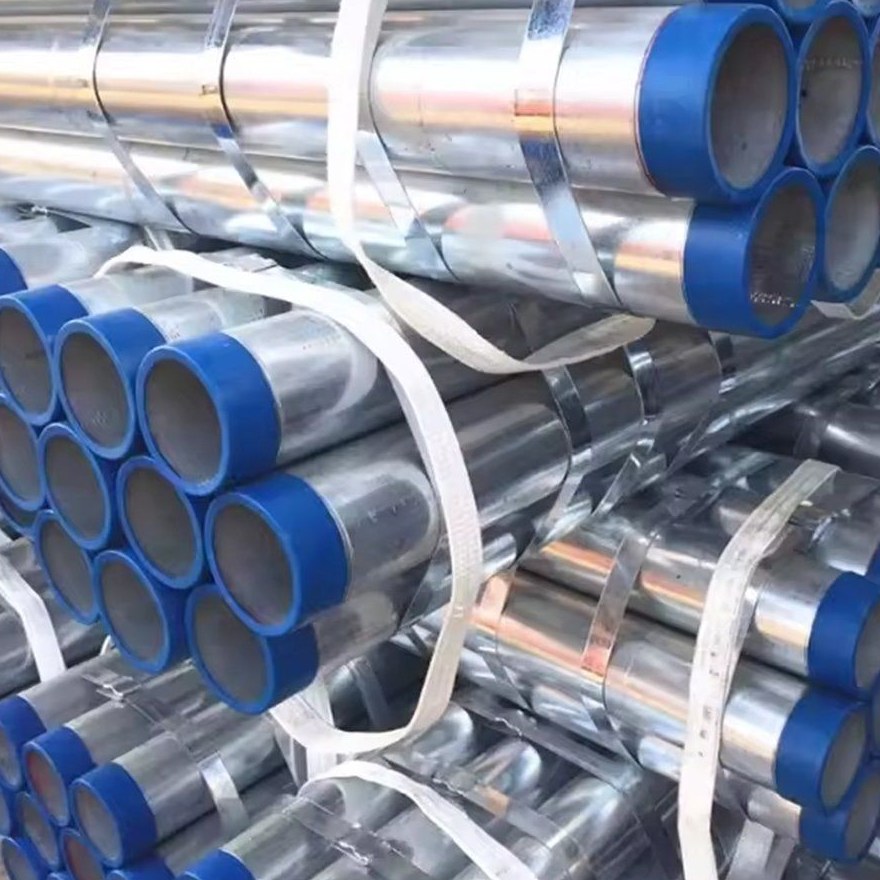
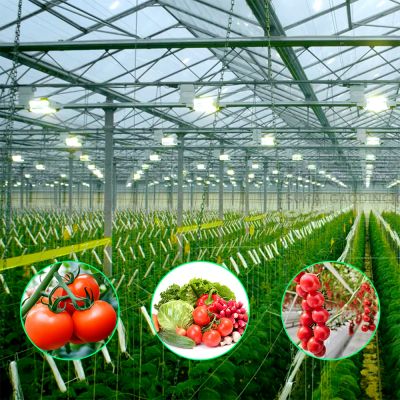
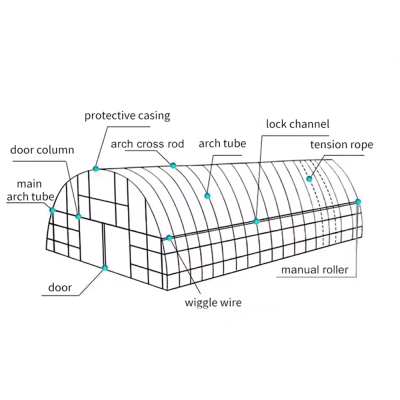
The pipe is used for greenhouse arch frames, columns, trusses and braces, for tie rods and film rolling rods, and for the frames of tunnel and multi span film houses. Outside horticulture the same section is used for fencing, general structural framing and construction work, but the sizes and the coating are normally specified around the greenhouse duty first.
Research and reference material on protected horticulture, including work on structures and on the growing environment, is published by Wageningen University & Research. Practical agricultural and market reporting for growers in South Asia is published by Krishijagran. The question that decides the specification is normally the crop the frame will be carrying in ten years, not only at handover.
Hot dipping bonds the zinc to the steel after the tube is formed, so the coating reaches the bore, the cut ends and the wall of every drilled hole. Paint is a surface film, and the three places a greenhouse frame fails first are exactly the three places paint cannot reach.
By duty, not by diameter. The small sizes used for pull rods and film rolling rods run 1.5 mm to 2.0 mm, arch and column sizes run 1.8 mm to 2.5 mm, and main columns and trusses on large or multi span houses run 2.5 mm to 3.5 mm. The section is then checked against the span, the snow load and the wind speed at the site.
Hot dip galvanized steel used in a greenhouse frame is rated for 15 to 20 years under normal growing conditions, with a 5 year anti-corrosion warranty on the coating. Where a member is cut on site, the cut face is treated with a cold galvanizing repair compound.
We provide a 5 year anti-corrosion warranty on the galvanized coating, and the structural warranty on the finished house is 10 years. Details are set out in the contract for each project.
Send the frame drawing or the section list, the sizes and wall thicknesses you need, and the quantities. We reply with a full quotation and a delivery schedule.