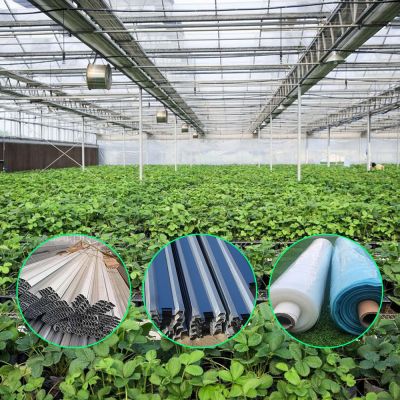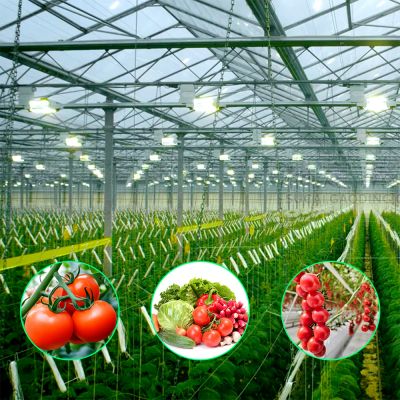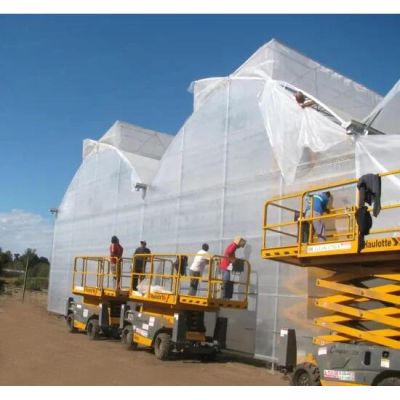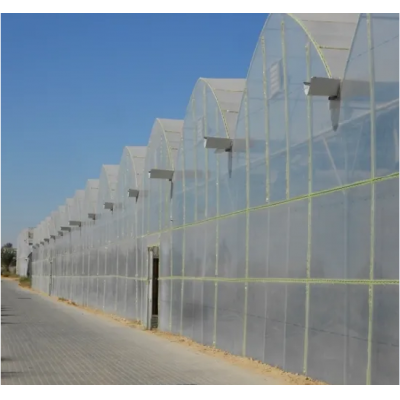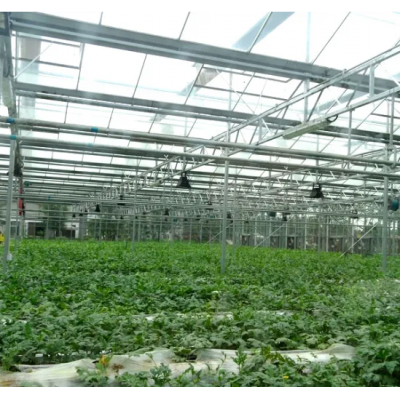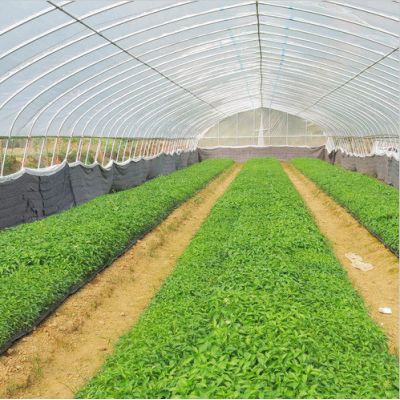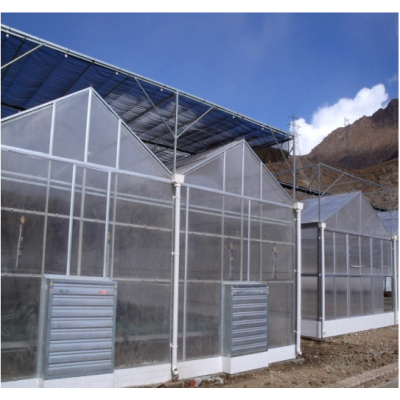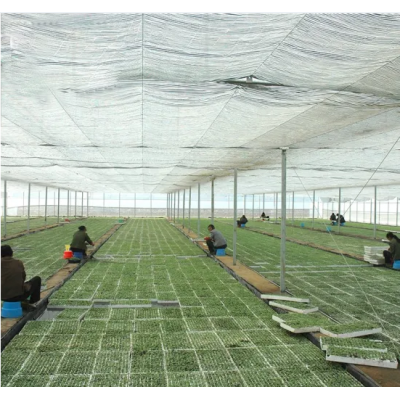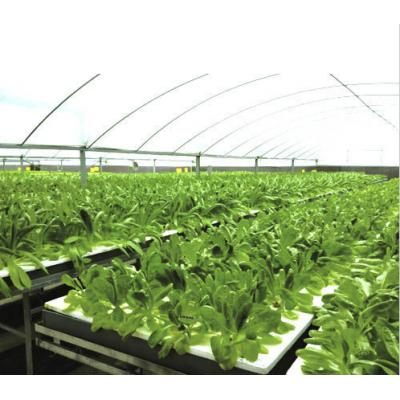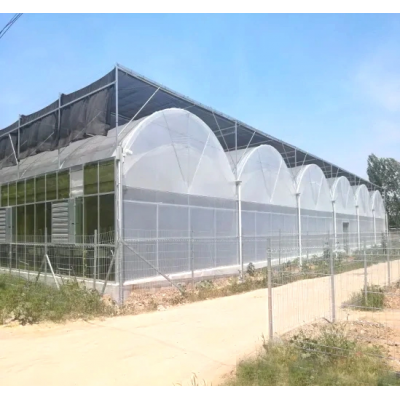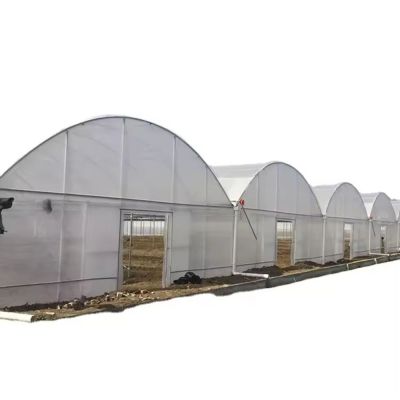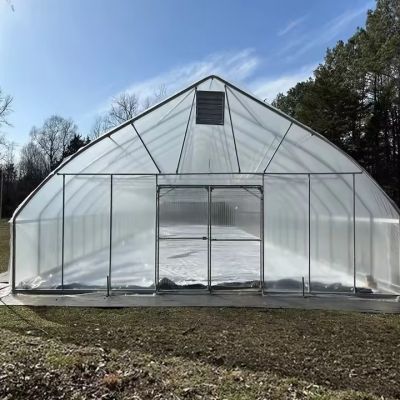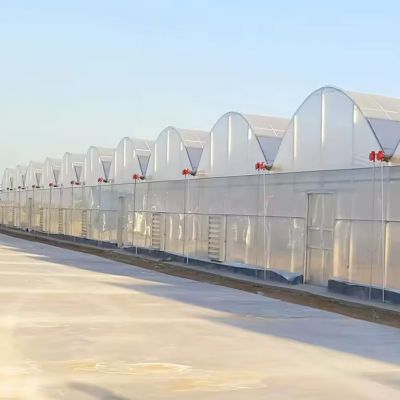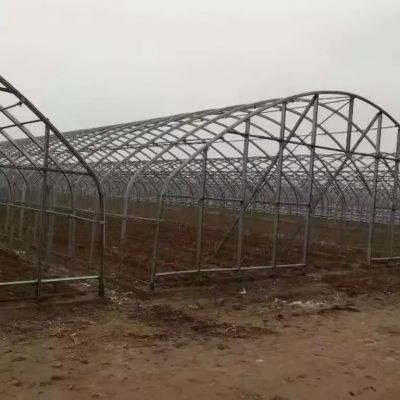


A film greenhouse covers a crop with plastic held over a steel frame, and the range runs from a single arch bay to a multi-span house with a gutter between every pair of bays. Covering options include PO film, PEP film and HDPE woven plastic film, with anti-insect net and shade cloth used on the side walls where airflow matters more than heat retention. The frame is hot-dip galvanized tube assembled with connecting accessories rather than welding, so no joint is left unprotected, and spans are made from 5 metres up to 20 metres. Ventilation windows, drip irrigation and climate systems are specified with the house, and free layout design and installation drawings come with the order.
Most growers meet a film greenhouse before they meet any other structure. It is the least costly way to put a cover over a crop, the fastest to put up, and the easiest to move if the plot changes. The trade-off is that the film is a consumable: it is renewed every few years while the frame stays in service, which is exactly why the frame has to be worth keeping.
The choice is about ground and access rather than price. A single-span tunnel is one arch wide, which suits a small plot, a seasonal crop or a house that may have to move. A multi-span house joins bays at a gutter, so the covered area grows in steps and the strips of ground between separate tunnels become growing rows instead. On a large block that difference is measured in canopy, and it is the reason commercial vegetable operations usually end up with a multi-span house. Single-span tunnels remain the practical answer where the ground is uneven or the crop is short-term. Buyers who need the arch form at scale usually look at the single span tunnel greenhouse range.

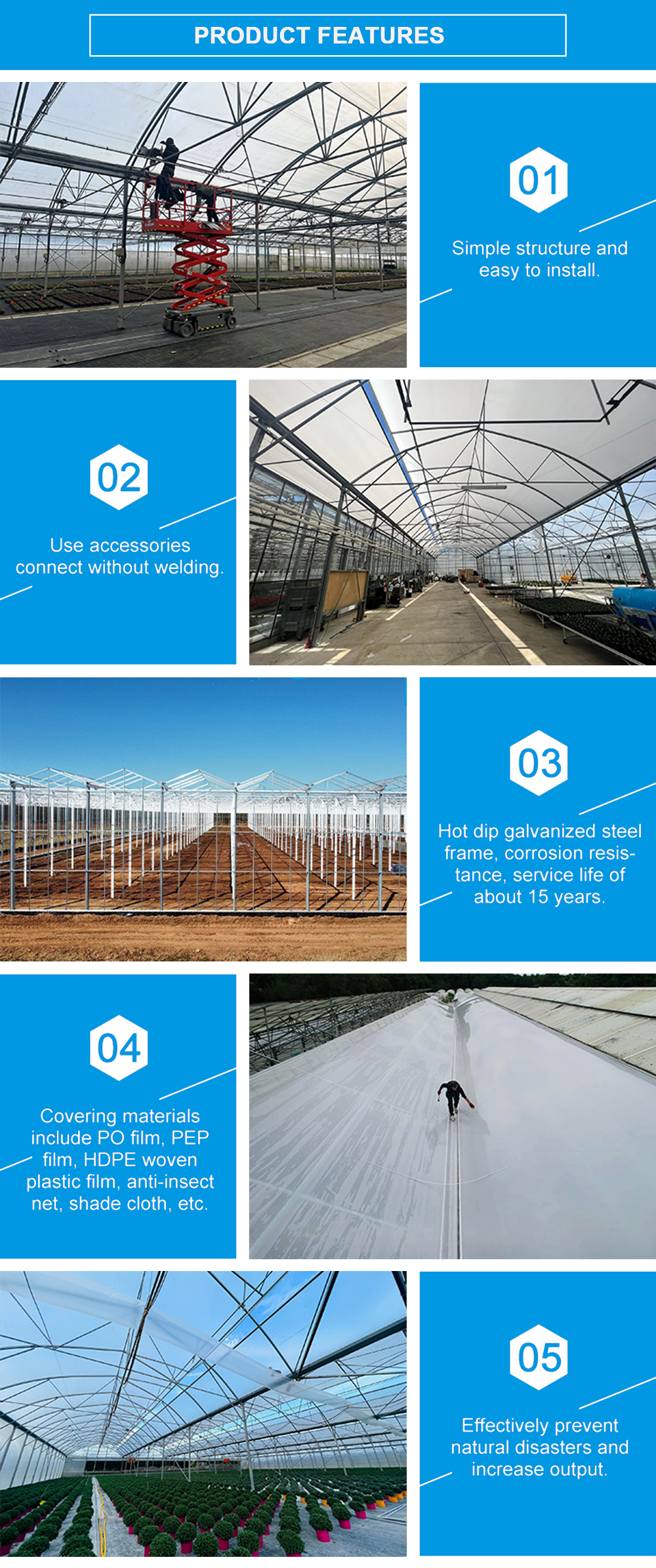
Covering is not limited to one film. PO film, PEP film and HDPE woven plastic film can all be used on the same frame, and where airflow matters more than heat retention, anti-insect net and shade cloth are fitted on the side walls instead. Cooling and heating, ventilation, fertigation, irrigation and shading are designed in at order stage, so ducts, curtain rails and pipe runs are positioned before the frame is fabricated rather than added later. Film houses of this type reach more than 90% light transmission and hold a steadier microclimate than open ground.
The frame is hot-dip galvanized steel tube with a zinc coating of 275 g/m², bolted together with connecting accessories so the assembly needs hand tools rather than site welding. Gable spans run from 5 metres up to 20 metres, with a total height of 3 or 4 metres on the arch houses and a gutter on the multi-span ones. Covering thickness is chosen with the crop and the climate. Because every joint is a bolted accessory, the structure can be taken down and re-erected if the farm layout changes.
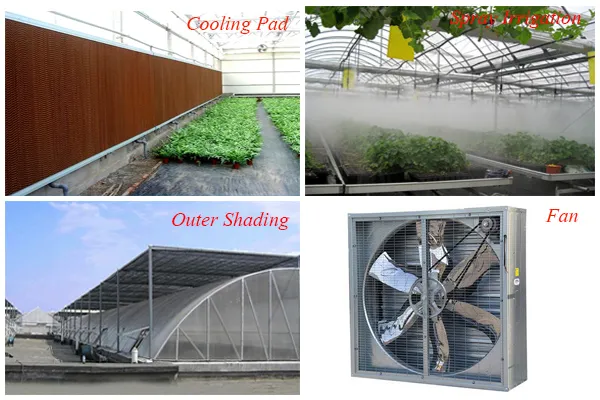
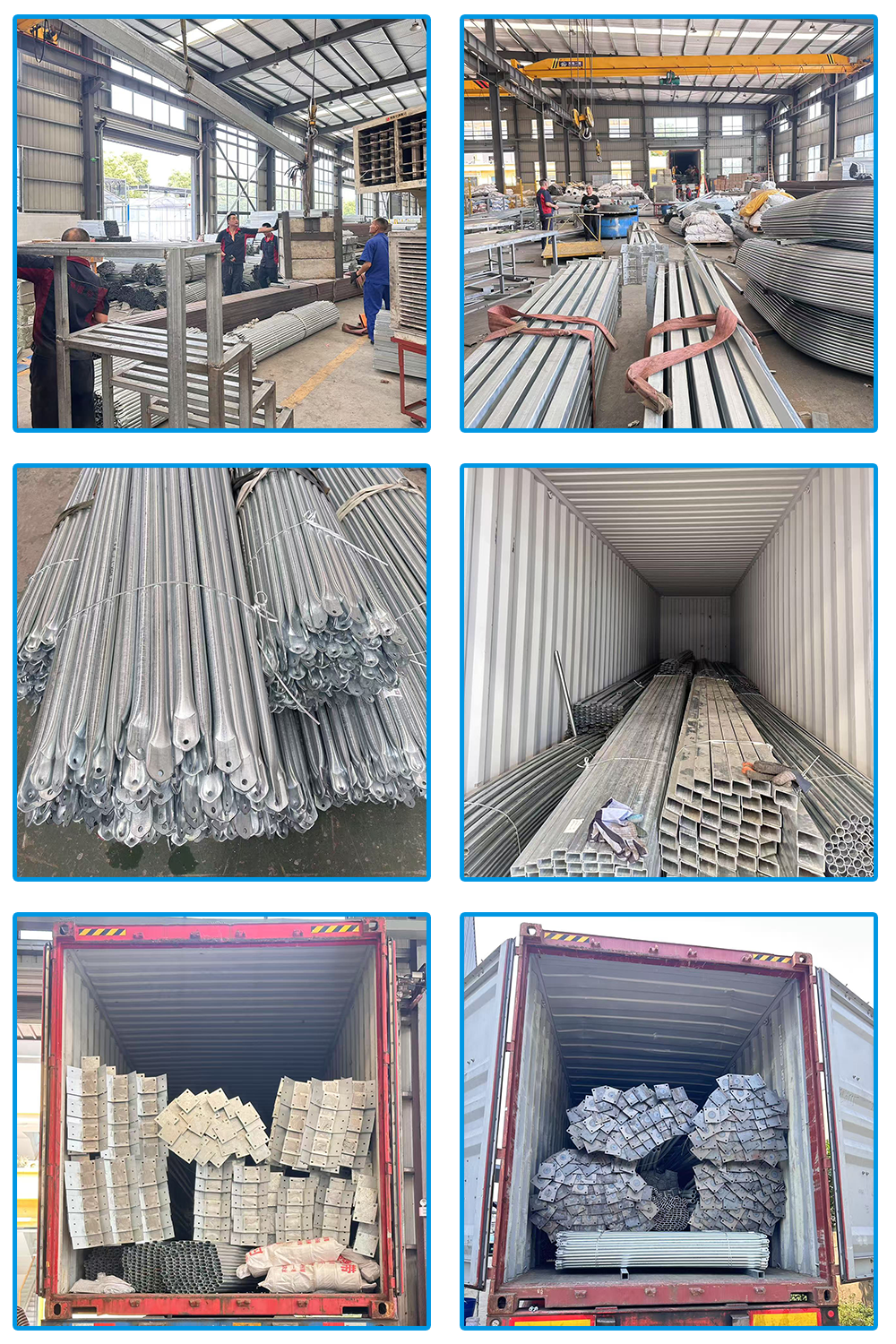
Ventilation windows, doors, drip irrigation and climate packages are specified with the house. Tube is roll formed and drilled to the drawing, galvanized, then bundled with the film and accessories and crated to keep container volume low. Every year we ship above USD 8 million of greenhouse structures to buyers worldwide, and the packing list and loading date are confirmed in writing before dispatch. Layout design and installation drawings are supplied at no extra cost, and component samples are available free with freight paid by the buyer. Comparable houses with a heavier film specification are covered by the polyethylene film houses, and a simpler frame for sheltered sites by the greenhouse with plastic film range. Standards for greenhouse structures are published by FAO, and protected cultivation coverage appears in FloralDaily.
A single-span house is one arch wide, which suits small plots, seasonal crops and sites that may be rearranged. A multi-span house joins bays at a gutter so the covered area grows in steps and the ground between tunnels becomes growing rows. Commercial vegetable operations usually need the multi-span form for the extra canopy.
PO film, PEP film and HDPE woven plastic film all fit the same frame, and anti-insect net or shade cloth can be fitted on the side walls where airflow matters more than heat retention. Film thickness is chosen with the crop and the local climate.
The hot-dip galvanized steel frame is designed for a 15-20 year service life in normal agricultural environments, with a double-sided zinc coating of 200-275 g/m². Film covers are replaced every 3-5 years, while glass and PC panels carry their own manufacturer warranties.
The hot-dip galvanized steel frame carries a 10-year structural warranty covering structural safety, plus a 5-year warranty against corrosion perforation. It is designed for a 15-20 year service life, and film covers carry a 3-5 year UV warranty depending on grade.
Tell us the quantity, the crops you plan to grow, your location, the local temperature range and the average wind speed. With those details we can recommend the span, the covering and the supporting systems, and return a quotation with a structure drawing and a bill of materials.