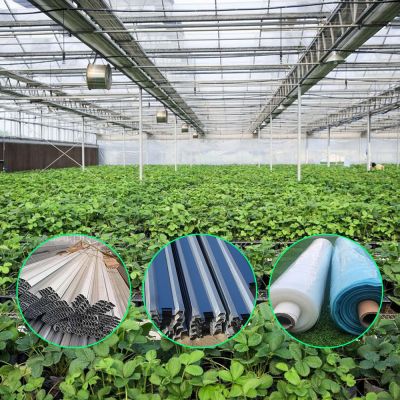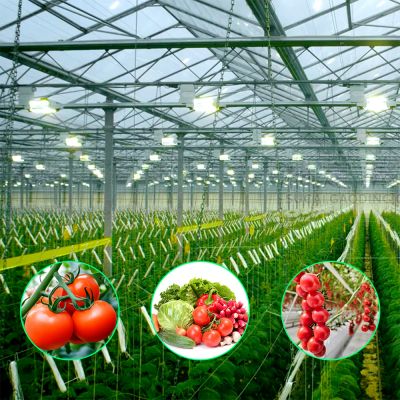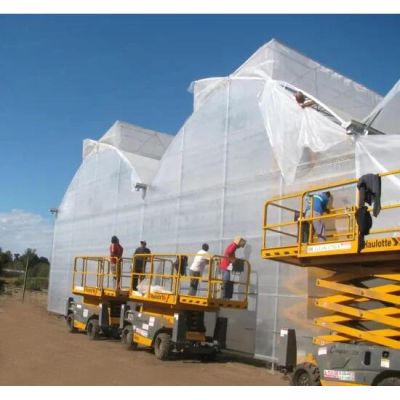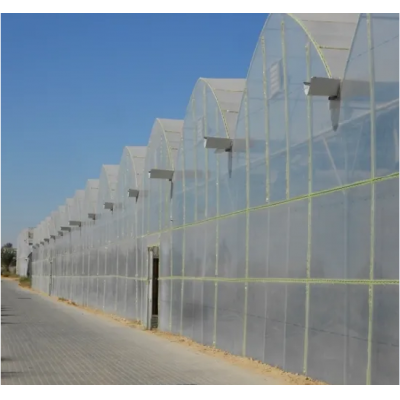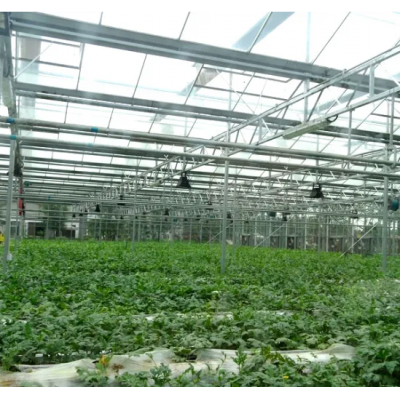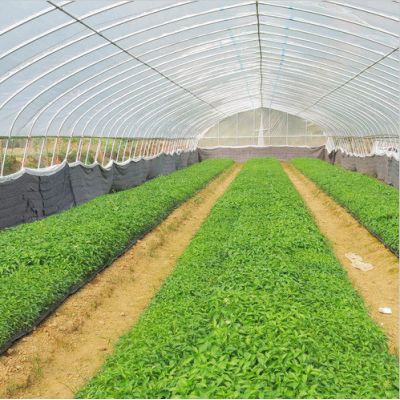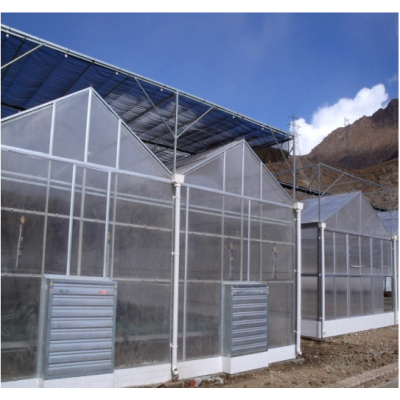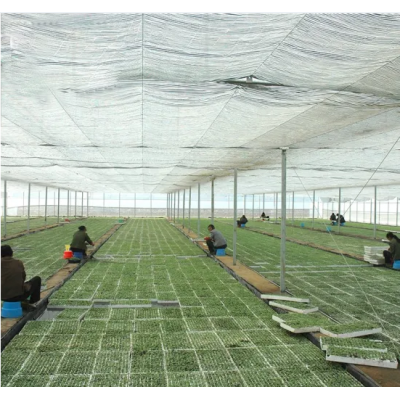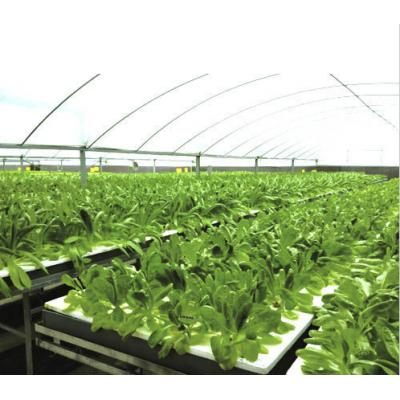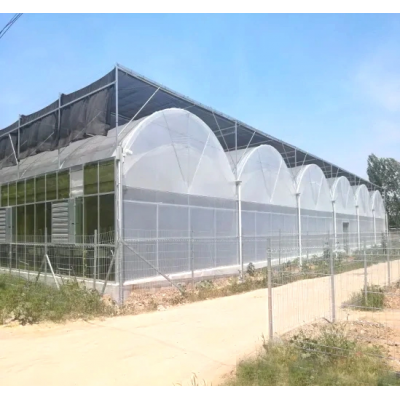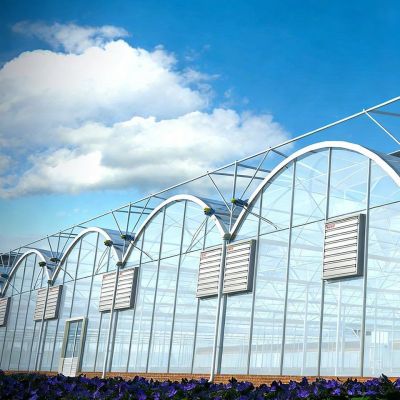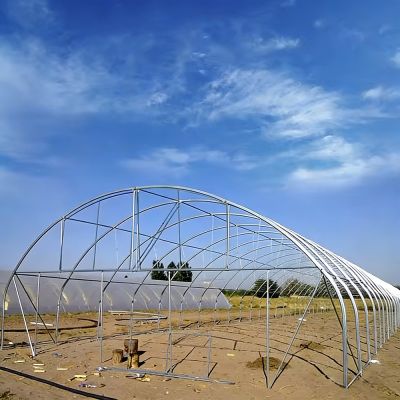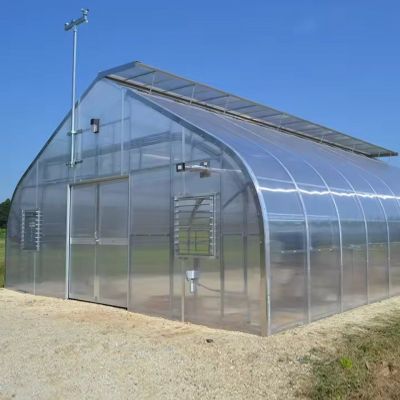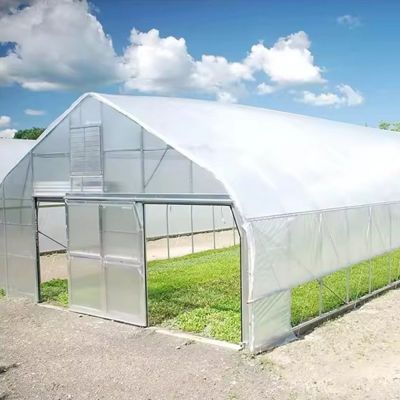


Polyethylene film is the covering most growers start with and many never replace: it transmits over 90% of daylight, holds heat better than a bare structure, and can be renewed on its own cycle without touching the frame. This greenhouse pairs a UV-resistant PE cover with a light steel frame and a grooved channel that grips the film against wind. The house is rated to level-10 wind resistance and is supplied as a single-span structure or as a multi-span house with a gutter between bays. Spans run from 8 to 20 metres. Ventilation windows and drip irrigation can be specified with the structure, and the covering thickness is chosen with your crop and climate at order stage.
The film is the part of a greenhouse that works hardest and wears out first. It is also the part most often chosen by habit rather than by specification, which is why two houses with the same frame can behave very differently in the same season. Choosing the cover deliberately is the least costly improvement available on a film structure.
Polyethylene film transmits more than 90% of available daylight, holds warmth around the crop overnight, and carries a UV stabiliser so the sheet does not embrittle in its first season. The cover is a consumable: it is replaced every few years while the frame stays in service, which is the whole economic case for a film house. Because the film is renewed on its own cycle, a covering chosen for your light levels today can be changed when the crop or the market changes.

Film thickness is set from the crop, the climate and how long you want the sheet to last. A single layer is the simplest specification; a double layer with an air gap adds insulation at the cost of a little light, which matters in cold nights and in houses that carry flowers. The structure is rated to level-10 wind resistance, and the cover is held in a grooved channel rather than tied, so the sheet stays tensioned instead of flapping loose. Gable spans run from 8 to 20 metres, in single-span or multi-span form.
The frame is hot-dip galvanized steel tube assembled with connecting accessories rather than site welding, so every joint keeps its zinc coating. That matters at re-covering time: the film is replaced while the steel is left alone, and a frame that has been assembled without welding can be dismantled and moved if the plot changes. Ventilation windows, doors and drip irrigation are fitted at build stage. Growers comparing coverings can look at the agricultural plastic film greenhouse we supply for vegetable production, and the heavier commercial specification is covered by the commercial polyethylene film house.
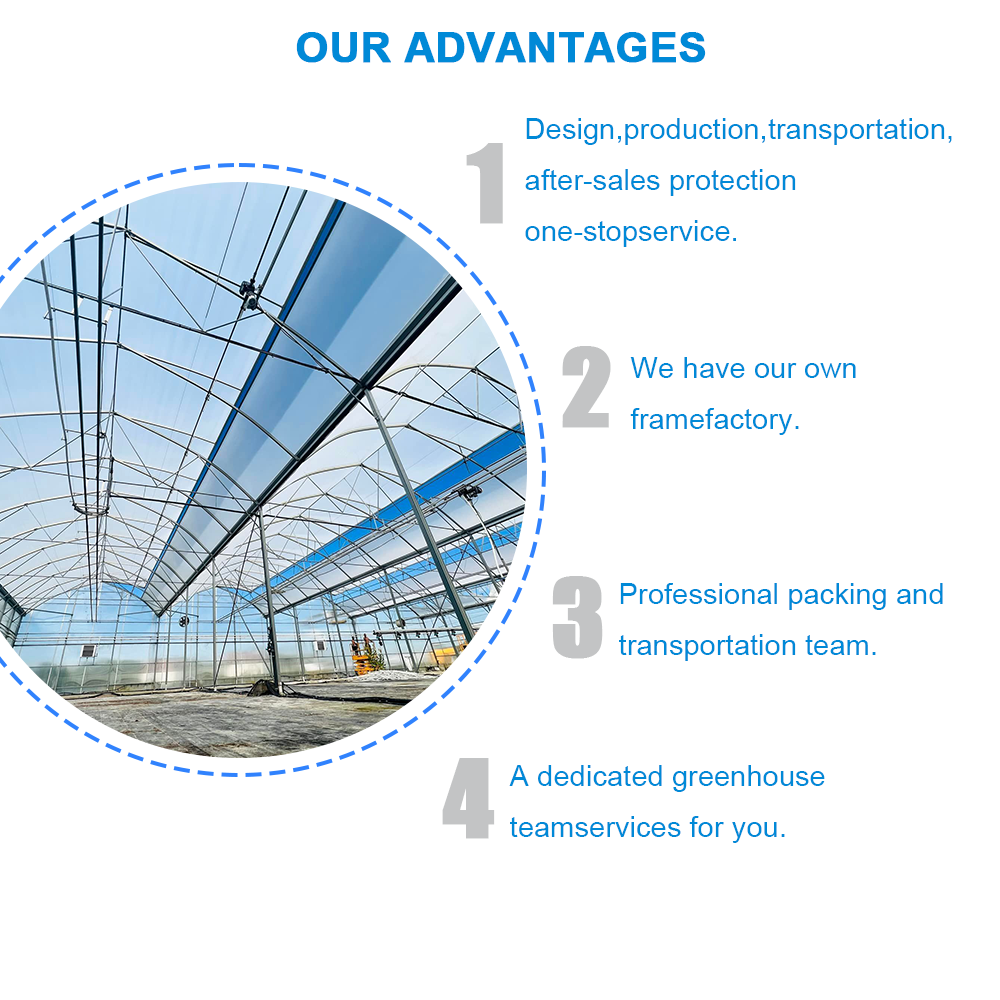
Tube is roll formed and drilled to the drawing, galvanized, then bundled with the film and accessories and crated to keep container volume low. Every year we ship above USD 8 million of greenhouse structures to buyers worldwide, and the packing list and loading date are confirmed in writing before dispatch. Layout design and installation manuals are supplied with the order, and after-sales guidance stays available through the build. The wider film house range covers the other spans and covering options we build. Standards for greenhouse structures are published by AIPH, and commercial growing practice is covered by GrowerTalks.
It is set from the crop, the climate and the service life you want from the sheet, and a double layer with an air gap is chosen where overnight insulation matters. Tell us your crop and local temperatures and we will recommend the thickness and layer count in the quotation.
Film transmits over 90% of daylight and is the least costly covering to buy and to renew, but it is a consumable and is replaced every few years. Glass and polycarbonate sheet cost more up front and last longer with less maintenance. The frame is the same in each case; the covering is the choice.
The hot-dip galvanized steel frame is designed for a 15-20 year service life in normal agricultural environments, with a double-sided zinc coating of 200-275 g/m². Film covers are replaced every 3-5 years, while glass and PC panels carry their own manufacturer warranties.
The hot-dip galvanized steel frame carries a 10-year structural warranty covering structural safety, plus a 5-year warranty against corrosion perforation. It is designed for a 15-20 year service life, and the covering film carries a 3-5 year UV warranty depending on material type.
Send your growing area, the crop, your location and the local temperature and wind conditions, and tell us whether you want ventilation windows or drip irrigation included. With that we can set the span, the covering specification and the accessories, and return a quotation with a bill of materials.