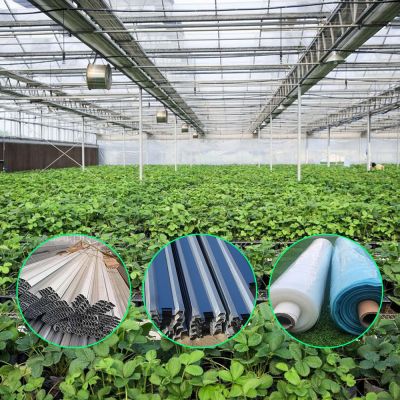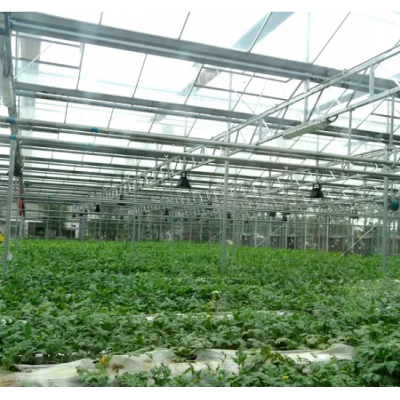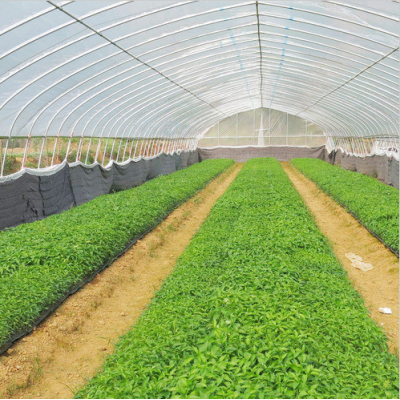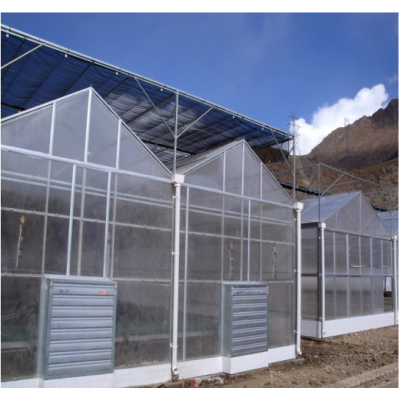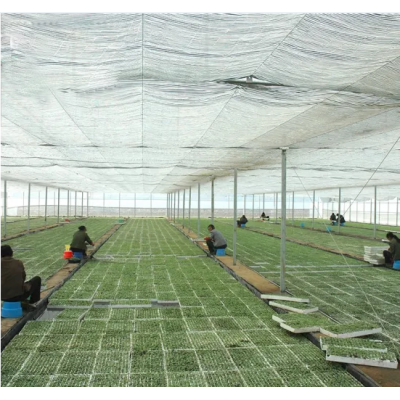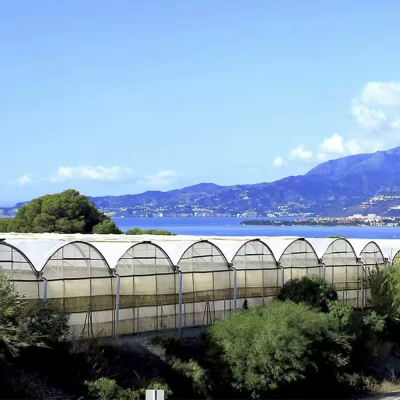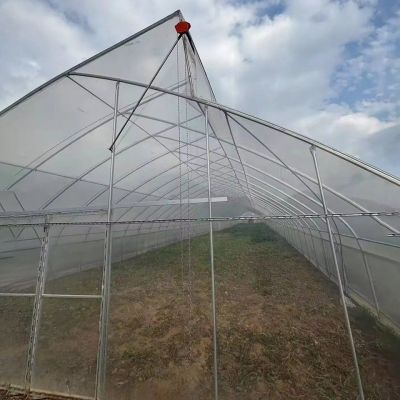
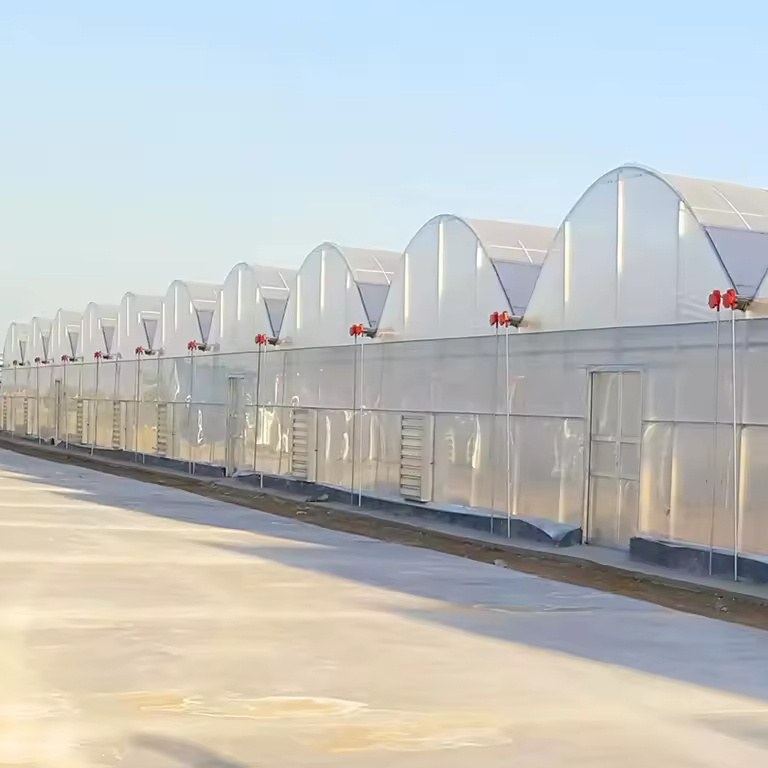
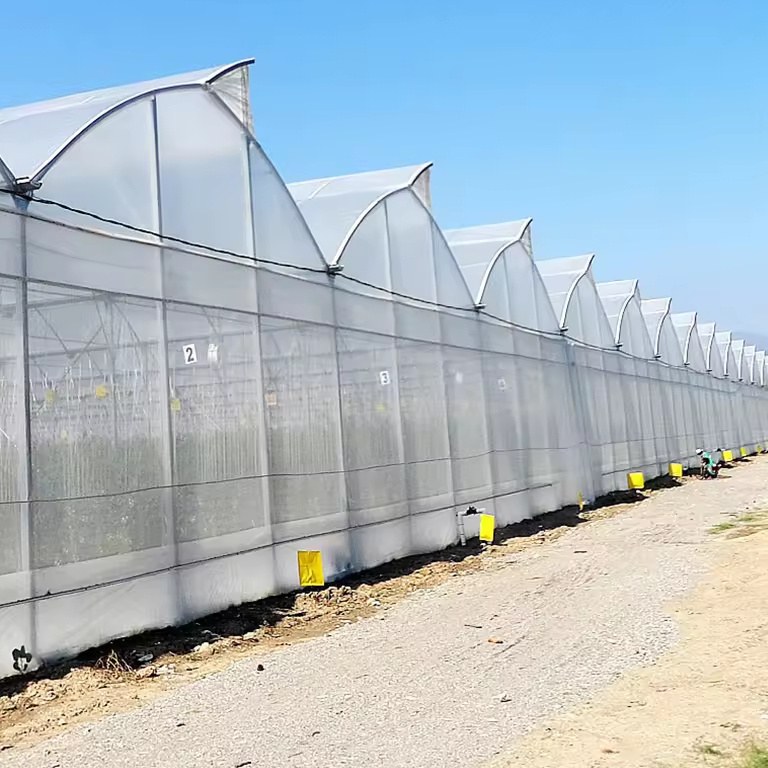
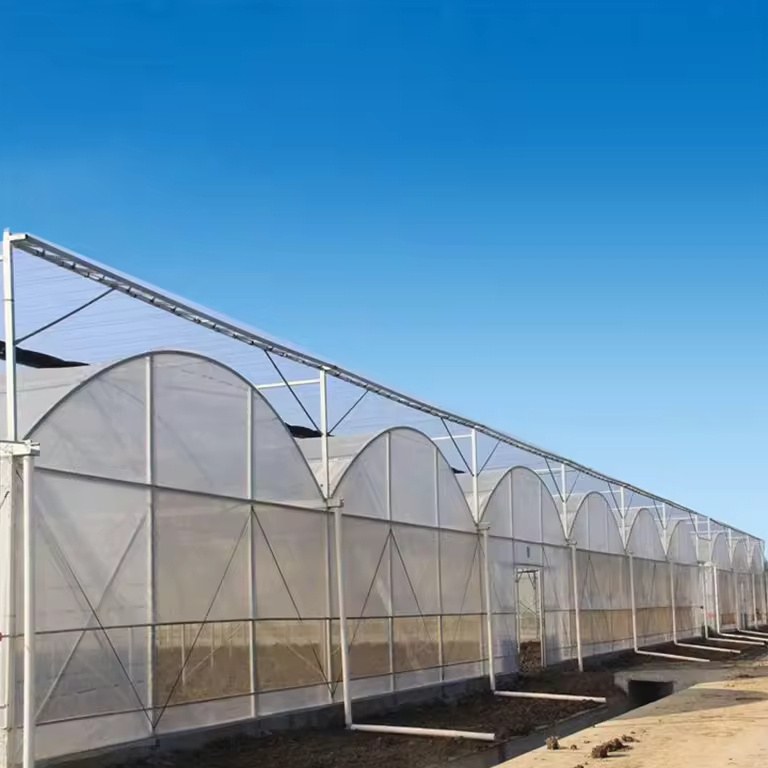
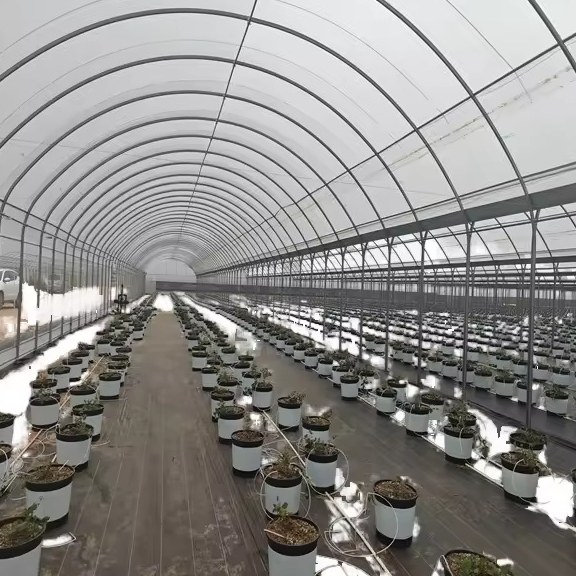
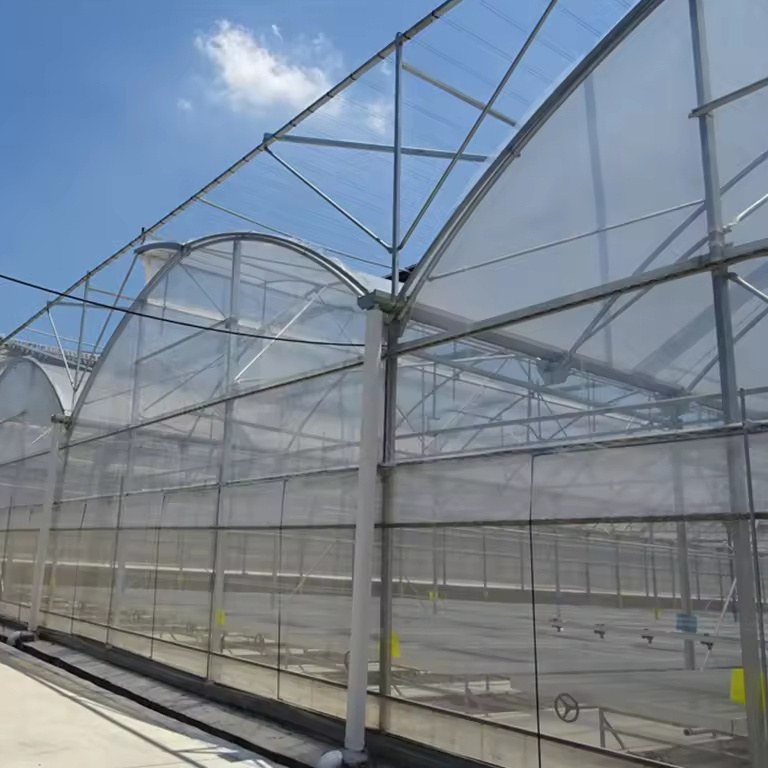
A multi span house loses most of its heat through the cover and through air leaking in at the sides, so this build attacks both. The cover runs as two layers of 200 micron UV stabilised film with air held between them by an inflation blower, and motorized side curtains close the walls down tight at night instead of leaving a gap along the full length. The frame is hot dip galvanized steel formed into arched bays with no centre posts across the working width, and spans run from 8 m to 12 m. End wall exhaust fans and a wet pad cooling system can be added on the same order.
On a commercial farm the running cost of a greenhouse is decided long before the first crop is sold. Heat leaves through the cover, air leaks in along the side walls, and the boiler or the heater makes up the difference every night of the season. A house that is specified around those two losses runs on less fuel for the same set point, which is what an energy saving build means in practice.
Two paths carry most of the heat out of a film house. The first is conduction and radiation straight through the cover, which is why a single skin film house cools quickly once the sun is off it. The second is air exchange through the walls, and a side wall that stays open along its full length will exchange the whole volume of the house in a short time. Cover insulation and curtain sealing are therefore the two items worth spending on.
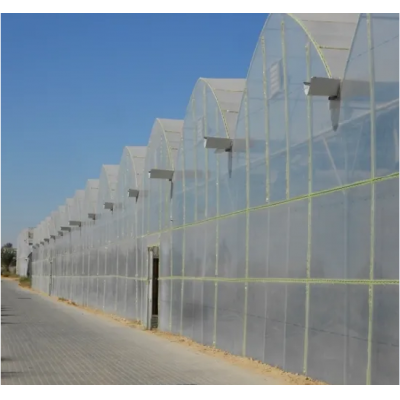
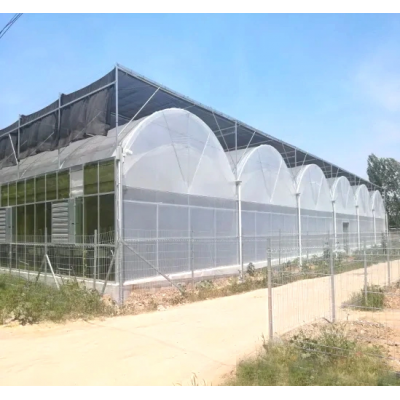
This house is built as a multi span arched structure, with bays joined by gutters and no centre posts across the working width. The wider multi span family is listed on the multi span greenhouse range page on this site.
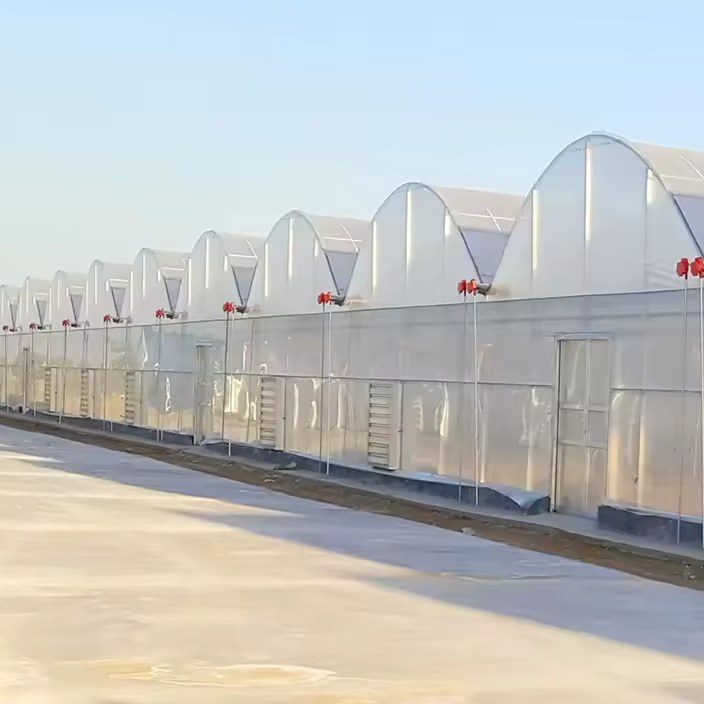
The cover is two layers of 200 micron UV stabilised film, with air held between them by an inflation blower. Still air is the insulating layer, and because it sits inside the cover rather than above it, the house keeps its working height. The film is a light scattering type, so daylight arrives at the canopy diffused rather than as a single beam, which reduces scorch on young leaves and gives a more even crop across the bay.
Cover options run across scattering film, PE film, PO film and woven film, with shade net and black and white film available where a crop needs to be held back or cooled. A second multi span film house that uses the same double layer principle is described in the multi span film house with an inflated double layer.
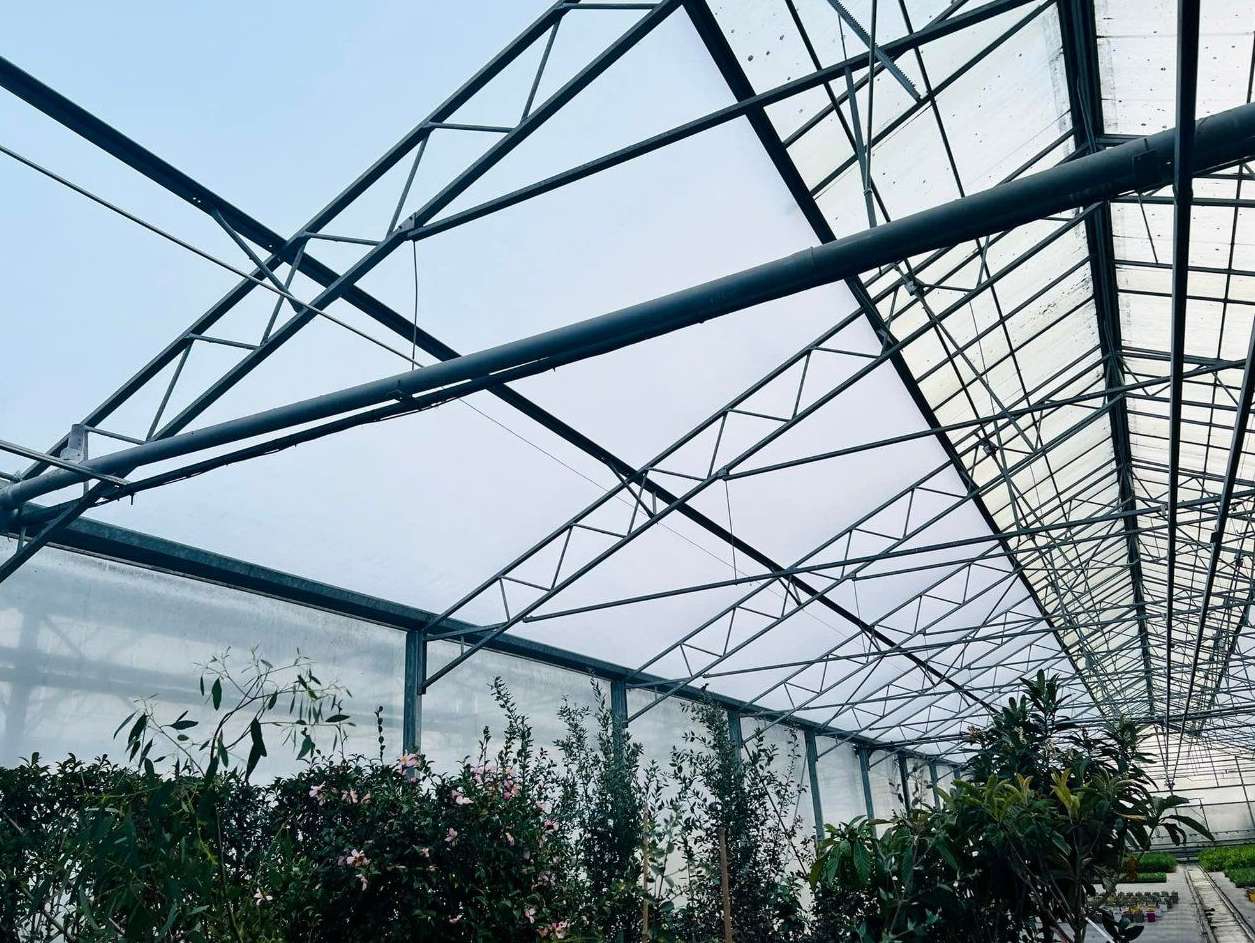
The frame is hot dip galvanized steel formed into arched bays, dipped after fabrication so the zinc reaches the inside of the tube and the cut ends. Bays are bolted rather than welded, which keeps the coating whole at the connections and lets a damaged member be unbolted and replaced. Motorized side curtains close the long walls at night and open them in the morning, and the same drive can be linked to a controller so the house responds to temperature rather than to a schedule.
For hot climates the house takes a fan and pad cooling system. Exhaust fans at one end wall pull air through wet pads at the other, and the evaporating water drops the incoming air temperature well below the outside reading, which is what holds a crop through a hot afternoon. The ventilation side is set up so the fans and the windows work together rather than against each other. A more general multi span build for open field farms is shown in the multi span greenhouse for agricultural use.
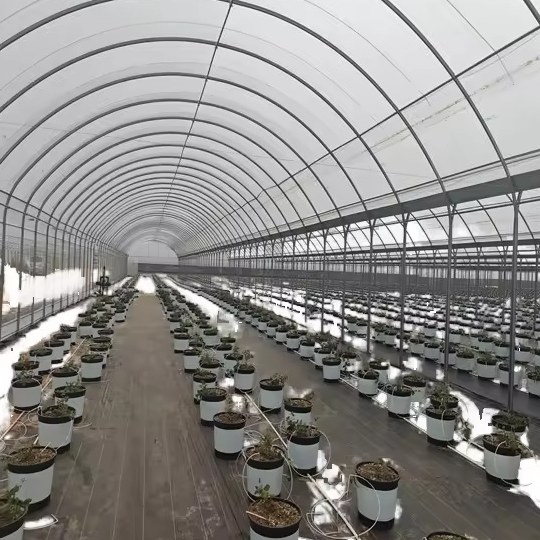
The table below is the standard build. Span, length, height, cover and ventilation are set to the site and to the crop.
| Greenhouse span | 8 m / 9 m / 10 m / 11 m / 12 m |
| Greenhouse length | 10 m to 100 m, or built to client demand |
| Greenhouse height | 3 m to 8 m |
| Structure material | Hot dip galvanized steel, bolted assembly |
| Cover material | 200 micron UV stabilised film, light scattering type |
| Cover build | Two layers with air held between them by an inflation blower |
| Alternative covers | PE film, PO film, woven film, shade net, black and white film |
| Ventilation | Motorized side curtains, manual or linked to a controller |
| Cooling | Optional fan and pad system, end wall exhaust fans |
| Wind load | 0.2 kN/m2 |
| Snow load | Up to 50 cm |
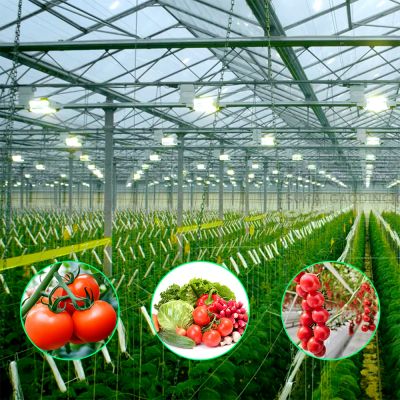
| Crops | Tomato, cucumber, bell pepper, fruit and cut flowers |
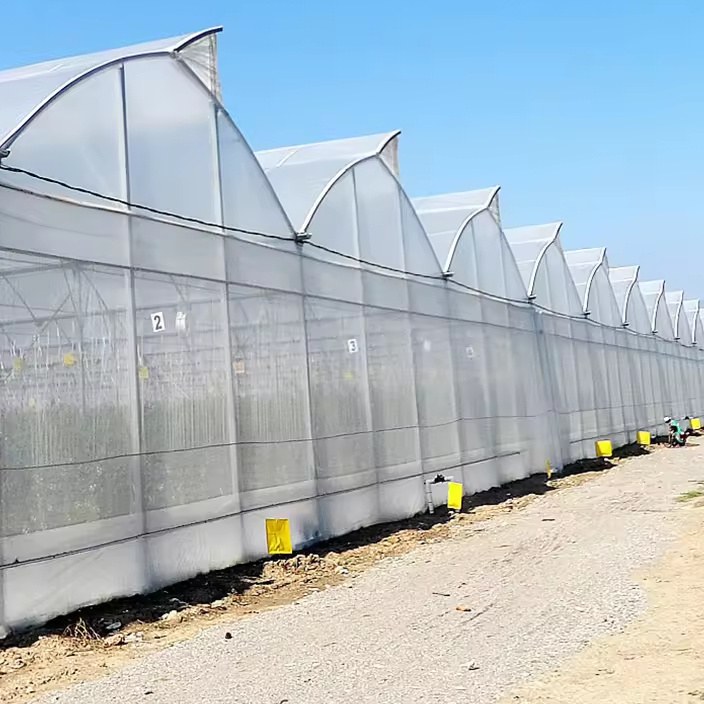
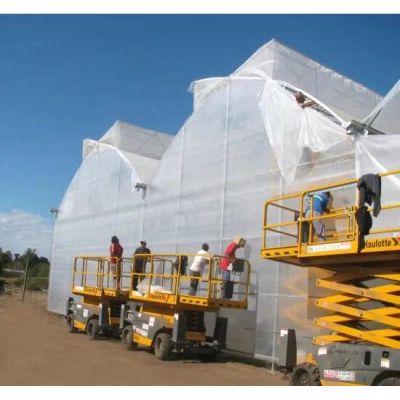
Erection is bolting work on a prepared base. The frame arrives as prefabricated arches and purlins, and each bay is squared as it goes up, because a multi span house shows any twist along the gutter line. A house of this size is normally standing in two to four weeks on a level site, and the structure ships as flat packed arches with the film on separate rolls, which keeps the container volume down.
Maintenance is mostly about the cover and the curtain drive. The routine is checking film tension and the pressure held between the two layers, greasing the curtain rack and inspecting the limit switches before each season, and clearing gutters so water cannot back up into the bays. On a cooled house the pads are the item to watch, because a pad that has clogged with dust or scale stops evaporating and the cooling drops away without any obvious fault.
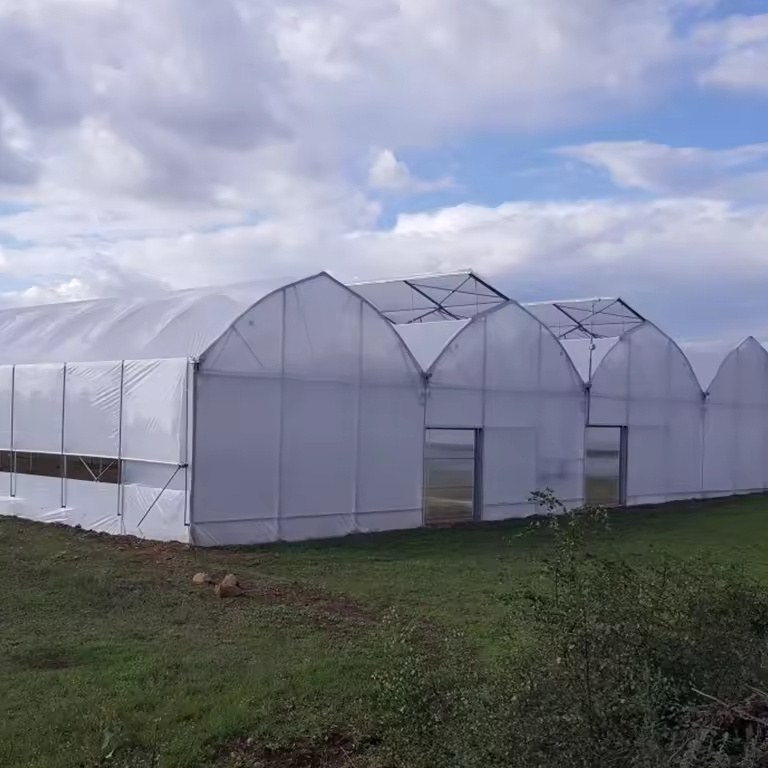
Houses built on this pattern are used for year round vegetable production, mainly tomato, cucumber and bell pepper, and for fruit, cut flowers and young plant work where a fixed temperature band matters more than peak light. They suit farms that run the house through a cold season and need the fuel bill to stay predictable, and farms in hot regions that add the pad cooling to hold a crop through summer.
Standards for the materials used in these structures, including films and the framing that carries them, are published by BSI, and EN 13206 remains the reference for agricultural covering films in the European market. Production and market reporting for the protected cropping sector is published by Greenhouse Grower, which covers how commercial houses are specified and operated. The question that decides the specification is normally the crop the house will be running in ten years, not only at handover.
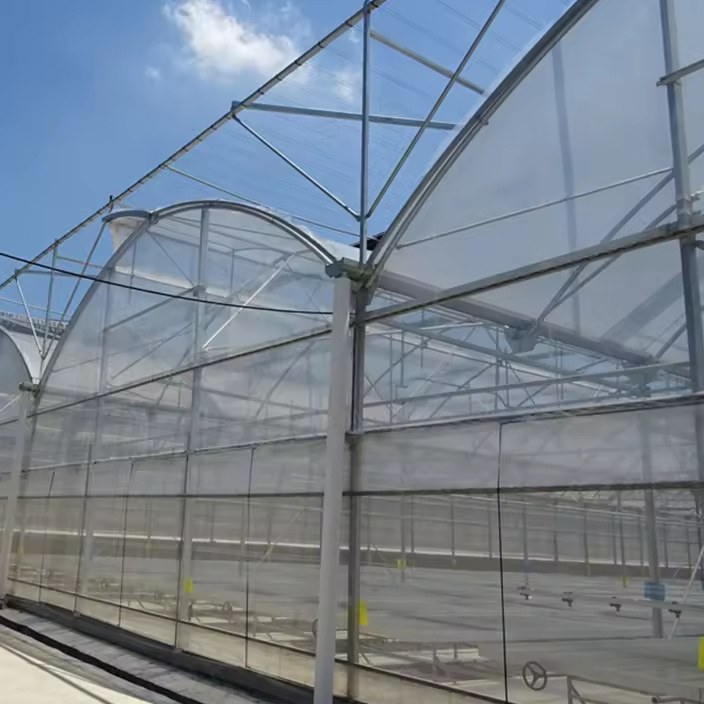
Air is held between the two film layers and acts as the insulating layer, so less heat passes through the cover for the same indoor temperature. Because the air sits inside the cover rather than in a separate roof space, the working height of the house is not reduced to gain it.
The build is specified to hold an internal band of roughly 15 to 26 degrees Celsius across the seasons with the curtains closed and the vents managed, and the fan and pad cooling option takes the peak out of a hot afternoon. The exact band depends on the crop, the site and the heating installed.
The galvanized steel frame is rated for 15 to 20 years under normal growing conditions. The film cover runs on a shorter cycle than the frame, typically 3 to 5 years depending on UV exposure at the site.
We provide a 10 year structural warranty and a 5 year anti-corrosion warranty on the galvanized frame. Details are set out in the contract for each project.
Send your site dimensions, the crops you plan to grow and your local wind and snow loads. We reply with a layout drawing and a full quotation.