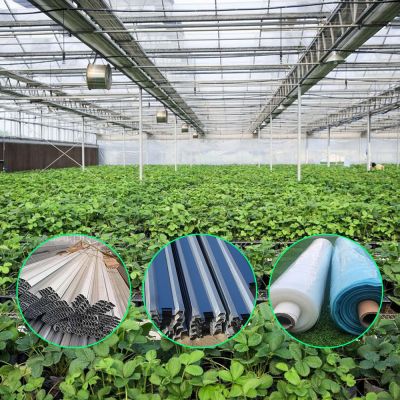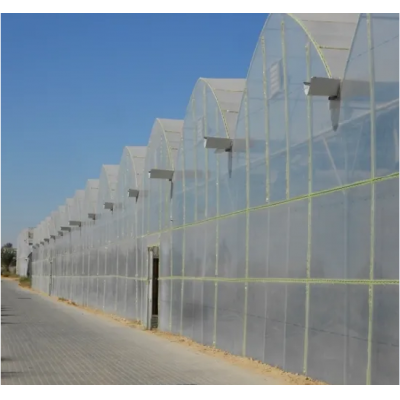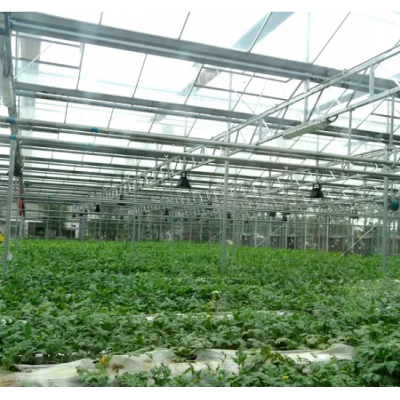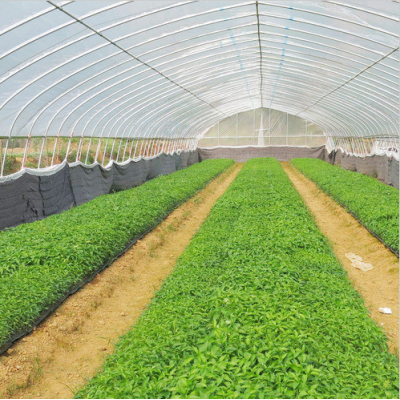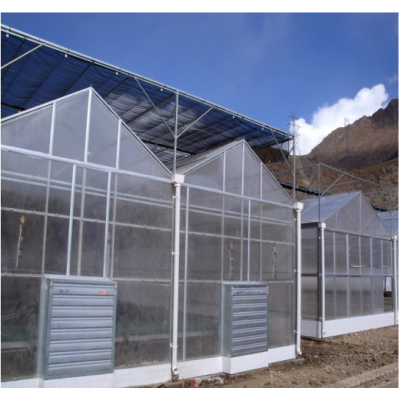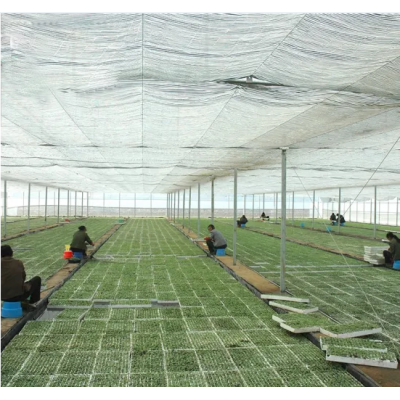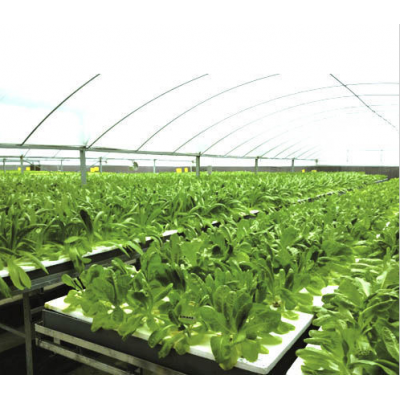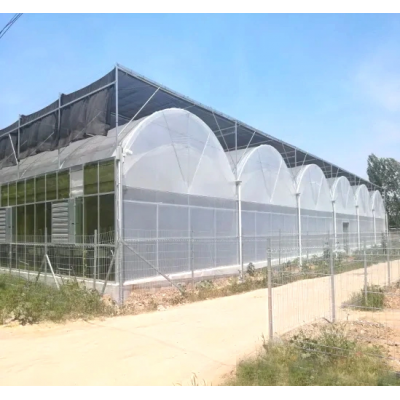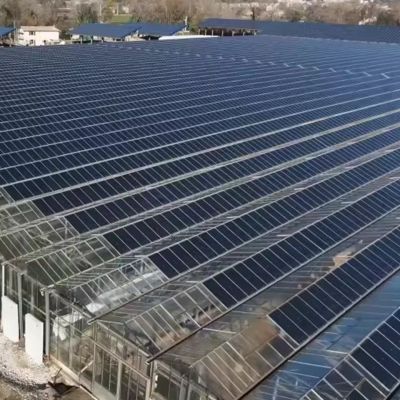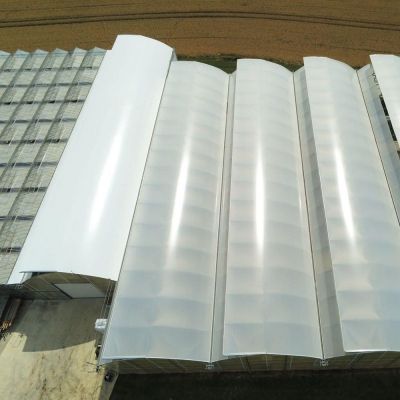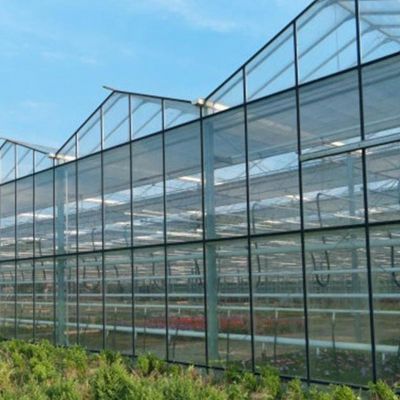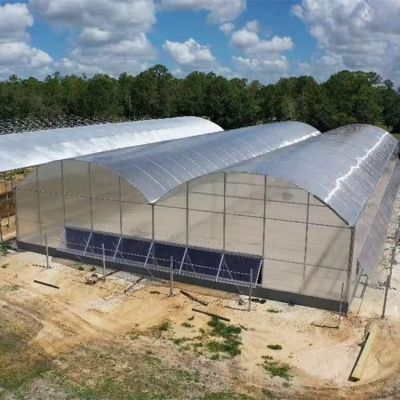
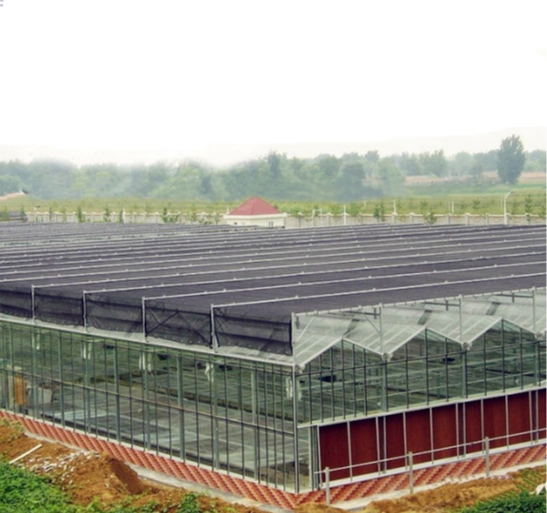
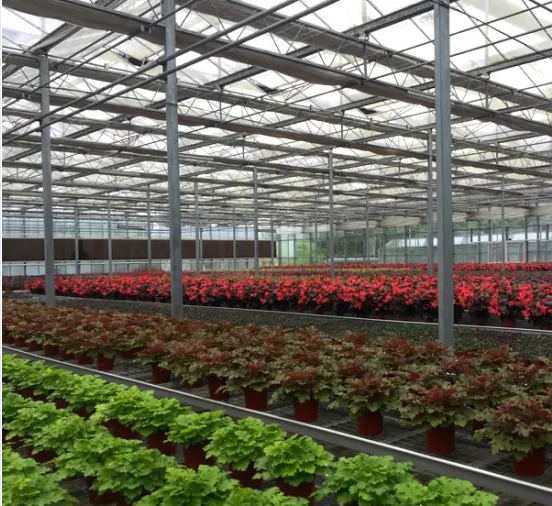
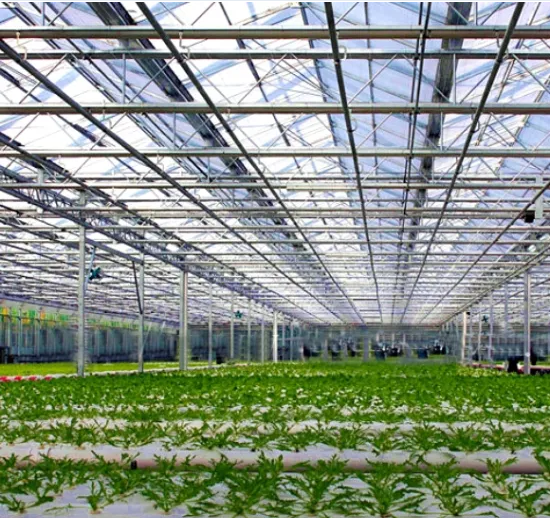
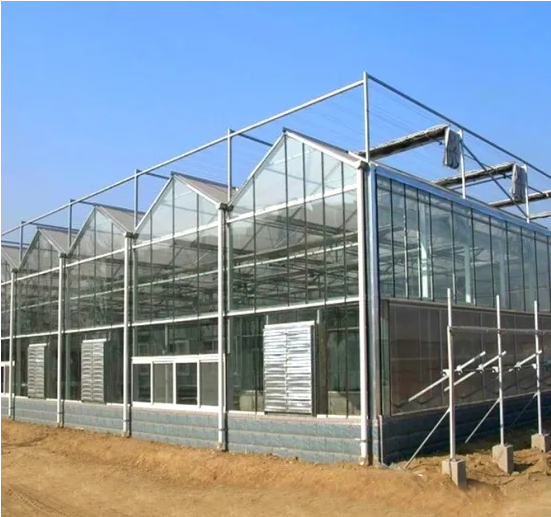
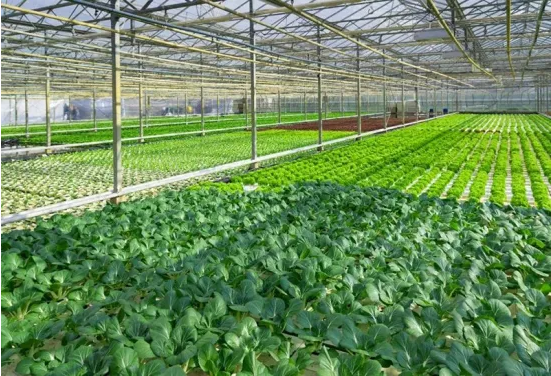
This farm glass greenhouse is a multi-span glasshouse built for growers who want a permanent structure rather than a seasonal cover. The frame is hot-dip galvanized steel pipe with a double-sided zinc coating of 200-275 g/m2, aluminium glazing bars and a grooved channel that locks the glass against wind and weather. Covering is 4 mm or 5 mm float glass, or 5 mm tempered glass where impact resistance matters, giving light transmission above 90 percent. Spans of 8 to 10.8 metres and structure heights of 4 to 5.3 metres are set to the plot, with a gable roof. The frame is designed for a 15-20 year service life, making it the long-life option for commercial flower and fruit production.
Glass is the covering a grower chooses when the structure is meant to outlast the crop plan. Film is replaced every few seasons and polycarbonate eventually yellows, but a properly framed glasshouse still transmits a stable spectrum after a decade of service, and it holds its value on the site. The trade is that glass only performs if the frame behind it does its job: glazing bars that stay straight, channels that hold panels tight through wind, and a structure that does not allow one weak bay to pull the block out of line. This farm glass greenhouse is built on that premise.
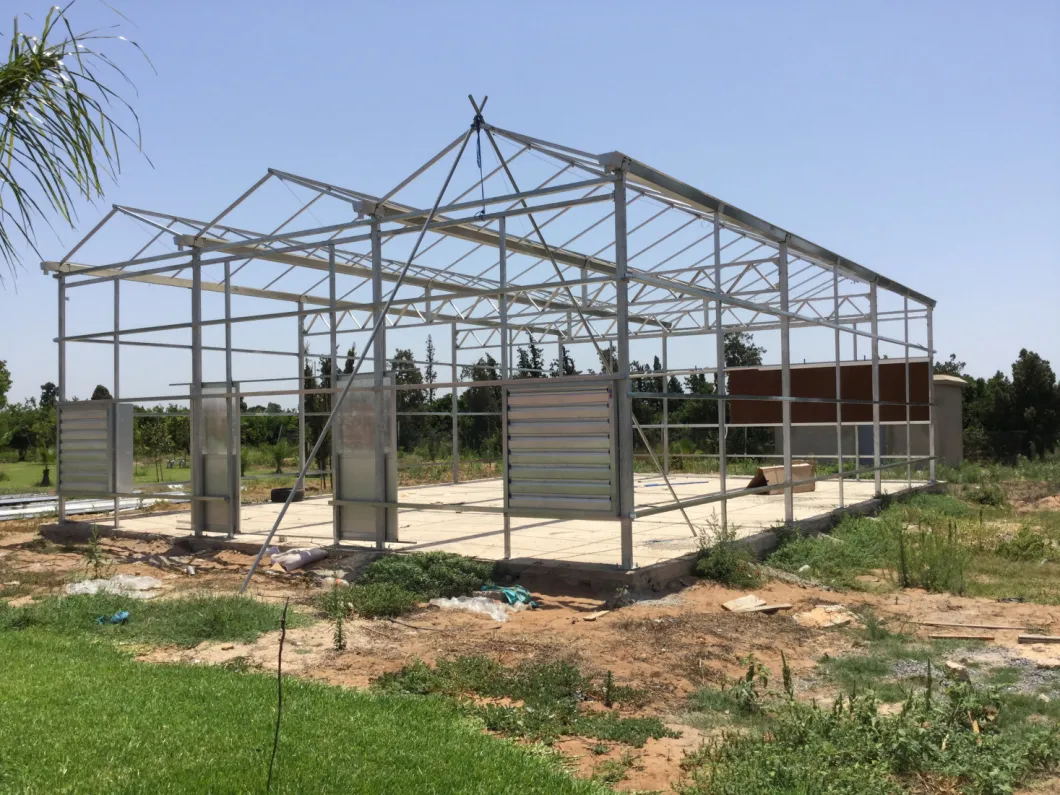
Structural members are hot-dip galvanized steel pipe coated inside and out to 200-275 g/m2, with aluminium glazing bars and a special grooved channel frame that reinforces the panels against wind and weather. The grooved profile matters more than it sounds: it holds each pane in a fixed plane, so the roof line does not ripple as the structure moves under load, and it lets a single pane be replaced without disturbing its neighbours. Joints are bolted rather than site-welded, which keeps the geometry you signed off in the drawing and allows later bays to match. The frame is designed for a 15-20 year service life.
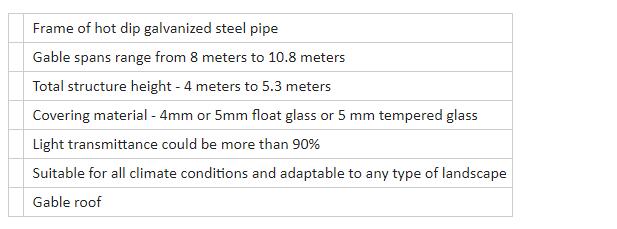
Covering is 4 mm or 5 mm float glass, or 5 mm tempered glass where impact resistance is needed - for example in hail zones or where machinery operates close to the perimeter. Light transmission exceeds 90 percent, and because glass does not degrade the way polymer sheets do, that figure stays close to its original value over the life of the house. Diffuse glazing options are available for crops that burn under direct summer radiation. Spans run from 8 to 10.8 metres with structure heights of 4 to 5.3 metres and a gable roof, so ridge ventilation sits high where the warm air collects. Growers comparing materials should note that film remains the lower-cost route with a shorter replacement cycle, as shown on the plastic film greenhouse page.
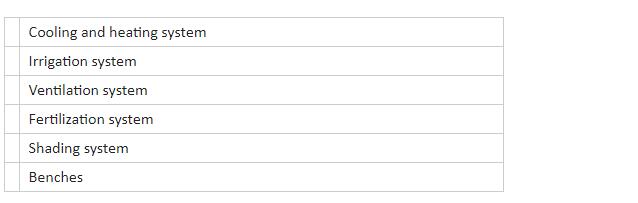
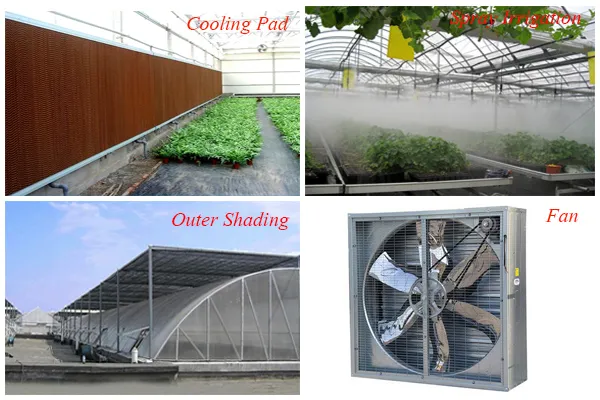
Glass holds heat well, which is an advantage in winter and a liability in summer. Most projects therefore pair the house with ridge and side ventilation, internal or external shading, and cooling equipment sized to the summer peak. Because the frame is fabricated to order, openings for fans, pads and vents are cut and reinforced during production instead of on site. A common layout for hot-climate flower and vegetable growing combines the house with wet curtain cooling and greenhouse irrigation mains laid along the bay grid before glazing begins.
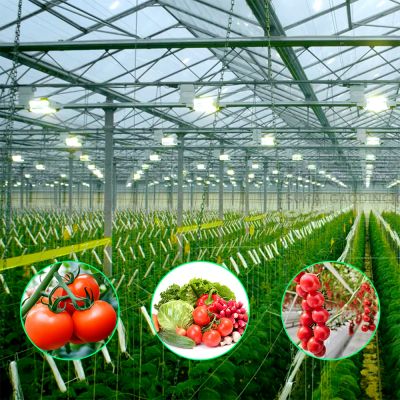
Glasshouses are used for cut flowers and pot plants where uniformity is graded, for high-value vegetables and soft fruit, for nursery and seedling production, and for ornamental and botanical collections. The stable light spectrum is what makes them the default choice for crops where colour, brix or shelf life are quality criteria rather than incidental. Where the site is cold, the insulating behaviour of glass reduces heating load compared with a single-layer film house, and where the site is hot the house is run with shading and evaporative cooling to hold a working temperature range. Protected-cultivation guidance from AIPH and industry reporting from Produce Grower are useful references when specifying a glass project.
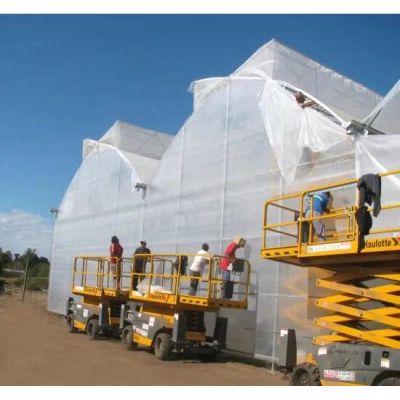
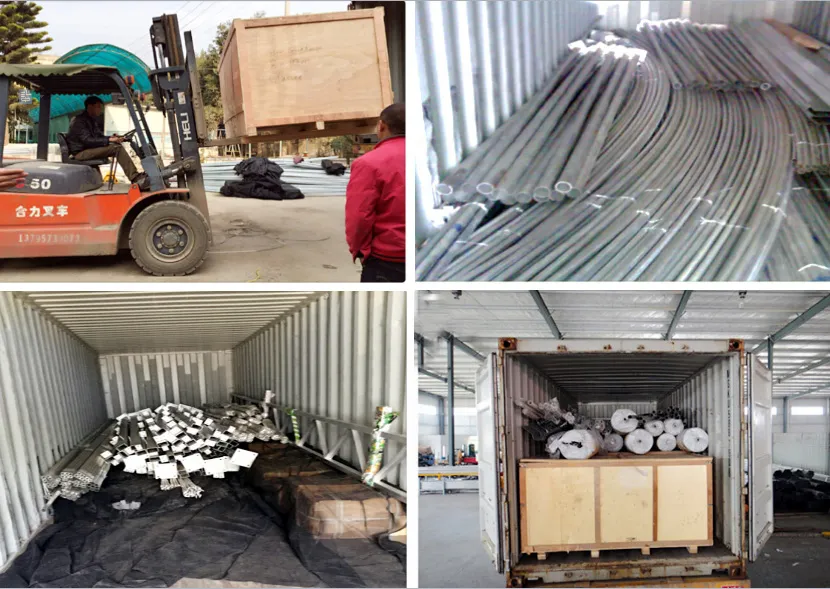
Frames are fabricated in our own workshop and shipped as one package: steel sections, glazing bars, glass, fixing hardware and foundation brackets, bundled for container loading to keep freight volume controlled. Glass has to reach site undamaged and on schedule, so crating and loading are planned around the container and the delivery date is confirmed in writing. Drawings and installation manuals ship with every order, and our engineers can attend site to supervise the first bays if your team has not glazed this structure type before.
Tempered glass costs more but resists impact far better, which matters in hail-prone regions or where machinery and workers operate close to the glazing. Float glass is the standard choice for protected sites and is simpler to replace pane by pane. Many projects use tempered glass for the roof and lower courses and float glass elsewhere, and we will confirm the mix against your local weather records.
The frame uses a grooved channel profile with aluminium glazing bars, which seats each pane in a fixed plane and reinforces it against wind pressure and weather. Because the channel holds the pane independently, a single cracked unit can be swapped without loosening the surrounding glazing.
The hot-dip galvanized steel frame is designed for a 15-20 year service life in normal agricultural environments, with a double-sided zinc coating of 200-275 g/m2. Film covers are replaced every 3-5 years, while glass and PC panels carry their own manufacturer warranties.
The hot-dip galvanized steel frame carries a 10-year structural warranty covering structural safety, plus a 5-year warranty against corrosion perforation. It is designed for a 15-20 year service life.
Send the plot dimensions, the crop, whether you want float or tempered glass, and the local wind speed and snow load. If ventilation, shading, heating or irrigation are planned, include those as well so the frame openings can be fabricated in rather than cut on site after glazing.