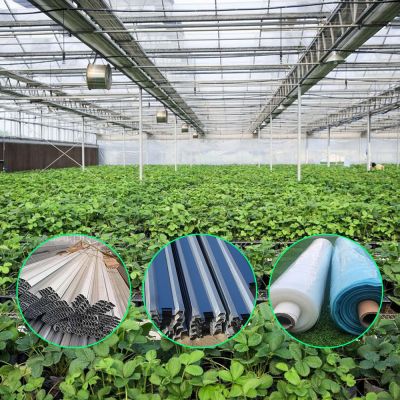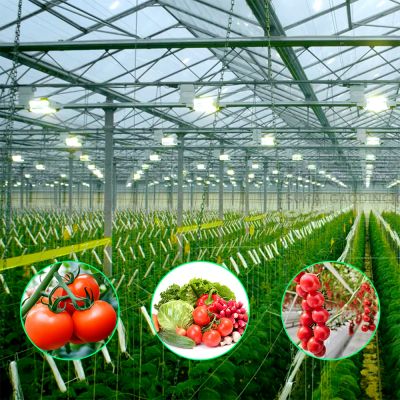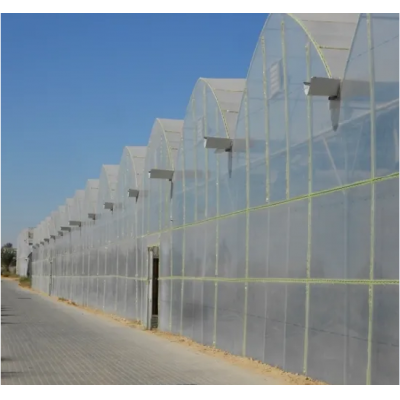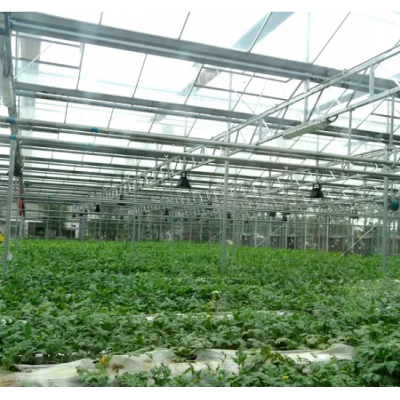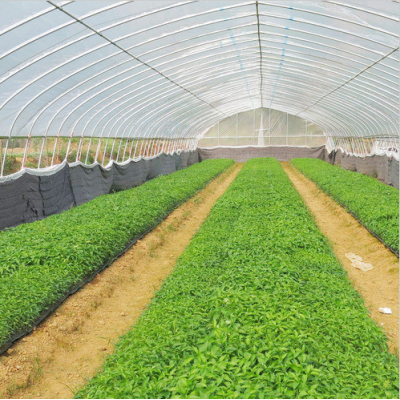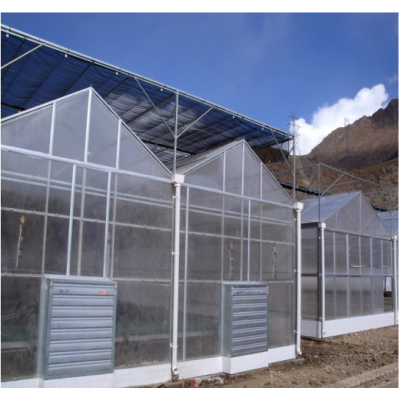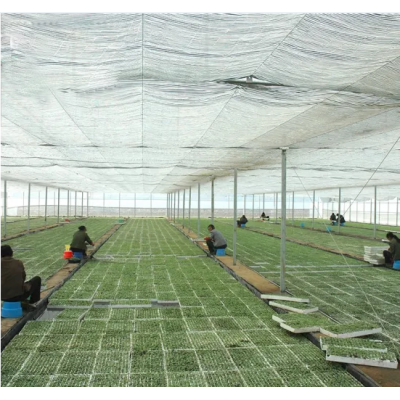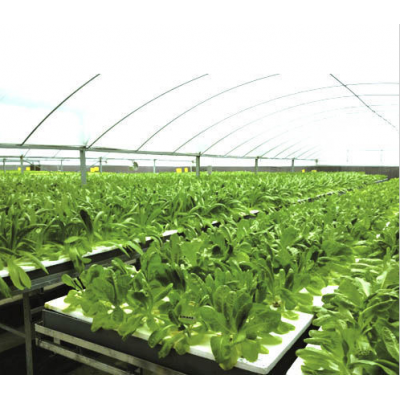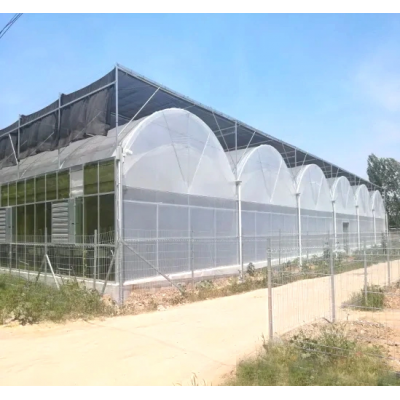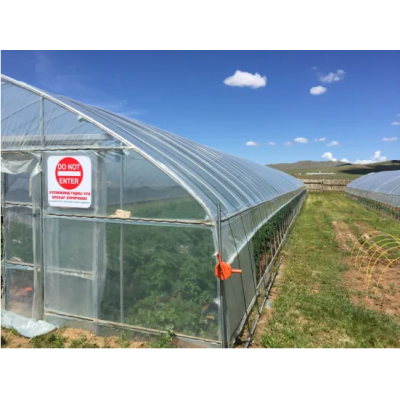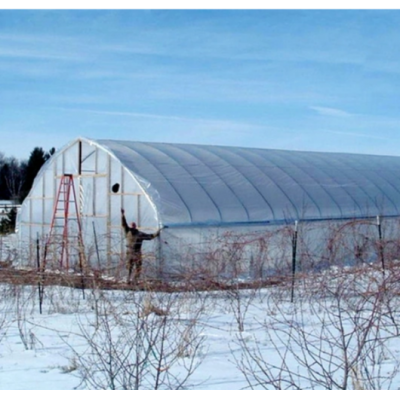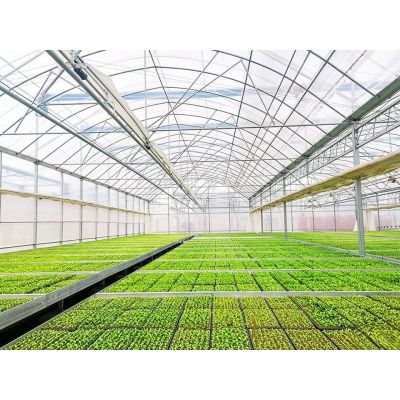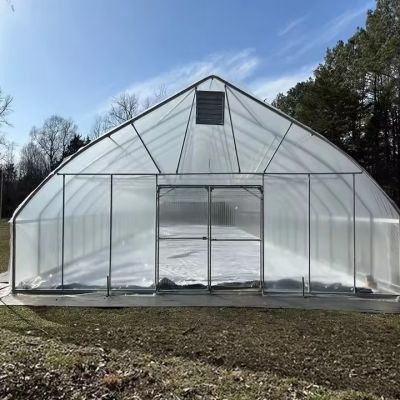
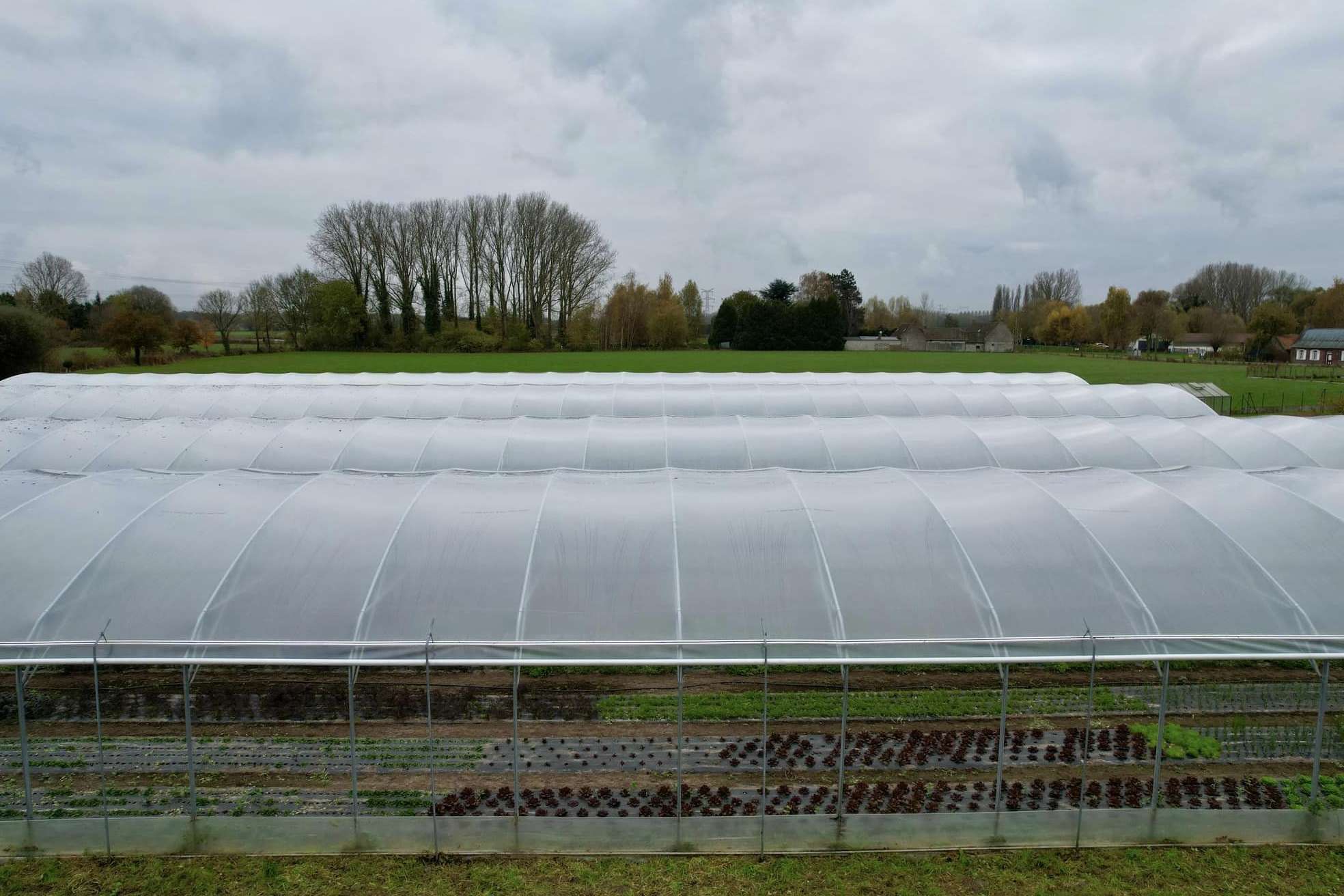
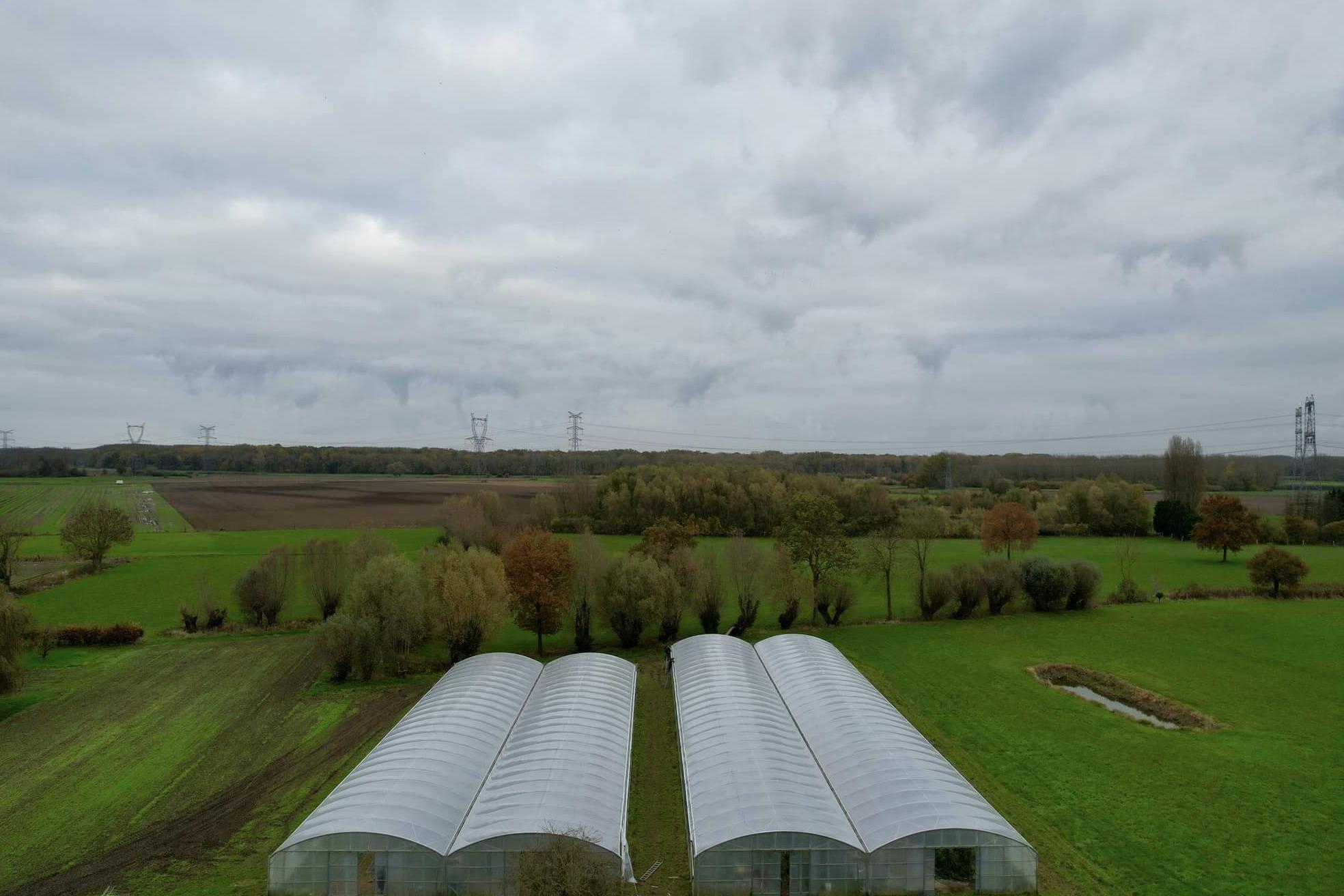
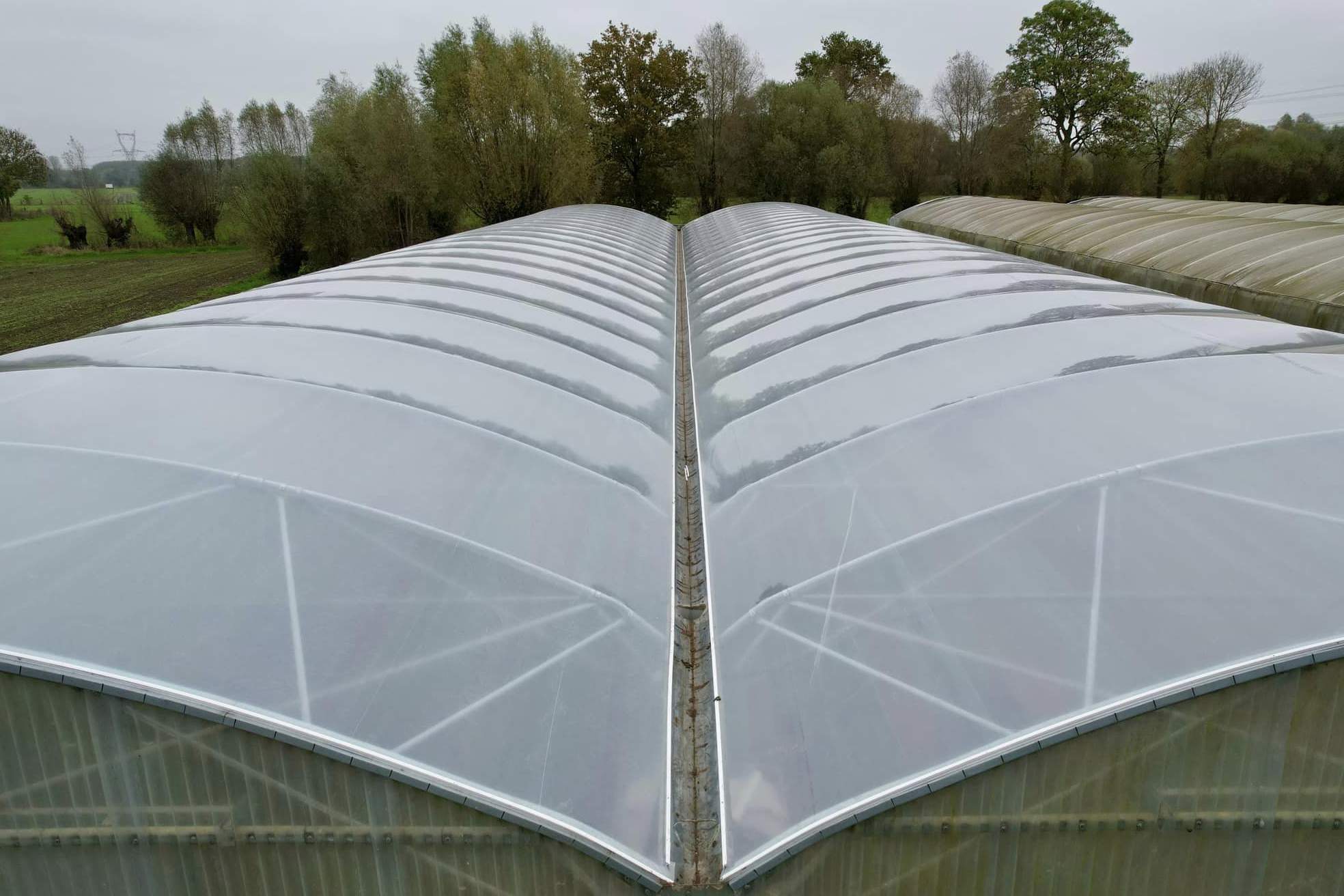
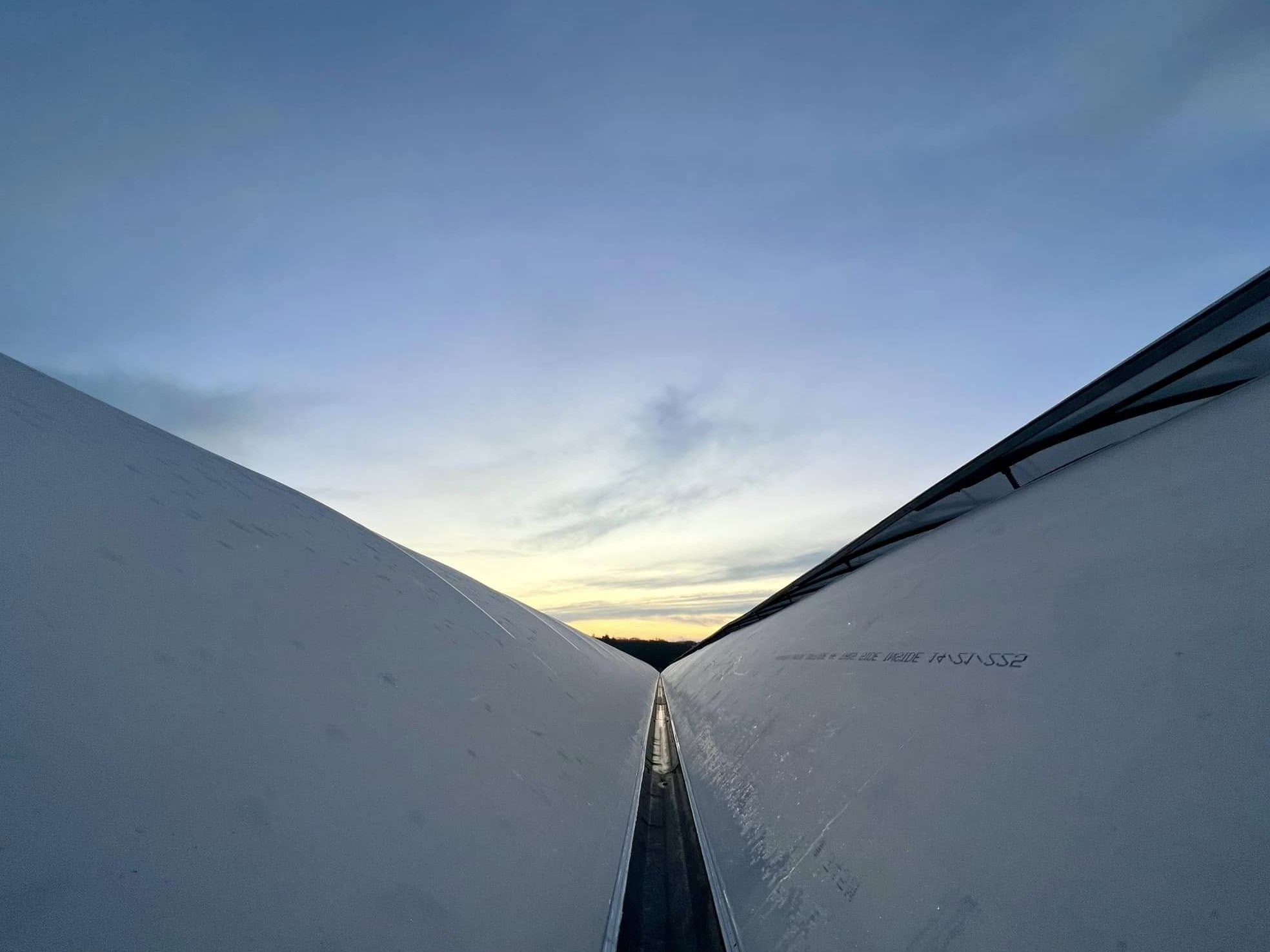
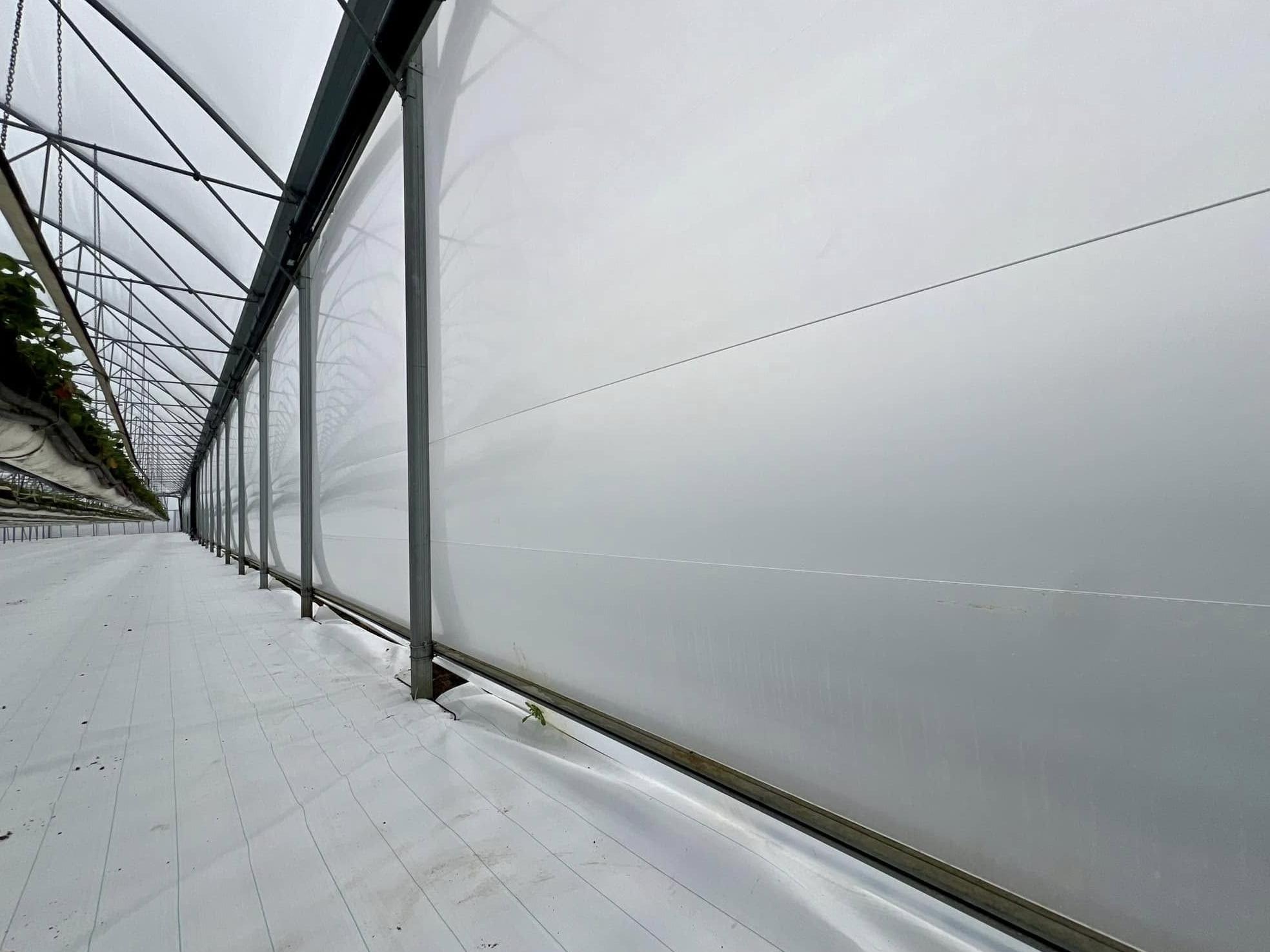
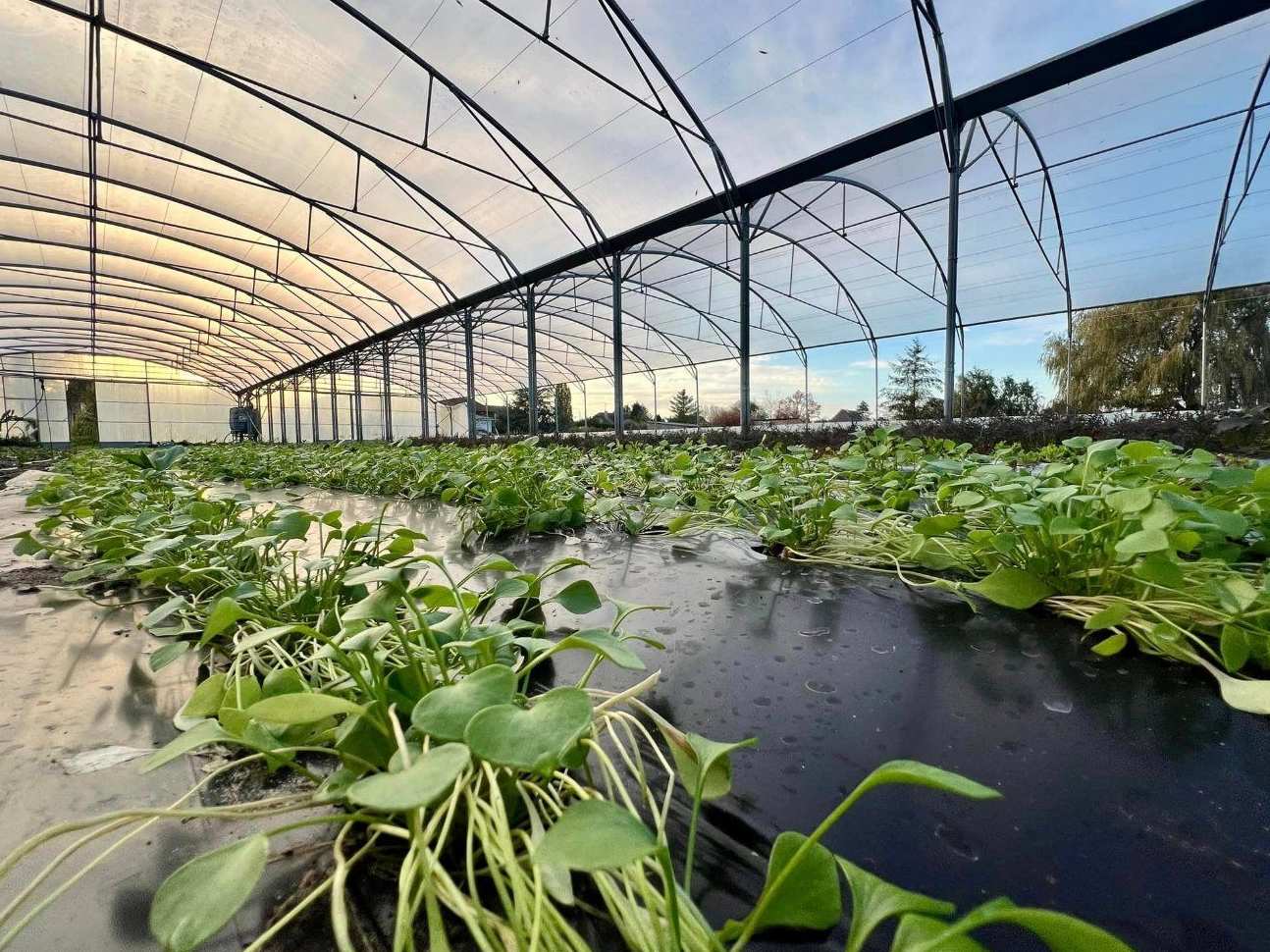
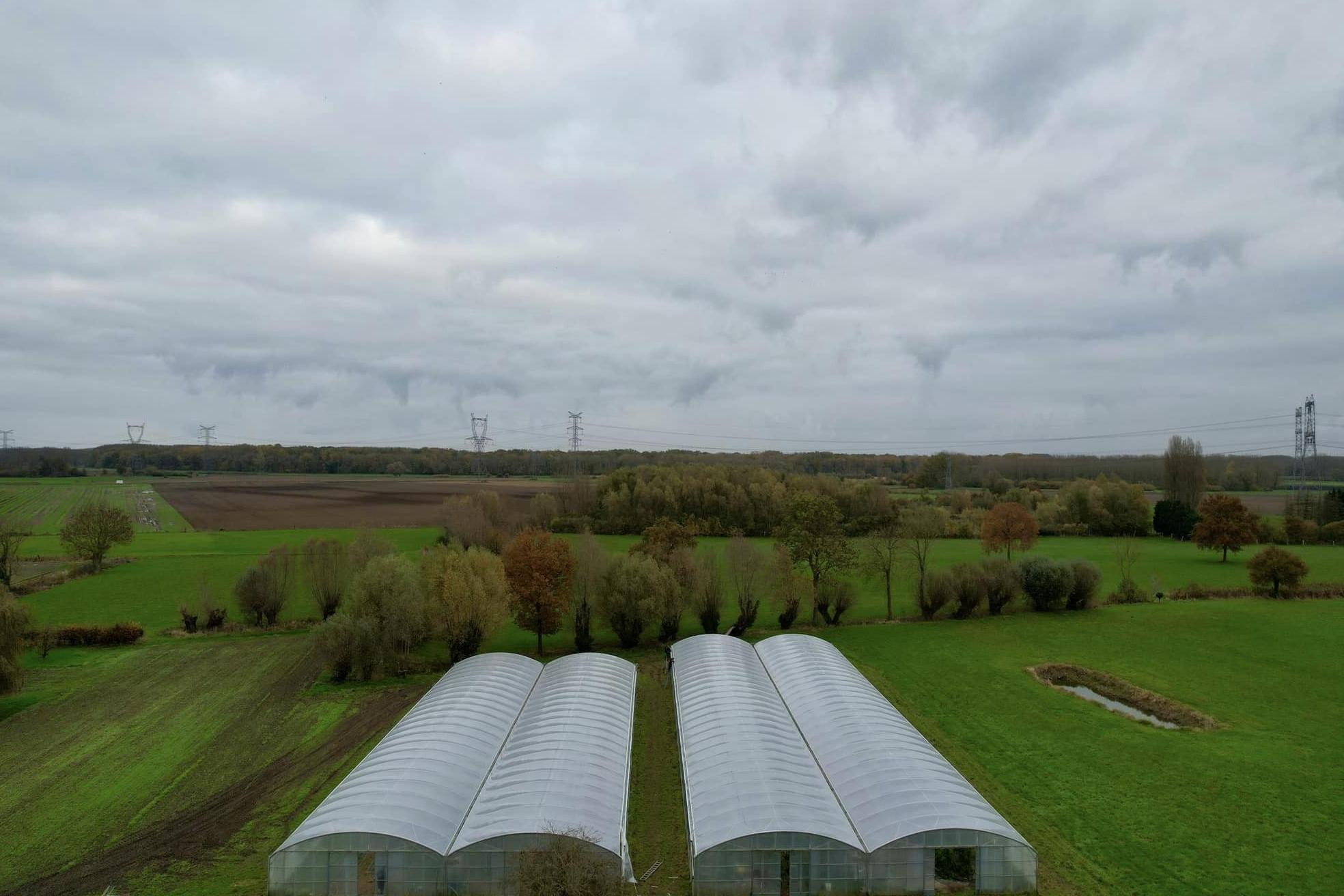
This multi span film greenhouse is built around heat retention, because the running cost of a vegetable house is set more by what it loses at night than by what it cost to erect. A three-layer compressed PE cover sits over a hot dip galvanized steel frame, and the multi span layout shares gutters between bays so the floor stays clear of internal posts. Spans run 8 m to 12 m, gutter height 3 m to 4.5 m and the house is built 10 m to 100 m long to suit the site. It suits growers producing leafy salad, herbs and vegetables through a long season.
On a vegetable house the honest measure of a structure is what it costs to run, not what it costs to build. Heat that leaves the house overnight has to be replaced, and ventilation that cannot be controlled has to be paid for twice, once in the fan and once in the crop lost to humidity. This multi span film greenhouse is put together with both of those bills in mind, starting with the cover and the shape of the block.
The frame is hot dip galvanized steel tube formed into arched trusses and joined into a multi span block. Sharing gutters between bays removes the line of posts that a row of single houses needs, so a tractor or a harvesting trolley has a clear run down the length of the house. Spans are built from 8 m to 12 m, gutter height from 3 m to 4.5 m, and the ridge sits 3 m to 8 m above ground depending on the span. Length is set from 10 m to 100 m by adding bays, which lets a grower match the house to the block rather than the other way round.
The cover is a three-layer compressed PE film, co-extruded so the outer layer carries the UV stabilisers, the middle layer takes the mechanical load and the inner layer handles condensation. Alongside the rest of the film greenhouse range on this site, this cover is chosen for the same reason: a three-layer sheet loses less heat overnight than a single extrusion of the same thickness, and it keeps droplets on the film instead of dropping them onto the leaves.
The saving is not a device that is bolted on. It comes from the house losing heat more slowly and needing less help to hold a set temperature. Three things do that work. The cover itself reduces heat loss through the roof and walls. The multi span block has a smaller exposed surface for the same floor area than several separate houses, because the outer walls and gables are shared rather than repeated. And a house that opens and closes on a thermostat does not sit ventilating warm air out through the afternoon and running equipment to replace it.
For a vegetable grower the effect shows up in the shoulder seasons, when the difference between a house that holds its night temperature and one that does not decides whether an early cutting is worth taking. A house of this type is commonly specified where a multi span PE film greenhouse frame is wanted with a heavier cover than a standard single sheet.
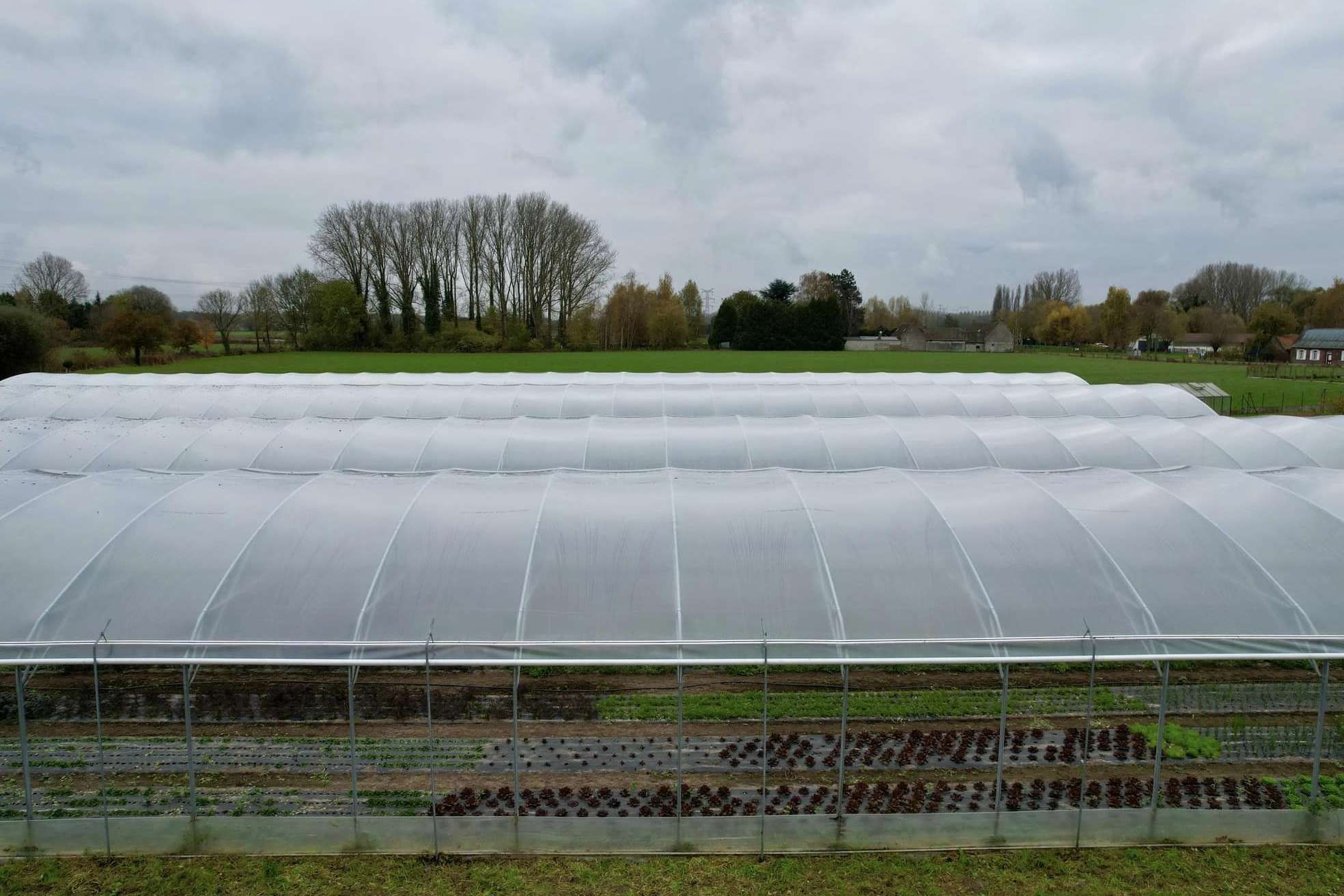
Ventilation is the other half of running cost. Roof vents along the ridge let the warm, humid air that has risen out of the house, and side openings bring fresh air in at crop height. Used together they hold a working temperature without running the house wide open, and in a long block the openings are usually grouped so one person can set the whole range. Growers raising leafy crops tend to look at the control of the side opening first, because that is the one that decides how much humidity sits around the leaves overnight.
An insulated house is also easier to automate. Once the cover does more of the work, a controller can hold a narrower band without the equipment running constantly, which is the practical reason a vegetable greenhouse is often specified with automated vents rather than manual ones. Extension guidance on how protected vegetable production is measured across the season is published by NC State University, and the trade side of the same business is covered by GrowerTalks.
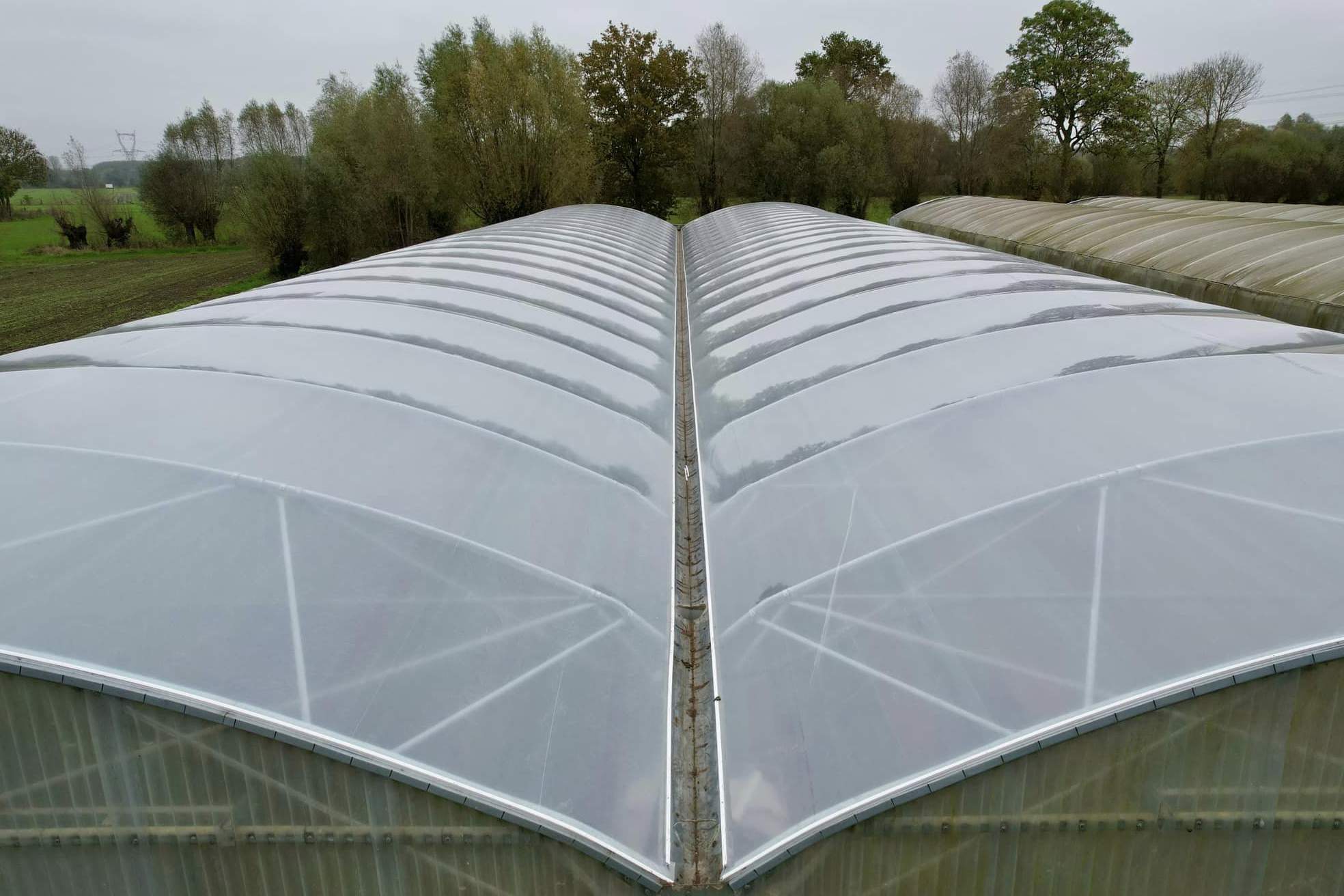
The table below lists the standard build. Span, length and ventilation are set to the site and to the crop.
| Greenhouse span | 8 m / 9 m / 10 m / 11 m / 12 m |
| Greenhouse length | 10 m to 100 m, or built to client demand |
| Gutter height | 3 m to 4.5 m |
| Ridge height | 3 m to 8 m |
| Structure | Hot dip galvanized steel tube, arch roof |
| Cover | Three-layer compressed PE film, UV resistant |
| Ventilation | Ridge vents and side openings, manual or automated |
| Crops | Leafy salad, herbs, vegetables and young plants |
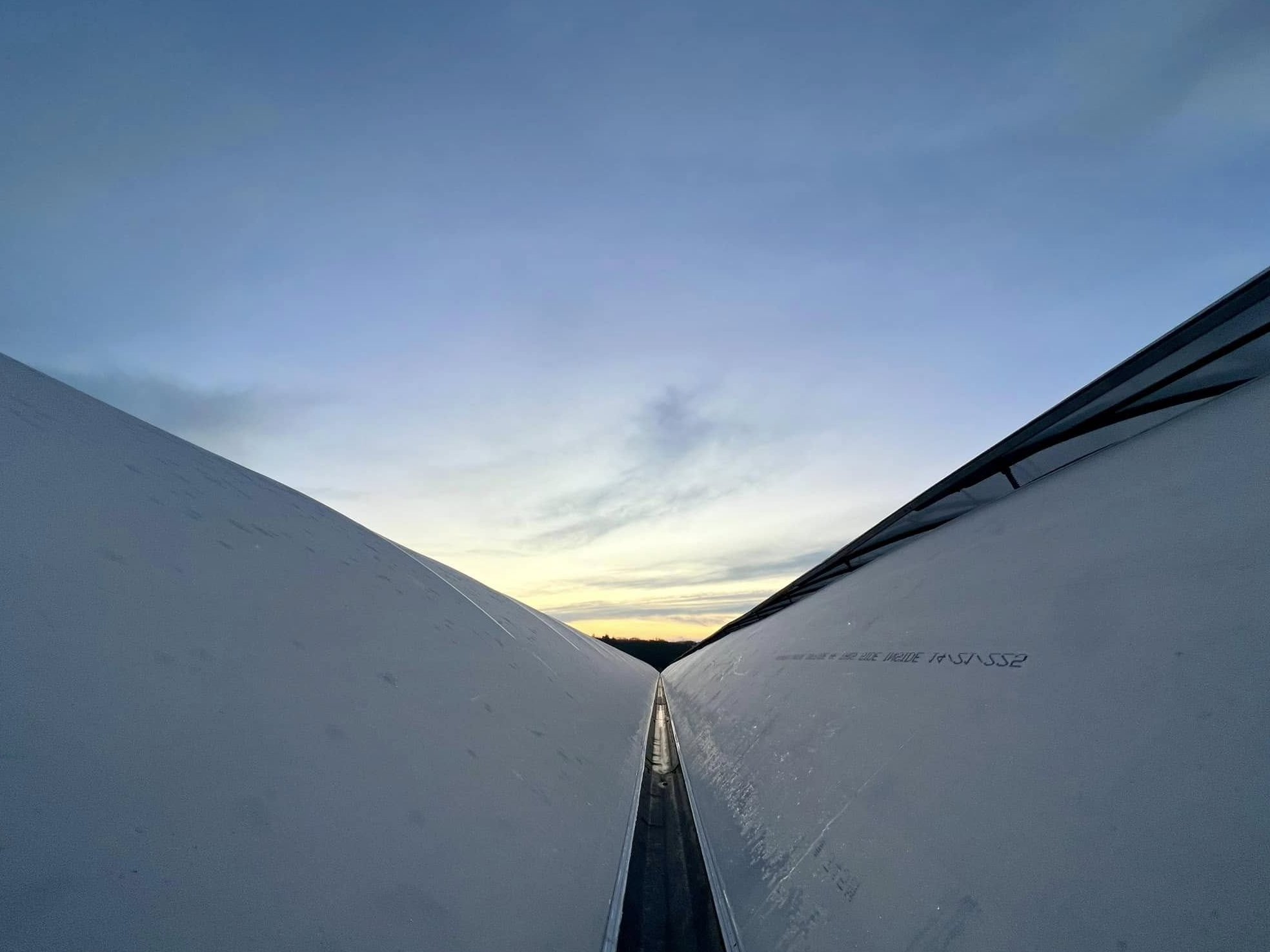
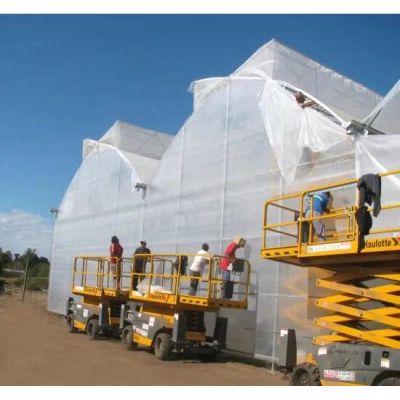
The house is delivered as a bolted kit with arches, gutters, purlins and film cut to the drawing. Work starts on a level pad, because a multi span block has to be squared as a whole rather than bay by bay, and any twist in the first bay is carried down the length of the house. Ground posts or base plates go in first, then arches and purlins, and the film goes on last so the frame is not loaded unevenly while it is being lined up. A block of this size is normally standing in two to four weeks on a prepared site.
Maintenance on the frame is limited to checking fixings after the first season, when the structure has settled. The film is the item with a cycle: it is worth walking the roof at the end of each season to look for chafing over the purlins and for tears that will run, and the cover is planned for replacement in the three to five year band. Rollers, vent drives and gutter outlets are the other jobs, and all three are less costly to keep moving than to repair.
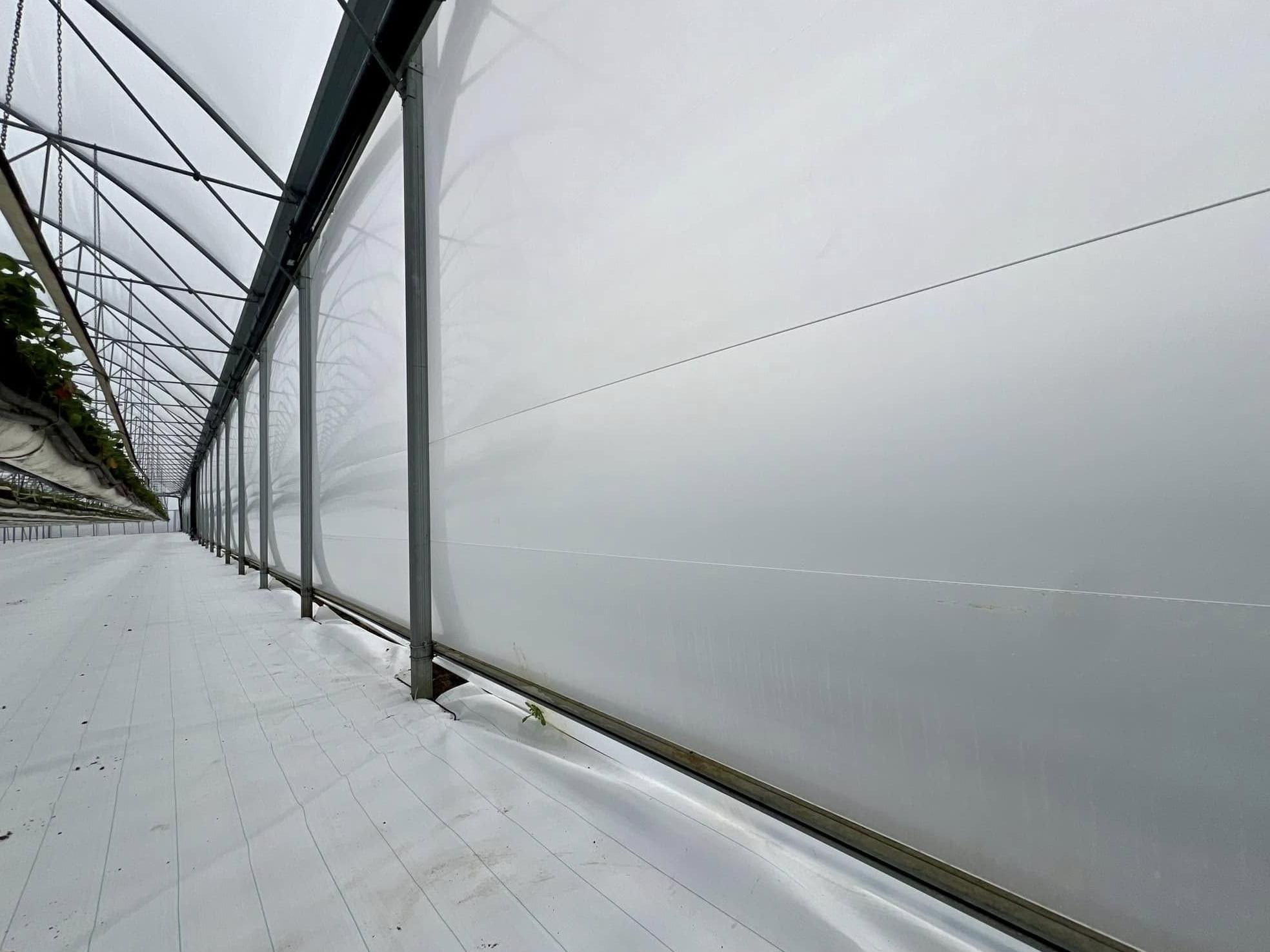
These houses are used for leafy salad and herbs grown on a short rotation, for vegetables raised for early and late market windows, and for young plant production where the night temperature matters more than the floor area. A multi span block also suits a grower who wants one climate to manage rather than six, because the bays are tied together and the vents can be grouped.
Buyers comparing structures usually weigh the cover against the crop plan, since the right sheet depends on how long the house has to hold heat and how much light the crop can use. On the same site, growers who need more light than a film cover gives often look at a glass or panel house for part of the layout while keeping film for the working area.
The cover is a three-layer sheet rather than a single extrusion, so less heat leaves through the roof and walls overnight, and a multi span block has less exposed wall and gable area than the same floor area split into separate houses. Both effects work on the running bill rather than on the build cost.
Yes. Side openings bring air in low down where leafy crops sit, which is where humidity builds up, and the ridge vents let the warm damp layer leave at the top. That combination is what keeps a salad crop clean through a humid spell.
The galvanized steel pipe frame is rated for 15 to 20 years under normal growing conditions. The film cover is replaced on a three to five year cycle.
We provide a 10 year structural warranty and a 5 year anti-corrosion warranty on the galvanized frame. Details are set out in the contract for each project.
Send your site dimensions, the crops and bench layout you plan to use and your local wind and snow loads. We reply with a layout drawing and a full quotation.