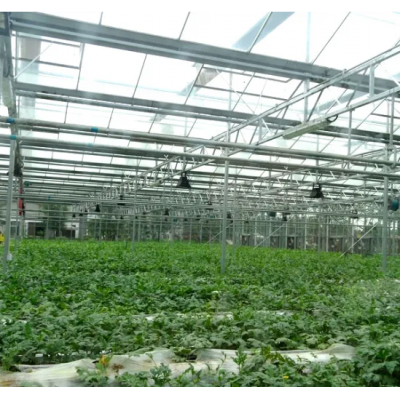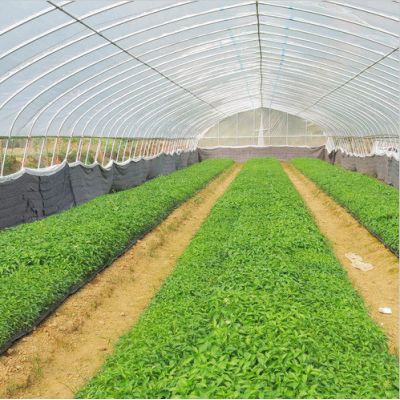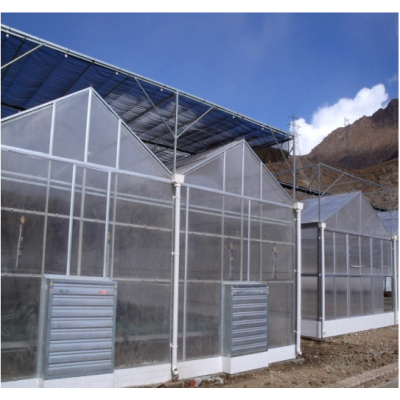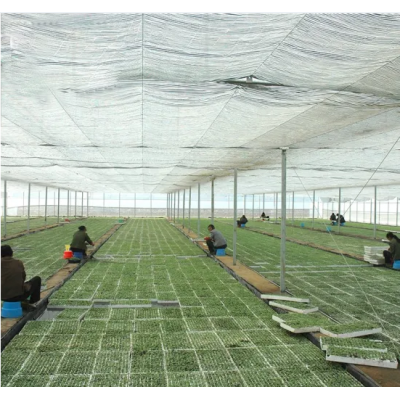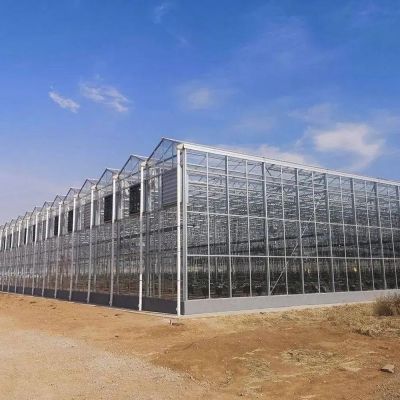
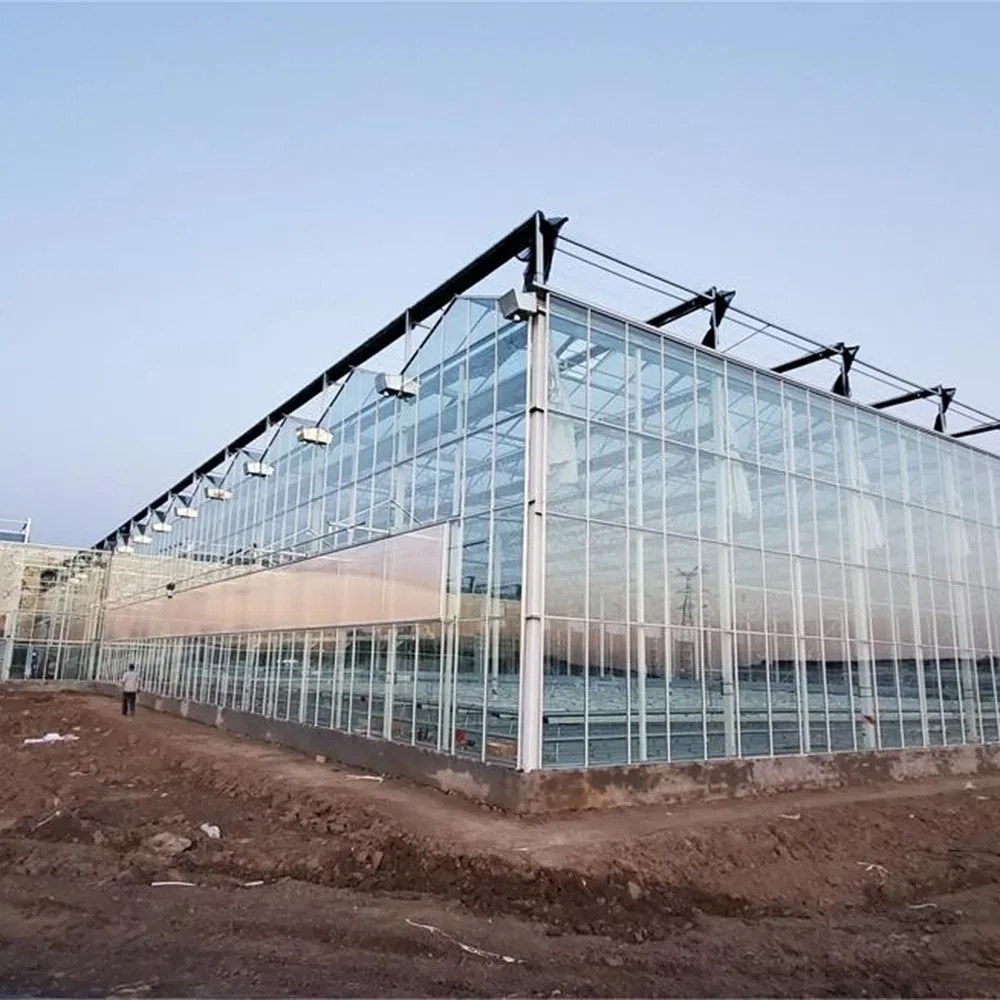
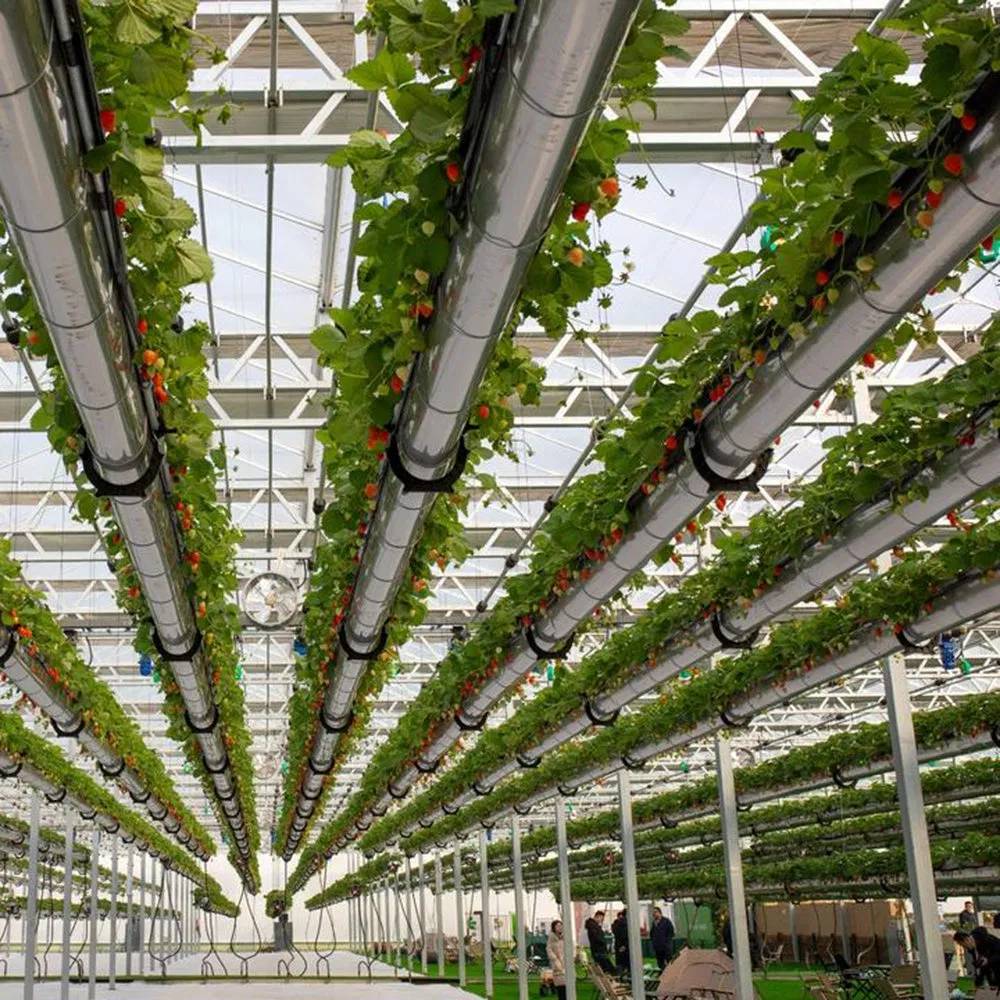
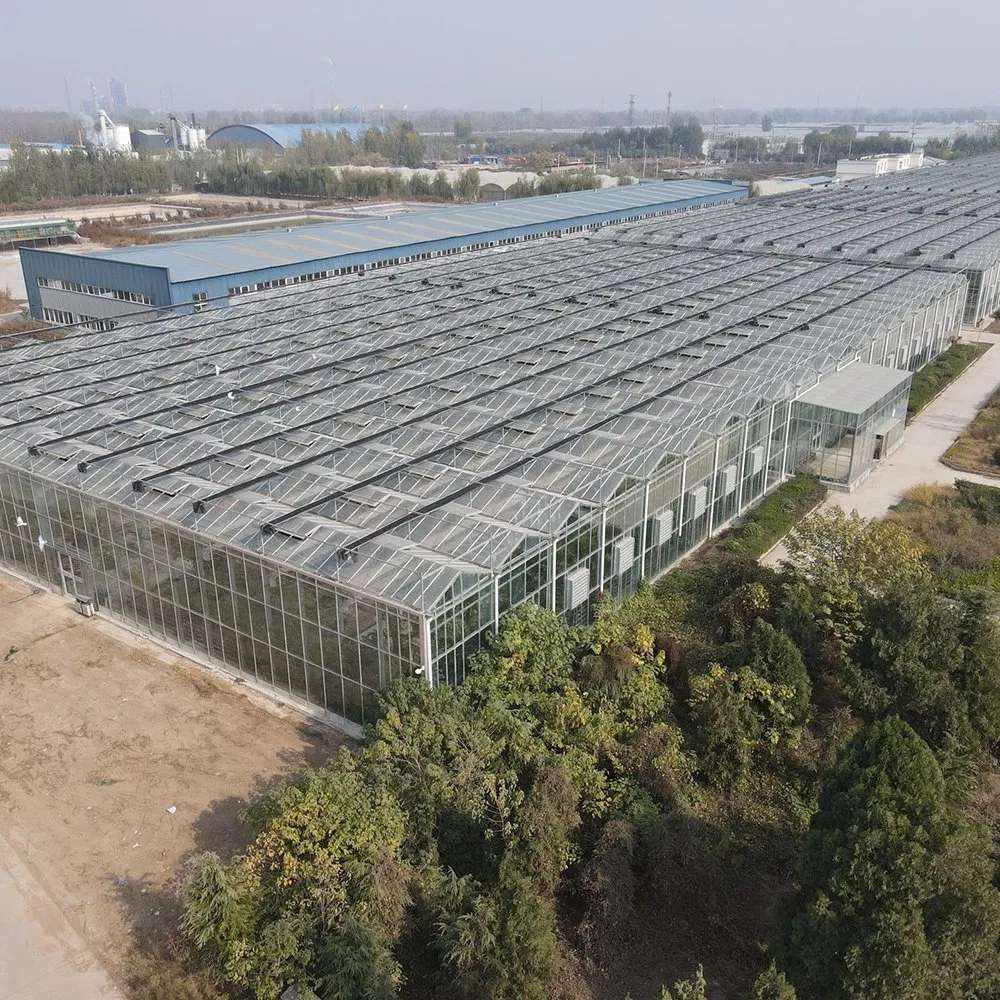
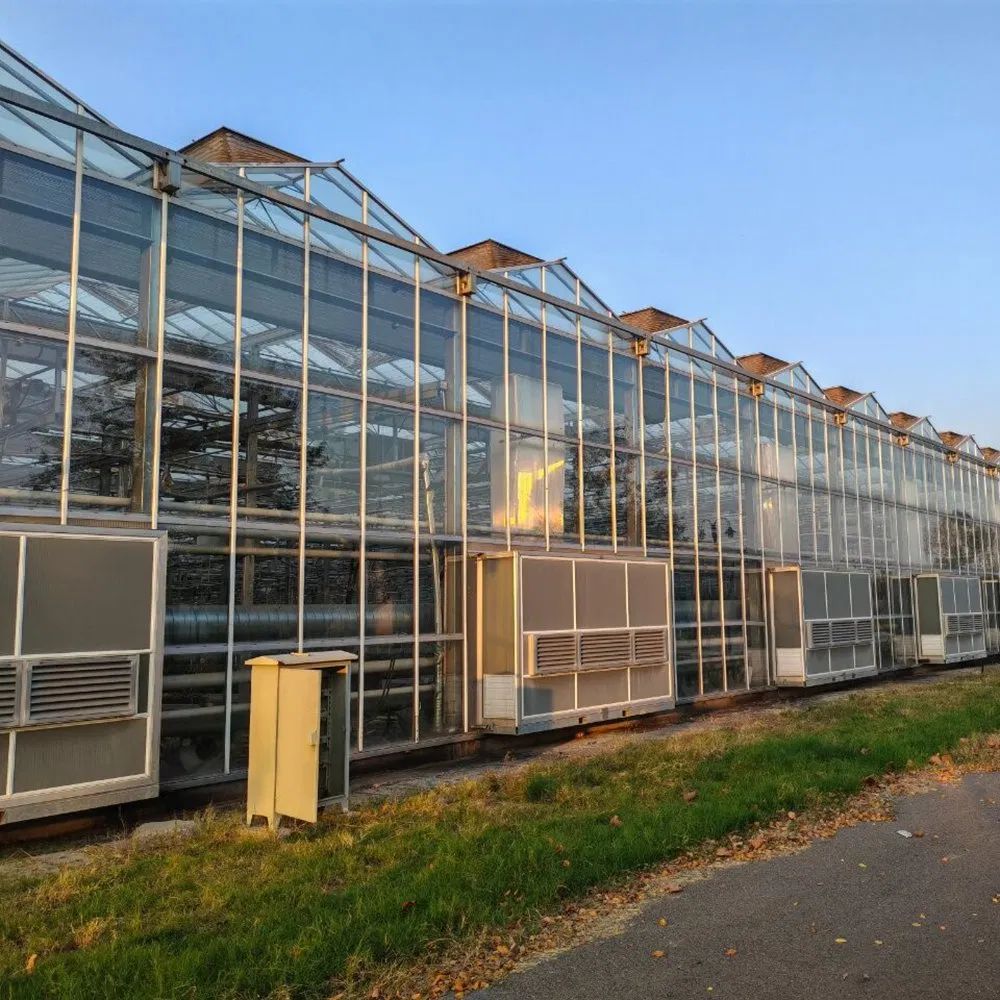
A seasonal house works harder than its hours suggest: it is cleaned out, replanted and often' repurposed two or three times a year, and every one of those cycles puts a hand, a hose or a trolley against the cover. Durability is therefore less about the frame and more about the panel and the way it is held at the edge. This range uses 8 or 12 mm sheet in grooved channels for that reason. A house with two or three cycles a year is judged on how well the cover survives them, not on how it looks on day one.
A glass house fails at a broken pane; a film house fails at a seam. A panel house fails at the fixing line, where the sheet meets the frame, and that is why the channel matters more than the thickness on a house that is worked hard. This range is built around that detail. It belongs to the polycarbonate greenhouse section of this site.
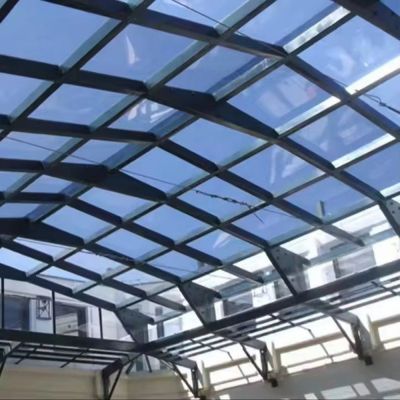
Every panel is held at four edges, and those edges take the wind load, the thermal movement and the knocks. A panel clamped on the face of a frame concentrates all three on a row of screws; a panel set into a grooved channel spreads them along the profile. On a house with two or three crop cycles a year, that difference is what decides whether the cover is still tight in year eight.
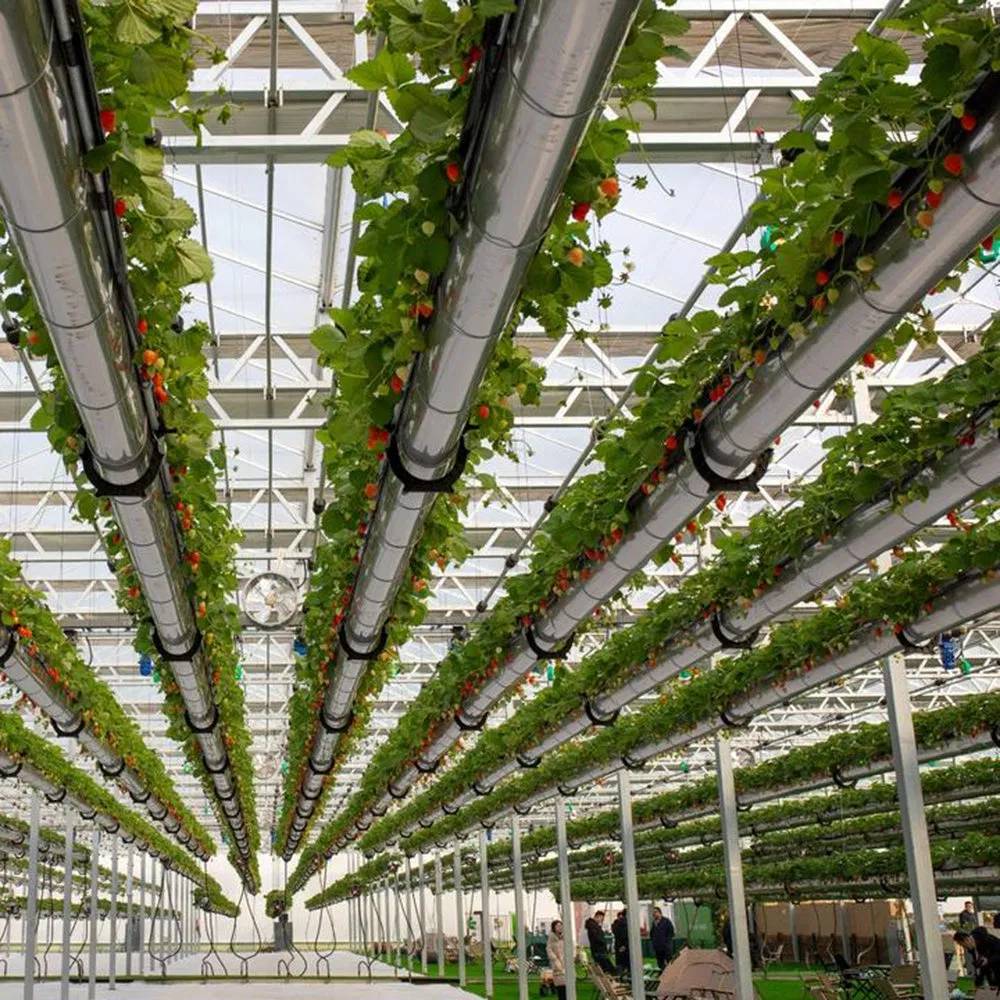
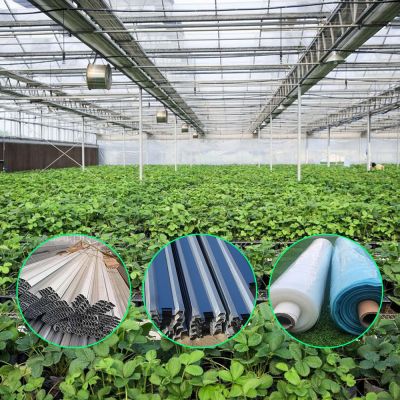
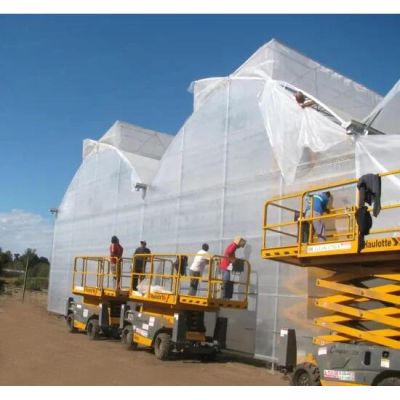
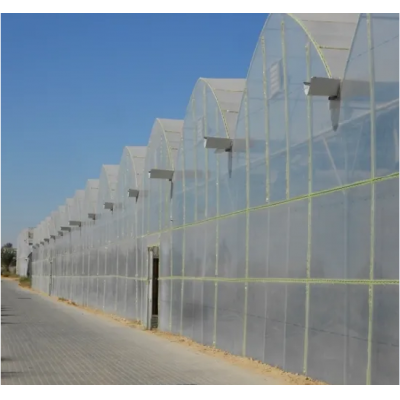
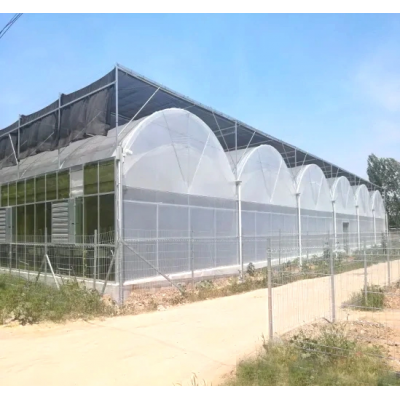
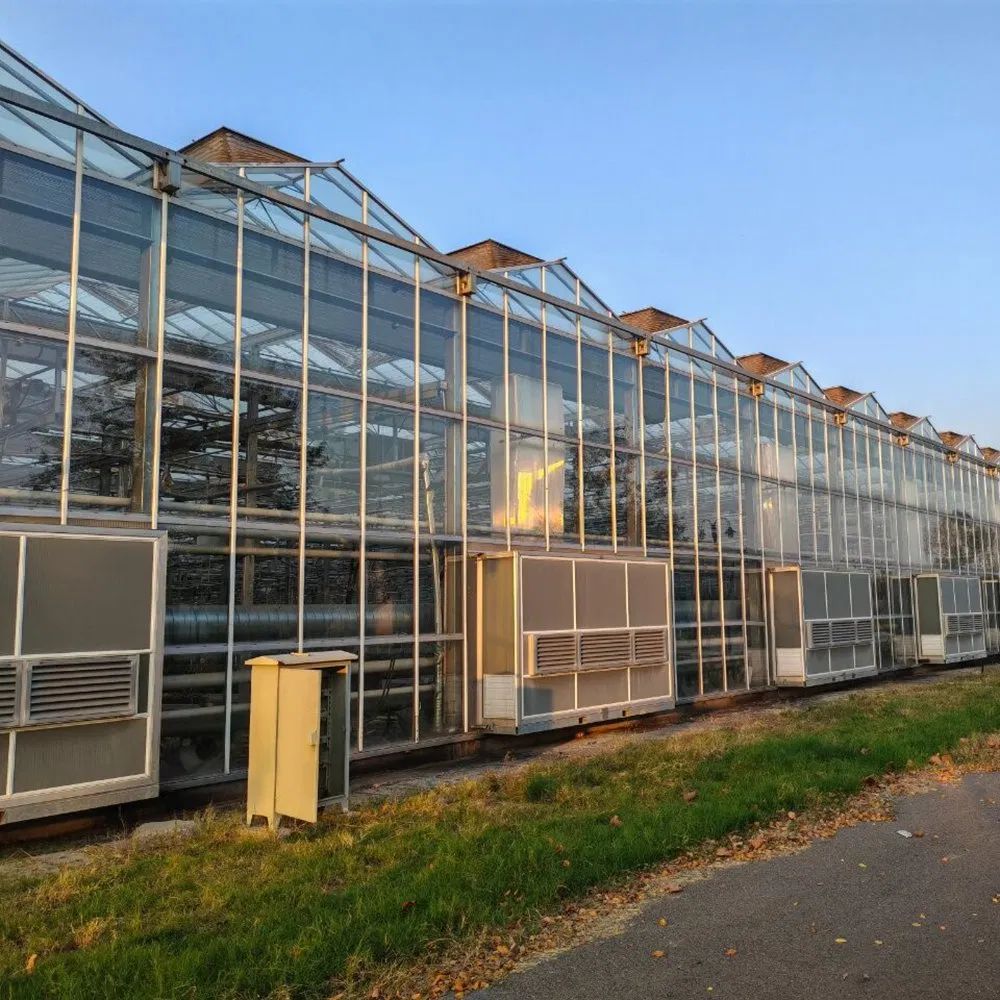
Panels are 8 mm or 12 mm hollow sheet in grooved channel profiles, on a hot dip galvanized steel frame with an aluminium option. Bays run 6.4 to 10 metres, heights 4 to 7.5 metres, and the sheet is quoted for 10 to 15 years of service.
| Type | Multi span PC panel greenhouse |
| Covering | 8 mm or 12 mm polycarbonate hollow sheet |
| Panel fixing | Grooved channel profile |
| Structure | Hot dip galvanized steel, aluminium option |
| Span | 6.4 / 8 / 9.6 / 10 m per bay |
| Length | 10 m to 100 m |
| Total height | 4 m to 7.5 m |
| Light transmission | 90 to 95 percent |
| Sheet life | 10 to 15 years |
| Ventilation | Roof vents, side vents, automated options |
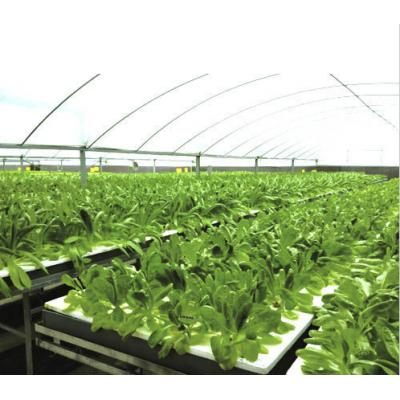
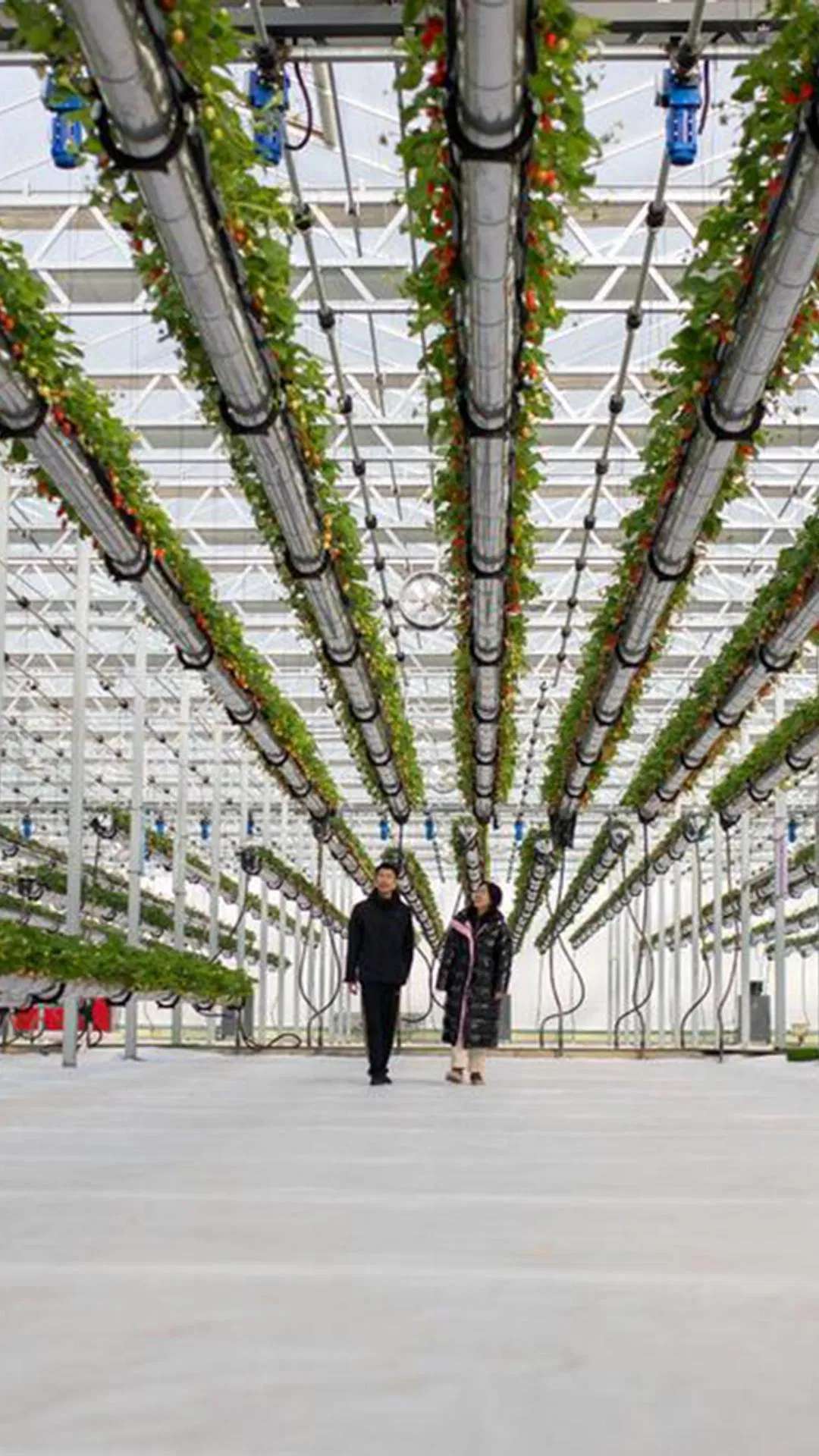
Between crops the house is washed, the irrigation lines are flushed and the floor is cleared. A panel cover takes that routine better than film, because it can be hosed without stretching and it does not need to be re-tensioned. The other half of a changeover is the structure: bench heights, gutter spacing and door positions decide how long the change takes, and those are drawing decisions.
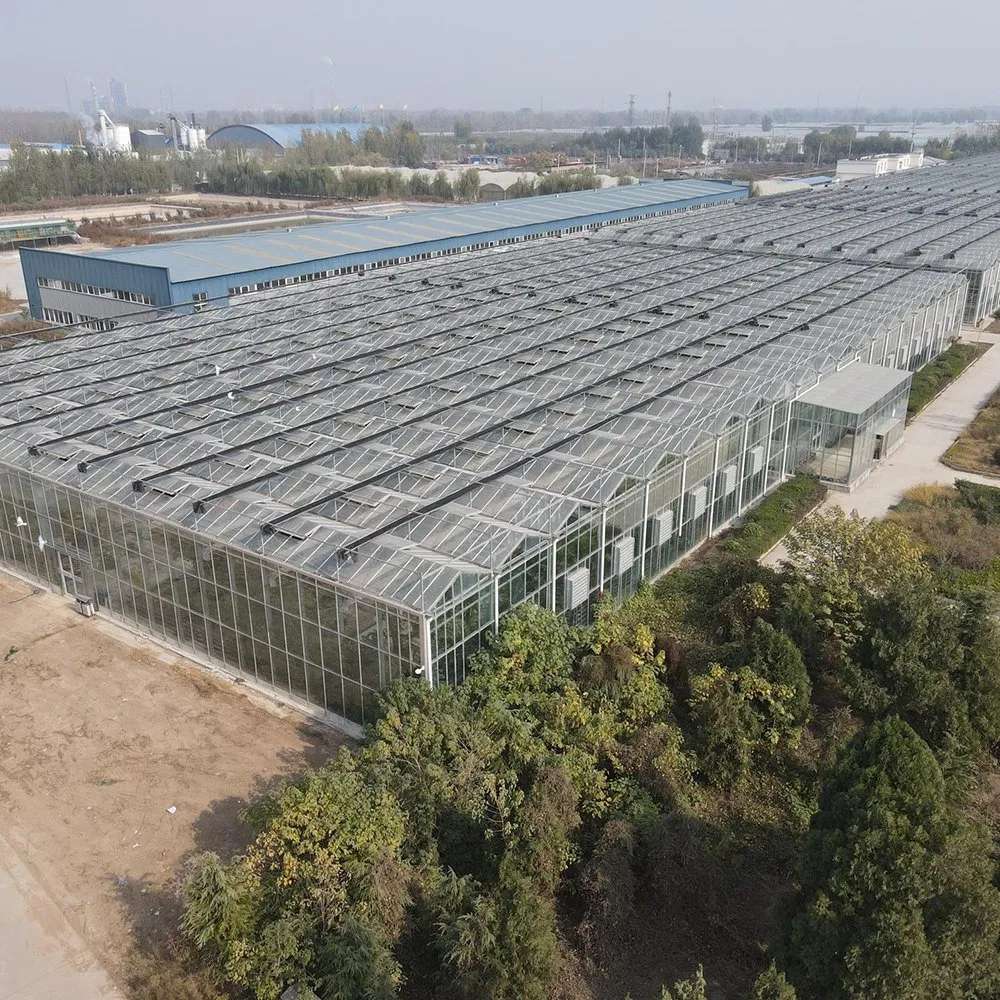
Transmission is quoted when the sheet is clean, and the honest maintenance note is that a hollow panel gathers dust in the cells and algae along the lower edge. Washing the outer face once a year, and keeping the cut edges closed, is what keeps the quoted figure meaningful.
A house laid out for urban sites is described on the urban PC greenhouse page, and an industrial version on the industrial PC greenhouse page.
In order: the seals and closing profiles, then the vent drives, then the sheet itself. The frame outlives all three. That order is worth knowing at order stage, because seals and drives cost little to replace and are easy to forget until a leak appears over a crop.
Extension guidance on protected cropping is published by University of Florida IFAS, and farm news by the Irish Farmers Journal.
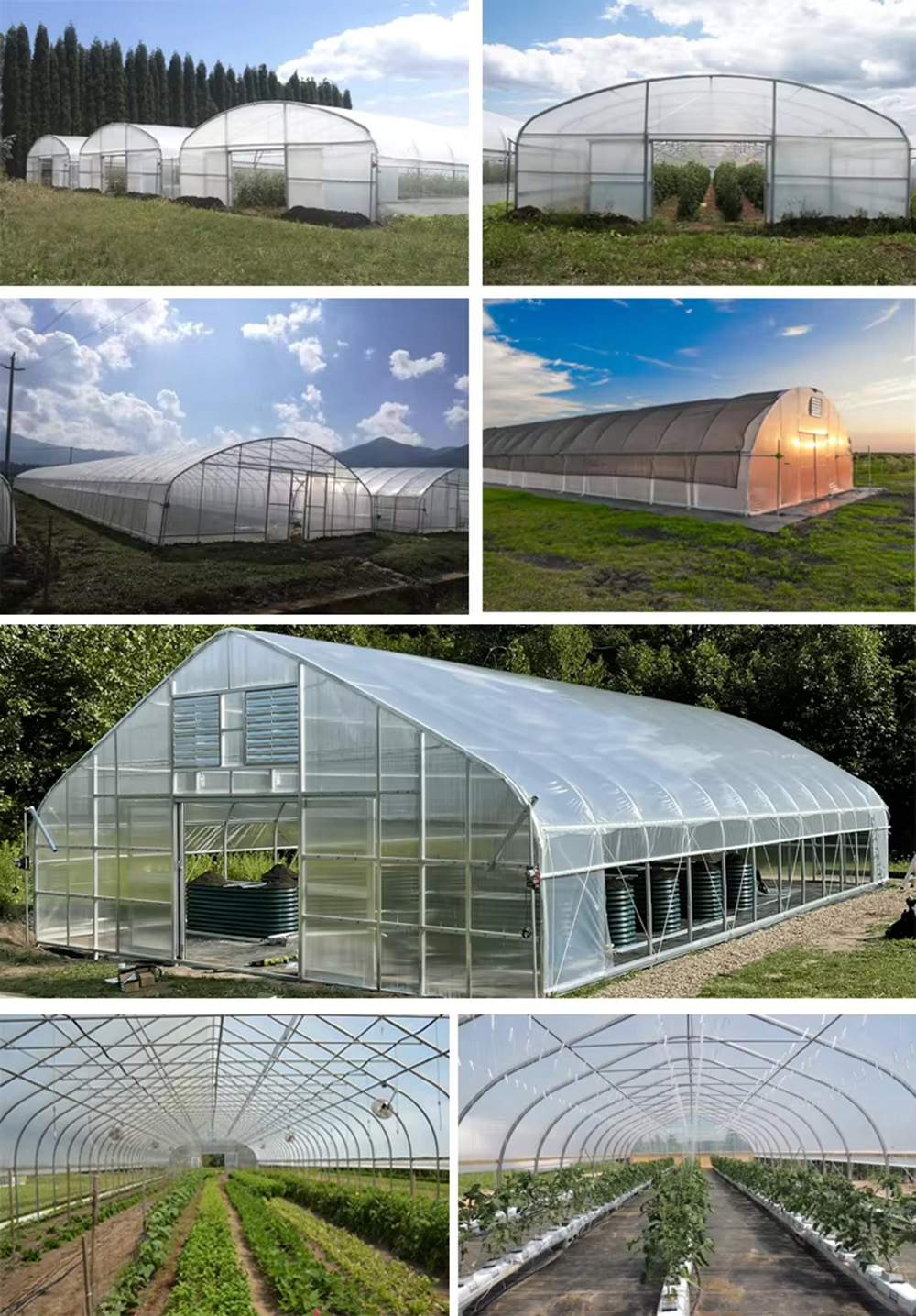
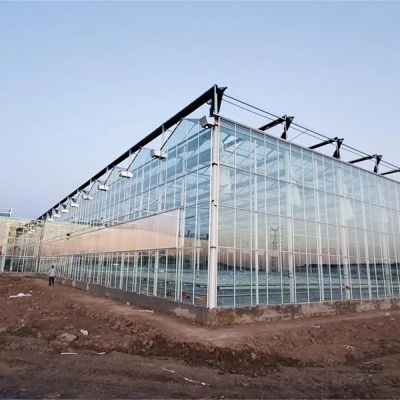
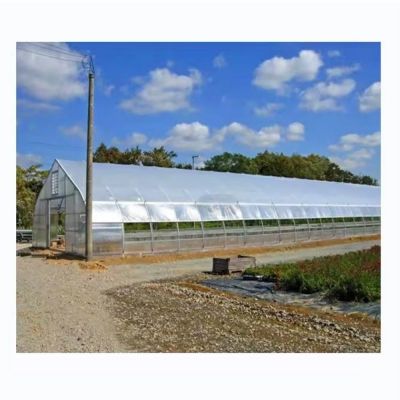
Film suits low-cost tunnels on 3-5 year replacement cycles. Glass delivers the highest light transmission and the longest lifespan, at the highest cost. PC sheet insulates better than film and suits cold or high-humidity climates. The right choice depends on climate, crop and budget.
The hot-dip galvanized steel frame is designed for a 15-20 year service life in normal agricultural environments, with a double-sided zinc coating of 200-275 g/m². Film covers are replaced every 3-5 years, while glass and PC panels carry their own manufacturer warranties.
Yes. We customize span width, bay length, gutter height, covering material (film, PC sheet or glass) and ventilation configuration. Share your crop type, local climate and growing area, and our engineers will size the structure to match.
Send your growing area, span and length, crop type and local climate. If you already have a layout drawing, that is enough to start. Our engineers then return a quotation with a structure drawing and a bill of materials.
Ten to fifteen years on the sheet specification, depending on the UV layer and on washing. The frame outlasts the sheet, and the seals and vent drives are the parts that usually need attention first.
Seals and closing profiles. They are inexpensive and easy to replace, and a failed seal shows up as a leak over a crop rather than as an obvious break.