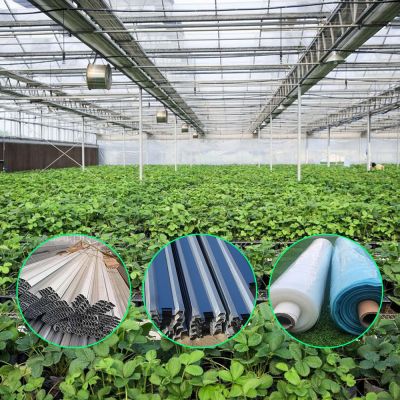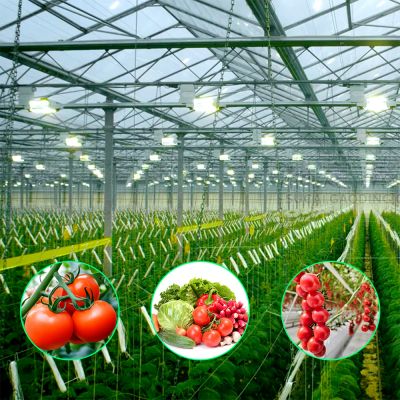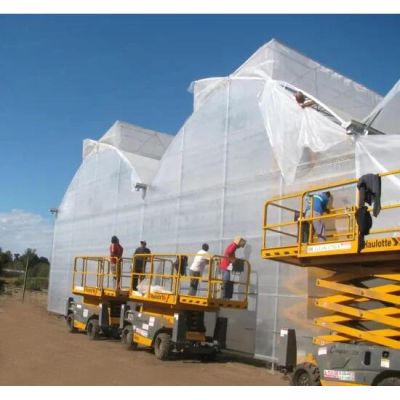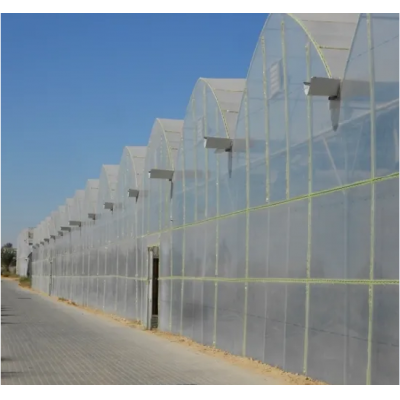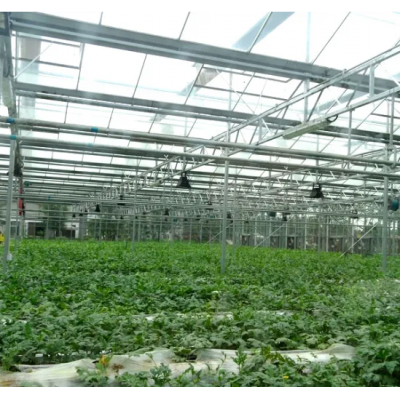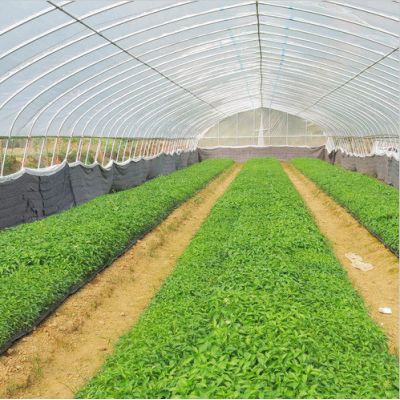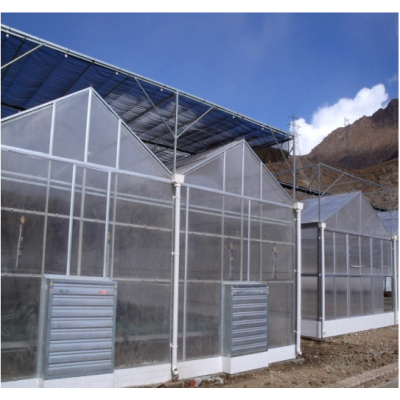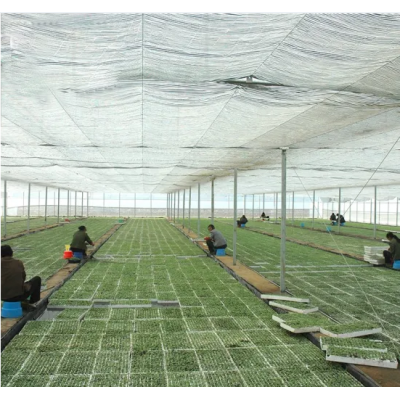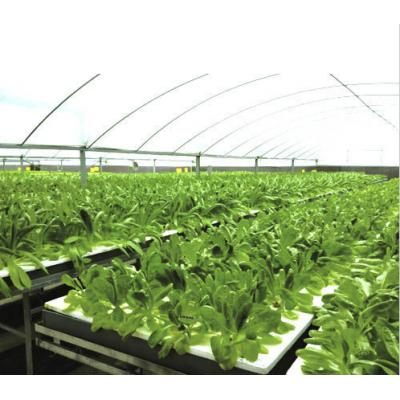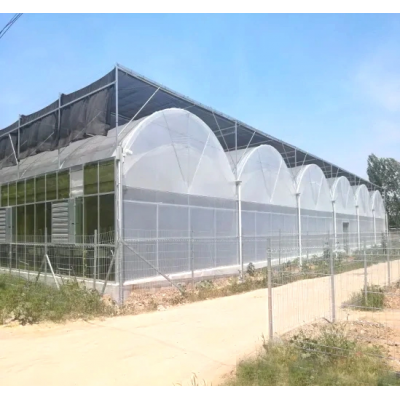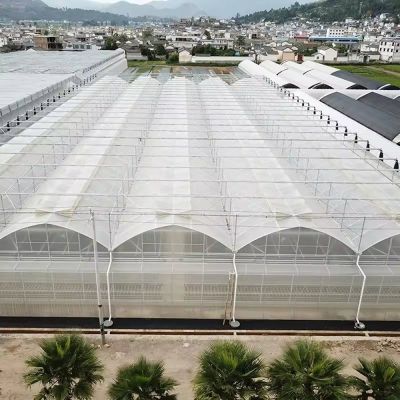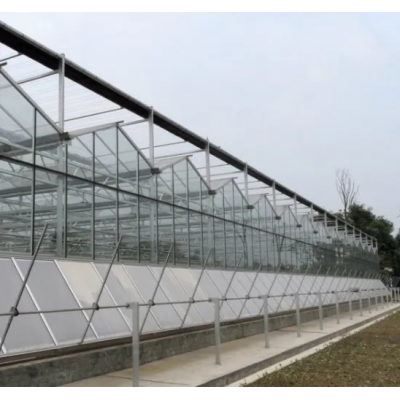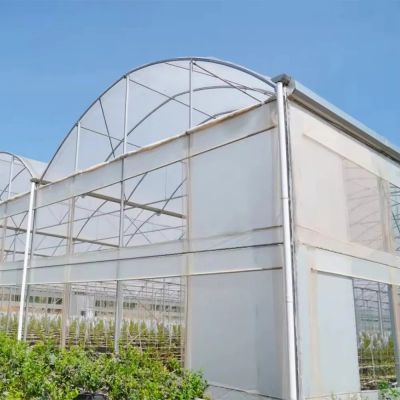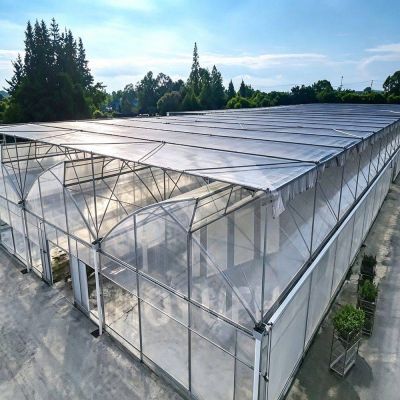
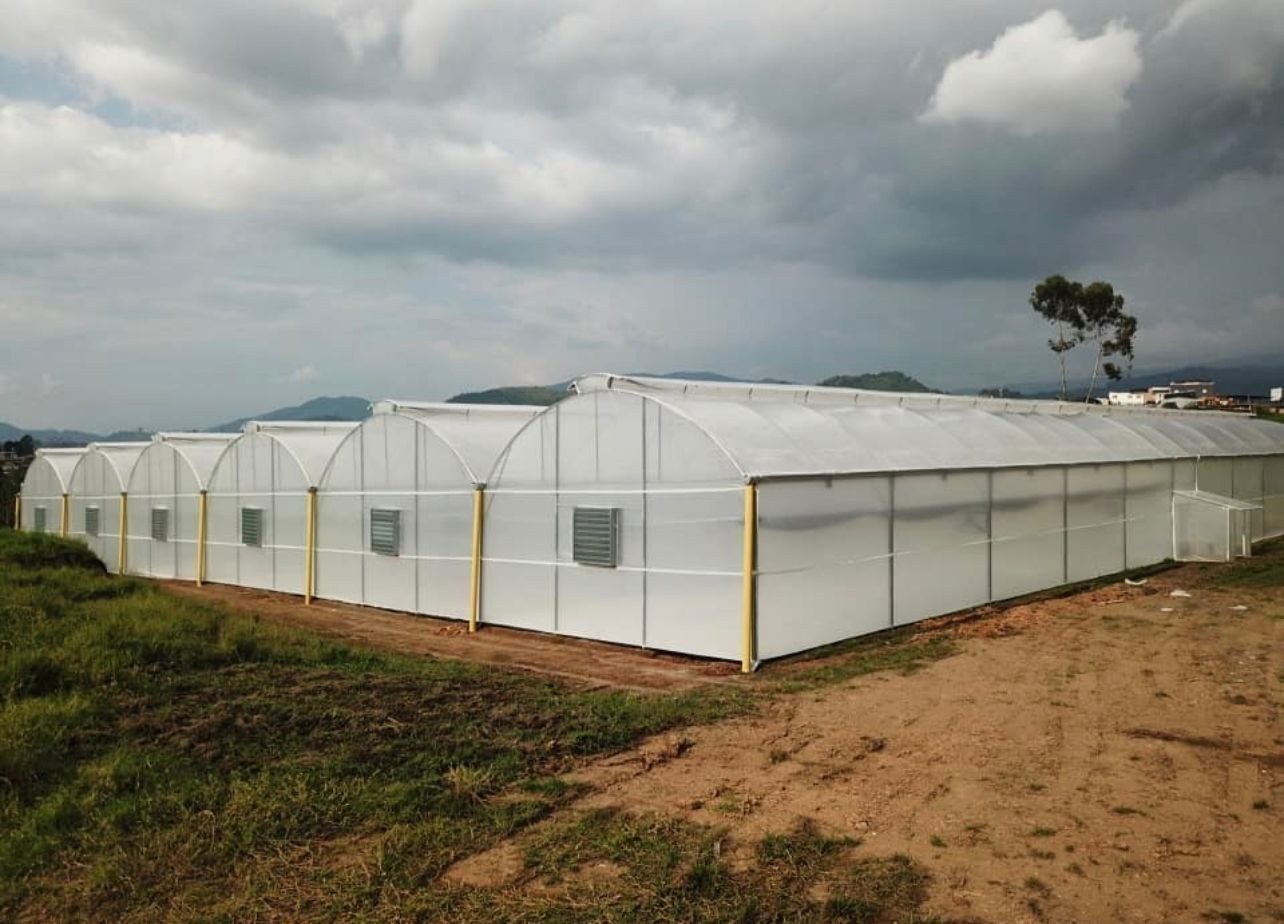
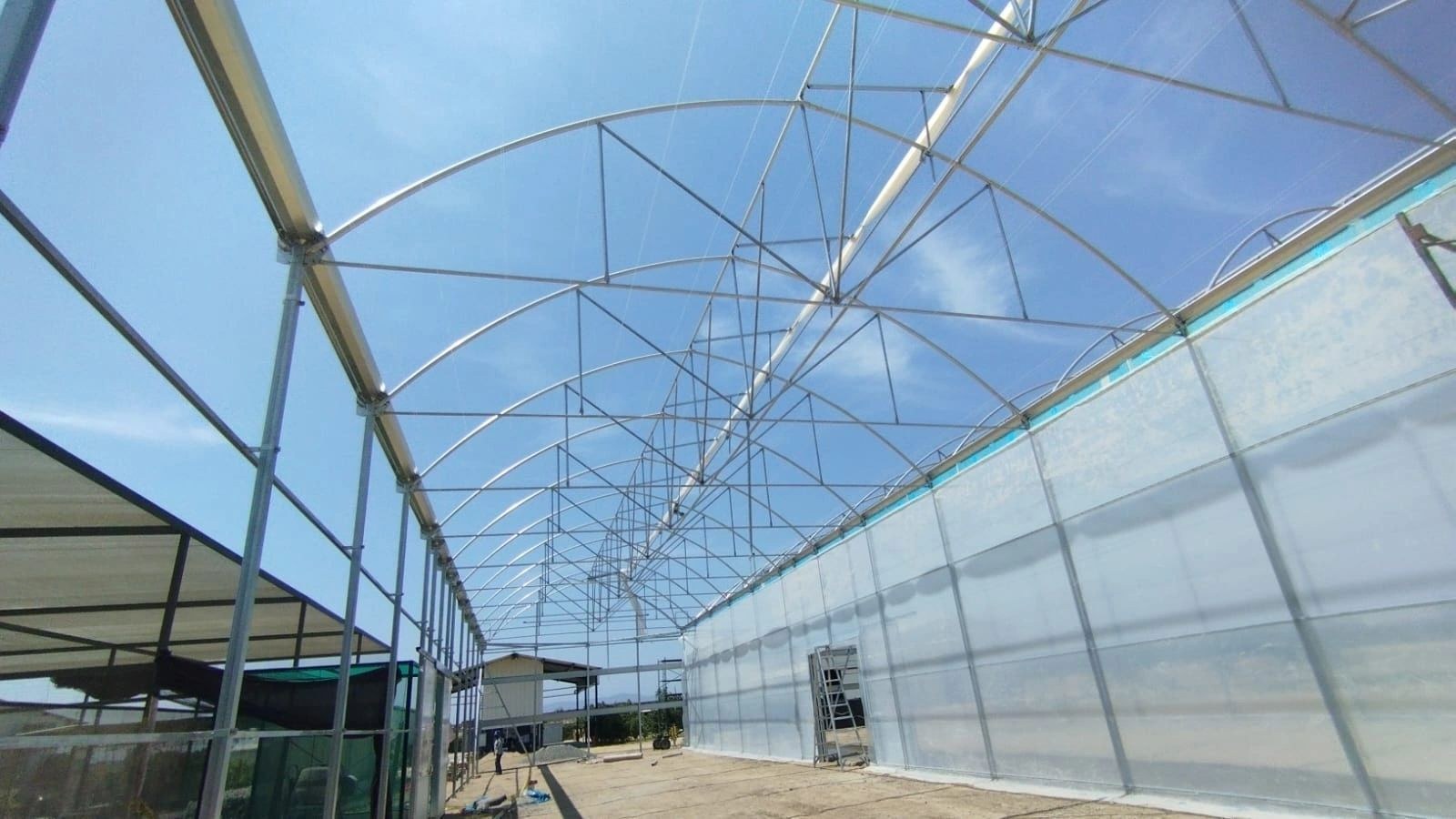
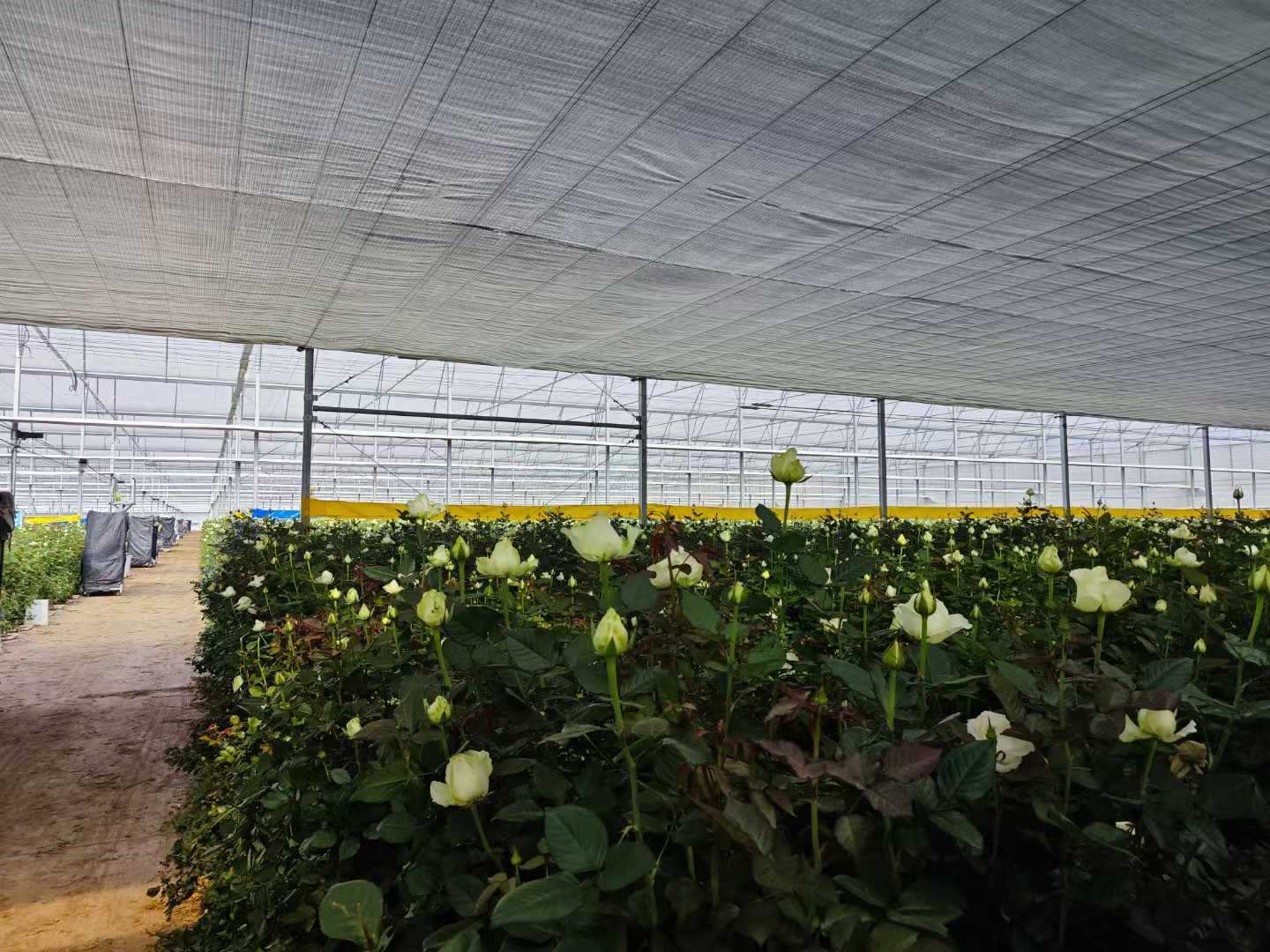
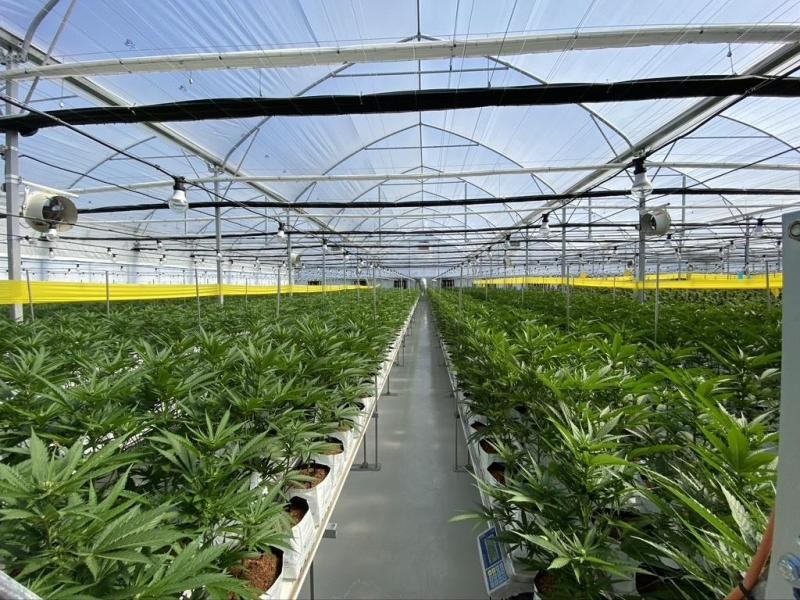
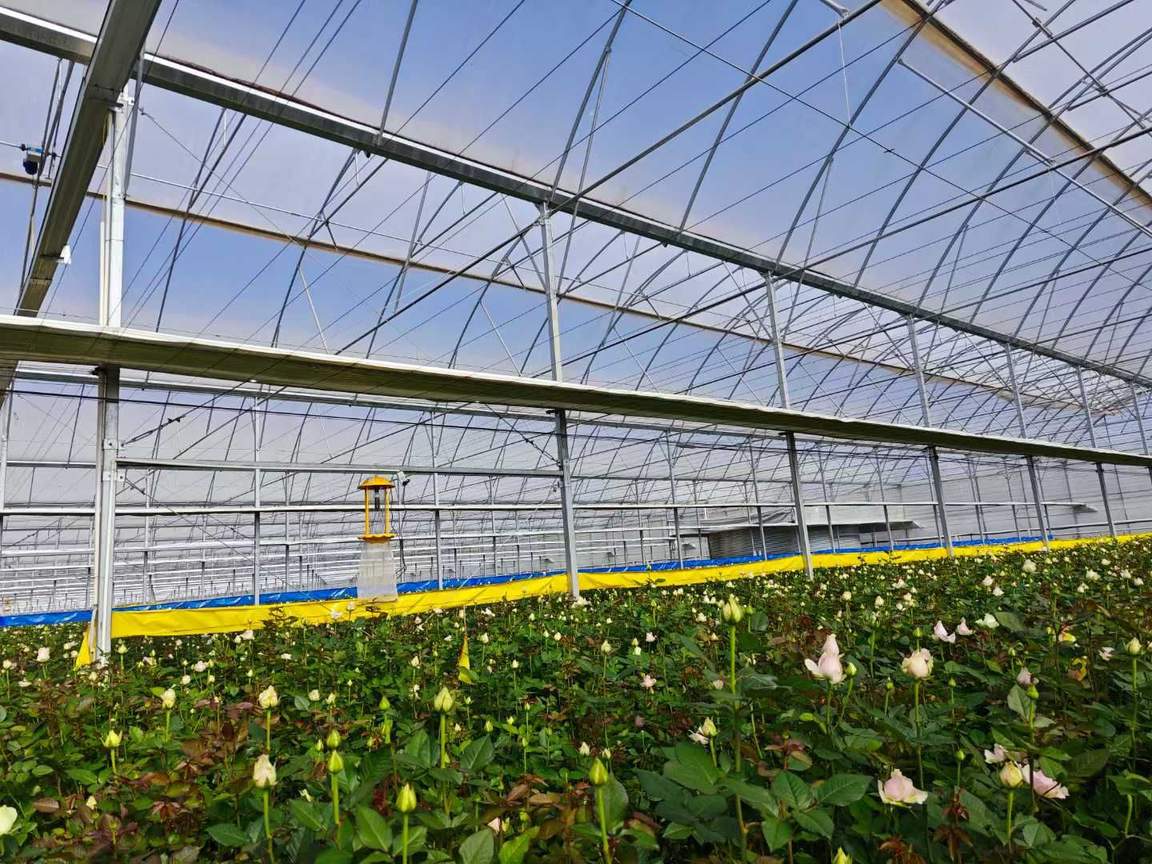
Herbs are a low volume, high value crop that suffers quickly in heat, so the house has to be able to take the top off a summer afternoon rather than simply keep the rain out. This listing quotes a multi span arch roof film house for an herb farm with cooling as its design purpose, in spans from eight to twelve metres, lengths from ten to a hundred metres and heights from three to eight metres, on a hot dip galvanized frame. Cooling equipment is quoted with the project against the local climate.
On an herb farm the summer problem is not cold, it is a fortnight of thirty eight degree afternoons that turns basil woody and mint bitter. A house described as a cooling house is one designed around that fortnight. This page covers the multi span arch house in this listing, part of the multi span greenhouse range on this site.
Before any equipment is added, the section decides how hot the house gets. Taller roof heights hold more air above the crop, which buffers a peak; wider spans reduce the wall area per square metre but make the air path longer from wall to ridge. An arch roof with a decent rise moves air up and out more readily than a flat one.
That is why cooling and the frame are quoted together rather than in sequence. A house specified too low cannot be fixed with more fans.
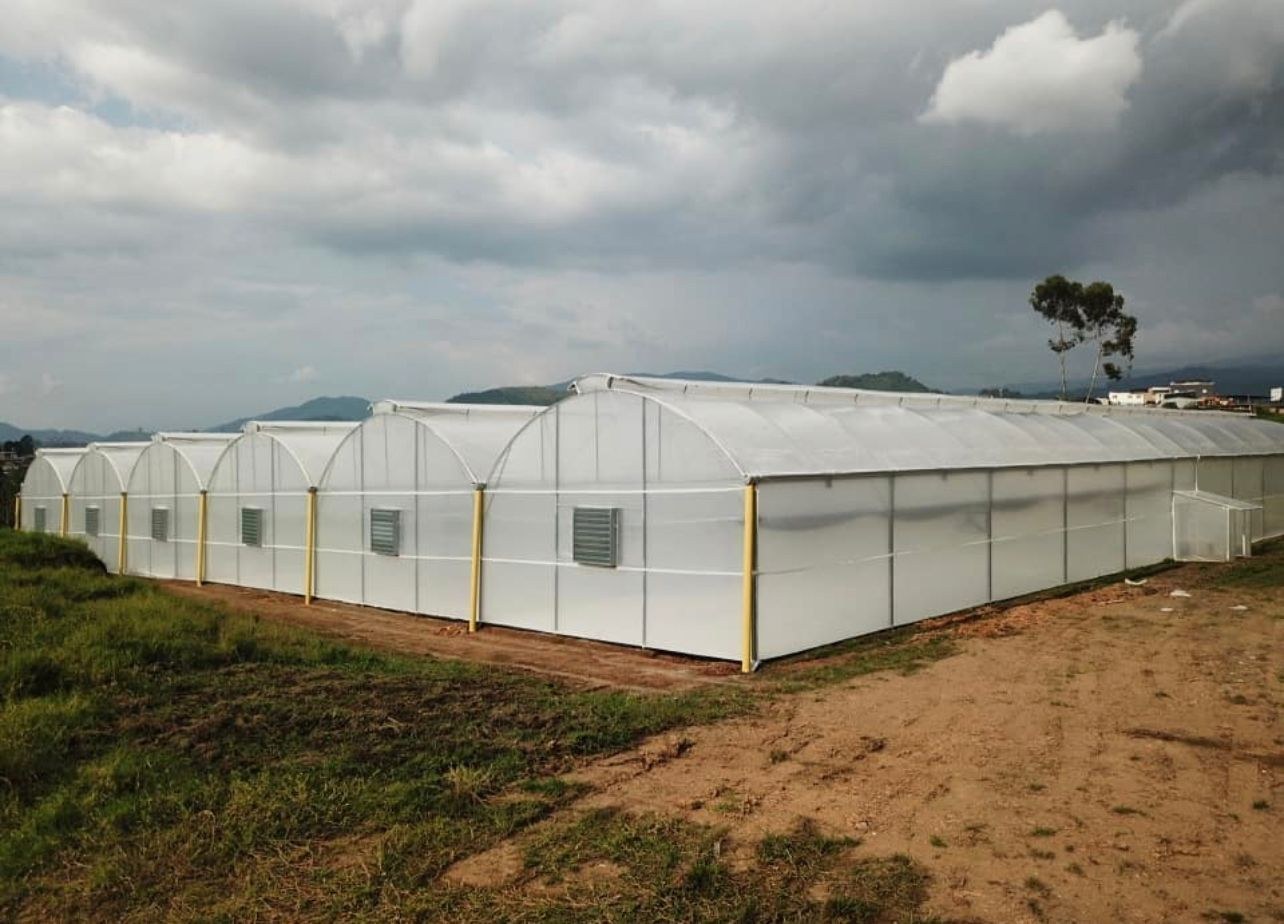
The roof is a multi span arch, the frame hot dip galvanized steel, and the cover plastic film with a three layer compressed film listed as an option. Film is the usual cover for an herb house because the crop cycle is short and the capital is better spent on cooling and irrigation than on glazing.
The arch also sheds water without a ridge gutter, which matters in a storm belt: fewer gutter runs means fewer places for water to back up over the crop.
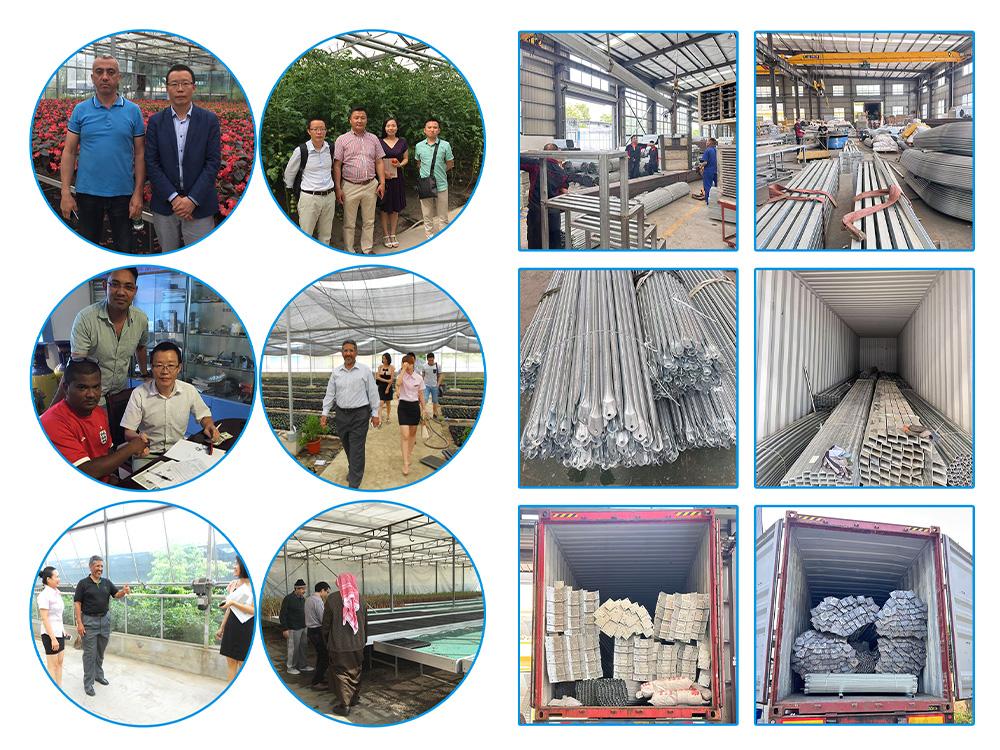
| Structure | Multi span arch roof, hot dip galvanized steel frame |
| Covering | Plastic film, three layer compressed film option |
| Span | 8 to 12 m, built to order |
| Length | 10 to 100 m, built to site |
| Height | 3 to 8 m |
| Design purpose | Cooling for herb production |
| Crops listed | Herbs, vegetables, fruit and flowers |
| Cooling equipment | Quoted with the project |
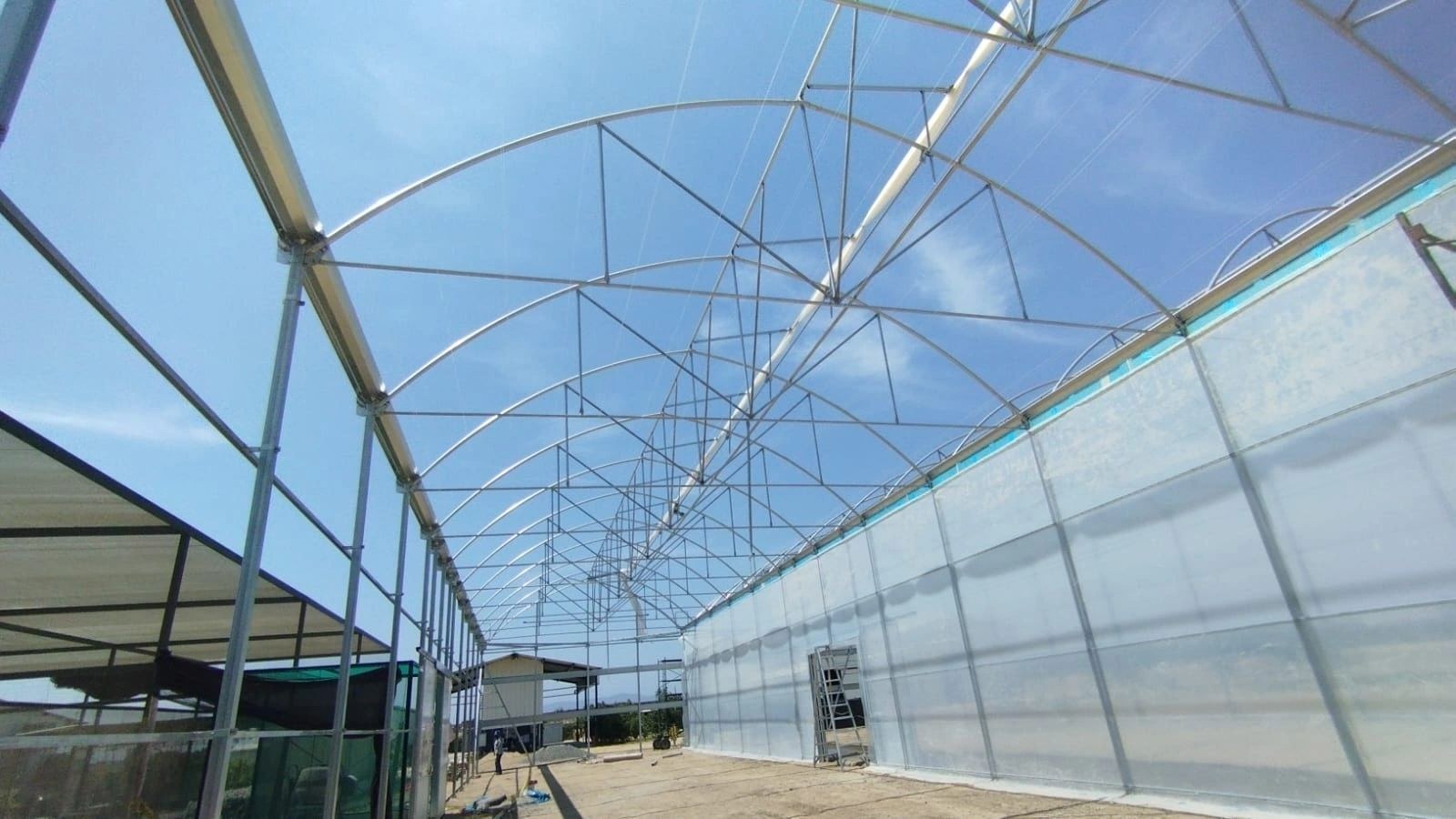
The first is ventilation, and it costs the least: open area at the ridge and at crop height, sized for the house rather than copied from a smaller one. The second is shading, which keeps radiation out before it becomes heat; external shade works earlier in the chain than internal shade and costs more because it has to survive wind. The third is evaporative cooling, fan and pad, which works well in a dry climate and loses effectiveness as humidity rises.
Most herb farms use all three in some proportion. The mix is a climate decision: a humid coastal site gets little from a pad and a lot from air changes, while a dry inland site gets the reverse.
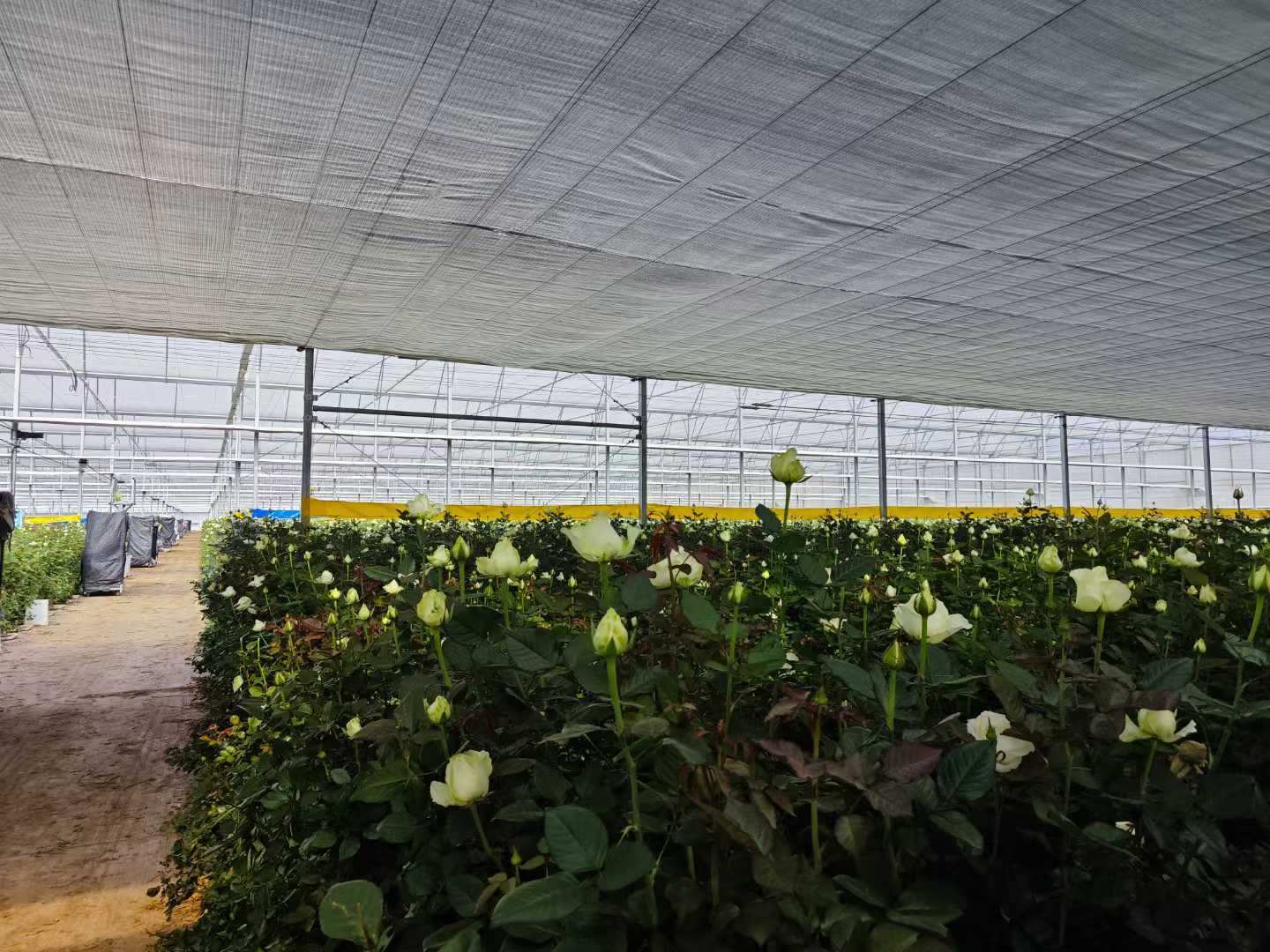
Basil, coriander and mint are the usual commercial herbs, and they do not share a heat limit. Basil stalls above the mid thirties; coriander runs to seed early in heat; mint is the most tolerant but loses aroma if it is stressed. A house that holds the crop a few degrees below the outside peak for the two worst weeks of the year is usually enough, and that is a ventilation and shade problem before it is a refrigeration problem.
Irrigation matters as much as air temperature. A crop that is short of water at midday closes its stomata and stops transpiring, and a house with no transpiration is a house that heats up.
Two related multi span houses are described on the prefab multi span high tunnel page and the large commercial multi span house page.
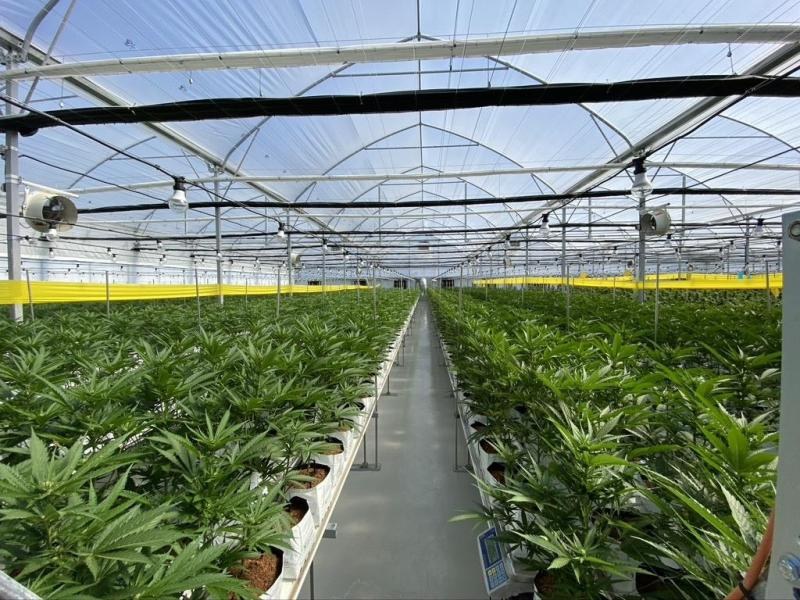
Cooling equipment, shade, irrigation and controls are all priced with the project. That is not a gap in the listing; it is the only honest way to quote cooling, because the same house needs very different equipment in Mombasa and in Mendoza.
Ask for three things with the quotation: the design outside temperature and humidity the cooling was sized for, the resulting inside temperature, and the water consumption of the pad if one is included. Those three numbers make two quotations comparable.
Guidance on greenhouse climate and crop response is published by UC Davis, and fresh produce trade coverage by Fresh Plaza.
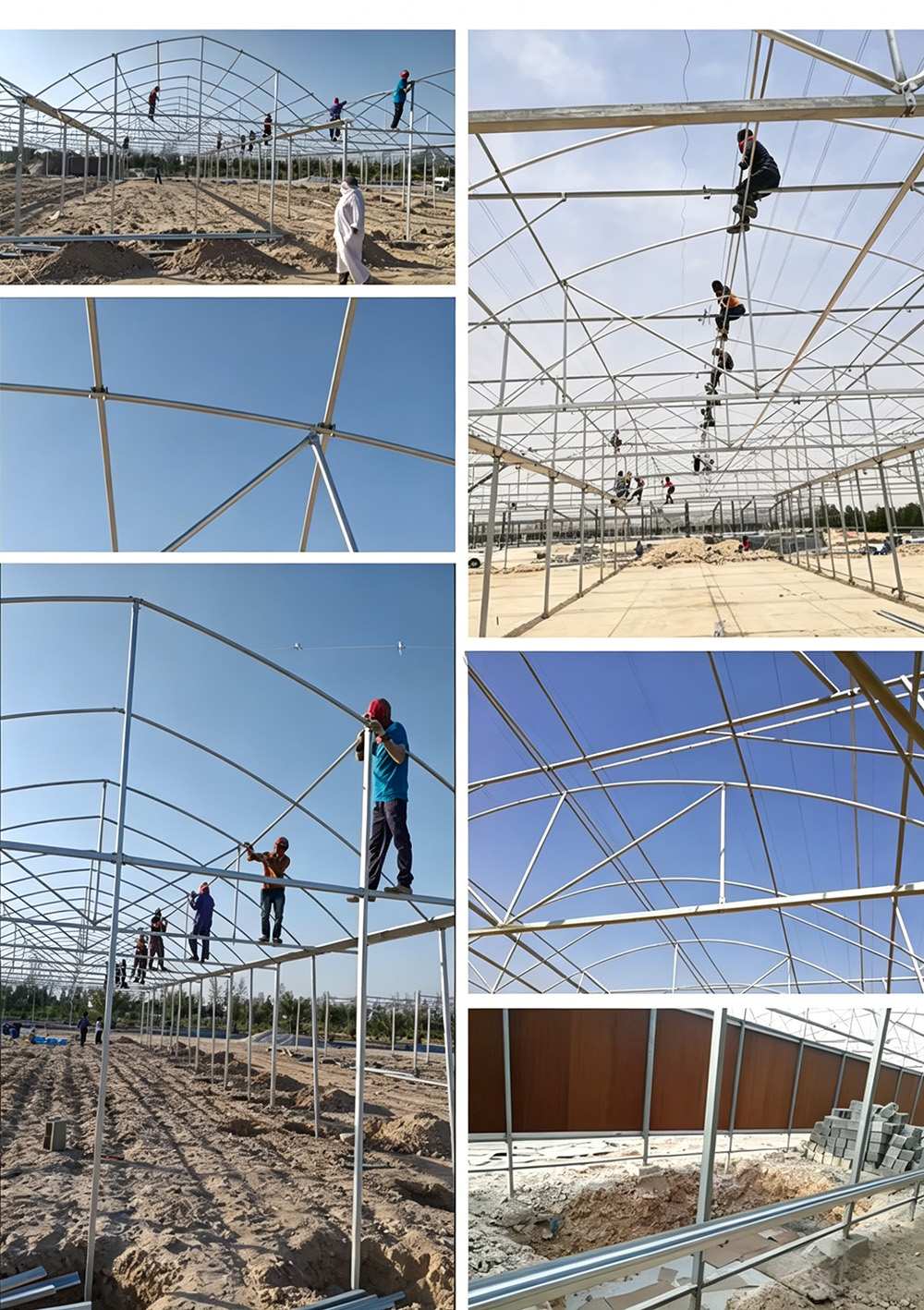
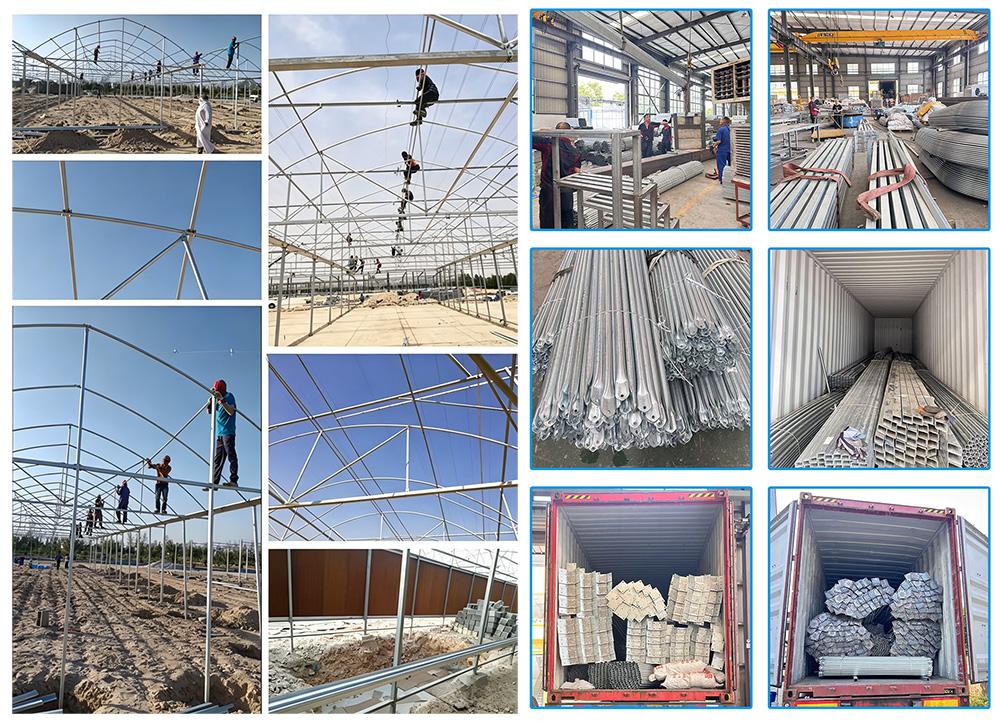

A standard multi-span greenhouse is typically erected in 2-4 weeks, depending on the span, the number of bays and site access. Foundation work and glazing are the two stages that set the pace, and both are scheduled before the frame arrives.
Yes. We customize span width, bay length, gutter height, covering material (film, PC sheet or glass) and ventilation configuration. Share your crop type, local climate and growing area, and our engineers will size the structure to match.
Film suits low-cost tunnels on 3-5 year replacement cycles. Glass delivers the highest light transmission and the longest lifespan, at the highest cost. PC sheet insulates better than film and suits cold or high-humidity climates. The right choice depends on climate, crop and budget.
Ziyang Bozong Greenhouse Industry Co., Ltd. is a manufacturer based in Ziyang, Sichuan, China. We produce the hot-dip galvanized steel frame in-house, cutting and drilling to drawing, and supply covering materials, ventilation, cooling and irrigation systems as one coordinated package.
Only if ventilation and shade cannot hold the crop below its limit on the worst afternoons. Pad cooling is effective in dry air and much less so at high humidity, and it adds a water demand. Start with open area and shade, then size the pad against a measured inside temperature.
The listing quotes ventilation with the project rather than a fixed ratio, because the requirement depends on the crop and the local summer. As a starting point, ask what inside temperature the proposed vents hold at the design outside condition, and compare that figure between suppliers.