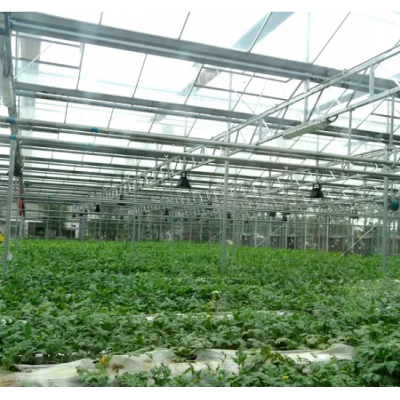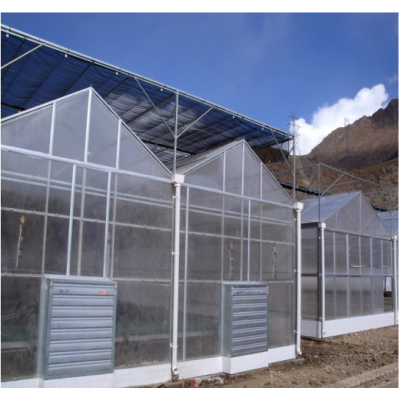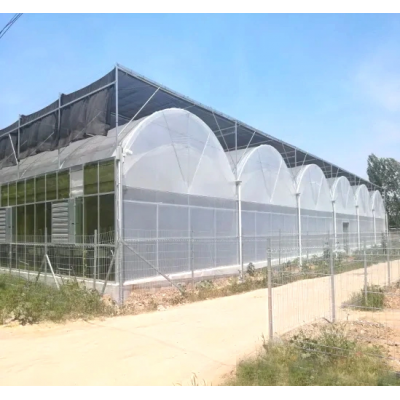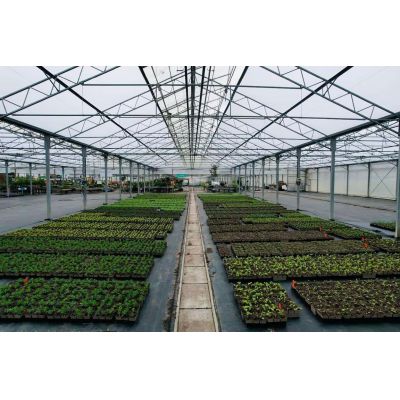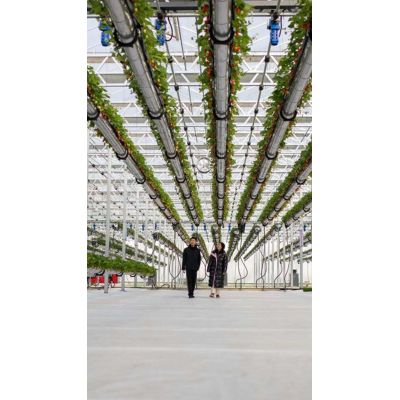
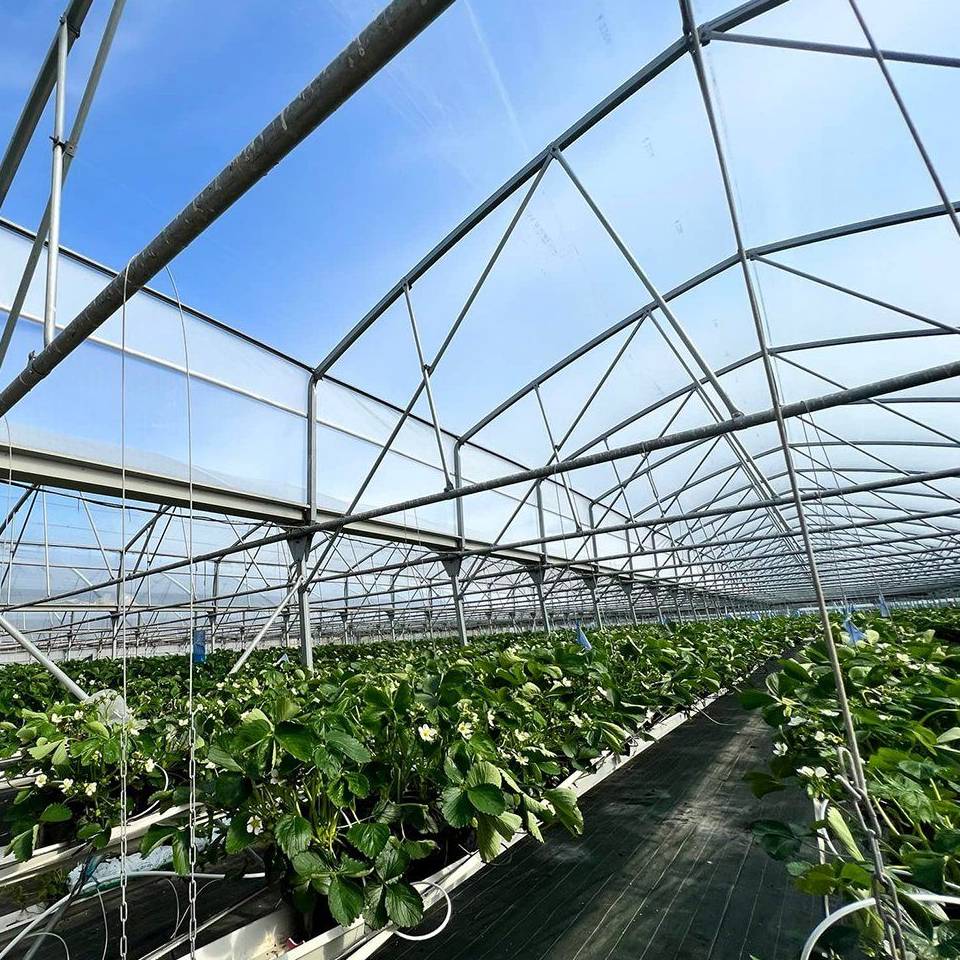
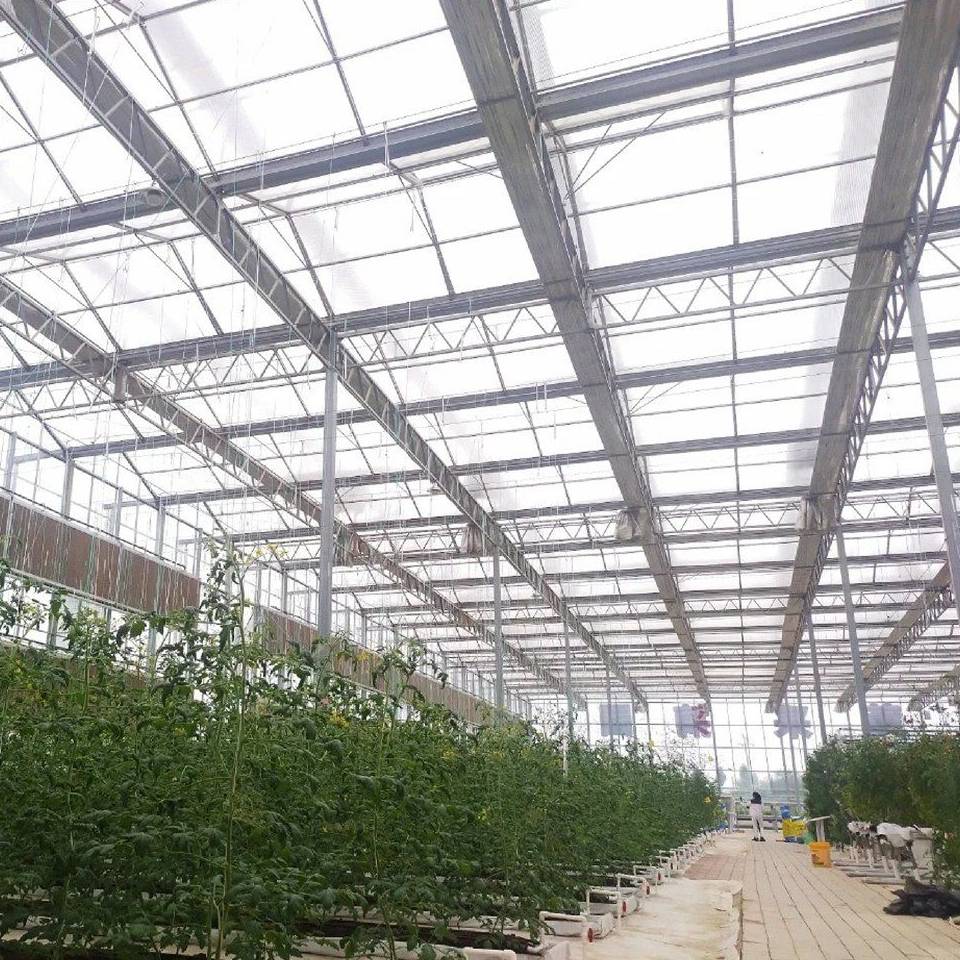
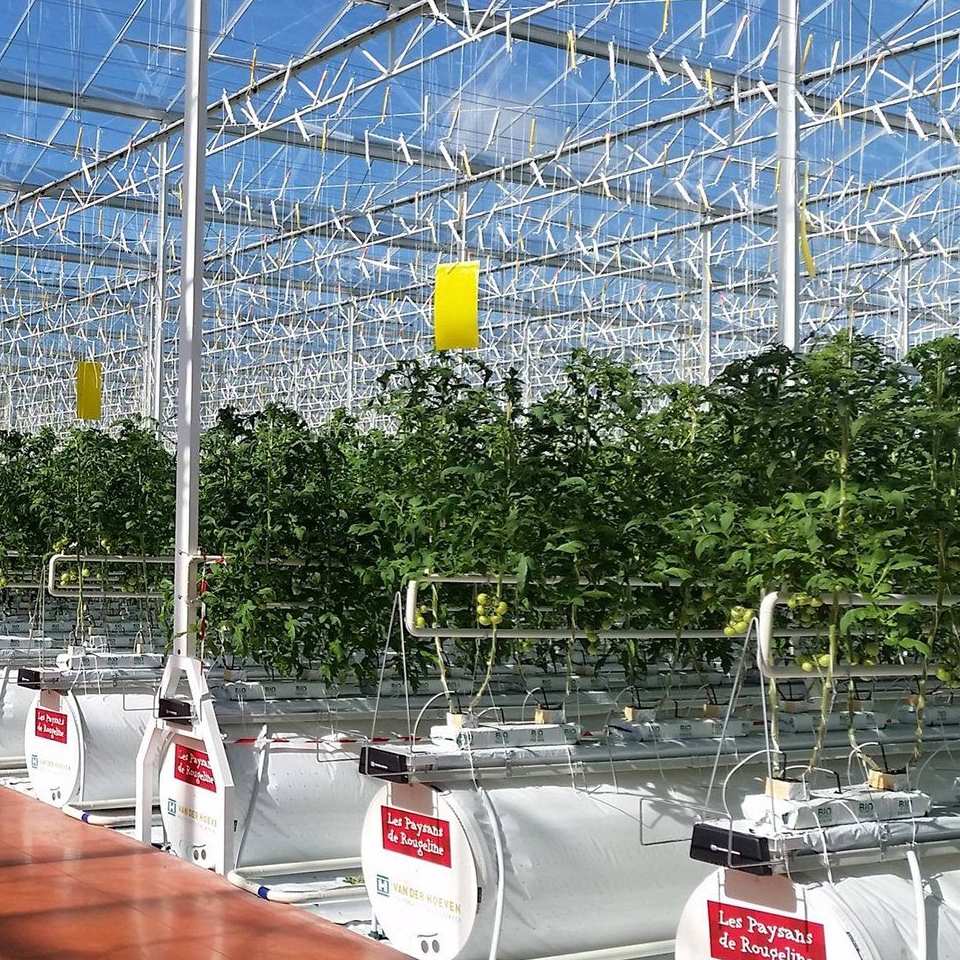
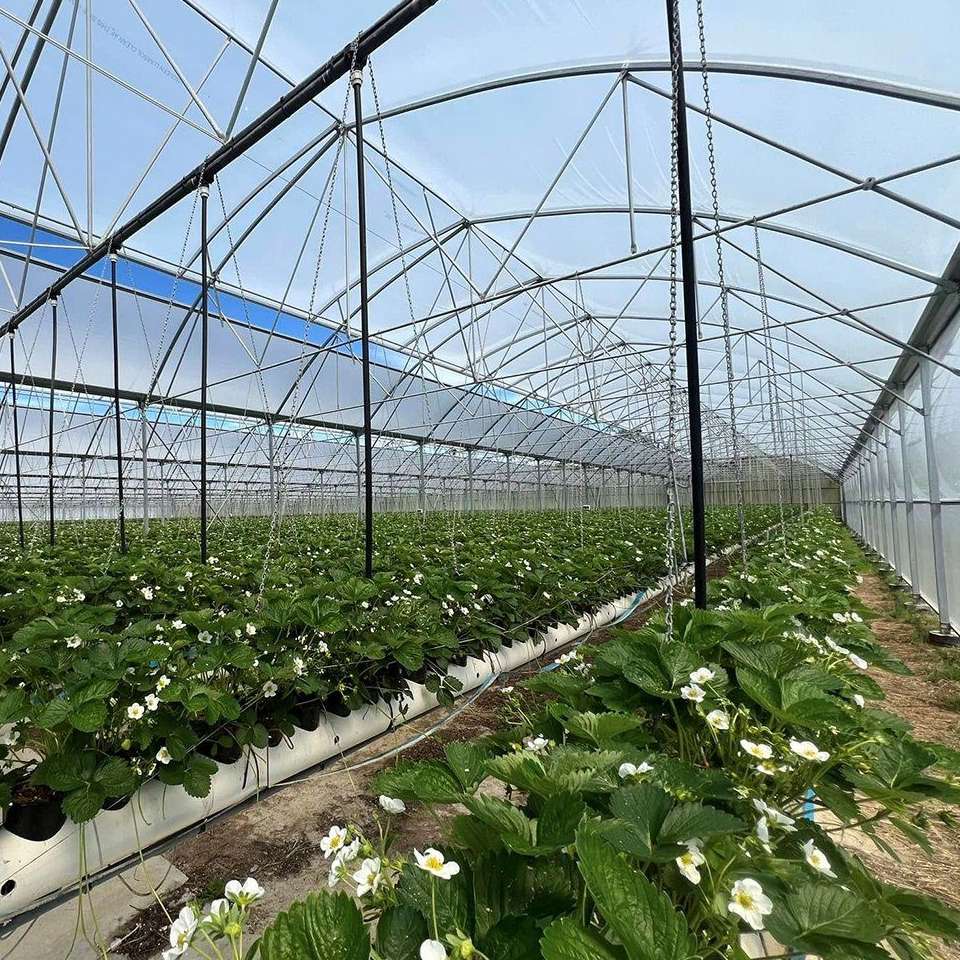
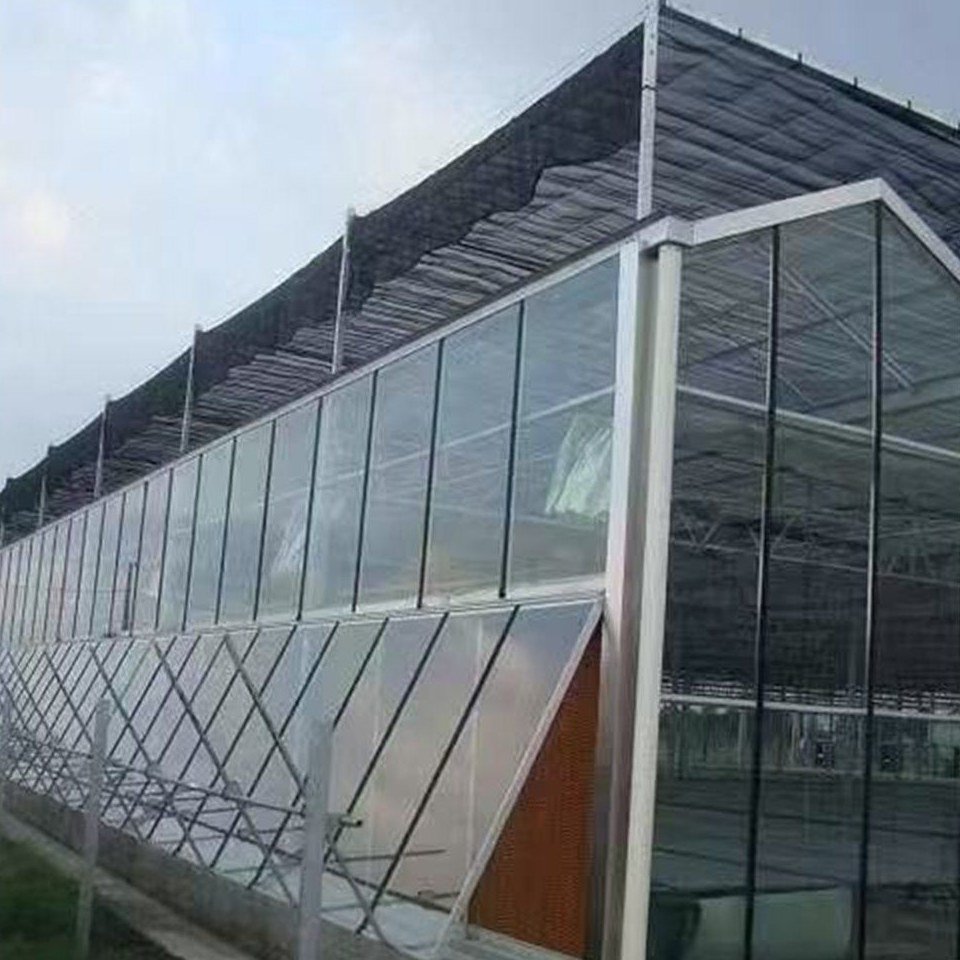
The covering is float or tempered glass at 4 to 5 mm, held in aluminium glazing bars on a hot dip galvanized steel frame, with a gable roof profile. Light transmission is above 90 percent and the sheet does not degrade the way a film or a panel does, so the crop sees the same light in year ten that it saw in year one. Gable spans are set from 8 m to 12 m and the frame is specified for a wind and snow load of 0.35 kN per square metre at each. Because the cover is rigid, there is no tensioning cycle and a damaged pane is released and replaced on its own.
Glass is the cover a grower chooses when light quality and cover life matter more than first cost. The sheet does not weather, it does not flap, and it does not need replacing on a cycle, so the decision is normally made on the crop rather than on the budget: a house is glazed when the grade of what comes out of it depends on the light that goes into it.
Two properties separate a glass cover from the alternatives. The first is stability: film loses transmission as it ages and is renewed on a cycle, and some rigid panel grades discolour, whereas glass holds its transmission, so a batch grown in year ten sees the same light as a batch grown in year one. The second is rigidity, and that changes the maintenance schedule rather than the crop: nothing moves against the frame in wind, there is no re-tensioning, and the cover is not a consumable.
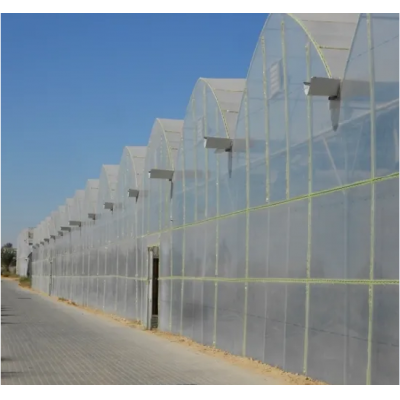
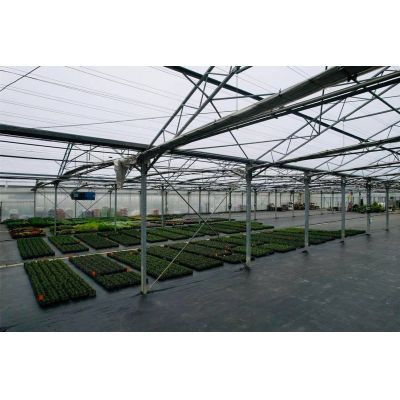
The house is built as a multi span structure with the bays tied by gutters, so the cropping area sits under one roof line with no column line across the working width. The wider glass range is listed on the glass greenhouse range page on this site.
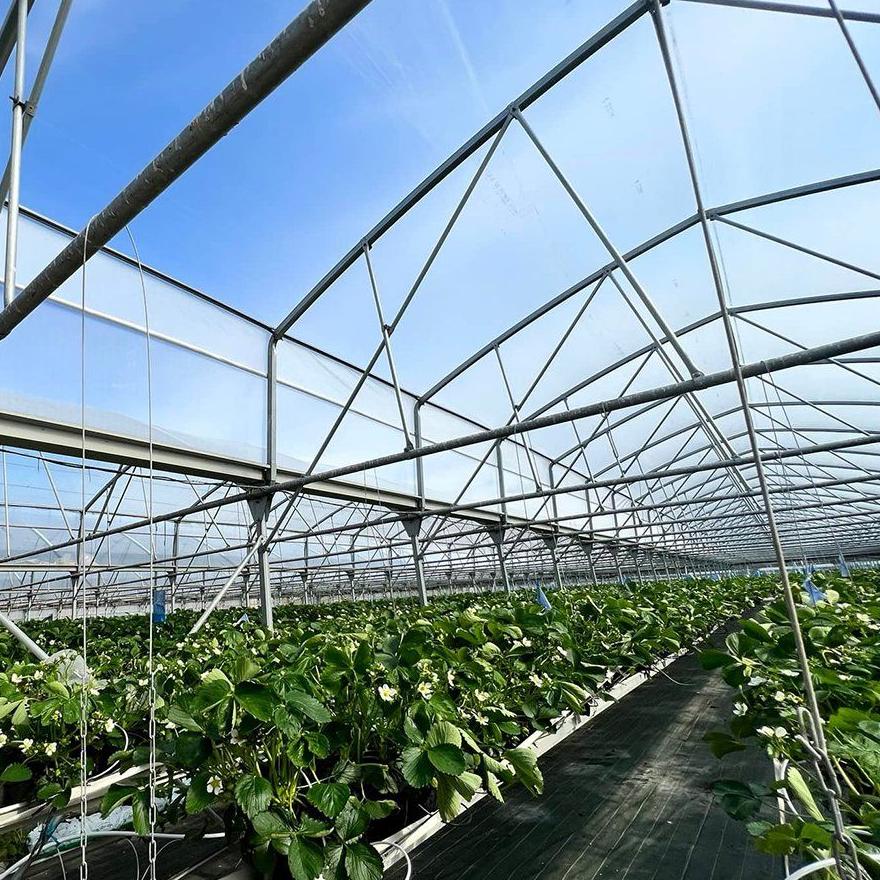
The covering is float glass at 4 mm or 5 mm, or 5 mm tempered glass where an impact risk sits above the crop. Panes are held in aluminium glazing bars on a gasket rather than set directly against steel, which allows the sheet to move slightly as it warms and cools without cracking at the fixing point and keeps the joint weathertight. Tempered glass breaks into blunt fragments rather than shards, which is the reason it is specified where people work under the roof.
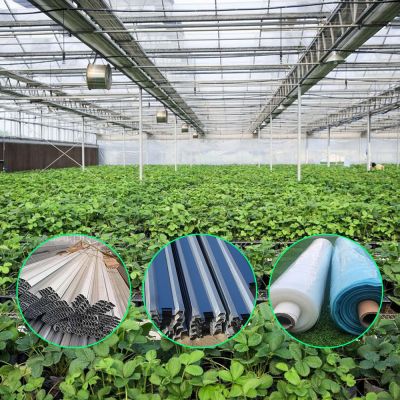
The frame is hot dip galvanized steel pipe, dipped after fabrication so the zinc is bonded to the steel and reaches the bore, the cut ends and the wall of every drilled hole. Members are bolted rather than welded on site, so the coating survives assembly and a damaged section can be unbolted and replaced. A glass house on a connected control platform is described in the connected glass greenhouse with high light transmission.
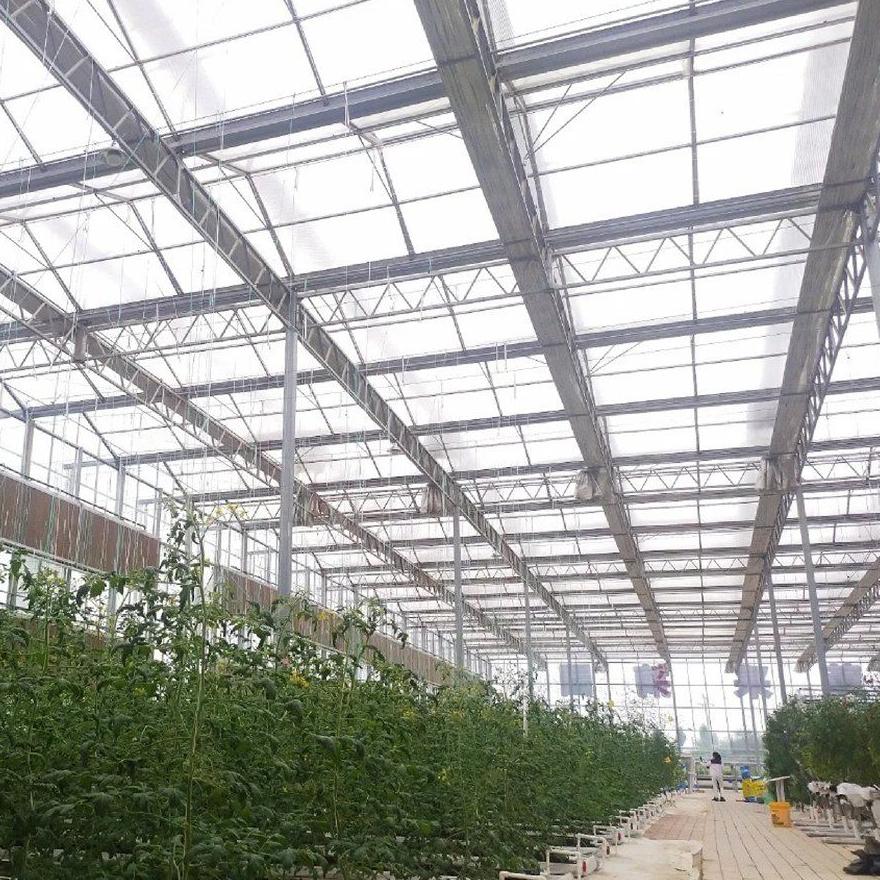
The standard roof is a gable profile, which sheds water to the gutters either side and takes ridge vents along the line of the building. Ventilation and any heating are specified per project rather than fixed by the cover, so the same frame can be run as a naturally vented house, as a house with powered vents, or with heat and cooling added where the crop needs a firmer set point. The house is specified for a wind load and a snow load of 0.35 kN per square metre at each, which is a design input checked against the site rather than a fixed figure for every location.
Where a project wants the running cost of the cover reduced rather than the light raised to the maximum, a glass house built around heat recovery is described in the energy saving glass greenhouse with heat recovery.
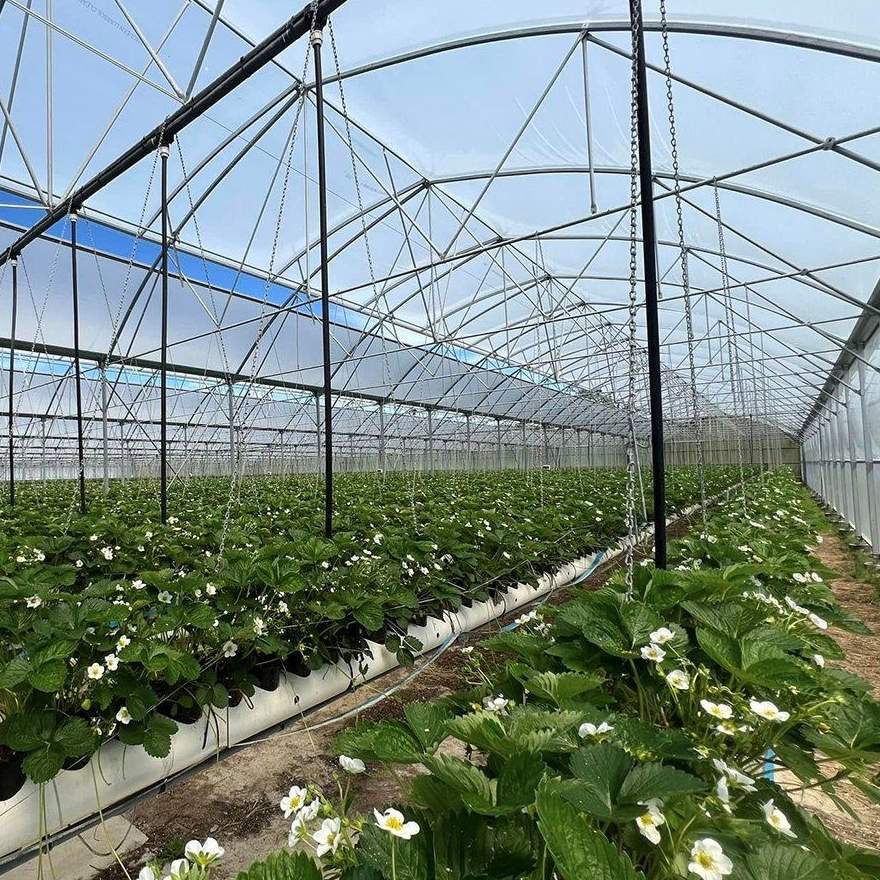
The table below is the standard build. Span, length, height, glazing and ventilation are set to the site and to the crop.
| Greenhouse span | 8 m / 9 m / 10 m / 11 m / 12 m |
| Greenhouse length | 10 m to 100 m, or built to client demand |
| Greenhouse height | 3 m to 8 m |
| Roof profile | Gable roof with ridge vents |
| Structure material | Hot dip galvanized steel pipe, aluminium glazing bars |
| Glazing | 4 mm or 5 mm float glass; 5 mm tempered glass available |
| Light transmission | More than 90 percent |
| Wind and snow load | 0.35 kN/m2 each, checked against the site |
| Ventilation | Ridge vents and side vents to specification |
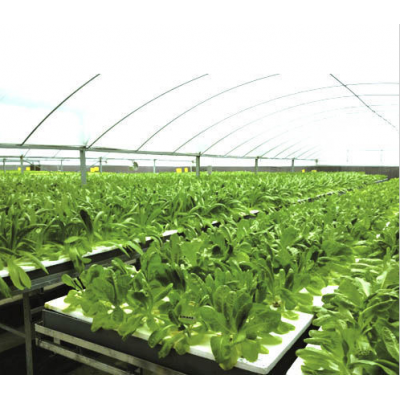
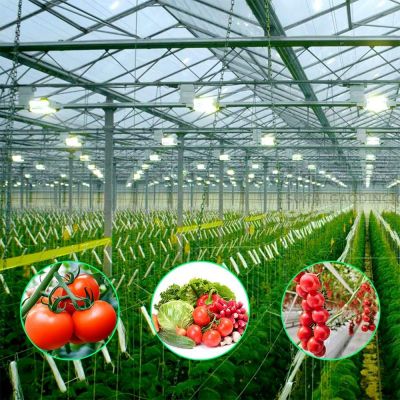
| Crops | Tomato, cucumber, strawberry, cut flowers and leafy crops |
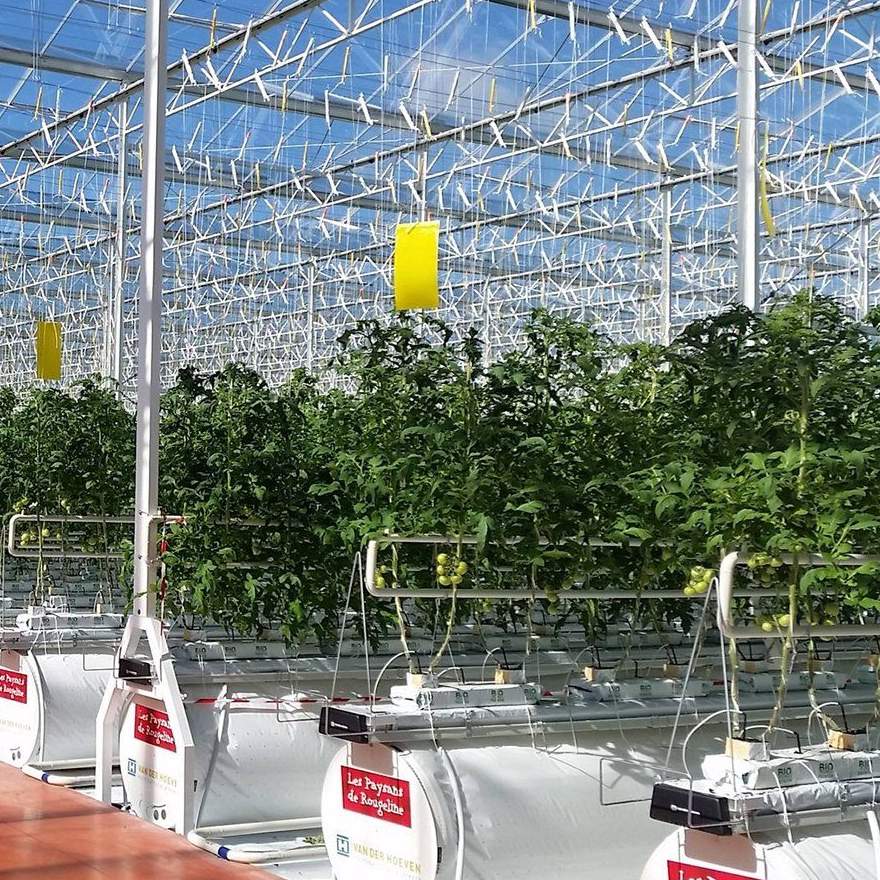
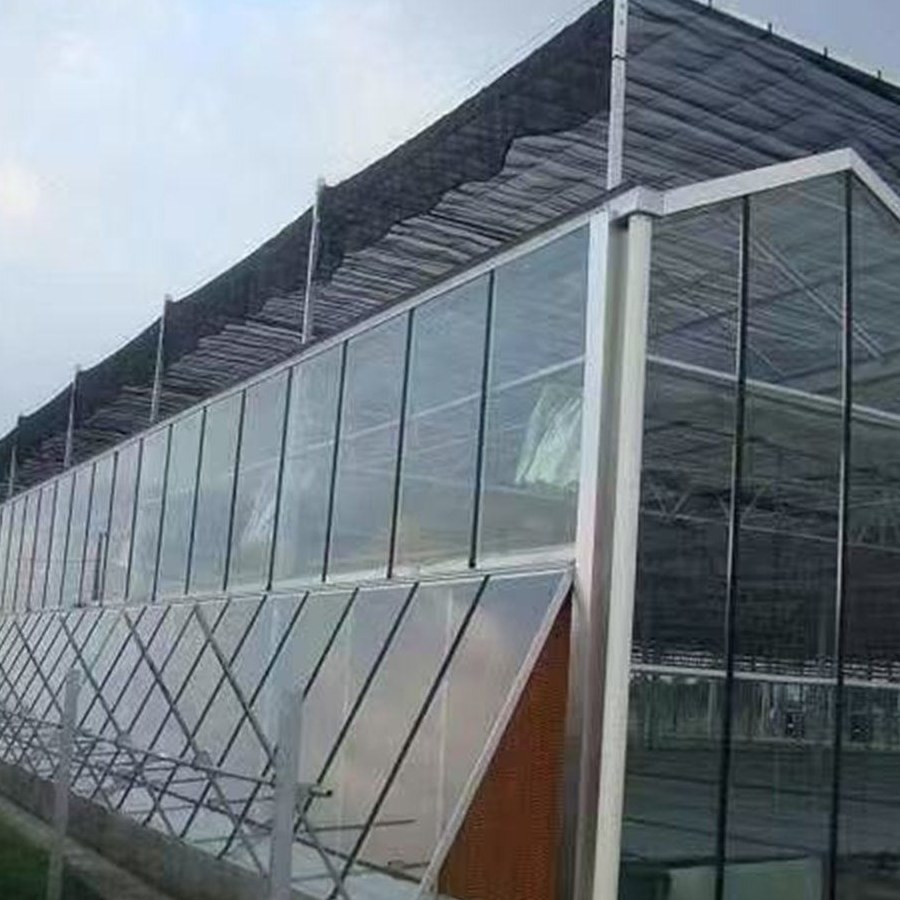
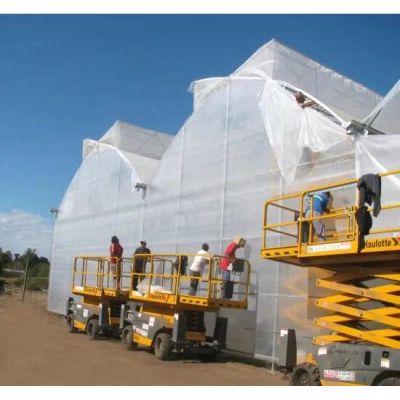
Assembly starts with the base, because a glass house shows any error in the foundation along the whole glazing line and a rigid pane has no give in it. Base plates or ground posts are set to the drawing, the frame is erected and squared bay by bay, and the glazing goes on last, each pane held in its bar on the gasket. No welding is done on site at any point. A house of this size is normally standing in two to four weeks on a prepared site.
Maintenance is lighter than on a film house because the cover is not on a replacement cycle. The routine is checking pane fixings and gaskets after the first season, cleaning the glass once a year because dust cuts transmission more than growers expect, and keeping gutters and downpipes clear. On a house carrying a trellised crop, the wire tension and the anchor points are checked before the rows are loaded, because a wire that lets go with fruit on it takes the row down with it.
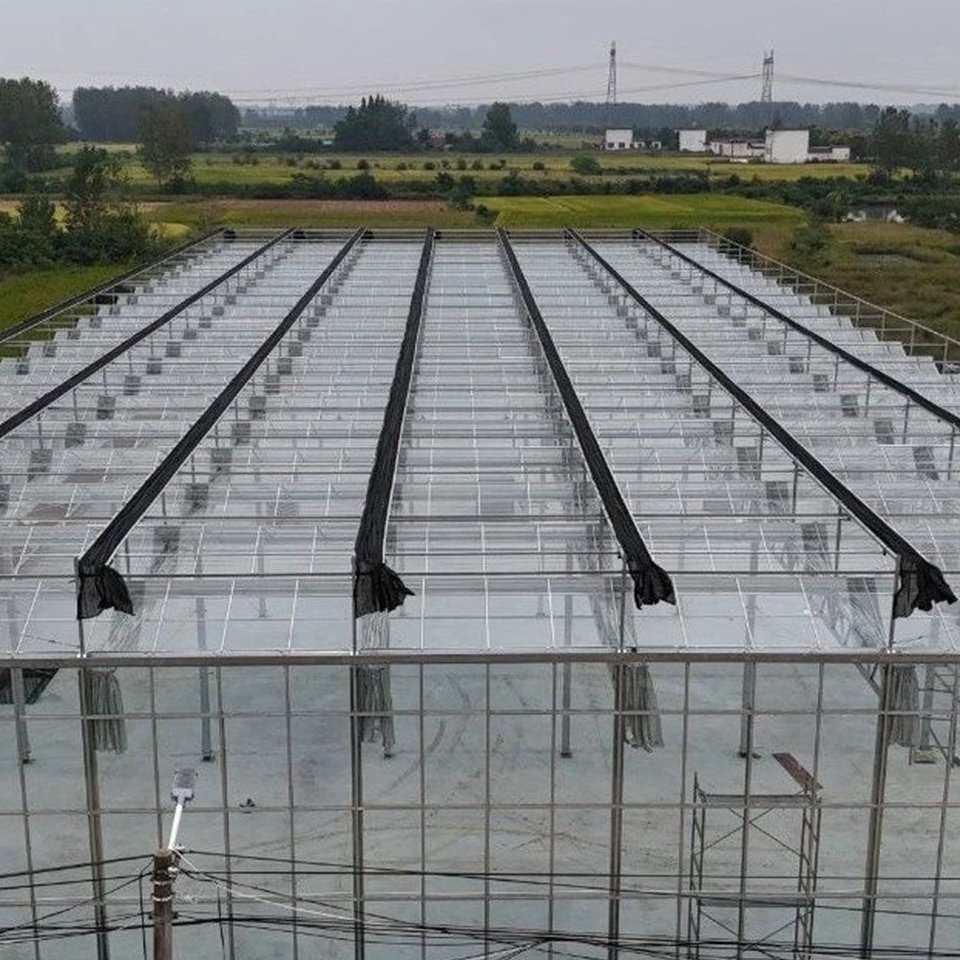
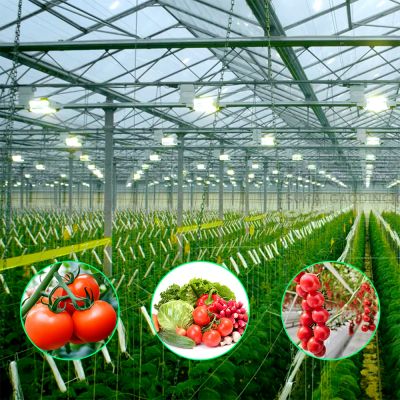
Houses of this type are used for tomato and cucumber production, for strawberries, for cut flowers and pot plants, for leafy crops and for propagation. They suit commercial growers who need the highest available light transmission and a cover that does not need renewing, and projects where the grade of the crop depends on how evenly light reaches the canopy.
Research on controlled environment agriculture, including work on the growing environment inside covered production, is published by the Controlled Environment Agriculture Center at the University of Arizona. Reporting on controlled environment production, including how glasshouse and indoor growing operations are built and financed, is published by VerticalFarmDaily. The question that decides the specification is normally the crop the house will be running in ten years, not only at handover.
Tempered glass breaks into blunt fragments instead of shards, which matters on a house where staff work under the roof and where a break can happen above a bench of stock. Float glass in 4 mm or 5 mm is used where that risk is not present, and the frame and glazing system are the same for either.
Each pane is held in an aluminium glazing bar on a gasket, so the bar is released, the sheet lifted out and a new one slid into the same channel. There is no need to strip the roof, and the rest of the house stays closed while the work is done.
The galvanized steel frame is rated for 15 to 20 years under normal growing conditions, and a glass cover keeps its light transmission for 20 years or more when it is cleaned and left undamaged.
We provide a 10 year structural warranty and a 5 year anti-corrosion warranty on the galvanized frame. Details are set out in the contract for each project.
Send your site dimensions, the crops you plan to grow and your local wind and snow loads. We reply with a layout drawing and a full quotation.