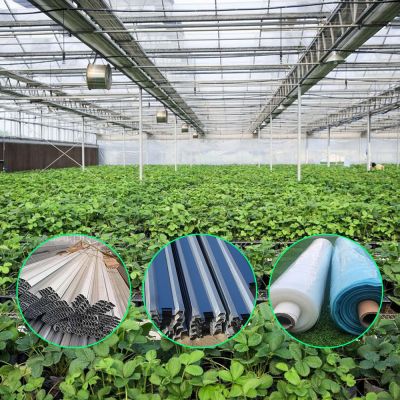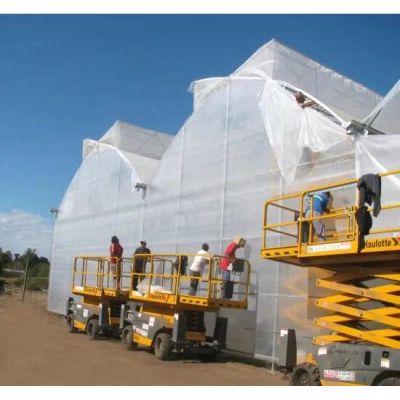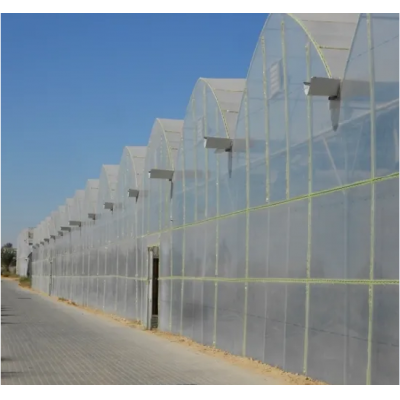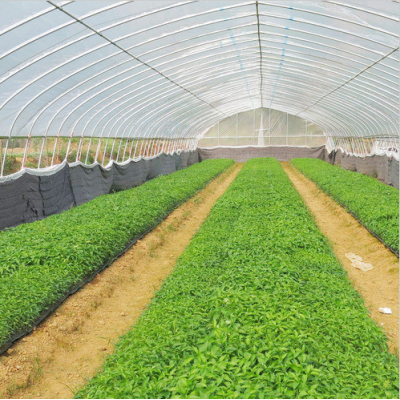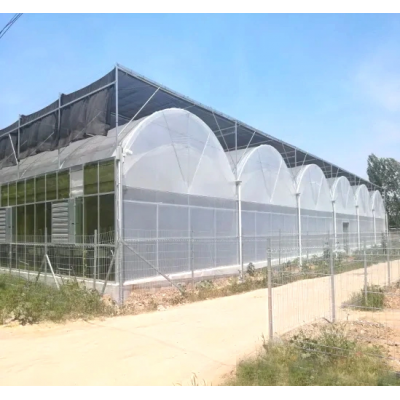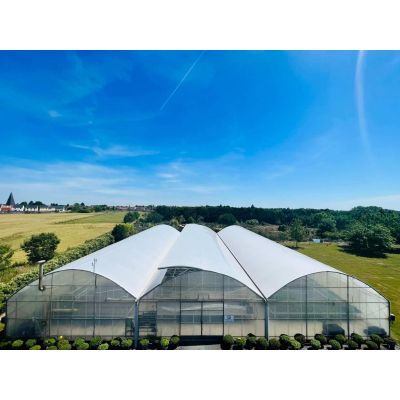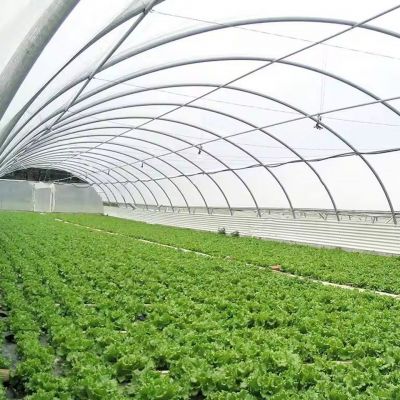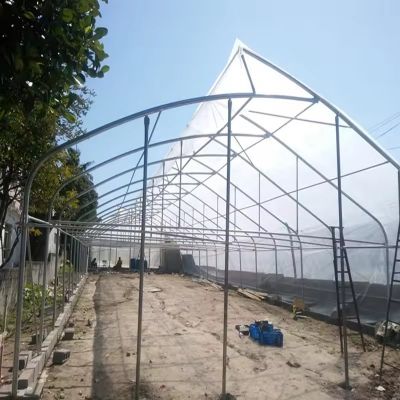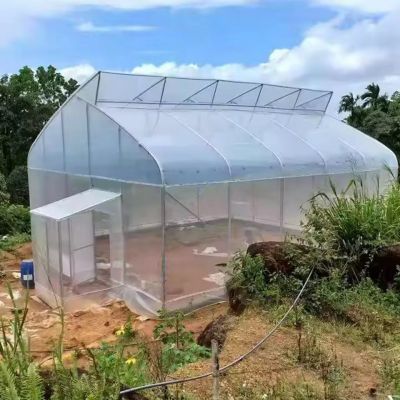
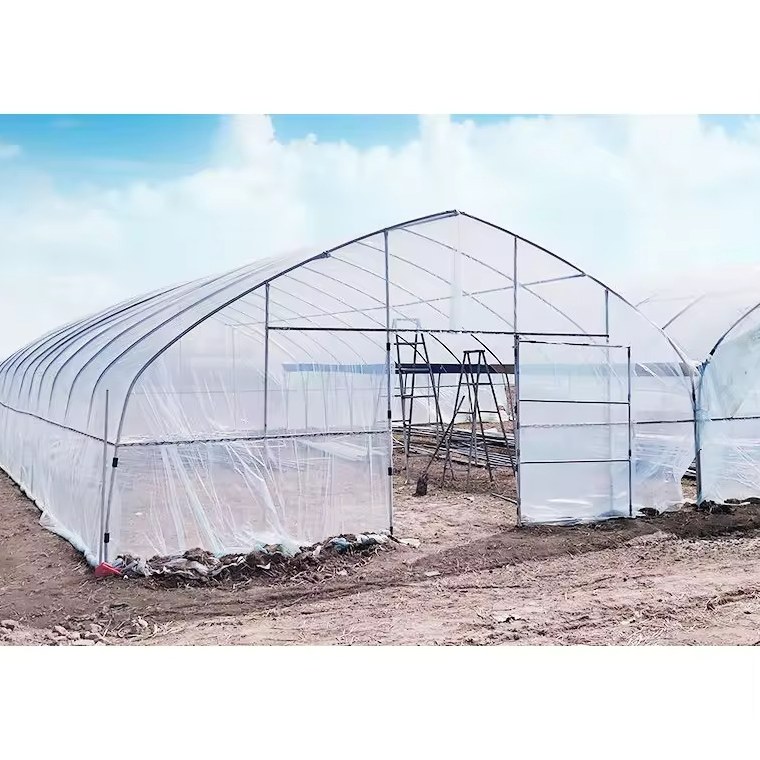
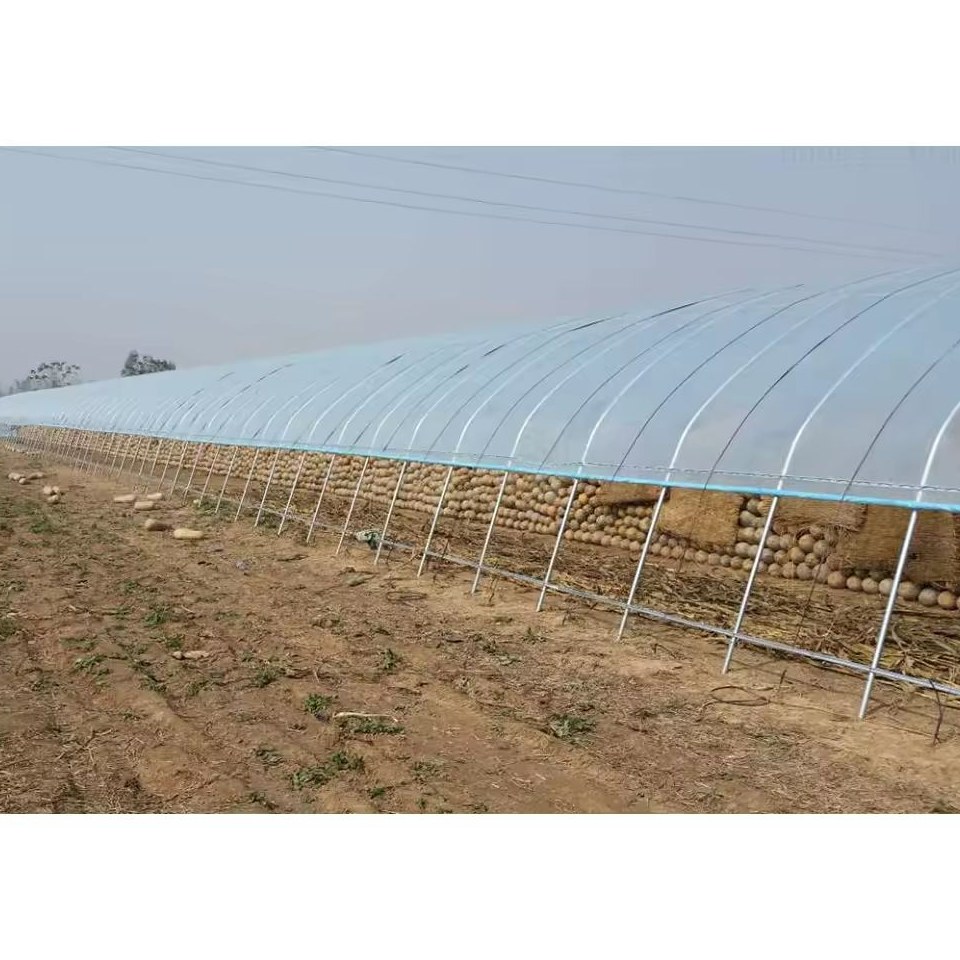
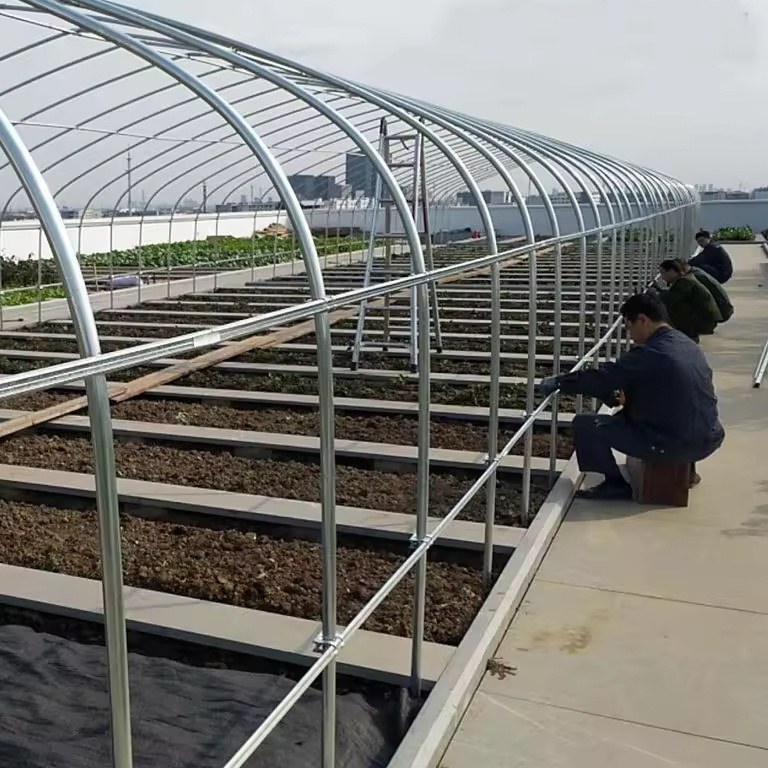
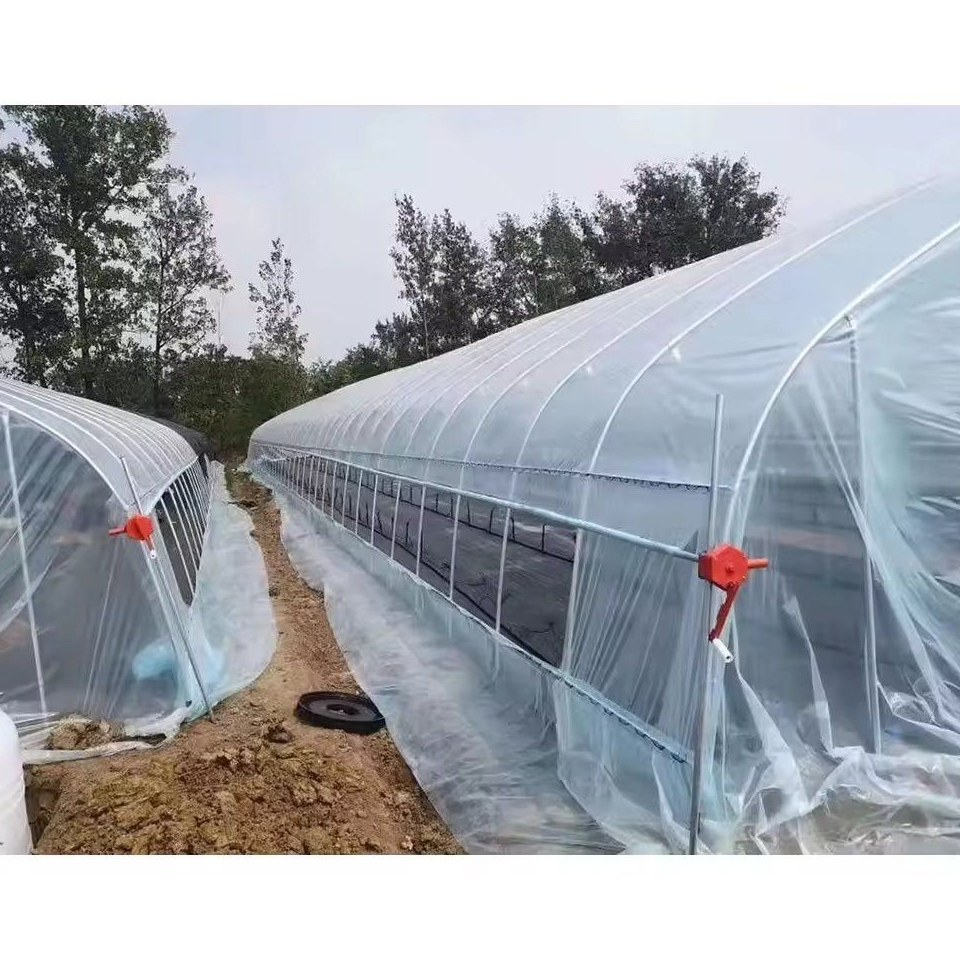
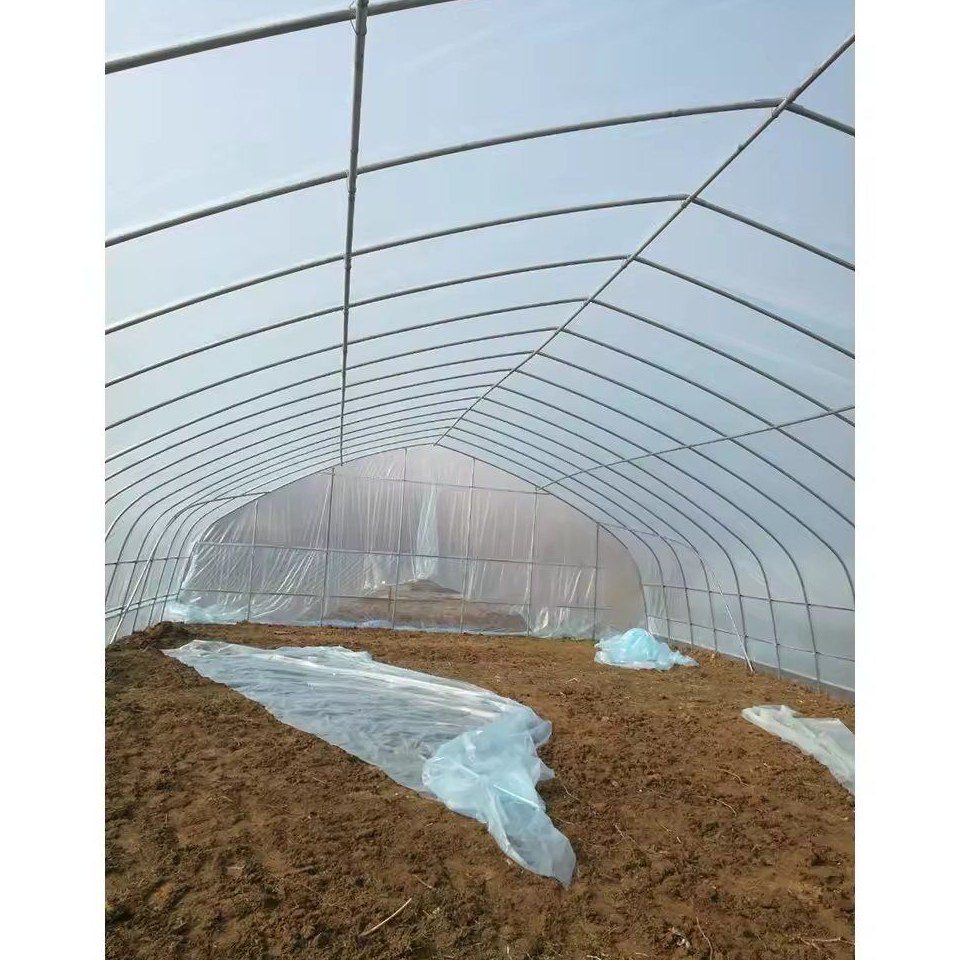
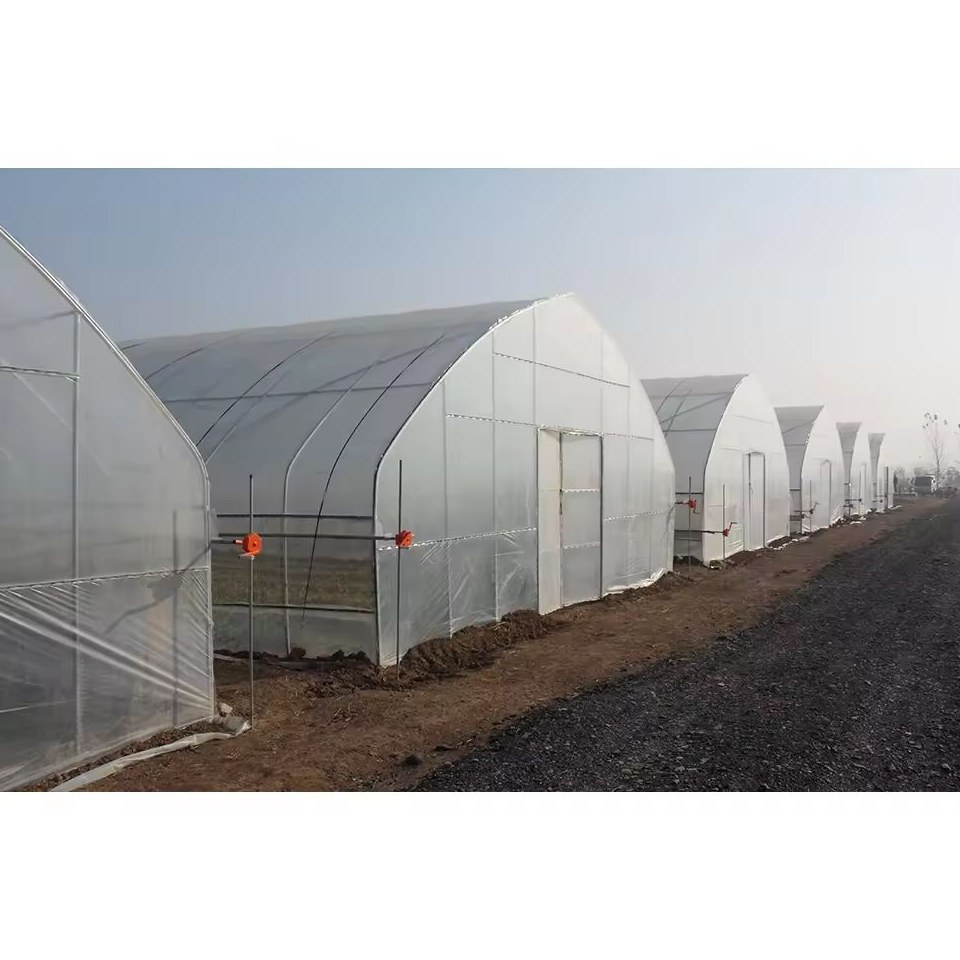
The house is an arched tunnel, built from curved galvanized steel hoops tied with purlins and closed at each end with a gable. The hoops carry a 275 g/m2 zinc coating applied by hot dipping, which is what keeps a tunnel standing where a painted frame would have started to rust through, and the arch tube comes in 25 mm to 60 mm diameters so the section is matched to the span and the local wind speed. The gable frames and door surrounds are aluminium alloy extrusions, which do not need painting and do not corrode. Cover is PEP film at 150 or 200 micron. Two workers can raise a tunnel of this type from a pre cut kit.
A tunnel house is the least complicated way to put a crop under cover. There is one arch, two side walls and a gable at each end, so there is no gutter to detail and no valley to seal, and the whole structure goes up from a kit of curved hoops. What decides whether it is still working in ten years is not the shape but the frame: how the steel is protected, and whether the joints let water sit on bare metal.
The form suits sites where a grower wants a working house without a building contract. The arched section sheds snow off the shoulders instead of holding it on a flat span, and because the wall height is low relative to the width, there is less exposed surface for the same floor area than on a house with tall vertical walls. That matters in a cold season, where heat loss is mostly a function of how much cover the weather can get at.
Tunnels are also easy to extend, because length is set by adding hoops further down the same line. The wider tunnel family is listed on the tunnel greenhouse range page on this site.
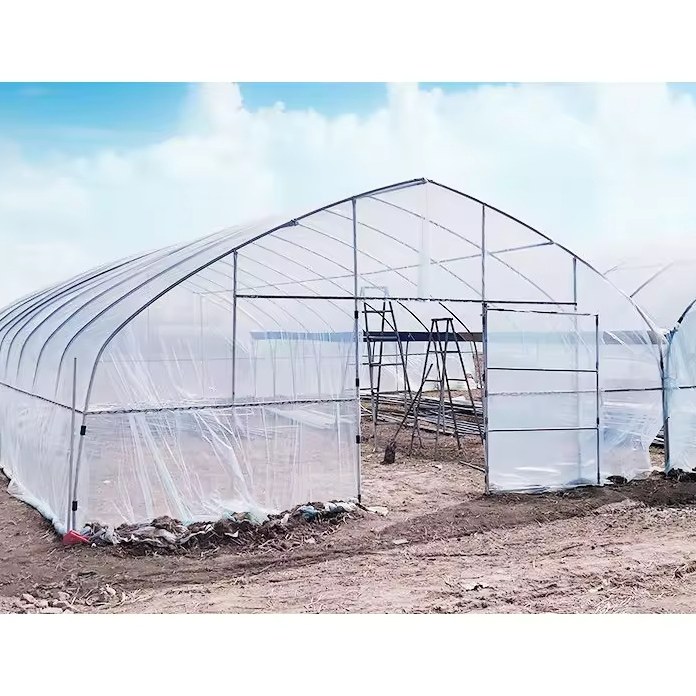
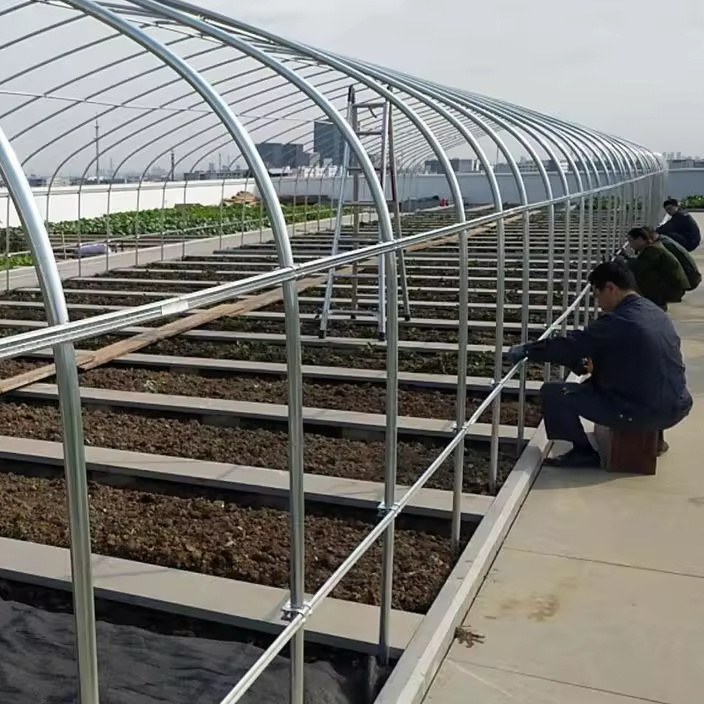
The hoops are steel tube formed into an arch, hot dip galvanized to a 275 g/m2 zinc coating. Hot dipping is the part that matters over a long season: the zinc is bonded to the steel and reaches the inside of the tube and the cut ends, which are the first places a painted or welded frame starts to corrode. The arch tube is supplied in 25 mm, 32 mm, 40 mm, 50 mm and 60 mm diameters, so a wide, wind exposed site gets a heavier section rather than the same section as a sheltered one.
The gable frames, door surrounds and glazing receivers are aluminium alloy extrusions. Alloy does not need painting, does not rust, and holds a straight edge, which is what keeps a door running true after years of use. Everything is bolted rather than welded, so the coating is not burned off at the connections and a damaged member can be unbolted and replaced. A tunnel built on a single arch rather than a row is described in the single span tunnel greenhouse.
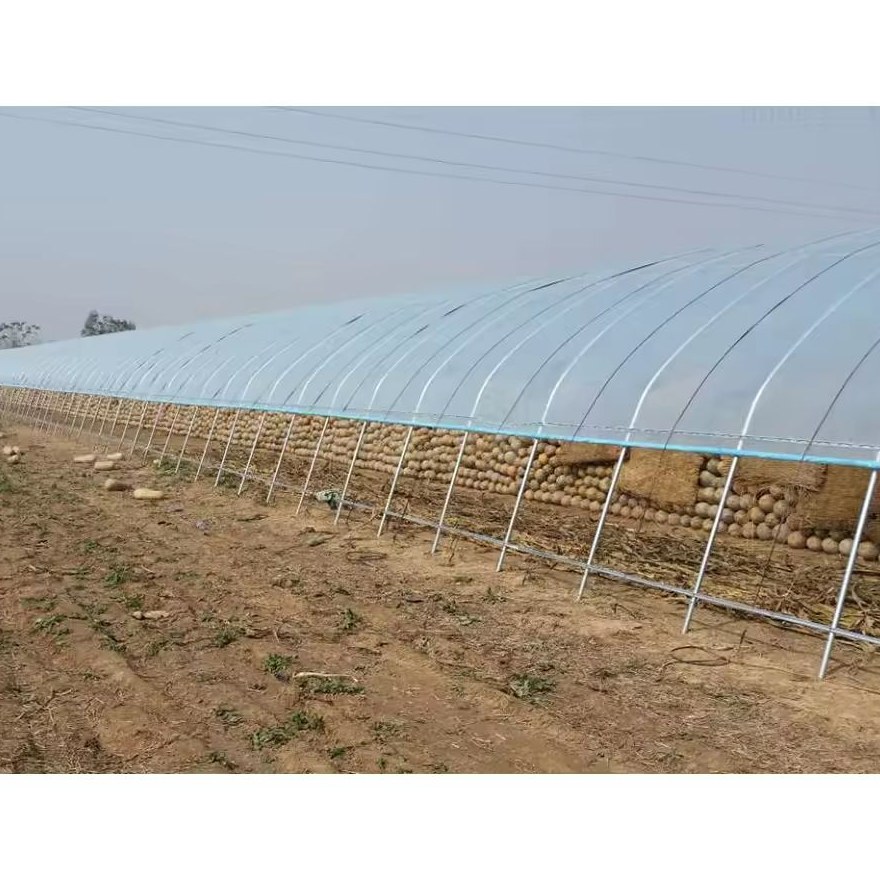
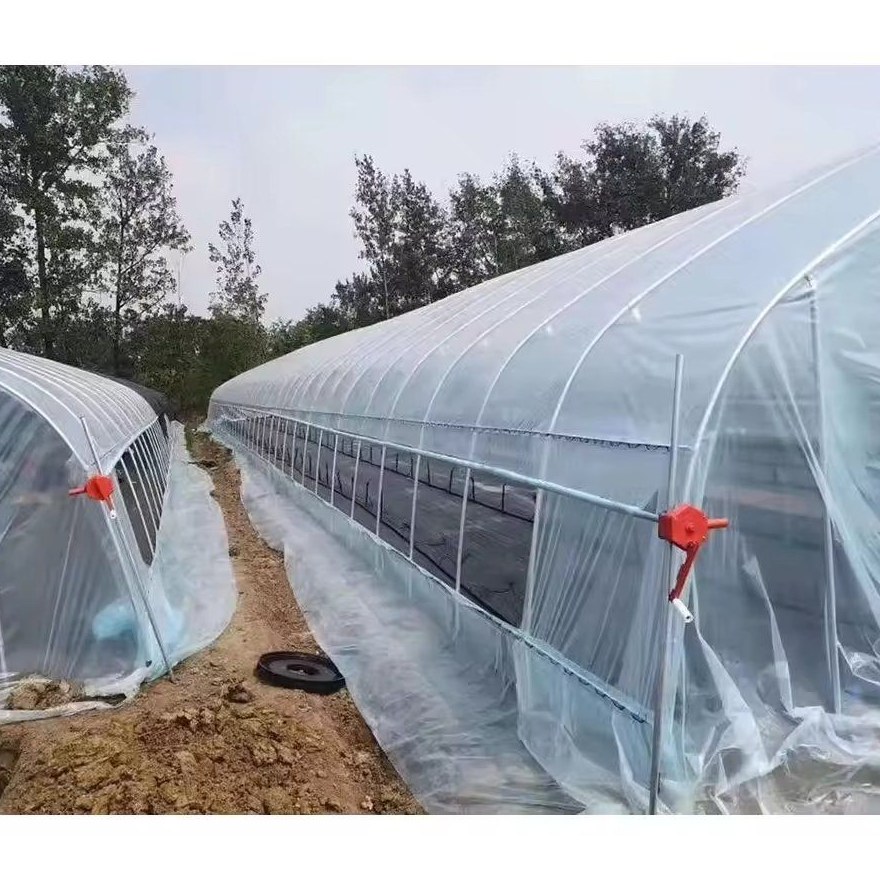
The cover is PEP film in 150 or 200 micron, held to the frame with clips along the hoops and the base rail. Side ventilation runs the length of both long walls and is opened and closed by hand from a roll up curtain, and end wall vents are fitted into the gables. Running the side curtain and the end vents together gives a flow along the house rather than a single opening that only moves air beside it.
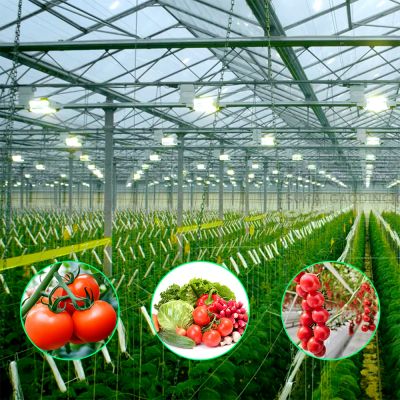
Vine crops are served by a trellis wire system hung from the hoops, and shade net can be laid over the same frame where a crop has to be held back in high summer. Heating, cooling, drip and micro irrigation are all available as additions rather than as separate orders. A heavier galvanized tunnel for tomato and vegetable growers is shown in the galvanized tunnel house for tomato and vegetable growers.
The table below is the standard build. Span, length, height, cover and openings are set to the site and to the crop.
| Greenhouse span | 8 m / 9 m / 10 m / 11 m / 12 m |
| Greenhouse length | 10 m to 100 m, or built to client demand |
| Greenhouse height | 3 m to 8 m |
| Frame | Hot dip galvanized steel hoops, 275 g/m2 zinc coating |
| Arch tube diameters | 25 mm / 32 mm / 40 mm / 50 mm / 60 mm |
| Gable and door frames | Aluminium alloy extrusion, no painting required |
| Cover material | PEP film, 150 micron or 200 micron |
| Ventilation | Roll up side curtains and end wall vents |
| Wind load | 60 km/h to 130 km/h |
| Snow load | 0.25 kN/m2 to 0.5 kN/m2 |
| Options | Heating, cooling, shading, drip or micro irrigation, trellis wires |
| Crops | Vegetables, cut flowers and vine crops |
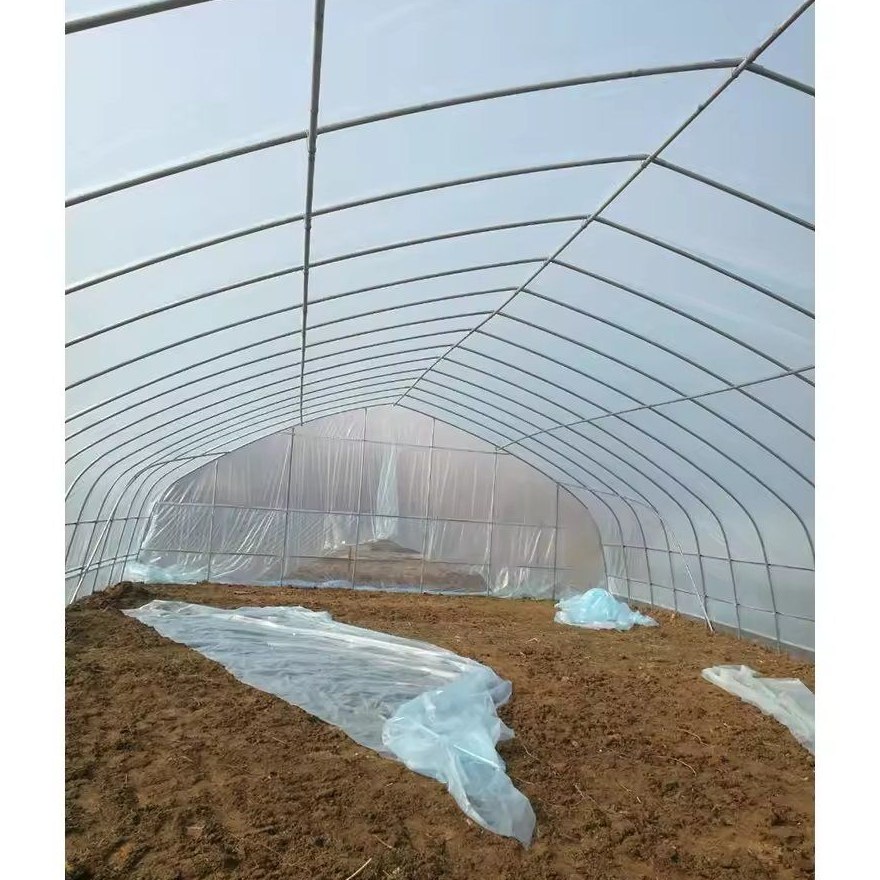
The house ships as a pre cut kit: hoops, purlins, gable frames, door surrounds and film on separate rolls. Ground posts or a base rail go in first and are set to the drawing, the hoops are raised and tied with purlins, and the film goes over last. Because the parts are cut and drilled before they leave, the work on site is bolting and tensioning, and a tunnel of this type goes up quickly with a small crew and no welding plant.
Maintenance is short. The routine is checking that the film is still tight on the hoops, inspecting the base rail and ground posts for movement after the first season, and clearing the gutters and the drainage at the low end so water does not pool inside the house. Where trellis wires carry a vine crop, the wire tension and the anchor plates are worth a look before the crop is loaded onto them.
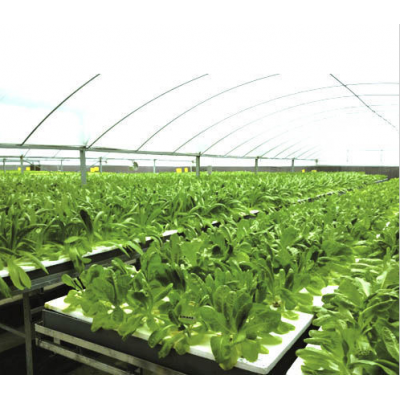
Tunnels of this type are used for tomatoes, peppers, cucumbers and leafy crops, for cut flowers and for young plant work. They suit a grower who wants to bring a crop under cover on a field scale without moving to a glazed house, and who needs the structure to be raised by their own team rather than by a specialist contractor.
Standards for the steel and for the coatings used on structures of this kind are published by ASTM International, whose documents set out the test methods behind galvanized and coated steel specifications. Practical coverage of protected cropping in South Asia, including horticulture and irrigation practice, is published by Agriculture India. The question that decides the specification is normally the crop the house will be running in ten years, not only at handover.
The zinc coating is bonded to the steel by hot dipping, so it protects the inside of the tube and the cut ends as well as the outside. A painted frame relies on the film staying intact, and once it is scratched at a fixing point the corrosion starts there and runs under the paint.
The arch tube is available in 25 mm to 60 mm diameters, and the section is chosen against the span, the snow load and the wind speed at the site. A wide house on an exposed site takes a heavier tube than the same span in a sheltered valley, so the frame is specified per project rather than from a single catalogue size.
The galvanized steel frame is rated for 15 to 20 years under normal growing conditions. The film cover runs on a shorter cycle than the frame, typically 3 to 5 years depending on UV exposure at the site.
We provide a 10 year structural warranty and a 5 year anti-corrosion warranty on the galvanized frame. Details are set out in the contract for each project.
Send your site dimensions, the crops you plan to grow and your local wind and snow loads. We reply with a layout drawing and a full quotation.