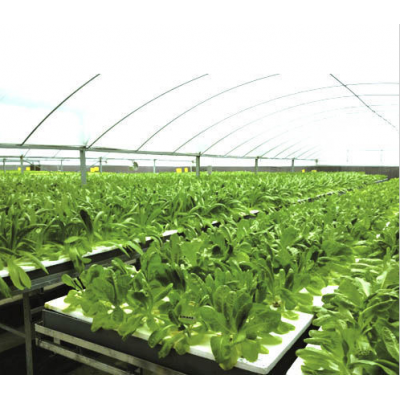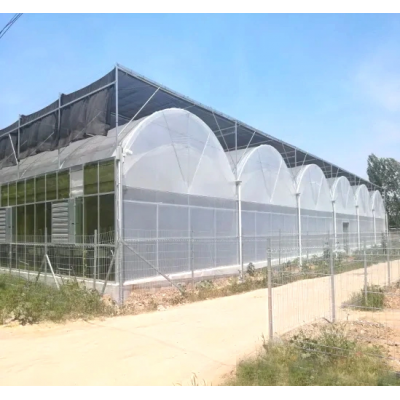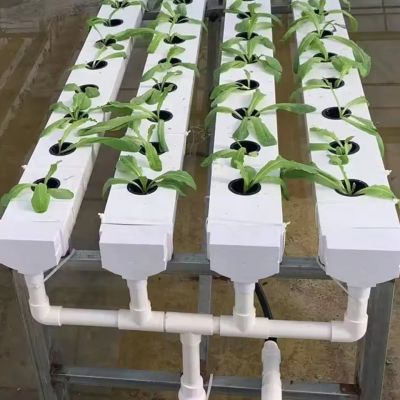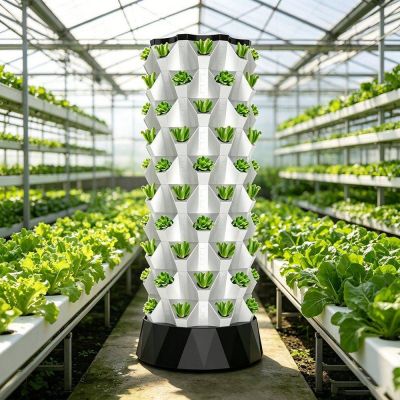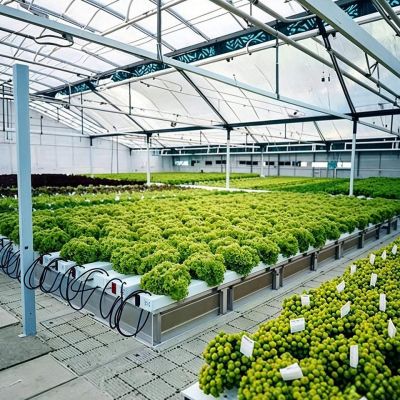
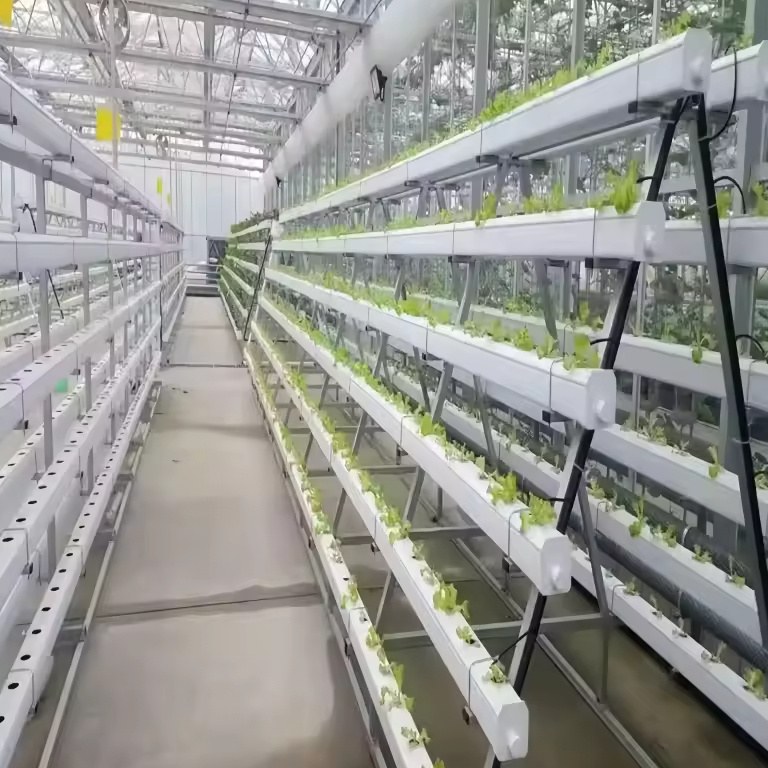
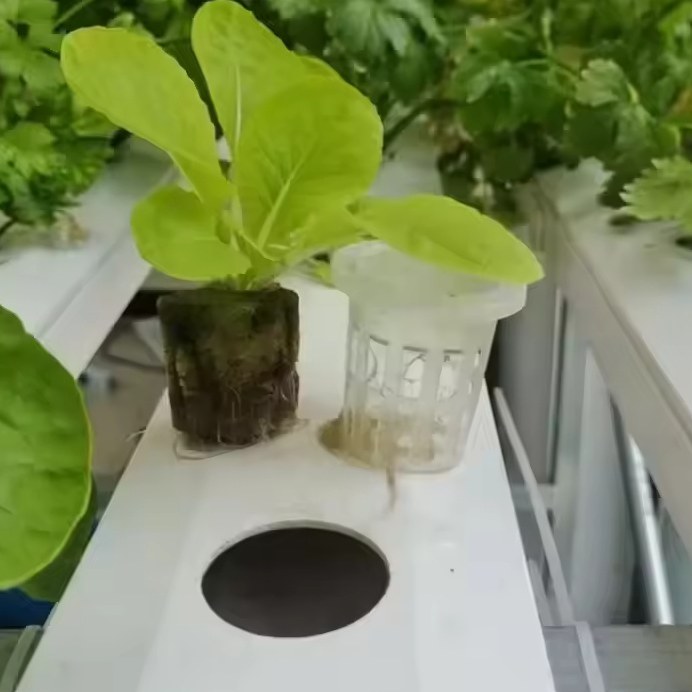
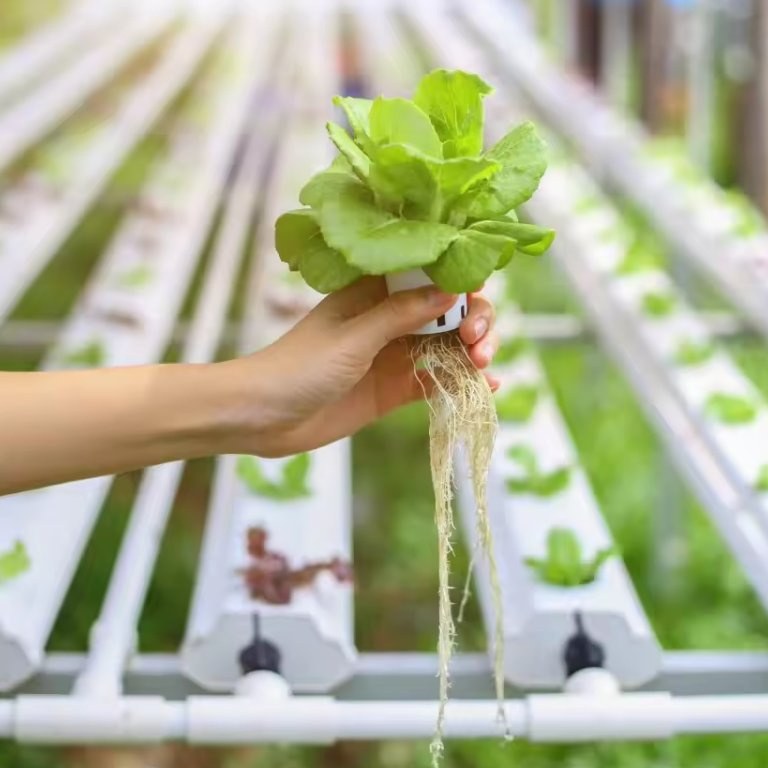
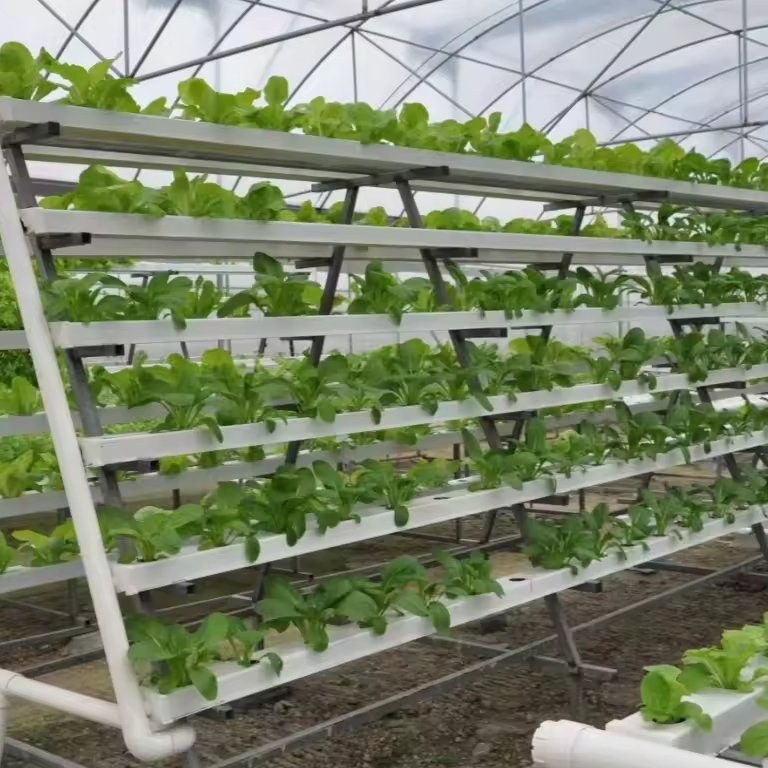
This smart hydroponic system is built around the controller rather than the channel, because in a recirculating system it is the dosing that decides whether the crop is consistent. The gullies are white PVC NFT channels with a fixed planting pitch, fed from a tank where a digital controller reads EC and pH and doses stock solution back to target, and runs the pump on a timer so the roots are never left dry. Channel length is made to the site, and the same gullies can be laid flat or carried on tiered racks. It suits commercial lettuce, herb and leafy green production.
Two growers can run the same channel, the same crop and the same recipe and get different results, and the difference is almost always in the water. A recirculating system drifts: the crop takes up water faster than salts, the tank concentrates, and by the end of the week the solution at the far end of the run is not the solution that went in. This smart hydroponic system is built around holding that drift inside a controlled band rather than around the channel itself.
The controller is the part that makes the system repeatable. It reads electrical conductivity and pH from the tank, compares them with the target for the crop, and doses stock solution or fresh water until the reading is back where it should be. Because it is reading continuously rather than being checked by hand once a day, the crop sees a narrow band instead of a sawtooth, and a narrow band is what makes a lettuce or herb crop come off even across a whole house.
The same controller runs the pump, so the feed cycle can be set to the crop and to the weather rather than to a fixed clock. On a hot afternoon the channels can be fed more often; overnight the cycle can be stretched so the roots are not sitting in solution when the crop is not transpiring. The wider family of systems for protected growing is listed on the irrigation system range page on this site.
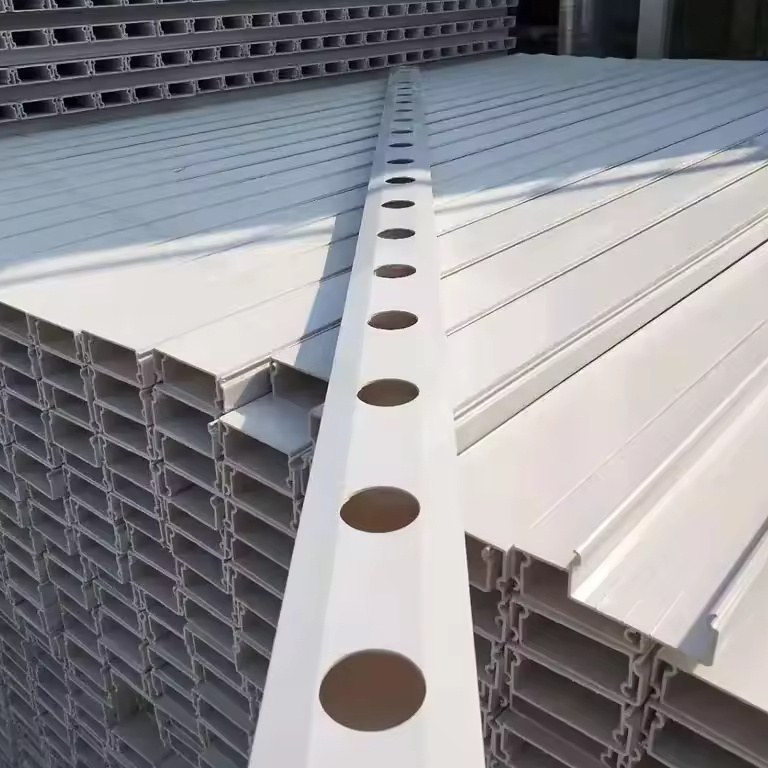
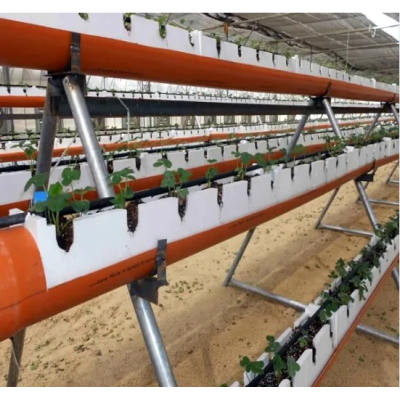
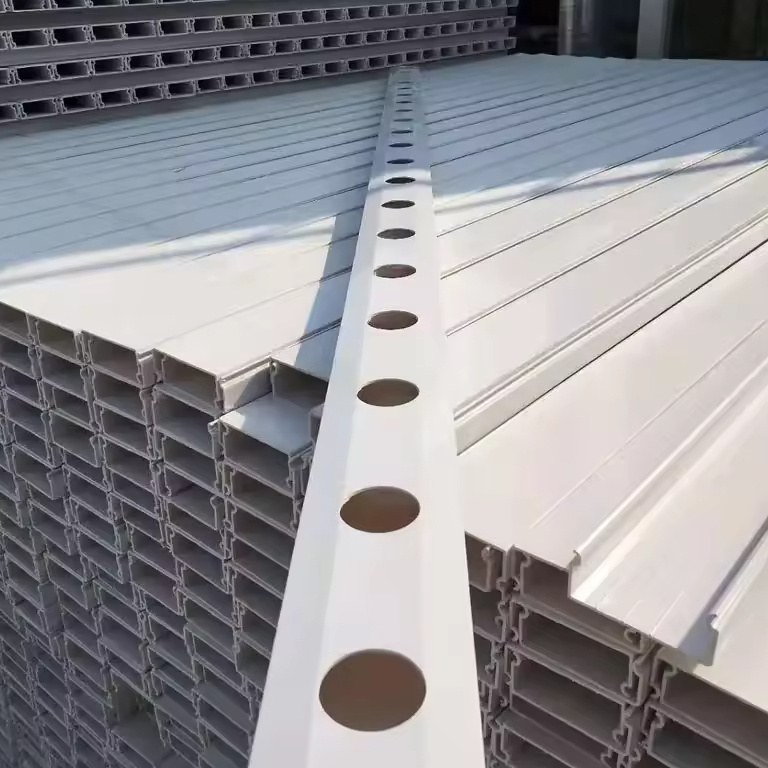
The channels are white PVC rigid gullies, which reflect light back onto the crop and stay cooler under lamps than a dark channel would. Each one is drilled at a fixed pitch for net pots, so a seedling goes in at the same spacing every time and the crop count per run is known before it is planted. Inside, the solution runs as a shallow film along the floor of the channel, and the roots sit in that film with the upper part of the root mass in air, which is what keeps them oxygenated without a separate aerator.
Gullies can be laid flat on floor rails or carried on tiered racks, and the layout is set to the room rather than the other way round. Channel length is made to the site, so a run can be cut to the span it stands in and the header end can be arranged to feed the first and last channel at the same rate. The drip side of the same water system is described in the drip irrigation system and, for a recirculating crop, in the hydroponic drip irrigation system.
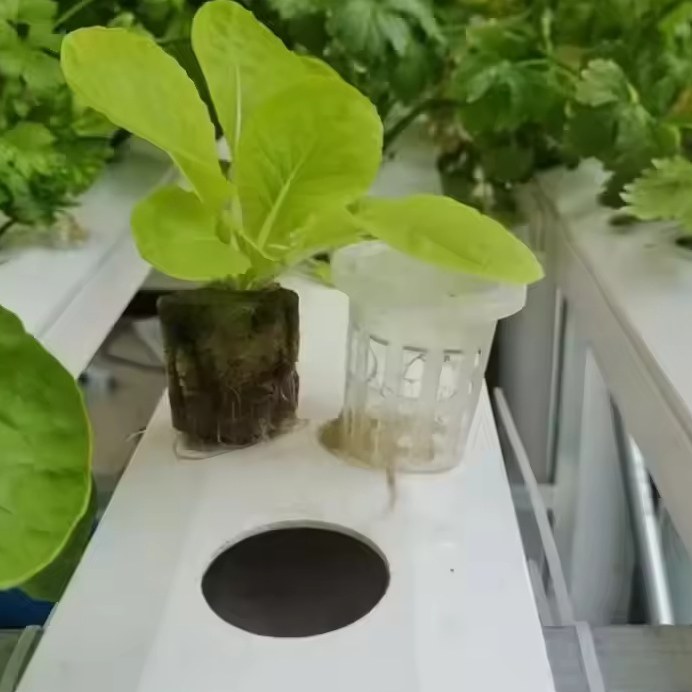
Fertigation is the part of a hydroponic system that most often gets under-specified. The stock tanks, the dosing pumps and the mixing point have to be sized for the peak demand of the house, not its average, because a system that cannot keep up at midday will drift every afternoon. Two stock tanks, one for calcium and one for the rest, keep the concentrated solutions from reacting with each other before they reach the irrigation water.
Because the controller is reading the same numbers a grower would read by hand, the system also produces a record of what the crop was given and when, which is what makes a supply contract repeatable season after season. Research on nutrient management and recirculating systems in protected growing is published by Wageningen University & Research, and investment and technology coverage of the same sector is carried by AgFunderNews.
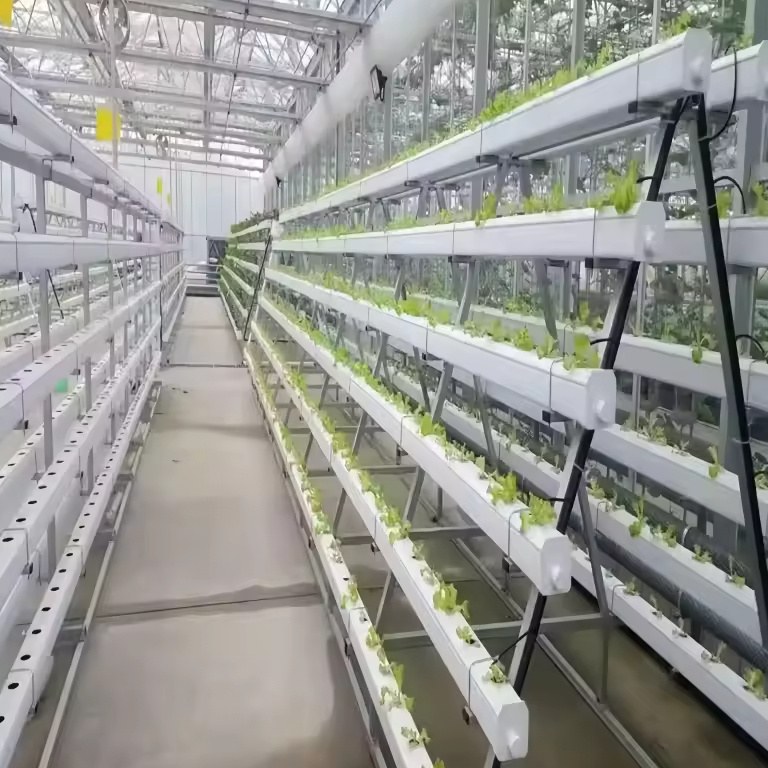
The table below lists the standard build of the channel and control system. Length and layout are set to the room or house it will stand in.
| Channel material | PVC |
| Channel colour | White |
| Channel layer | Single |
| Cover material | Plastic sheet |
| Length | Made to the site |
| Control | Digital EC and pH dosing with timed pump cycles |
| Layout | Flat gully run or tiered racks |
| Crops | Lettuce, herbs and leafy greens |
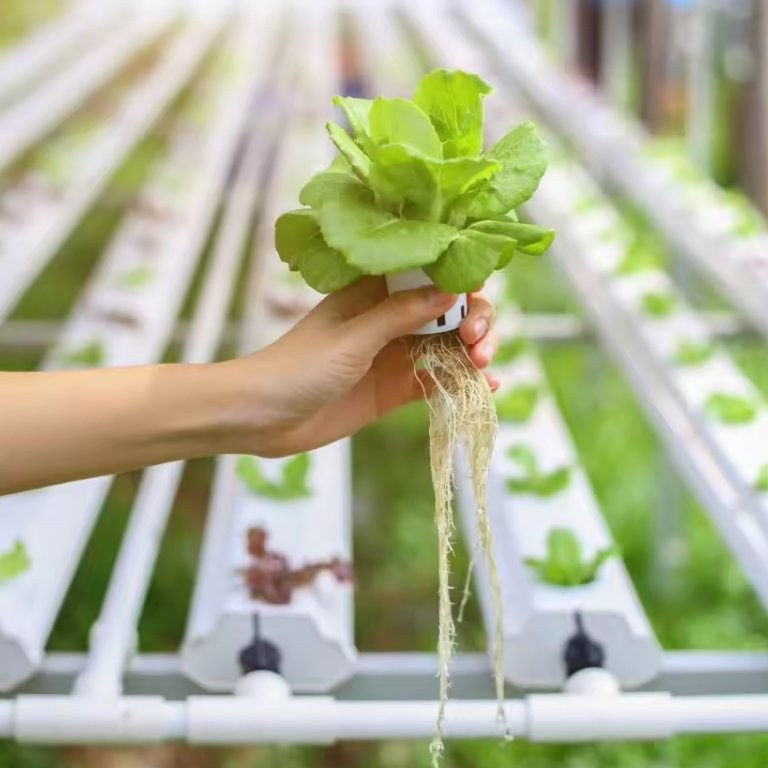
Installation follows the water rather than the frame. The tank and dosing station go in first, then the header pipework, then the rails and channels, and the whole circuit is flushed and flow checked at the far end of the longest run before anything is planted. Setting the fall on every channel in the same direction is the step that decides how the system behaves for the rest of its life, because a channel that holds solution will drown the roots in it.
The routine work is checking the things that decide the reading: the EC and pH probes need calibrating on a schedule, the filters and screens need clearing so a blocked feed line does not leave the roots dry, and the channels should be cleaned between crops so root debris does not build up along the floor of the gully. Dosing pumps and non-return valves are the other items worth inspecting each cycle, since a leaking valve is a slow and invisible drift.
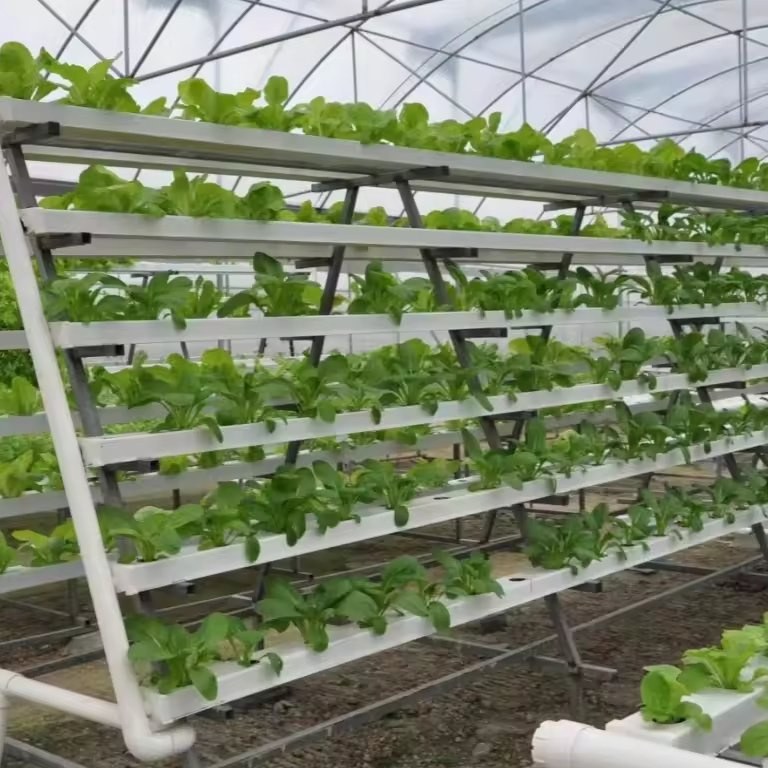
Systems of this type are used for lettuce and salad crops grown to a weekly cutting schedule, for culinary herbs, and for leafy greens sold by weight. The repeatable planting pitch and the controlled solution are what make them suit a supply contract, because every run holds the same number of plants and the crop comes off in predictable batches.
On a mixed site the same tank and control station usually serves more than one layout, with gullies at floor level for one crop and tiered racks for another. Growers planning that kind of expansion generally size the dosing station for the whole house at the start, because adding capacity to a working circuit later is the expensive way to do it.
It reads electrical conductivity and pH from the tank and doses stock solution or fresh water back to target, and it runs the pump on a timed cycle. That keeps the solution the crop sees inside a narrow band instead of drifting between manual checks.
Calcium and the other salts react with each other when they are concentrated, so they are kept in separate tanks and only meet in the irrigation water. A single tank is simpler but limits how concentrated the stock can be.
The galvanized frame and rack system is rated for 15 to 20 years under normal growing conditions. PVC channels and probes are consumable items, replaced as they wear or as the planting pitch changes.
We provide a 10 year structural warranty and a 5 year anti-corrosion warranty on the galvanized frame. Details are set out in the contract for each project.
Send your site dimensions, the crops and bench layout you plan to use and your local wind and snow loads. We reply with a layout drawing and a full quotation.