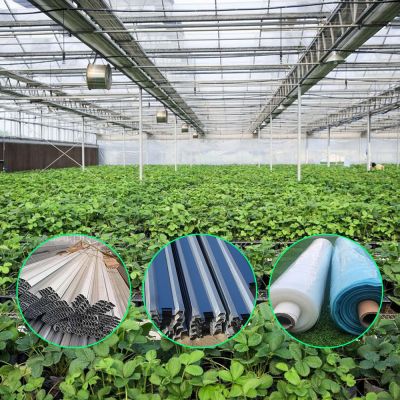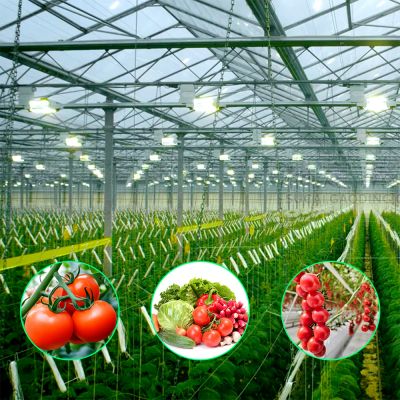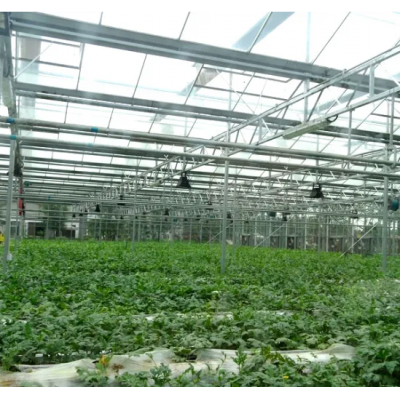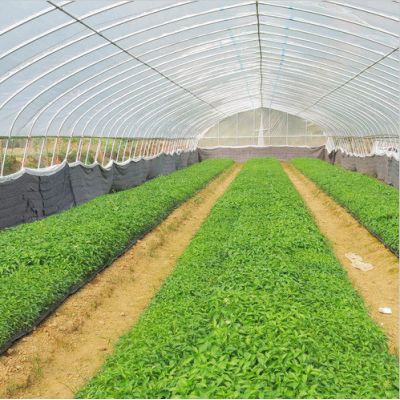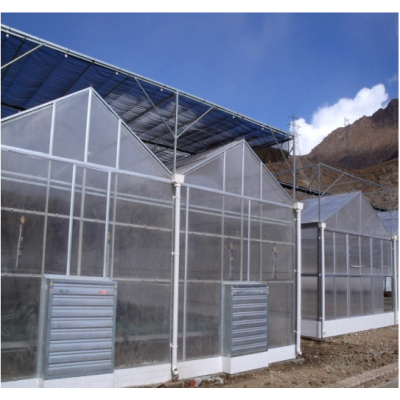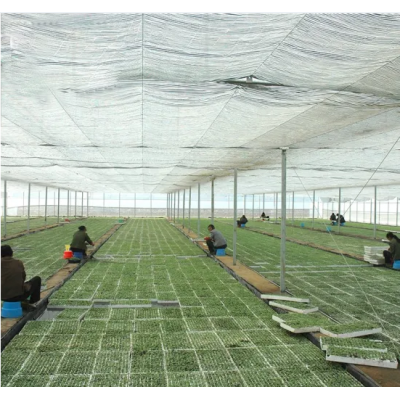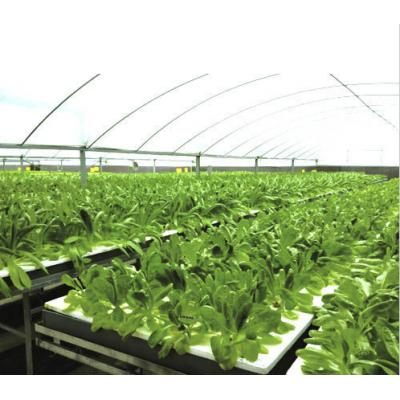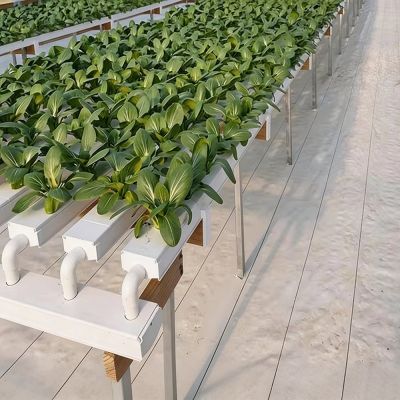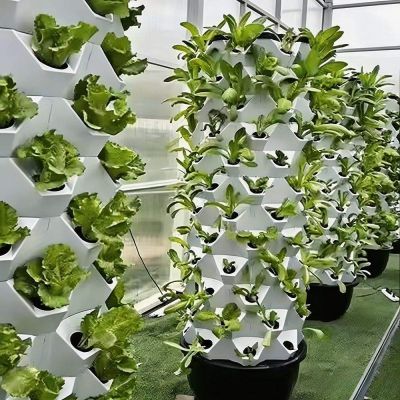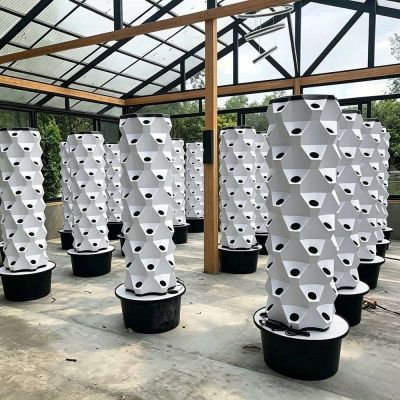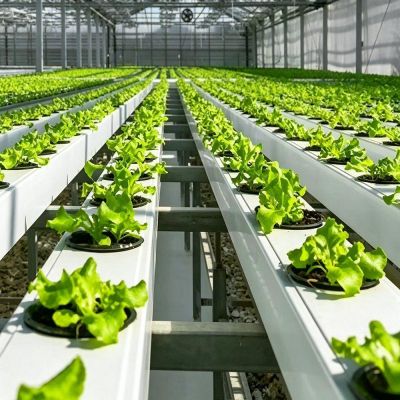


This hydroponic drip irrigation system is a greenhouse growing setup that delivers nutrient solution straight to the root zone instead of feeding the soil. Two options are offered. In an NFT system, plants sit in channels and a thin film of nutrient solution is pumped past the roots, which suits short-term crops such as lettuce and herbs. In a substrate system, drip emitters feed a growing medium on a timer, flushing fresh nutrients and oxygen through the root zone, which suits long-term crops such as tomato, pepper and cucumber. Both options can be sized to a single bay or rolled out across a full multi-span house, and both cut water and fertilizer use compared with field irrigation.
This hydroponic drip irrigation system feeds crops through a nutrient solution delivered straight to the root zone, rather than watering the soil around the plant. It is used in greenhouse production for lettuce, herbs, tomato, pepper, cucumber and strawberry, and it can be scaled from a single bay up to a full multi-span house. The system works with either NFT channels or substrate beds, and the choice depends on how long the crop stays in the house and how much control you want over the root environment.
The two systems solve different problems. In an NFT system, plants are held in channels and a thin film of nutrient solution is pumped continuously past the roots, which keeps them moist without drowning them. NFT suits short-term crops such as lettuce, leafy greens and herbs, where the growing cycle is measured in weeks. In a substrate system, the nutrient solution is pushed through drip emitters onto a growing medium on a timed cycle, flushing fresh nutrients, water and oxygen through the root zone. Substrate suits long-term crops such as tomato, pepper and cucumber that stay in production for months.

Hydroponic production changes the economics of a greenhouse in several ways. Water use falls because the solution recirculates instead of draining away, and fertilizer use falls with it since nutrients are measured rather than spread. Labour drops because there is no soil to work and the crop sits at working height. Pests and soil-borne disease pressure are lower without soil in the system. Because the root zone is under control, growth is more even across the house, which matters when you are supplying a wholesale buyer on a fixed schedule.
| Growing method | NFT channels or substrate beds |
| Nutrient delivery | Recirculating solution, timed dosing |
| Suitable crops | Lettuce, herbs, tomato, pepper, cucumber, strawberry |
| Water use | Lower than field or flood irrigation |
| Scale | Single bay to full multi-span greenhouse |
| Optional add-ons | Cooling, heating, ventilation, shading, benching |
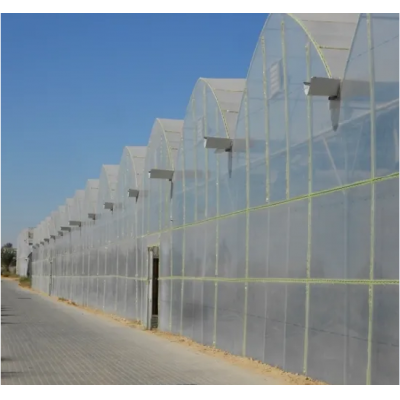
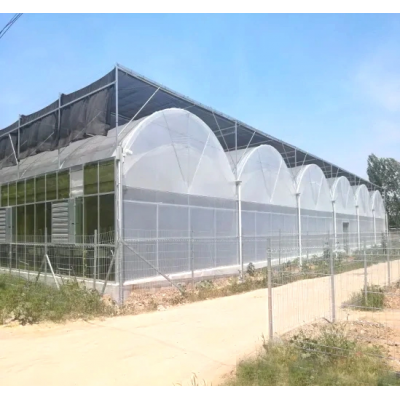
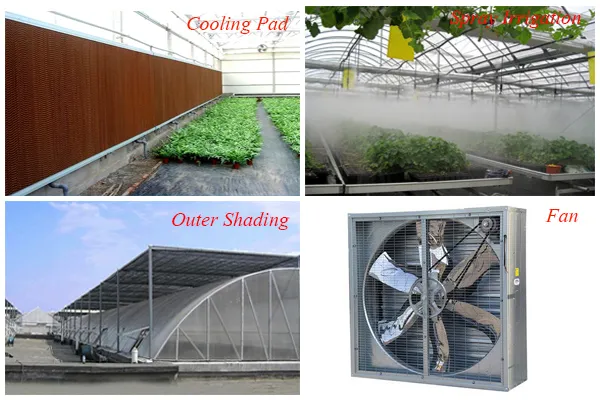
A hydroponic system performs most reliably inside a controlled greenhouse, because the nutrient balance is affected by root-zone temperature and by how much water the crop transpires. In a hot climate, cooling pads and exhaust fans hold daytime temperatures down so the solution does not overheat. In a cold climate, heating protects the root zone at night. Ventilation removes humidity that would otherwise encourage leaf disease, and shading screens cut peak summer radiation for sensitive crops. We supply these systems alongside the growing equipment so the house and the irrigation are matched from the start.
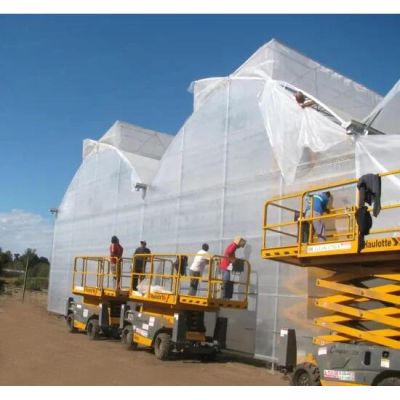
Systems are built to the crop, the house dimensions and the water quality at your site. We supply the channels or beds, the drip lines and emitters, the pump and dosing equipment, and the control timer, along with layout drawings. Structures and equipment ship as a metal frame package with the irrigation components boxed separately for container loading. Our engineering team provides drawings and guidance through commissioning, and can send engineers to site if you want support during the build.
It depends on crop cycle length. NFT suits short-cycle crops such as lettuce and herbs, while substrate suits long-cycle crops such as tomato and cucumber that stay in production for months.
Yes. Cooling pads, exhaust fans and shading hold greenhouse temperatures down, and we size the ventilation so the nutrient solution stays within a workable range.
Yes. The nutrient solution recirculates rather than draining into the soil, so water and fertilizer use are both lower than field or flood irrigation.
In most cases it can. Send us the house dimensions and the crop plan and we will lay out the channels, drip lines and pump to fit the space you have.
Yes. We supply the channels or beds, drip lines and emitters, pump, dosing equipment and control timer, with layout drawings for installation.
See our hydroponic system for lettuce, the greenhouse with vent system and our multi span agricultural greenhouse for the structures these systems run inside.
For crop production references, see the Food and Agriculture Organization of the United Nations and Produce Grower magazine on controlled environment growing.