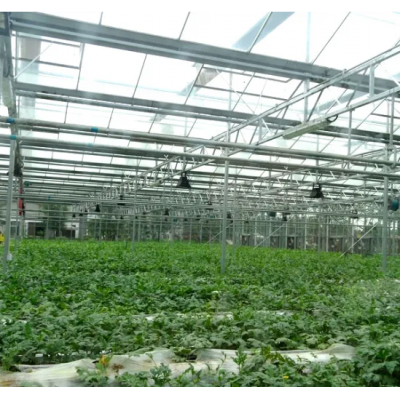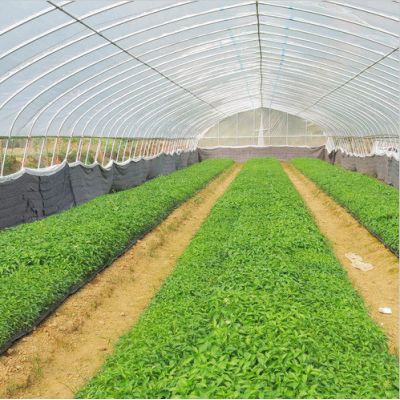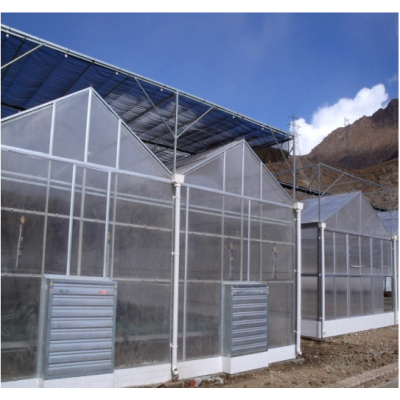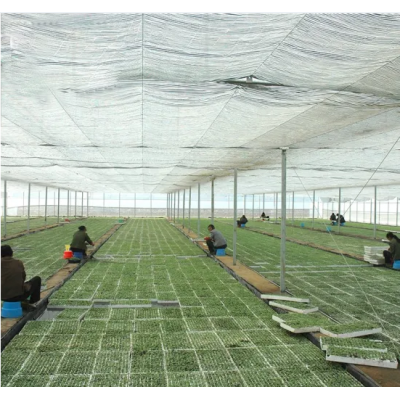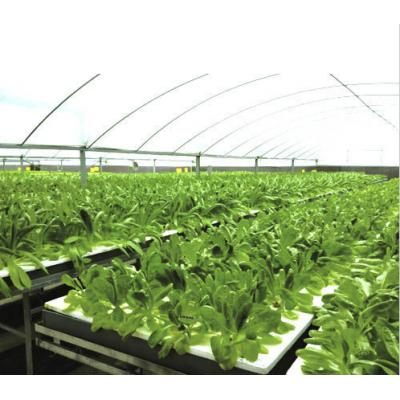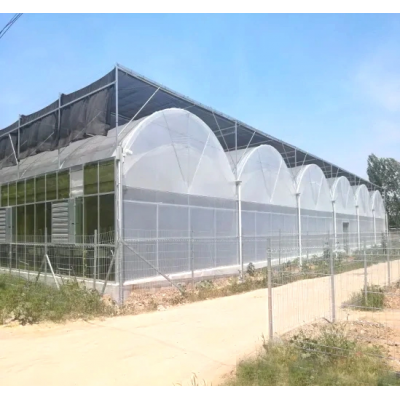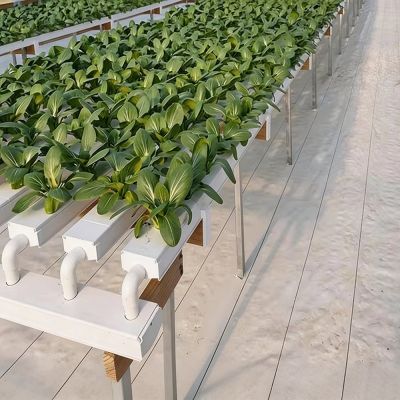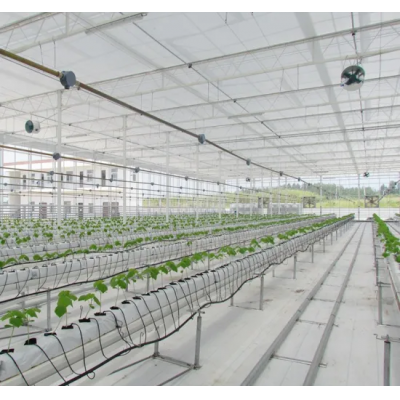
An NFT house is a water system that happens to have a roof. The channels, the tank, the pump and the return line are the machine; the structure is what keeps rain off it and the temperature steady. This one is quoted complete with a 1000 litre tank and a recirculating loop, on galvanized benches, in bays of 8 to 12 metres. Tank sizing, pipe opacity and bench levelling are the three details that decide whether the loop runs clean through a season.
In an NFT system the nutrient solution runs as a shallow film down a channel, the roots sit in the film, and the water returns to a tank to be pumped round again. Everything else — house, benches, cover — exists to keep that loop stable. This page is written from the loop outwards. It belongs to the hydroponic greenhouse section of this site.
Three components make the loop: the tank, the pump and the return. The tank buffers volume and temperature, the pump sets the flow, and the return pipe brings water back without letting light into the line. A loop that is sized correctly runs quietly; one that is not shows up as algae in the channel or a pump that runs dry.
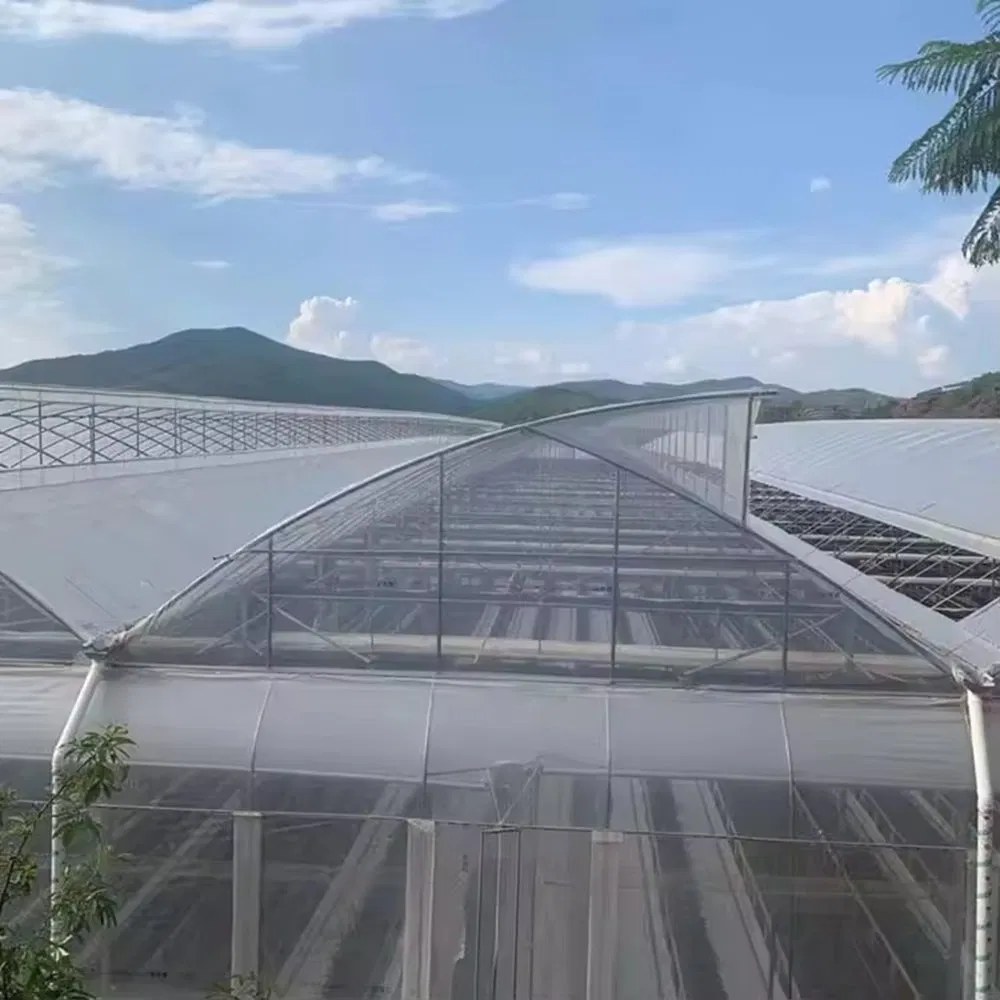
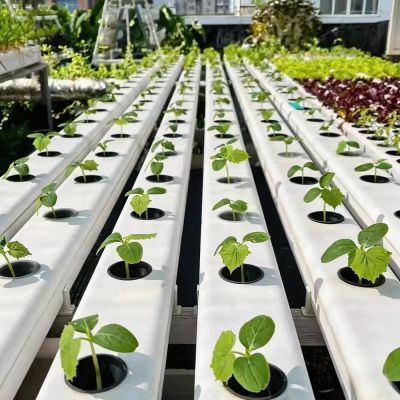
NFT channels sit on galvanized steel benches at working height, with a fall along the channel run. The 1000 litre tank, submersible pump and return pipe are supplied with the house, which matters because the pipe runs want fixing points on the frame rather than brackets improvised later.
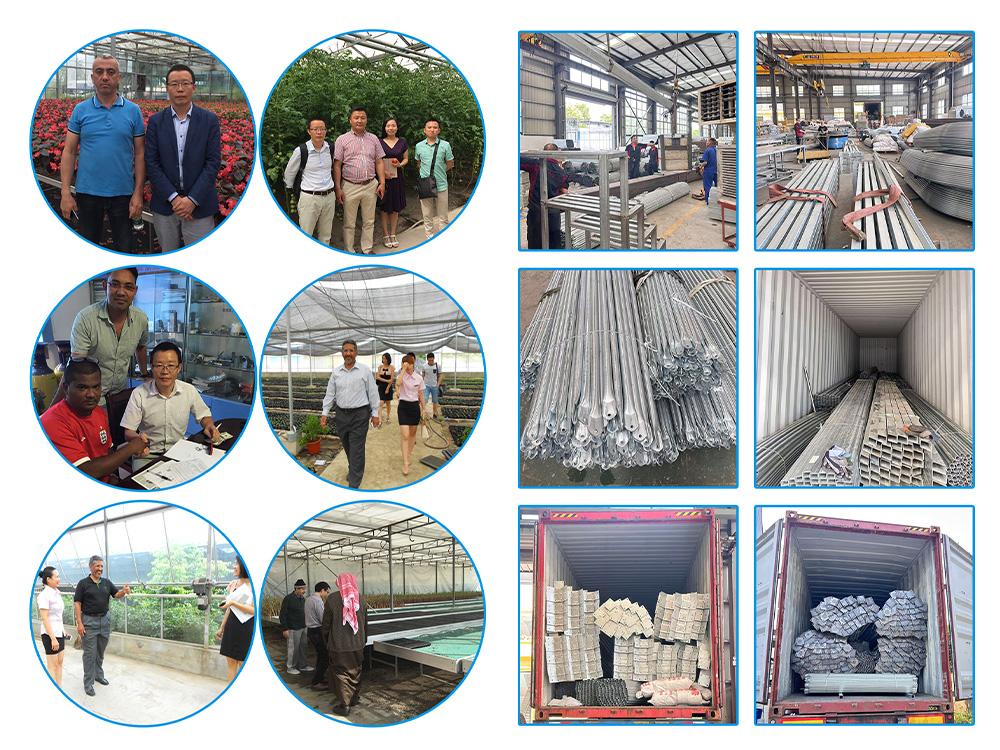
| Type | NFT hydroponic greenhouse |
| Growing system | NFT channels on galvanized steel benches |
| Nutrient tank | 1000 litres, with submersible pump and return pipe |
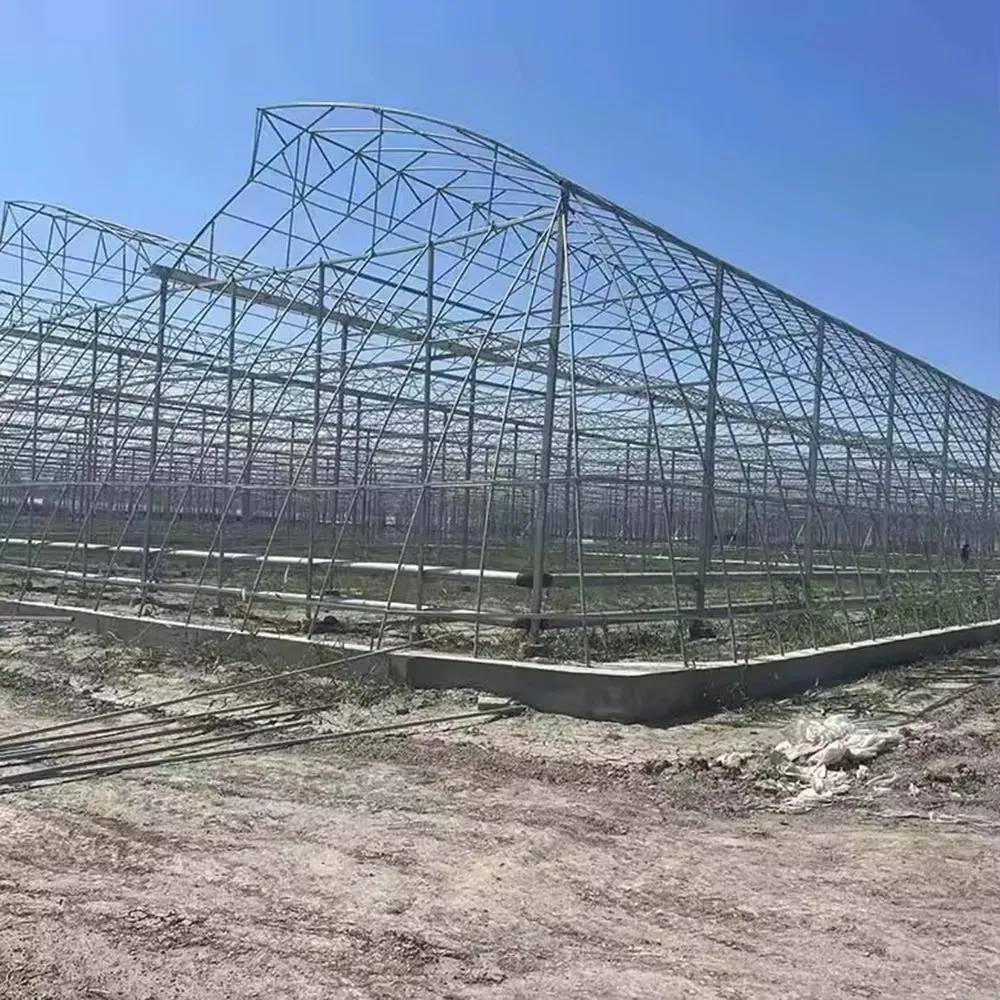
| Structure | Hot dip galvanized steel, aluminium option |
| Covering | PO or PEP plastic film |
| Light transmission | 90 to 95 percent |
| Film life | About 3 years |
| Span | 8 / 9 / 10 / 11 / 12 m, custom |
| Length and height | 10 m to 100 m long, 3 m to 8 m high |
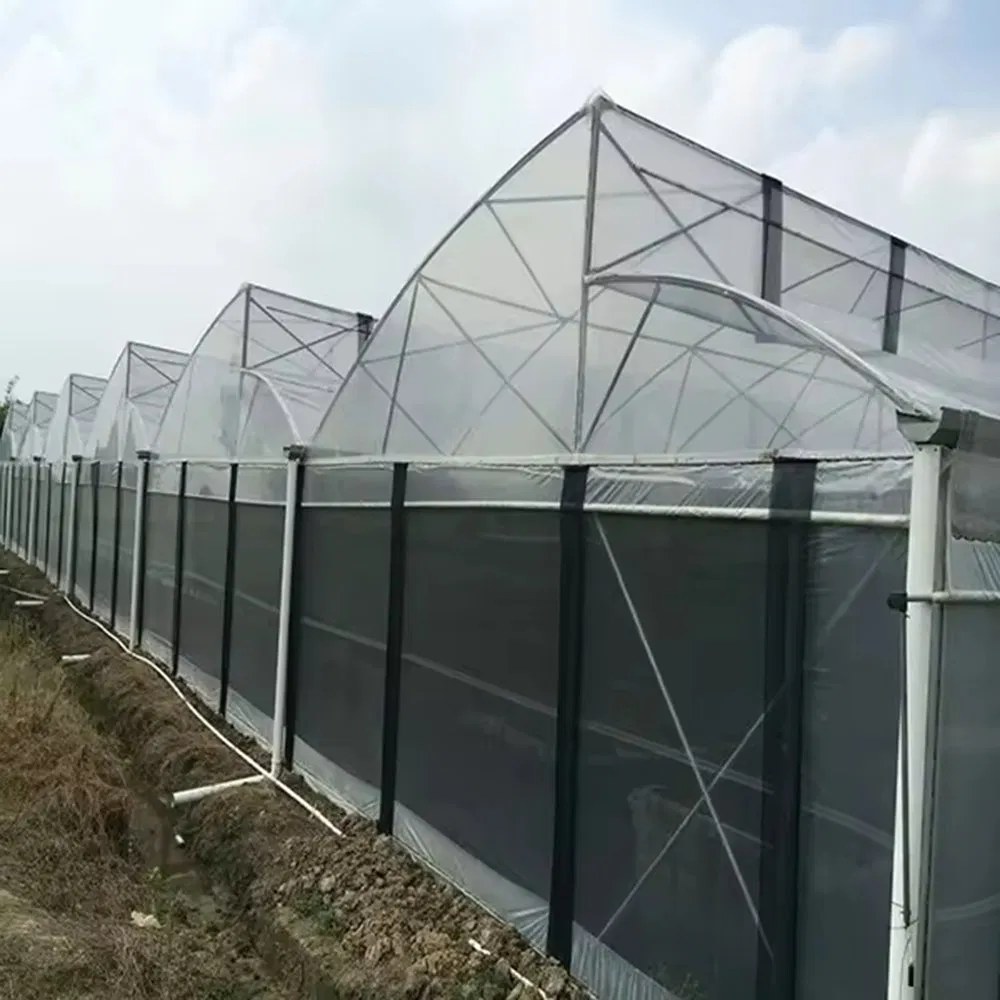
The film has to move: too slow and the roots sit in stagnant water, too fast and the channel runs deeper than the roots can use. The fall is set on the bench, not on the frame, which is why levelling the benches matters as much as levelling the site.
Light in the loop is the other failure mode. A return pipe that lets daylight in grows algae, and algae ends up in the channel. Opaque pipe and a covered tank solve it at almost no cost, provided they are specified at the start.
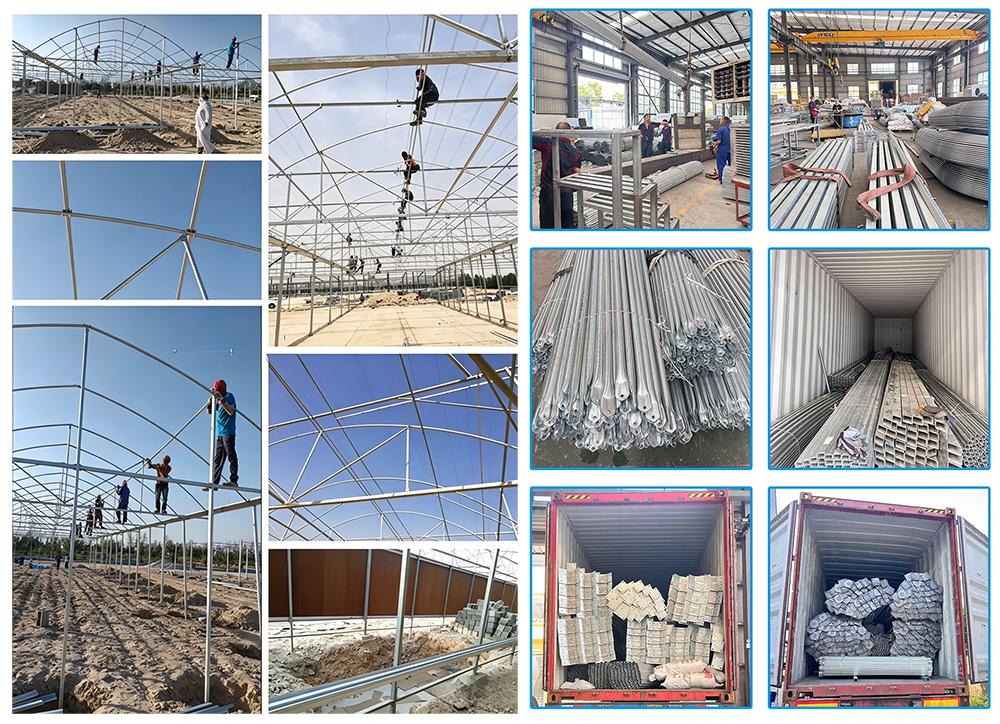
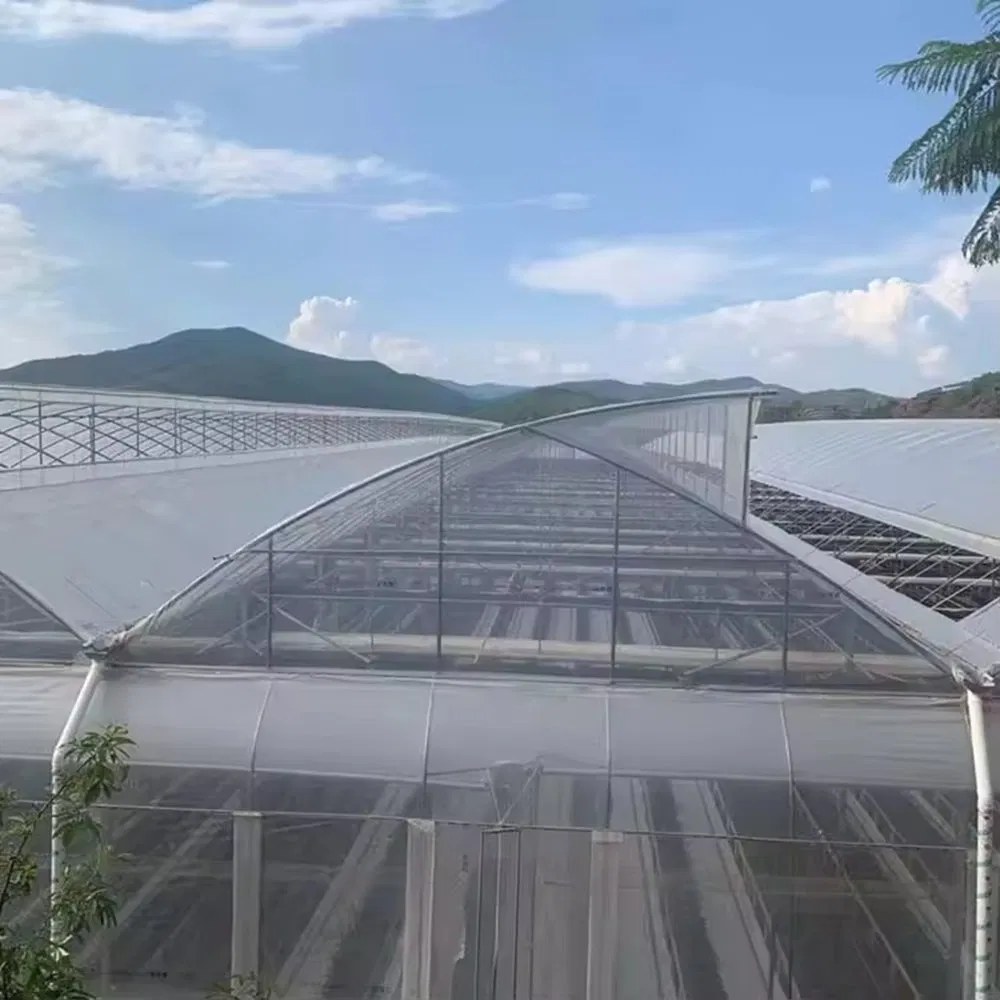
The structure contributes three things to a water system: shade control, temperature buffering and rain exclusion. Rain matters more than growers expect, because a dilute nutrient solution from a leaky roof changes the EC in a single afternoon, and an NFT loop has very little buffer to absorb it.
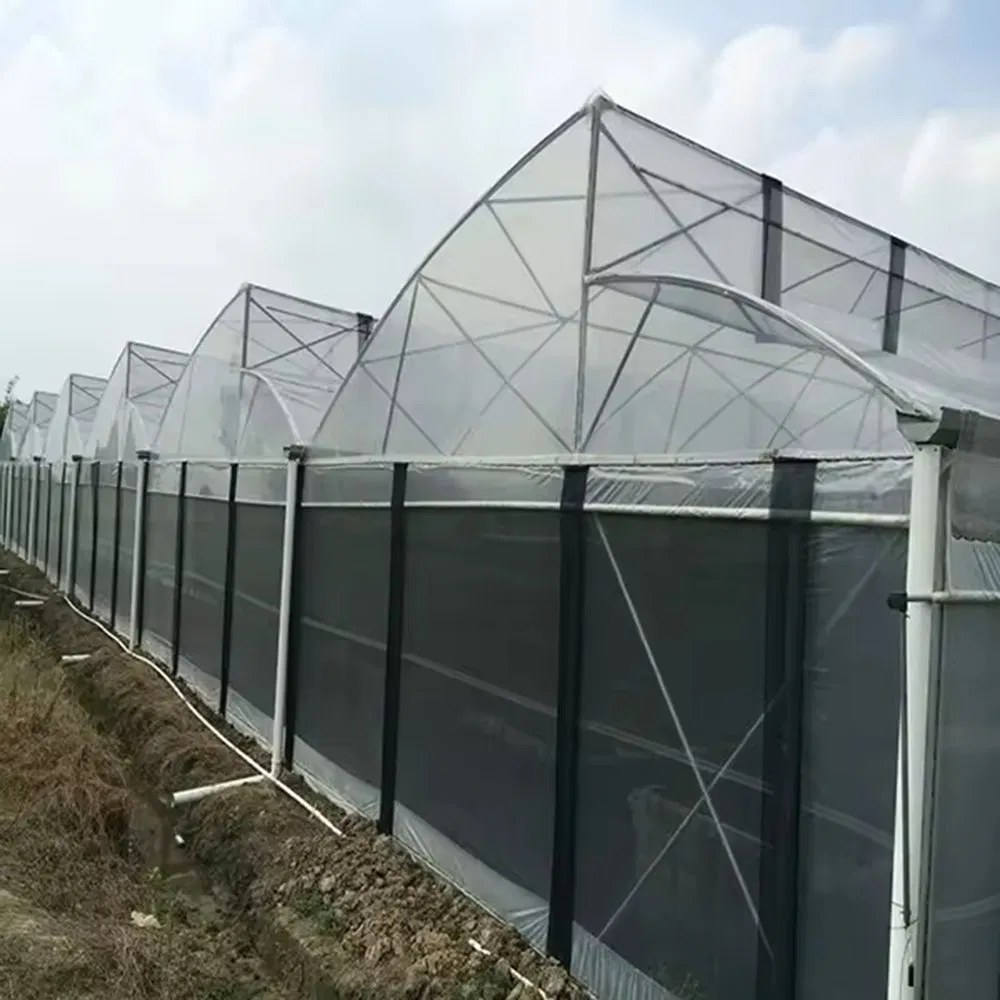
Film is the usual cover on this house, at a lower capital cost than glass or panel and with a three year replacement cycle. On a site where hail is a risk, panels are the alternative.
A glass house built around hydroponic strawberry gutters is described on the hydroponic Venlo strawberry house page, and a Dutch PC house for the same crop on the Dutch hydroponic PC house page.
Tank volume is a buffer, not a reservoir: it absorbs the water the crop takes between top-ups and it damps temperature swings in the solution. A 1000 litre tank suits a small NFT run; a long channel set needs either a bigger tank or a top-up regime that keeps the level steady.
Plant science and hydroponic guidance is published by the Royal Horticultural Society, and agribusiness coverage by AgriBusiness Global.

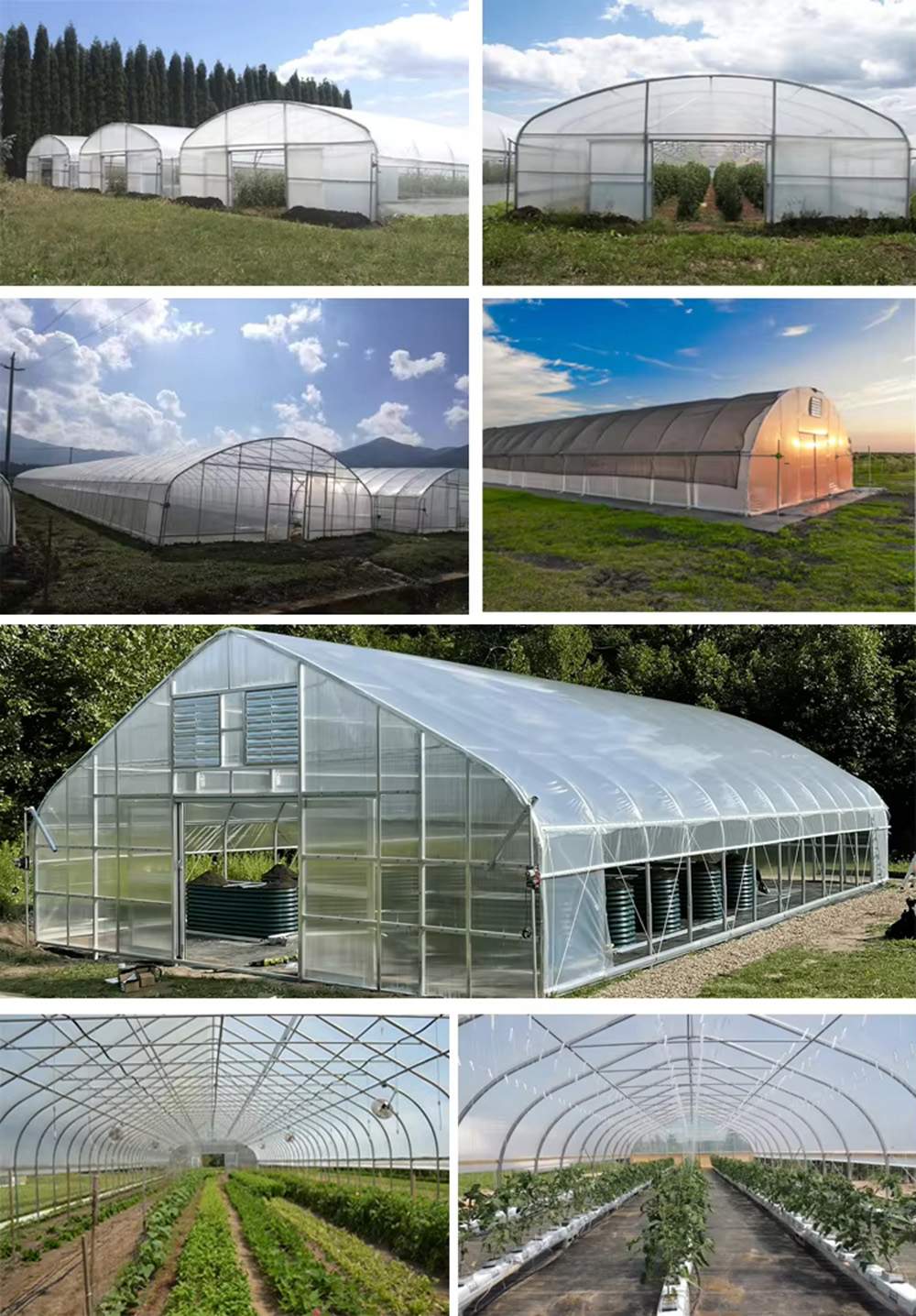
Film suits low-cost tunnels on 3-5 year replacement cycles. Glass delivers the highest light transmission and the longest lifespan, at the highest cost. PC sheet insulates better than film and suits cold or high-humidity climates. The right choice depends on climate, crop and budget.
Yes. We customize span width, bay length, gutter height, covering material (film, PC sheet or glass) and ventilation configuration. Share your crop type, local climate and growing area, and our engineers will size the structure to match.
The hot-dip galvanized steel frame is designed for a 15-20 year service life in normal agricultural environments, with a double-sided zinc coating of 200-275 g/m². Film covers are replaced every 3-5 years, while glass and PC panels carry their own manufacturer warranties.
Send your growing area, span and length, crop type and local climate. If you already have a layout drawing, that is enough to start. Our engineers then return a quotation with a structure drawing and a bill of materials.
A small NFT run with a steady top-up regime. A long channel set needs a larger buffer or more frequent topping up, because the tank damps change rather than replacing it.
The tank and pump do not care where the water comes from, but rainwater is low in buffering capacity and needs its EC and pH adjusted before it goes into the loop. That is a dosing decision rather than a structural one.