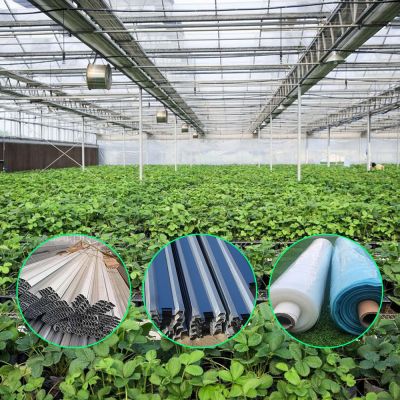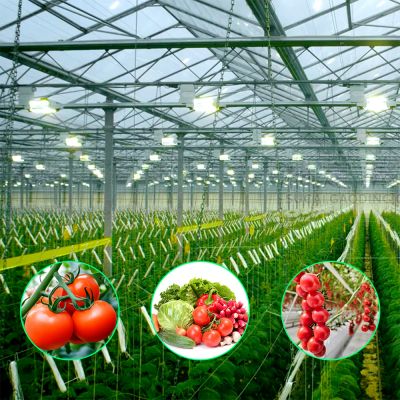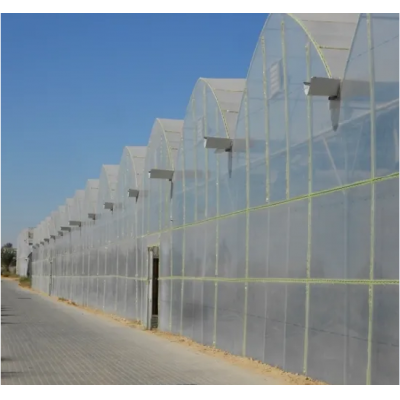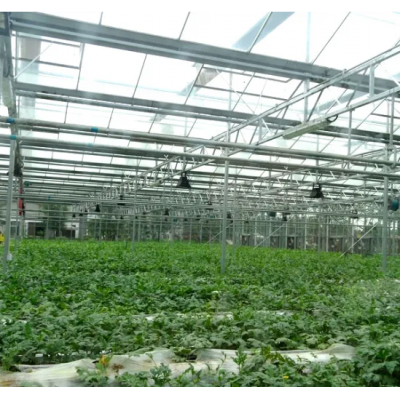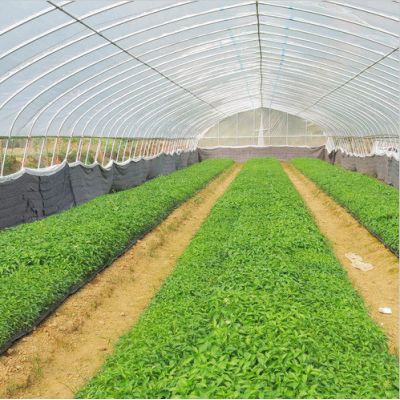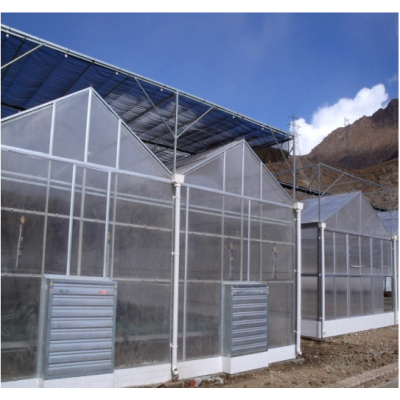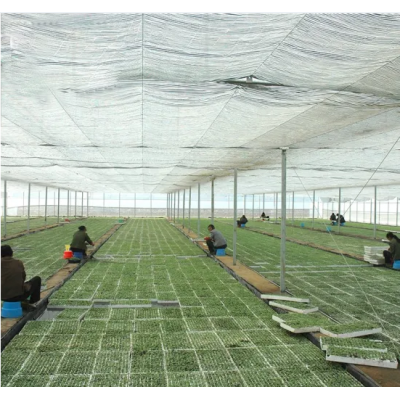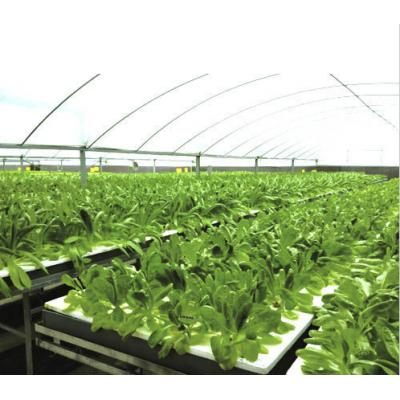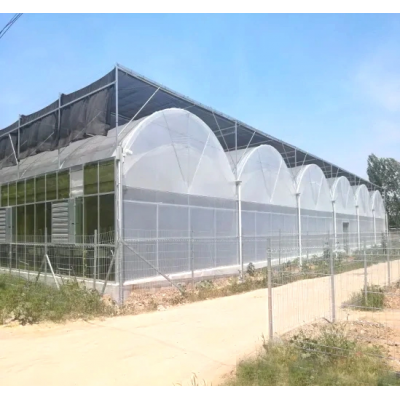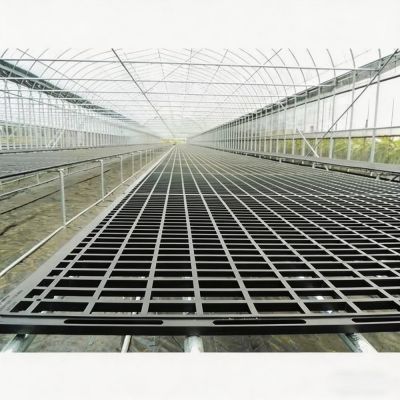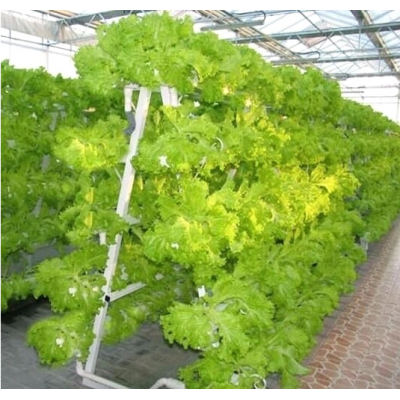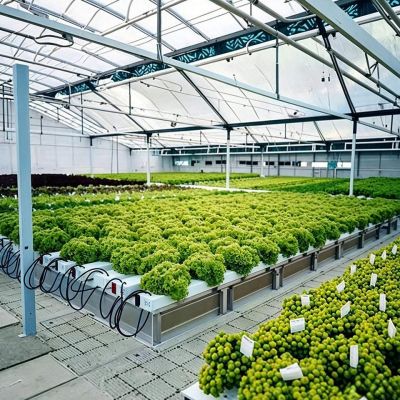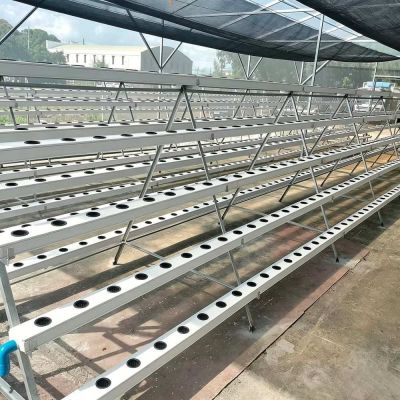
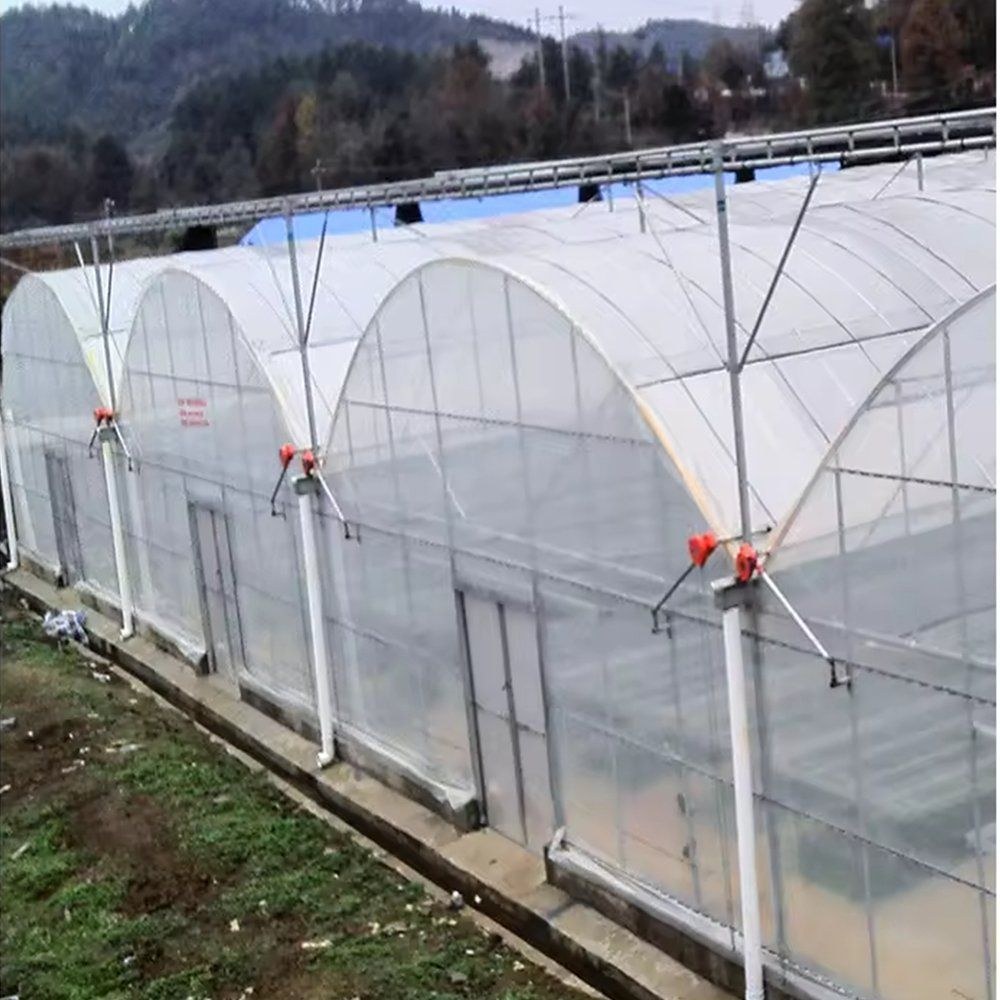
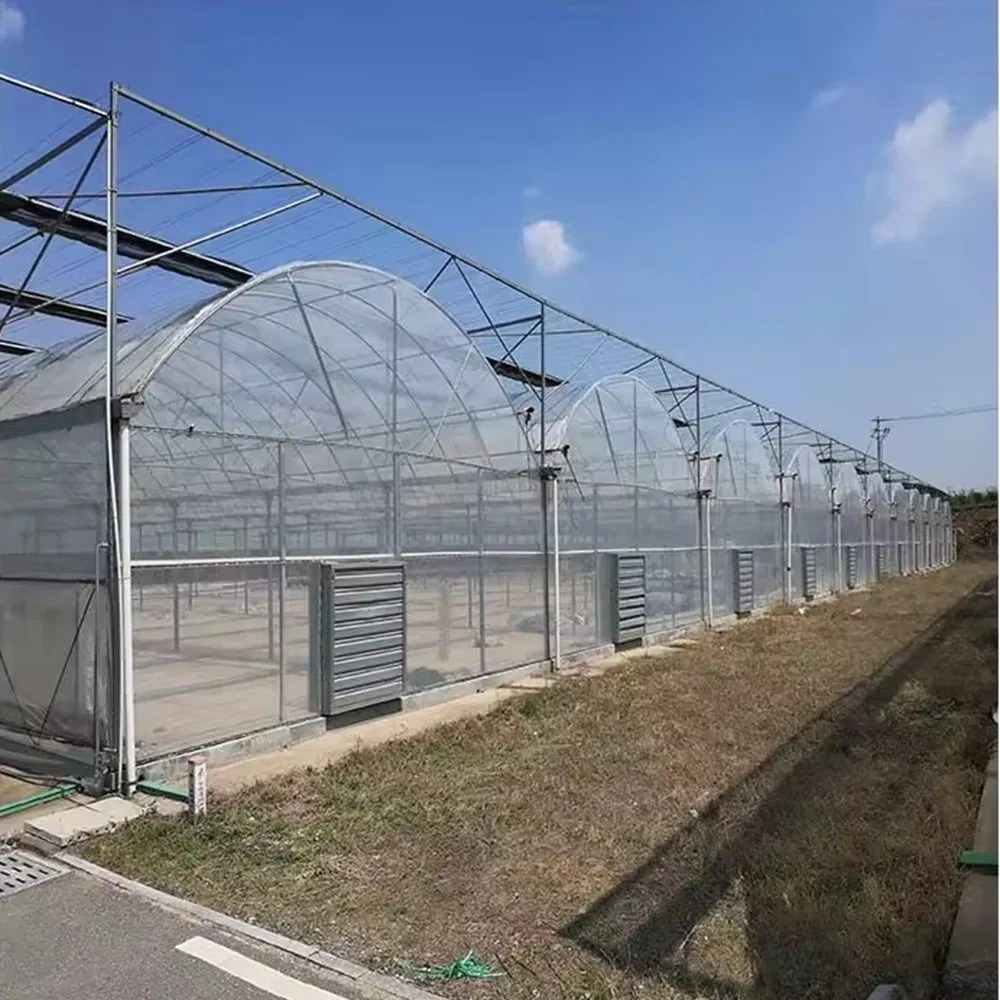
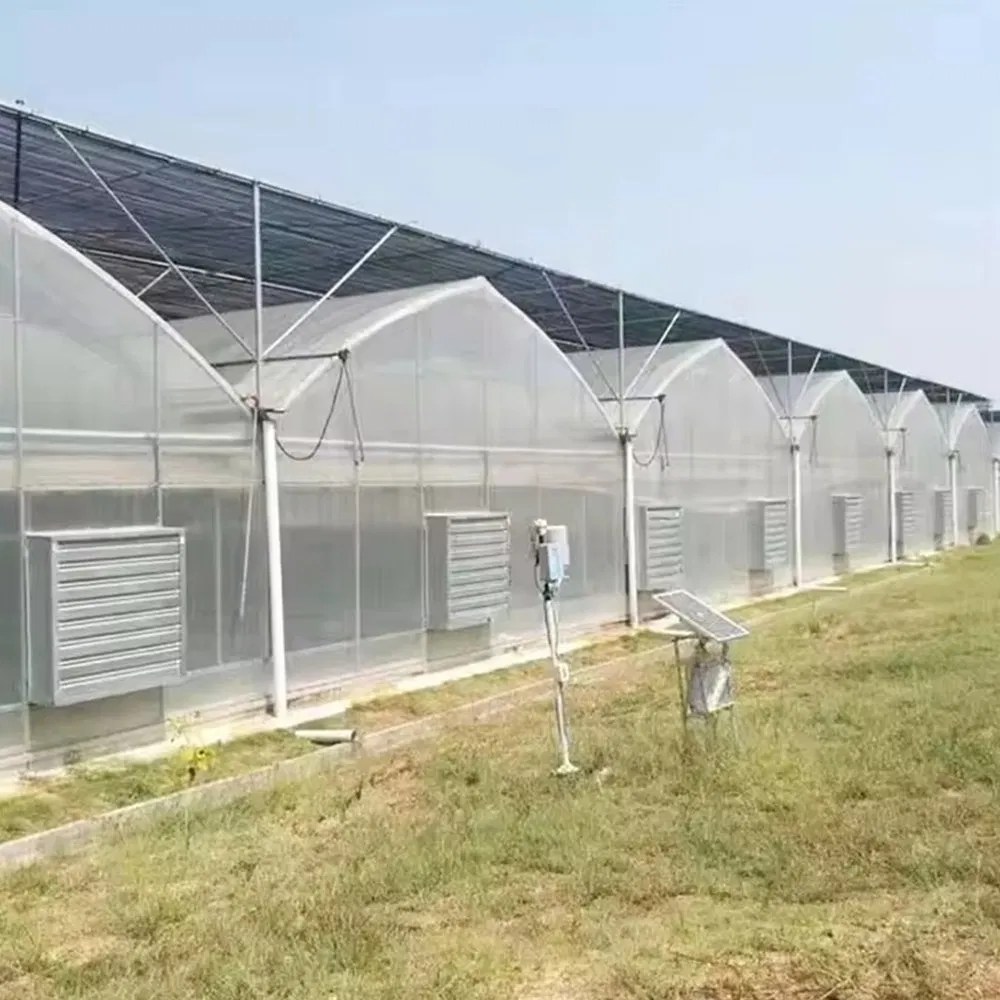
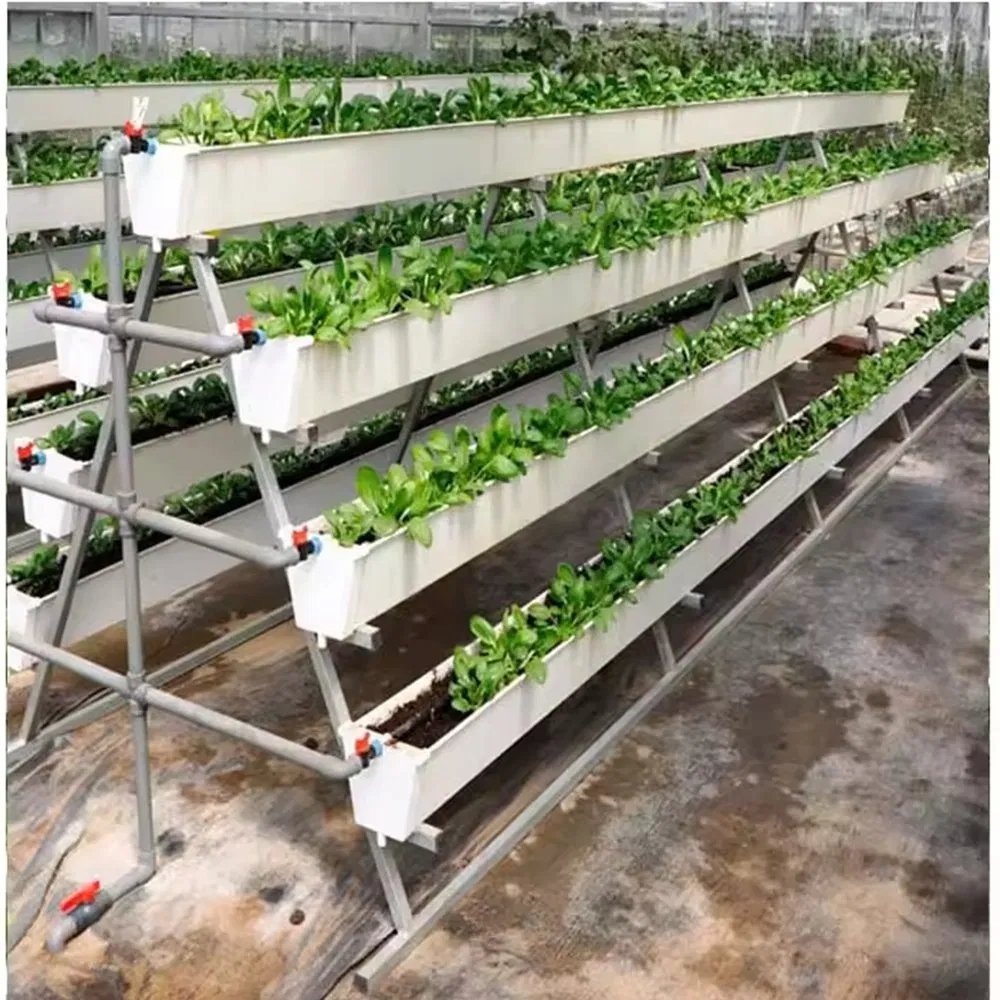
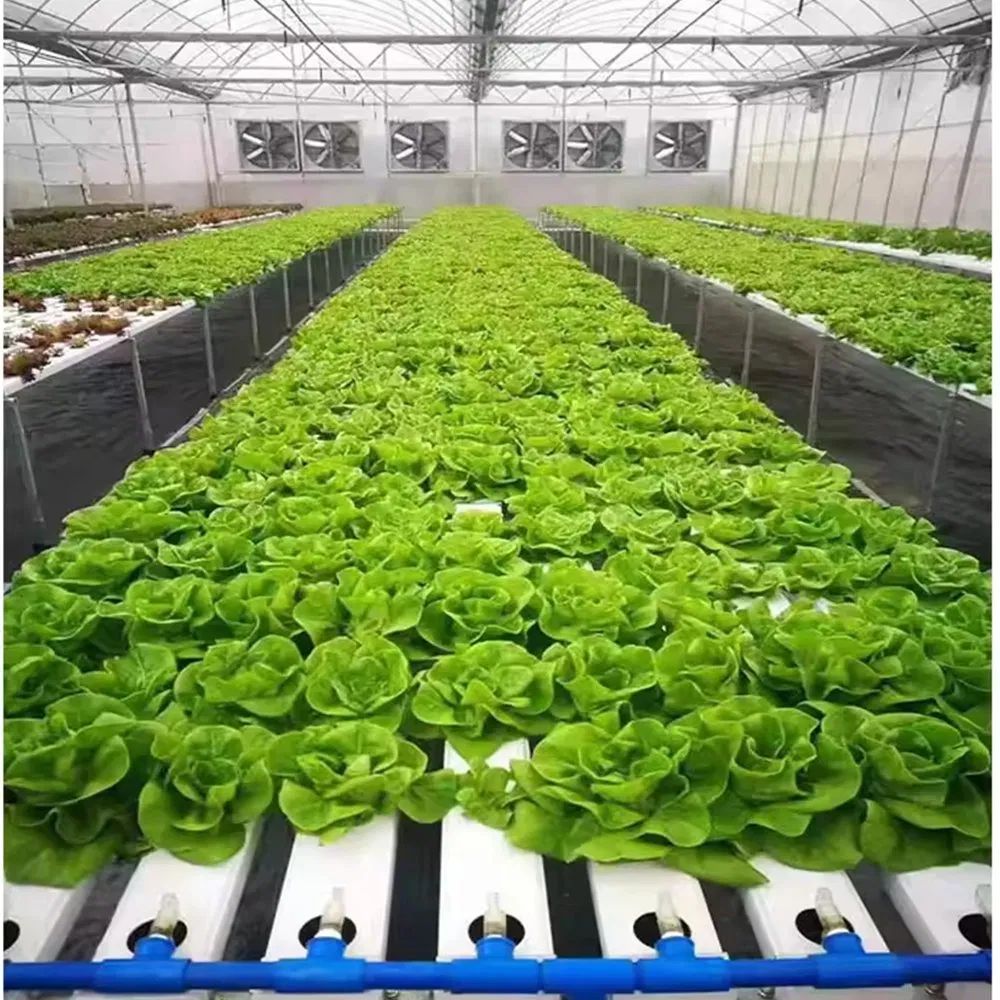
This is a house sold around a growing system rather than a frame with a cover on top. The listing quotes a hot dip galvanized frame, a 150 or 200 micron PE film cover, spans of seven to ten metres, roof and side vents, fan and pad cooling, internal and external shade, drip irrigation and a water and fertiliser unit. The hydroponic side is quoted as NFT or deep water culture, with pH and EC sensors driving nutrient dosing, and the vertical racks can be stacked up to twelve layers.
A hydroponic house fails at the joints between systems: the benches are fixed to a frame that was never drilled for them, the drain runs at the wrong fall, the dosing unit arrives without a shelf. This listing avoids that by quoting the structure, the cover, the cooling, the irrigation and the fertiliser unit together. It is part of the hydroponic greenhouse range on this site.
The value here is coordination rather than any single component. Fan and pad cooling has to line up with the vent area; the drip lines have to run at the same fall as the benches; the water and fertiliser unit has to sit within reach of both the tank and a power point. When those four are quoted as one package, the site work is assembly instead of improvisation.
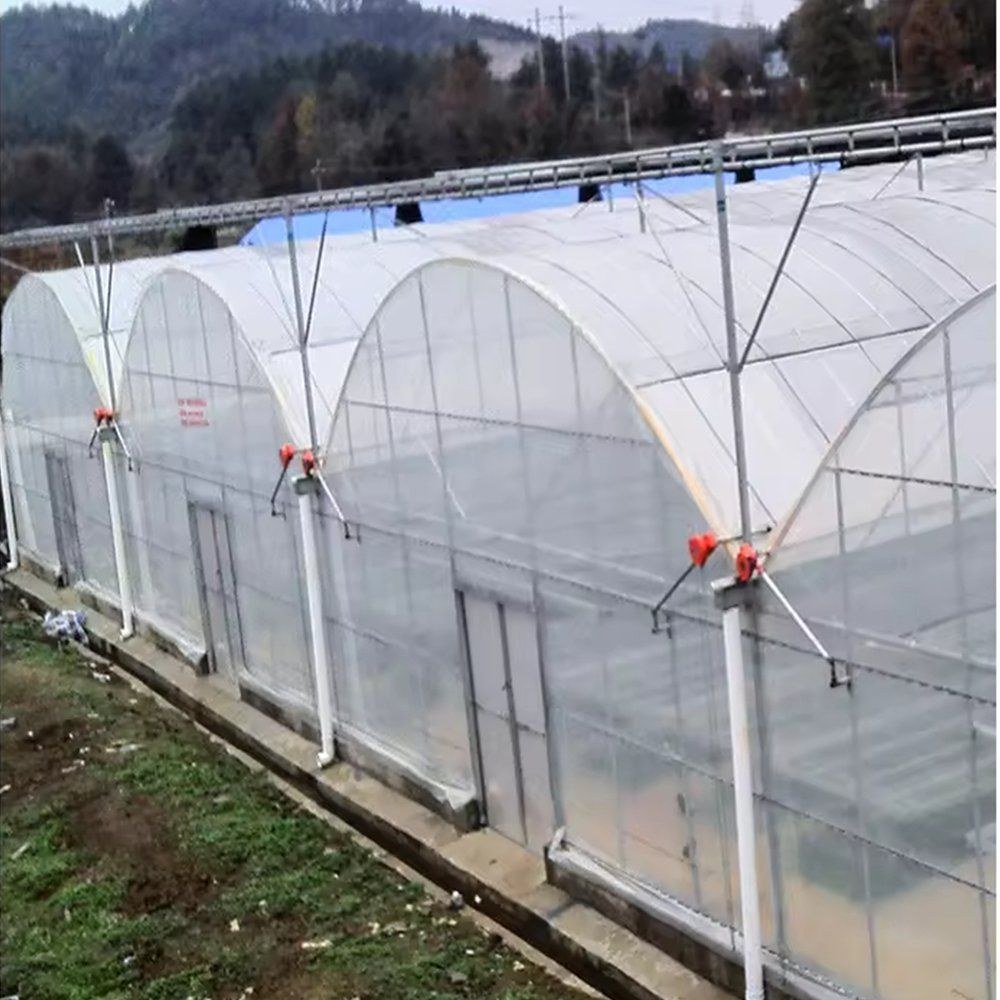
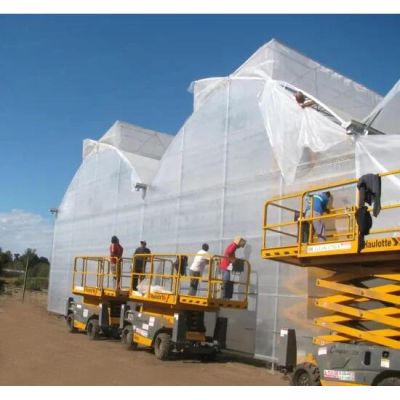
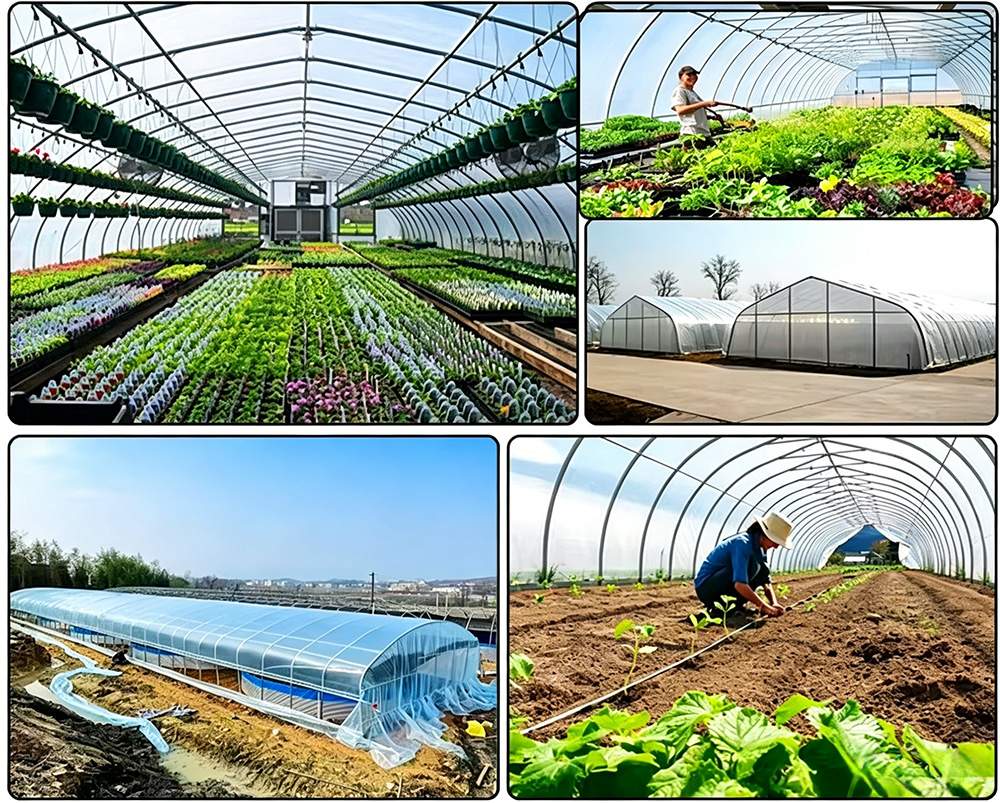
The cover is PE film at 150 or 200 micron, and the frame is hot dip galvanized steel. Film is the right choice when the crop inside earns more per square metre than the cover costs, which is usually the case for leafy greens grown close to a city. It is also the easier cover to replace in sections if hail takes one bay and leaves the rest.
Spans are quoted from seven to ten metres, with the custom fields offering eight to twelve metres, lengths from ten to a hundred metres and heights from three to eight metres. Wind load is listed at 60 to 75 km/h, which is a site-specific number: a coastal or typhoon site needs the higher end or a different frame, and that conversation belongs before the order.
| Frame | Hot dip galvanized steel frame |
| Cover material | PE film, 150 or 200 micron |
| Span | 7 to 10 m, 8 to 12 m to order |
| Length and height | 10 to 100 m long, 3 to 8 m high |
| Wind load | 60 to 75 km/h |
| Ventilation | Roof and side ventilation |
| Cooling | Cooling fan and cooling pad |
| Shading | Internal and external shading |
| Irrigation | Drip irrigation |
| Fertilisation | Water and fertiliser unit |
| Growing system | Hydroponics, NFT or deep water culture |
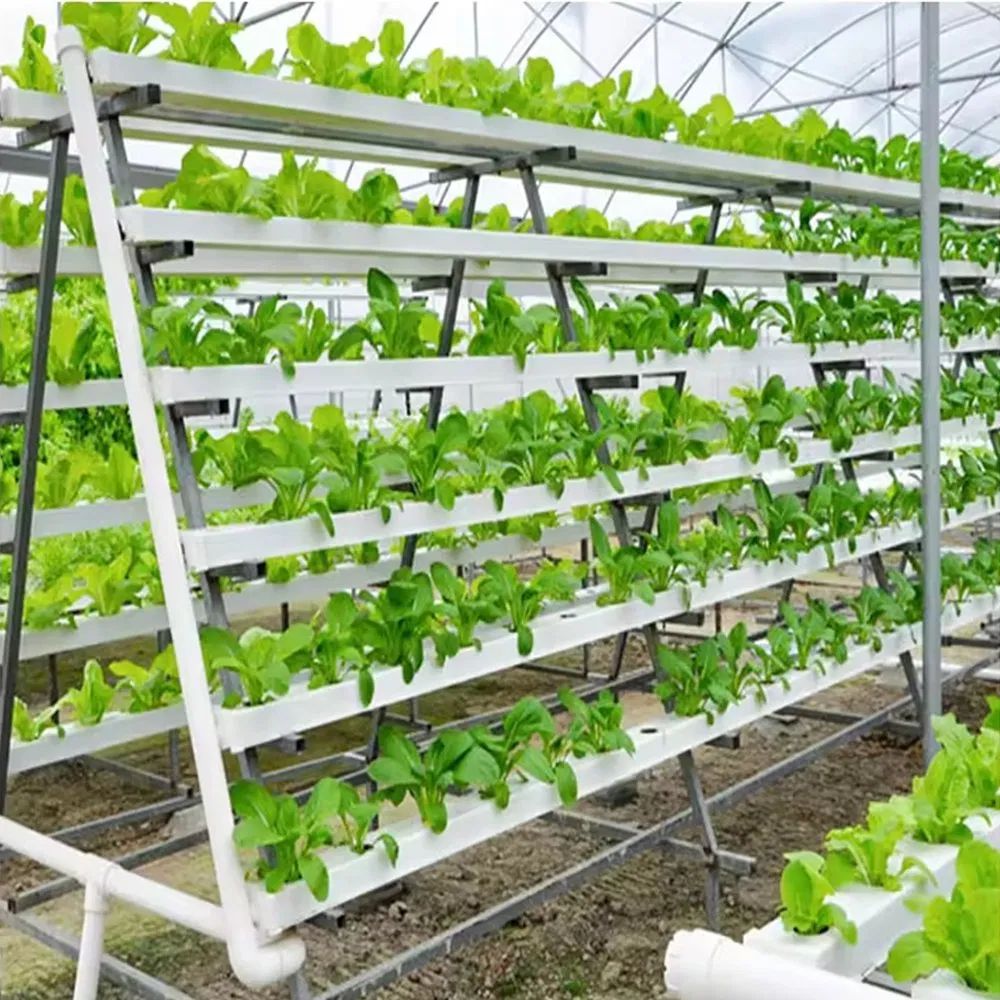
The growing racks are quoted as stackable to twelve layers. Stacking changes what the house has to do: the top layer sees full sun and the bottom layers see almost none, so the film has to be diffusing rather than clear, and the cooling has to move air between layers rather than only across the house. Where natural light is not enough at the lower tiers, the listing offers LED grow lights as part of a bulk order.
Twelve layers also sets the height. A three metre column leaves room for working above the top tier but not much more, and the eight metre option exists for exactly this reason. The safe order is to fix the tier height, the aisle width and the trolley first, then size the column.
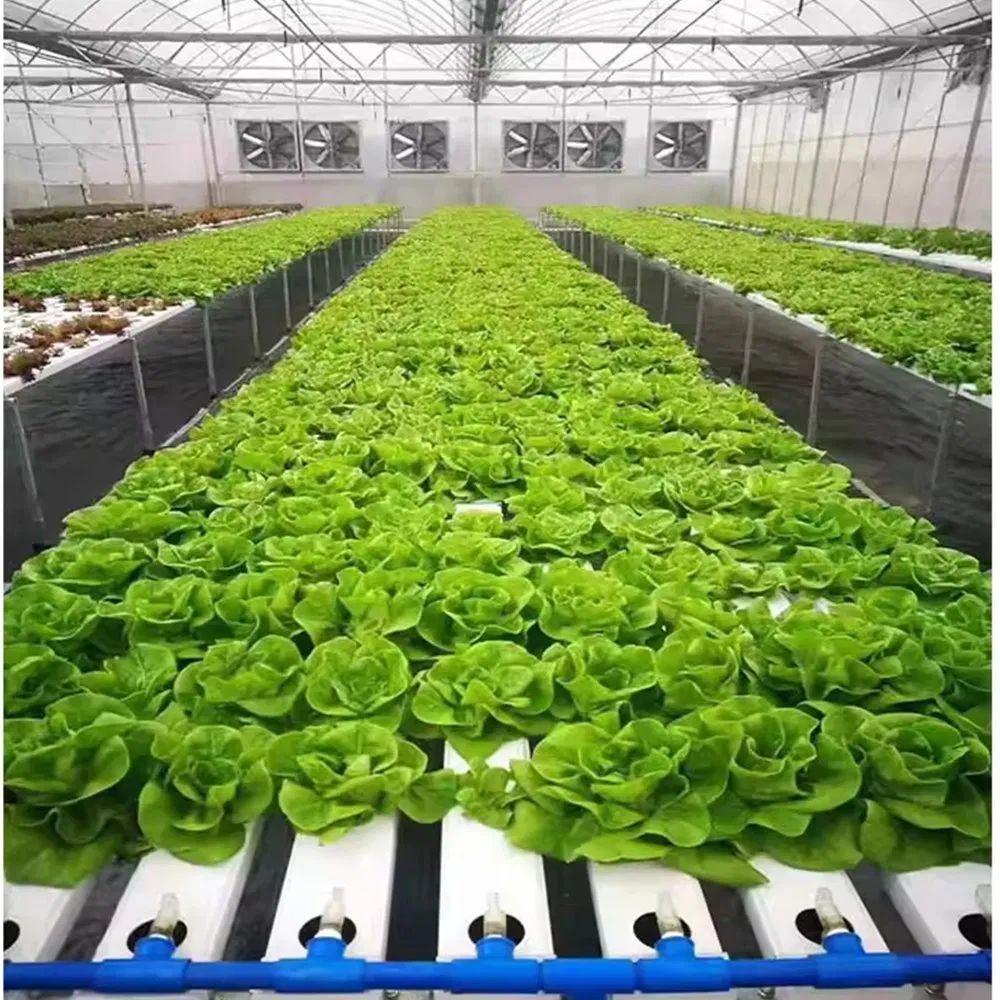
The listing specifies NFT or deep water culture, with pH and EC sensors adjusting the nutrient solution automatically. Sensors do not replace a daily check, but they catch the two failures that matter: a drifting pH that locks out nutrients, and an EC that climbs as water evaporates faster than the crop drinks.
Drip irrigation is quoted alongside the hydroponic system, which covers the nursery side of an operation rather than the channels. A water and fertiliser unit serving both keeps one recipe and one record, and that is easier to audit than two separate systems drifting apart.
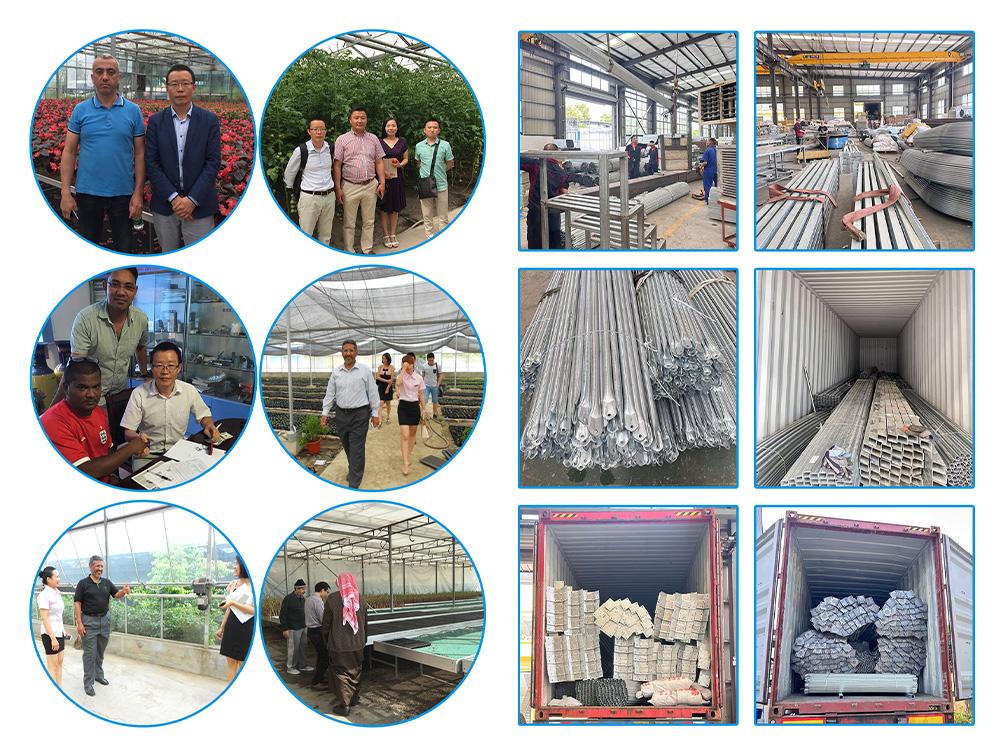
Parts are packed flat and numbered, and the house is offered in three build grades, high, medium and low, so the same bay layout can be quoted to three budgets. The options list covers LED grow lights, irrigation manifolds and harvest carts. Whether those are worth adding depends on labour cost more than on technology: a harvest cart pays back where pickers walk long rows.
A taller multi span for a flower crop is described on the double film flower house page, and a stacked grow tower system on the commercial grow tower page. Research on controlled environment horticulture is published by Wageningen University and Research, and grower practice by GrowerTalks.
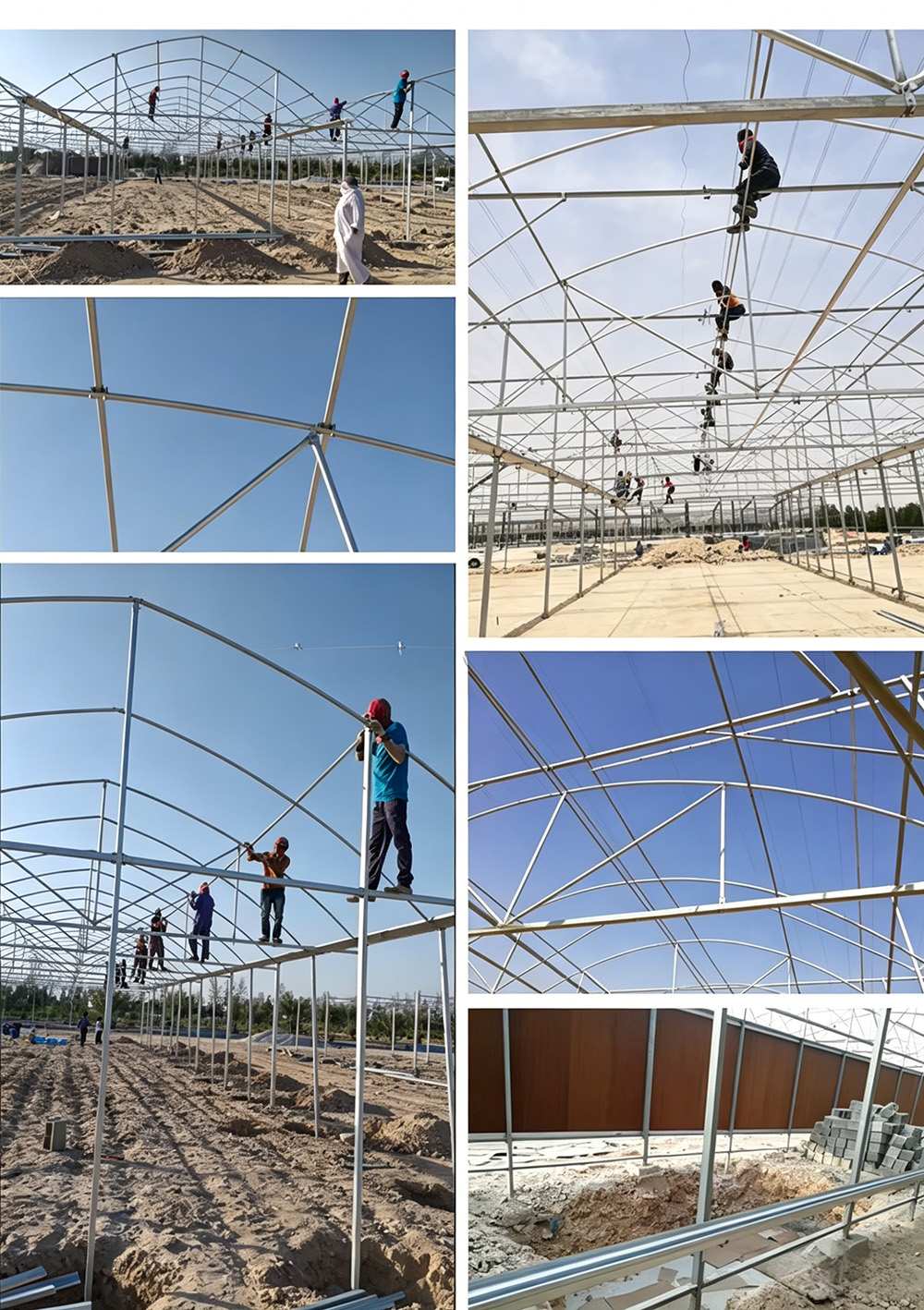
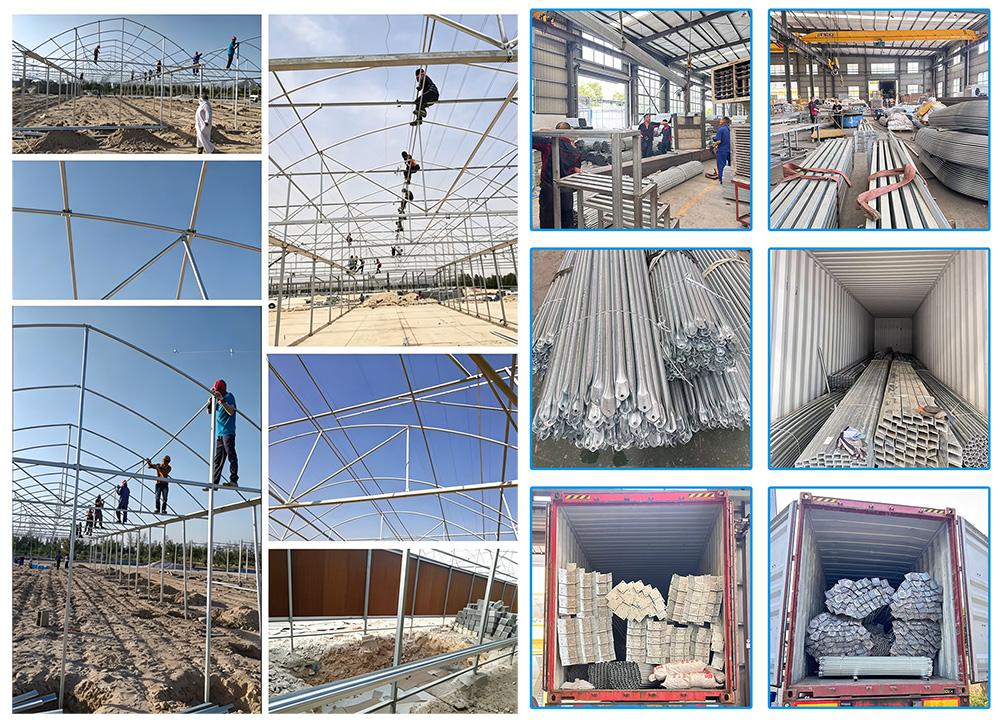
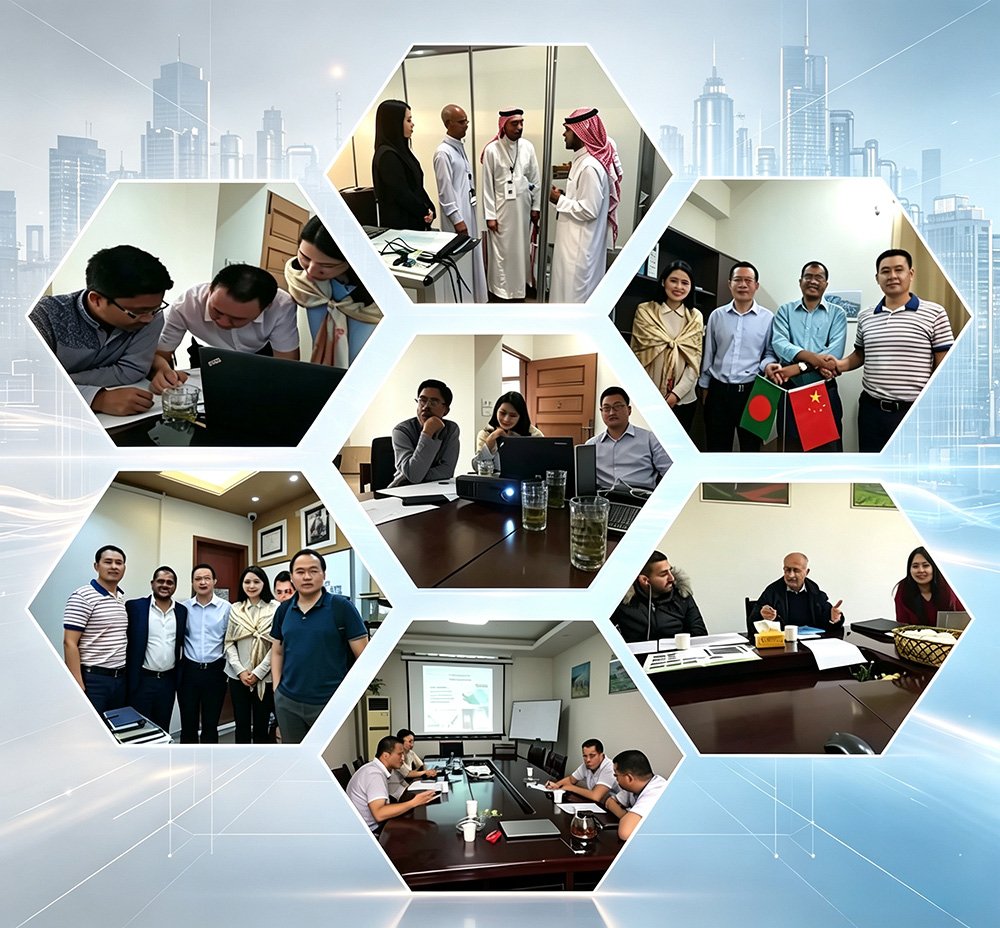
The hot-dip galvanized steel frame is designed for a 15-20 year service life in normal agricultural environments, with a double-sided zinc coating of 200-275 g/m². Film covers are replaced every 3-5 years, while glass and PC panels carry their own manufacturer warranties.
Yes. We customize span width, bay length, gutter height, covering material (film, PC sheet or glass) and ventilation configuration. Share your crop type, local climate and growing area, and our engineers will size the structure to match.
Film suits low-cost tunnels on 3-5 year replacement cycles. Glass delivers the highest light transmission and the longest lifespan, at the highest cost. PC sheet insulates better than film and suits cold or high-humidity climates. The right choice depends on climate, crop and budget.
Ziyang Bozong Greenhouse Industry Co., Ltd. is a manufacturer based in Ziyang, Sichuan, China. We produce the hot-dip galvanized steel frame in-house, cutting and drilling to drawing, and supply covering materials, ventilation, cooling and irrigation systems as one coordinated package.
The listing quotes up to twelve layers. The practical number is set by the crop and the light: leafy greens with LED supplement can go higher than a crop that depends on daylight, and every extra layer takes light from the one below it. Send the tier height and we will check the stack against the column height you need.
The listing describes pH and EC sensors with automatic nutrient adjustment. In practice the unit doses acid or base for pH and stock solutions for EC, and both readings have to be calibrated on a schedule. Ask for the calibration interval and the spare probe list with the quotation.