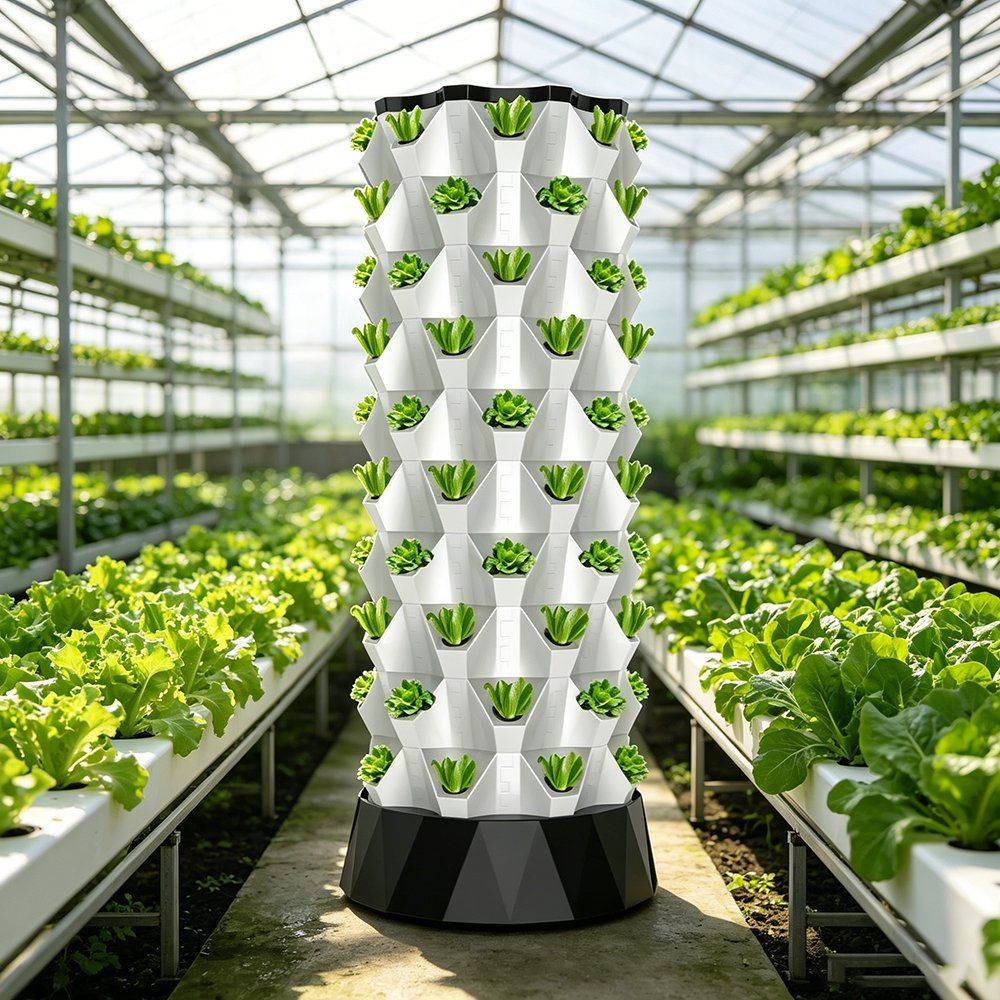
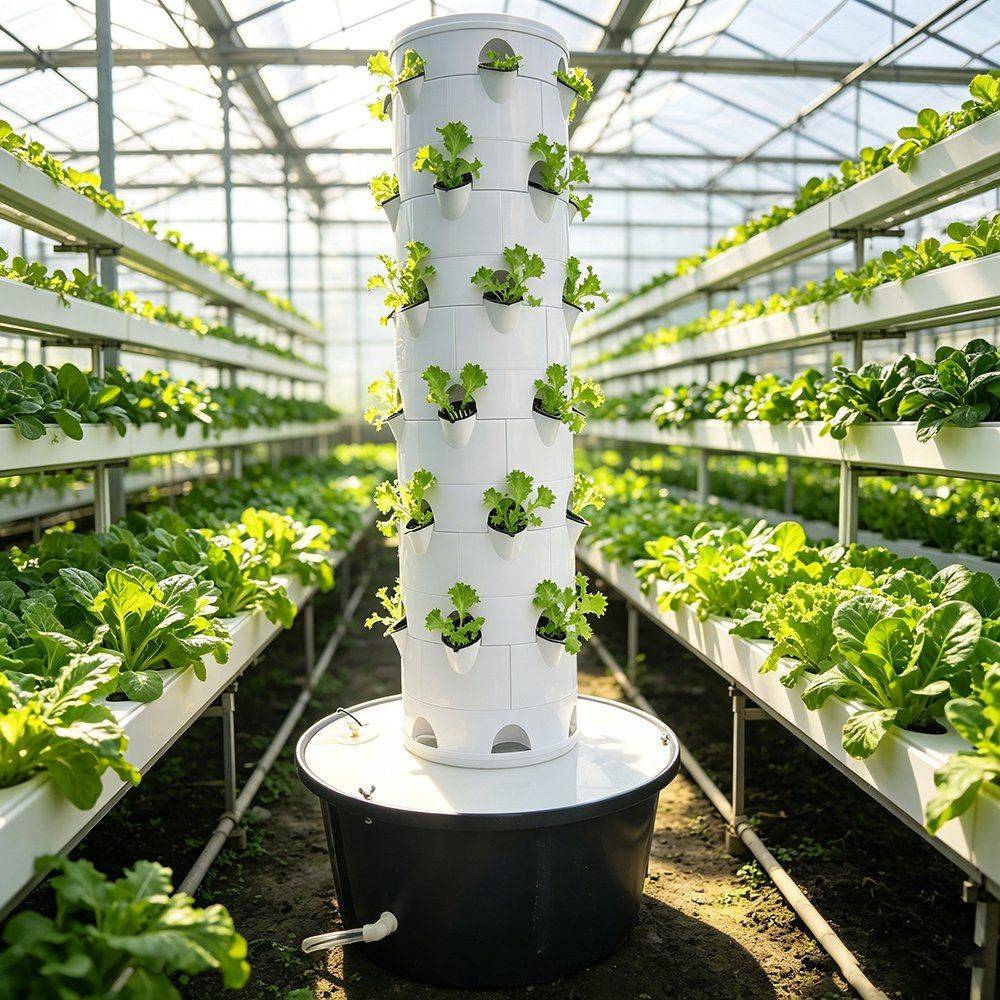
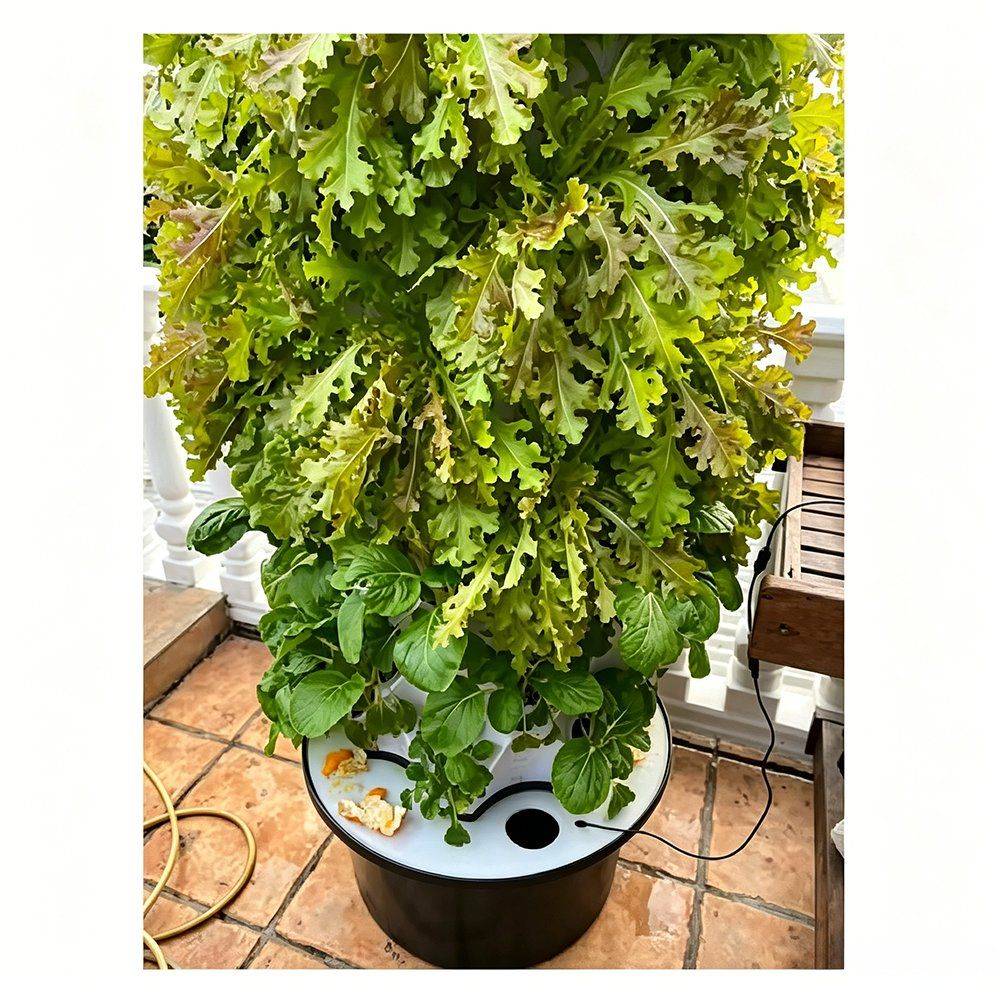
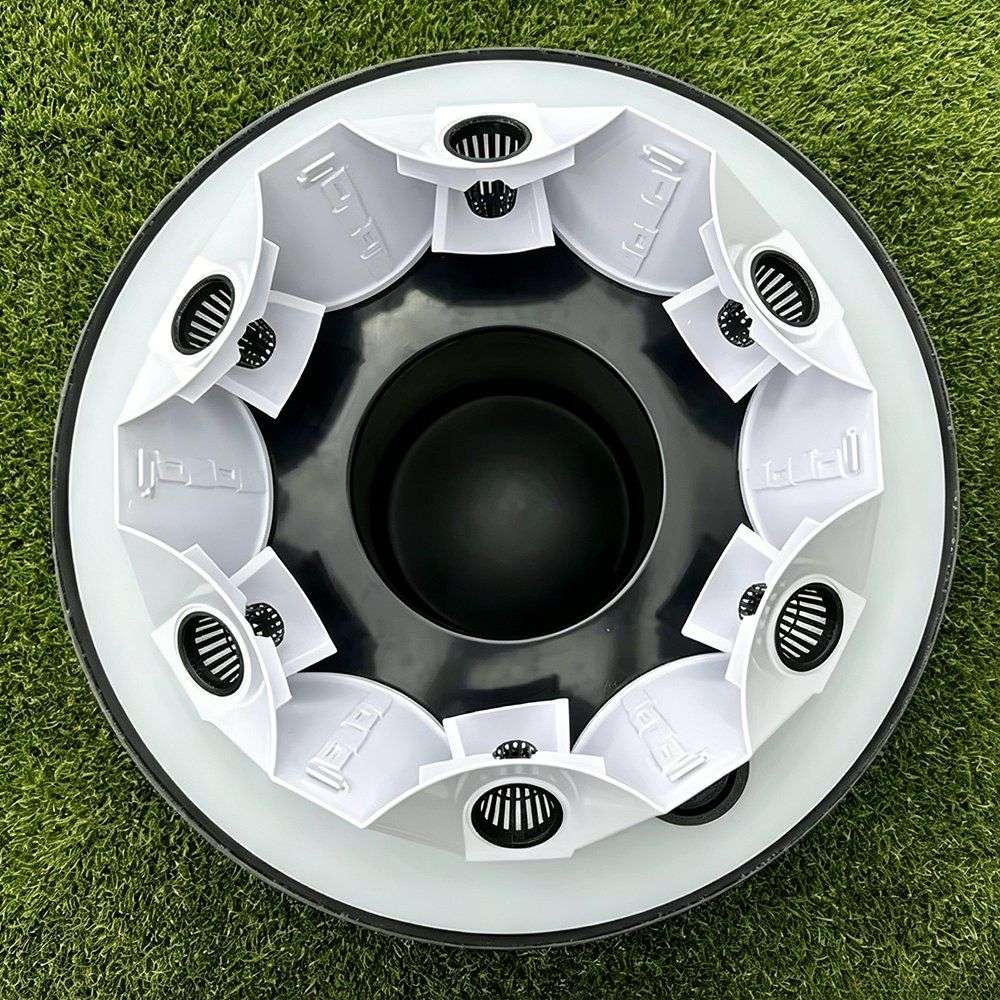
This tower is a stack of planting modules on a galvanized steel support pipe, made to turn a small floor area into a tall growing face. Layer count runs from 6 to 10, so the same tower can be built for a low bench space or for a full height house. Modules are food grade PVC in white, which keeps the root zone clean and the growing face bright. The tower stands on its own base rather than hanging from the structure, and the planting ports take strawberry, lettuce, herbs and other small crops. Layer count and layout are set to the crop and to the house.
Floor area is the limit on what a greenhouse can earn, and a tower works on that limit directly. Instead of spreading one crop over benches, the same footprint is used as a vertical face, so the number of plants standing in a bay goes up without the house being enlarged. For strawberry and leafy crops, which are small and shallow rooted, that is the most economical way to add capacity to a house that is already built.
Growing upright also changes how the crop is worked. Plants sit at working height rather than at ground level, so picking and replanting are done standing, and the crop does not have to be reached across a bench. Air moves past a tower on every side, which keeps the leaves dry after irrigation and takes away the still, humid pocket that forms over a flat bed.
The trade is in light. A tall face shades itself from the side, so towers are set in rows with a gap between them and the aisle is kept clear of anything that would block light from the side faces. Hydroponic production under cover is described more widely on the hydroponic system range page on this site.
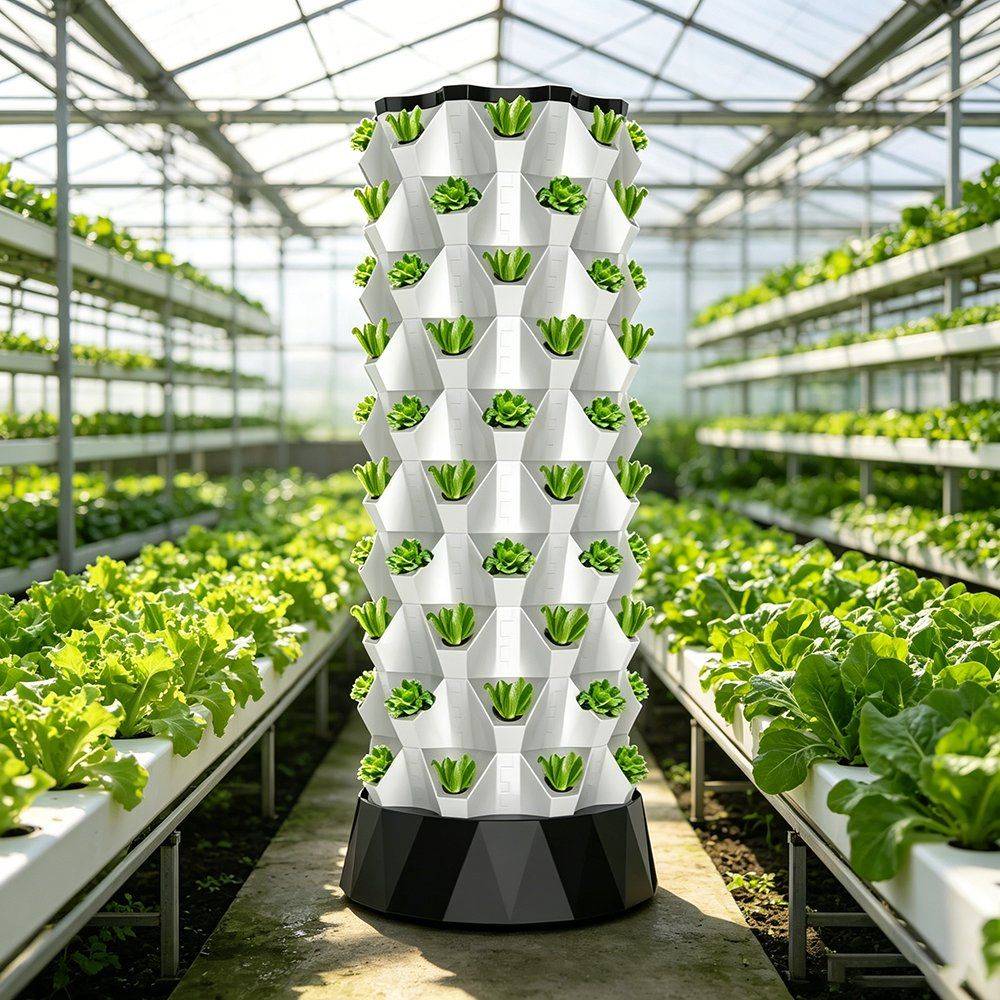
The tower is built up as a stack of modules on a single galvanized steel support pipe, and the layer count is what sets the height. Six layers suits a low house or a bench position, ten layers uses the full height of a commercial bay. Each module is a ring of planting ports around the central column, so a tower is planted on all sides and the crop faces outward from the pipe.
Modules are food grade PVC in white. The material matters because the root zone sits in the module body rather than in a separate pot, and white keeps the growing face bright instead of turning the wall into a heat sink. The base is a wide foot that carries the tower without fixing it to the structure, so a tower can be moved or re-laid without dismantling the house. A smaller tower in the same family is described in the 5 layer grow tower kit for lettuce and herbs.
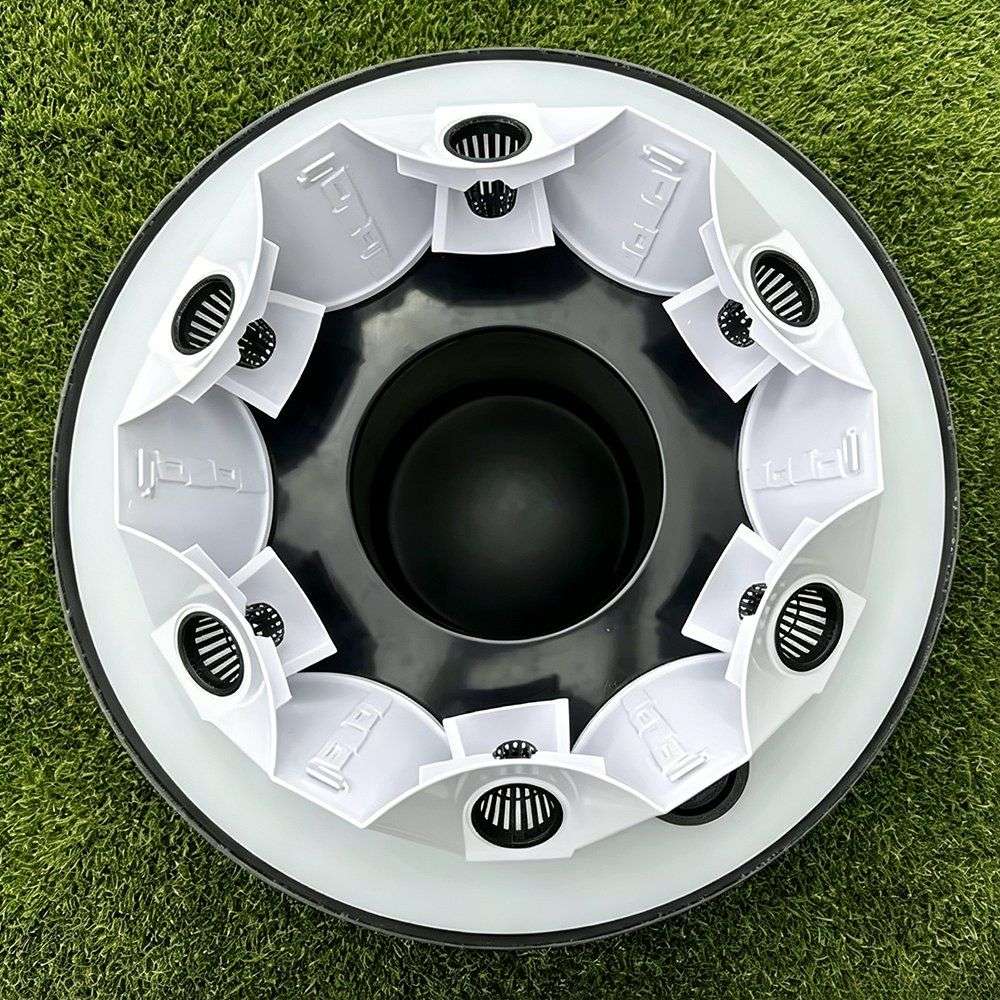
Nutrient solution is delivered to the top of the tower and passes down through the modules, so one feed point serves every plant on the stack. That is the reason a tower pairs well with a recirculating system: the solution that leaves the bottom can be collected, tested and returned rather than drained, which keeps both the water and the fertiliser in the loop.
Because the plants share one flow, the tower is only as even as its distribution. Ports are checked when the crop is replanted so that no module runs dry, and the supply line is flushed on the same cycle as the rest of the house. A system built on the same principle for larger crops is described in the custom hydroponic growing system for tomato and cucumber houses.
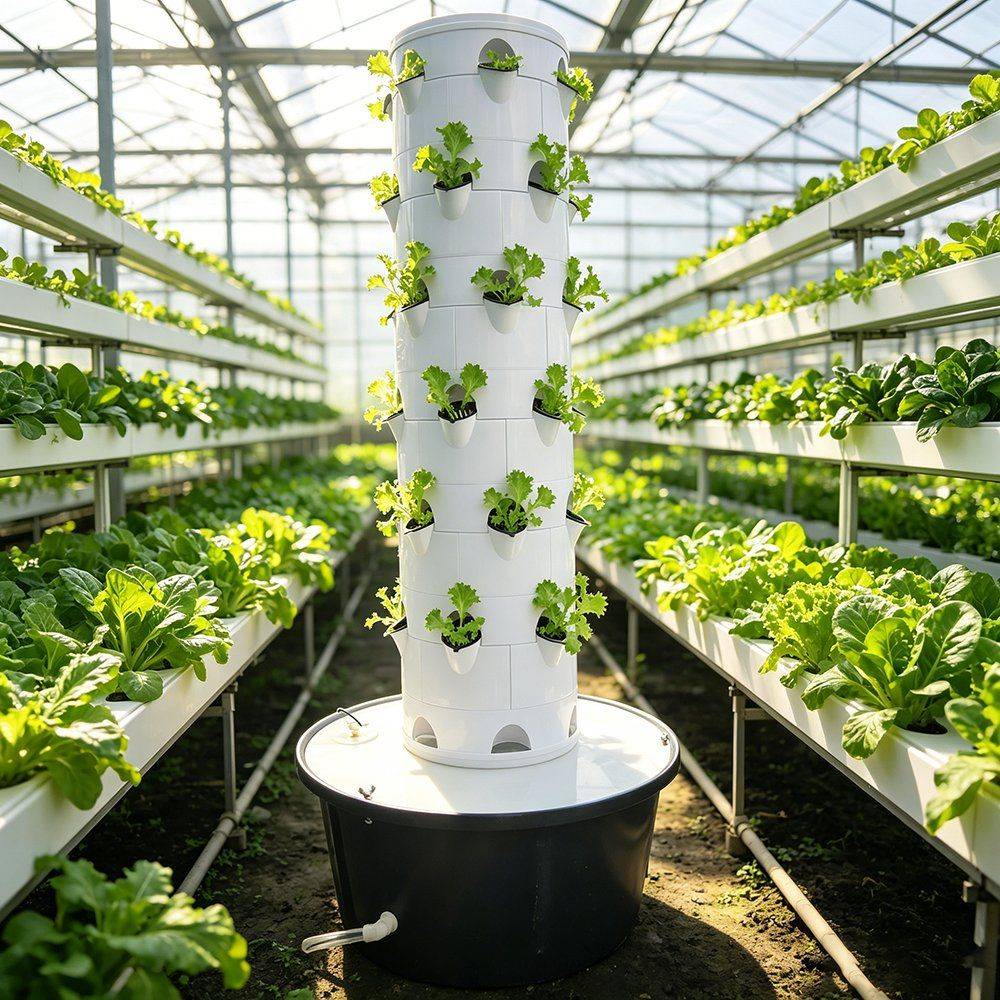
The table below is the standard build. Layer count and layout are set to the crop and to the house.
| Tower layers | 6 / 7 / 8 / 9 / 10 |
| Module material | Food grade PVC |
| Module colour | White |
| Support pipe | Galvanized steel pipe |
| Base | Free standing foot, not fixed to the structure |
| Feeding | Solution delivered at the top and returned at the base |
| Crops | Strawberry, lettuce and leafy greens, herbs and flowers |
| Customisation | Layer count and layout set to the crop and the house |
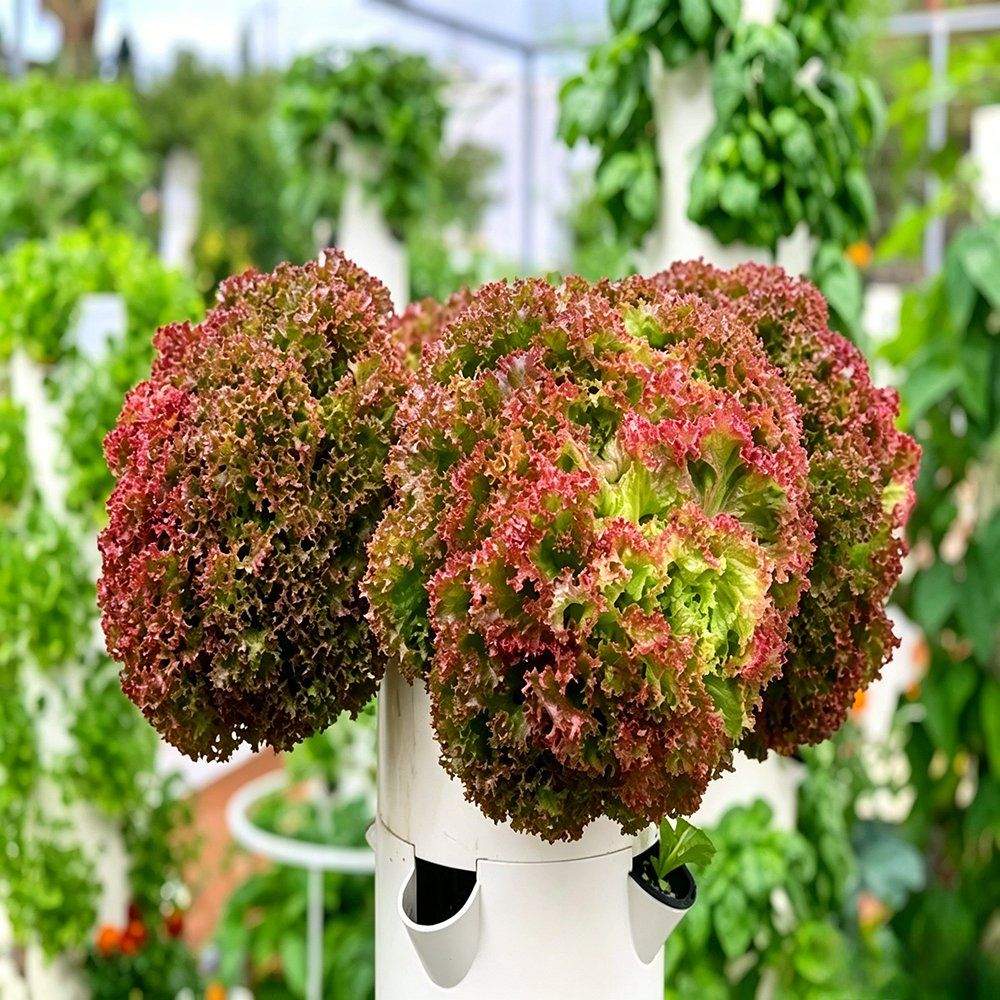
The tower arrives as modules, pipe and base, and is assembled on site without cutting or welding. The base is set level on the floor first, the support pipe is dropped into it, and the modules are stacked and locked as the pipe goes up. Because the tower is free standing, rows are laid out and moved by hand rather than tied back to the frame.
Maintenance is the same cycle as any recirculating system. Ports and the supply line are checked and flushed when the crop is changed over, and the modules are cleaned between crops so that root material does not carry over from one planting to the next. The galvanized pipe and the base are wiped down rather than hosed at pressure, which keeps water out of the joints.
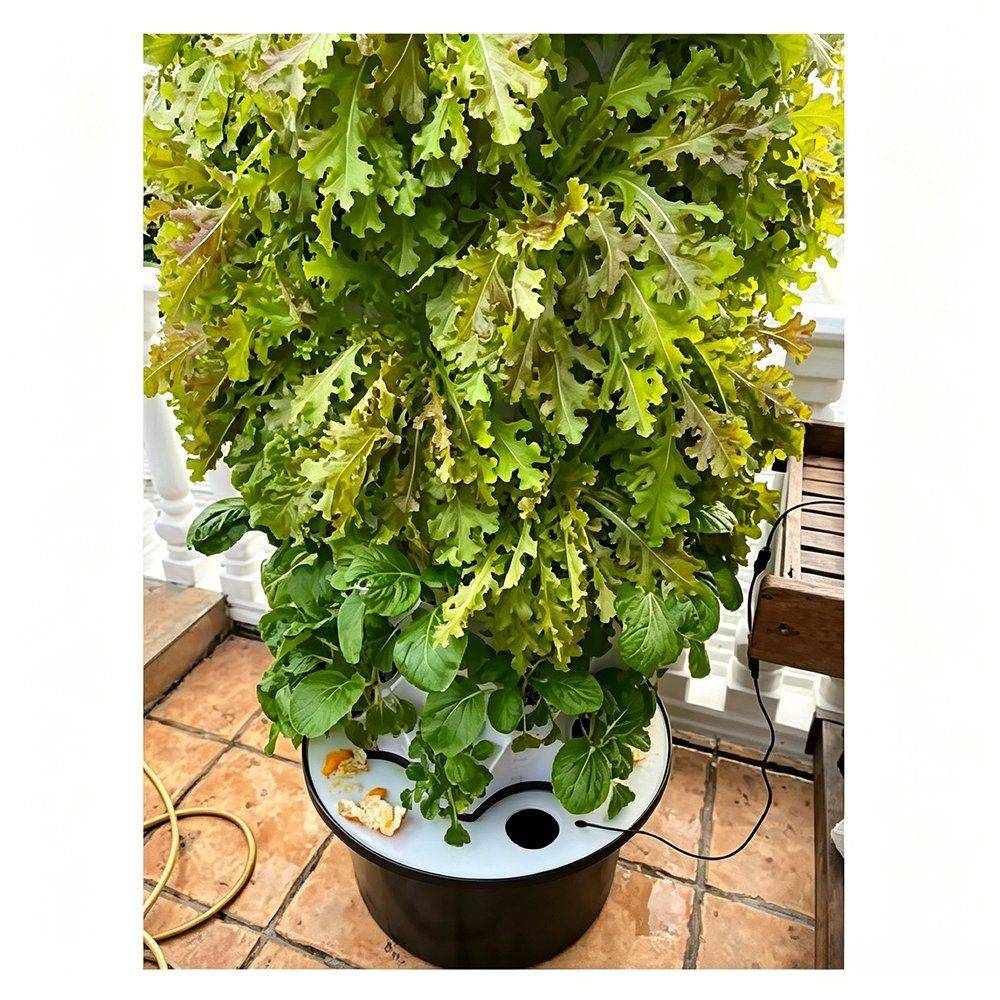
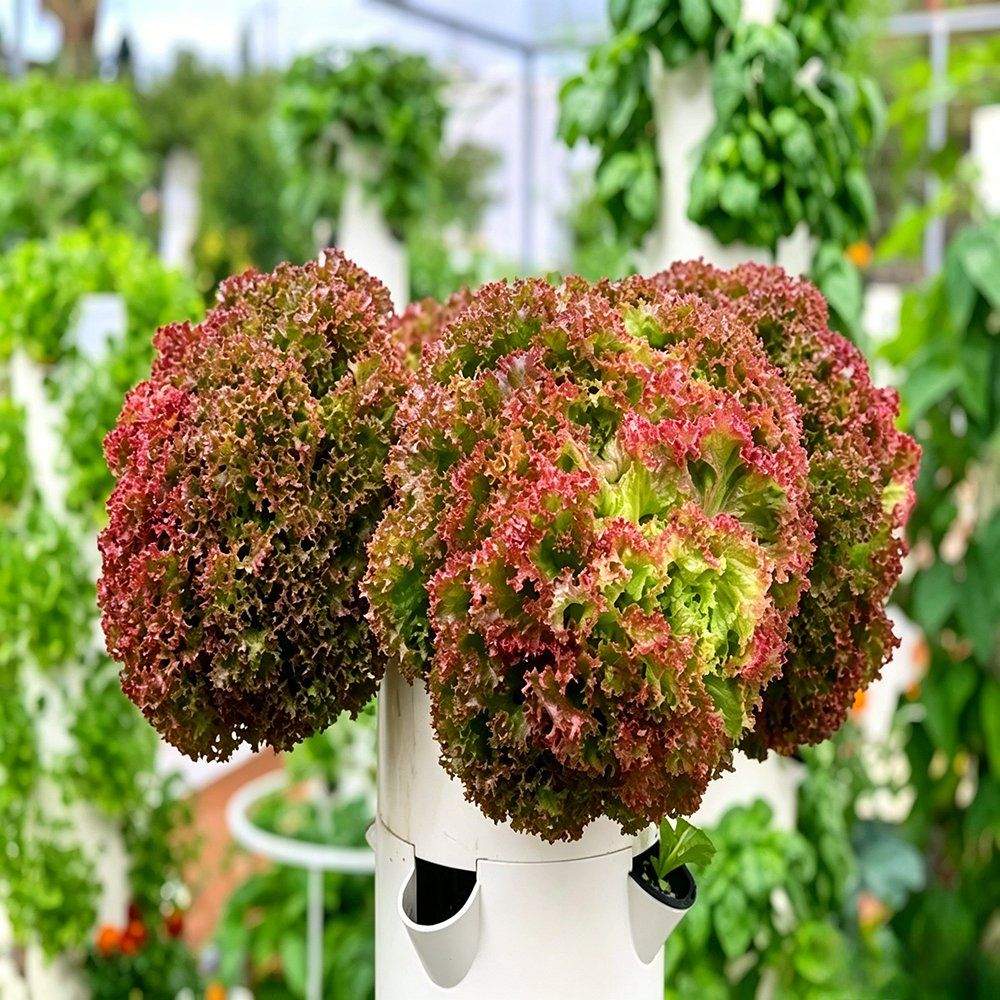
Towers of this type are used for strawberry production, for lettuce and leafy greens, and for herbs and cut flowers in a vertical arrangement. They suit growers who are short of floor area rather than of height, existing houses that are being converted to hydroponic production, and operations that expect to add a recirculating system, dosing or a control unit to the same layout later.
Research and extension material on protected crop production, including work on soilless growing and on the growing environment under cover, is published by the National Greenhouse Manufacturers Association. Production and market reporting for commercial growers under cover is published by GrowerTalks. The specification that matters is the one that still suits the crop ten years from now.
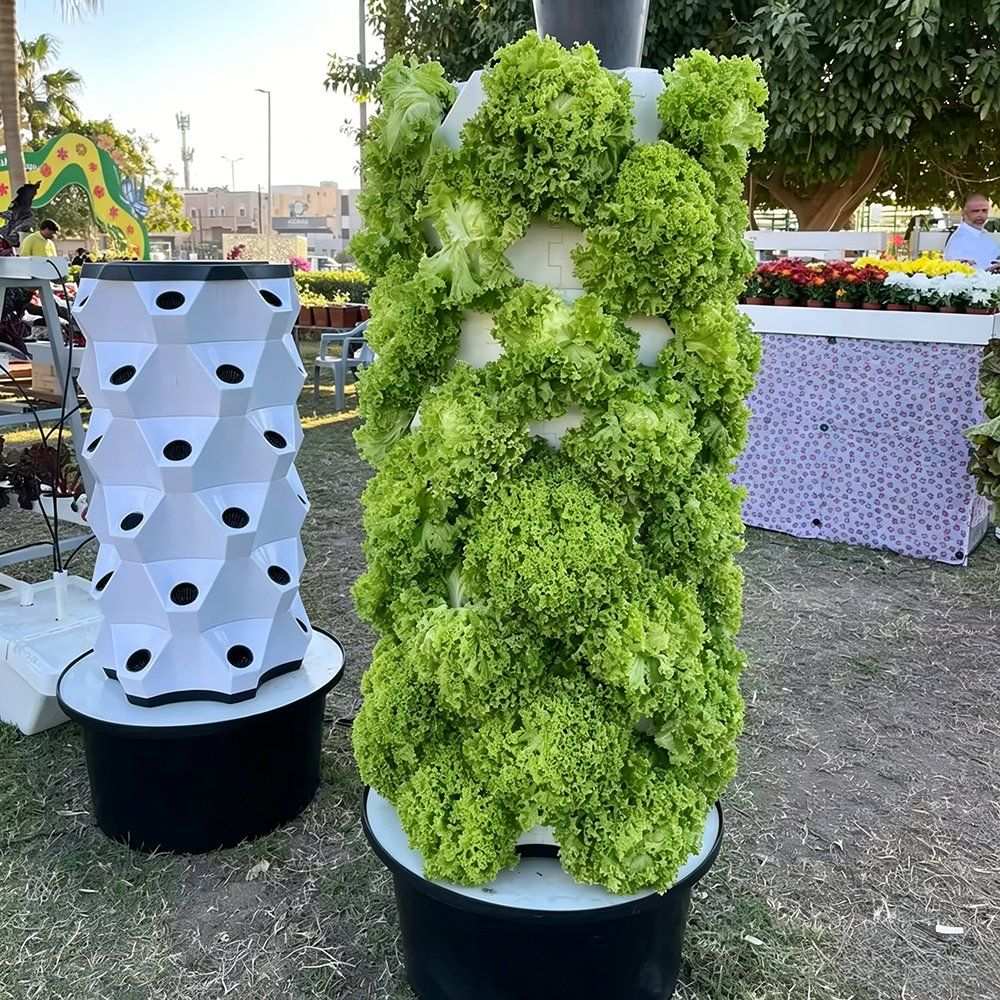
It is set by the house rather than by the crop. Six layers suits a low bay or a position on a bench, and ten layers uses the full height of a commercial house. The layer count is also what sets how much of the plant has to be reached from a ladder, so taller is not always easier to work.
No. It stands on its own base, which is why a row can be laid out, moved or re-spaced as the crop changes. Nothing has to be drilled into the structure to hold a tower upright.
The galvanized steel support and the PVC modules are both rated for long service under normal growing conditions. Modules are the part that is handled most, so they are checked and replaced individually rather than as a set.
We provide a 10 year structural warranty and a 5 year anti-corrosion warranty on the galvanized support. Details are set out in the contract for each project.
Send your house dimensions, the crops you plan to grow and how many towers you intend to run per row. We reply with a layout drawing and a full quotation.